Key insights
6 slides
The core argument
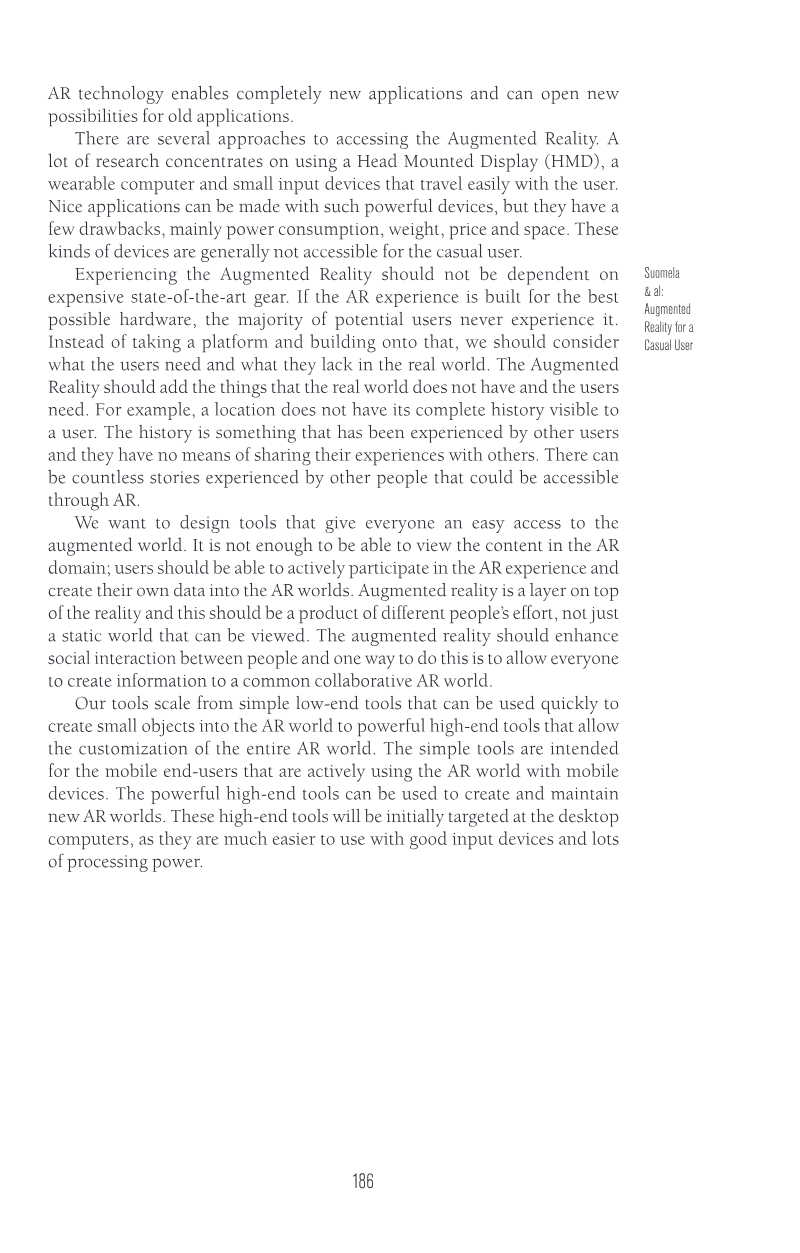
The paper argues AR should reach casual users, not only expensive-hardware owners.
They propose users actively create content in a shared, collaborative AR layer rather than only viewing a static world.
1 / 6
- 01The paper argues AR should be accessible to casual users rather than dependent on expensive head-mounted displays and wearable computers, with users actively creating content in a shared, collaborative AR layer instead of only viewing a static world.See it on page 2
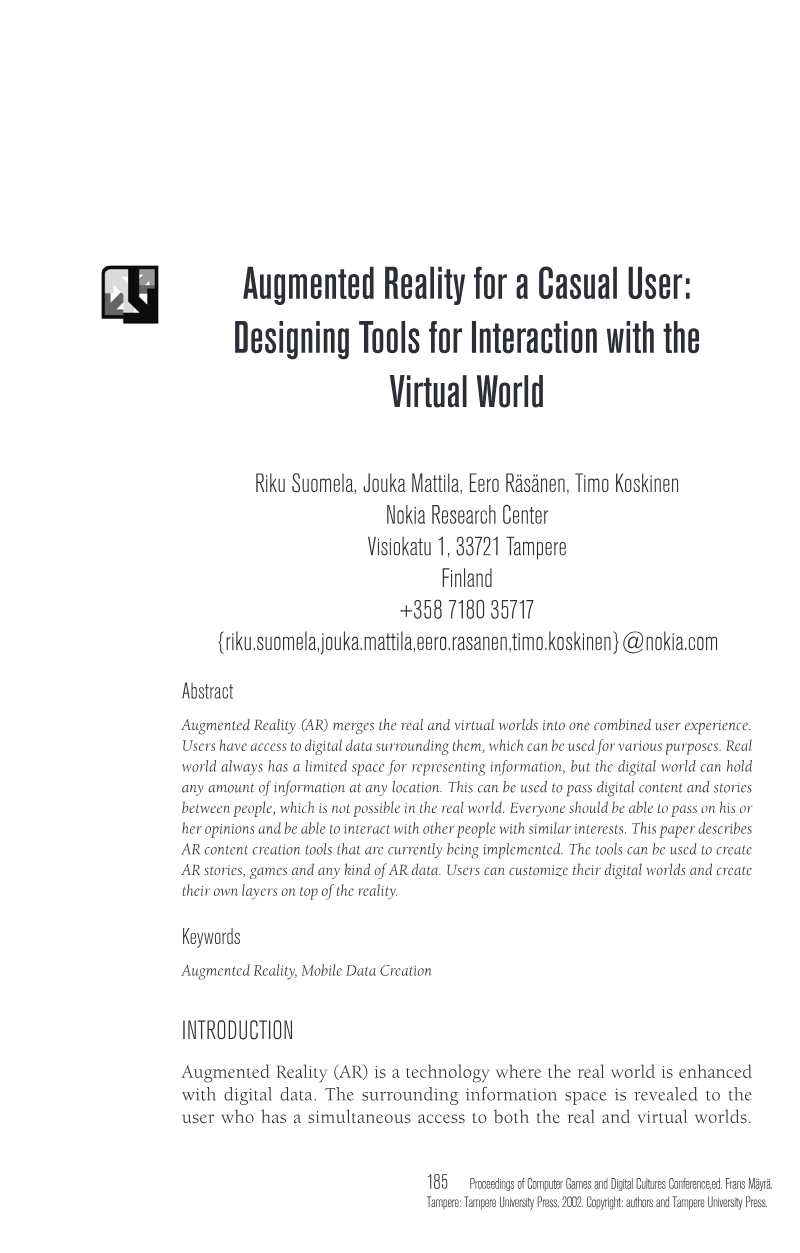
- 02The central thesis is that letting everyone contribute digital objects, stories, and games to shared AR spaces can enhance social interaction between people.See it on page 1
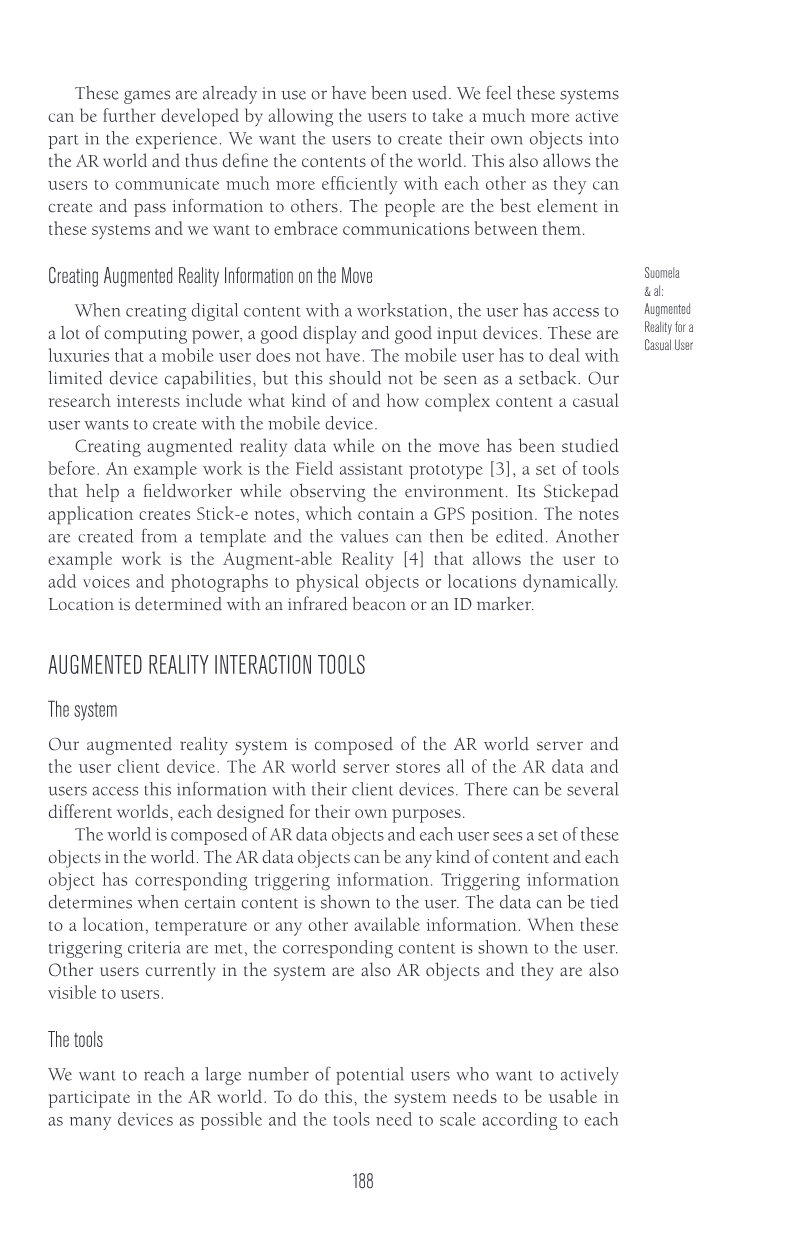
- 03The proposed system pairs an AR world server, which stores data objects with triggers tied to location, temperature, or other available information, with client devices through which users see and interact with that content.See it on page 4
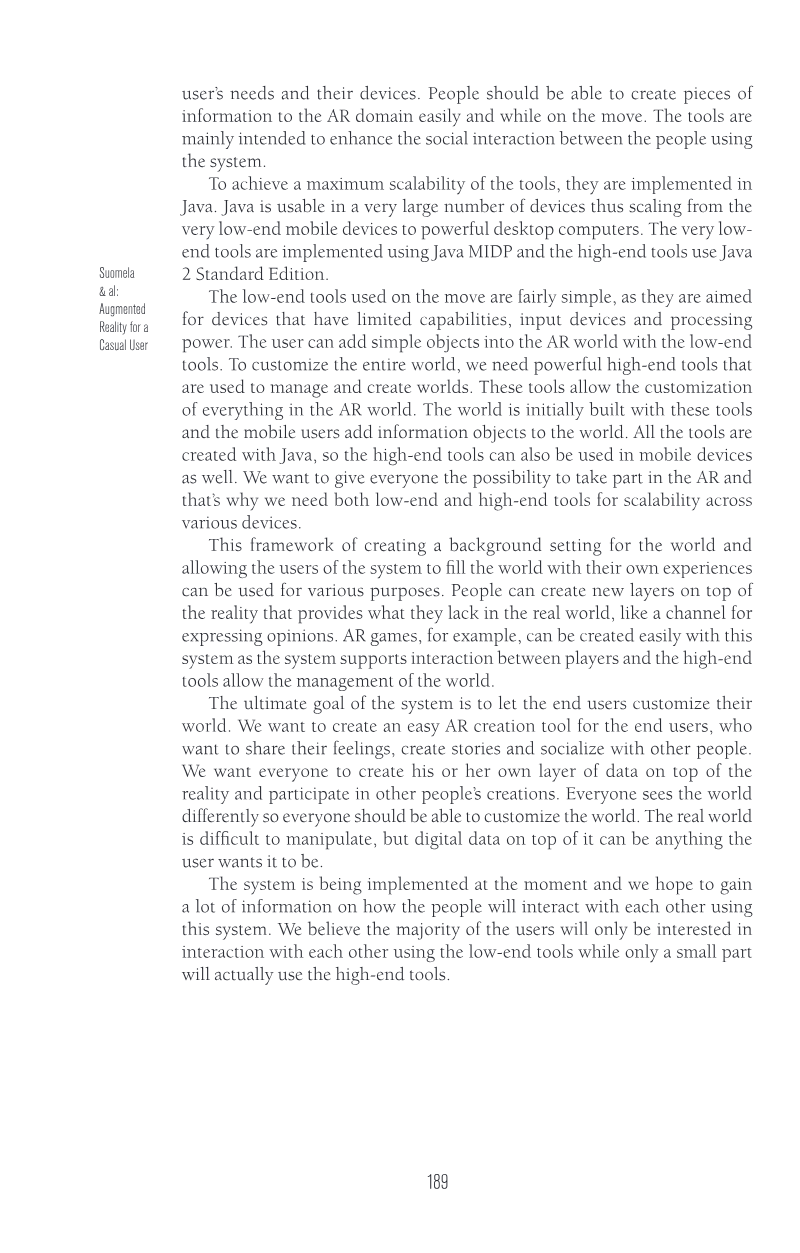
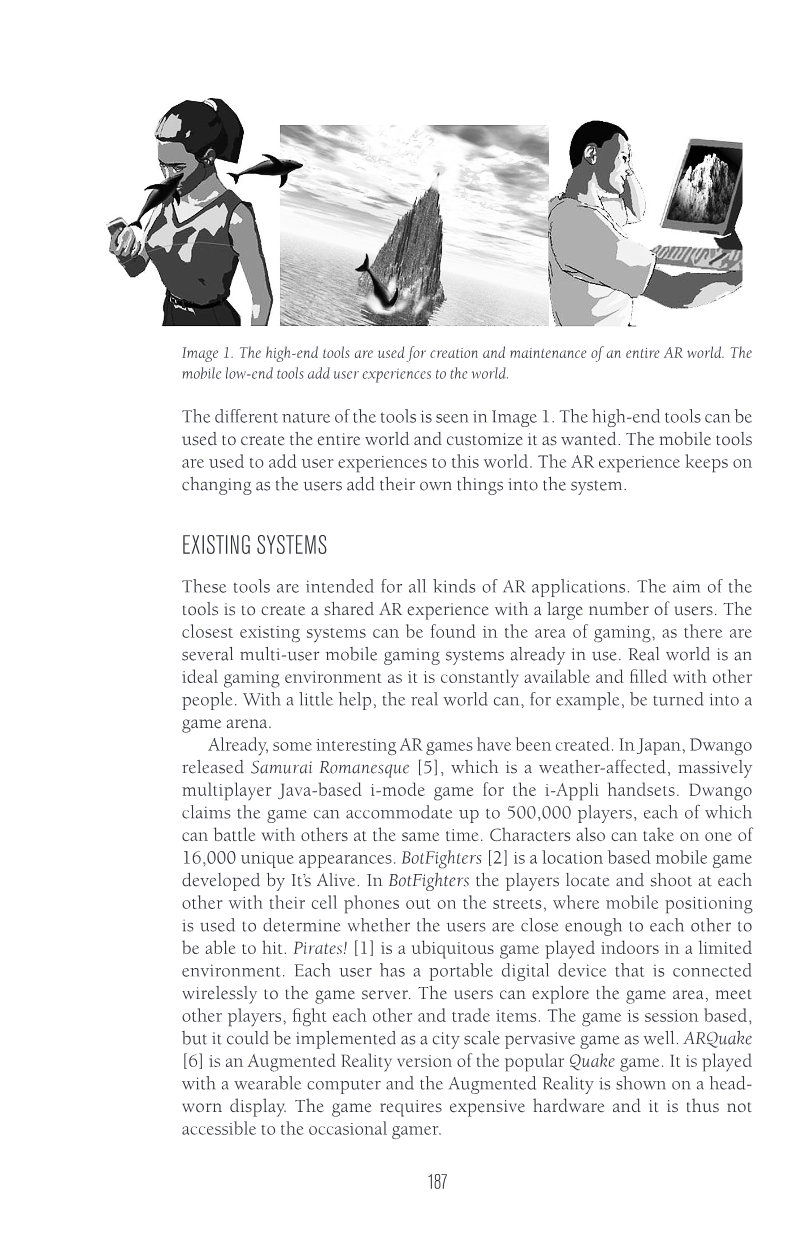
- 04Tooling is split across platforms: lightweight low-end tools built on Java MIDP for quick mobile content creation, and high-end desktop tools built on Java Standard Edition for designing and maintaining entire AR worlds.See it on page 5
- 05The authors review existing AR systems including Samurai Romanesque, BotFighters, Pirates!, ARQuake, the Field Assistant, and Augment-able Reality, noting that most require expensive hardware or offer limited user participation.See it on page 3
- 06This is a design proposal and system description, not an empirical study: it presents no survey data, user sample, or evaluation results, and the system was still under implementation when written.See it on page 5
- 07The authors expect most users to engage via low-end mobile tools with only a small portion using high-end authoring tools, but this expectation is untested.See it on page 5
Ask AI about this report
Summary
This paper, authored by researchers at Nokia Research Center, argues that augmented reality should be accessible to casual users rather than dependent on expensive head-mounted displays and wearable computers. The authors propose that AR should add what the physical world lacks, such as shared histories and experiences, and that users should be able to actively create content within a common, collaborative AR layer rather than simply viewing a static world. The central thesis is that enabling everyone to contribute digital objects, stories, and games to shared AR spaces can enhance social interaction between people.
The proposed system consists of an AR world server that stores data objects with triggering criteria tied to location, temperature, or other available information, plus client devices through which users see and interact with that content. Tools are implemented in Java to scale across devices: lightweight low-end tools built on Java MIDP for quick, mobile content creation, and high-end desktop tools built on Java Standard Edition for designing and maintaining entire AR worlds. The paper reviews existing systems including Samurai Romanesque, BotFighters, Pirates!, ARQuake, the Field Assistant, and Augment-able Reality, noting that most require expensive hardware or offer limited user participation.
The work is a design proposal and system description rather than an empirical study, and it presents no survey data, user sample, or evaluation results. The authors state that the system was still under implementation at the time of writing and that they anticipate most users will engage through low-end mobile tools while only a small portion will use the high-end authoring tools, though this expectation remains untested.