FinancialKadokawa Corporation
Summary of Consolidated Earnings Results for the Three Months Ended June 30, 2026
13 pages~25 min full read
Distilling the key insights…
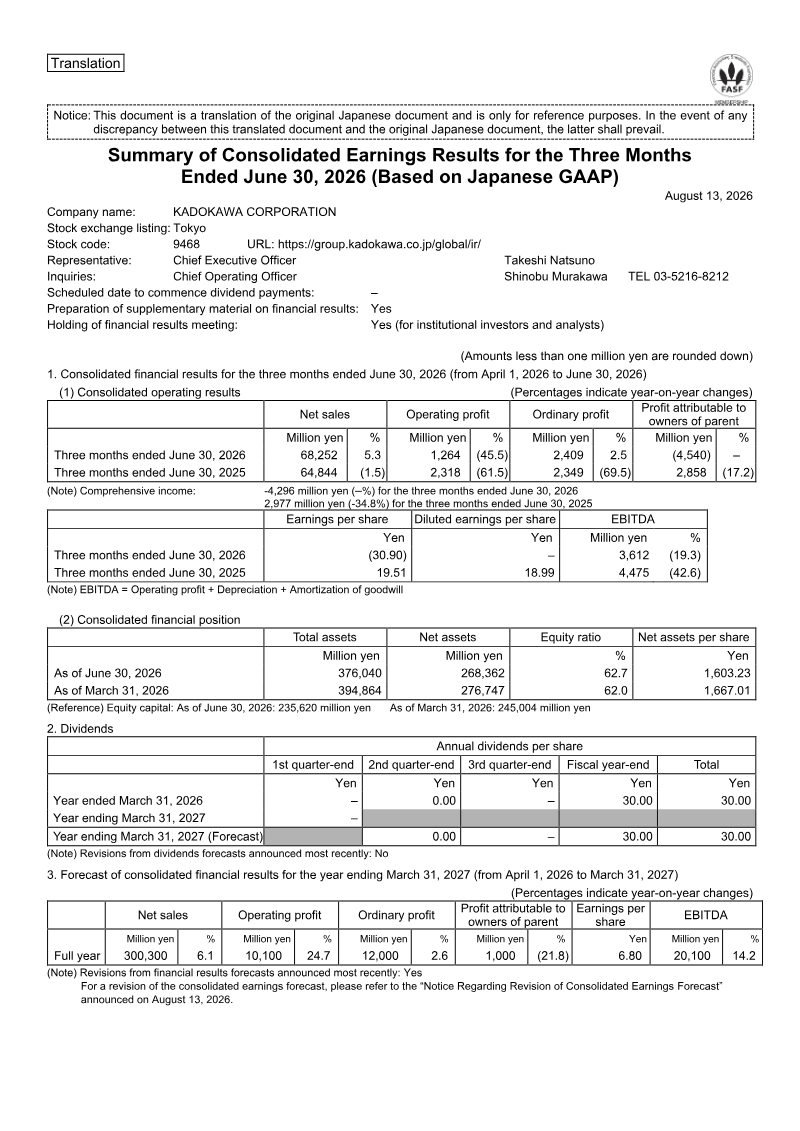
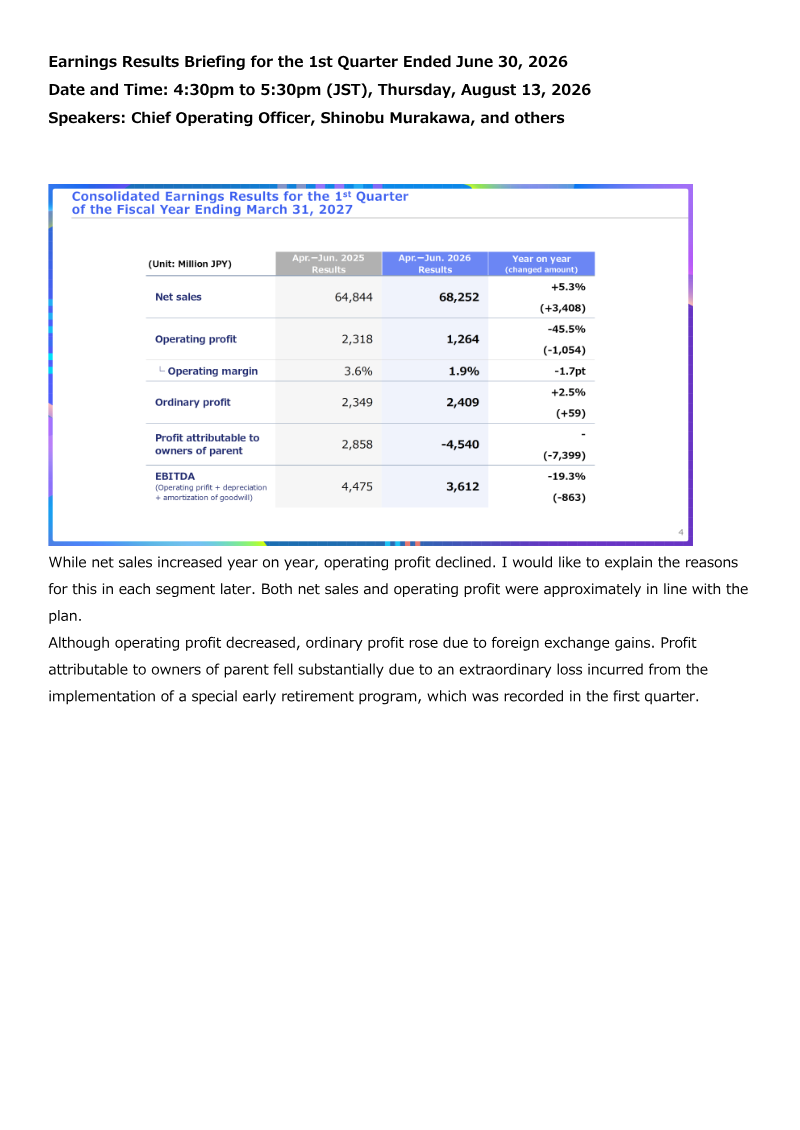
KADOKAWA CORPORATION’s consolidated earnings results for the first quarter of the fiscal year ending March 31, 2027, reflect a period of strategic transition characterized by revenue growth alongside significant one-time restructuring costs. The company reported net sales of 68,252 million yen, representing a 5.3% increase compared to the same period in the previous year. Despite this top-line growth, operating profit declined by 45.5% to 1,264 million yen, and the company recorded a loss attributable to owners of the parent of 4,540 million yen. This bottom-line deficit was primarily driven by an extraordinary loss of approximately 5,400 million yen associated with a special early retirement program implemented during the quarter.
Segment performance varied across the company’s diversified portfolio. The Publication/IP Creation segment served as a primary growth driver, with net sales rising 10.2% to 37,966 million yen, bolstered by international expansion and domestic structural reforms. The Animation/Film segment also saw a 26.1% increase in sales, though it incurred an operating loss due to rising production costs. Conversely, the Gaming segment experienced a contraction, with sales falling 37.4% as the company faced difficult year-over-year comparisons against previous hit titles. The Education/EdTech segment maintained steady growth, while the Web Services segment saw increased event-related revenue offset by higher IT infrastructure and development investments.
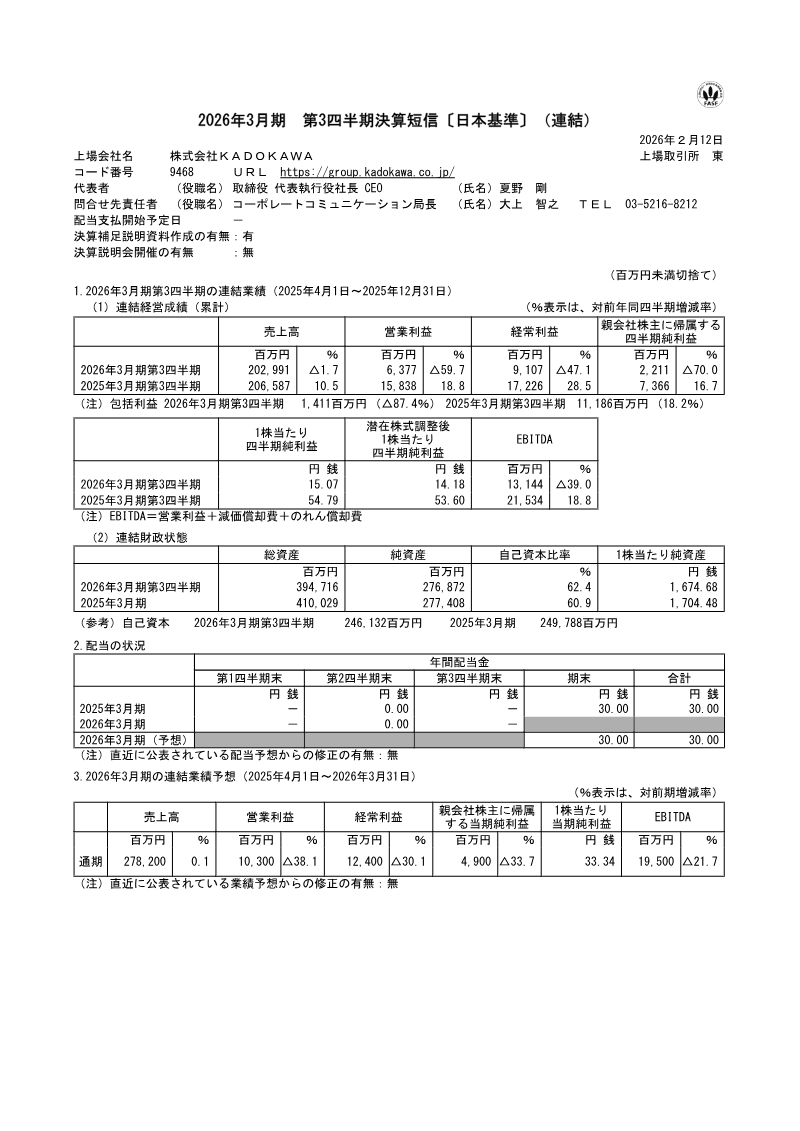
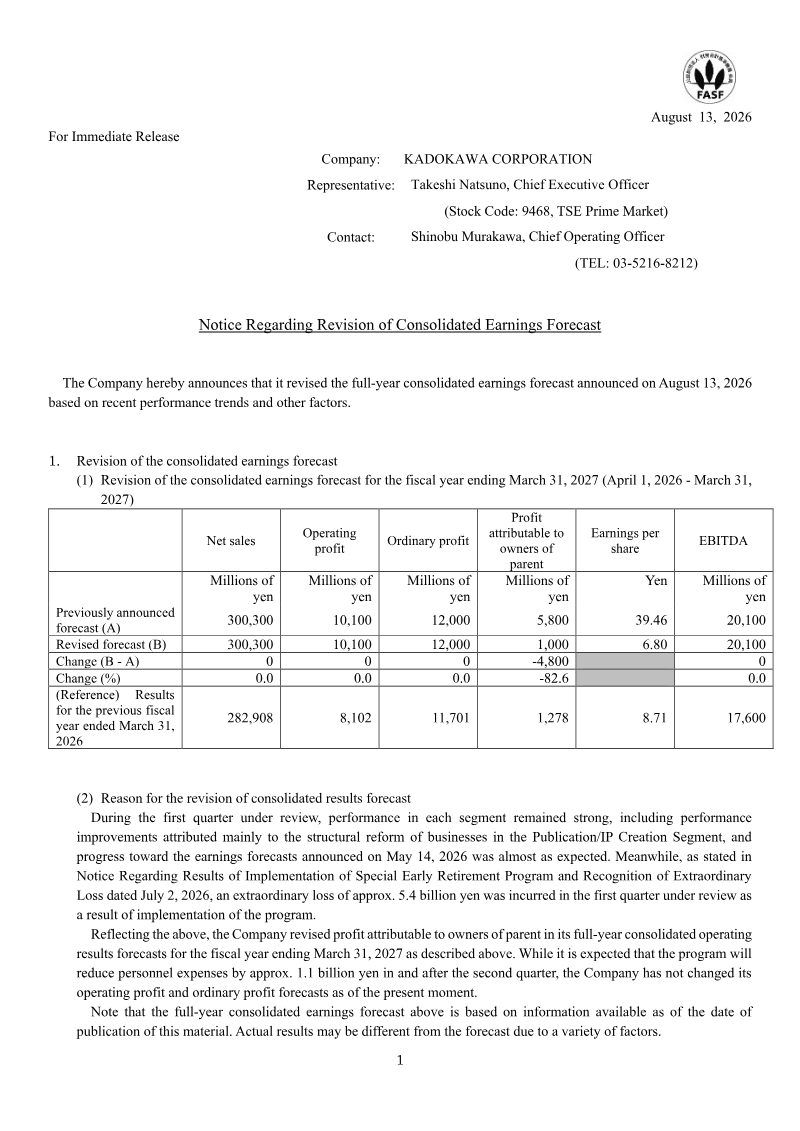
The company’s financial position remains stable, with an equity ratio of 62.7% as of June 30, 2026. Total assets decreased to 376,040 million yen, largely due to the repayment of long-term borrowings. While the company has revised its full-year forecast for profit attributable to owners of the parent to account for the early retirement program, it anticipates that the restructuring will yield approximately 1.1 billion yen in personnel expense savings starting in the second quarter. Operating and ordinary profit forecasts for the full fiscal year remain unchanged, reflecting management's expectation that core business performance will align with previously established targets.

Kadokawa Corporation · 2026
Kadokawa Corporation · 2026
Kadokawa Corporation · 2026
Kadokawa Corporation · 2026
Kadokawa Corporation

Kadokawa Corporation
Kadokawa Corporation

Kadokawa Corporation
Kadokawa Corporation
Kadokawa Corporation
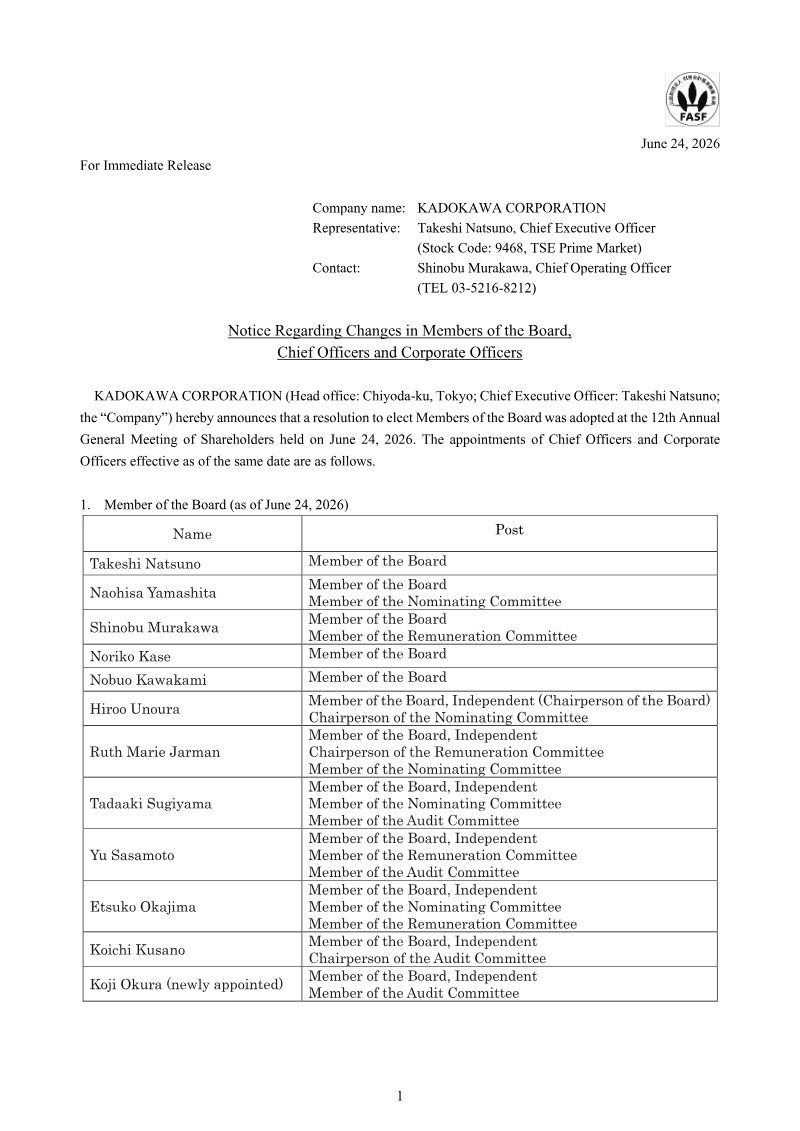
Kadokawa Corporation
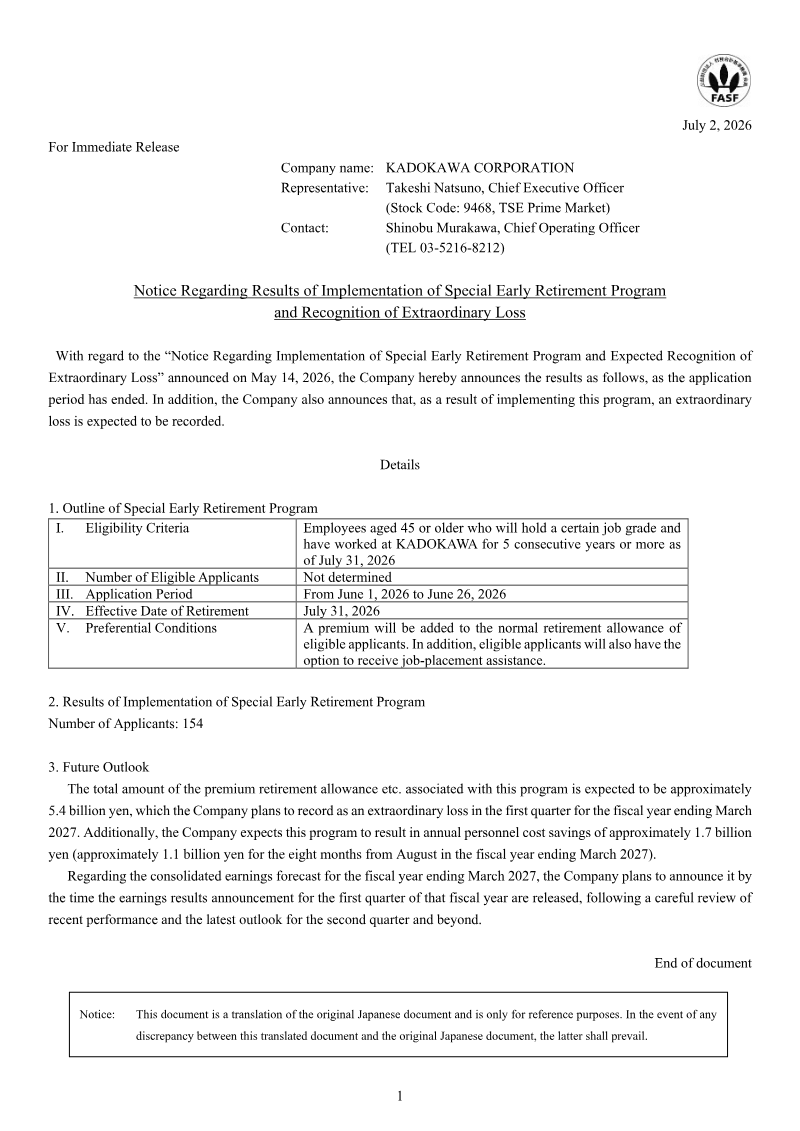
Kadokawa Corporation

Capcom · 2026

Capcom Co. · 2026

Capcom · 2026
Sony Group Corporation · 2026

Square Enix · 2026
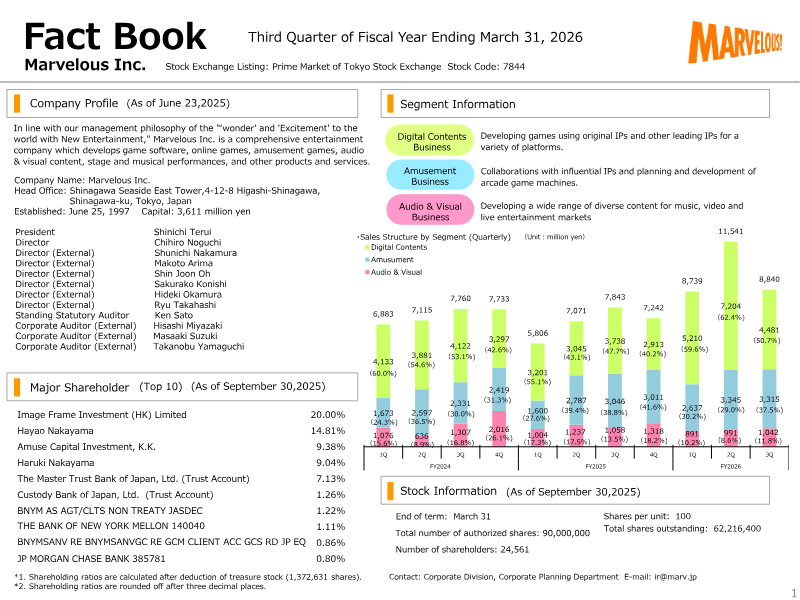
Marvelous · 2026
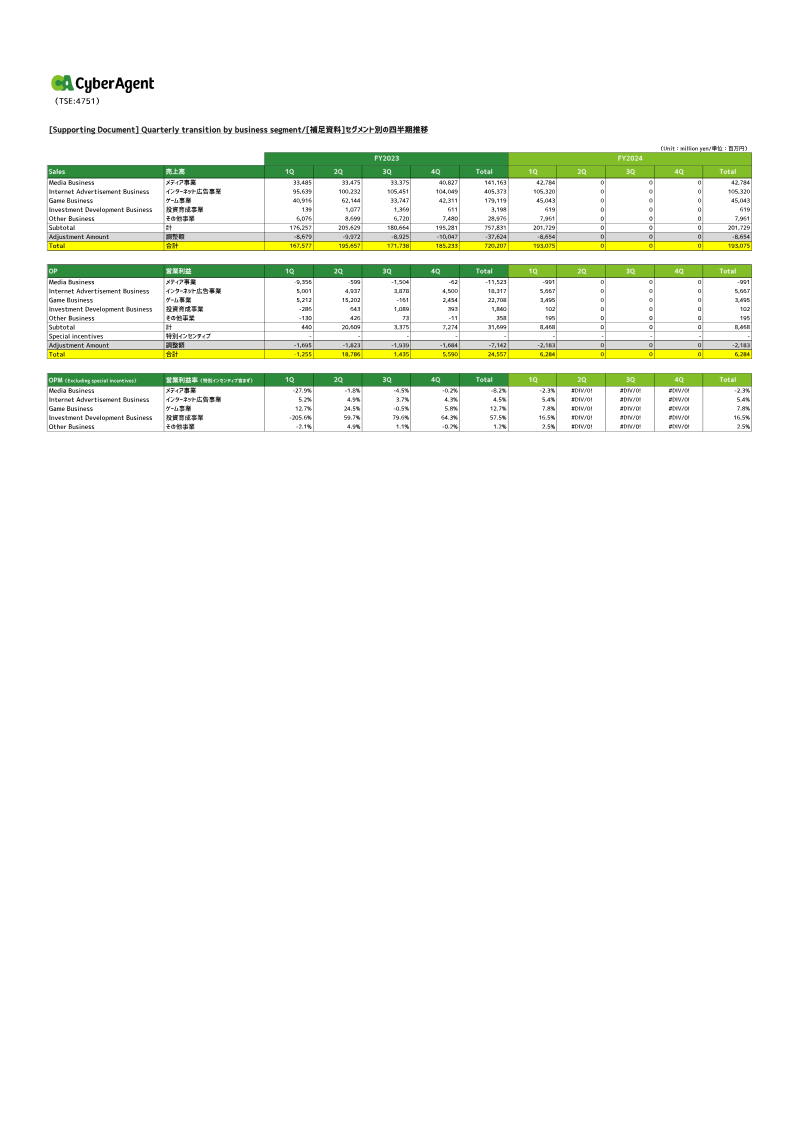
CyberAgent · 2026

Square Enix · 2026
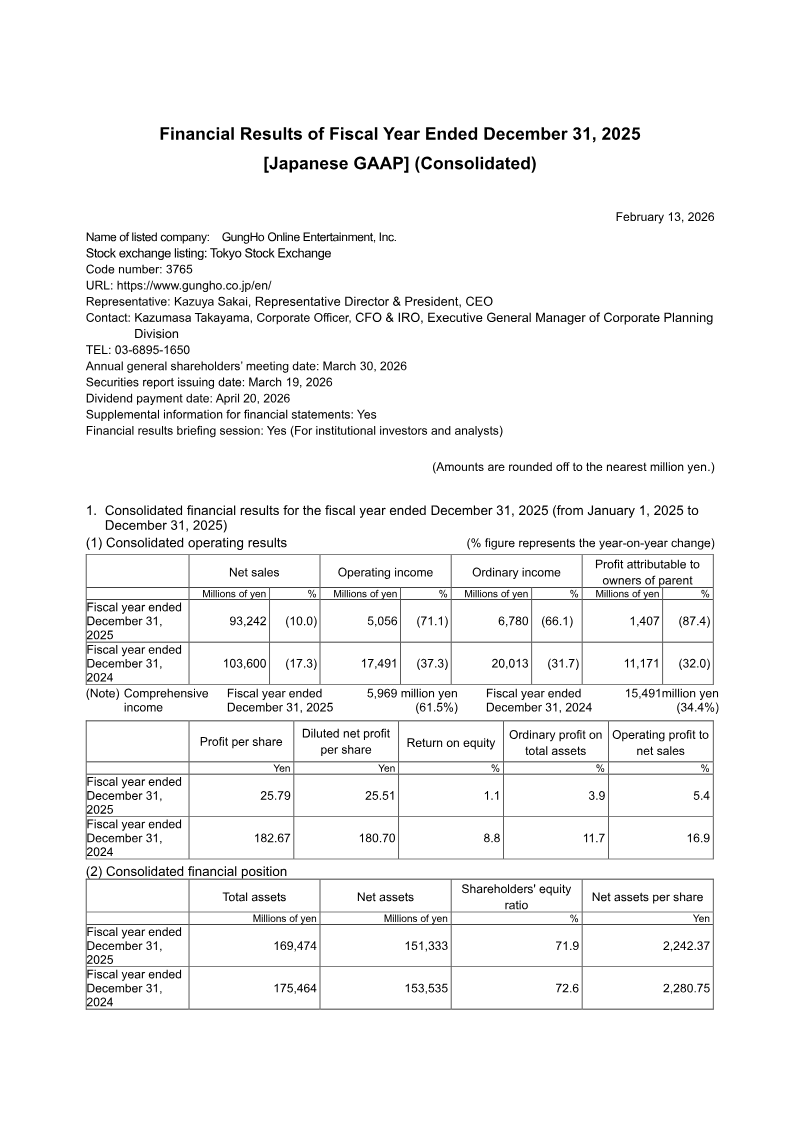
GungHo Online Entertainment · 2026
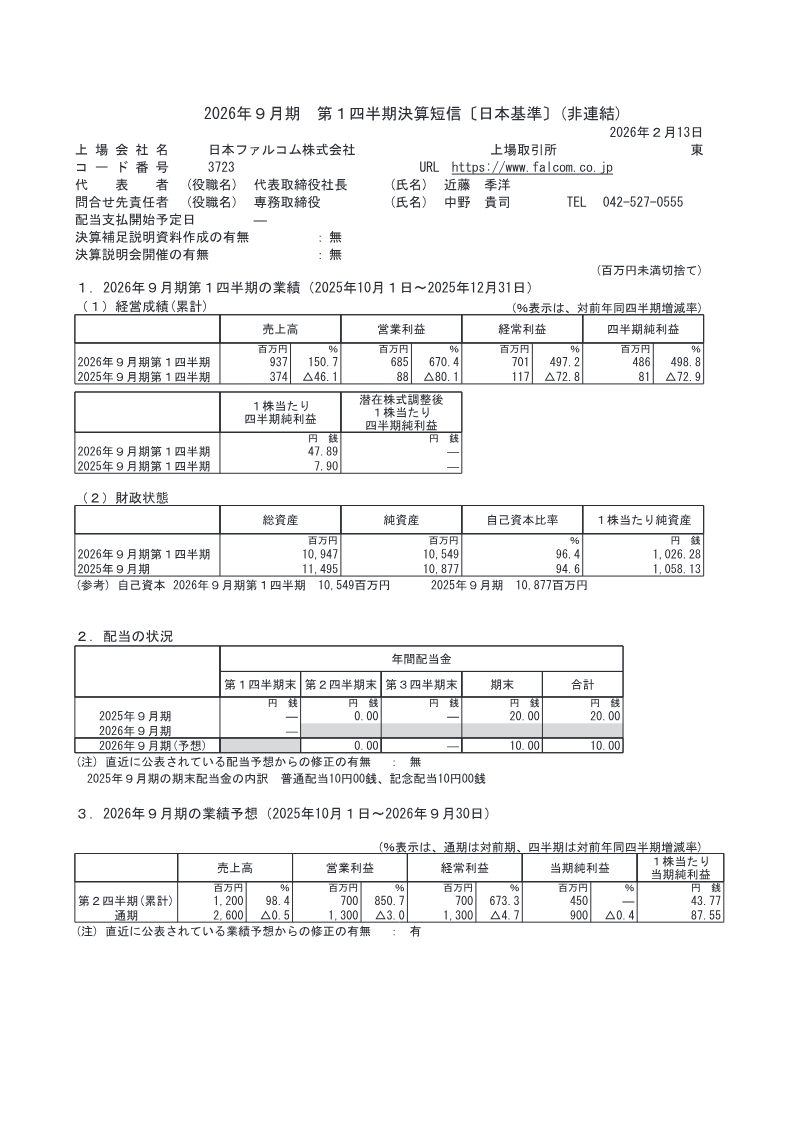
Nihon Falcom Corporation · 2026
Sega Sammy Holdings · 2026
Akatsuki · 2026