1 free read left. Create a free account for unlimited reading + AI research.
Create free account
Audience-Driven Entertainment as the Next Frontier in Gaming
Key insights
6 takeaways- 01Massively Interactive Live Events (MILEs) bridge the gap between passive media and active gaming by using AI and physics engines to allow real-time audience influence over narrative and character development.
- 02The transition toward audience-driven entertainment expands the total addressable market by attracting linear media consumers who fall outside traditional core gaming demographics.
- 03The 'Rival Peak' project demonstrated the commercial viability of this model by generating over 100 million minutes of engagement through integrated viewer voting and mini-games.
- 04Cloud-based streaming is the essential technical enabler for these experiences, as it removes hardware barriers and local download requirements to reach users on low-end devices.
- 05Proactive quality management is a prerequisite for commercial success, as technical bugs, poor performance, and localization issues are direct drivers of user churn and negative market reception.
- 06Quality Assurance must shift from a final gatekeeping role to a foundational development phase to mitigate the high risks of technical failure in complex, audience-driven formats.
Ask AI about this video
Transcript
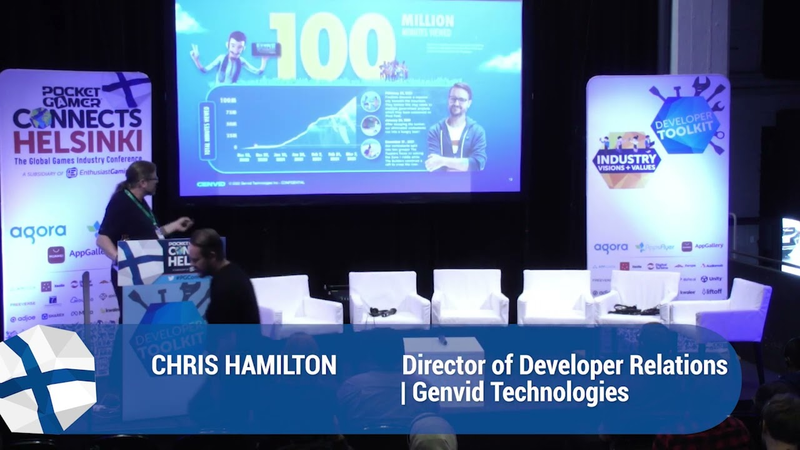
[Music] thank you [Music] our next session is entitled audience driven entertainment as the next Frontier in gaming so massively interactive live events of zero friction highly accessible forms of entertainment that can be experienced on any connected screen equipped device in this presentation Chris Hamilton will give us an introduction to miles Mr Chris Hamilton
yes indeed Walk This Way would you like to come on stage now I don't know whether you'd like to uh I'll move my laptop out of the way if you want to go here that would be fantastic you're right ahead you've got power and stuff you're all good I think I'm all good yeah it's Chris Hamilton take it away uh where's the clicker oh clicker is is the is the clicker here and working okay all set uh good morning everybody and welcome to this talk on audience driven entertainment and miles or massively interactive live events I'll cover a little bit about about myself about genvid I'll talk about massively interactive live events or miles uh I'll talk a little bit about spectator-centric design and what we mean by audience driven entertainment and then I'll jump into case studies of rival speak and our new project The
Walking Dead last mile so my name is Christopher Hamilton I'm the director of developer relations in Europe for genitive Technologies I also feel very strongly about giving back to the community so I'm involved in the igda where I'm a European coordinator igda Finland where I'm still involved in the chapter here the finished game jam and uh we love games um General Technologies was founded in 2016 by some Square Enix veterans it is a U.S based uh company with a headquarters in New York and offices around the world uh the company has raised 166 million dollars to date you can see our funders here on the bottom of this slide I'll just point out Galaxy interactive and makers fund because we have both of people from both of those funds on our board we also have amazing advisors like X Square Enix CEO ichiwada digital media Executives Matt ball and Andrew Snyder Anna Suite who is instrumental in building building Steam
and valve into what they are today she's currently head of Studio at Bad Robot Games and then Cindy Holland who was a VP for original content at Netflix and JT Gleason who was at twitch for more than eight years in key roles leading both a partner and developer relations so our mission is to power the future of interactive media we believe that people love shared experiences particularly when that participation matters be it gaming sports or reality TV these are the events that become water cooler moments in the office and we're already creating these massively interactive experiences with top tier partners and platforms now let me talk about miles or massively interactive live events the concept that you'd be watching people play games used to be limited to sitting on the couch waiting for your friend to finish the game now today we're seeing as many people watch games as play them how do we as game developers create content that maximizes the opportunity not just for the player base but also for people who
are watching and the people who want to engage but only have a very short amount of time to interact with that content and this is what we've been looking at um with this Foundation that we call massively interactive live events or miles this vision of Miles comes from 13 years of work and research in the game streaming Space by video game veterans from Square Enix back in 2009 the people that I work with were thinking about the future of games and interactivity they had this thesis that if you could render things in the cloud you could do things with AI and physics that up to that point were just not not possible and you need to remember at this time twitch did not exist and live streaming on YouTube and Facebook wasn't available so what does this interactive media look like well visual media TV and film started in the 1920s um video games become interactive in the 1970s there's video game broadcasting
that starts in the early 2010s and the future of our industry is um likely something that's highly immersive um but we feel that there's an opportunity between traditional media and fully immersive games um that is compelling for video game developers today video games require my full attention I cannot play Candy Crush Angry Birds or Clash Royale without giving the game my full attention and tapping on the screen traditional media does not require my attention and that's why the average American watches about five hours of Television a day but really only one hour of that demands their attention this is some premium program like Game of Thrones or maybe Better Call Saul but for the most part the other four hours it's kind of on in the background and people are kind of paying attention to it and kind of moving back and forth it's there in the background people might be cooking or working or doing something else as their attention moves back and forth um there's an incredible amount of content being consumed by people who
don't have the time the ability are necessarily the interests in getting progressively better at a game and if I don't have a few hours to play an immersive AAA game I might watch somebody else play um and I might watch them play and have it in the background and again my attention might kind of move back and forth with it and I'm experiencing it vicariously um through this stream so now what if you had the opportunity to change and affect that content what if you were watching Netflix and you could change and impact things uh these are the questions that we've been asking the types of things that we're helping developers build around people are players rather players of the core demographic that game developers are thinking about but when we look at streaming media and the streaming Wars of Netflix Disney plus and HBO Max we see that there are billions of dollars being spent today on content and we see this as an opportunity for developers to create interactive content that can be assumed by linear media audiences did anybody here see the Netflix Choose
Your Own Adventure program Bender snatched a couple years ago um now think of what that would be like if it were done by game developers what would it have in terms of loops and engagements you could still lean back and watch it but you could also choose to lean in and engage and participate and impact what was happening not just for you but for everybody that's watching people from traditional media don't really understand this but you as game developers particularly free to play game developers you know how these experiences can be successful mobile developers who have worked in casual genres particularly genres like idle games or anything that has short casual play sessions understand kind of how these engagements work and this is an opportunity to expand the audience beyond the players to people who just want to watch the game and interact with it as well so miles are cloud-powered they're highly engaging they're interactive live broadcast events that allow anyone to be part of a large audience while directly participating in the event in a
meaningful way miles combine the best of Lean Forward gaming Lean Back TV and the thrill of live entertainment and here the audience will matter and the audience can determine their own level of involvement or influence we think of this as a new form of content a new genre of entertainment if you want to immerse yourself you and have agency you can if you just want to lean back and watch that's good too but by allowing for different levels of Engagement we open things up for new audiences and create new Revenue opportunities game studios are in a position um to to expand this audience Beyond The Players um to everybody that just wants to interact with it go back here right so during these early years we worked on a number of r d projects with various Studios uh rival Peak was born out of a project made by a studio called
pipeworks uh in Oregon they made a very robust Ai and that had left 10 people stranded on an island and they were all kind of fighting one another to see who was going to survive um and basically it's a zero player game it's an AI simulation that's playing out but everybody in their office was transfixed watching how these different characters were kind of attacking each other doing things and who was going to be the Lone Survivor um they made a demo for us which you can see pictured here where they allowed the viewers to sort of play God they could sort of choose a drone drop it in it might give them an extra might give some player a powerful weapon it might give somebody Health but it basically was tipping the scales as to who was going to be um sort of Survivor who the winner was going to be um this eventually was very intriguing to Facebook and this was evolved into a multi-million dollar project called rival Peak uh rival Peak is a different experience where the characters were not trying to kill each other but rather compete against each other in a sort of reality TV show
um but it's again it's important to know that it's not really a game so much as an AI driven experience so they're basically three parts um okay there are basically three parts to this um mile it's there's a Facebook Instant Game this is a persistent world that's very similar to the show Big Brother where the audience can follow uh all the contestants and what they're doing 24 7. um all of these AI driven contestants are driven by sophisticated AI that was developed by the folks at pipeworks and voting takes place through audience partition of audience participation events or apes and these are various interactions that um happen on the live stream so the contestant that is the AR character in the mile with the lowest score the lowest number of interactions is eliminated so the audience votes by engaging with the Instant Game Rivals speak which was a Facebook watch
original companion show was hosted by Will Wheaton and that gives the audience a much deeper look into this world at Secrets its characters um this show is much more like lost it had a very complex storyline uh with conspiracy theories and total craziness that was dreamed up by the team at dj2 entertainment it was more than just a weekly wrap-up show it really um will interviewed a lot of the contestants and and really gave more of a backstory and really kind of filled in a lot of the other parts around everything and again will and the The Producers they had no idea who was getting eliminated week by week so it created this intense um crazy production schedule where voting for uh the characters would end on Friday uh we would have to readjust all the dialogues and everything over the weekend write the script for will shoot him on Monday go into post-production on Tuesday and then on Wednesday that program would air and then that half hour the Instant Game would go down the team would be able to load the next week's uh amount of content up and we're ready to go it was
really kind of crazy to see it happen uh and then there was the Facebook platform itself um which was basically uh uh there were all different types of character pages and the the game page itself people were able to ask questions and do stuff and interact with characters and more or less like live tweeting shows um this is basically what you'd uh just another way to engage with the various characters this is essentially what it looked like uh this is basically Porsche's live stream I'll just point out that the game is still active and it's in sort of rerun mode so if anybody wants to scan the QR code they can jump into it right on their phone um this is Porsha she needs to get some exercise we're helping her we're speeding up her ability to get the exercise by tapping on this sort of idol game and by doing this we're scoring points um she is scoring points and she is less likely to get eliminated across the bottom you can see quick jump um click on one any one of these characters to jump to their individual
live streams you can see the three characters that have already been eliminated um you can jump to the home screen uh and then pull up information on Porsche dialogues uh leaderboards uh all sorts of things there are a number of also Daily uh vote voting things that you could click on but I think you get the idea um so the project ran for three months the interactive streams were getting more than 100 million minutes viewed in the Rival speak program had 13 million minutes watched um these were some of the interactions the audience could engage with most people engage with the storyline uh basically reading the dialogues but people also participated in various events and various votes like you could vote for the what the weather was going to be uh the following day you could maybe vote to see maybe two AI characters get together and have some sort of romance and it sort of directly moves the The Narrative forward there were contestant votes you'd often see one of the characters kind of stand there and go hmm what should I do next and then there would be three options
that you could kind of vote for and then the um vote that got the most actions would be what that character would actually do but I will point out that one thing we discovered with this project was that people actually don't like voting so much because you lose agency um if it's just two of us making a a decision I have a 50 50 chance that I'm gonna get what I voted for if they're three people it's maybe 33 percent of the time if there are hundreds and hundreds of thousands of people out there you don't have much agency um so we've really changed this in more into more of an influence system in our in our follow-up game um Power projects match three memory games were mostly the sort of audience participate participation events um that people got involved with um these are all very simple games that don't require uh instruction everybody knows how to play them so it was very accessible um we did get a lot of feedback saying hey can we just play the match three all the time we really like them so we created these tribute challenges where people could just engage in the match three um collect things and send tools or food or maybe nasty evil surprises to the
contestants to troll them um it was quite fun and interesting some basic demographics the top five countries with the U.S Mexico Brazil India and the Philippines um this is basically 13 Unity instances streaming from the cloud uh and since it's streaming from the cloud it works really well on low end Android devices without even having to optimize for them um this is sort of hence why we had some of the strong numbers we had in some of these countries the experience was more like a casual game so I was quite surprised that men edged out women in terms of the audience uh and I should note here that iOS support wasn't added until Midway through the project Facebook originally didn't offer that but then this was getting so much traction they put some developers on it and um lo and behold we got there so The Walking Dead last mile launched on Facebook on July 11th it is the next big installment of The Walking Dead franchise and this story is driven
by you the fans you influence a um constantly evolving Coastal Alaskan community Through the Instant Game with new story content available every day live interactive streams are hosted by Yvette Nicole Brown and Felicia Day and they reveal new story details and discuss the impacts that fan choices have had and maybe this is gonna I guess I guess we're not gonna get to see the trailer okay uh so much for the trailer um but let me set the stage again this mile is set in a remote Alaskan town called Prosper Landing the inhabitants are among the last survivors of the undead Onslaught it is a rather harsh winter and hordes are bearing down on them while they fight amongst themselves um for resources and Authority and many of the interactions that take place here generate influence points and
then you sort of grind for these influence points and then you can use those points to bid on decisions large and small that impact the story as it moves forward so when you start you end up creating your own Survivor and they're 12 different classes and you join one of two factions um and then basically all these characters are both working together to survive the undead Onslaught while competing with one another for resources and this is sort of typical of The Walking Dead franchise leaving you with very interesting ethical decisions that you have to make you can send your Survivor on quests to help contribute to the community or build up your own influence points and survivors may appear in cinematic cut scenes and as such they will be immortalized in The Walking Dead Canon similar to the Rival Peak you jump into the action by finding out what happened to the community um to the Community Driven storyline as it's unfold since you were last on um and then you engage in mini games to contribute or sabotage your faction collect the influence points and impact how the story develops
um and then you connect with the hosts uh you share they they're sharing their live streams they interview people and discuss key Junctions in the overall plot can we uh okay uh similar to rival Peak there's a TV show component to this experience on Mondays you've called Nicole Brown has a weekly interactive live stream Where She reviews uh the culmination of the previous week's audience driven sort of twists and turns on Friday Felicia Day hosts her own live stream um she's playing the live stream uh herself but also with the global community and she has people kind of coming in and talking to her um this usually launches sometime in the evening Pacific Coast time it's all available for us on demand here in Europe um the whole story has been evolving uh since July it'll take place over four
months the prologue was sort of an open Beta period where we were polishing things and getting feedback and figuring out sort of things that we wanted to tweak and help develop features for future expansions and now we're into three four-week acts that are basically going to run through mid-november and this is resulting in a huge epic storyline that will be Canon for The Walking Dead so act two started last Monday and as act one came through a close the relationship between the two factions became more strange more strained than ever as Winter's full force descends on Prosper Landing things grow dire for both groups as they prepare for the end of winter when the recently discovered Frozen Walker heard will thaw and grapple with the latest horror saltwater rocker Salt Water Walkers shambling out of the Bay Act 2 also includes some new features like a new survival mode in which players are able to participate in more rewards escalating the threat of death by Rolling random mission objectives and Mission conditions and the greater the risk the greater the reward also two new
mini-games with gun sorting and weapon making and a new bidding system that allows players to see how their bid actually affected the outcome of the story and let's see okay I guess we're not gonna have the videos work but basically key takeaways the audience that is watching live streams is growing faster than the games Market this is an expanding blue ocean um at genvid where platform agnostic um basically you pick the platform that best reaches your audiences so we have experiences that are on Twitch YouTube and Facebook and Native Cloud streaming reduces friction there's absolutely nothing for the user to download install update you just get to jump right into the game it's highly accessible because it works well on low Android low end Android devices that are otherwise difficult to support um again all you have to do is be able to stream HD content to a phone and it
will work just fine uh with that thank you thank you for that do you have any questions any questions I I wanted to ask it looks really really complicated and hard to develop and I'm just thinking whether these guys you know what tips would you give them about about moving into this space and developing their their own game I mean how do they even get started thinking about something as massive as that yeah basically uh it's a SDK that's relatively easy to download install uh we have technical people that can help onboard people I think the hardest thing is really thinking about new forms of game design because we're used to designing things for players and so basically there are a number of levels of interaction that you can have and a lot of that is geared more towards viewers by providing them with additional information um so that you're not actually impacting what's happening but you're getting more information or you're sort
of having a communal experience with a lot of other people and and these types of interactions require a lot of out of the box thinking we have designers and we can help people do this we have technical people that can help onboard people into some of the the more technical things and then you can actually have an interplay with between players and viewers that's more complicated um but it's also doable it's typically what game developers think of first because we're used to thinking of sort of viewers as players and we want to provide them with a game experience yeah cool are we ready with our next oh yeah I was going to ask um what was been the biggest hurdle a big problem that you've you came up against and how you how you overcame that what's the biggest challenge that we faced um gosh that's an interesting question uh uh timelines and being able to get all
the features in and hitting some of the schedule scheduling bits um there were some issues hiring people so we didn't really have the the teams that we needed to get everything going um to hit certain dates and we had like obligations to hit things um with Facebook um in in general the the team has been thinking about these types of experiences for lots of time so we have in terms of expertise in terms of technical expertise and design expertise um we're pretty well covered that's fantastic thank you give it up for Chris we'll move on to our next session now that was great thanks man [Applause] moving on a packed program thank you for that Chris that's great this is the developer toolkit track right here our next session of the morning how are we doing for time we're about there that's good
so this is a superstar session why QA input during development is critical with my guest Rafael Turner QA manager gaming Solutions at transperfect nice to you nice to meet you as well you're all miked up yeah the clicker is right here perfect hopefully you have everything you need so which one is uh green for girl green to go back all right perfect sweet thank you all right great hi everyone nice to nice to see you here A bunch of good looking people um I'll have to tell you that it's my first time speaking in front of complete stranger so sorry if there's anything uh that doesn't work out very well but here we go so my name is Rafael I am the QA manager for transperfect gaming Solutions I have been in QA localization quality assurance and functionality quality assurance for nearly 12 years now
um and I've worked for a couple of vendors for a couple of developers and now I'm I'm heading operations at transperfect um so yeah we are here today to talk about the importance of QA in games or the important the importance of the input from the QA people that work in your projects uh this is something that you might have heard before and it's not really I'm not here to tell to tell you all you have to listen to us or you know it's not about me trying to get you to just listen to QA for the sake of it there's obviously advantages and disadvantages and there's good times and bad times for QA now um well I guess I should have started with this slide um now okay the question what do I do to help developers mobile developers so we
work with a plethora mobile developers all sizes from one man teams to larger Studios 20 40 50 100 people and you know some of the larger ones that you all know and love and we we give them the the knowledge that we bring the knowledge that we have in QA and other services as well but in my case it's QA and we bring this knowledge to them so they can uh uh so so they can skip the the that learning process which takes often a lot of times and it uh it you know a learning process will cause you to have failures as well so we help them skip those failures and they go straight to having successful and and experienced QA people working on their projects um so as I mentioned uh I'm not here to talk
about I'm not here to tell you just listen to QA but some of you if you're already developing or if you're familiar with development you'll know that QA uh a lot of times can be put into a category uh that you know can be seen as like it says in here that it's an obstacle something just to get through something that's not as desirable if you'll notice uh a lot of times QA people are not even put in games credits and this is obviously to a developers discretion of course I don't think there's a problem with that but just to show you that there is sometimes a a separation between the QA teams and the development teams so um to differentiate QA I think some developers think of it as just meeting
the minimum requirements for release whether it's on Console whether it's on a PC but there's no real certification on PC so you can pretty much release anything you want and on mobile which you do have an entry point for for your game's quality right so a lot of developers just want to get to that minimum uh minimum level um and you also know that there's others other games other developers other Publishers that do aim for that excellence in their game so there's obviously a difference in in the objectives of each game on each developer and it has to do with their return of investment what do they want out of their QA what do they want out of their results do they want to just release the game cash in and go on to the next one or do they want to release a game that works properly works as expected and keep uh keep working on it and keep
releasing content for it and keep that product to life for a long time um so again it's it's about uh developers choose what do they want based on what do they want from their game right their return um so oh I think we're missing some text in there I'm gonna try to ah there you go some animation um so for all games you will always have that same uh uh you know this this is true right when you have core functionality your people your games are not going to be happy it doesn't matter how hard uh you worked in your game it doesn't matter how much they enjoy the games that you make what publisher you are I mean you can for sure remember a few examples from the last couple of years of games that were supposed to be the
most groundbreaking games in the uh in the decade and uh they their their functionality and the the QA was so poor that you know they got sued by in the by their investors right they got the games got pulled from the from the from the stores Microsoft said you know this game you can buy this game but it's crap right so how how how does that happen on a game that's supposed to be the next best thing um so obviously when you have poor quality you have less player enjoyment which leads to poor reviews we gotta remember that uh it's way more likely for someone with a negative experience to leave a review than for someone with a positive experience to live a review because someone with a positive experience it's kind of what's expected right to have a positive experience a negative experience no one wants a negative experience so most likely you
guys whenever you've had a negative experience you've left a bad review whether it's a restaurant a game a survey Etc so it's way more likely that you'll get bad reviews and when you get bad reviews people are not going to want to buy your game so in the end lack of uh QA lack of a lack of QA and a lack of this process or poor QA will directly impact your game and and will lead to to poor sales and as we can see here uh this is this is something that I found out while I was doing the research um 20 of people will just leave your game with one bad experience I mean I have there's been games that I played that I'm like nope this is not happening right so um that's that's the ultimate impact is that you're getting your your game is going to suffer right and uh your bottom
line whatever it is it's going to suffer um same with uh linguistic semester with functional with functional QA we also have localization QA or linguistic QA and um it's also a step that we see a lot of times people skipping especially on the mobile world people think okay you know it's in English everyone speaks English I have news for you not everyone speaks English the fact that we uh uh a move around maybe France or in an industry where we all speak English and and it's a uh it's a language that unites us a lot of people just don't do it or are not comfortable even if they understand it on TV or whatnot or they can understand or speak a little bit it doesn't mean that they're comfortable I work with plenty of people that are fully bilingual or trilingual and they will still play their games in French or in Italian or whatever language they they speak
whatever's their main language right so it's important to have also the the localization process your Translation your QA um uh and yeah you know having those done poorly especially linguistic QA um can take you out of the experience right I mean this is this is an actual example of a released game on mobile right so you tell me if that doesn't take you out of the experience it does right um so you know I think as as the takeaway and it looks like I'm reading but I'm not I did practice this a little bit um in the end when your QA done is correctly no one will notice it no one will see QA no one will see the benefits of it because things will work as expected no one will notice the placeholders that are not there no one
will notice the game breaking bucks that are not there right that's the goal QA is invisible to the player and when it's visible then that's a problem because it wasn't done correctly uh uh and I think it's very important I mean if you guys are in development or thinking about it um that takeaway is I think probably the best thing right the a player will not notice the good QA uh and uh um and that that that was changed that initially said actually um a good game uh good QA doesn't make a game fun but bad QA can make a good game bad right so I think that's the that's that's the takeaway that that you guys need to to leave with um so I think I need to hurry up
um after I spoke to several uh game development uh and Publishers uh management teams QA management teams and although this is really not a figure that anyone can verify because it's not really out there usually this is kind of kept in-house for a lot of these people um about one in ten games are released with a QA saying yes your game's good to go so that means that the other nine QA said we don't think it's ready but there's obviously other things to take into account right like there's other decision makers that uh need to take a lot of other things into account so um games are actually being released without QA giving uh giving that green light or giving that uh approval if you will um
so why is this happening right the decision makers they usually um can be people that are not really in the QA world or have no experience in QA and that's totally fine um but I think there's a misunderstanding and it says in there about the importance of QA a lot of times other aspects are giving a priority which is again totally fine like everyone releases their game as they want and everyone has their own priorities but um to to to Really um to really listen to QA feedback uh you know it's it's important so um yeah it's it's it's weird it's a weird thing um so really quickly I'm gonna go through a quick storytelling uh we had
uh a developer a mobile developer approaches they had some issues with uh with their game [Music] um where they were having issues with certain devices which then they later found out that it was lower specification devices um they missed this because they thought QA is not important or we can do a little bit of QA and that should be good so they used people that were not experts in QA that did not have the tools that did not have the processes that did not have the equipment um so but you know they thought it's going to be good we tested on a few devices and it works well and you're good to go uh the problem is that you couldn't get past a certain point of their game and they really couldn't figure it uh they couldn't figure it out so they they came to us they uh they brought us this problem they told us what they needed what they wanted and we uh you know we
have way more devices than they would so we went uh we went ahead did the test provided the the the information that they wanted um they had some test plans that they wanted us to to follow and ultimately it ended up being something that they did not or could not fix uh uh you know some things you can some things you can't um but what ended up happening is that they increase the minimum requirements for the game and basically this problem disappeared because people that were having the issue were no longer able to access the game now I don't know what happened if they had any you know they had to return money or uh for microtransactions maybe um but the game went from a 1.5 stars or 1.5 reviews to 3.8 I think in the span of a few weeks right so more people were playing their game than they
uh uh than they were when they had let's say a larger base right so they're base got smaller but more people were playing their game uh than than when they first released um so what do we need what do we need for for the future I think it's important that you guys and everyone that's that's developing that we are here for like we have the same goal right like QA and any other department uh our goal is for your game to be the best that it can I've never met anyone in Korea that says I don't want that game to be successful I'm not going to report a bug no that we all want your game to succeed right so uh we're seeing a lot of people uh announcing this this change in the last couple years specifically we're seeing a lot of a lot of developers
actually start bringing in QA earlier because they've probably noticed in the last decade so from the early 2010s to the late 2010s uh there was this trend of poor QA and then relying on patches and and you know just things really we got accustomed to games releasing like garbage and then it would take a year for a game to be uh properly played I mean you can still see them today but this is this seems to be changing people uh we're getting a lot more requests to bring people to bring testers into uh into the development process earlier uh which are usually uh uh yes almost almost ready which are usually called Dev testers so we're seeing a lot of people uh ask for Dev testers ask for embedded testers uh we have teams that we've been working with developers from you know two two and a half years before the release of the game when usually QA takes place in the last year last six
months or so so uh we're speaking to people to developers that want you know our red inquiring about QA and they're three years from actually starting proper production right so there's uh there's definitely a shift in mentality uh why this is I don't know I think it has to do with just multiple failures from everyone uh uh but but there's change there's a change happening and I think us as Gamers because I'm I am a QA person but I'm I'm also a huge gamer and I think I'm tired of just buying a game and it's not performing how it should so I think all the decision makers and everyone working on their games they're noticing this so there's uh there's this is changing um yeah so I mean I don't think I have any more time so uh that's it uh
well I did miss a couple of things in there from the presentation animations are not good for presentations um oh that's a huge one really quick sorry so as you as you go right when you're bringing in earlier your QA team your QA will probably be all those things faster cheaper than better and better right so you're not going to have to have this massive team for three months and your your uh your development team is gonna have to go through a backlog of things and and get swamped right so if you get a couple of people in early they can work next to your development team and you can address things in a more uh natural way right and it's going to be cheaper you're not going to have such a massive team and your end product is going to be better so that one's great that one's really really good uh any questions I think we're short on time yeah we've got to move on do catch up with Raphael on the show any questions find out what transperfect can do for your game
speak to the man right here but uh thank you for that thank you thank you everyone and do make sure to uh visit us at the trans perfect booth and if you go back here you should find some cookies and some goodies so please uh please go ahead thank you very much for your time thank you have a lovely uh have a lovely day
Summary
Massively Interactive Live Events represent a transformative evolution in digital entertainment, effectively bridging the divide between passive television consumption and active gaming participation. By leveraging cloud-based artificial intelligence and physics engines, these experiences empower audiences to influence narrative trajectories and character development in real-time. This model successfully expands the reach of interactive media beyond traditional core gaming demographics, tapping into broader linear media audiences. The viability of this approach is evidenced by projects like Rival Peak, which generated over 100 million minutes of engagement by integrating viewer voting and mini-games into a persistent, AI-driven reality show format.
The technical foundation for this shift relies heavily on cloud-based streaming, which removes significant barriers to entry by bypassing hardware constraints and eliminating the need for local downloads. This accessibility allows developers to deploy complex, interactive experiences to a global user base on low-end devices. As the industry moves toward these sophisticated, audience-driven formats, the complexity of development increases, necessitating a more rigorous approach to product stability and user experience.
Consequently, the role of Quality Assurance has transitioned from a final gatekeeping function to a foundational element of the development lifecycle. Integrating testing teams early in the production process is essential for mitigating the risks of costly failures and ensuring that ambitious concepts translate into functional, polished products. Because poor performance, technical bugs, and inadequate localization are directly linked to high churn rates and negative market reception, proactive quality management is now a prerequisite for commercial success. While technical excellence alone cannot guarantee the appeal of a game, it remains the critical safeguard that prevents even the most innovative projects from failing due to preventable functional shortcomings.