1 free read left. Create a free account for unlimited reading + AI research.
Create free accountWhitepaper DiGRA
1 free read left. Create a free account for unlimited reading + AI research.
Create free accountWhitepaperDiGRA
The paper borrows a concept from improvisational theatre, treating each conversational move as an offer. Offers can be accepted, blocked, or met with a counter-offer.
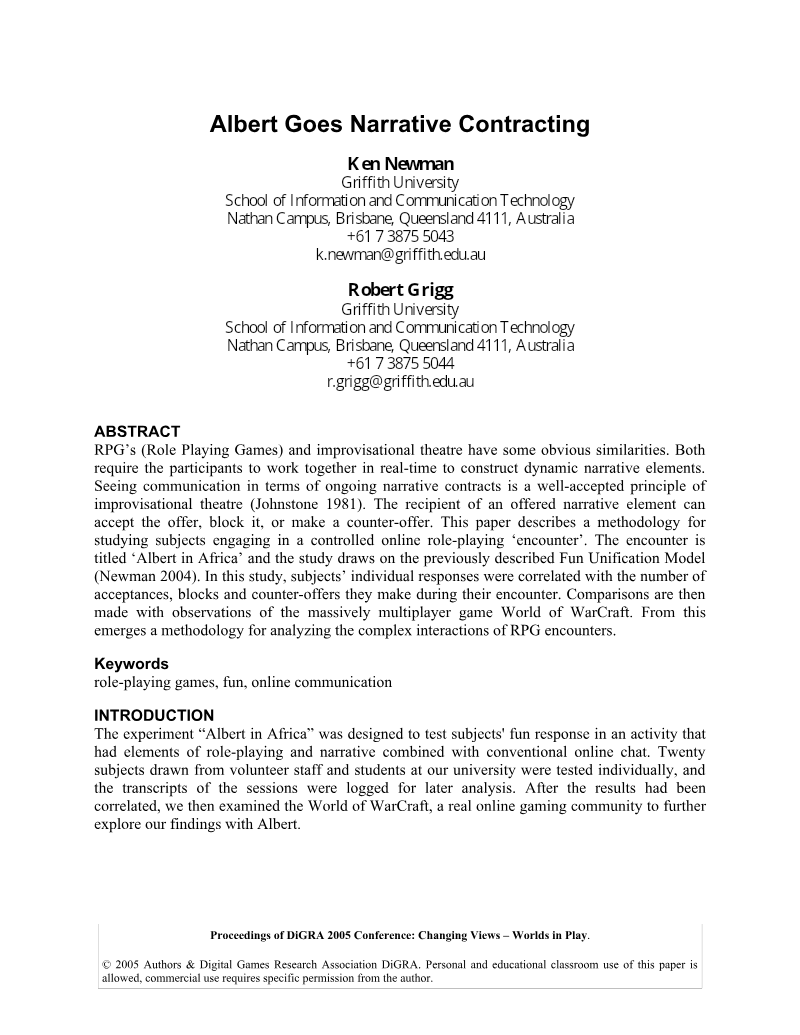
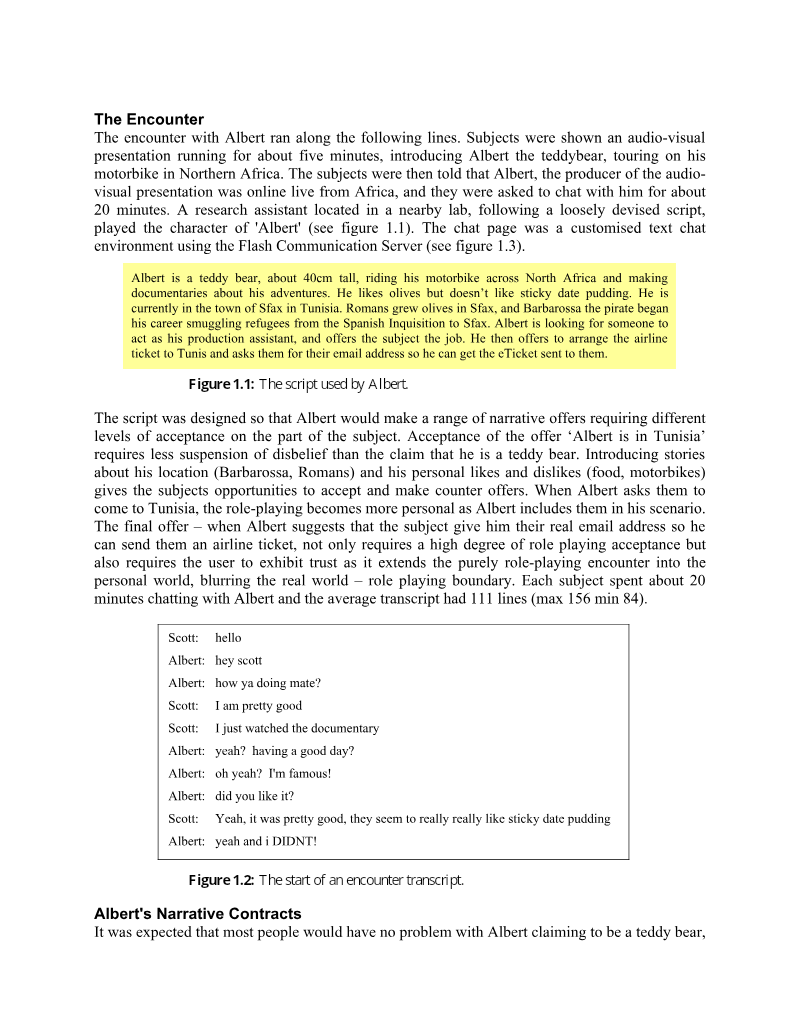
This paper, "Albert Goes Narrative Contracting," proposes a methodology for studying how participants in role-playing encounters negotiate shared fiction, framing each conversational move as a narrative offer that can be accepted, blocked, or met with a counter-offer, a concept drawn from improvisational theatre. Its central thesis is that players enjoy role-playing activities more and are more inclined to return to them when their narrative offers are accepted by others. The authors test this through an online encounter called "Albert in Africa," in which twenty volunteer subjects from a university chatted for about twenty minutes with a scripted teddy bear character who claimed to be a motorbike-riding documentary maker in Tunisia and eventually asked for their email address to send an airline ticket. Subjects' transcripts were coded for acceptances, blocks, and counter-offers and correlated with self-reported measures of fun, drawn from the authors' Fun Unification Model, including temporal dislocation, focused immersion, enjoyment, playfulness, and intention to revisit.
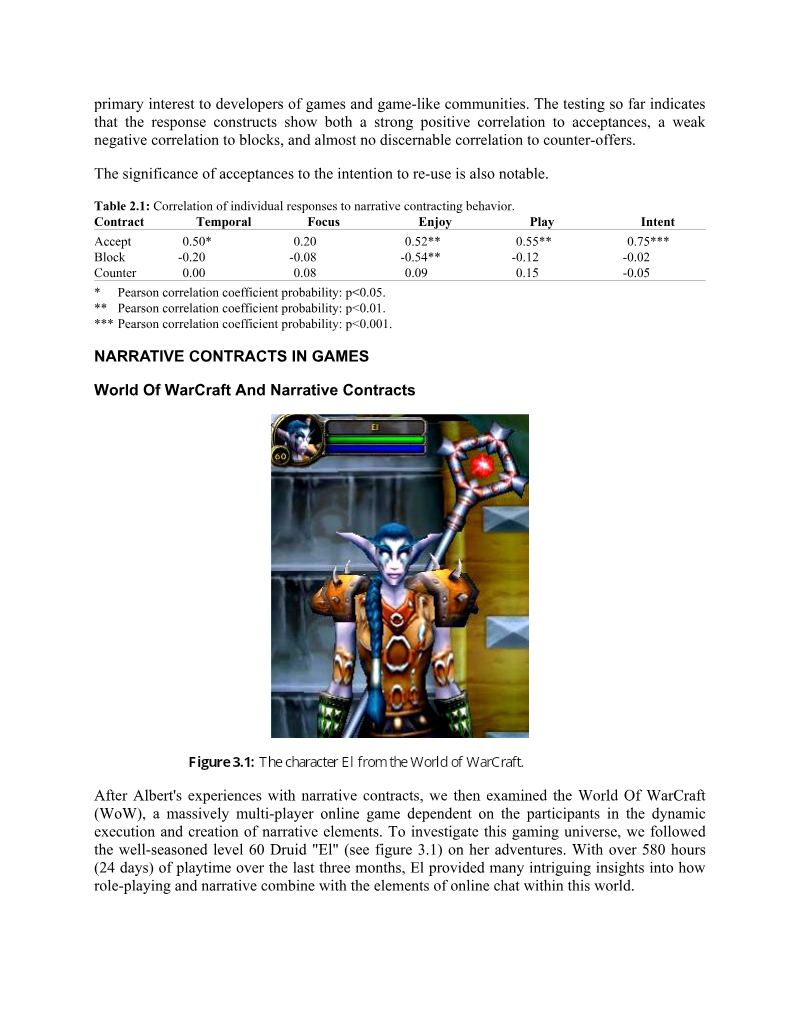
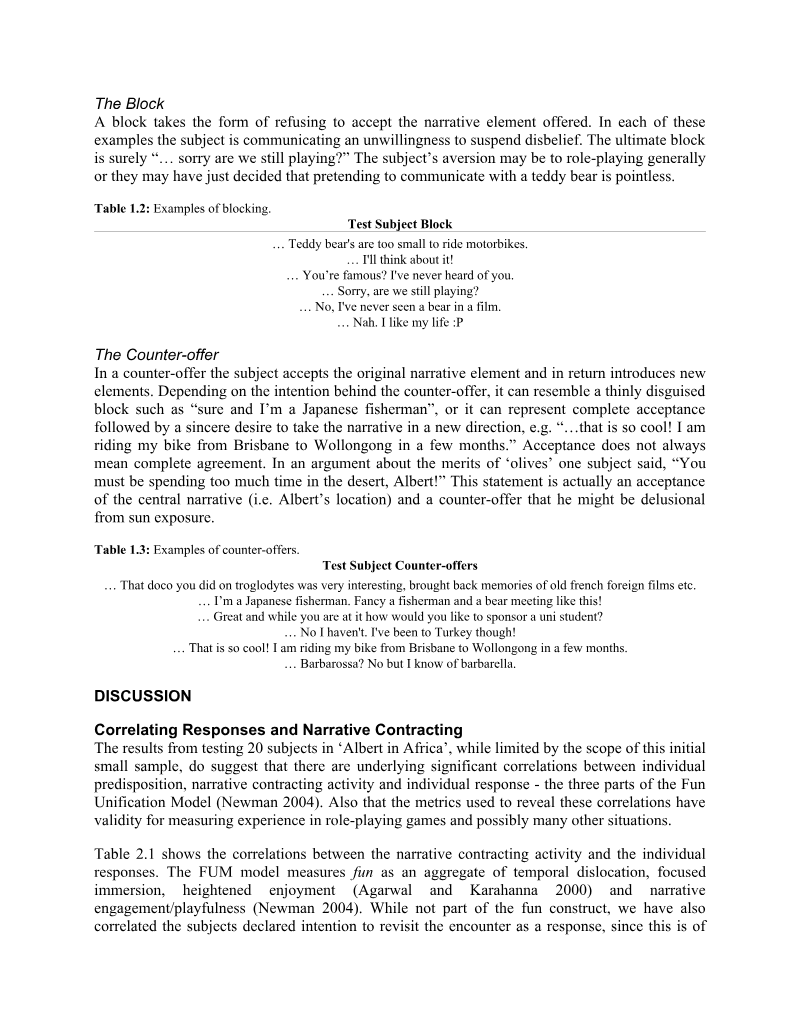
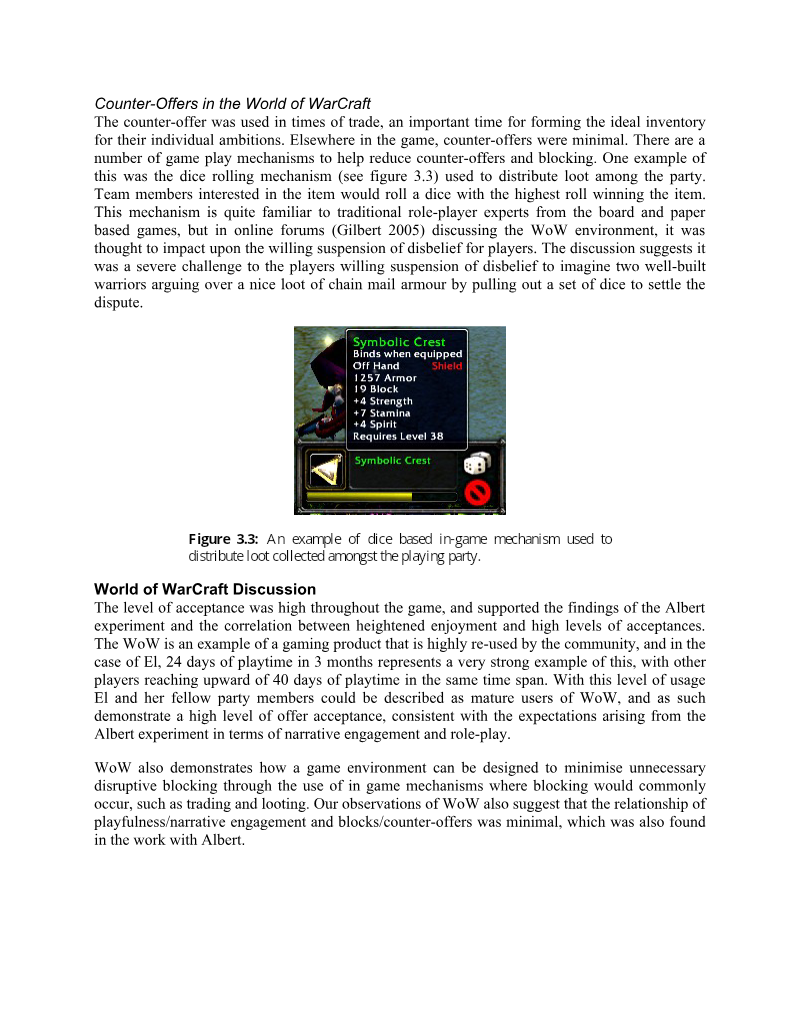
The reported correlations are strongest for acceptances, which show significant positive associations with enjoyment, playfulness, and intent to return, with the strongest relationship to intent (r = 0.75, p<0.001). Blocks show a weak negative correlation with enjoyment and little relationship to other measures, while counter-offers show almost no discernible correlation with any response. The authors then examine a single long-term player's experience in the massively multiplayer game World of WarCraft, observing high acceptance levels that grew as players matured, frequent implicit blocking through ambiguous silence, and in-game mechanisms such as loot dice rolls that reduce friction. The authors are candid that the sample is small and the work mainly demonstrates a methodology, with planned follow-up studies varying environmental complexity.
DiGRA · 2023
DiGRA · 2023
DiGRA · 2023
DiGRA · 2023
DiGRA · 2023
DiGRA · 2023
DiGRA · 2023
DiGRA · 2023
DiGRA · 2023



DiGRA · 2023
DiGRA · 2023
DiGRA · 2023
Game Developers Conference · 2023