1 free read left. Create a free account for unlimited reading + AI research.
Create free accountWhitepaper DiGRA
1 free read left. Create a free account for unlimited reading + AI research.
Create free accountWhitepaperDiGRA
In biofeedback games the player consciously controls physiological responses to influence play. In affective games the system senses uncontrolled emotional reactions and feeds them back into gameplay.
This paper, presented at the DiGRA 2005 conference, examines affective videogames, which use players' physiological signals to modify gameplay in real time. Its central argument is that affective gaming differs from biofeedback gaming: in biofeedback games the player consciously controls physiological responses to influence the game, whereas in affective games the system senses uncontrolled emotional reactions and feeds them back into play, forming an affective feedback loop. The authors ground this distinction in a discussion of biofeedback's therapeutic origins, historical examples such as the Atari MindLink and Konami's Tokimeki Memorial, and conceptual boundaries that they acknowledge often blur in practice.
The authors draw on an in-depth case study of an early prototype built with their Intelligent Gaming System toolkit. A mouse-driven target-acquisition game, modeled loosely on Missile Command, adjusted the number and damage of threats according to the player's heartbeat relative to a resting baseline, aiming to keep engagement within an optimal range. The evaluation involved a small test group of eight participants, aged 21 to 38, and the findings are preliminary. Players reported an enjoyable experience, but experienced gamers responded less physiologically than novices, which the authors link to habituation research and which indicates that individual differences must be compensated for.
Building on this work, the authors propose three high-level design heuristics, collectively termed ACE: assist me, which uses frustration detection to offer hints and relieve stress; challenge me, which dynamically adjusts difficulty based on engagement and arousal rather than fixed difficulty tiers; and emote me, which uses measured emotional states to restore intended emotional effects when players habituate to content. These heuristics are presented as conceptual proposals grounded in limited experience rather than validated outcomes, and the paper's scope is primarily a physiological perspective on the emerging field.
Each row is a game or company this document names, each column a document, oldest first. A mark means that document names it. Select a row to see those documents.
DiGRA · 2022
DiGRA · 2022
DiGRA · 2022
DiGRA · 2022
DiGRA · 2022
DiGRA · 2022
DiGRA · 2022
DiGRA · 2022
DiGRA · 2022

DiGRA · 2022
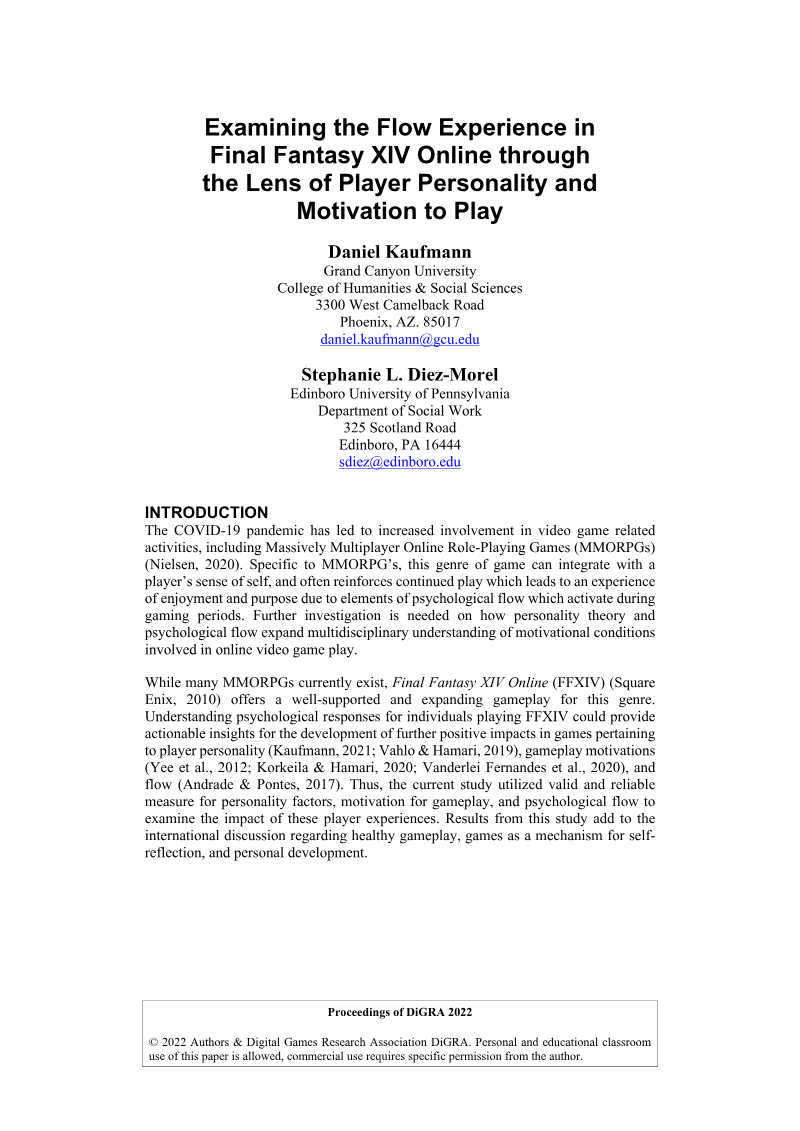
DiGRA · 2022
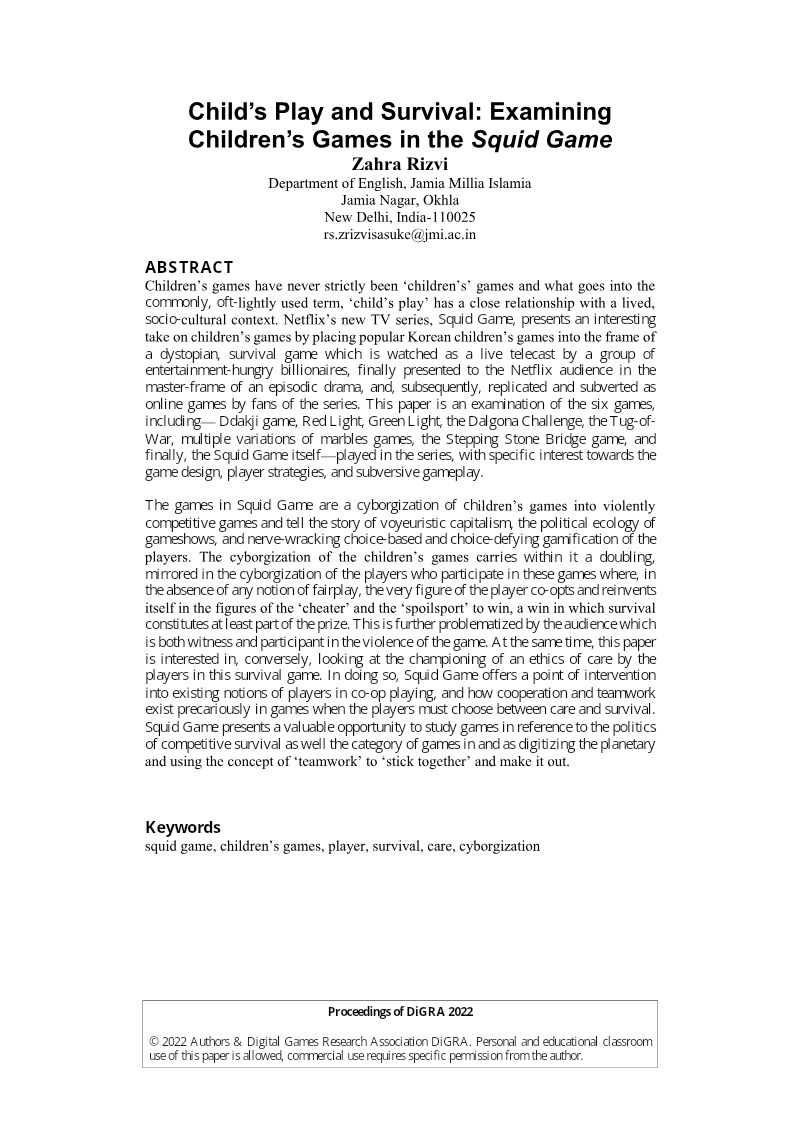
DiGRA · 2022

PocketGamer.biz · 2026