1 free read left. Create a free account for unlimited reading + AI research.
Create free accountWhitepaper DiGRA
1 free read left. Create a free account for unlimited reading + AI research.
Create free accountWhitepaperDiGRA
Aarseth, Smedstad, and Sunnanå propose a multidimensional typology to replace the ad hoc genre labels used by the gaming industry and popular press.
Aarseth, Smedstad, and Sunnanå propose a multidimensional typology for classifying games set in simulated virtual environments, aiming to replace the ad hoc genre labels used by the gaming industry and popular press with a more rigorous analytical framework. Written as a chapter in a volume on game studies, the paper argues that games have been neglected by humanist and aesthetic scholarship, partly because their diversity makes common features hard to identify. The authors respond to earlier classification attempts, which often included overlapping or arbitrary categories and relied on technology labels that date quickly. Their model is biased toward spatial games but can accommodate non-spatial ones by excluding spatial dimensions.
The typology comprises fifteen dimensions grouped under Space, Time, Player-structure, Control, and Rules. Space dimensions include perspective (omni-present versus vagrant), topography (geometrical versus topological), and environment (dynamic versus static). Time dimensions cover pace (realtime versus turnbased), representation (mimetic versus arbitrary), and teleology (finite versus infinite). Player-structure combines adversary and team configurations into six categories, while control dimensions address savability, mutability, and determinism. Rules are assessed through topological, timebased, and objective-based distinctions. The authors derived these categories through comparative analysis of pairs of similar games, such as Morrowind and Diablo, extracting principles that could then apply broadly.
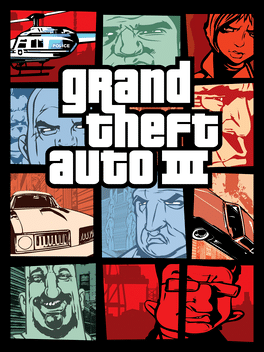
The authors contend that the model can classify any game, allow precise comparison between similar titles, and even predict or construct new games by altering individual dimensions. They acknowledge that the framework is open to revision, as dimensions can be modified, replaced, or added without undermining its underlying logic. The paper illustrates its use through classification diagrams and examples drawn from well-known titles, including Chess, Quake Arena, EverQuest, and Grand Theft Auto III.
DiGRA · 2026
International Journal of Role-Playing · 2026