1 free read left. Create a free account for unlimited reading + AI research.
Create free accountWhitepaper European Conference on Games Based Learning (ECGBL)
1 free read left. Create a free account for unlimited reading + AI research.
Create free accountWhitepaperEuropean Conference on Games Based Learning (ECGBL)
The paper argues that visual decisions hinge on which taxonomic level to depict and where to place the style on a photorealism-to-abstraction spectrum.
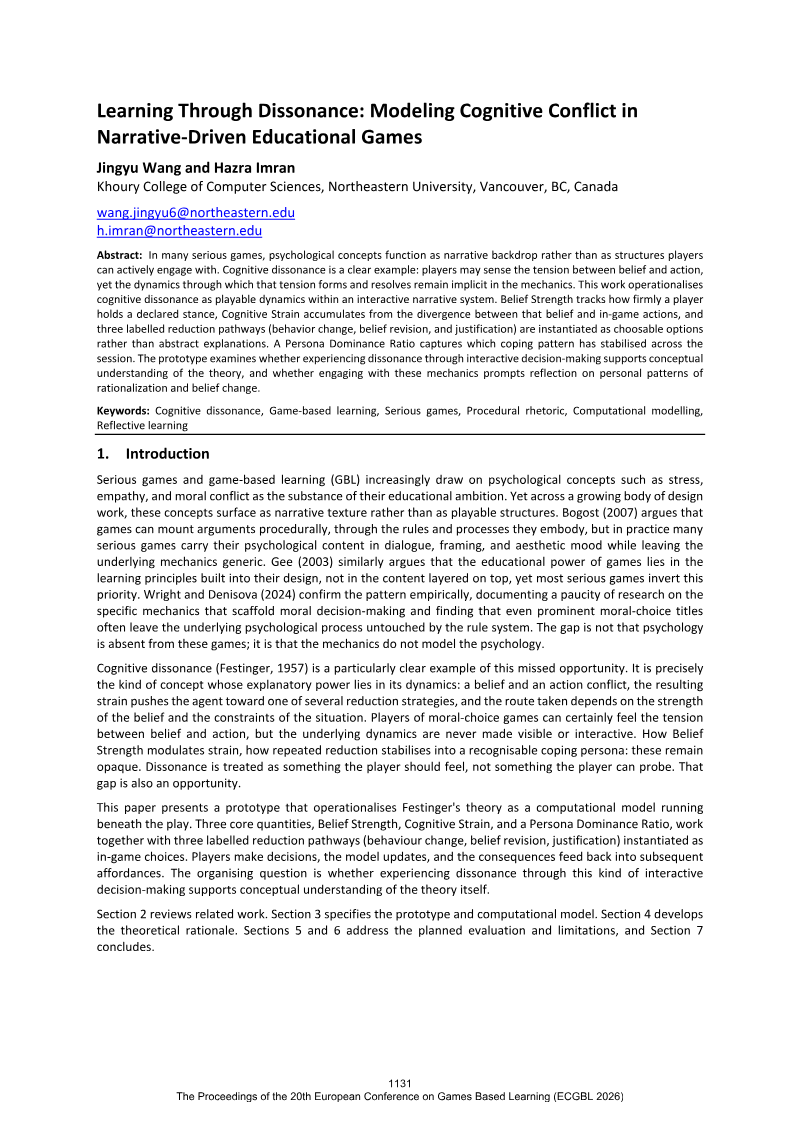
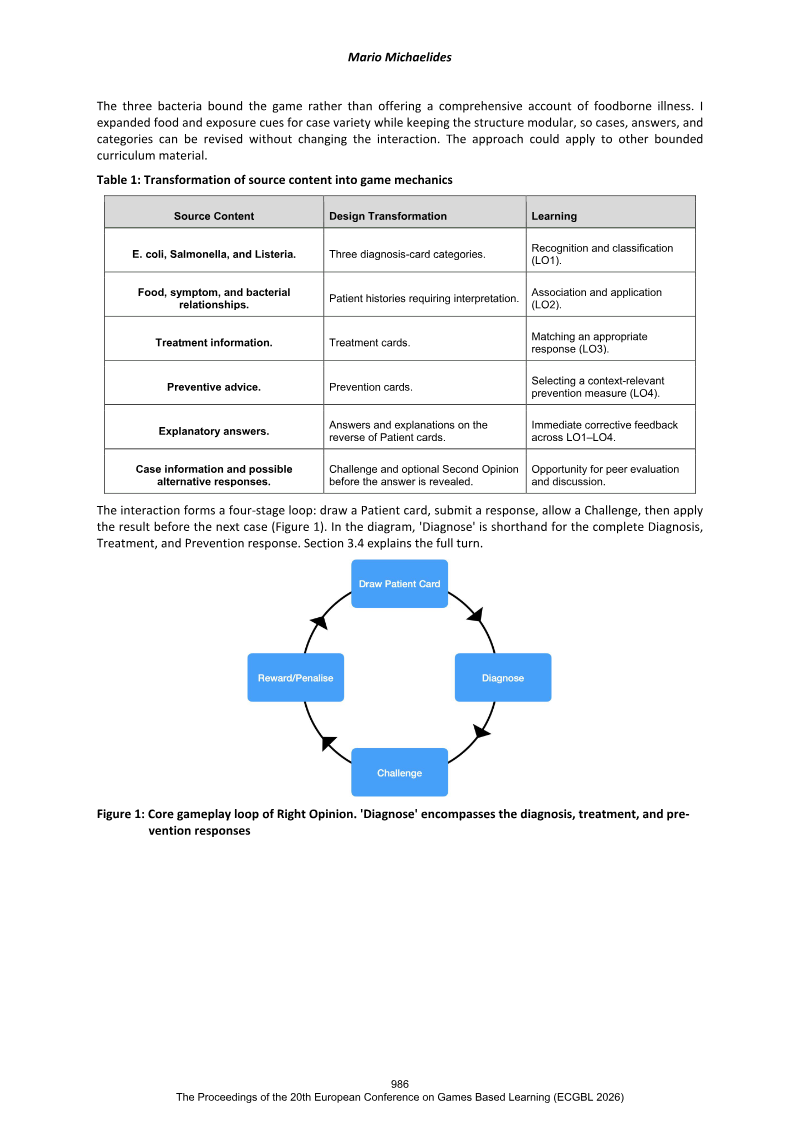
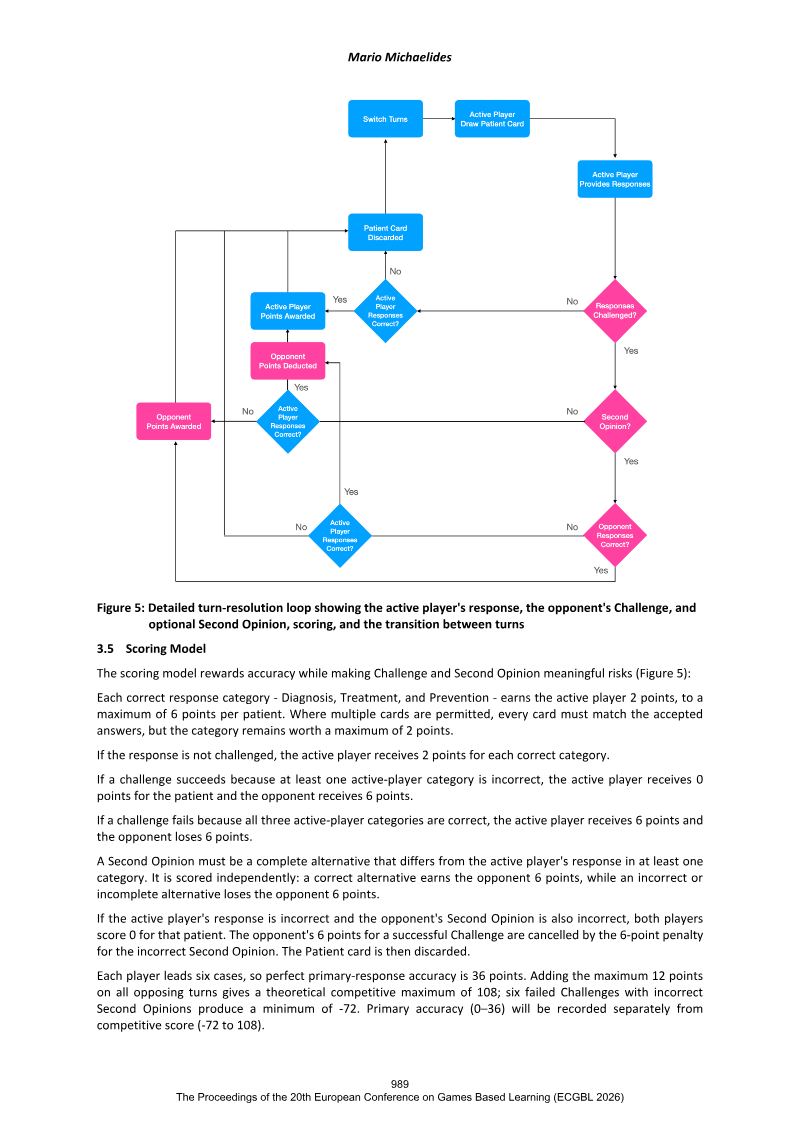
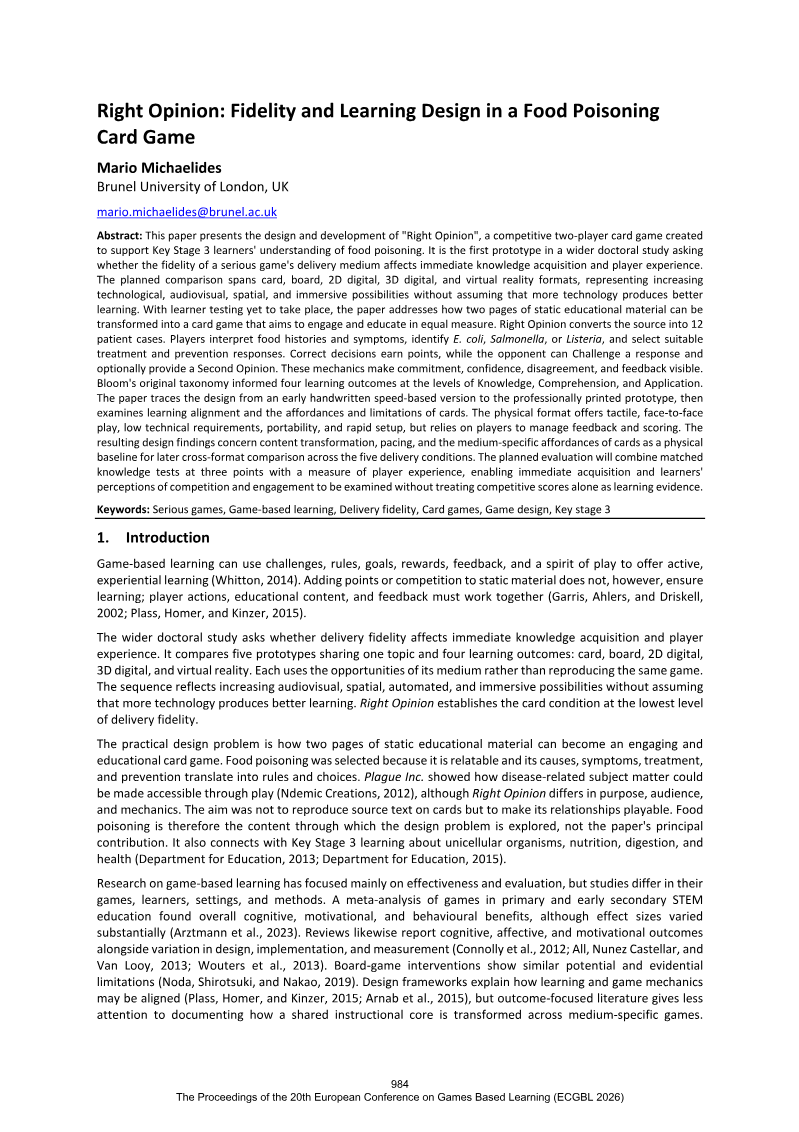
This paper proposes a model for balancing "clarity" (how recognizable a game object is as its real-world counterpart) against "appeal" in the visuals of serious games. Its central argument is that graphic design decisions in serious games rest on two choices: which level of the taxonomic hierarchy (universal versus specific) to depict, and where to position the visual style on a spectrum from photorealism to abstraction. The authors argue that these decisions are shaped by audience characteristics such as age, cultural background, and media habits, as well as by hardware constraints, development budget, and team skills. The work positions this balancing problem as comparable in importance to the well-studied balance between learning and engagement in game mechanics.
The model is illustrated through Happy Heart, a mobile game promoting healthy eating and activity among 13-15-year-olds in Nepal. Drawing on a Knowledge, Attitude, and Practice study, a literature review, and an exploratory study with Nepalese teenagers, the authors chose familiar local food items for specific depiction, used universal representations for categories such as fruit and vegetables, and handled ambiguous items like beer case by case. The exploratory findings favored an abstract style with flat color and hard shading and no outlines, and a cartoon style was adopted given the target platform and budget. The authors also report that a steel plate was replaced with a white porcelain one after contrast problems emerged. The paper is explicitly exploratory, covers only the Nepalese study, and notes that comparative studies with Swedish teenagers are still in progress.



European Conference on Games Based Learning (ECGBL) · 2026



European Conference on Games Based Learning (ECGBL) · 2026



European Conference on Games Based Learning (ECGBL) · 2026



European Conference on Games Based Learning (ECGBL) · 2026



European Conference on Games Based Learning (ECGBL) · 2026



European Conference on Games Based Learning (ECGBL) · 2026



European Conference on Games Based Learning (ECGBL) · 2026



European Conference on Games Based Learning (ECGBL) · 2026



European Conference on Games Based Learning (ECGBL) · 2026



European Conference on Games Based Learning (ECGBL) · 2026



European Conference on Games Based Learning (ECGBL) · 2026



European Conference on Games Based Learning (ECGBL) · 2026
European Conference on Games Based Learning (ECGBL) · 2026
European Conference on Games Based Learning (ECGBL) · 2026



European Conference on Games Based Learning (ECGBL) · 2026