Loading the document
1 free read left. Create a free account for unlimited reading + AI research.
Create free accountArticle GameRefinery
1 free read left. Create a free account for unlimited reading + AI research.
Create free accountArticleGameRefinery
These events provide a necessary break from routine gameplay loops.
Think of it like a special holiday sale that keeps shoppers coming back to a store.
Live events are positioned as a critical retention and monetization tool for free-to-play mobile games, where hundreds of thousands of competing titles make it easy for bored players to churn. This September 2017 GameRefinery blog post by Joel Julkunen, VP of Games, argues that three event-centered features can amplify the impact of live events: exclusive rewards, event versions of familiar characters, and special event currencies.
Exclusive event rewards address two needs: giving players reasons to participate, typically through new content and mechanics announced in advance, and giving them incentives to spend beyond their usual level. Examples include limited-time gachas for exclusive characters in meta-heavy RPGs and ranking-based "bragging badges" in PvP titles. Hearthstone's monthly ranked-season card backs illustrate how collectible, time-limited prizes drive repeat participation.
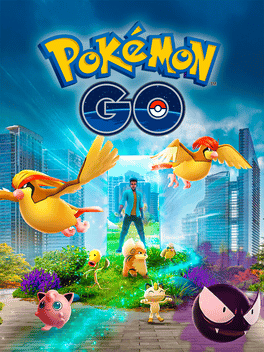
Live event versions of regular in-game characters are treated as a specialized subset of exclusive rewards. The feature appears in roughly 50% of Japan's top-grossing 100 games and has also proven effective in Western markets. It works best in character-collection games, especially those built on strong IPs such as Marvel, Dragonball Z, and Pokémon, as seen with Pokémon GO's Santa Hat Pikachu.
Special event currencies, earned through event activities and required to buy exclusive content, work as an advanced evolution of static point-scoring systems. Because players choose how to spend them, they enable a more dynamic event economy, as in Dragonball Z Dokkan Battle's event gacha tickets.
The post concludes that events must be carefully implemented and balanced, citing AppLovin's Johannes Heinze: events should serve core gameplay without upsetting game balance. The analysis is qualitative, draws on genre examples rather than original survey data, and offers little quantitative evidence beyond the Japanese top-grossing figure.
GameRefinery · 2026