Updated Mar 17, 2026 by ESAC – Entertainment Software Association of Canada
Financial · January 1, 2019
Published by ESAC – Entertainment Software Association of Canada
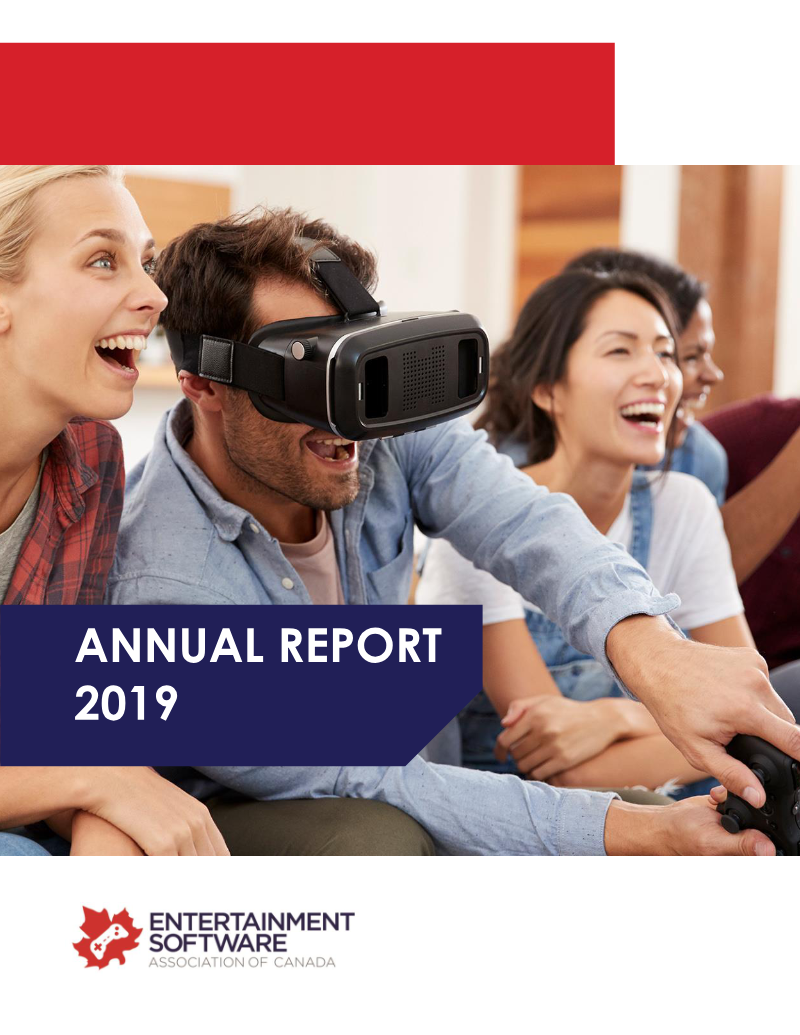
The Entertainment Software Association of Canada (ESAC) positioned its 2019 annual report as a strategic overview of the organization’s role as the national voice for the Canadian video‑game sector, emphasizing a “members‑first” agenda built on six pillars that include regulatory advocacy, tax‑credit preservation, policy engagement, parental‑control promotion, membership growth and public awareness. During the fiscal year, ESAC facilitated a record‑breaking “Video Games on the Hill” event that attracted more than 250 participants, including 25 Members of Parliament, and showcased titles from major publishers such as Ubisoft, Nintendo, EA and Xbox. The association also testified before three parliamentary committees and a provincial commission, reinforcing its stance against heightened regulation while urging favourable economic policies. Internationally, ESAC contributed to the International Video Game Associations Summit in Santa Monica, where representatives from ESA, IGEA, UKIE and other bodies debated loot‑box regulation, e‑sports, WHO’s ICD‑11 gaming‑disorder classification and privacy legislation. Research remains a cornerstone of ESAC’s advocacy. Partnering with the NPD Group, the association confirmed that over 23 million Canadians regularly play video games, a finding leveraged in a nationwide media campaign and in positive coverage across four major newspapers. Public‑relations efforts addressed contentious issues surrounding loot boxes and the ICD‑11 classification, while a bilingual parental‑control video series was launched with Microsoft, Sony and Nintendo to guide families. Membership stability persisted, with the addition of Codename Entertainment and Kabam as new Canadian publishers, and a continued focus on recruiting independent studios and distributors. The report underscores ESAC’s commitment to shaping policy, enhancing industry visibility and supporting the growth of Canada’s vibrant video‑game ecosystem.
TABLE OF CONTENTS Message From The President_________________________________________ 3 OUR MEMBERS – ALWAYS FIRST __________________________________________________ 3 GOVERNMENT RELATIONS ______________________________________________________ 5 COMMITTEE APPEARANCES _____________________________________________________ 6 ENGAGING WITH INTERNATIONAL PARTNERS _____________________________________ 6 ADMINISTRATION_______________________________________________________________ 7 PUBLIC RELATIONS & COMMUNICATIONS ________________________________________ 8 ADVOCACY __________________________________________________________________10 MEMBERSHIP _________________________________________________________________ 11 ABOUT ESAC __________________________________________________________________12
MESSAGE FROM THE PRESIDENT OUR MEMBERS – ALWAYS FIRST What does it mean when we say members first? The Entertainment Software Association of Canada is the voice of Canada’s video game industry. Our primary purpose is to serve our members by acting on their interests and engaging with government nationally and provincially to advocate for policies that support an ecosystem of industry growth. We are also committed to advocating for positions at home and abroad in order to promote public understanding of how our industry contributes to Canada’s economy and serves its consumers. A few years ago, we developed six strategic pillars that outline what ‘members first’ means for the Entertainment Software Association of Canada. 1. We promote positive a regulatory environment 2. We preserve tax credit frameworks 3. We promote our industry to national and provincial policy makers and change makers 4. We promote ESRB ratings, Parental Controls and age appropriate content 5. We seek to build our membership base to strengthen our voice 6. We raise awareness about the industry and ESAC as its voice
frameworks 3. We promote our industry to national and provincial policy makers and change makers 4. We promote ESRB ratings, Parental Controls and age appropriate content 5. We seek to build our membership base to strengthen our voice 6. We raise awareness about the industry and ESAC as its voice We act on our purpose by engaging our stakeholders and developing relationships with government officials across party lines; we also contribute to international policy discussions around issues that may be affecting our industry globally; we conduct environmental scans to keep up-to-date with changes in business and foresee any challenges or opportunities for our industry, and we provide support and advice to our provincial associations on issues at the regional levels.
Our industry has undergone major transformations over the last few years. We are a nexus point for innovation. We are seeing our members adopt AI and blockchain tools to create more realistic and engaging video games. Advances in digital technologies and frameworks have direct impact on how our members develop and deliver best-in-class video games to consumers. This past fiscal, we launched the results of our 2018 research survey – and one of the big take-aways we were more than pleased to highlight was that Canada is truly a nation of gamers. We found that over 23 million Canadians are playing video games. And as a nation of gamers, we are wellpositioned to promote the benefits of video games and video game technology at home and abroad. Over the past fiscal year, the Entertainment Software Association of Canada has undertaken a series of activities aligned with our strategic pillars to support our purpose and promote the benefits of video game play. In this year’s Annual Report, you’ll see an overview of our activities for fiscal 2019. I am proud of our progress and I am looking forward to building on our successes and continuing to promote the benefits of our industry next fiscal. Jayson Hilchie President & CEO
GOVERNMENT RELATIONS PROMOTING POSITIVE POLICY AND REGULATORY ENVIRONMENTS VIDEO GAMES ON THE HILL 2019 Each year, ESAC hosts Video Games on the ofa.Can Hill. We invite our members to showcase their games; our event is sponsored by a Member of Parliament which gives us access to venues on Parliament Hill in the Nation’s Capital. Our showcase is held in concert with a series of lobby meetings where we meet with selected government officials to discuss issues related to our industry. We look to our members to The Honourable Navdeep Bains, Minister of Innovation, Science and support and engage in these discussions as The Honourable Navdeep Bains, Minisfer of Innovafion, Science and The Honourable Navdeep Bains, Minister of Innovation, Science and well. Over the last few years, our event has Economic Development at Video Games on the Hill sharing his ongoing support and interest in Canada’s video game industry. garnered increased interest from Members of Parliament and their staff. This past fiscal, Video Games on the Hill was held in the stunning Sir John A. Macdonald building, and we had a record number of attendees with over 250 participants, including 25 Members of Parliament. ESAC Membership participation included: Ubisoft, Nintendo, Other Ocean, EA, PlayStation, Xbox, Ludia, and Minors – the winner of ESAC’s 2018 Student Video Game Competition.
. Macdonald building, and we had a record number of attendees with over 250 participants, including 25 Members of Parliament. ESAC Membership participation included: Ubisoft, Nintendo, Other Ocean, EA, PlayStation, Xbox, Ludia, and Minors – the winner of ESAC’s 2018 Student Video Game Competition. Sponsored by Member of Parliament (MP) Andy Fillmore, Parliamentary Secretary to the Minister of Canadian Heritage and Multiculturalism, speakers included Jayson Hilchie, President & CEO, ESAC and the Honourable Navdeep Bains, Minister of Innovation, Science and Economic Development. Minister Bains and MP Fillmore were supportive of Canada’s video game industry, highlighting our important contribution to our economy and our consistent leadership in innovation. See Video Games on the Hill 2019 online. Highlights. Xbox Adaptive Controller, racing sleds, Sony VR, Ubisoft’s Assassin’s Creed Odyssey, EA Sports’ NHL 19, Nintendo’s Super Smash Bros., and Square Enix’s Shadow of the Tomb Raider.
The 2019 annual report of the Canadian Entertainment Software Association (ALD) outlines the organization’s role as the principal advocate for Canada’s video‑game sector, emphasizing a strategic focus on member‑first principles, regulatory advocacy, and public perception. Central to its thesis is the conviction that a coordinated, policy‑friendly environment and heightened visibility of the industry’s economic contribution will sustain long‑term growth. Key findings highlight a robust domestic market, with more than 23 million Canadians identified as regular gamers through a 2018 NPD Group survey that captured demographic, console usage and purchasing patterns. The “Jeux vidéo sur la Colline” event drew a record 250 participants, including 25 federal legislators, and featured leading publishers such as Ubisoft, Nintendo, EA and Xbox, underscoring the sector’s political engagement. ALD’s lobbying efforts included testimonies before multiple parliamentary committees and direct dialogue with Minister Navdeep Bains, reinforcing support for tax‑credit frameworks and innovation policies. Internationally, the association participated in the Global Video Game Associations Summit in Santa Monica, addressing issues like loot‑box regulation and the WHO’s inclusion of gaming disorder in ICD‑11. Operational highlights for 2019 include the appointment of a new director of policy and a director of communications, a targeted media campaign that secured coverage in four major Canadian newspapers, and the launch of bilingual parental‑control tutorials in partnership with console manufacturers. Membership remained stable while two prominent publishers, Codename Entertainment and Kabam, joined the association, reflecting continued expansion of the member base. Overall, the report demonstrates ALD’s comprehensive advocacy, research, and outreach activities aimed at strengthening Canada’s video‑game ecosystem during the fiscal year.
The 2024 Annual Report for the Entertainment Software Association of Canada (ESAC) outlines the organization’s strategic achievements in advocacy, regulatory affairs, and industry promotion during a period of significant legislative activity. The primary thesis emphasizes the industry’s resilience and its successful efforts to secure exemptions from restrictive Canadian regulations, specifically the Online Streaming Act and the Online Harms Act. By demonstrating the efficacy of existing self-regulatory tools like the ESRB rating system and parental controls, ESAC successfully argued that video games differ fundamentally from traditional broadcasting and require distinct policy considerations. Geographically focused on Canada with a global collaborative scope, the report highlights the industry’s substantial economic footprint, contributing $5.5 billion to Canada’s GDP. Key data points from the "Power of Play" survey, which sampled 13,000 players across 12 countries, reveal the social and emotional drivers of gaming in Canada. Findings show that 74% of Canadians play for fun, while 76% use games to reduce stress and 63% to lower anxiety. Furthermore, 46% of Canadian respondents engage in online multiplayer experiences, with 66% reporting positive social interactions. The report details ESAC’s expanded influence through the addition of major global members, including Epic Games, Roblox, and Tencent. It also reviews international engagement through the Global Video Game Coalition and the hosting of the Global Video Game Associations Policy Summit in Montreal. While celebrating these successes, the analysis notes ongoing challenges, such as amendments to the Invest in Canada Act that may restrict foreign investment. Methodologically, the report relies on member surveys, economic impact studies, and case studies to advocate for the "transformative power" of games in sectors like education, healthcare, and physical therapy. Financially, ESAC reports a strong position, benefiting from increased membership revenue and a virtual operating model.
The Entertainment Software Association of Canada’s 2022 annual report presents a comprehensive overview of the sector’s health, advocacy work and public‑facing initiatives during a year still shaped by the COVID‑19 pandemic. Central to the narrative is the conclusion that Canada’s video‑game industry not only withstood pandemic‑related disruptions but accelerated its contribution to the national economy, emerging as a “national champion” with global impact. The 2021 economic impact study, conducted by Nordicity, surveyed more than 160 studios—the largest dataset since the study’s inception—and incorporated data from over 150 member companies. Findings reveal an expansion from just under 700 active studios in 2019 to close to 1,000 in 2021, supporting 32,000 full‑time employees and an additional 23,000 indirect jobs. The sector’s contribution to GDP rose to $5.5 billion, the highest level recorded, while more than 80 % of studios employing 100 + staff reported having diversity‑and‑inclusion strategies. Media outreach amplified these results, with a coordinated campaign that generated 194 media hits, reached nearly 39 million impressions, and secured 42 000 bilingual video views amounting to 1 213 hours of watch time. Parallel efforts included a bilingual “My Why” vaccine‑promotion series featuring seven influencers, and the publication of a nationwide e‑waste recycling guide to assist members in meeting provincial obligations. Advocacy activities spanned virtual parliamentary engagements with senior policy officials, ongoing dialogue on immigration, skills development and digital‑learning curricula, and participation in think‑tank panels. Collectively, these actions underscore the association’s role in shaping a favorable regulatory environment, fostering industry growth, and highlighting the social benefits of gaming across Canada.
The 2023 annual review underscores a year of extraordinary expansion for Canada’s video‑game industry, positioning the nation as a pre‑eminent global hub for development talent and creative output. Canadian studios not only captured a record share of international awards and critical praise, but also deepened export revenues, reinforcing the sector’s contribution to the broader digital economy. Concurrently, the industry association intensified its advocacy agenda, securing more favourable regulatory frameworks and advancing diversity, equity and inclusion initiatives that aim to broaden participation across the workforce. Financial analysis reveals that the Canadian Entertainment Software Association (ALD) concluded the fiscal year with a substantial surplus, reflecting both robust membership growth and effective cost management. The surplus enabled the organization to maintain flat membership fees for existing constituents while expanding its full‑time staff, thereby enhancing service delivery and policy‑making capacity. This fiscal stability signals confidence among stakeholders and provides a solid foundation for future strategic investments. Geographically, the findings pertain to the Canadian market, encompassing all provinces and territories, and cover the calendar year 2023. The scope spans development studios, publishing entities, and ancillary service providers within the interactive entertainment ecosystem, as well as the association’s governance and advocacy functions. Overall, the data illustrate a thriving, financially sound industry that is both internationally competitive and increasingly inclusive, supported by an association that leverages its surplus to reinforce member value and influence public policy.