1 free read left. Create a free account for unlimited reading + AI research.
Create free accountArticle International Journal of Esports
1 free read left. Create a free account for unlimited reading + AI research.
Create free accountArticleInternational Journal of Esports
The essay points to demanding professional gaming schedules that often involve many hours of sedentary play. It cites a reported average of 5.28 training hours per day among 115 e-athletes.
This essay, the first-place entry in the IJESPORTS Essay Competition 2020, examines the health challenges faced by competitive esports players and the measures stakeholders can take to address them. Written by a student at the University of Portsmouth, it argues that the demanding training schedules of professional gaming, often involving many hours of sedentary play, expose players to physical, psychological, and sleep-related risks comparable in seriousness to those faced by traditional athletes, despite the absence of physical contact.
On the physical front, the essay draws on World Health Organization guidance and a 2002 pilot study of cumulative trauma disorder among young computer users, which reported discomfort in the neck, eyes, and wrists in substantial shares of the sample. It cites a claim that computer vision syndrome affected 90% of people who used computers for more than three hours a day, alongside a reported average of 5.28 training hours daily among 115 e-athletes. Psychological risks are examined through a 2018 study of 7,200 Korean adolescents, which found depression as a common comorbidity of internet gaming disorder, and a neuroimaging study showing differences in grey matter volume between professional and non-professional players. Sleep deprivation, linked to caffeine use and disrupted attention and memory, is addressed largely through analogy to rugby players, as the essay acknowledges limited direct research on esports athletes.
The author proposes practical interventions, including ergonomic workstation adjustments, the 20-20-20 eye rule, limits on blue light before sleep, step-count targets, dietary counselling, and routine screening for addiction and mood disorders. The essay concludes that e-athletes, while facing fewer health challenges than traditional athletes, nonetheless require comparable physical and mental support. Its evidence base relies heavily on small or dated studies and extrapolation from other populations, a limitation that the essay itself partly acknowledges.
International Journal of Esports · 2026
International Journal of Esports · 2026
International Journal of Esports · 2026
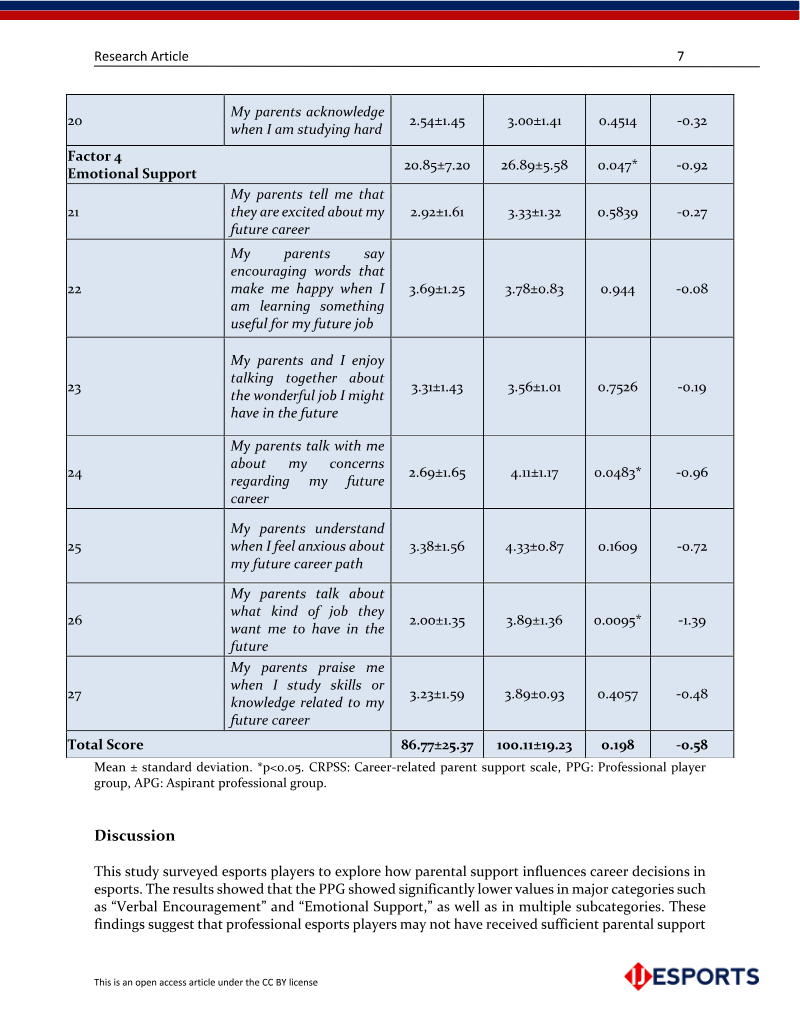
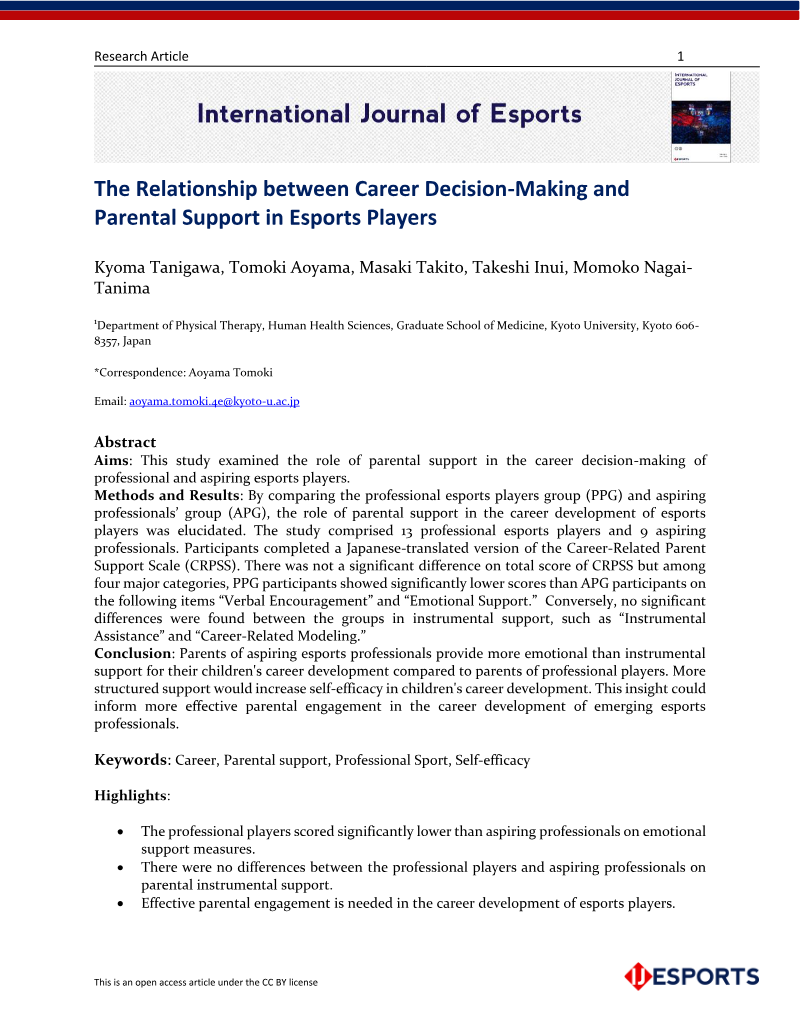
International Journal of Esports · 2026
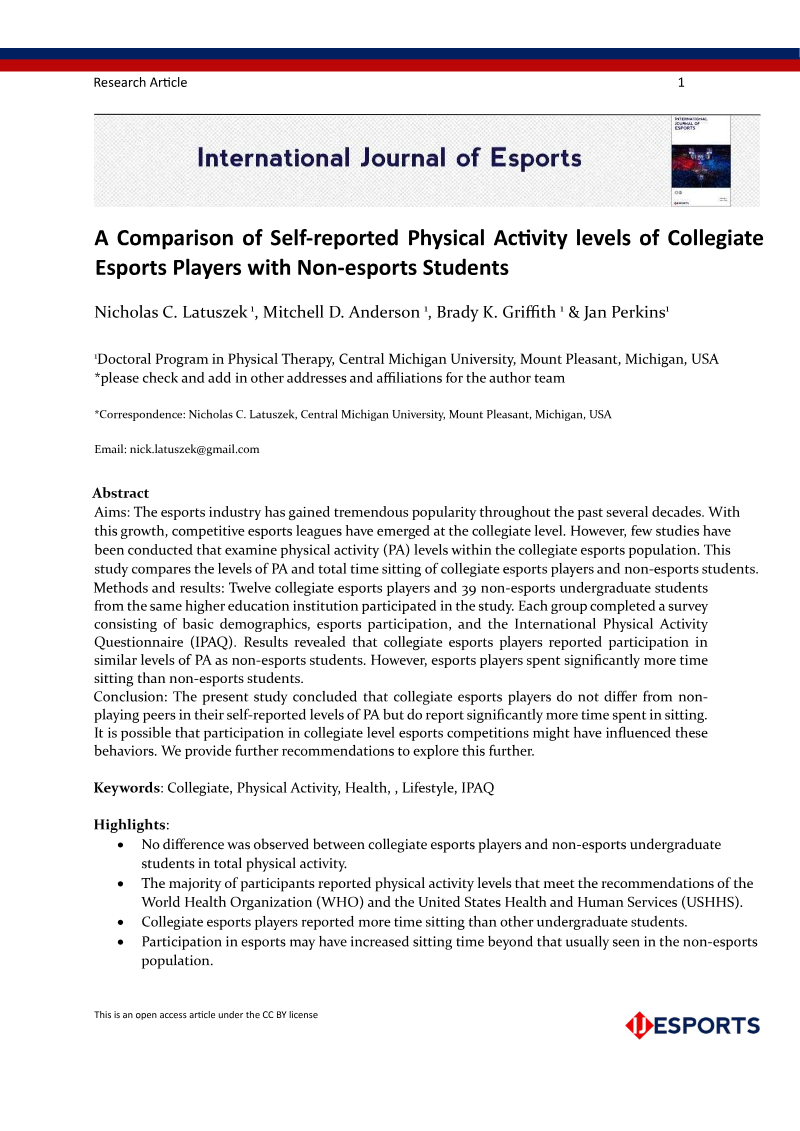
International Journal of Esports · 2026
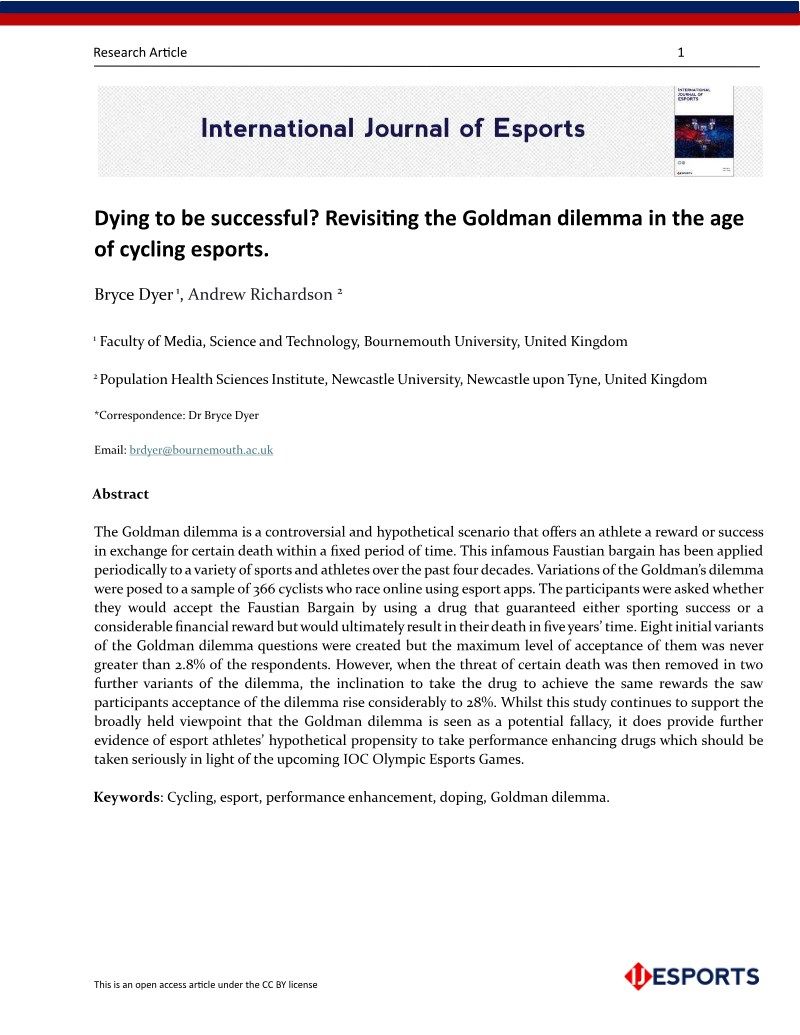
International Journal of Esports · 2026
International Journal of Esports · 2025
International Journal of Esports · 2025
International Journal of Esports · 2025
International Journal of Esports · 2025
International Journal of Esports · 2025
International Journal of Esports · 2025
Game Developers Conference · 2021