Monetization & Live Ops
Revenue models, in-game economies, retention and live operations.
282 documents

data.ai · 2018
ReportThe Data Behind 10 Years of Google Play (2018)
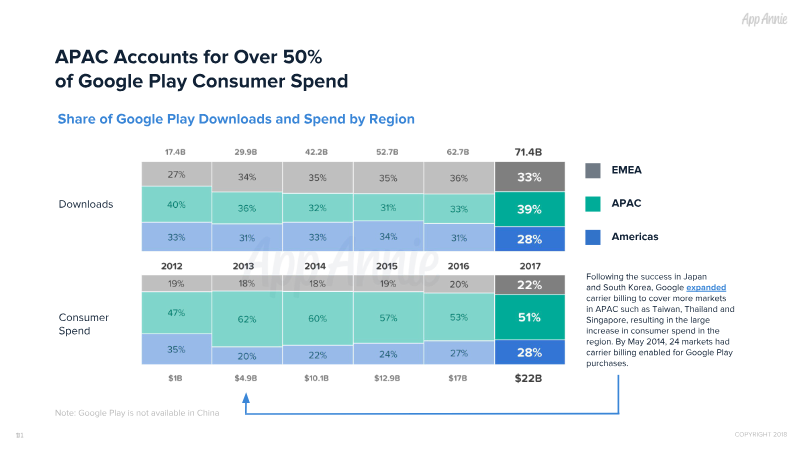
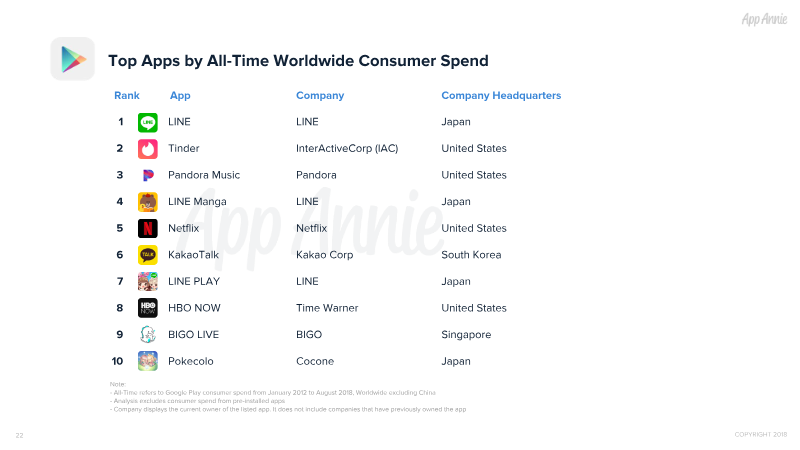
This analysis examines the growth and performance of the Google Play Store over a nearly seven-year period, spanning from January 2012 to August 2018. Utilizing data from the App Annie platform, the findings track the evolution of the Android ecosystem from its early stages to a mature marketplace featuring over 2.8 million available apps. During this timeframe, the platform recorded nearly 330 billion total downloads and generated over $85 billion in consumer spend, with more than 5,000 individual apps surpassing the $1 million revenue milestone. Geographic trends reveal a significant divide between volume and value. India leads the world in total downloads at 36.9 billion, followed closely by the United States and Brazil. However, Japan emerges as the most lucrative market, contributing $25.1 billion in consumer spend, significantly outpacing the United States and South Korea. The data highlights a shift in monetization strategies, particularly the 2017 transition toward in-app subscriptions. This change, supported by a reduction in Google’s transaction fees for long-term subscribers, resulted in a 55% growth in spend for non-gaming apps between 2016 and 2017. The competitive landscape is dominated by major social media and gaming entities. Facebook-owned properties occupy the top four spots for all-time downloads, while LINE and Tinder lead in non-gaming consumer spend. In the gaming sector, Subway Surfers is the most downloaded title, but GungHo Online’s Puzzle & Dragons and Mixi’s Monster Strike lead in total revenue. Looking forward, the analysis projects continued aggressive growth, estimating that annual consumer spend on Google Play will reach $42 billion by 2022, a 90% increase from 2017 levels.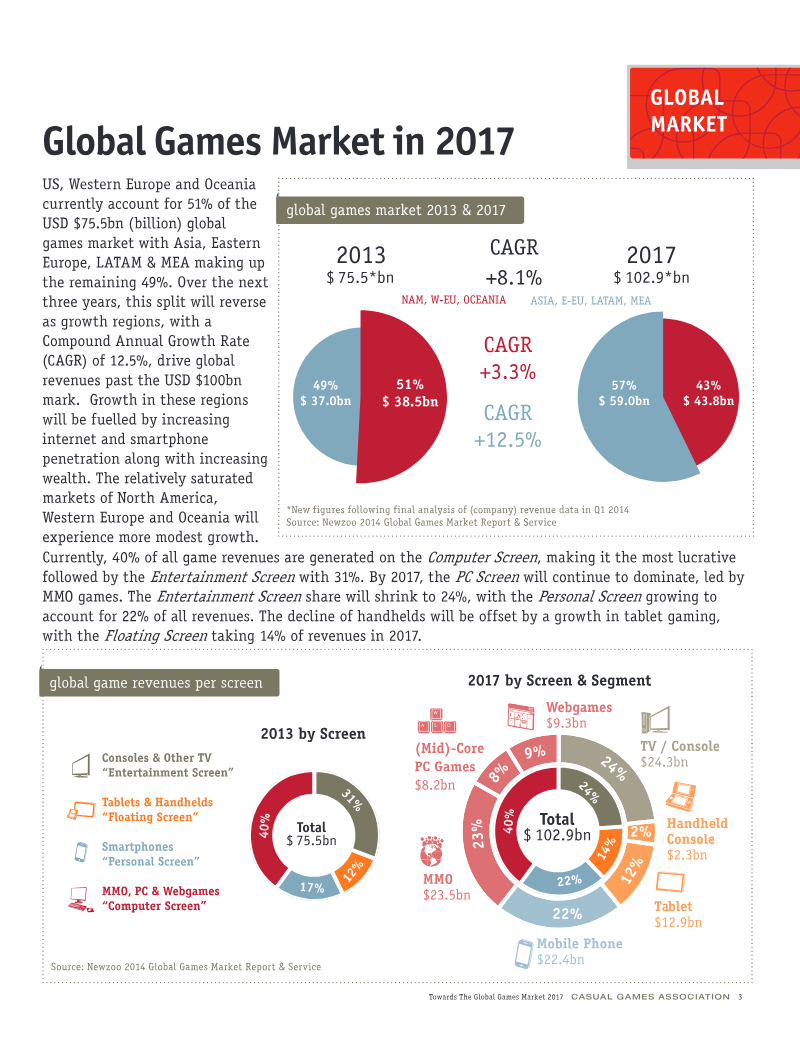
Newzoo · 2017
ReportCasual Games Sector Report: 2017
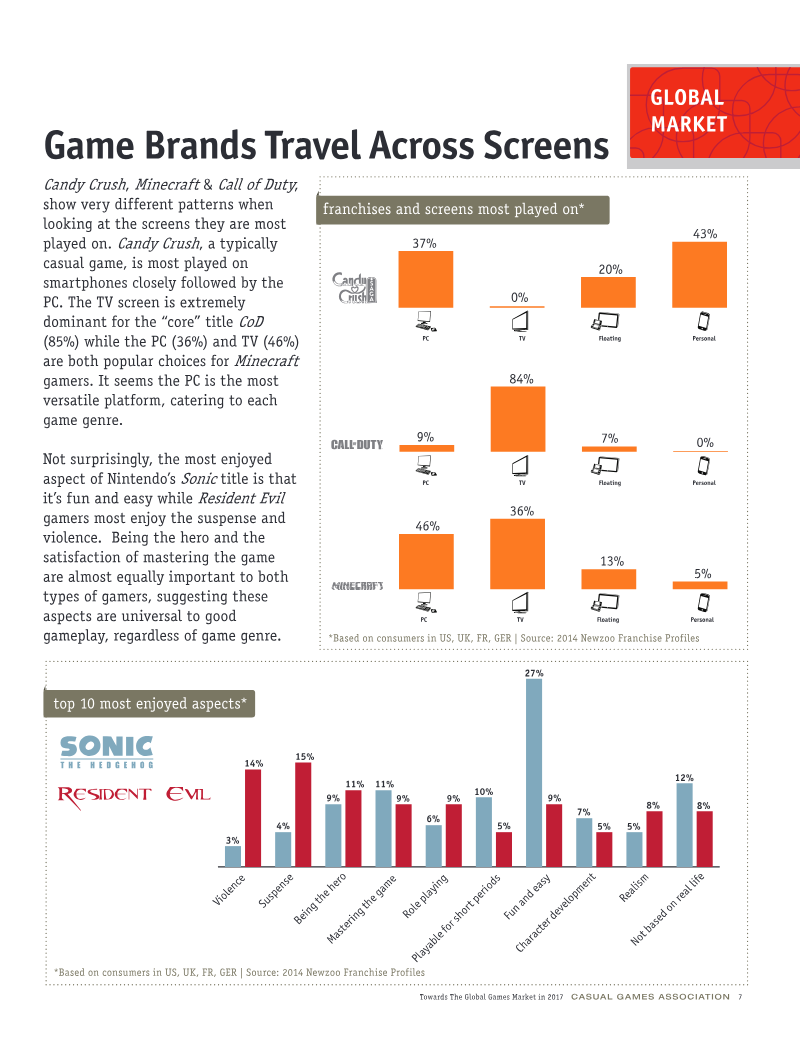
The global games market is undergoing a period of rapid expansion and structural transformation, with total revenues projected to exceed $100 billion by 2017. This growth is driven by the globalization of business models, such as free-to-play, and the increasing ubiquity of mobile devices. While mature markets in North America, Western Europe, and Oceania currently account for 51% of global revenue, emerging regions—including Asia, Eastern Europe, Latin America, and the Middle East—are expected to drive a compound annual growth rate of 12.5% over the forecast period, eventually shifting the majority of market share toward these developing territories. Mobile gaming serves as a primary catalyst for this expansion, with smartphone and tablet usage becoming essential for global consumers. By 2017, mobile gaming is expected to capture 34% of the total market, up from 23% in 2013. Simultaneously, the industry is evolving as games transition into broader entertainment brands that span multiple media platforms. This cross-media presence, supported by the rise of eSports and digital content consumption, allows developers to increase engagement and monetize non-paying users more effectively. China represents a significant focal point for industry growth, with revenues quadrupling between 2008 and 2013. Despite challenges related to piracy and strict censorship, the Chinese market is characterized by a robust mobile app ecosystem and high engagement with both domestic and foreign titles. Success for international companies in this region increasingly depends on local partnerships, effective localization, and the integration of in-game monetization models. The analysis relies on a combination of primary consumer research, transactional data, and financial analysis to provide a comprehensive view of these shifting global dynamics.


Newzoo · 2017
ReportGlobal Esports Market Report: 2017
The 2017 Global Esports Market Report provides a comprehensive analysis of the esports industry’s transition into a mainstream global business. The primary thesis posits that esports is accelerating the convergence of gaming, media, and traditional sports, driven by significant investments from non-endemic brands and major media conglomerates. The report identifies this convergence as a strategic necessity for media companies seeking to engage digital natives and Millennials, as well as for traditional sports leagues looking to revitalize an aging fan base. Key financial findings indicate that the global esports economy reached $696 million in 2017, representing a 41.3% year-on-year growth. Sponsorship remains the largest revenue stream at $266.3 million, while media rights are identified as the fastest-growing segment, projected to reach $340 million by 2020. The report forecasts total market revenues to hit $1.488 billion by 2020, with a compound annual growth rate of 35.6%. Audience metrics show a global reach of 385.5 million viewers in 2017, consisting of 191 million dedicated enthusiasts and 194 million occasional viewers. The scope of the analysis covers global markets across 10 subregions, utilizing a proprietary forecasting model that integrates primary consumer research from 27 countries, census data, and engagement metrics from streaming platforms and event organizers. The methodology distinguishes between "Esports Enthusiasts"—defined as frequent viewers and active participants—and occasional viewers, while excluding revenues from betting, fantasy leagues, and in-game transactions to maintain a focus on the professionalized esports economy. The report concludes that while esports is currently not a profitable venture for most game publishers, their continued investment is justified by the positive impact on game engagement and the long-term potential of esports as a standalone business. The integration of traditional sports clubs into the ecosystem, particularly through FIFA-branded leagues, further validates the industry's shift toward mainstream acceptance and professionalized competition.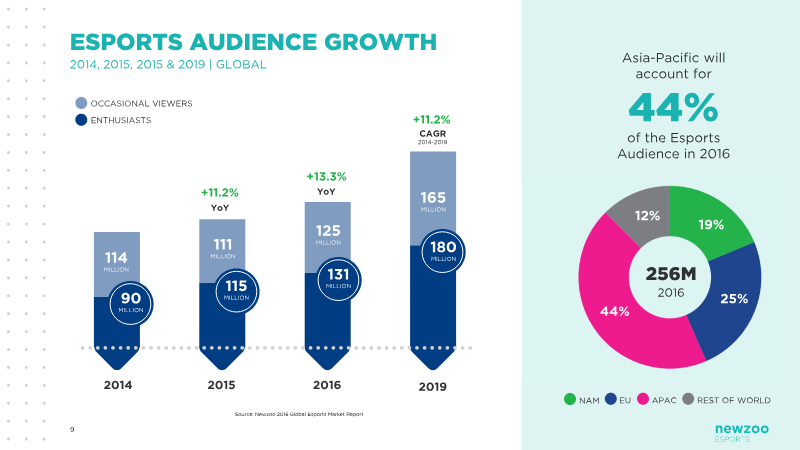

Newzoo · 2016
Report2016 Global Esports Market Report: An Overview of the Esports Market & Its Valuable Audience
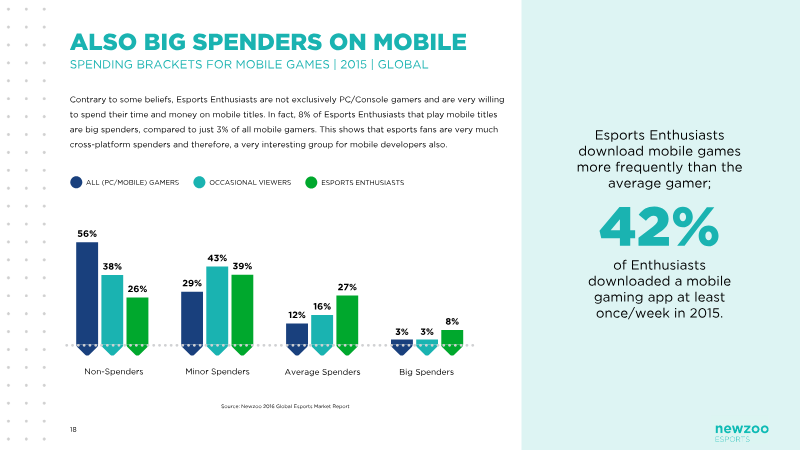
The 2016 Global Esports Market Report provides a comprehensive analysis of the burgeoning esports economy, identifying it as a transformative force in the video game industry. The primary thesis posits that esports is shifting gaming from a personal activity to a spectator sport, creating significant monetization opportunities for publishers, brands, and media companies. By evolving games into entertainment brands, the industry is successfully engaging a highly valuable, difficult-to-reach demographic that traditional media increasingly fails to capture. Key findings highlight rapid financial and audience growth. The global esports economy reached $325 million in 2015, with projections indicating continued acceleration. The total esports audience is expanding, driven by a 13.3% year-over-year increase in enthusiasts. Revenue per enthusiast is also rising, climbing from $2.20 in 2014 toward a projected $6.00 by 2019. This growth is supported by a surge in non-endemic brand sponsorships and increased investment from media rights, merchandise, and ticket sales. The report covers a global scope, with specific data points across North America, Europe, Asia-Pacific, and other regions. The methodology relies on a multi-layered approach, integrating complex databases, predictive modeling, and result validation through primary consumer research across 26 countries. By profiling esports awareness and engagement across 100+ variables, the analysis characterizes the audience as high-earning, tech-savvy, and more likely to spend on digital subscriptions, mobile gaming, and hardware than the general online population. Ultimately, the findings suggest that the esports market is maturing into a sustainable, high-value ecosystem that demands a specialized marketing approach distinct from traditional gaming audiences.

Entertainment Software Association · 2013
ReportEssential Facts About the Computer and Video Game Industry: 2013
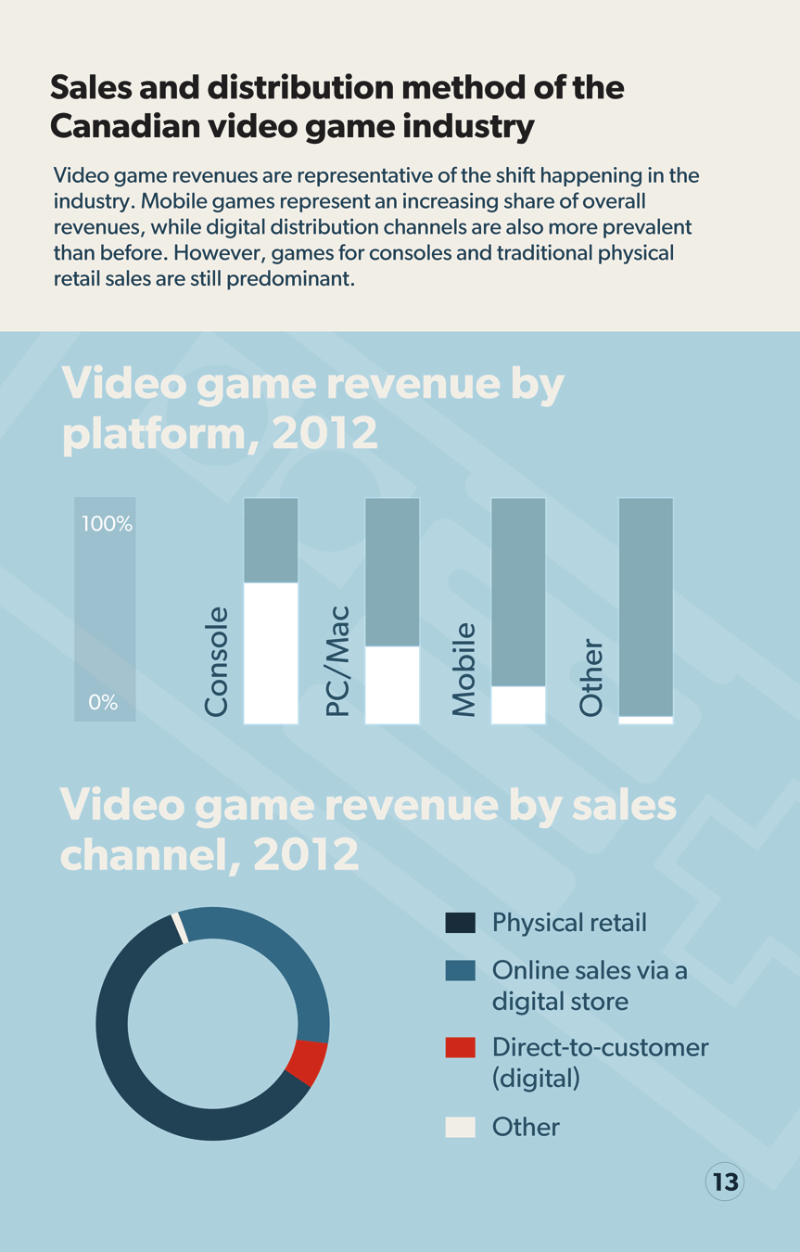
The computer and video game industry in the United States demonstrated significant economic strength in 2013, generating a total revenue of $21.53 billion. This financial performance underscores the sector's role as a major contributor to the national economy, driven by robust consumer demand for interactive entertainment across various platforms and delivery methods. Consumer spending on game content accounted for $15.39 billion of the total industry revenue. A notable shift in purchasing behavior is evident in the 11 percent year-over-year growth of digital format sales. This trend highlights a transition toward digital distribution models, reflecting evolving consumer preferences for immediate access to content over traditional physical media. These findings provide a snapshot of the domestic gaming market during the 2013 calendar year, focusing specifically on revenue generation and sales distribution. By tracking the growth of digital formats alongside total content expenditure, the data illustrates a maturing market that is increasingly reliant on digital infrastructure to sustain its financial trajectory. The industry maintains a strong foothold in the entertainment sector, characterized by consistent revenue streams and a clear movement toward digital-first consumption patterns.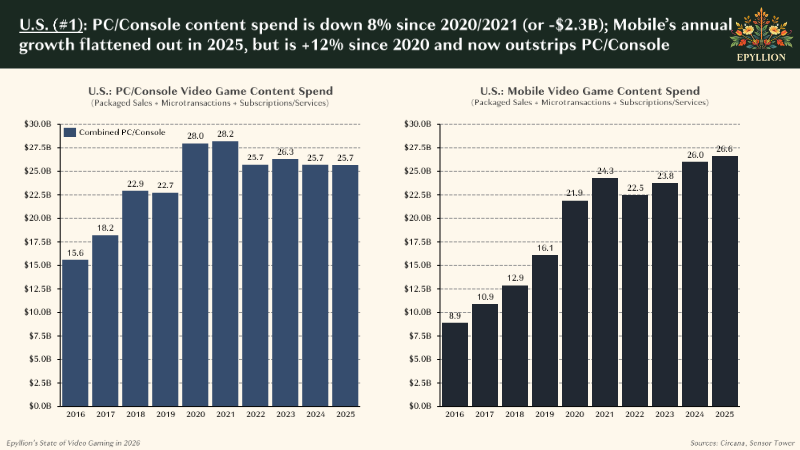

Epyllion
ReportThe State of Video Gaming in 2026: Growth and Where to Find It
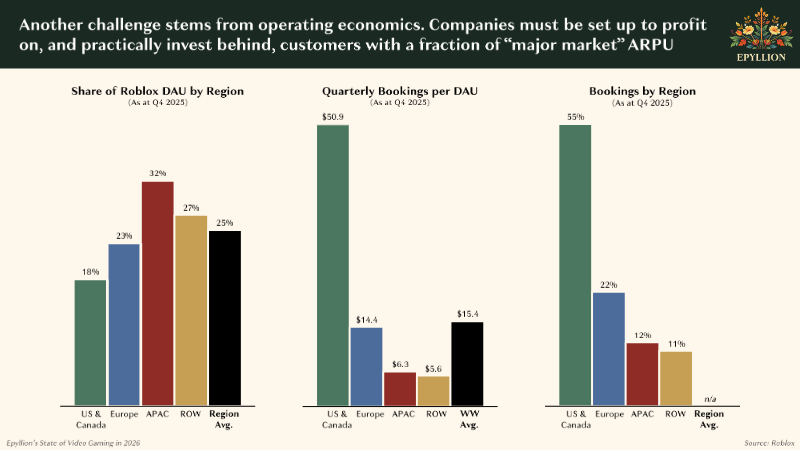
The global video game industry in 2026 stands at a critical juncture, characterized by record-high consumer spending that masks deep structural instability. While top-line revenue has reached new peaks, operating income for major publishers remains stagnant, hampered by a 55% decline in private funding and the cumulative impact of 44,000 layoffs. The industry is no longer a monolithic growth engine; instead, it is experiencing a sharp bifurcation where traditional console and PC markets in Western regions face declining participation and intense competition from alternative digital sectors like iGaming, social media, and AI-driven applications. Growth is increasingly concentrated, driven not by broad market expansion but by a small number of dominant franchises and aggressive monetization of a shrinking player base. Chinese developers and platforms like Roblox have become the primary engines of global expansion, capturing roughly half of all industry growth since 2021. As user acquisition costs rise and engagement plateaus in mature markets, publishers are pivoting toward emerging economies in Southeast Asia, Latin America, and the broader APAC region. These markets, which have seen a 41% surge in value since 2022, now dictate a shift toward low-end device optimization and culturally specific content over traditional Western-centric design models. To preserve margins amidst rising costs, the industry is undergoing a fundamental operational transformation. Publishers are increasingly bypassing platform fees through direct-to-consumer billing and webshops, while simultaneously relying on outsourcing for 35% of development tasks to maintain flexibility. Furthermore, the integration of ad-supported models across all platforms signals a move to monetize non-spending users as a core strategy. Ultimately, the industry’s future depends on its ability to adapt to these fragmented, high-scale emerging markets and the adoption of leaner, more efficient development and monetization frameworks that prioritize long-term engagement over the diminishing returns of legacy business models.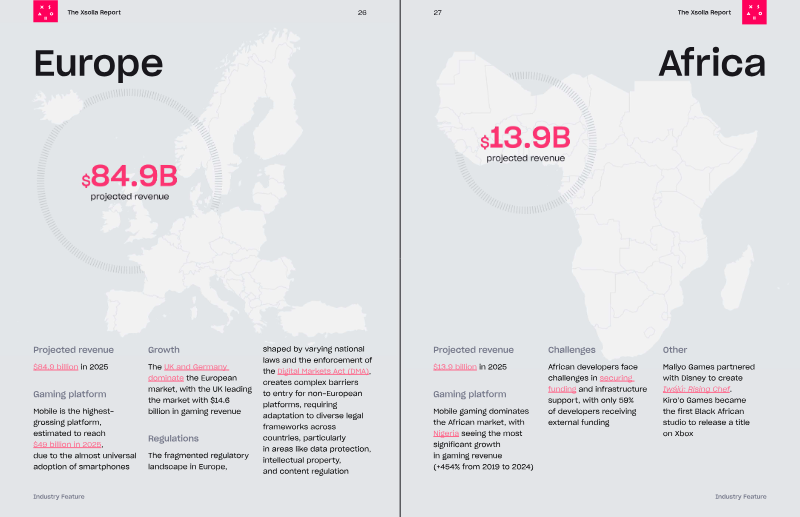

Xsolla
ReportThe Xsolla Report: State of Play – Q1 2025
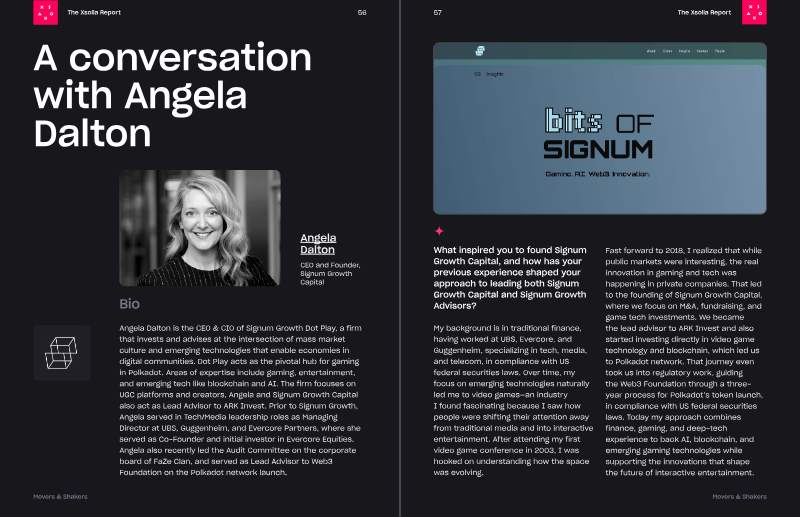
The global gaming industry is entering a period of sustained expansion, with total revenue projected to reach $522 billion by 2025 and a forecasted annual growth rate of 7.25% through 2029. This growth is underpinned by the maturation of the mobile sector and a robust rebound in PC and console software. As the market evolves, developers are increasingly prioritizing direct-to-consumer strategies and web-based storefronts to circumvent traditional platform fees, improve profit margins, and foster deeper, more personalized relationships with their player bases. A fundamental transformation is occurring in how content is produced and consumed, driven largely by Gen Z and Gen Alpha. These cohorts are shifting the industry paradigm from passive consumption to active participation through user-generated content and in-game development tools. This transition toward player-driven ecosystems is supported by the integration of advanced data analytics, artificial intelligence, and blockchain technology, which collectively enhance digital authenticity and operational transparency. Furthermore, regulatory shifts allowing for alternative app stores and hybrid billing models are providing studios with the flexibility to diversify revenue streams and optimize monetization through mobile-specific tools like SDKs and offerwalls. Long-term industry stability relies on the convergence of inclusive design, proactive community engagement, and technical innovation. By adopting hyper-personalized experiences and robust anti-fraud measures, developers are better positioned to navigate rising user acquisition costs and market saturation. Ultimately, the industry is moving toward a more symbiotic model where diverse leadership and player-centric distribution strategies serve as the primary catalysts for innovation, ensuring that developers can effectively capture the attention of digital-native generations while maximizing lifetime player value in an increasingly competitive global landscape.


Sensor Tower
ReportQ3 2015 Data Digest
The Q3 2015 Data Digest provides a comprehensive analysis of the iOS mobile application market, focusing on global and U.S. trends in downloads, revenue, and advertising strategies. The primary objective is to equip developers with actionable marketplace intelligence to optimize growth and monetization. The analysis utilizes proprietary Store Intelligence and Ad Intelligence data, benchmarking performance against top-tier apps to provide a clear comparative landscape of the mobile ecosystem during the third quarter of 2015. Key findings indicate that the gaming category remains the dominant force in the App Store, accounting for the highest volume of downloads and generating revenue more than 20 times greater than the next leading category. While Clash of Clans maintained its lead, Game of War demonstrated significant momentum, narrowing the revenue gap in the U.S. market. The data also highlights a strong correlation between aggressive advertising on the Facebook network and revenue performance, with gaming and lifestyle apps—specifically those from ContextLogic—leveraging high-production image and video advertisements to drive user acquisition. Geographically, the report identifies Japan as a high-value market, contributing a disproportionate number of top-grossing publishers relative to their download volume. Furthermore, the analysis reveals that while iPhone remains the primary driver for total downloads, the iPad serves as a critical platform for high-revenue entertainment and gaming consumption. The industry experienced a rebound in Q3 following a Q2 slump, with the travel category showing the most significant growth. Ultimately, the findings underscore a shift toward sophisticated monetization, particularly within music and gaming apps, which successfully increased revenue despite varying download trends.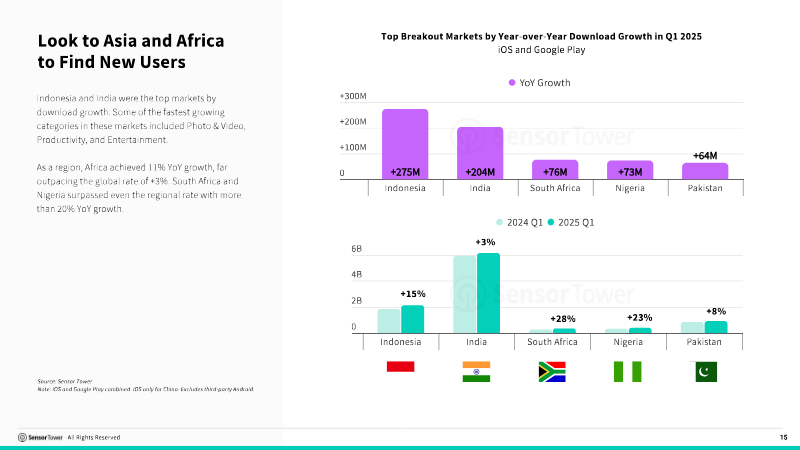
Sensor Tower
ReportDigital Market Index: Q1 2025
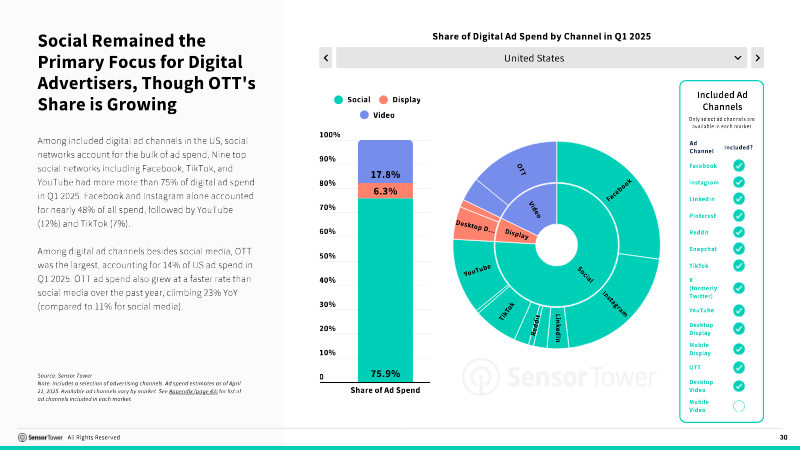
The global digital economy experienced a transformative first quarter in 2025, characterized by a shift in revenue dominance toward non-gaming applications and a strategic pivot in advertising priorities. Total in-app purchase revenue climbed to a record $40 billion, representing an 11% year-over-year increase. While mobile gaming remains a foundational pillar of the digital ecosystem, the sector is currently defined by stability rather than expansion, as established titles continue to outperform new releases. Strategy games have successfully overtaken RPGs as the leading revenue-generating genre, even as overall game downloads experienced a marginal contraction of 2.5%. The advertising landscape, particularly within the United States, reflects a broader realignment of capital toward high-growth sectors. Total digital ad spend reached $31 billion, with social media maintaining its status as the primary channel. However, the composition of this spend has shifted significantly; retail-focused advertising has cooled as major players prioritize international expansion, while financial services experienced a 43% surge driven by tax season activity and renewed interest in cryptocurrency. Simultaneously, the rise of generative AI continues to act as a primary catalyst for growth in productivity and creative application downloads. Retail media has solidified its role as a critical marketing infrastructure, with impressions rising 31% year-over-year. Platforms such as Walmart and Chewy have emerged as leaders in this space, with the food and beverage sector proving particularly effective at leveraging co-branded advertising. As the industry moves further into 2025, the data suggests a maturing market where growth is increasingly driven by specialized financial services, the integration of generative AI, and the strategic optimization of existing, high-performing digital assets rather than reliance on new user acquisition.

App Annie
ReportState of Mobile 2022: Germany
The German mobile landscape experienced a transformative period in 2021, characterized by a fundamental shift toward mobile-first engagement across nearly all facets of daily life. Daily time spent on mobile devices surged by 30 percent to reach 3.4 hours, while consumer spending grew by 72 percent over a two-year window. This expansion reflects a broader global trend where mobile has solidified its position as the primary channel for digital advertising and consumer interaction, supported by a global mobile ad market that reached $295 billion. The gaming sector remains a primary economic driver, generating $2.8 billion in consumer spend within Germany, fueled by the popularity of hypercasual titles and high-performing global hits. Beyond entertainment, the financial sector is undergoing a significant demographic shift as younger users increasingly bypass traditional retail banking in favor of neobanks and cryptocurrency platforms. This preference for specialized, mobile-first experiences extends to the retail and food sectors, where shopping app usage rose by 20 percent and food delivery sessions increased by 37 percent, bolstered by the rapid emergence of hyper-fast grocery delivery services. Post-pandemic behavioral shifts have further diversified the mobile ecosystem. While health and fitness app downloads have stabilized, engagement remains robust, with distinct preferences emerging between younger users focused on mental wellness and older cohorts prioritizing physical activity tracking. Simultaneously, the travel sector has staged a strong recovery, with download volumes exceeding 2019 pre-pandemic levels by late 2021. Other sectors, including dating, sports, and utility-based medical applications, also recorded substantial growth, underscoring a comprehensive integration of mobile technology into the German consumer experience. These findings illustrate a mature, high-growth market that continues to prioritize convenience, specialized utility, and digital-first service delivery.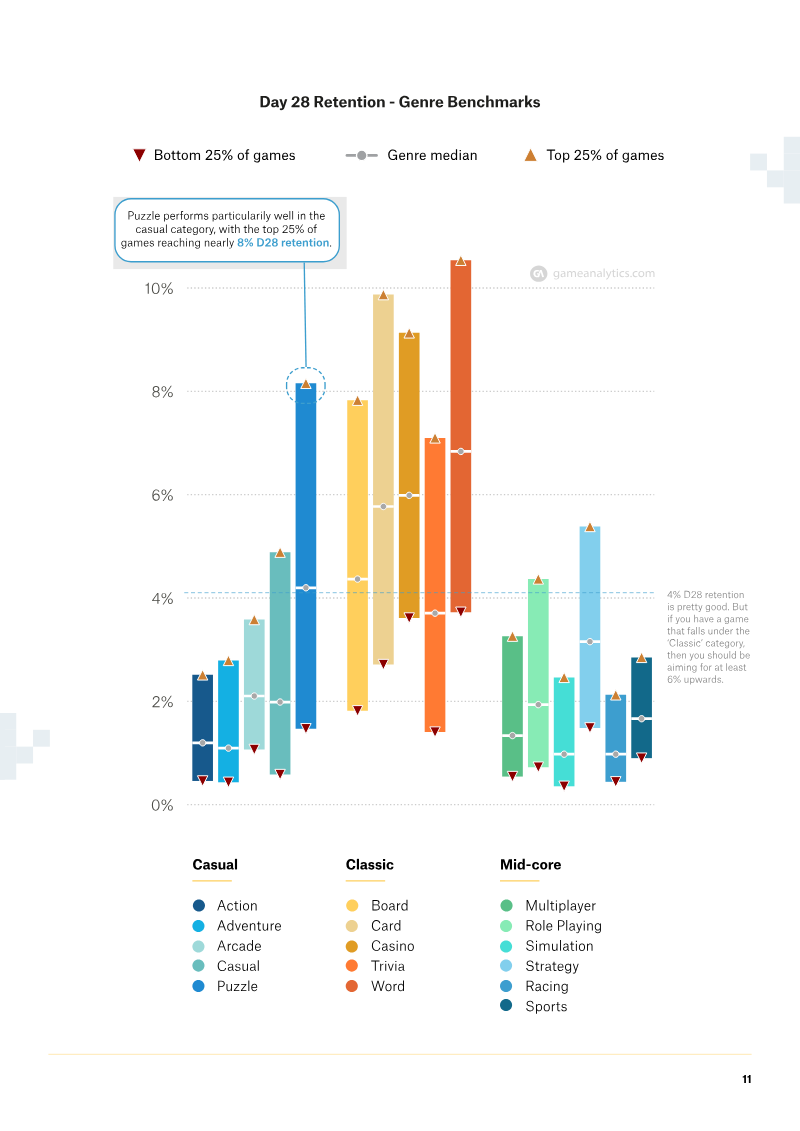
GameAnalytics
ReportMobile Gaming Benchmarks Report: H1 2019
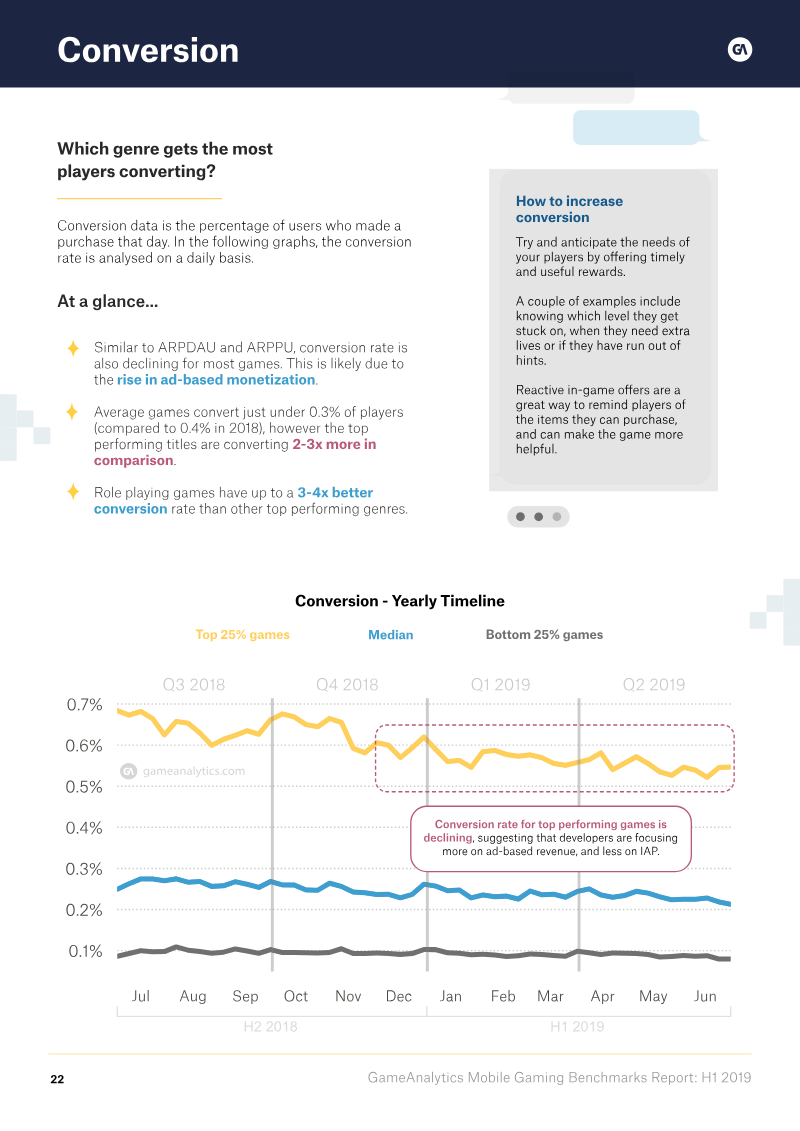
The mobile gaming landscape during the first half of 2019 underwent a significant structural transition, characterized by a pivot from traditional in-app purchase models toward ad-based monetization strategies. This shift is underscored by a 15 to 20 percent year-on-year decline in average revenue per paying user and average revenue per daily active user within the casual gaming sector. While mid-core genres, specifically role-playing and strategy titles, maintain their position as the primary drivers of revenue and conversion, the broader market is increasingly defined by the dominance of hyper-casual games. Player engagement metrics, including retention rates, session lengths, and overall stickiness, experienced slight downward pressure across the industry. Classic genres such as card, casino, and word games continue to exhibit the most resilient performance in terms of retention and session duration. To mitigate rising churn rates, developers are being urged to prioritize the development of robust endgame content. Simultaneously, China has emerged as a critical high-value region for effective cost per mille, further influencing global monetization strategies. Publishing practices are evolving to meet these challenges, with industry leaders leveraging sophisticated data analytics to streamline development pipelines. By establishing strict performance thresholds—such as a 50 percent day-one retention requirement—publishers are able to identify high-potential titles early in the lifecycle. This data-driven approach allows for the rapid optimization of gameplay and lifecycle performance, ensuring that resources are concentrated on titles capable of sustaining long-term engagement in an increasingly competitive and ad-centric market environment.

Sensor Tower
Report