Mobile Games
The mobile market by genre, from hypercasual and puzzle to midcore and idle.
403 documents

Adjust
ReportRamadan App Trends Decoded: Benchmarks and Insights for 2026
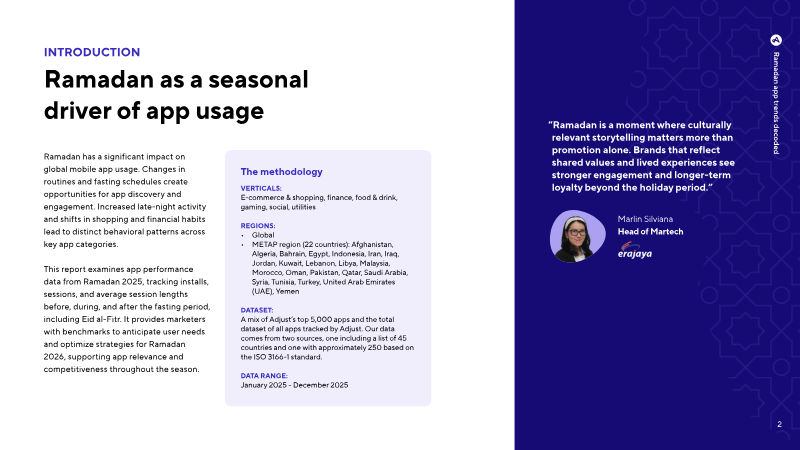
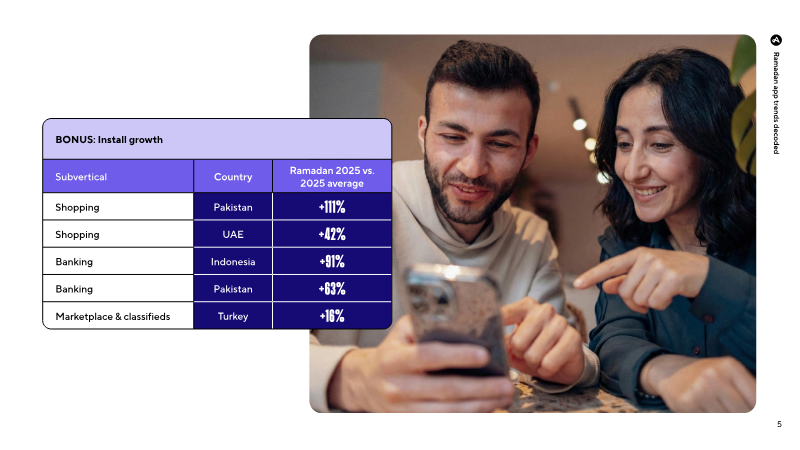
This analysis examines mobile app performance trends during the 2025 Ramadan season to provide strategic benchmarks for 2026. By tracking installs, session counts, and session lengths across seven key verticals—including e-commerce, finance, gaming, and social—the findings highlight how shifting consumer routines during the fasting period and Eid al-Fitr create distinct opportunities for user acquisition and engagement. The scope covers global data with a specific focus on the METAP region, encompassing 22 countries such as Saudi Arabia, Indonesia, Pakistan, and the UAE. Data indicates that Ramadan acts as a significant driver of mobile activity, with average daily installs in the METAP region rising 11% during the month compared to the preceding two weeks. Session counts also saw a 6% increase during the period. Engagement patterns varied by vertical; gaming and social apps emerged as primary drivers of session growth, while e-commerce experienced significant spikes in specific markets like Pakistan and the UAE. Notably, session lengths for gaming apps remained the longest across all regions, averaging 35.6 minutes during Ramadan. The analysis emphasizes that Ramadan should be treated as a phased growth cycle rather than a single peak. While overall install growth reached 10% during Ramadan and climbed to 13% in the post-Eid period, performance varied significantly by country and category. The findings suggest that marketers should avoid uniform regional strategies, instead utilizing country-level benchmarks to guide budget allocation. Success during this season requires sustained, conversion-focused activity that extends through Eid al-Fitr, alongside a focus on high-intent engagement windows, particularly during late-night hours, to maximize user retention and long-term loyalty.

Adjust
ReportThe Shopping App Insights Report: 2025 Edition
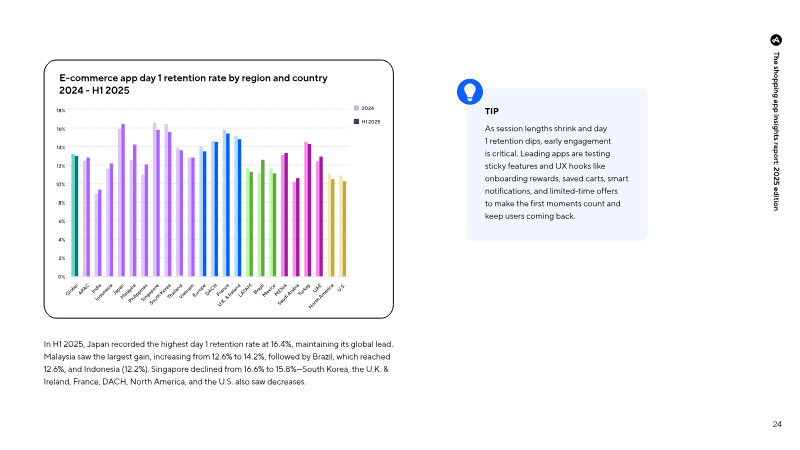
The global e-commerce landscape, currently valued at $6.42 trillion, is undergoing a significant transformation as marketers navigate economic volatility and evolving consumer expectations. While the first half of 2025 saw a 14% year-over-year decline in total app installs, session growth remains resilient, signaling a shift toward deeper engagement rather than mere acquisition volume. Success in this environment requires a transition from broad-reach tactics to sophisticated, omnichannel strategies that leverage artificial intelligence for hyper-personalization and predictive modeling. Performance data from the first half of 2025 reveals a strategic pivot toward paid user acquisition and re-engagement, with the global reattribution share rising to 0.18 and the paid-to-organic ratio climbing to 0.54. Regional performance is increasingly polarized; while Thailand and Brazil have emerged as high-growth markets, other regions like the UAE and Saudi Arabia have experienced notable contractions. Marketplace apps continue to lead in session volume, yet dedicated shopping apps maintain a stronger hold on new install acquisition. Despite competitive engagement metrics, the industry faces challenges with a 13% decline in day-one retention and rising costs per install. To counter these trends, developers are diversifying partner ecosystems and utilizing tools such as deep linking and smart banners to reduce friction in the user journey. Sustainable growth now depends on prioritizing long-term retention through data-driven, localized experiences rather than relying on seasonal traffic spikes. By integrating AI-powered measurement and analytics, businesses can better optimize their return on investment and maintain a competitive edge in a privacy-first, global marketplace.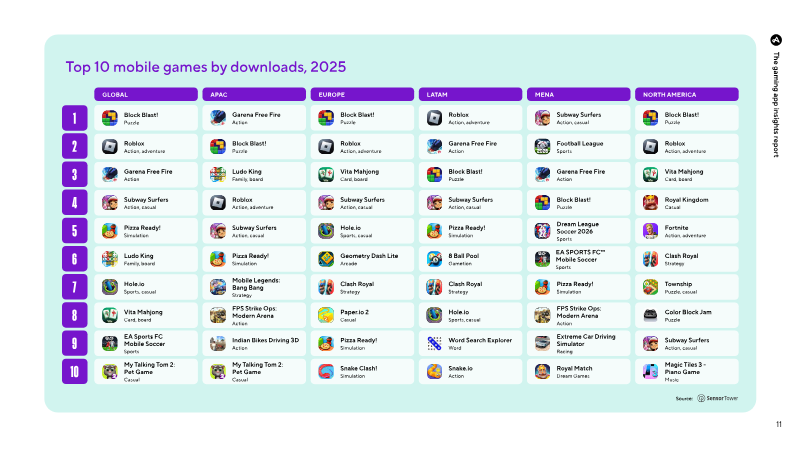
Adjust
ReportThe Gaming App Insights Report: 2026 Edition
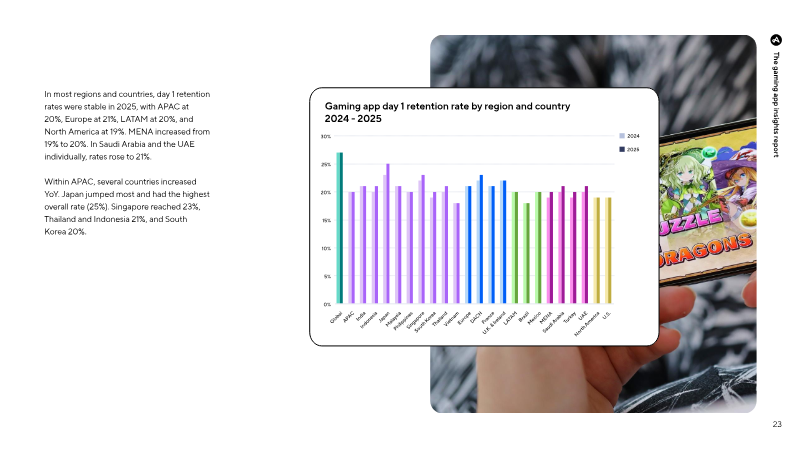
The mobile gaming industry is undergoing a fundamental strategic transition, moving away from a reliance on high-volume user acquisition toward a model centered on long-term retention and high-value player engagement. This shift is driven by a challenging economic environment characterized by a 33% increase in global cost-per-click and a 30% rise in cost-per-install throughout 2025. To mitigate these rising expenses, studios are consolidating their marketing efforts, reducing the average number of advertising partners per application to focus on high-performing channels that promise superior return on investment. Technological innovation serves as a primary lever for this transformation, with generative artificial intelligence and machine learning now integral to creative production and audience targeting. These tools allow developers to optimize ad performance and refine engagement tactics in an era where data privacy remains a critical factor. Notably, App Tracking Transparency opt-in rates on iOS reached 39% in early 2026, providing studios with more reliable data to fuel their direct-to-consumer strategies. This data-driven approach is increasingly vital as the industry seeks to balance the dominance of hyper-casual titles, which still account for 29.1% of installs, with the superior session-to-install ratios found in action and puzzle genres. The global landscape reflects a maturing market where session lengths and day-1 retention rates remain stable despite the broader cost pressures. While hyper-casual games maintain the largest share of installs, the industry is clearly pivoting toward hybrid monetization and cross-platform experiences to sustain growth. By prioritizing long-term progression over rapid acquisition, developers are successfully navigating a period of rising costs, ensuring that engagement remains robust even as the industry shifts toward more sustainable, value-based growth models.


Adjust
ReportMobile App Trends 2026: Japan Edition
The Japanese mobile application market maintains a robust, iOS-dominant trajectory, characterized by a 4% year-over-year increase in total installs during the first half of 2026. This growth is underpinned by a maturing digital ecosystem where mobile integration has become deeply embedded in daily life. Legislative shifts, specifically the Mobile Software Competition Act, are actively reshaping the landscape by incentivizing developers to diversify their distribution and payment strategies, thereby fostering a more competitive and sustainable environment for long-term growth. Financial and gaming sectors serve as the primary catalysts for this expansion. Stock trading applications have experienced a 90% surge in installs, bolstered by the participation of younger investors and the influence of tax-advantaged programs like NISA. Simultaneously, gaming engagement has intensified, highlighted by a 113% increase in card game sessions. These sectors are not only attracting new users but are also achieving higher retention rates and longer session durations, indicating that users are increasingly comfortable managing complex financial and recreational activities through mobile interfaces. The entertainment sector continues to evolve through cross-media synergy, particularly between anime, manga, and short-form content. While OTT streaming services recorded a 15% revenue increase in 2025 and maintain high engagement levels with average session lengths exceeding 36 minutes, the digital manga industry is pivoting toward low-friction content models to better capture younger demographics. Based on aggregated data from January 2024 through May 2026, these trends suggest that success in the Japanese market now requires a strategic focus on high-frequency engagement and the ability to adapt to shifting regulatory and consumer preferences.
Rovio
ReportRovio Sustainability Report 2025
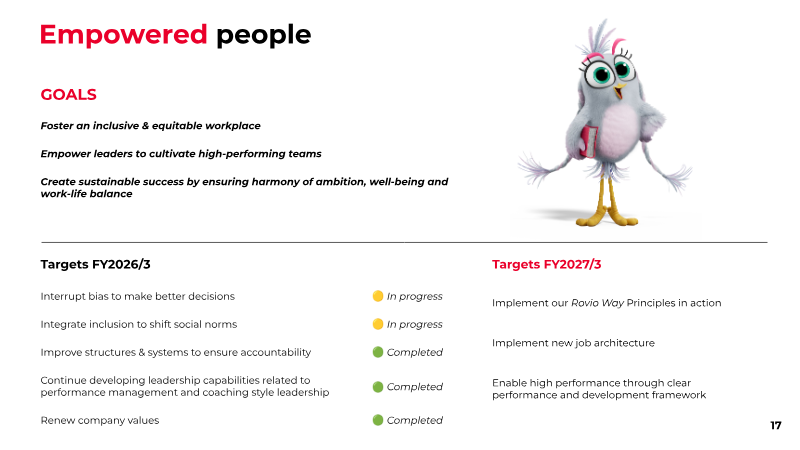
The Rovio Sustainability Report 2025 outlines the company’s voluntary environmental, social, and governance performance for the fiscal period spanning April 1, 2025, to March 31, 2026. As a subsidiary of SEGA SAMMY Holdings, Rovio utilizes this disclosure to maintain transparency and accountability regarding its sustainability strategy, which is structured around three core pillars: Positive Play, Empowered People, and Protecting our Planet. The report aligns partially with European Sustainability Reporting Standards, though it remains a voluntary exercise for the organization. Key findings highlight a total carbon footprint of 20,980 tons of CO2e, with Scope 3 emissions accounting for 98.6% of the total. For the first time, the company included downstream emissions from initial game downloads in its accounting, which significantly improved coverage but precluded direct year-over-year comparisons. Operationally, Rovio maintains six global locations with 508 employees, reporting a gender pay gap of 1.4% when adjusted for location, level, and role. The company continues to prioritize industry collaboration, maintaining active memberships in the Playing for the Planet Alliance and the Sustainable Games Alliance to drive collective climate action. Strategic conclusions emphasize a pragmatic approach to sustainability, acknowledging challenges in formalizing long-term emission reduction plans due to supply chain limitations and evolving market realities. While the company successfully implemented new internal "Rovio Way" principles and improved data tracking for career progression, it faced capacity constraints that delayed the rollout of certain accessibility scorecards and carbon pricing models. Looking ahead, the organization intends to focus on integrating AI sustainability frameworks, enhancing inclusive game design, and embedding its new corporate principles into daily operations to ensure long-term, sustainable growth across its transmedia and mobile gaming portfolio.

Adjust
ReportMobile App Trends: Vietnam 2026
The mobile app market in Vietnam is experiencing significant expansion, driven by a digitally native population, high smartphone penetration of 84%, and near-universal 4G coverage. As of 2025, the country ranked 11th globally for app downloads, totaling 2.88 billion. The primary objective for marketers in this region is to navigate increasingly complex regulatory environments and sophisticated user behaviors to convert high engagement into sustainable revenue. This analysis utilizes aggregated, anonymized data from apps tracked by Adjust between January 2024 and March 2026 to benchmark performance across the gaming, finance, and entertainment sectors. Gaming remains the most dominant vertical, with 1.29 billion downloads in 2025. Vietnamese studios are increasingly pivoting toward hybrid-casual and midcore titles to improve monetization, resulting in a 15% year-over-year increase in session growth during Q1 2026, which significantly outperformed global and APAC benchmarks. Finance apps are also seeing accelerated growth, with mobile payment volumes rising 34.4% in early 2026. This sector is consolidating around dominant super apps, though stricter biometric and identification regulations have raised the barrier to entry. Meanwhile, the entertainment sector is characterized by a surge in short-form drama content, which saw a 271% year-over-year increase in downloads by late 2025. Despite strong growth in installs and session frequency, retention remains a challenge. Gaming retention in Vietnam trails global averages, and finance app session lengths have slightly decreased as users shift toward more efficient, embedded financial services. Success in the Vietnamese market now depends on balancing aggressive user acquisition with high-quality, stable digital experiences that align with local habits. Marketers are encouraged to leverage precise data measurement to navigate a non-linear user journey and comply with evolving local regulations, such as the 2024 Decree 147.

Adjust
ReportMobile App Trends: LATAM
The Latin American mobile app market is experiencing robust growth, driven by a highly mobile-first population and rapid economic digitalization. With smartphone penetration projected to reach 93% by 2030, the region’s app development sector is forecast to reach $56.1 billion by 2034. This growth is particularly pronounced in the finance and e-commerce sectors, where the adoption of super apps, buy-now-pay-later models, and real-time payment systems like Brazil’s Pix have fundamentally altered consumer behavior. Data collected between January 2024 and March 2026 indicates that user engagement remains high, with regional App Tracking Transparency (ATT) opt-in rates reaching 49% in Q1 2026, significantly outpacing the global average of 38%. Brazil leads the region in opt-in rates at 54%. Overall app performance in the region showed consistent year-over-year gains, with Q1 2026 seeing notable spikes in session activity, particularly in Peru and Chile. Finance apps, in particular, saw a 34% year-over-year increase in sessions during Q1 2026, while e-commerce apps benefited from strong seasonal shopping events that drove significant install and session volume. Methodologically, the analysis utilizes aggregated, anonymized data from a subset of 5,000 top-performing apps alongside a broader dataset tracked by Adjust across 45 to 250 countries. While the region shows strong growth, the report emphasizes that success is not uniform across countries. Marketers are encouraged to move beyond last-click attribution models, instead adopting cross-platform, cross-device measurement and deep-linking strategies to navigate non-linear user journeys. By focusing on personalized, data-driven engagement, developers can better optimize retention and maximize lifetime value in this complex, high-growth mobile ecosystem.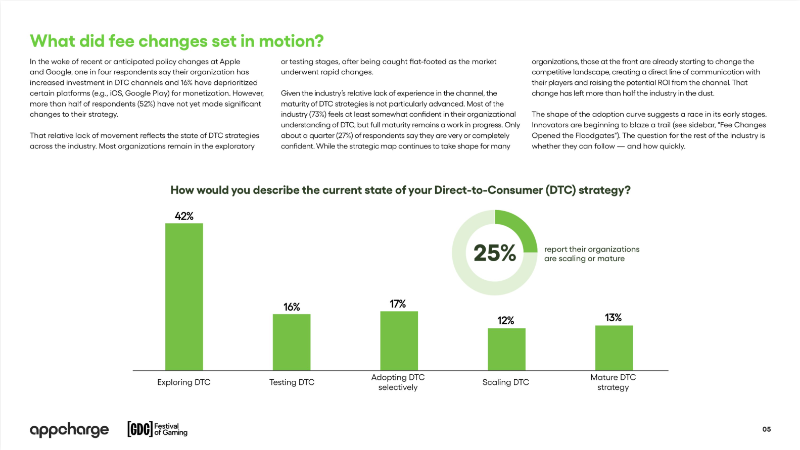
Appcharge
ReportDirect-to-Consumer: A $17 Billion Market for Mobile Gaming
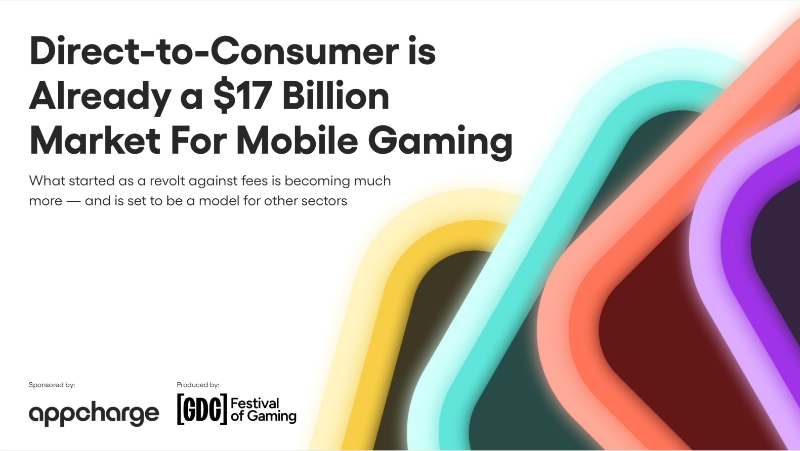
The mobile gaming industry is undergoing a fundamental structural shift toward direct-to-consumer (DTC) distribution models, a transition that has already established a $17 billion market. By bypassing traditional app store ecosystems, publishers are successfully reclaiming profit margins previously lost to platform fees while simultaneously securing ownership of first-party player data. This evolution represents a strategic pivot from passive reliance on third-party storefronts to the active cultivation of proprietary, data-driven player relationships that foster long-term retention and competitive differentiation. While the transition presents significant hurdles regarding technical infrastructure and player acquisition, the industry is increasingly adopting a hybrid model. This approach balances internal, player-facing strategies with specialized external partnerships for payment processing and regulatory compliance. Early adopters of these DTC frameworks are already demonstrating superior revenue growth and improved engagement metrics, creating a widening performance gap between firms that have integrated these channels and those that remain tethered to traditional distribution methods. Looking toward the next decade, the broader digital economy is poised to mirror the success of mobile gaming, with the global in-app purchase market projected to reach $721.4 billion by 2034. DTC strategies are no longer the exclusive domain of large-scale enterprises; they have become a scalable imperative for developers of all sizes. By leveraging personalized experiences and sophisticated marketing analytics, firms can achieve higher year-over-year growth and greater valuation stability. Ultimately, the ability to control the end-to-end user experience has emerged as the primary driver of economic sustainability and long-term success in the modern mobile landscape.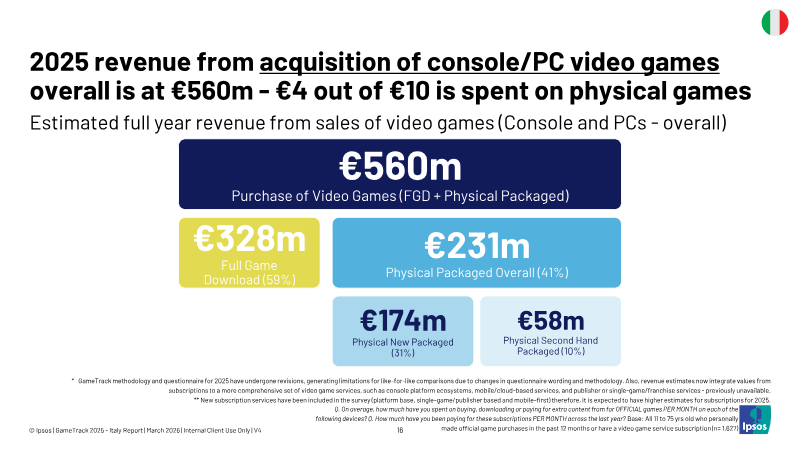

IIDEA – Italian Interactive Digital Entertainment Association
ReportEssential Facts about Video Games in Italy: 2025
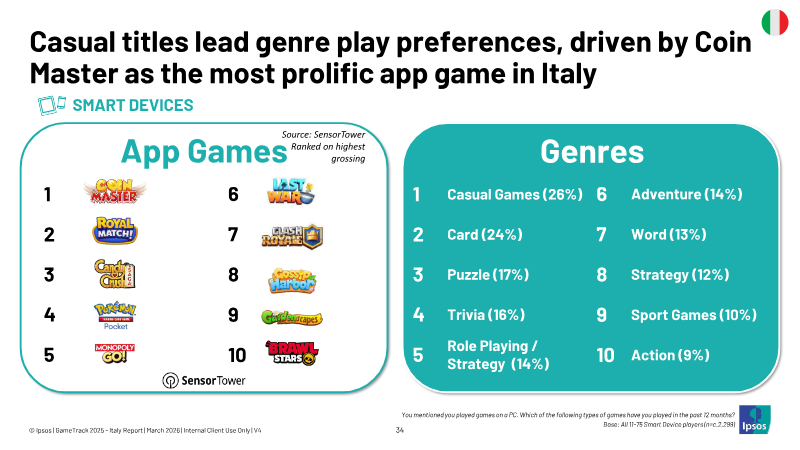
In 2025, roughly 14.2 million Italians—about a third of the population aged six to seventy-five—engage in video gaming, with a pronounced male bias and a concentration of players under 35. The industry’s total revenue remains steady at €2.4 billion, of which game sales account for 77 percent (€1.8 bn). Gaming time has risen to nearly eight hours per week, driven primarily by smart-device play (22 percent reach, €929 m revenue) and console gaming (13 percent reach, €643 m). App-based games now represent more than half of the market, dominated by freemium monetisation; only one percent of app revenue comes from upfront purchases. Revenue distribution varies by platform. Smart-device earnings are almost entirely from in-app purchases (ARPU €84), while console sales lean heavily on digital downloads—65 percent of new game revenue comes from full-game downloads (€502 m) and 21 percent from DLC (ARPU €99). PC revenue is largely driven by DLC (43 percent) and full-game downloads (98 percent of console sales). Subscription services are pivotal: console ecosystem subscriptions contribute 59 percent of total gaming-subscription revenue (€153 m), with mobile and single-game franchises accounting for 6 percent and 35 percent respectively. Player demographics reveal that smart devices attract a younger, male-skewed audience (31 percent of 6–17-year-olds), whereas console and PC gaming remain niche but heavily male-skewed, concentrated among teens. Casual and sports titles dominate sales across all platforms, with subscription services such as PlayStation Plus and Xbox Game Pass driving a significant share of paid play. Engagement patterns show males spending the most hours on consoles (average seven hours per week), while PC gaming remains steady across age groups. Approximately one-quarter of players follow gaming news on YouTube or vlogs, and 20 percent rely on social media or family discussions for information. The data derive from a nationally representative online survey of 3,000 respondents, weighted against an offline omnibus sample and calibrated to industry sales figures.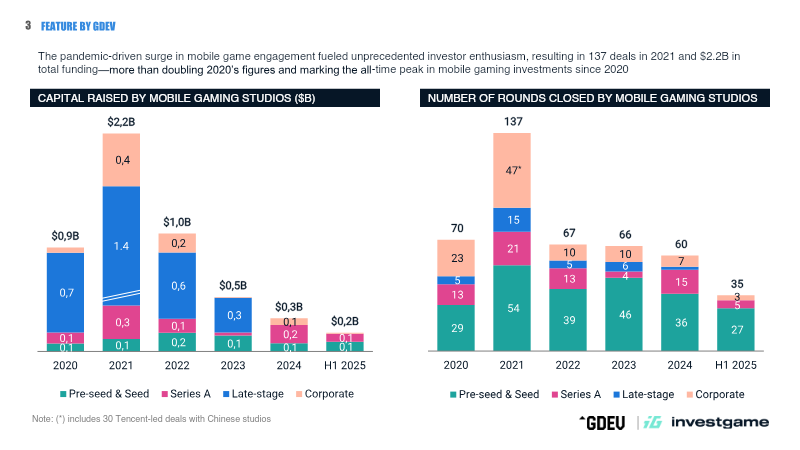

InvestGame
ReportThe Great Mobile Reversal: Why Buyers Pay Billions for What VCs Abandoned
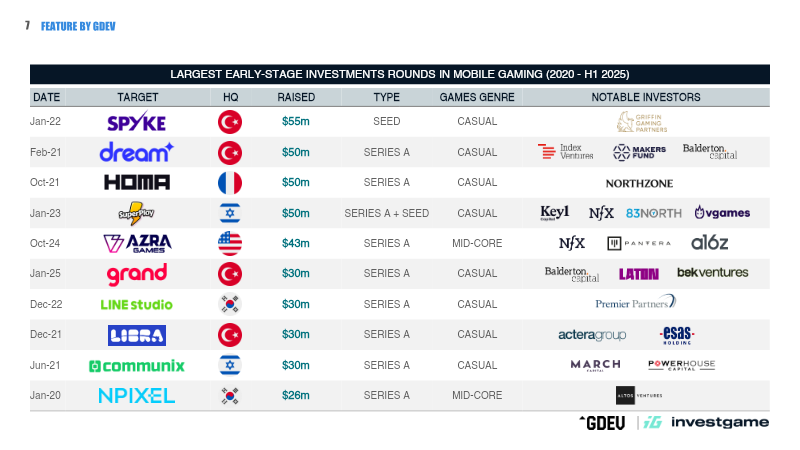
The analysis examines the evolution of mobile gaming investment and M&A activity from 2020 through the first half of 2025. Mobile platforms have dominated the sector, accounting for 61% of total gaming deal value (excluding ATVI) and nearly all first-half 2025 volume, driven by strategic and private-equity deals. Venture capital enthusiasm peaked in 2021 with 137 rounds totaling $2.2 B, but post-2021 the focus shifted toward profitability and sustainable unit economics, leading to a sharp decline in mid-core deals—from 49 in 2021 to only eight by H1 25—while casual studios captured 65% of all deals due to faster iteration and broader audience reach. Geographically, Turkey led casual gaming with 27% of deals, whereas Europe and Asia dominated mid-core, contributing 66% of transactions in 4X, RPGs, and shooters. Early-stage activity remained steady at pre-seed/seed levels, yet Series A and later rounds became rarer as scaling challenges intensified. Median early-stage check sizes hovered around $10 M, with notable large rounds such as Spyke’s $55 M seed and Scopely’s $340 M Series E. Strategic buyers intensified their presence, executing $7 B in mobile M&A across six deals within a year. The largest acquisitions include Af’s $12.7 B purchase of 2yga (casual) and Scopely’s $4.9 B takeover of GamesGroup (mid-core). Overall, the data illustrate a market shift from VC-led growth to strategic consolidation, with casual titles and recurring revenue models becoming the primary drivers of investment value.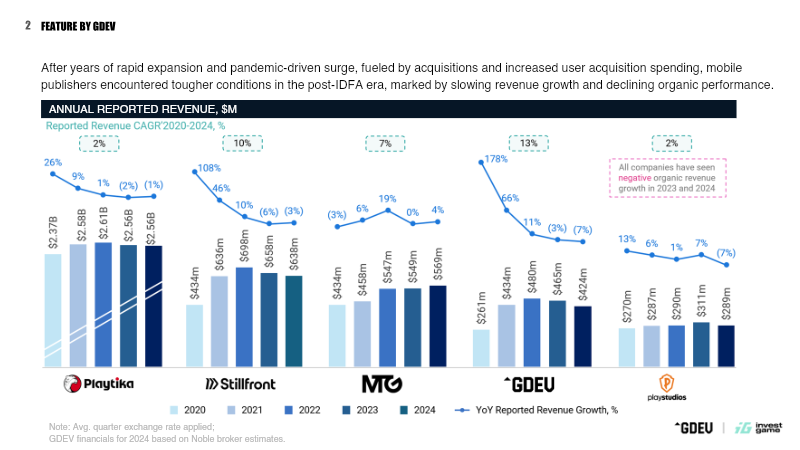

InvestGame
ReportPublic Mobile Gaming Publishers: Resilience & Adaptation in a Shifting Landscape
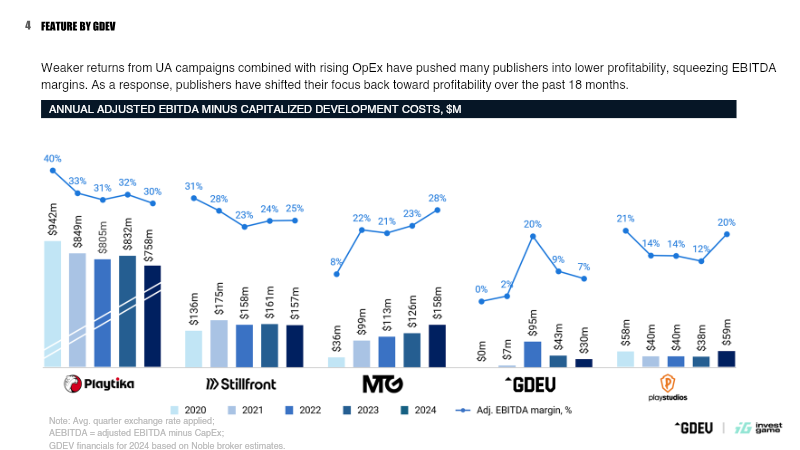
The analysis examines the post-IDFA mobile gaming landscape, focusing on revenue dynamics, user acquisition spending, profitability trends, and market valuation shifts across key publishers. Data reveal that annual reported revenue growth has slowed markedly, with many companies experiencing negative organic revenue and overall declines in 2023-24. User acquisition expenses have surged, reaching peaks of $40 million for some firms, yet returns from these campaigns have weakened, driving higher operating expenses and compressing EBITDA margins. Consequently, publishers are pivoting from aggressive scaling toward profitability, reflected in tighter cost controls and a renewed emphasis on player retention and lifetime value. Daily active user metrics illustrate the broader market contraction, with average DAU figures falling across the sector. Valuation impacts are stark: aggregate market capitalisation for major publishers has fallen by more than 50% since January 2022, and most stocks remain below their pre-IDFA peaks. An exception is MTG, whose disciplined mergers and acquisitions strategy and operational efficiency yielded 9% organic growth in Q4 2024, translating into a 50%+ share price increase and outperforming the S&P 500. The study covers global mobile gaming publishers over a 2022-2025 timeframe, drawing on quarterly financial statements and market data. Methodology includes analysis of reported revenue, user acquisition spend, EBITDA adjustments for capitalised development costs, and market cap changes. The findings underscore a sector in transition, where resilience hinges on profitability focus, retention strategies, and disciplined capital allocation.


Gamesforum
Report