Mobile Games
The mobile market by genre, from hypercasual and puzzle to midcore and idle.
403 documents

data.ai · 2021
ReportHow to Win on Mobile in LATAM
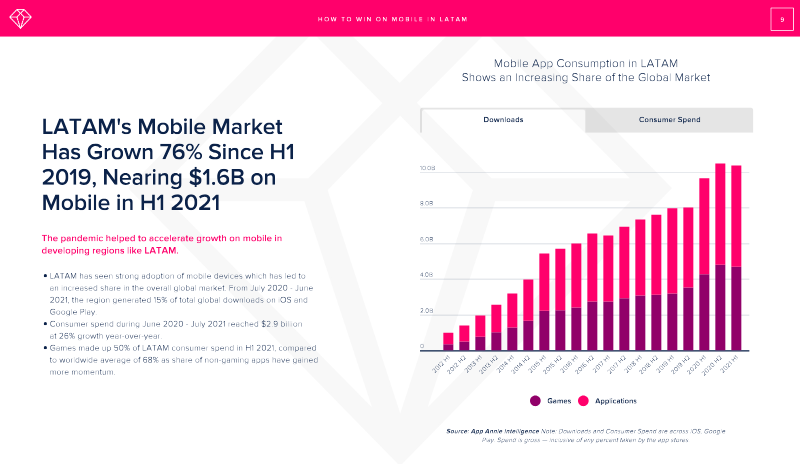
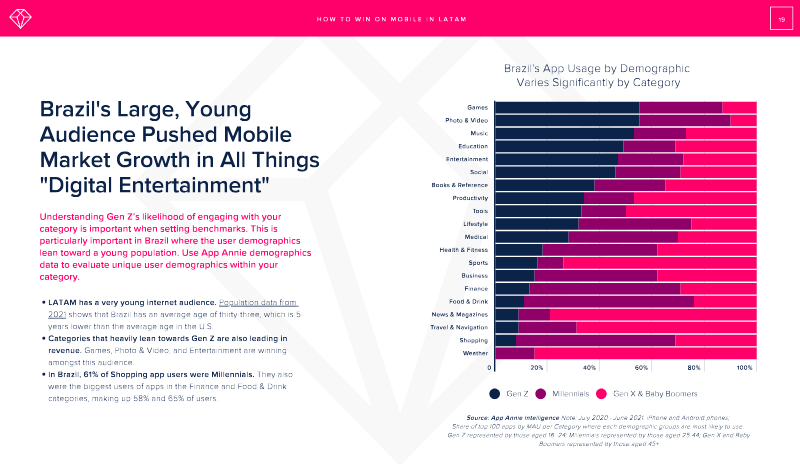
This analysis examines the mobile application ecosystem in Latin America (LATAM) from July 2020 through June 2021, a period marked by rapid digital acceleration due to the COVID-19 pandemic. The region emerged as a high-growth market, generating 20.9 billion new app downloads and $3 billion in consumer spend. A defining characteristic of this landscape is the dominance of Android, which accounted for 89% of all downloads, though iOS maintained a significant 56% share of total consumer spend, indicating high monetization potential per user. The geographic scope focuses primarily on Brazil and Mexico, which together generated 73% of the region's downloads. However, the findings highlight a fragmented market where smaller nations like Uruguay show higher per capita spend despite lower download volumes. Engagement is exceptionally high across the region; users in Brazil and Mexico averaged 5.4 and 4.8 hours daily on mobile devices, respectively, surpassing averages in the United States. This high engagement is driven by a young demographic, particularly in Brazil, where the average age is 33. Industry segments showing the most significant momentum include Finance, Shopping, and Gaming. Finance app downloads in Brazil grew by 36% year-over-year as users shifted toward neobanks and digital wallets. In the gaming sector, which represents 50% of total consumer spend, hypercasual titles lead in downloads while core subgenres like Strategy and RPGs drive 60% of revenue. The retail sector saw the rapid rise of foreign entities like Shopee alongside established regional leaders like MercadoLibre, often utilizing gamification to drive retention. The data, sourced from App Annie Intelligence, suggests that success in LATAM requires a platform-specific strategy favoring Android for reach and a localized approach to subscription pricing. As internet penetration continues to expand, the region is positioned as a critical frontier for global mobile publishers and developers.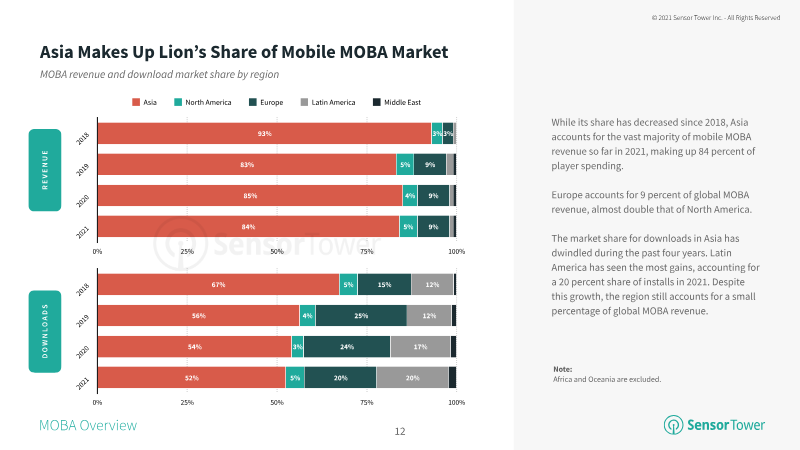

Sensor Tower · 2021
ReportThe State of MOBA Mobile Games 2021
This analysis explores the Multiplayer Online Battle Arena (MOBA) sub-genre within the mobile gaming market, focusing on its rapid financial growth and competitive landscape. Leveraging data from Sensor Tower’s Game Intelligence and Store Intelligence platforms, the report examines global trends from 2019 through August 2021. The central thesis identifies MOBAs as a "winner-takes-all" market dominated by a few high-performing titles that command significant player spending despite a general stagnation in overall sub-genre downloads. The findings reveal that MOBAs are among the fastest-growing segments of the Strategy genre, generating approximately $2 billion in global player spending during the first half of 2021. While Asia remains the dominant force, accounting for 84 percent of total revenue, emerging markets like Brazil, Indonesia, and Russia have become critical hubs for daily active users. Honor of Kings stands as the industry leader, surpassing $10 billion in lifetime revenue, while Mobile Legends and Brawl Stars maintain strong global positions. Notably, the September 2021 launch of Pokémon Unite set a new record for the sub-genre, achieving 15 million downloads in its first two days. The study also highlights a divergence in monetization and engagement strategies. Titles like Brawl Stars favor simplified mechanics and high long-term retention, whereas others utilize "paid advantage" mechanics—such as stat-boosting skins—to drive higher revenue per download at the potential risk of lower retention. In the United States, intellectual property plays a significant role, with licensed IP games accounting for 43 percent of all MOBA installs. Ultimately, the market is characterized by high concentration among top publishers like Tencent, Supercell, and ByteDance, creating a challenging environment for new entrants without established brand recognition.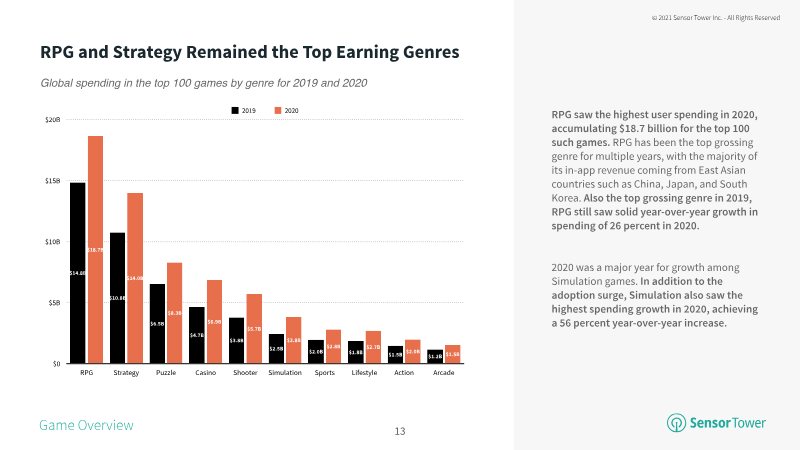

Sensor Tower · 2021
ReportMobile Game Taxonomy Report 2021
The mobile gaming landscape underwent a transformative shift in 2020, catalyzed by global lockdowns that accelerated adoption across all major categories. Hypercasual games emerged as the dominant force in volume, experiencing a 123% year-over-year increase to reach 6.3 billion downloads and surpassing the Arcade genre. While Simulation games led the market in spending growth with a 56% increase, the RPG and Strategy genres maintained their financial stronghold, generating half of the total global revenue among top-performing titles. This period of growth was further bolstered by the migration of players from physical venues to mobile Casino platforms and the massive commercial success of high-fidelity releases like Genshin Impact. Visual and thematic trends shifted toward more sophisticated presentations as the market matured. Although 2D Cartoon remained the most prevalent art style, 3D Realistic aesthetics dominated mid-core segments, and Isometric perspectives gained significant traction within the Hypercasual space. Thematic preferences evolved rapidly, with Fashion and Crime themes growing by 109% and 69% respectively. Notably, the viral success of Among Us spurred a resurgence in Space-themed content and influenced the Puzzle genre to adopt more mid-core characteristics. Innovation in 2020 was defined by cross-genre experimentation and a move toward higher production values in traditionally casual categories. The Fashion genre serves as a primary example of this evolution, transitioning from 2D Side POV styles toward 3D Cartoon aesthetics and First Person perspectives. Developers are increasingly finding success by blending disparate elements, such as integrating Military and Combat Arena themes into Puzzle mechanics. This trend suggests a broader industry movement toward hybrid-casual models that combine accessible gameplay with the deeper engagement and thematic complexity typically found in mid-core titles.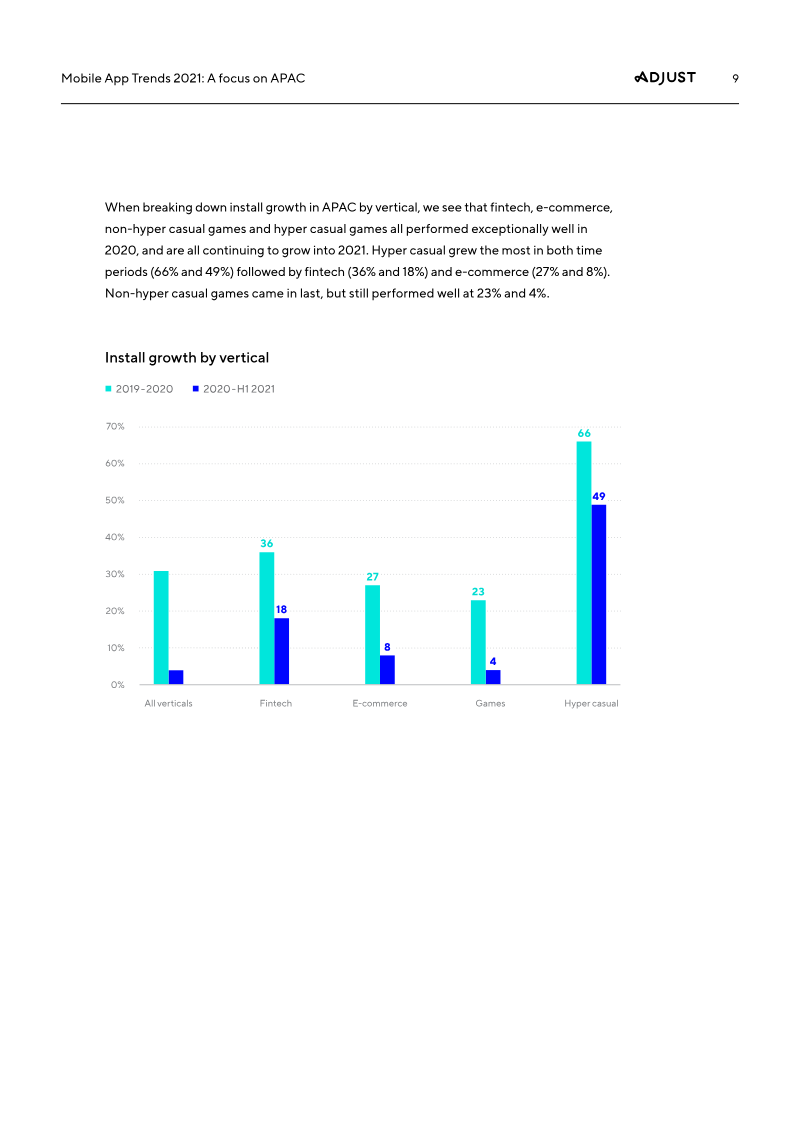
Adjust · 2021
ReportMobile App Trends 2021: A Focus on APAC
This analysis examines mobile app performance across the Asia-Pacific (APAC) region, focusing on the period from January 2019 through May 2021. The data is derived from a sample of 910 top-performing APAC-based apps and the broader Adjust dataset, covering markets including India, Indonesia, Japan, Singapore, and South Korea. The study concentrates on four primary verticals: fintech, e-commerce, hyper-casual gaming, and non-hyper-casual gaming. The findings reveal a significant surge in mobile adoption triggered by 2020 lockdowns, with regional installs growing by 31% and sessions increasing by 54% year-over-year. This momentum has largely sustained into 2021, with installs rising an additional 4% in the first half of the year. APAC currently accounts for 64% of global mobile app downloads and 60% of global mobile gaming revenue. Fintech emerged as a standout performer, seeing a 36% increase in installs in 2020 and continued growth in 2021, particularly in Singapore and Vietnam. Hyper-casual gaming also saw explosive growth, with installs rising 66% in 2020. User engagement metrics indicate that APAC users spend more time in-app than the global average, with session lengths averaging over 22 minutes in early 2021. Retention rates remained stable despite the influx of new users, with fintech maintaining the highest 30-day retention at 7.14%. From a cost perspective, the median effective cost per install (eCPI) peaked at $1.49 in early 2020 before dropping to $0.74 by early 2021. The analysis concludes that while the pandemic accelerated mobile reliance, the resulting shifts in consumer behavior are permanent, requiring marketers to focus on granular user journey data and localized optimization to maintain growth in an increasingly competitive landscape.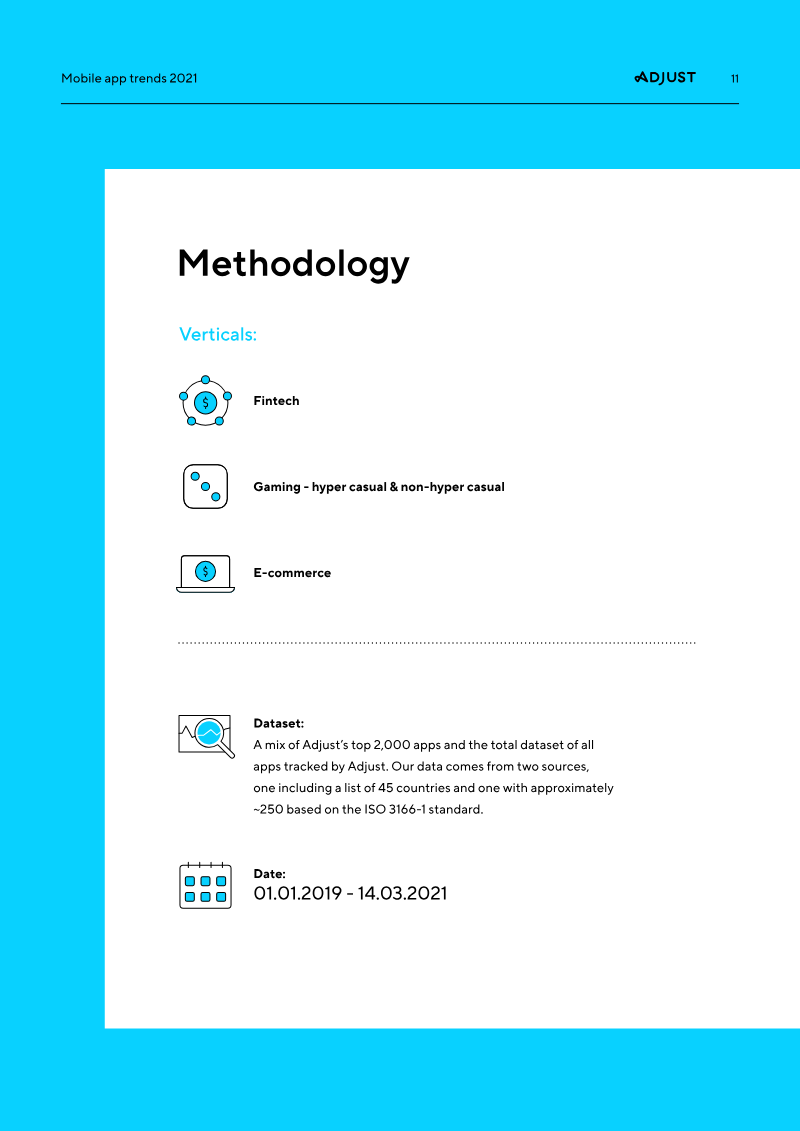
Adjust · 2021
ReportMobile App Trends 2021: A Global Benchmark of App Performance
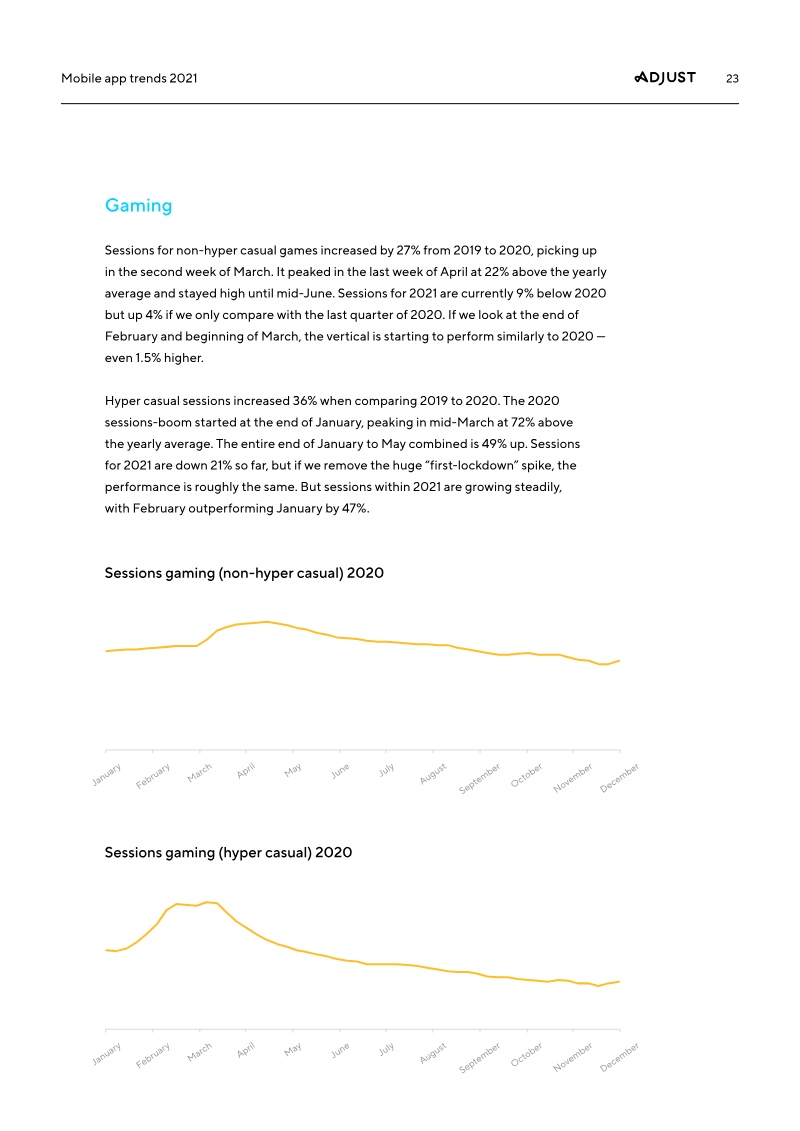
The mobile app industry underwent a transformative period of growth in 2020, characterized by a 50% year-over-year increase in global installs and a total consumer spend of $112 billion. While the fintech sector led in raw install growth at 51%, the gaming industry remained a dominant force with a $165 billion valuation, driven by a 43% surge in hyper-casual downloads. E-commerce demonstrated a distinct trend toward intensified user engagement; despite a modest 6% rise in installs, the vertical experienced a 44% increase in sessions and a 58% jump in in-app transactions, signaling a shift in consumer behavior toward deeper digital integration. User engagement metrics across the ecosystem reflected this heightened activity, with overall sessions rising by 30%. Fintech and e-commerce sessions saw particularly sharp increases of 85% and 44%, respectively. Within the gaming sector, performance varied significantly by sub-genre. Hyper-casual titles relied heavily on paid acquisition and faced rapid churn, whereas non-hyper-casual games maintained superior retention, reaching median session lengths of 45 minutes by day 30. Cost structures also diverged sharply, as acquisition costs for general gaming peaked at $2.52 per install in the fourth quarter, while hyper-casual costs plummeted to a low of $0.27. Sustaining growth in this increasingly competitive landscape requires a strategic pivot from volume-based metrics to sophisticated behavioral analytics. Developers must prioritize retention rates and effective cost per install (eCPI) to refine onboarding processes and ensure long-term profitability. Success in the current market depends on a data-driven, UX-centric approach that utilizes automation and real-time measurement to navigate evolving privacy regulations, such as iOS 14. Ultimately, the path to maximizing return on investment lies in personalized marketing campaigns and a granular understanding of vertical-specific user behaviors.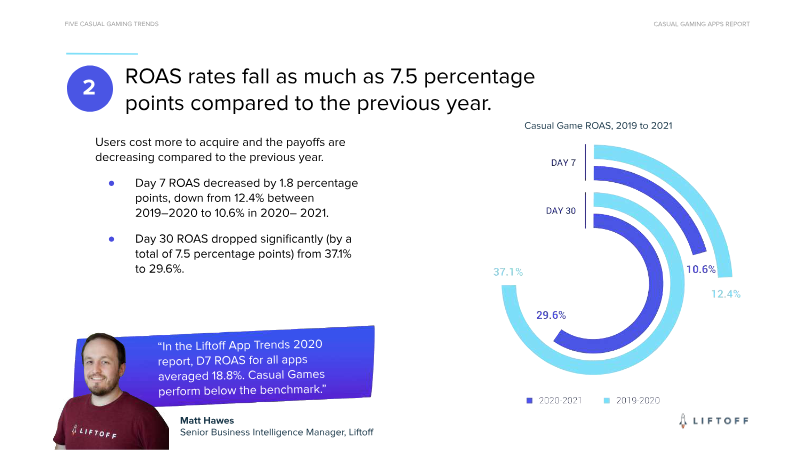

Liftoff · 2021
ReportCasual Gaming Apps Report: The State of Play in 2021
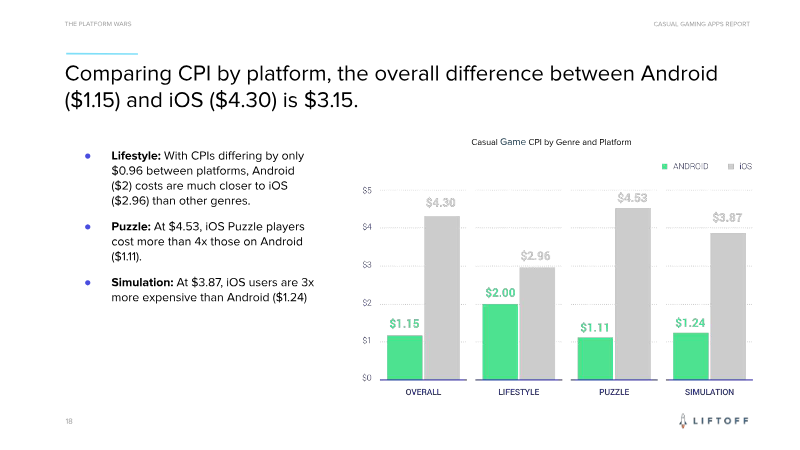
The casual gaming sector experienced significant growth and volatility between March 2020 and February 2021, driven largely by shifting consumer habits during the COVID-19 pandemic. While mobile gaming spend surged to nearly triple that of PC and console platforms, the market became increasingly competitive. Analysis of 246 million installs across 416 apps reveals that while the audience for casual titles is massive, the cost to acquire these users has risen sharply. The average cost-per-install (CPI) for casual games increased by 45.2% year-over-year to $1.96, while return-on-ad-spend (ROAS) saw a corresponding decline, dropping 7.5 percentage points to 29.6% by Day 30. Market dynamics vary significantly by sub-genre and platform. Lifestyle games emerged as the most expensive to acquire at $2.57 per install but offered the highest engagement, yielding a Day 7 ROAS of 22.5%, which far outperforms Puzzle and Simulation categories. Platform trends indicate a strategic shift toward Android, where CPIs surged by 120% as marketers prepared for privacy changes on iOS. Despite this, iOS remains the more expensive platform, with an average CPI of $4.30 compared to $1.15 on Android. Geographically, North America remains the most expensive region for user acquisition, while APAC and EMEA offer more cost-effective opportunities. Countries such as France, Germany, and South Korea are highlighted as high-performance markets with relatively low CPIs and strong ROAS. To combat rising costs and diminishing returns, the findings suggest a heavy reliance on creative experimentation, particularly through playable ads, which saw a 113% increase in usage. The data indicates that success in the current landscape requires balancing localized strategies with high-engagement ad formats to convert increasingly distracted global audiences.
data.ai · 2021
ReportState of Mobile 2021
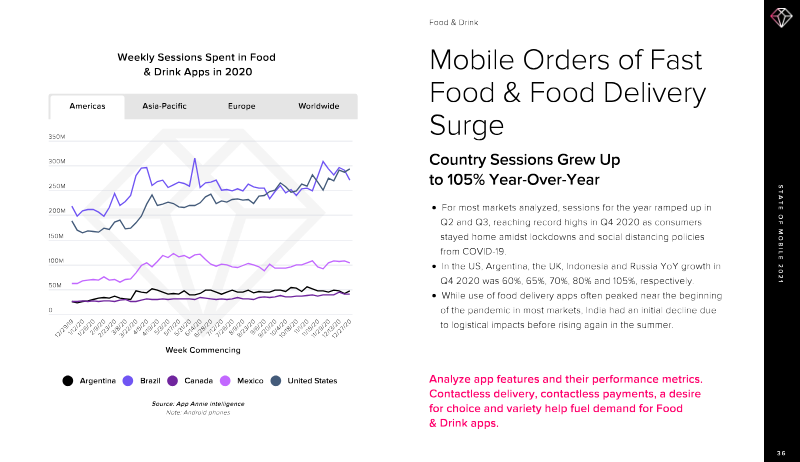
The mobile industry experienced a historic acceleration in 2020, effectively compressing two to three years of projected growth into a single twelve-month period. Global app downloads reached 218 billion while consumer spending surged 20% year-over-year to $143 billion. This shift was characterized by a fundamental change in consumer behavior, as global users averaged 4.2 hours of daily mobile engagement, surpassing live television viewership in the United States. Venture capital followed this momentum, with investments in mobile technology rising 27% to $73 billion. Mobile gaming remained the primary economic engine of the ecosystem, contributing 66% of total spend and positioning the sector to exceed $120 billion in 2021. The global pandemic acted as a catalyst for digital-first adoption across diverse sectors, most notably in finance, streaming, and retail. Time spent in finance apps increased by 45% globally, driven by the democratization of stock trading, while video streaming hours rose by 40%. Retail saw a 30% increase in usage as social commerce emerged as a dominant trend, projected to reach a $2 trillion market value by 2024. TikTok emerged as a standout performer, experiencing a 325% increase in engagement. This heightened activity fueled a robust mobile advertising market, which reached $240 billion in spend, supported by a 95% increase in ad placements within the United States. Specific categories saw unprecedented spikes in utility, with business app usage growing 275% and health and fitness spending rising 30% to $2 billion. Leading platforms such as Tinder, PUBG Mobile, and TikTok dominated their respective metrics for spend, active users, and downloads. Furthermore, specialized platforms like Azar and SmartNews demonstrated the success of integrating artificial intelligence and real-time data to capture Gen Z and news-seeking audiences. These developments underscore a permanent shift toward a mobile-centric global economy where digital engagement is the primary medium for commerce, communication, and entertainment.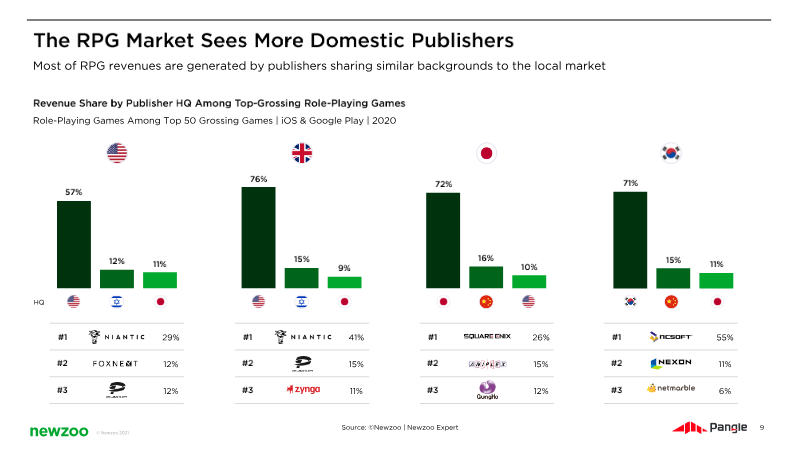
Newzoo · 2021
ReportMobile Game Genre Report: Comparing & Contrasting Eastern and Western Markets
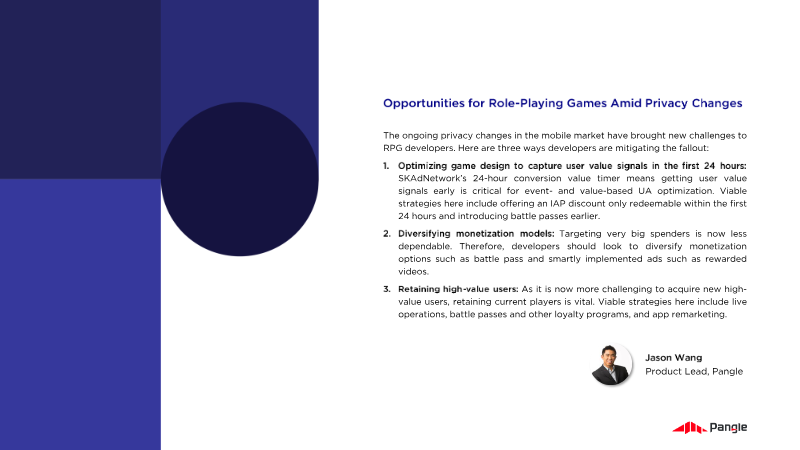
Role-playing games emerged as the dominant force in the mobile gaming industry in 2020, generating $18.5 billion in revenue and capturing over 21% of the global market share. This financial success is heavily concentrated in East Asia, specifically China, Japan, and South Korea, which collectively account for 72% of the genre's total earnings. The market is characterized by a heavy reliance on established intellectual properties from anime, film, and legacy PC franchises, which facilitate organic user acquisition and long-term retention. While Eastern markets are dominated by titles like Lineage, Western audiences gravitate toward major media brands such as Marvel and Star Wars, though original titles can achieve success through aggressive influencer marketing and high-quality creative campaigns. The monetization landscape for the genre is currently shifting toward hybrid models that integrate traditional gacha-based in-app purchases with rewarded video advertisements. Data indicates that 83% of players are receptive to opt-in ads, and developers are increasingly utilizing battle passes to diversify revenue streams beyond high-spending "whales." These strategies, combined with robust live-ops and cross-media collaborations, have proven effective in maintaining engagement among the genre's core demographic of younger, high-income males. To navigate modern privacy-related tracking challenges, successful developers are prioritizing early user value signals and optimizing for return on ad spend through interactive playable advertisements. By tailoring game design and monetization to regional preferences—leveraging data from major industry analysts—developers can better address the distinct behavioral patterns of Eastern and Western players. Ultimately, the integration of cross-platform play and sophisticated hybrid monetization remains essential for sustaining growth in this highly competitive and lucrative segment of the mobile industry.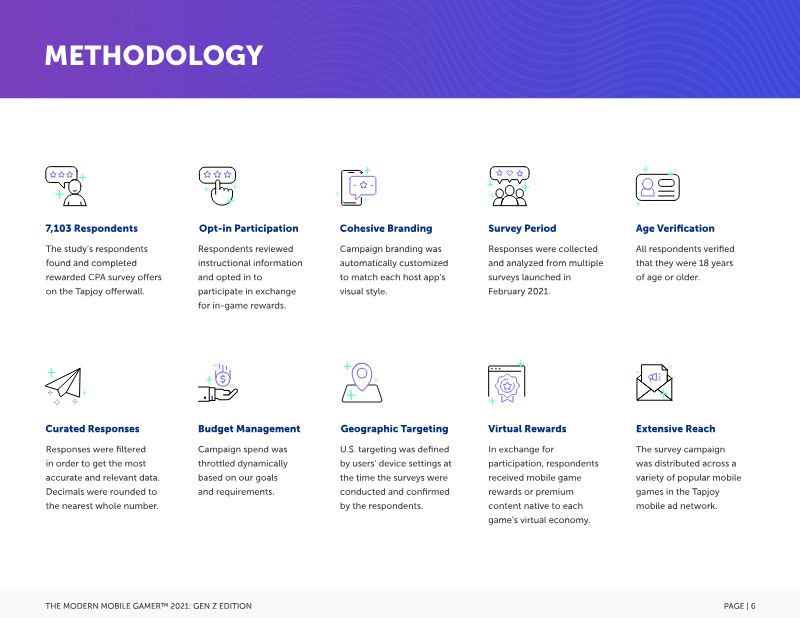
Tapjoy · 2021
ReportThe Modern Mobile Gamer: 2021 Gen Z Edition
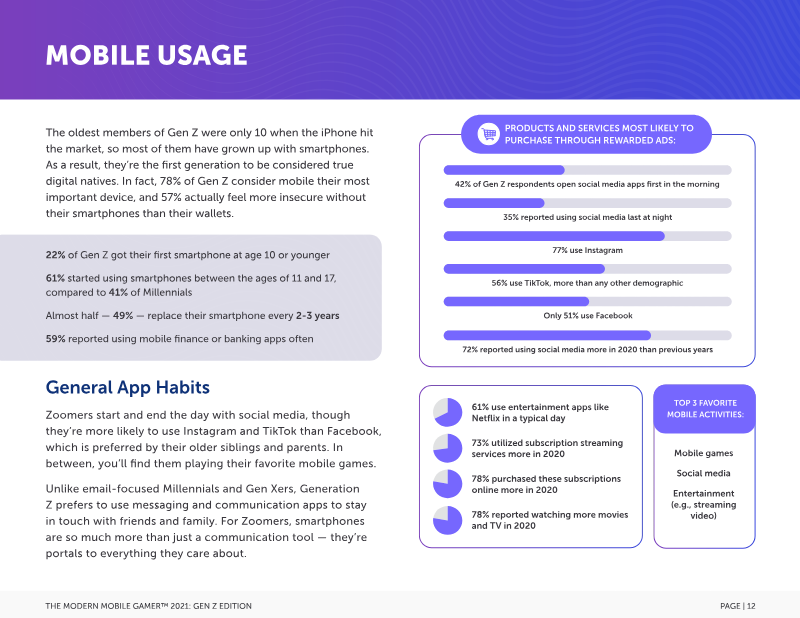
This analysis examines the mobile behaviors, gaming habits, and advertising preferences of Generation Z, defined as individuals born in 1997 or later. Based on a February 2021 survey of 7,103 U.S. consumers aged 18–24 on the Tapjoy network, the findings characterize this demographic as "digital natives" who view the smartphone as their primary device for entertainment, social connection, and commerce. The study utilizes opt-in participation and rewarded survey methodology to gather data on a generation that currently represents $140 billion in buying power. Key findings indicate that Gen Z is heavily invested in the mobile ecosystem, with 86% using mobile as a gaming platform—significantly higher than the 42% who use consoles. The COVID-19 pandemic accelerated these trends, as 71% of respondents reported playing more mobile games in 2020. Beyond gaming, the demographic is highly active in mobile commerce; 68% shop via mobile one to four times per week, frequently purchasing to-go food, retail items, and subscription services. Socially, Gen Z favors Instagram and TikTok over Facebook and increasingly rejects traditional gender stereotypes in marketing. The research concludes that Gen Z has a unique, high-standard relationship with advertising. They largely reject intrusive, non-skippable, or inauthentic content, preferring ads that offer a value exchange. Consequently, 54% of respondents prefer rewarded ads over other formats, and 53% engage with rewarded mobile game ads—outperforming engagement rates on Instagram (38%) and TikTok (23%). To successfully reach this audience, brands must prioritize humor, social and environmental awareness, and opt-in experiences that respect the user's digital autonomy.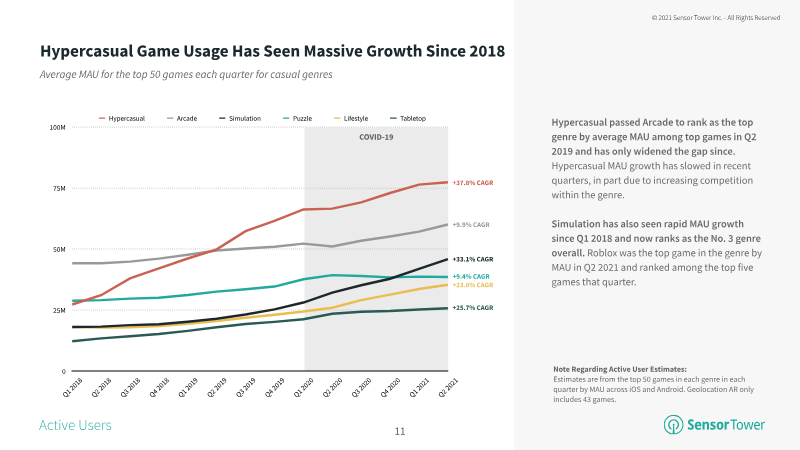
Sensor Tower · 2021
ReportThe State of App Engagement 2021: An Analysis of Key Global App Usage Trends in 2021
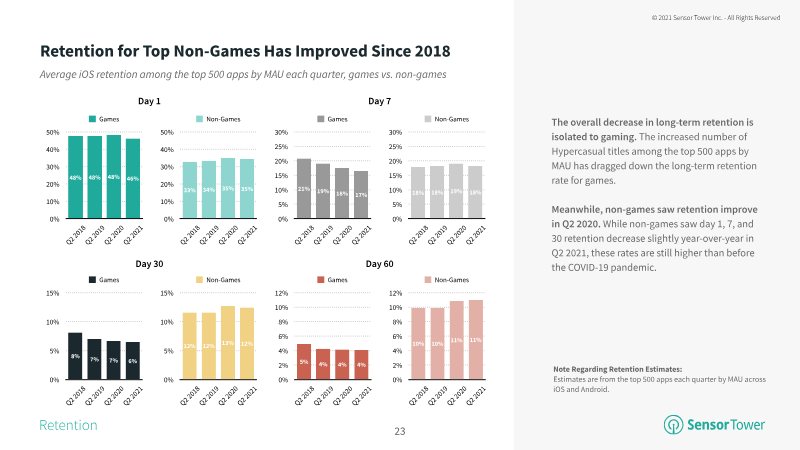
Global app engagement experienced a significant upward trend between 2018 and 2021, catalyzed by the COVID-19 pandemic. Monthly active users (MAU) for the top 500 apps grew at a compound annual growth rate of 12 to 14 percent, with the average top app gaining approximately 10 million MAU annually. While a spike in engagement occurred during 2020 lockdowns, growth rates and time spent largely normalized by the second quarter of 2021, though they remained above pre-pandemic levels. The analysis covers worldwide usage on iOS and Android across various categories and game genres. Business, Education, and Medical apps emerged as the fastest-growing categories due to shifts in remote work and remote learning. Conversely, Travel and Navigation suffered the most significant declines, though they began a slow recovery as restrictions lifted. In the gaming sector, Hypercasual titles dominated MAU and weekly active user metrics, while the Shooter genre led in daily active users. Engagement depth varies significantly by category and platform. Social Networking apps see the highest frequency of use, averaging nearly 10 sessions per day on Android, whereas Entertainment apps lead in daily time spent at approximately 30 minutes. Within gaming, mid-core genres like Strategy and RPG command the highest engagement, with users averaging about one hour of play per day. A strong correlation exists between time spent and revenue per download, particularly in mid-core and Casino genres. Retention trends reveal a divergence between games and non-games. While non-game retention improved during the study period, overall game retention—specifically day 30 metrics—was dragged down by the proliferation of Hypercasual titles, which prioritize high user acquisition over long-term loyalty. Tabletop games remain an outlier in the gaming category, maintaining the highest long-term retention and daily time spent among casual genres. Data for this analysis was sourced from Sensor Tower’s Usage and Store Intelligence platforms, benchmarking the top 100 to 500 apps per category.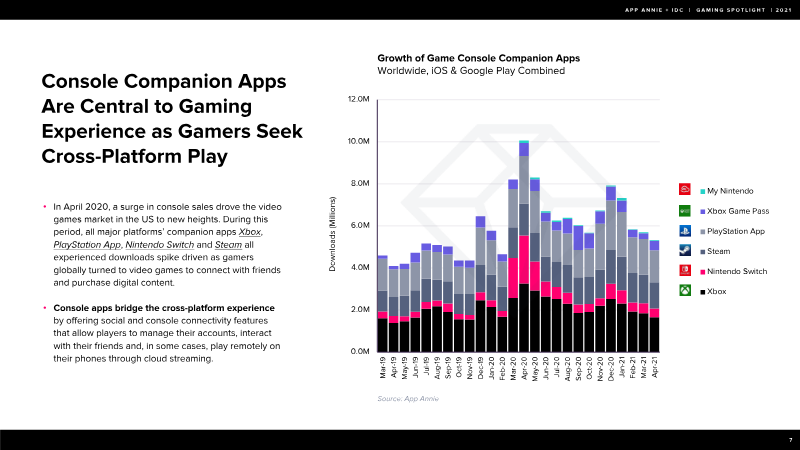

data.ai · 2021
ReportGaming Spotlight 2021: The Year in Review
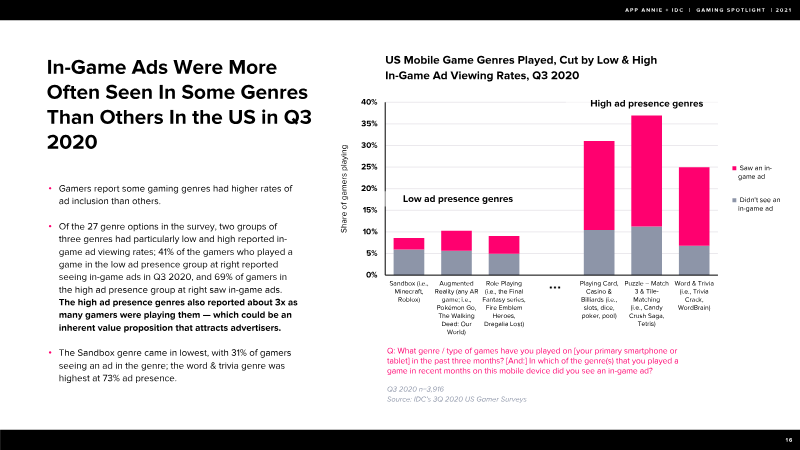
Mobile gaming has solidified its position as the primary driver of digital games consumption, with global spending projected to extend its lead to 2.9 times that of PC/Mac and 3.1 times that of home consoles in 2021. This growth is underpinned by a significant surge in engagement during the COVID-19 pandemic; by Q1 2021, global users were downloading over 1 billion games per week, a 30% increase over pre-pandemic levels. Consumer spending followed a similar trajectory, reaching $1.7 billion per week, up 40% from late 2019. While the Asia-Pacific region maintains nearly half of the global market share, North America and Western Europe saw the most significant growth in mobile spending during the period. A central thesis of the market analysis is the convergence of mobile and console experiences. High-performing titles like Roblox and Genshin Impact demonstrate that cross-platform play and real-time social features are no longer novelties but essential drivers of long-term engagement. This trend is supported by the rising popularity of console companion apps and the expansion of PC gaming, with Steam reaching a record 26.85 million peak daily concurrent users in early 2021. Additionally, the rise of game livestreaming on platforms like Twitch and Discord has created new avenues for monetization and community building. Regarding monetization, survey data from over 3,300 US gamers indicates a shift in sentiment toward in-game advertising. While video ads remain divisive due to their full-screen nature, rewarded video and playable ads have achieved net positive sentiment because they offer an immediate value exchange, such as in-game currency or a trial experience. However, the data warns of ad oversaturation; gamers in high-saturation genres, such as word and trivia games, report significantly more negative opinions of ads compared to those in low-saturation genres like sandbox games. The findings suggest that publishers must balance ad frequency with format quality to mitigate churn.

GameIntel · 2021
Report