Mobile Games
The mobile market by genre, from hypercasual and puzzle to midcore and idle.
403 documents
Tenjin · 2022
ReportAd Monetization Insights for Mobile Game Developers 2022
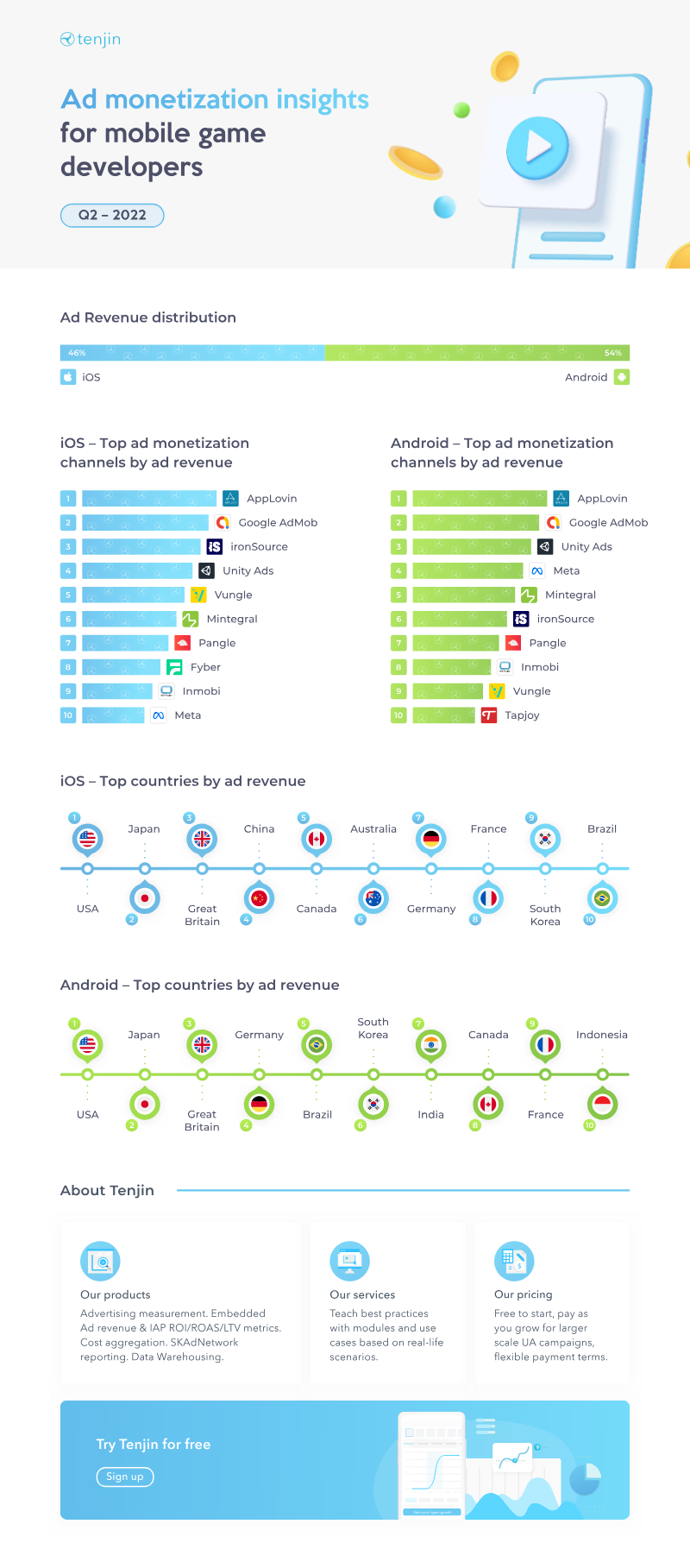
The 2022 ad monetization briefing delivers a data-driven overview of revenue-generation strategies for mobile game developers, emphasizing measurement, optimization, and regional performance trends. Core insights reveal that ad-based income accounts for a majority share of total monetization, with a highlighted 54% figure indicating the proportion of revenue derived from advertising across the surveyed markets. The analysis spotlights key territories—Germany, Japan, South Korea, Canada, and Indonesia—illustrating how each region contributes to overall earnings and how localized user acquisition (UA) campaigns influence cost structures and return on ad spend. A central theme is the importance of precise analytics to drive return on investment (ROI), return on ad spend (ROAS), and lifetime value (LTV) calculations. The briefing outlines a suite of measurement tools that aggregate ad revenue, in-app purchase (IAP) data, and cost metrics, integrating SKAdNetwork reporting for iOS environments and offering flexible data-warehousing solutions. These capabilities enable developers to assess campaign performance at scale, compare cost aggregation across organic and paid acquisition channels, and refine budgeting decisions based on real-time insights. Tenjin’s platform is positioned as a turnkey solution for developers seeking to embed advanced measurement modules without upfront cost, operating on a free-to-start, pay-as-you-grow pricing model. The service package includes advertising measurement, cost aggregation, and data-warehousing, designed to support both emerging studios and larger publishers in optimizing ad revenue streams. While specific methodological details such as sample size or data sources are not disclosed, the briefing draws on 2022 market data to inform best-practice recommendations for maximizing monetization efficiency across the highlighted global regions.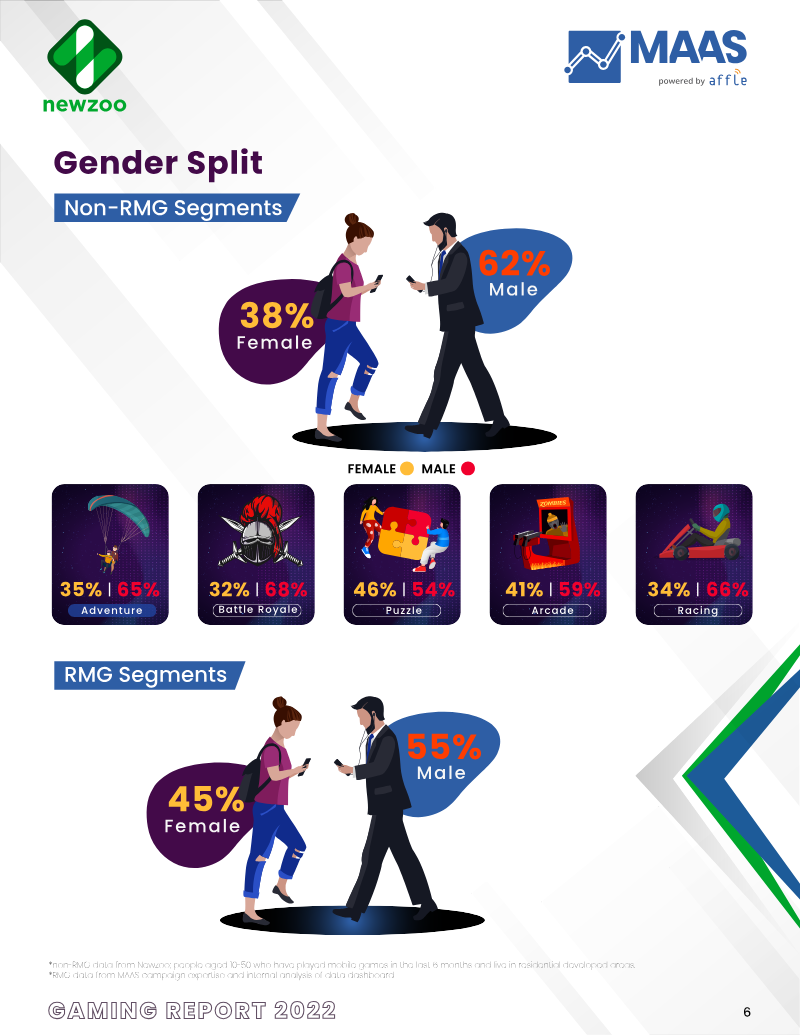
Newzoo · 2022
ReportGames India Plays!: A Look into the Gaming Habits of Indian Mobile Gamers and How to Reach Them
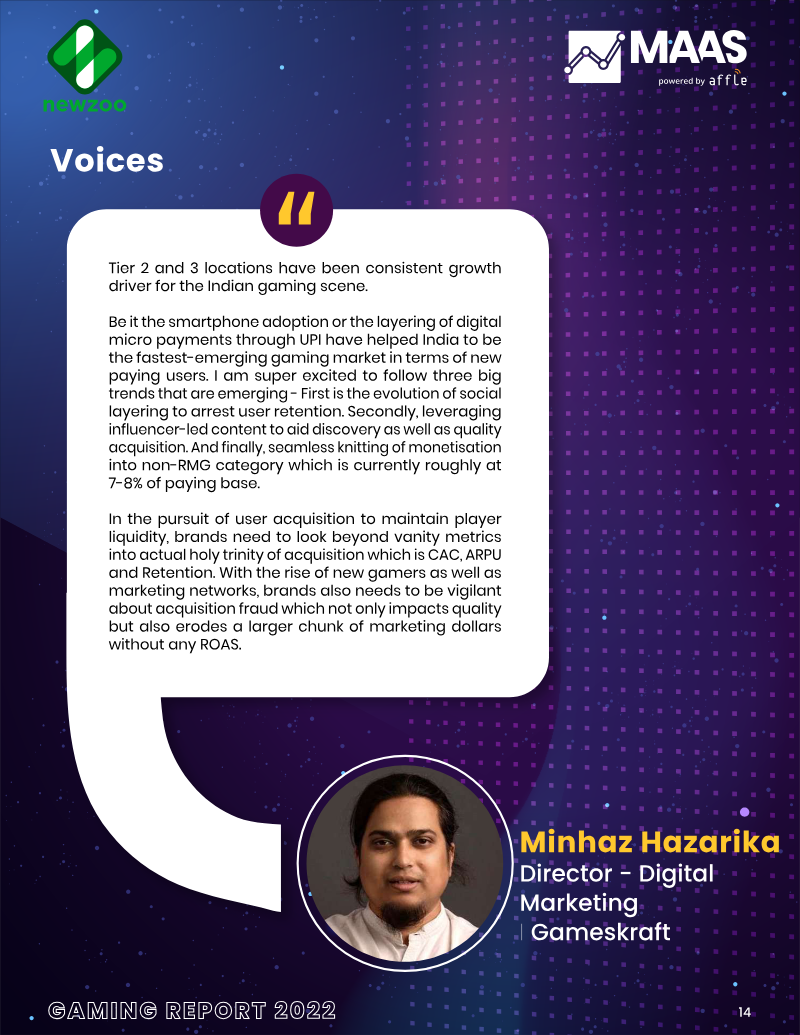
The Indian mobile gaming industry is undergoing a significant transformation, driven by affordable data, increased smartphone penetration, and a shift toward digital entertainment. This analysis, covering the 2022-2027 period, segments the market into Real Money Gaming (RMG)—including card-based and fantasy sports—and non-RMG categories like adventure, battle royale, and puzzles. Utilizing data from Newzoo and Affle MAAS, the findings highlight a market of 373 million online gamers as of 2022, with 91% playing on mobile devices. Revenue for 2022 reached $2.2 billion, with RMG contributing over 50% of the total industry revenue in the preceding year. Demographic data reveals a young, male-skewing audience, particularly in the adventure and battle royale genres, where 55% of players are aged 13-27. While non-RMG players are motivated by stress relief and time-filling, RMG players are driven by seasonal events and the opportunity to earn rewards. Fantasy sports see massive spikes during major cricket tournaments, while card-based RMG peaks during festive seasons. Engagement is exceptionally high, with over 80% of mobile gamers consuming gaming video content and 44% engaging with esports. For advertisers, the report establishes critical benchmarks and growth strategies. Successful user acquisition relies on navigating a complex funnel where install-to-registration rates hover around 25-50% depending on the sub-genre. Experts suggest that growth is increasingly driven by Tier 2 and Tier 3 cities, facilitated by UPI-based micro-payments. To maximize return on ad spend, marketers are encouraged to use vernacular creatives, programmatic targeting to reduce audience overlap, and a mix of ad formats like playable and short-video ads. The industry is poised for further disruption through the integration of Web3 technologies, blockchain-based play-to-earn models, and the rise of "gaming malls" or super-apps.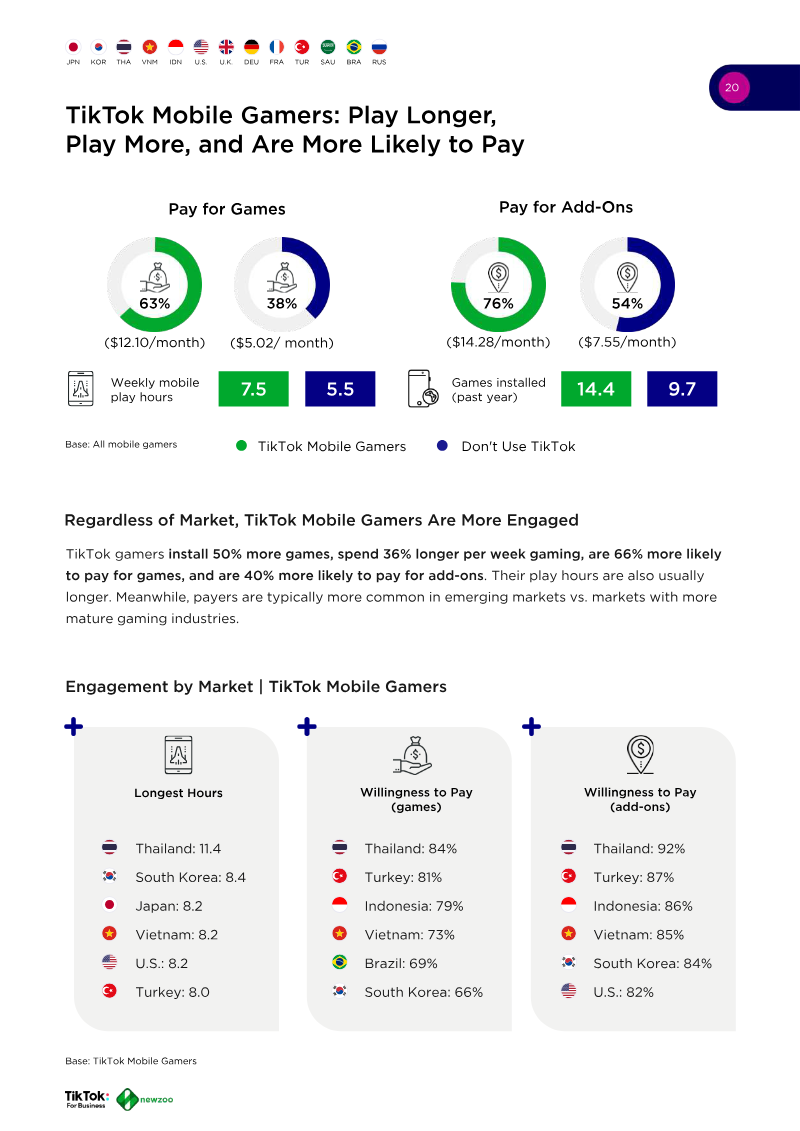
Newzoo · 2022
ReportThe New Destination to Reach Global Gamers: The 2021 Global Mobile Gamers Whitepaper
Mobile gaming represents the largest and fastest-growing segment of the global entertainment industry, generating $93.2 billion in 2021 with a projected trajectory toward $126.1 billion by 2024. Within this landscape, a distinct synergy has emerged between mobile gaming and social media platforms, particularly TikTok, where nearly half of all mobile gamers are active. These users demonstrate significantly higher value than non-users, installing 50% more games, playing 36% longer, and showing a 66% higher likelihood of making in-game purchases. This demographic functions as a highly social and evangelical audience that consumes an average of seven different genres and responds more favorably to innovative advertising formats like sponsored livestreams and user-generated content. Global player behavior reveals a consistent preference for realistic art styles and fantasy or mystery settings, though regional nuances remain critical for market penetration. While Southeast Asian markets are dominated by MOBA titles, Japanese and South Korean audiences show a marked preference for immersive RPGs and Puzzle RPGs. Across all regions, the primary motivation for gameplay is relaxation or passing time, yet monetization is driven by progression-based incentives, such as the desire to unlock content or bypass difficult levels. This suggests that while the initial draw of a game is often casual, long-term financial viability depends on structured advancement and consistent content updates. Retention and re-engagement strategies must address the primary drivers of player churn, which are identified as technical bugs and slow leveling speeds. Conversely, the introduction of new missions, story-driven updates, and technical optimizations are the most effective methods for reclaiming lapsed players. To maximize impact, advertisers and developers should prioritize action-packed, narrative-driven creative content that leverages the social metaverse. By focusing on regional aesthetic preferences—such as "cute" or anime styles in Asia versus cartoonish realism in Western markets—and addressing the specific progression needs of players, stakeholders can better navigate the increasingly competitive global mobile gaming ecosystem.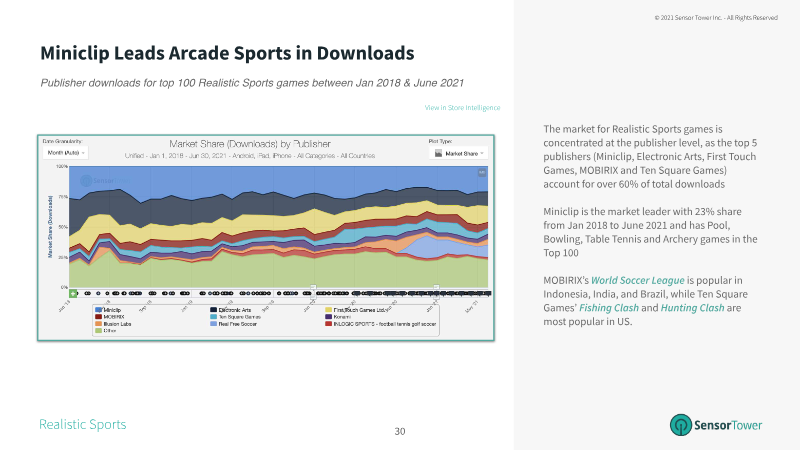
Sensor Tower · 2021
ReportSports & Racing Games Report: Q3 2021
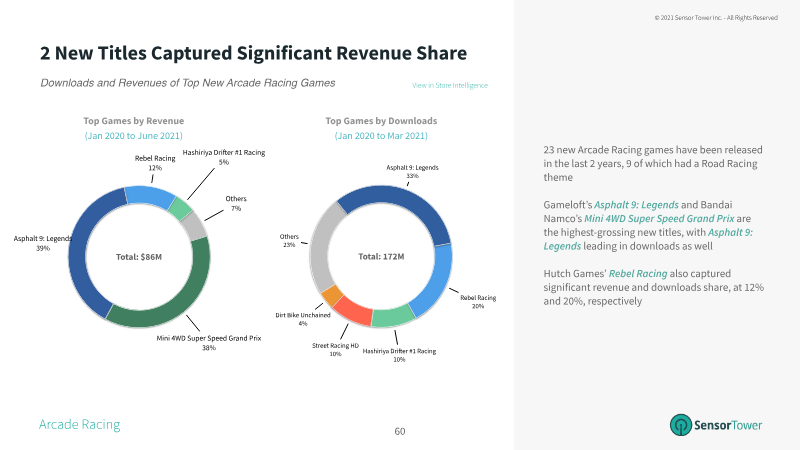
The sports and racing gaming sectors experienced a transformative period throughout 2020 and early 2021, characterized by a 40.2% year-over-year revenue increase to $2 billion. This growth was underpinned by a clear bifurcation in market dynamics: while realistic sports and racing titles consistently outperformed arcade-style counterparts in revenue generation, arcade games maintained higher download volumes. The industry remains highly concentrated, with a small cohort of major publishers—including Electronic Arts, Konami, Tencent, and Zynga—exerting significant control over both market share and intellectual property. Strategic consolidation through high-profile mergers and acquisitions, such as the integration of Glu Mobile and Codemasters into Electronic Arts, reflects a broader industry trend toward portfolio expansion and market dominance. Geographic performance reveals distinct regional preferences that dictate global revenue flows. The United States remains the primary revenue driver for Western-centric sports and drag racing, while Japan serves as the critical hub for baseball and soccer titles. Conversely, emerging markets such as India and Brazil lead in total download volume, highlighting a disparity between user acquisition and monetization potential. Within the racing segment, kart racing has emerged as a superior model for long-term player retention and balanced gender demographics, contrasting with the gradual revenue decline observed in racing simulators since late 2019. Despite a temporary pandemic-induced surge in arcade racing downloads during 2020, the market has largely normalized to pre-pandemic levels. The sports manager sub-genre exemplifies the industry’s shift toward high-value monetization, as it has successfully increased net revenue despite a multi-year decline in download volume. Ultimately, the sector is defined by a reliance on established intellectual property and a strategic focus on realistic simulation, with revenue spikes frequently tethered to the launch of major new titles. These trends underscore a mature, consolidated market where success is increasingly dependent on publisher scale and the ability to sustain engagement within specific, high-performing sub-genres.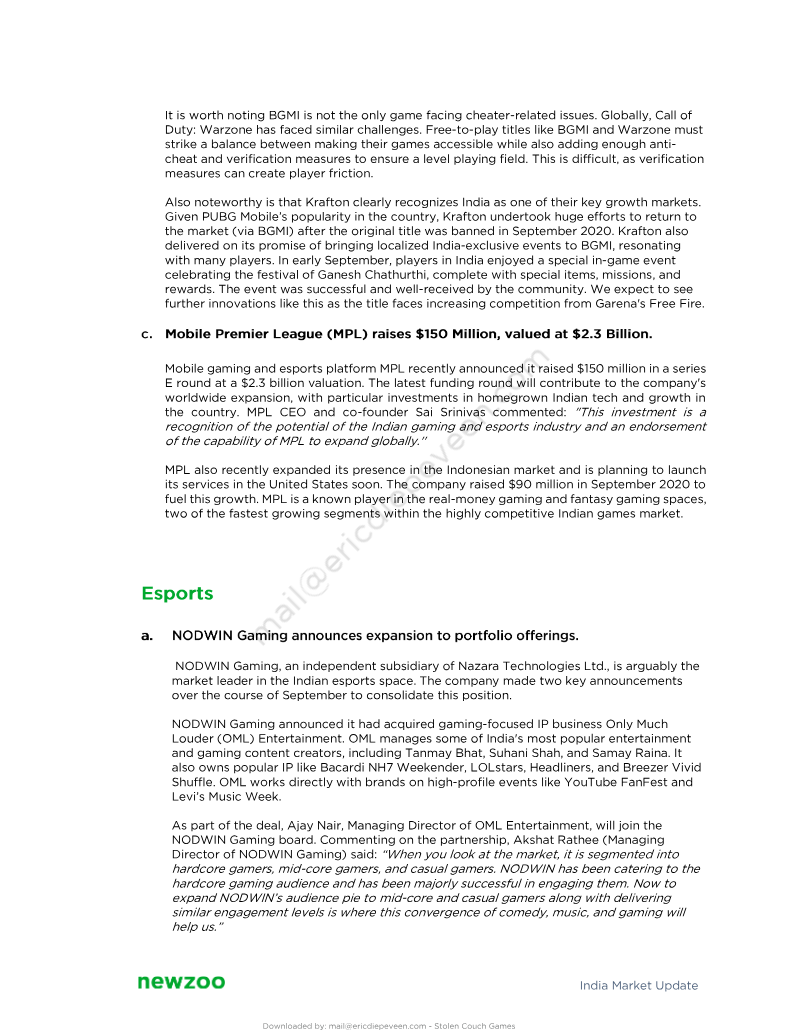
Newzoo · 2021
ReportIndia Market Update: September 2021
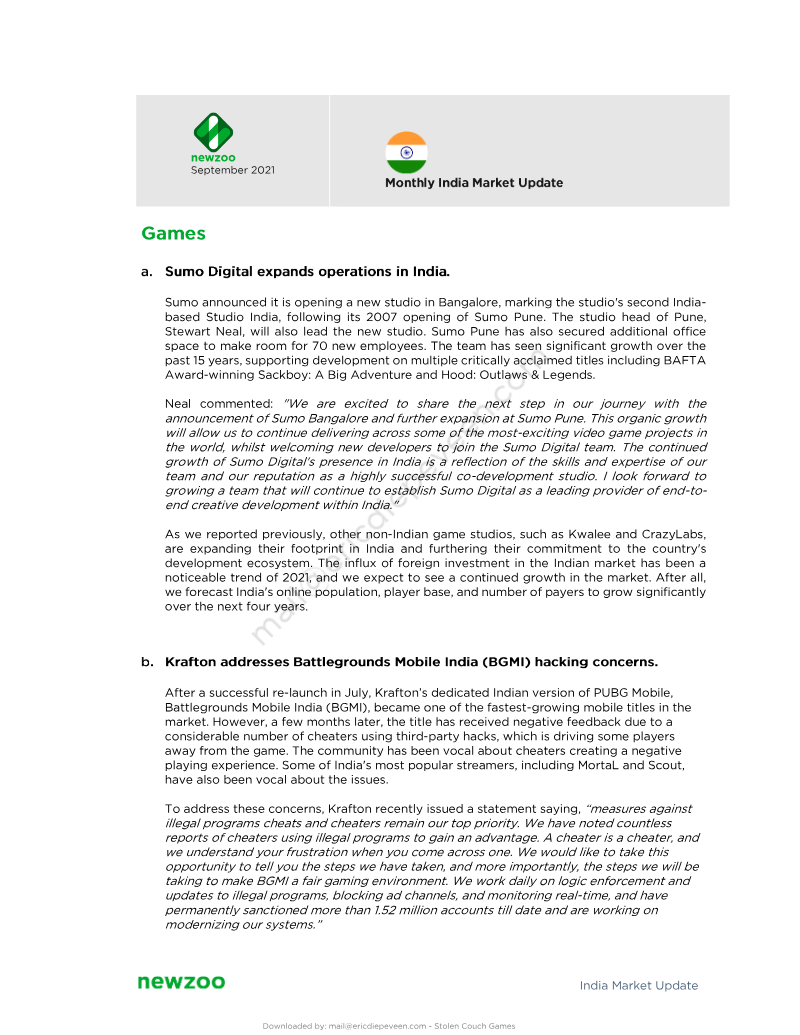
The Indian gaming and esports landscape is undergoing a period of rapid institutional growth and diversification, characterized by significant foreign investment and the expansion of domestic infrastructure. During the 2021 period, international developers such as Sumo Digital, Kwalee, and CrazyLabs have deepened their commitment to the region. Sumo Digital’s establishment of a second studio in Bangalore and the expansion of its Pune facility highlight a strategic shift toward utilizing India as a hub for end-to-end creative development rather than just a support center. This trend aligns with forecasts predicting substantial increases in India’s online population, player base, and total number of paying users over the next four years. The mobile gaming sector remains a primary driver of market activity, though it faces operational hurdles. Krafton’s Battlegrounds Mobile India has seen explosive growth but must navigate the technical challenge of maintaining competitive integrity. The company has permanently sanctioned over 1.52 million accounts to combat cheating, illustrating the friction between accessibility in free-to-play titles and the necessity of robust anti-cheat measures. Simultaneously, the real-money and fantasy gaming segments are accelerating, evidenced by Mobile Premier League reaching a $2.3 billion valuation following a $150 million Series E funding round intended to fuel global expansion into markets like the United States. The esports ecosystem is maturing through consolidation and the convergence of gaming with broader entertainment sectors. Market leader NODWIN Gaming has expanded its reach into the casual and mid-core demographics by acquiring OML Entertainment’s IP business and partnering with PVR Cinemas to pilot in-theater esports viewing. These moves signify a transition toward a more integrated media model where gaming, music, and comedy intersect to drive brand engagement. Overall, the Indian market is evolving into a sophisticated environment defined by high-value capital raises, localized content strategies, and the professionalization of the broader creator economy.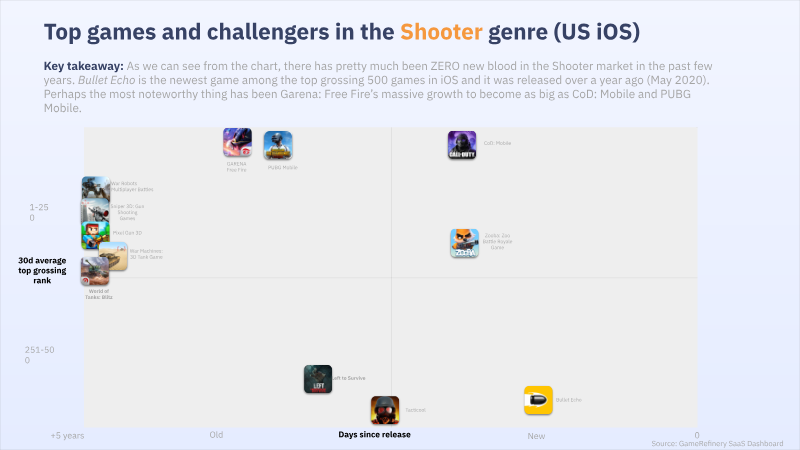

GameRefinery · 2021
ReportShooter Genre Snapshot: September 2021
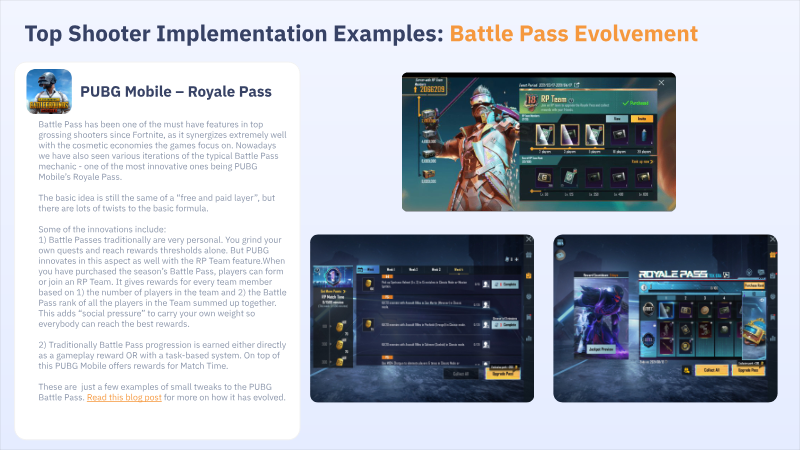
The mobile shooter genre in the United States iOS market currently occupies the sixth-largest position by revenue, accounting for approximately 6% of total market earnings. The sector is characterized by high market concentration, with the "Big Three" titles—Call of Duty: Mobile, PUBG Mobile, and Garena Free Fire—collectively generating over 84% of the genre's revenue. The competitive landscape underwent a significant shift following the removal of Fortnite from the App Store in August 2020, which previously held a 30% market share. In the subsequent year, Garena Free Fire emerged as the primary growth leader, more than doubling its revenue to reach parity with its top-tier competitors. Market entry for new titles has been notably stagnant, as no new shooter games have successfully broken into the top 200 grossing list in the past two years. The most recent entrant to the top 500, Bullet Echo, launched in May 2020. Despite this lack of new successful releases, the genre maintains high engagement through a rigorous content cadence, including seasonal updates, limited-time game modes, and extensive cosmetic collections. Monetization strategies are heavily standardized across the top performers, relying primarily on Battle Pass systems and diverse gacha mechanics that utilize limited-time offers to drive recurring spending. The industry is currently monitoring several high-profile upcoming releases, such as Valorant Mobile, Apex Legends Mobile, and Battlefield Mobile, to determine if these titles can disrupt the established hierarchy. Analysis of player motivations indicates that top shooters share a consistent profile, prioritizing mastery, competition, and excitement. While current market leaders rely on social and customization features to retain players, future entrants may attempt to differentiate themselves by targeting niche motivational drivers, such as exploration or survival-based mechanics, to expand the genre's audience.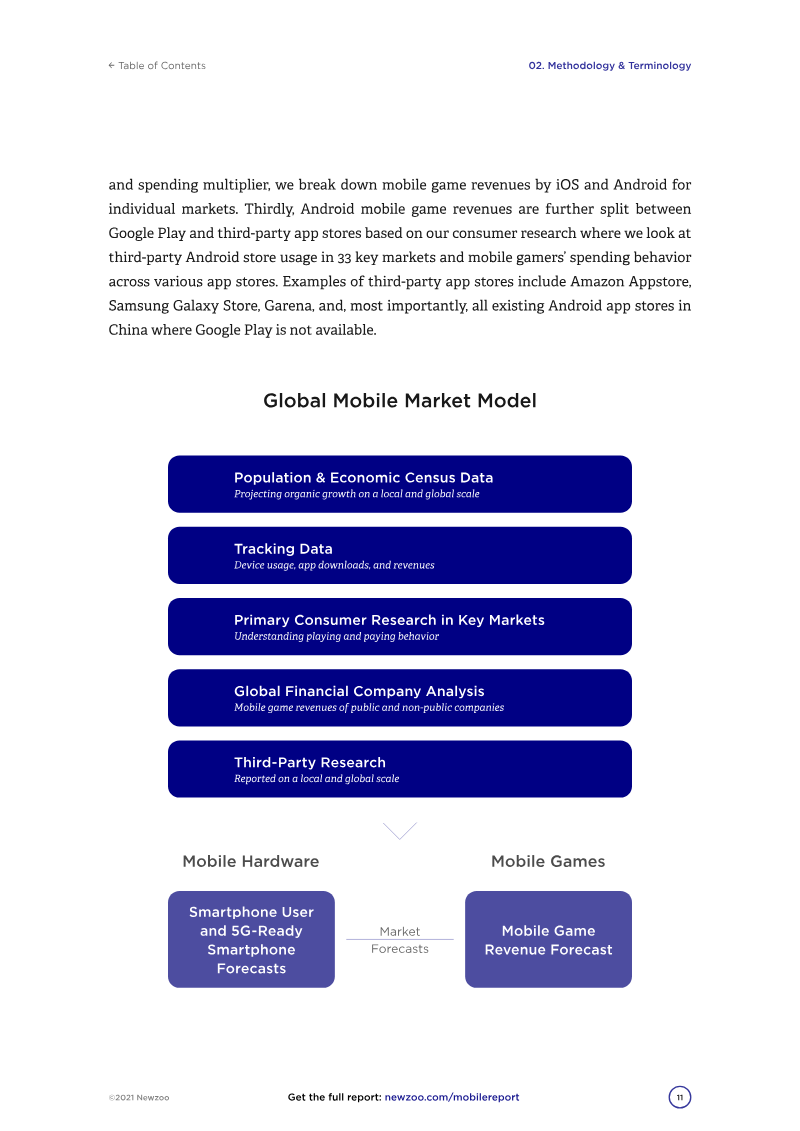
Newzoo · 2021
ReportGlobal Mobile Market Report 2021
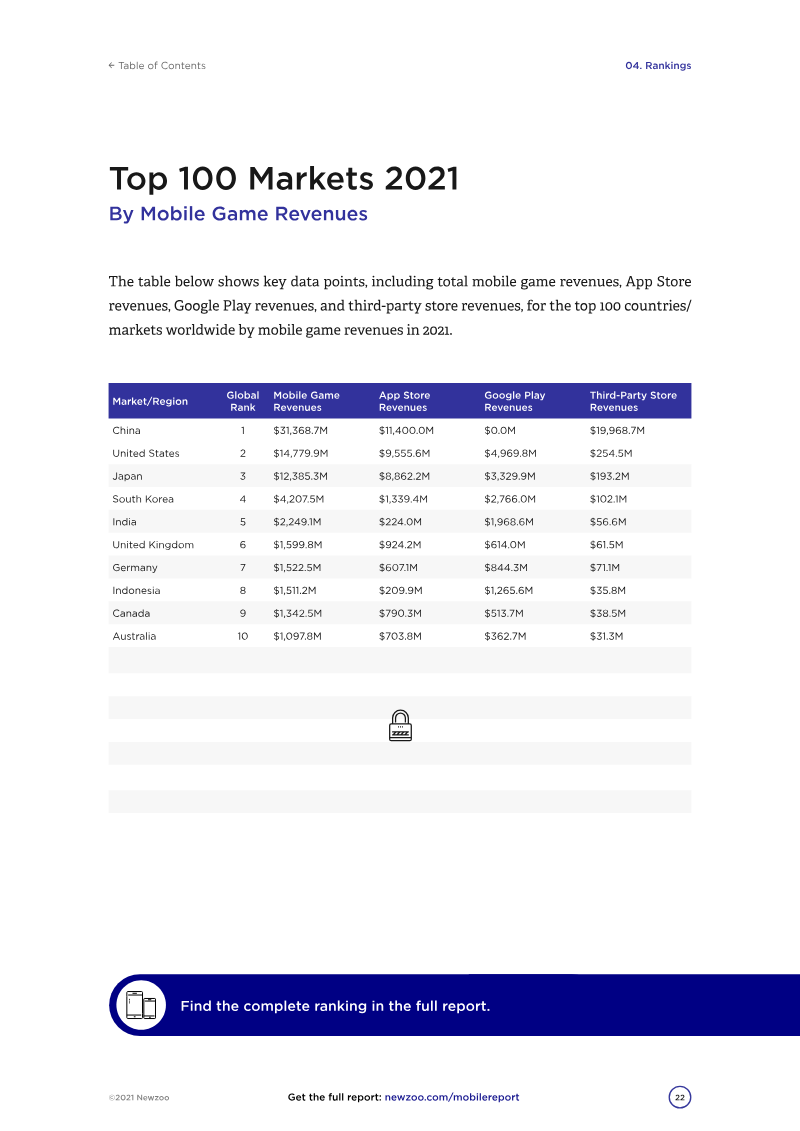
The 2021 global mobile market analysis underscores a rapidly expanding ecosystem in which smartphone ubiquity, rising active-device counts, and the early rollout of 5G networks are driving unprecedented growth in mobile gaming. By integrating socio-economic indicators, device-usage data from more than 400 million monthly active devices, and revenue tracking from major app-store partners, the study projects that mobile-game spending will climb from $90.7 billion in 2021 to $116.4 billion by 2024, reflecting an 11.2% compound annual growth rate. Smartphone penetration reached 3.9 billion users in 2021, a 6% year-over-year increase, while 5G-ready devices are beginning to reshape gameplay experiences and monetisation models. Regulatory shifts, notably Apple’s App-Tracking Transparency and Google’s parallel privacy policies, together with the high-profile Apple-Epic litigation, are redefining user-acquisition strategies and prompting developers to explore platform-driven revenue streams such as in-game advertising, subscriptions, and direct storefronts. Revenue distribution remains heavily skewed: the top 20% of spenders—players who spend $25 or more per month—account for roughly 80% of total income, favouring socially rich, competitive titles and showing greater openness to ads and subscription offers. A consumer survey of 5,400 gamers aged 10-50 across the United States, China, Germany, and Japan reveals modest regional variation in intellectual-property preferences, suggesting that aligning established entertainment IPs—books, comics, movies, and TV series—with appropriate game genres can enhance engagement. Overall, the findings highlight a market poised for continued expansion, driven by technological adoption, evolving privacy landscapes, and a concentrated core of high-value players.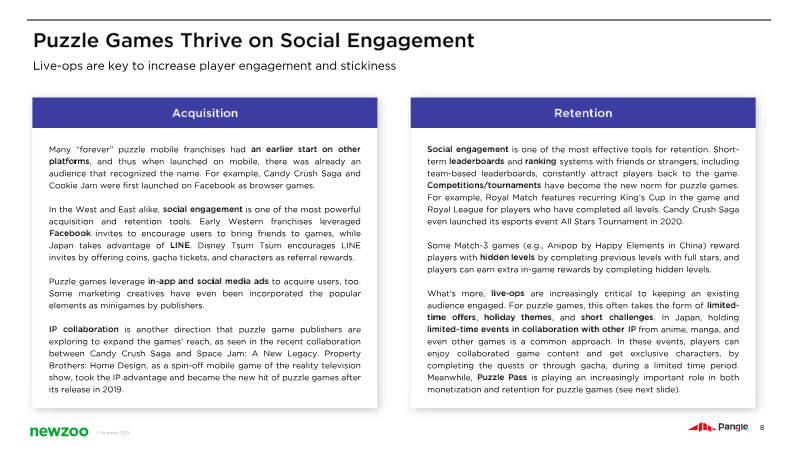
Newzoo & Pangle · 2021
ReportMobile Game Genre Report: Puzzle Games
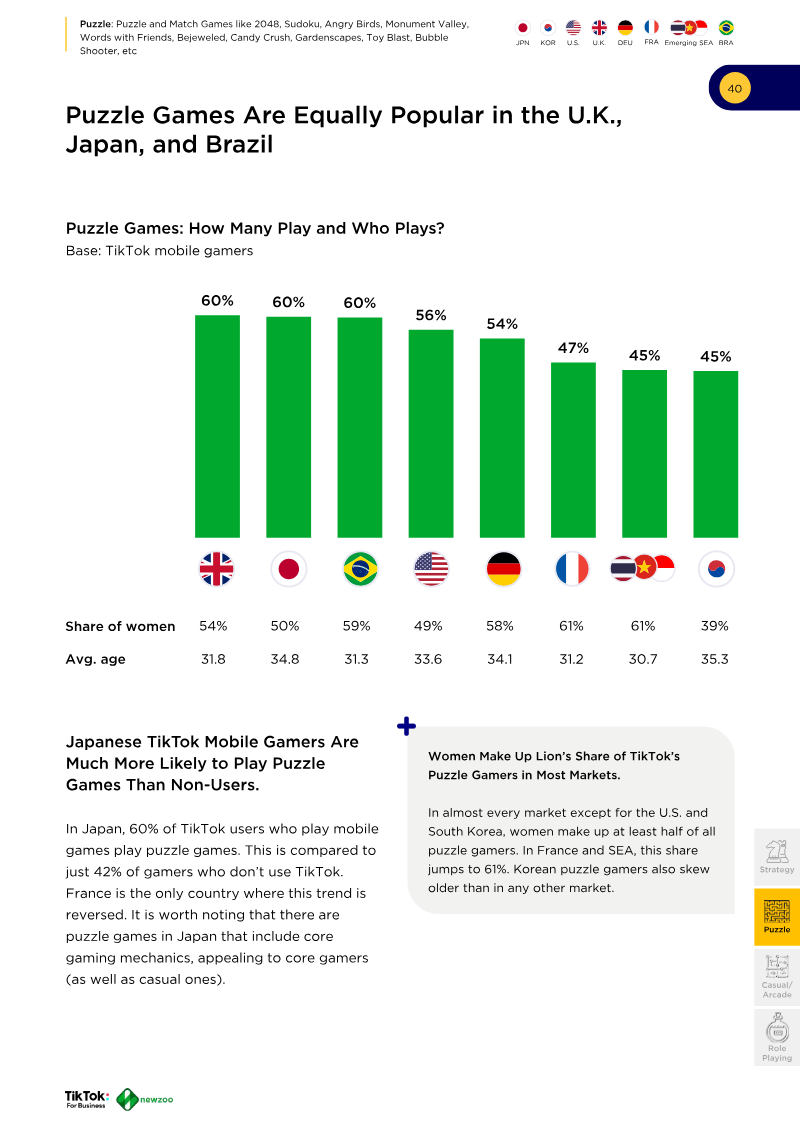
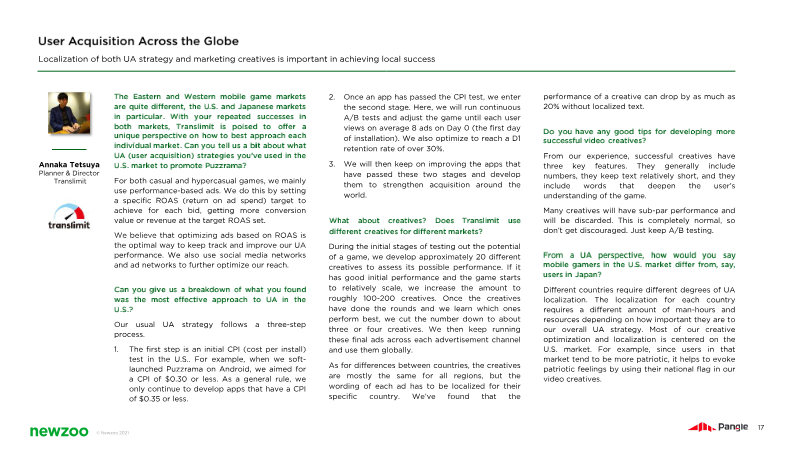
This analysis examines the mobile puzzle game market, contrasting dynamics between Western and Eastern regions with a focus on the United States, United Kingdom, Japan, and South Korea. In 2021, mobile emerged as the primary gaming platform globally, with puzzle games representing a significant 8% of total mobile game revenues, totaling $6.9 billion in 2020. The United States leads as the largest market for the genre ($2.0 billion), followed by Japan ($1.2 billion) and China ($0.9 billion). While puzzle games are the most popular genre across all surveyed markets, regional player behaviors and monetization preferences vary significantly. In the West, players favor casual experiences and show a higher tolerance for in-app advertising (IAA). Conversely, Eastern markets, particularly Japan, demonstrate a higher propensity for in-app purchases (IAP) and deeper engagement with character collection, progression mechanics, and "gacha" systems. Demographically, puzzle gamers worldwide skew female and hold mid-to-high incomes, though players in the East tend to be younger and more highly educated than their Western counterparts. The findings highlight a shift toward hybrid monetization models that combine IAP, IAA, and subscription-based "Battle Passes." While classic Match-3 remains the dominant subgenre, developers are increasingly integrating "meta" elements such as narrative, decoration, and RPG mechanics to drive retention. Successful global expansion requires localized user acquisition strategies; for instance, Japanese players respond better to longer intervals between ads and collaborative events with popular anime IPs, whereas U.S. marketing often benefits from performance-based ads and localized creative content. The data suggests that while the core appeal of puzzle solving is universal, long-term commercial success depends on tailoring the in-game economy and social engagement tools to specific regional expectations.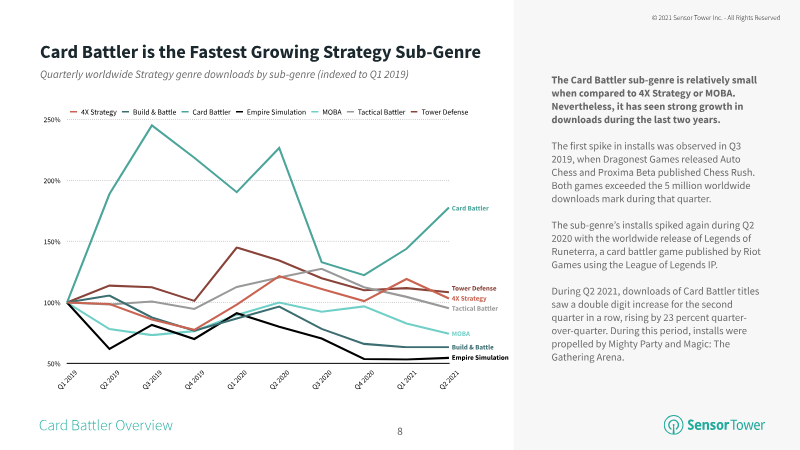
Sensor Tower · 2021
ReportState of Card Battler Mobile Games Report 2021
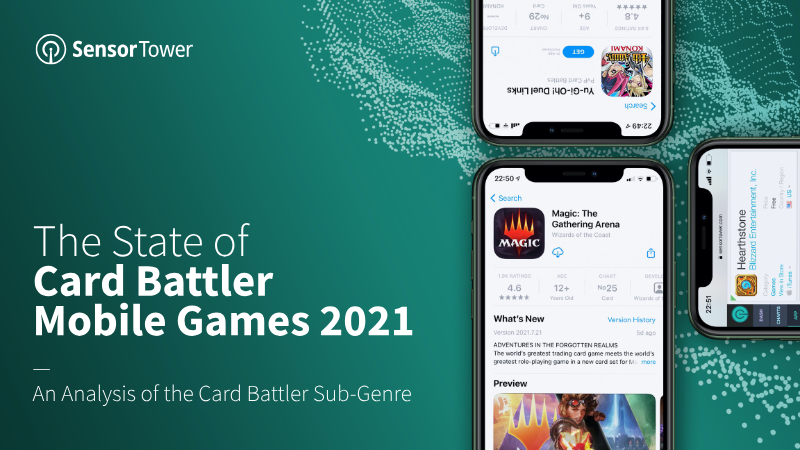
The mobile card-battler sub-genre represents a high-growth segment within the broader mid-core strategy market, characterized by strong monetization and increasing global diversification. While mid-core games account for only 20 percent of worldwide installs, they drive 60 percent of total player spending. Within this ecosystem, card battlers represent 5 percent of strategy game revenue and 6 percent of downloads. Data from the first half of 2021 indicates a significant shift in market composition; while historically dominated by Asian markets like Japan and China, the United States has emerged as a critical growth engine, increasing its revenue market share to 27 percent. Financial performance in the sub-genre reached a new baseline of over $55 million in monthly player spending during early 2021. This stability is supported by "forever franchises" such as Yu-Gi-Oh! Duel Links and Hearthstone, which have accumulated $700 million and nearly $1 billion in lifetime revenue, respectively. However, the market is also seeing rapid disruption from newer titles. Magic: The Gathering Arena and Mighty Party have utilized aggressive user acquisition strategies across major ad networks to challenge established leaders, with the former reaching the top 10 grossing list within three months of its mobile launch. The analysis, which utilizes Sensor Tower’s proprietary store and ad intelligence data, concludes that the sub-genre offers significant opportunities for both major intellectual properties and niche titles. In the U.S. market specifically, card battlers exhibit the fastest-growing revenue per download among all strategy sub-genres, rising 53 percent. This trend suggests that as the segment matures, it has the potential to match the commercial scale of dominant categories like 4X strategy and MOBA games.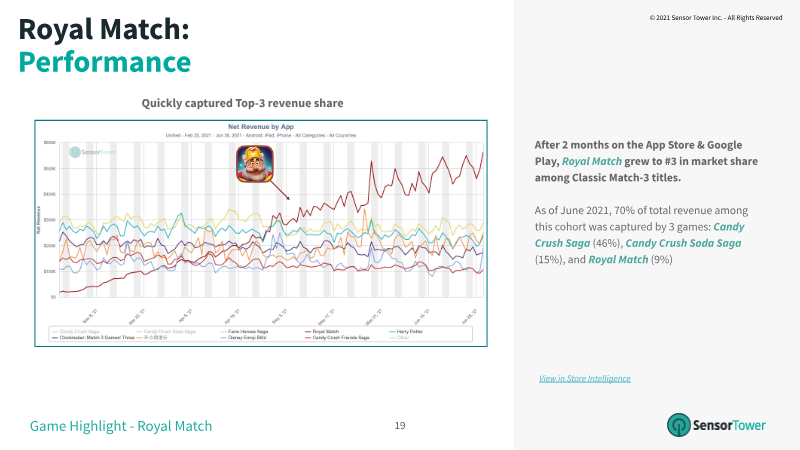
Sensor Tower · 2021
ReportCasual Puzzle Category Review 2021
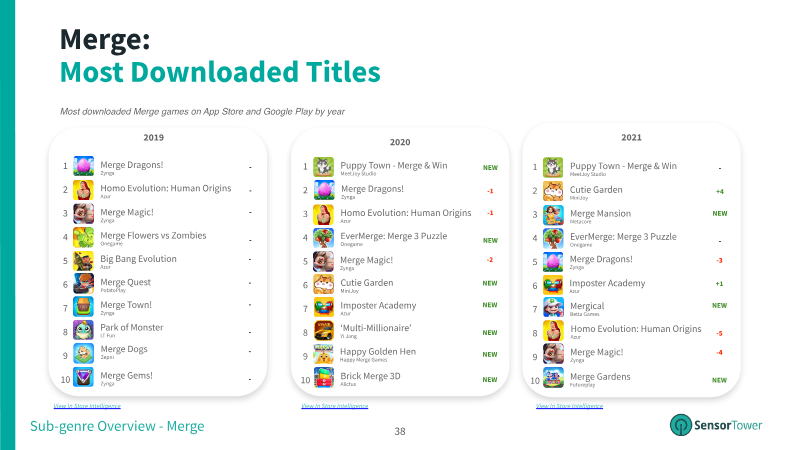
The casual puzzle market experienced a period of significant expansion and structural transformation between 2020 and mid-2021, characterized by a 17% increase in monthly revenue and a surge in successful new releases. While legacy giants like Activision Blizzard and Playrix maintain a combined 58% revenue share, the competitive landscape is shifting as the Puzzle & Decorate sub-genre surpasses Classic Match-3 as the industry’s primary revenue driver. This evolution is defined by the rise of titles like Project Makeover and Royal Match, which have successfully disrupted established hierarchies through superior Day-1 retention rates and the integration of narrative-driven 3D customization and fluid gameplay mechanics. The Merge sub-genre represents the most aggressive growth area, posting a 498% four-year compound annual growth rate. This segment’s 44% revenue increase over 18 months was largely propelled by Merge Mansion and EverMerge, which utilized innovative "merge-2" mechanics and substantial user acquisition investments to erode the market share of previous leaders like Zynga. Despite this volatility, the Puzzle & Decorate segment remains highly consolidated, with Playrix and AppLovin controlling 88% of total downloads and revenue, illustrating the high barrier to entry for sustained market dominance. In contrast to the rapid fluctuations of the Merge and Match-3 segments, the Hidden Objects category maintains a steady 13% four-year growth rate, dominated by June’s Journey. This title accounts for over half of the sub-genre's revenue despite a disproportionately low download share, highlighting the high monetization potential of its core audience. Across all casual puzzle segments, the most successful titles are increasingly those that integrate sophisticated decoration metas and narrative episodes, suggesting that future market leadership depends on blending traditional puzzle mechanics with deep, meta-driven player engagement.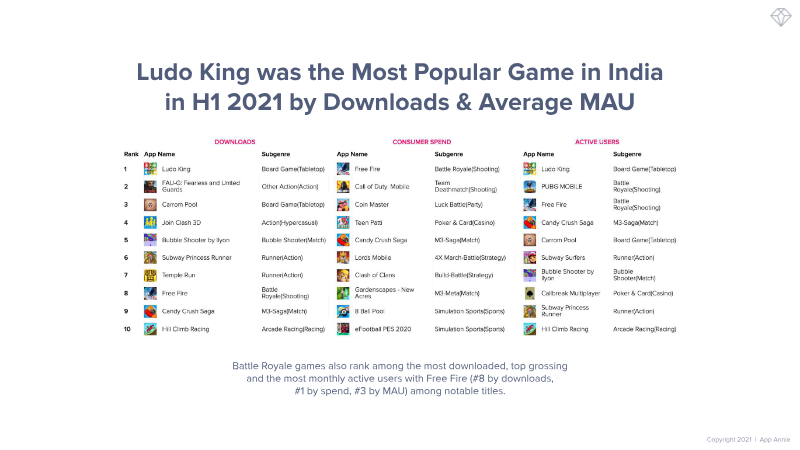


data.ai · 2021
ReportIndia: Mobile Market Spotlight: A Booming Mobile Economy
This analysis examines the rapid expansion of India’s mobile economy, focusing on user behavior, app categories, and market growth between 2019 and mid-2021. Utilizing proprietary intelligence data, the findings characterize India as one of the world’s most mobile-first markets, ranking second globally in total app downloads. In 2020, Indian users downloaded 24 billion apps, a 28% year-over-year increase, and spent a total of 651 billion hours on Android devices. Driven by the COVID-19 pandemic, average daily time spent per user rose from 3.3 hours in 2019 to 4.8 hours by the third quarter of 2021. Mobile gaming represents a significant pillar of this growth, with India becoming the largest market for game downloads in the first half of 2021, accounting for nearly one-fifth of global installs. While titles like Ludo King and Free Fire dominate active user and spend charts, homegrown publishers represent only 7.6% of the top 1,000 downloaded games, suggesting a major opportunity for local development. Additionally, monetization strategies are evolving, with a 15% increase in top-grossing games adopting hybrid models that combine in-app purchases with advertising. The financial services sector has also seen a dramatic transformation. Hours spent in investment and trading apps grew by 65% in 2020, led by platforms like Upstox Pro and WazirX. The Unified Payments Interface (UPI) continues to drive the market, with transaction volumes doubling year-over-year by mid-2021. Emerging segments such as "Buy Now Pay Later" and merchant utility apps like Khata Book are gaining significant traction. Beyond finance and gaming, the report highlights surging engagement in digital-first shopping, video streaming services like MX Player and Netflix, and a growing demand for mental health resources through meditation apps.
GameRefinery · 2021
Report