
The 2021 global mobile market analysis underscores a rapidly expanding ecosystem in which smartphone ubiquity, rising active‑device counts, and the early rollout of 5G networks are driving unprecedented growth in mobile gaming. By integrating socio‑economic indicators, device‑usage data from more than 400 million monthly active devices, and revenue tracking from major app‑store partners, the study projects that mobile‑game spending will climb from $90.7 billion in 2021 to $116.4 billion by 2024, reflecting an 11.2 % compound annual growth rate. Smartphone penetration reached 3.9 billion users in 2021, a 6 % year‑over‑year increase, while 5G‑ready devices are beginning to reshape gameplay experiences and monetisation models.
Regulatory shifts, notably Apple’s App‑Tracking Transparency and Google’s parallel privacy policies, together with the high‑profile Apple‑Epic litigation, are redefining user‑acquisition strategies and prompting developers to explore platform‑driven revenue streams such as in‑game advertising, subscriptions, and direct storefronts. Revenue distribution remains heavily skewed: the top 20 % of spenders—players who spend $25 or more per month—account for roughly 80 % of total income, favouring socially rich, competitive titles and showing greater openness to ads and subscription offers.
A consumer survey of 5,400 gamers aged 10‑50 across the United States, China, Germany, and Japan reveals modest regional variation in intellectual‑property preferences, suggesting that aligning established entertainment IPs—books, comics, movies, and TV series—with appropriate game genres can enhance engagement. Overall, the findings highlight a market poised for continued expansion, driven by technological adoption, evolving privacy landscapes, and a concentrated core of high‑value players.

Google · 2026
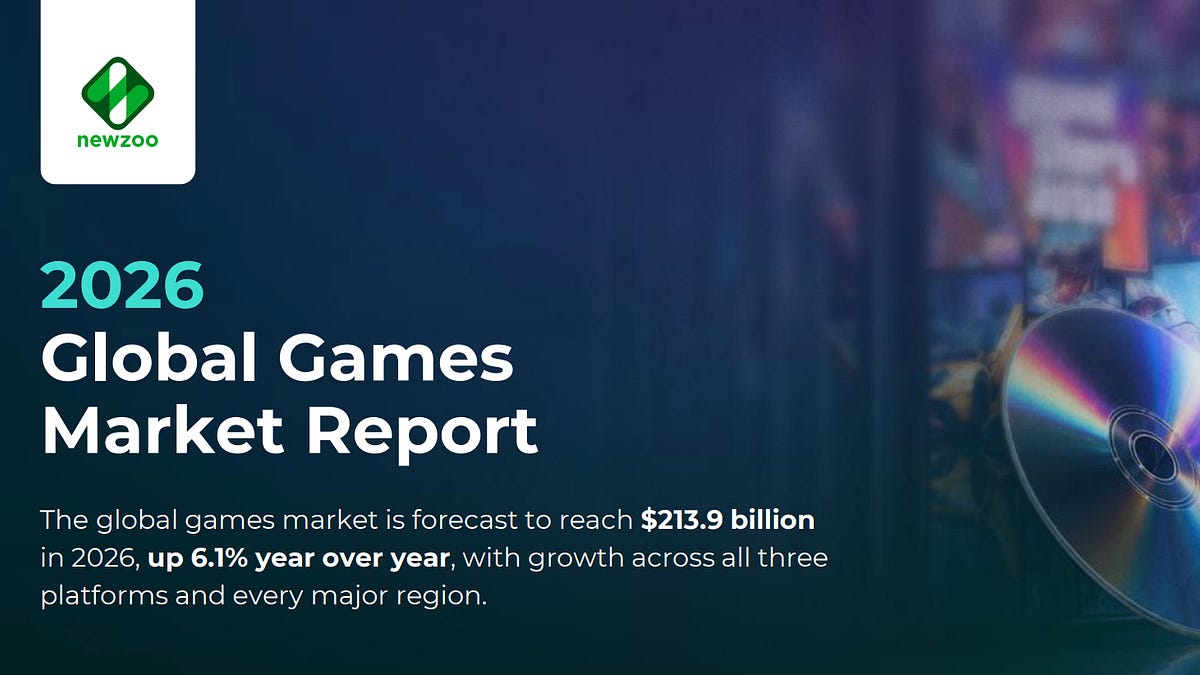
Newzoo · 2026

Newzoo · 2026
Newzoo · 2026

Deconstructor of Fun · 2026
Newzoo · 2026
Newzoo · 2026
Newzoo · 2026
Newzoo · 2026

Newzoo · 2026
Newzoo · 2026
Newzoo · 2025
InvestGame · 2026
InvestGame · 2026
Aream & Co · 2026

InvestGame · 2026
Epyllion · 2026
Xsolla · 2025
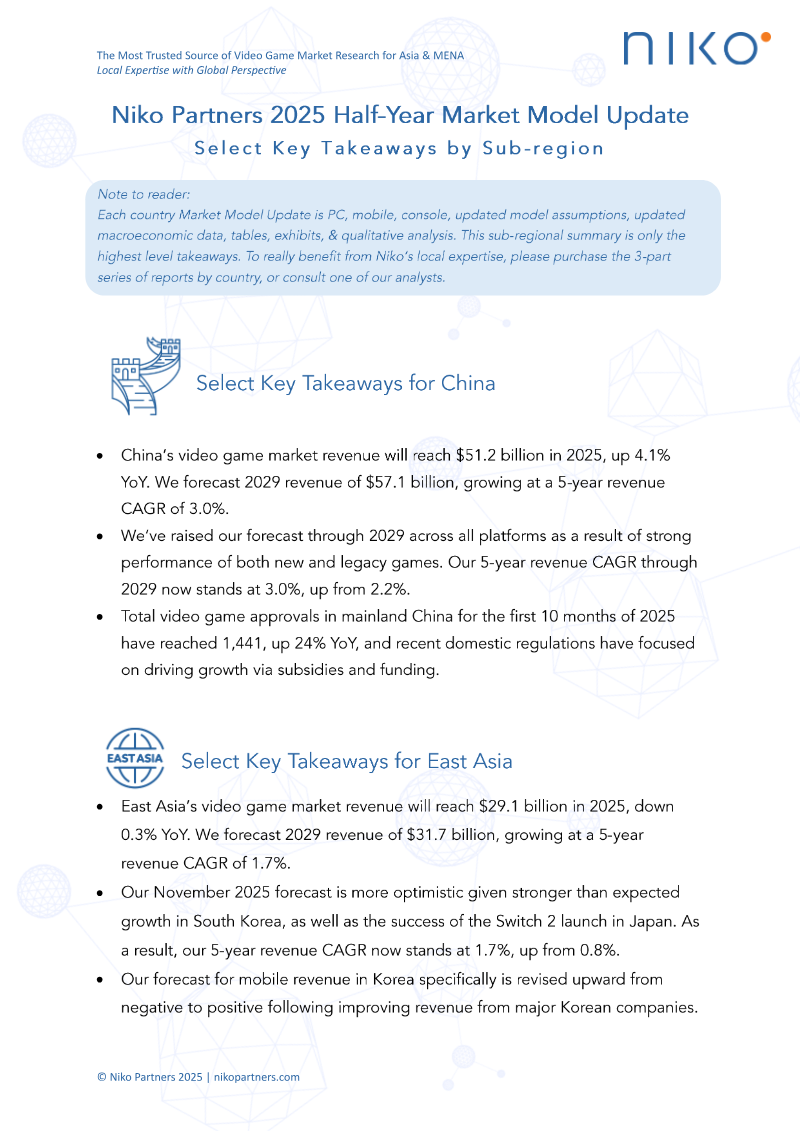
Niko Partners · 2025

Meridian Play · 2025

Aldora · 2025
Sensor Tower · 2024
Sensor Tower · 2024

Aldora · 2024