Key insights
4 slides
Key number
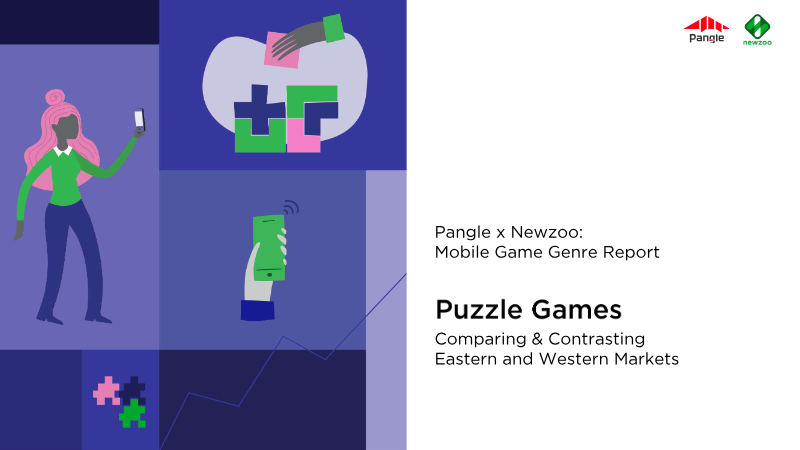
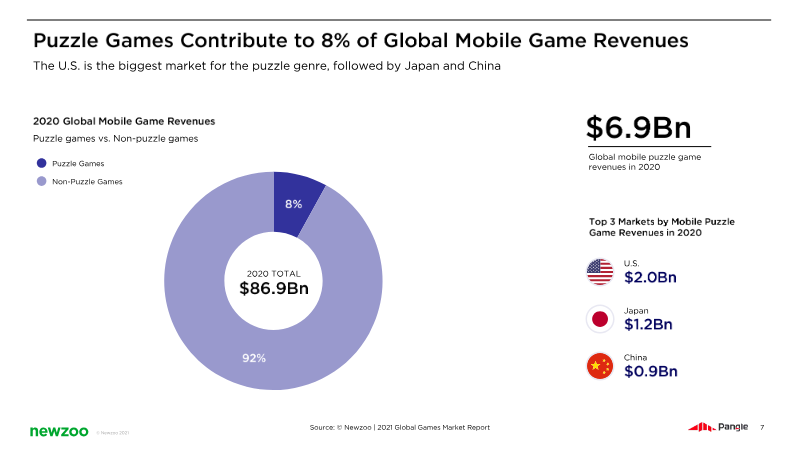
Puzzle games generated $6.9 billion in mobile revenue in 2020.
The global mobile puzzle game market reached $6.9 billion in 2020. Puzzle games account for 8% of total mobile game revenue.
What changed
Western and Eastern players prefer different puzzle game experiences.
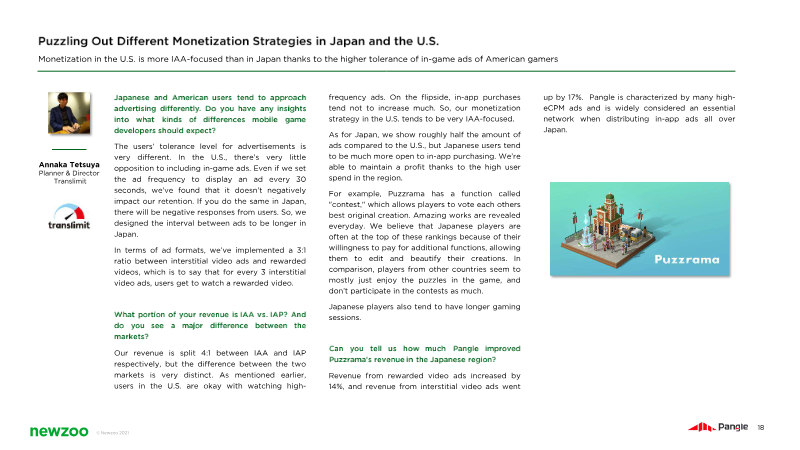
Western markets favor casual experiences and in-app advertising. Eastern markets show a higher propensity for in-app purchases and gacha systems.
Regional split. Western markets favor casual experiences and IAA, whereas Eastern markets demonstrate a higher propensity for IAP and gacha systems.
What changed
Developers are shifting toward hybrid monetization models.
Successful monetization is shifting toward hybrid models that combine IAP, IAA, and subscription-based Battle Passes. Developers are also integrating meta elements into classic Match-3 gameplay.
Page 9 of the report- 01Combine IAP, IAA, and Battle PassesHybrid monetization models combine in-app purchases, in-app advertising, and subscription-based Battle Passes.
- 02Integrate meta elementsDevelopers integrate narrative, decoration, and RPG mechanics into classic Match-3 gameplay.
- 03Improve retentionMeta elements are integrated to improve player retention.
Who plays
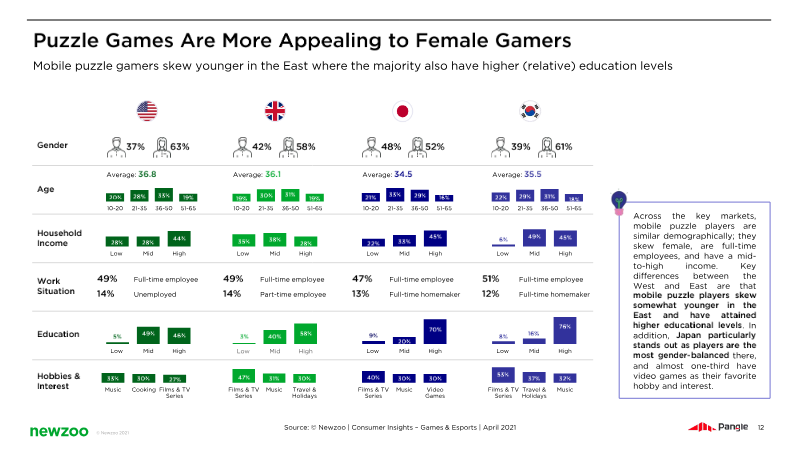
Puzzle gamers skew female and hold mid-to-high incomes.
Global puzzle gamers generally skew female and hold mid-to-high incomes. Eastern players tend to be younger and more highly educated than Western counterparts.
1 / 4
Ask AI about this report