Marketing & User Acquisition
Campaigns, ad creatives, app store optimization and the cost of a player.
235 documents



SuperScale · 2024
ReportTurning Organic Success into Long-Term Revenue: A Framework for F2P Mobile Games
This industry guide provides a strategic framework for mobile game developers to transition from initial organic traction to sustainable, long-term revenue growth. The central thesis argues that while organic "sparks" are invaluable, lasting success requires a rigorous, two-step approach: first, optimizing the game’s internal economy for maximum Lifetime Value (LTV), and second, deploying data-driven paid User Acquisition (UA) campaigns. The first phase focuses on monetization through ad mediation and in-app purchases (IAP). Key findings suggest that implementing a hybrid ad mediation setup—combining real-time bidding with manual waterfalls—can yield a 10% to 20% uplift in Average Revenue Per Daily Active User (ARPDAU) immediately. The analysis emphasizes the importance of rewarded ads over intrusive interstitials and highlights that personalized, segmented IAP offers can increase player spending by up to 23%. It also advocates for regional pricing, noting that price cuts in lower-purchasing-power markets can boost ARPDAU by as much as 30%. The second phase details a methodology for scaling through paid UA, emphasizing the necessity of accurate data post-IDFA. The guide recommends a three-step framework of assessment, preparation, and optimization. It advises that while platforms like Meta and TikTok are accessible for smaller budgets, larger networks typically require a minimum monthly spend of $20,000 to exit the "learning phase" effectively. Furthermore, it stresses the role of App Store Optimization (ASO), citing a case where a simple icon change resulted in a 90% install uplift. The scope of the analysis covers the global free-to-play (F2P) mobile gaming market, applicable to various genres and studio sizes. The methodology relies on industry benchmarks, case studies, and data from SuperScale’s proprietary analytics engine, SuperInsights. The overarching conclusion is that developers must treat monetization and UA as iterative, scientific processes, using predictive modeling to forecast Return on Ad Spend (ROAS) up to a year in advance to ensure business-level profitability.

Virtuos · 2024
ReportThe Golden Age of Video Game Remakes and Remasters
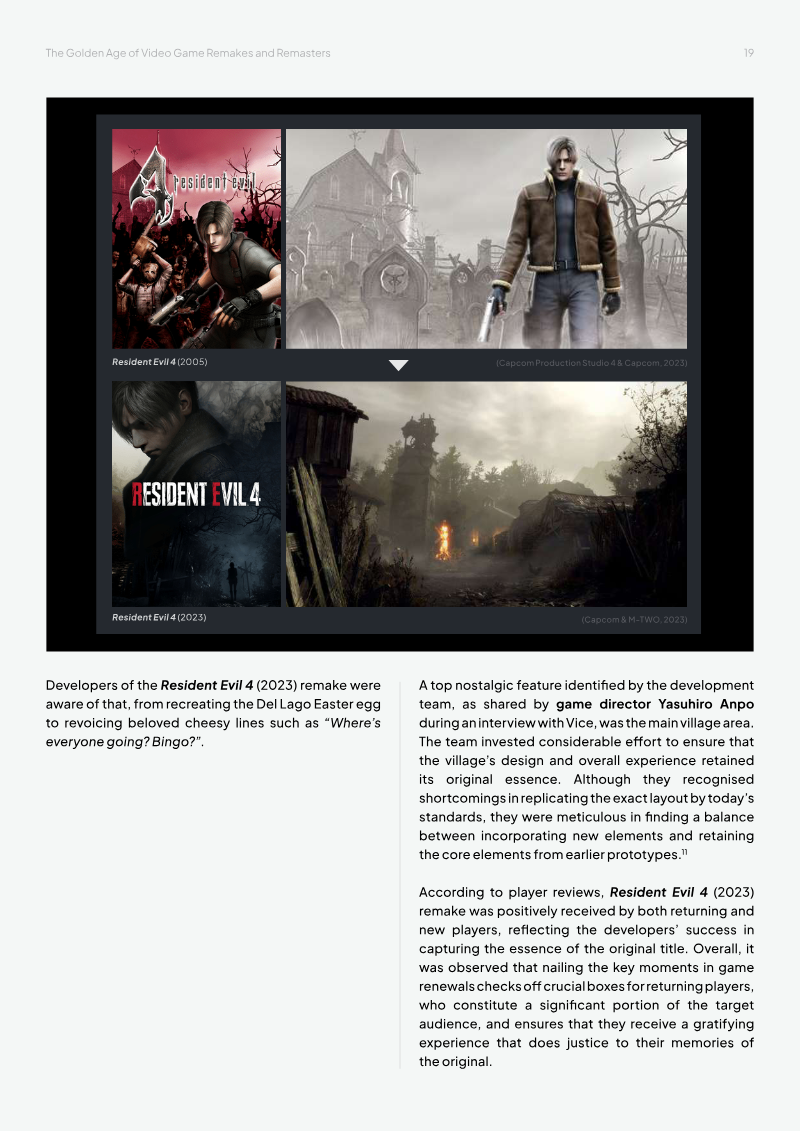
The video game industry has entered a definitive era of remakes and remasters, fueled by a risk-averse development climate and the significant purchasing power of nostalgic Millennial consumers. These projects serve as a strategic hedge against the rising costs of original intellectual property, allowing developers to re-engage dormant fanbases while attracting new audiences through modernized graphics and gameplay. Success in this sector depends heavily on timing and the specific nature of the renewal. Remasters perform most effectively when released within five years of an original title to capitalize on hardware transitions. Conversely, full remakes require a longer gestation period, typically between nine and twenty-five years, to ensure that technological advancements are substantial enough to justify a full-price purchase. Effective remakes must strike a delicate balance between preservation and modernization. Developers are encouraged to maintain the core essence and iconic moments of a title—such as specific art styles or dialogue—while aggressively updating outdated mechanics like quick-time events. Leveraging contemporary hardware capabilities, such as 3D audio and advanced rendering, is essential for meeting modern player expectations. By aligning these updates with a clear vision for modernization, studios can successfully bridge the gap between historical authenticity and current industry standards. This 2024 analysis provides a comprehensive overview of the global gaming landscape, focusing on the strategic advantages of revitalizing established franchises. While the findings highlight clear pathways to commercial success through market-tested IPs, the data is intended for informational purposes and reflects the broader trends shaping the current development cycle. Ultimately, the strategic deployment of remakes and remasters reduces financial volatility for studios while ensuring that classic gaming experiences remain accessible and relevant in a rapidly evolving technological environment.
Apptica · 2024
ReportState of the Market 2023: An Annual Analysis of App Market and Advertising Activities
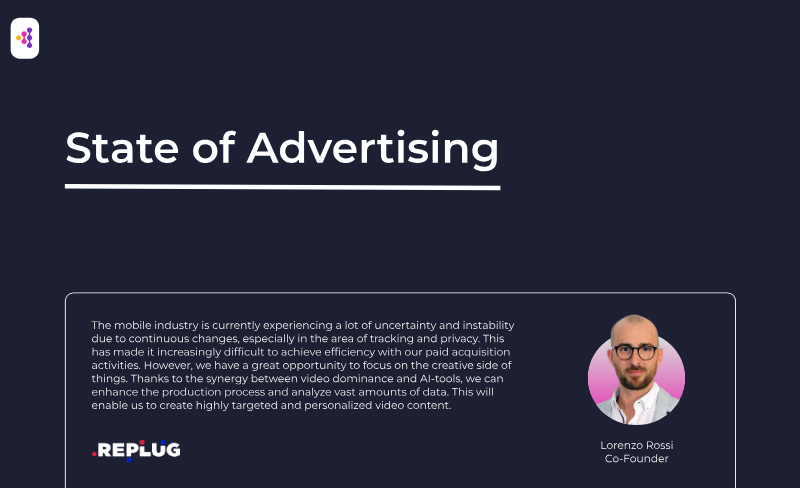
The 2023 market analysis evaluates global mobile advertising performance, concentrating on the two dominant operating systems, iOS and Android, and the leading social platforms that drive ad spend. Facebook and Instagram continue to command the largest share of the social advertising ecosystem, reinforcing their status as primary channels for marketers seeking broad reach and engagement across diverse audiences. Video advertising emerged as the pre-eminent format throughout the year, registering a 16% increase on iOS and a markedly higher 37% rise on Android. This divergence underscores Android’s accelerating momentum in video consumption and ad adoption, while iOS maintains steady growth. Interactive ad formats also showed modest gains, with a 2.7% uplift on iOS, indicating a gradual shift toward more engaging user experiences, though the expansion remains limited compared with video. Overall, the findings suggest that mobile video continues to dominate revenue generation, with Android delivering the strongest growth trajectory. The incremental rise in interactive formats points to emerging opportunities for richer creative solutions, yet video’s dominance will likely shape strategic allocations for the coming year. These trends highlight the importance of platform-specific optimization and the need for advertisers to balance high-impact video placements with exploratory interactive formats to maximize reach and performance across the mobile landscape.


Comscore · 2024
ReportUS Gaming Audience in 2023
The gaming landscape in 2024 has solidified as a mainstream entertainment pillar, with 62% of U.S. adults aged 18 to 65 identifying as active gamers. This audience is characterized by high engagement across multiple devices, as 77% of players utilize more than one platform and 40% play across PC, console, and mobile combined. While mobile-only gamers typically prefer free-to-play titles, console and PC players demonstrate a high willingness to invest in premium content, with 45% of all gamers spending over $40 on their most recent purchase. The demographic profile of the U.S. gaming audience skews toward Millennials and spans a wide range of household income levels. Genre preferences vary by platform; PC gamers favor first-person shooters, action, and role-playing games, while console players show a strong preference for action-adventure, sports, and racing titles. This broad reach is further amplified by the success of video game intellectual property in other media, evidenced by significant box office performance for game-inspired films. Advertising within the gaming ecosystem presents significant opportunities for brand growth through formats such as intrinsic in-game ads, rewarded video, and sponsorships. Approximately two-thirds of gamers view advertisements as having a positive or neutral impact on their experience, with 34% noting that product placements can enhance realism. Case studies, such as campaigns by Tommy Hilfiger, demonstrate that non-intrusive in-game ads can drive substantial lifts in brand favorability, recommendation, and purchase intent. Through partnerships between measurement firms like Comscore and ad-tech providers like Anzu, advertisers can now better quantify the incremental reach provided by these specialized digital environments.

Newzoo · 2024
ReportThe Ultimate Game Hype Tracking Guide
This guide provides a framework for tracking game performance through the purchase funnel, emphasizing the importance of monitoring consumer sentiment from the pre-launch phase through the post-release lifecycle. The primary thesis is that success in the competitive PC and console gaming market requires a data-driven understanding of player awareness, purchase intent, and demographic behavior. By benchmarking these metrics against competitors, developers can optimize marketing spend, identify target audiences, and sustain long-term engagement. The analysis relies on data from the Game Health Tracker, which surveys over 3,000 PC and console players in the United States monthly. Key metrics include unaided awareness, which measures spontaneous brand recall, and aided awareness, which gauges maximum reach through prompted recognition. The findings demonstrate that awareness often fluctuates based on major industry events, such as trailer releases or gameplay reveals. Furthermore, the conversion rate—defined as the percentage of aided-aware players who express purchase intent—serves as a critical indicator of marketing effectiveness. The research highlights that demographic profiling and channel analysis are essential for resource allocation. For example, data shows that younger players may be more effectively reached through specific social media platforms like TikTok and Snapchat, whereas older or different segments might prioritize online stores or gaming subscriptions. Post-release, the guide notes that awareness naturally plateaus, necessitating tactical interventions such as price drops, DLC releases, or content updates to re-engage potential buyers. Ultimately, the document concludes that while initial hype is valuable, sustained success depends on continuously monitoring the purchase funnel and adapting strategies to meet the evolving motivations of both primary and secondary player audiences.
SocialPeta · 2024
Report2023 Global Mobile Games Marketing Trends White Paper
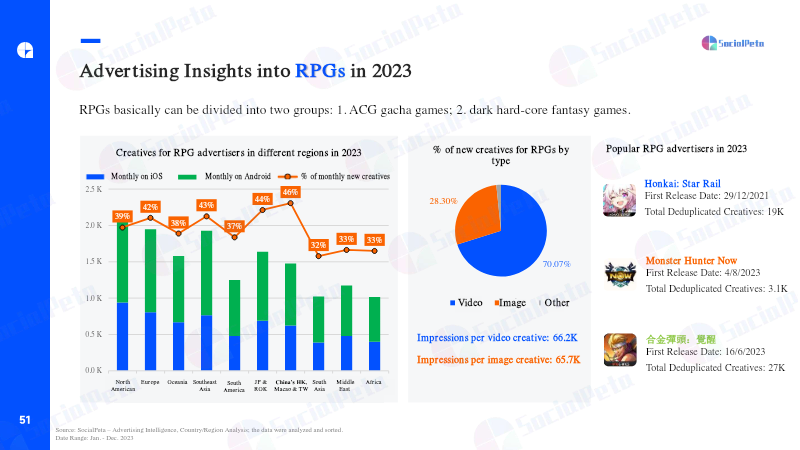
The global mobile gaming landscape underwent a significant transformation in 2023, characterized by a strategic shift toward the hybrid-casual model. This evolution combines the accessibility of hyper-casual mechanics with the monetization depth of mid-core titles, utilizing a mix of in-app advertising and in-app purchases to stabilize revenue. Marketing efforts were defined by a nearly 50% year-over-year surge in monthly active advertisers, exceeding 40,000 globally. While North America maintained its leadership in total advertiser volume, Southeast Asia emerged as the most competitive region for creative output. Concurrently, Android became the primary focus for volume-driven campaigns due to ongoing iOS privacy restrictions, though iOS remained the preferred platform for high-value mid-core and hard-core marketing. Creative strategies pivoted toward high-impact visual storytelling and the integration of generative AI to manage rising user acquisition costs. Although video remains the dominant format, accounting for over 76% of impressions, AI-generated image creatives gained significant traction, particularly in square formats. Developers increasingly utilized "mini-game" ad patterns—such as ASMR, dramatic narratives, and deliberate failure scenarios—to lower entry barriers for complex genres like Simulation and Strategy games. Meanwhile, RPG and Casino titles leaned heavily on influencer collaborations and live-action content to drive engagement in emerging markets across Southeast Asia and the Middle East. Sustainable growth in 2024 depends on a holistic integration of AI-driven production and programmatic transparency. The successful global expansion of Chinese-developed mini-games and the revitalization of legacy titles through trending ad mechanics illustrate a broader trend of creative agility. By analyzing over 1.4 billion ad creatives across 70 countries, it is evident that the industry is moving toward a data-driven future where high-engagement formats like rewarded ads and user-generated content are essential for navigating a fragmented and privacy-conscious global market.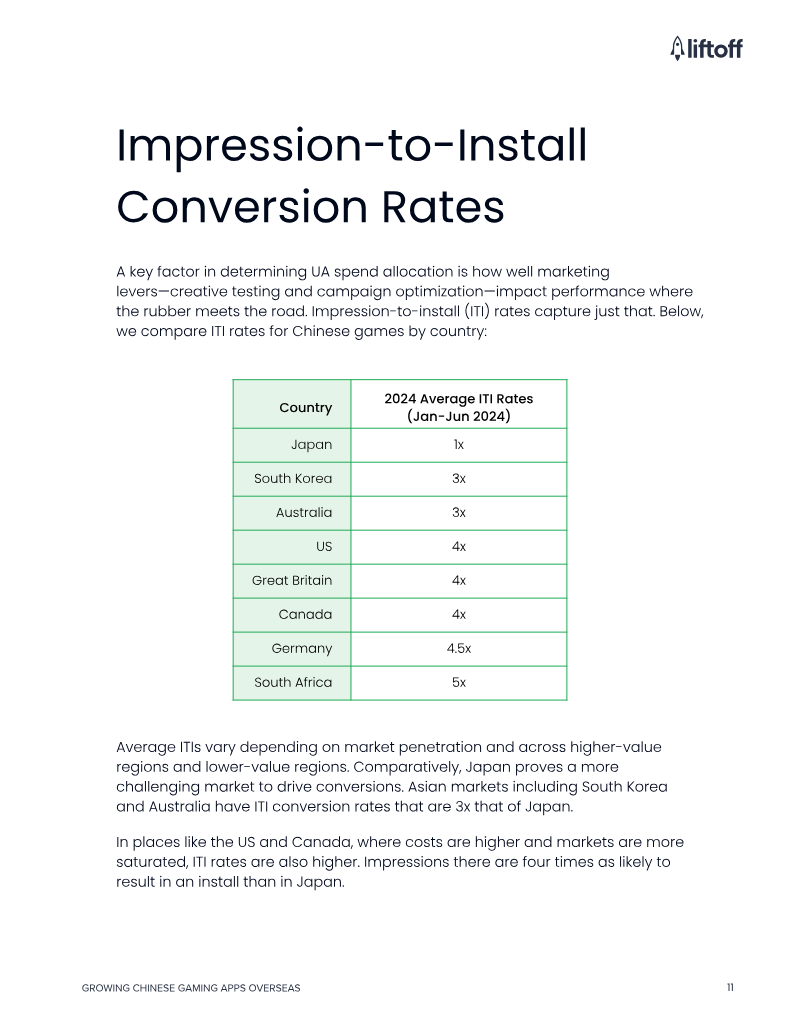

Liftoff · 2024
ReportGuide to Growing Chinese Gaming Apps Overseas: 2024
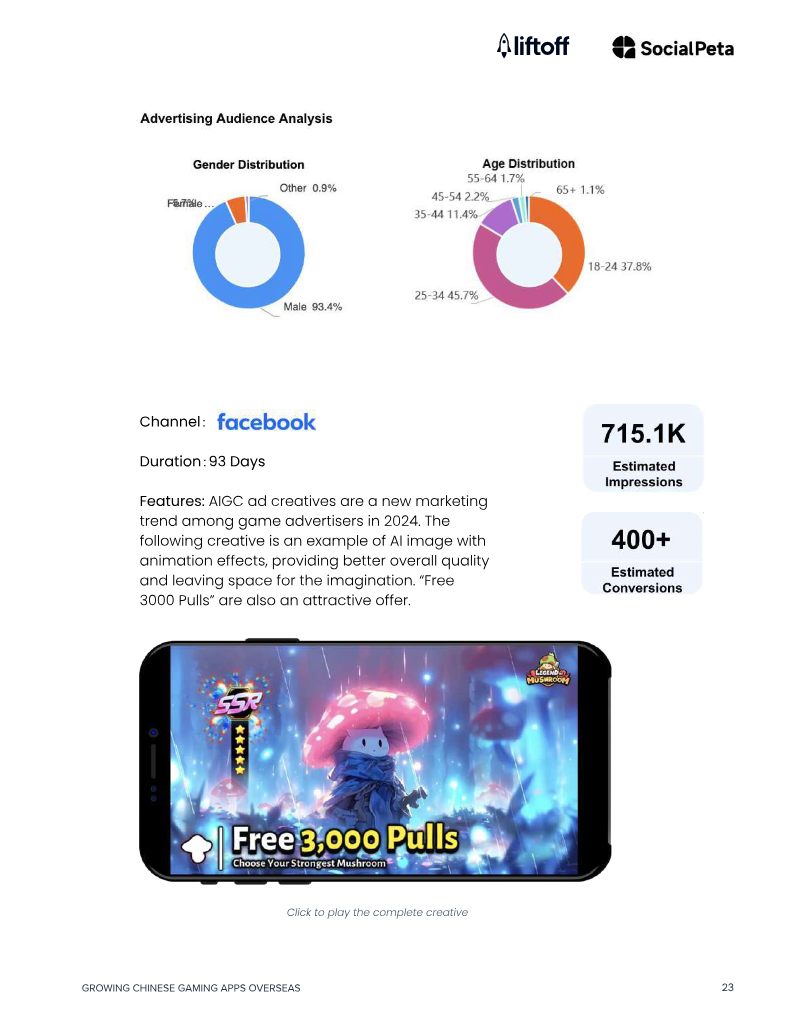
Chinese gaming applications continue to exert a dominant influence on the global stage, particularly within the strategy and role-playing game segments in mature markets such as the United States, Japan, and South Korea. While these regions offer substantial revenue potential, they are characterized by intense competition and elevated costs per install. To navigate these challenges, successful publishers are shifting toward hyper-localized strategies that tailor art styles to regional aesthetic preferences—favoring manga-inspired visuals in Japan and realistic or cartoon aesthetics in Western markets—while utilizing local influencers to establish brand credibility. Technological innovation serves as a primary driver for operational efficiency and user acquisition. The integration of generative AI has become essential for the rapid localization of ad creative, voice-overs, and marketing copy, ensuring both speed and brand compliance. High-performing titles currently leverage high-volume, innovative campaigns that incorporate minigames and AI-enhanced visuals to capture player attention. Beyond acquisition, long-term retention is increasingly supported by the implementation of social hangout spaces, home-building systems, and character trial models that balance accessibility with monetization. Monetization strategies have evolved to prioritize engagement through sophisticated, time-limited mechanics. Publishers are frequently employing box gachas, pull-milestone rewards, and gamified event structures such as diceboards and bingo to incentivize spending. Furthermore, the consistent deployment of diverse live events remains a critical requirement for maintaining player interest and competitive viability. By combining these aggressive monetization tactics with a commitment to continuous content updates, Chinese developers are effectively sustaining growth and deepening their footprint across the global gaming landscape throughout 2024.


Sensor Tower · 2024
ReportThe State of AAA Game Advertising
The analysis demonstrates that 2023 marked a peak in AAA game advertising, with live-service titles such as Fortnite commanding the highest spend (US$57 M) and blockbuster launches—Hogwarts Legacy, Diablo IV, and Call of Duty: Modern Warfare III—each exceeding US$25 M. YouTube remained the dominant channel (35% of spend), yet Facebook, TikTok, and Instagram captured significant shares, indicating a broadened media mix compared to 2022. Activision Blizzard and Epic Games led the market, each allocating over US$70 M to U.S. campaigns that supported both new intellectual properties and established franchises. Hogwarts Legacy’s strategy centered on PlayStation branding, with “PS5” references dominating pre-launch and launch creatives across TikTok, Facebook, and other social platforms. The campaign’s largest spend outside social media was on OTT (US$1.8 M), supplemented by Twitch, Reddit, and niche sites such as fandom.com and Pluto TV. The title relied heavily on the PlayStation partnership and traditional OTT channels rather than extensive brand collaborations. Diablo IV leveraged a “hellish” fantasy narrative, consistently using terms like devour, violence, and gore throughout its campaign. The title partnered with diverse brands—from Mountain Dew to SteelSeries, Secretlab, and First We Feast—to extend reach across gaming hardware, lifestyle, and food sectors. In contrast, Starfield capitalized on its Xbox Game Pass launch, offering a $70 full price or a $10/month subscription model that attracted new players. Its spend focused on YouTube and TikTok 15-second video ads (94% of creative), blending gameplay and live-action content across Hulu, YouTube, and Twitch. Brand partnerships spanned retailers like Target, hardware makers such as Seagate, and food brands like yfood, underscoring a multi-channel approach that blended platform promotion with cross-industry collaborations. Call of Duty: Modern Warfare III executed a highly integrated, multi-phase advertising strategy that blended pre-order, beta, launch, and holiday campaigns into a single continuous push. Forty percent of spend was allocated to post-launch activities, with creative focus shifting from celebrity endorsements to esports influencers. Ad formats diversified—reducing YouTube 15-second ads from 92% to 69% and increasing Instagram video posts—while high-profile collaborations (e.g., with 21 Savage and Monster) positioned the title as a leading example of modern AAA advertising. The campaign’s aggressive, format-diverse approach drove strong post-launch engagement and brand visibility. Fortnite remained the top-spending game in U.S. PC/console advertising, supported by a broad brand partnership ecosystem that includes Nike, LEGO, and Disney. The year’s most significant launches—Hogwarts Legacy (highest sales and ad spend, capitalizing on the Harry Potter IP) and Diablo IV (the biggest 2Q launch with robust live-service performance)—illustrate how new titles continue to drive high-profile marketing campaigns. Major publishers such as Activision Blizzard and Epic Games dominate ad spend, while diversified media strategies and cross-industry collaborations underpin the sector’s continued growth.


Liftoff · 2024
ReportLiftoff Report: Mobile Ad Creative Index 2024
The report presents a comprehensive analysis of mobile ad creative performance across four key app verticals—gaming, e-commerce, finance, and entertainment—for the period January 1 2023 to January 1 2024. Using 602 billion impressions, 49.4 billion clicks, and 144 million installs, the study benchmarks cost-per-install (CPI), install-to-action (ITA) rates, and day-7 return on ad spend (ROAS) by ad format (banner, native, interstitial, playable, video). Gaming ads that include video or playable elements achieve over 20-fold higher install likelihood than banner ads, while native remains the most cost-effective format at $1.80 CPI on average. In e-commerce, native and banner ads drive the highest ITA rates (>30%) and lowest CPAs ($2.57–$3.23), whereas video ads incur higher costs, especially on iOS. Finance apps see the lowest overall CPI ($1.84–$5.93) but exhibit a pronounced platform split, with iOS costs exceeding $5 for most formats; native and video ads outperform others in ITI conversion (up to 16×). Entertainment apps benefit from banner and native formats, with CPI ranging $2.79–$6.00, while video and interstitial ads are markedly more expensive on iOS. Methodologically, the report aggregates data from Liftoff’s Creative Studio and GameRefinery teams, supplemented by a survey of over 500 app marketers. It highlights emerging creative trends: generative AI for rapid asset creation, optimized user-generated content (UGC) with interactive elements, minigames and leaderboards for gaming acquisition, and longer immersive ad formats (45-second videos and triple-page ads) that drive higher engagement. The findings underscore the importance of platform-specific optimization, format selection based on vertical and performance goals, and leveraging AI tools to scale creative production while maintaining authenticity.


SocialPeta · 2024
ReportMarketing Insights into Global Mobile Games & Minigames in 2024
The analysis outlines global mobile game advertising trends for 2024, drawing on a database of over 1.6 billion ad creatives from more than 70 countries and 80 media channels, including Facebook, TikTok, YouTube, Unity, and WeChat. Monthly active mobile game advertisers peaked at 70 k in June, with a total of 63.5 k average for the year and a steady decline in new advertisers to below 7% after August. Conversely, the proportion of advertisers releasing new creatives rose from 52.7% in early 2024 to an expected 55% in the second half, with new creatives comprising roughly 65% of total ads. Genre-level data show casual games experienced a 3% YoY drop, while casino titles grew over 10%. RPGs and puzzle games remained stable. The top twenty global mobile titles by ad spend include “Pesta Ludo,” “Monopoly GO!,” and “Block Blast! Hungry.” In the minigame segment, WeChat’s market reached RMB 60 billion in 2023, with over 400 k developers and a user base averaging one hour of play per day; the most successful minigames are predominantly RPG/SLG hybrids. Marketing patterns differ by region: Asia-Pacific campaigns focus on pre-registration and new-release periods, whereas Europe and America emphasize stable-period creatives. The most anticipated minigames for H2 2024, such as “Capybara Go!” and “Bacon’s Revenge,” demonstrate high daily revenue projections (over USD 600 k) and rely on video-heavy, localized creative strategies across Meta platforms and YouTube. The report’s methodology relies on real-time scraping of ad creatives, monthly activity metrics, and genre classification to provide actionable insights for advertisers seeking to optimize spend in a tightening competitive landscape.


data.ai · 2024
ReportMobile App Predictions for 2024
Mobile market analysts project a dynamic yet uneven 2024 landscape, with generative AI and video-first platforms driving growth while text-centric microblogging contracts. Global app store revenue is expected to reach $111.4 billion, a 4% rebound after a 3% decline in 2023, with the United States accounting for roughly 80% of that uptick. Gaming spend is projected to climb back to $111 billion, up 4% from the 2023 forecast of $107.5 billion; key growth will come from RPG, match-making, party and casino titles, particularly in the U.S., Japan, South Korea, Taiwan, Germany and the UK. Video-centric social media continues to dominate consumer spending, with TikTok poised to surpass $14.6 billion in lifetime spend and reach a $16 billion milestone by year-end. The platform’s average monthly user hours are projected to hit 40 hours in December 2024, up from 32.5 hours in October 2023, underscoring its monetization potential beyond advertising through tipping and subscription models. In contrast, microblogging apps such as X (Twitter) and Threads are forecast to see daily active users fall by 53 million and 20 million respectively, reflecting a shift toward photo-and video-first experiences. Generative AI apps are set to experience a 40% year-over-year download growth, with AI chatbots and art generators leading the surge. The overall trend suggests that AI-enhanced features, video content, and direct consumer monetization will shape the mobile ecosystem in 2024, while traditional ad-driven models face increasing pressure.


Fandom · 2024
Report