Marketing & User Acquisition
Campaigns, ad creatives, app store optimization and the cost of a player.
235 documents

SocialPeta · 2024
ReportInsights into Marketing Trends in Southeast Asian Mobile Games in 2024
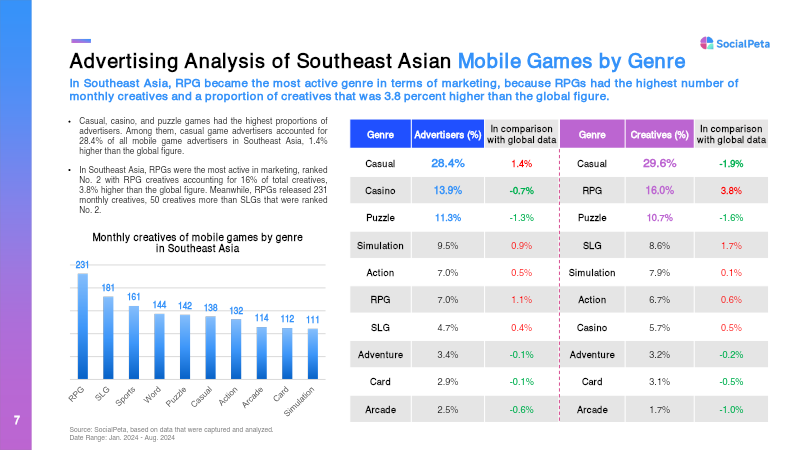
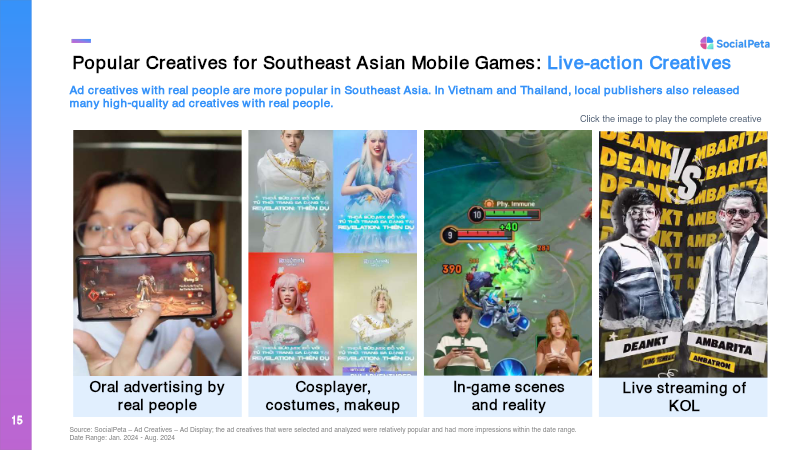
The Southeast Asian mobile gaming market in 2024 is characterized by high advertiser activity and a strategic shift toward video-centric marketing. Data collected between January and August 2024 reveals a monthly average of over 20,000 active advertisers in the region, representing a 9.5% year-over-year increase. While the proportion of new advertisers remained stable at approximately 3.7%, a significant surge occurred in June, where new game advertisers reached 8.5% of the total market. Geographically, Indonesia leads the region in the volume of monthly advertisers with 12.3K, surpassing major markets like Japan and South Korea. However, Thailand remains the most intensive in terms of content volume, serving as the only country in the region to exceed 100 monthly creatives per advertiser. From a platform perspective, Android dominates the landscape, accounting for over 70% of advertisers in markets like Indonesia, though iOS users see a higher proportion of image-based creatives. Genre analysis indicates that while casual games maintain the largest share of advertisers at 28.4%, Role-Playing Games (RPGs) are the most aggressive marketers. RPGs account for 16% of total creatives, a figure significantly higher than the global average. Strategy games (SLGs) lead in format innovation, with 76.5% of their ads utilizing video. Across all genres, video is the dominant medium, making up nearly 70% of all creatives, with a growing trend toward using local influencers, live-action footage, and "mini-game" playables to drive engagement. The findings are based on sampling from SocialPeta’s database of 1.6 billion ad creatives across 70 global channels. The methodology combines statistical forecasting with desk research to track advertising intelligence across Indonesia, Thailand, Singapore, Malaysia, Vietnam, the Philippines, and Cambodia. Findings suggest that successful regional campaigns increasingly rely on localized content, such as Thai celebrity endorsements and TikTok-inspired audio synchronization, to navigate the fierce competition in the Southeast Asian media-buying landscape.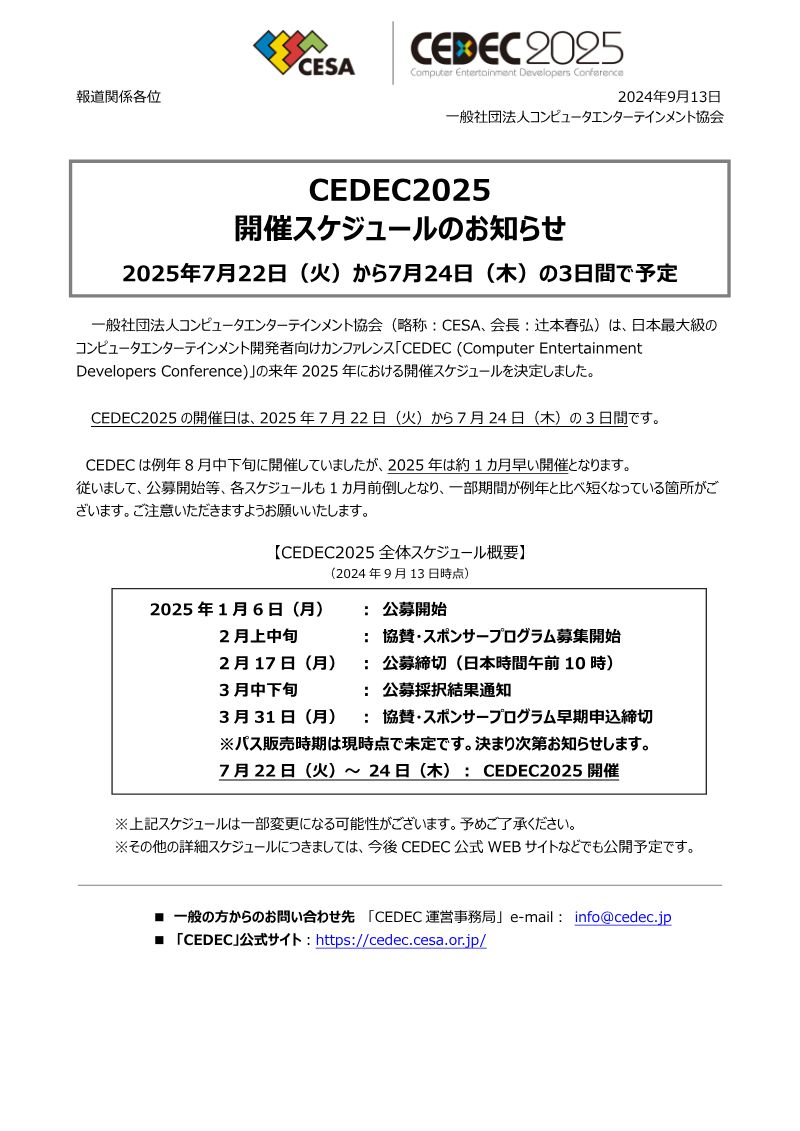
Computer Entertainment Developers Association · 2024
ReportCEDEC 2025 Schedule Announcement
The announcement establishes the official timetable for CEDEC 2025, Japan’s premier three-day conference for computer-entertainment developers organized by the Computer Entertainment Developers Association (CESA). By moving the event to July 22-24, 2025—approximately one month earlier than the traditional late-August slot—the schedule compresses several preparatory phases, prompting participants to adjust their planning accordingly. Key milestones are detailed: the public call for proposals opens on January 6, 2025, followed by the launch of sponsor and partnership programs in early-to-mid February. The final deadline for submissions is set for February 17 at 10 a.m. JST, with selection results communicated in late March. An early-application deadline for sponsorships occurs on March 31, while ticket-sale dates remain pending and will be announced later. The conference itself occupies three consecutive days, Tuesday through Thursday, in late July. The scope is national, targeting Japanese developers, studios, and related stakeholders within the computer-entertainment sector, and it outlines a timeline that spans from early January through late July 2025. Although the schedule is provisional and subject to minor adjustments, contact information for the CEDEC operations office and the official website are provided for inquiries and future updates.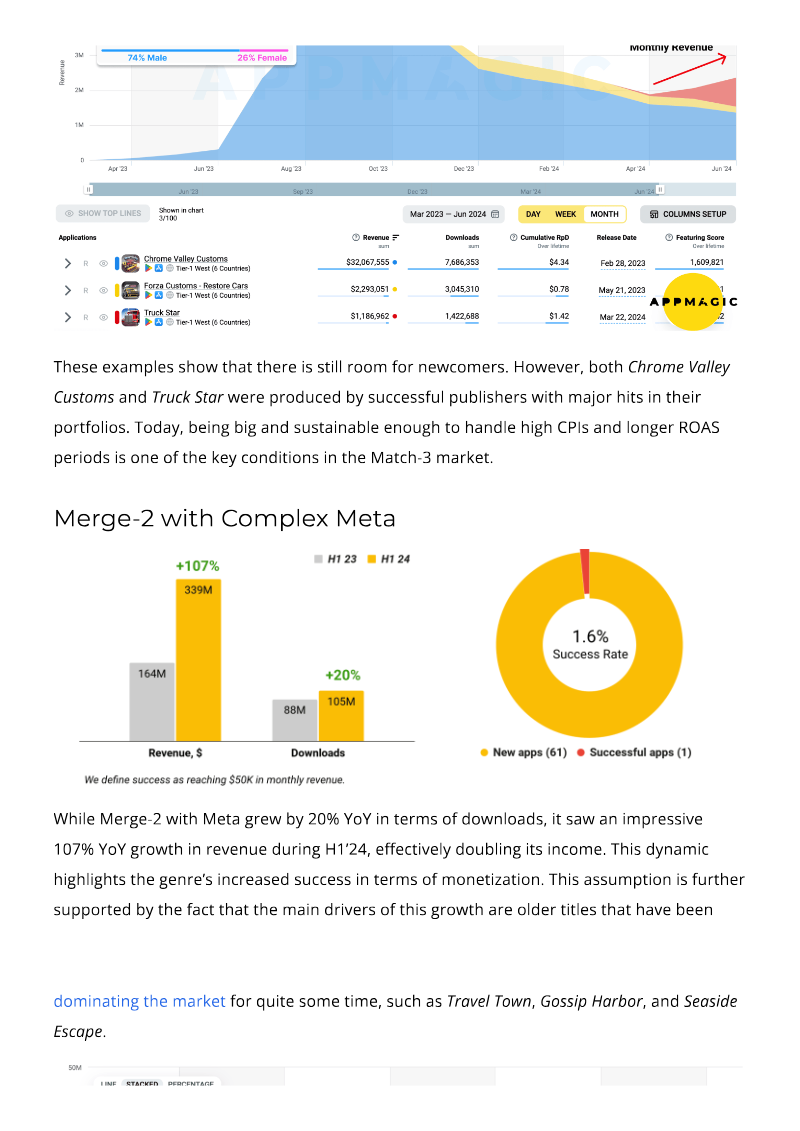
AppMagic · 2024
ReportCasual Gaming in H1 2024: Tough Competition and New Opportunities
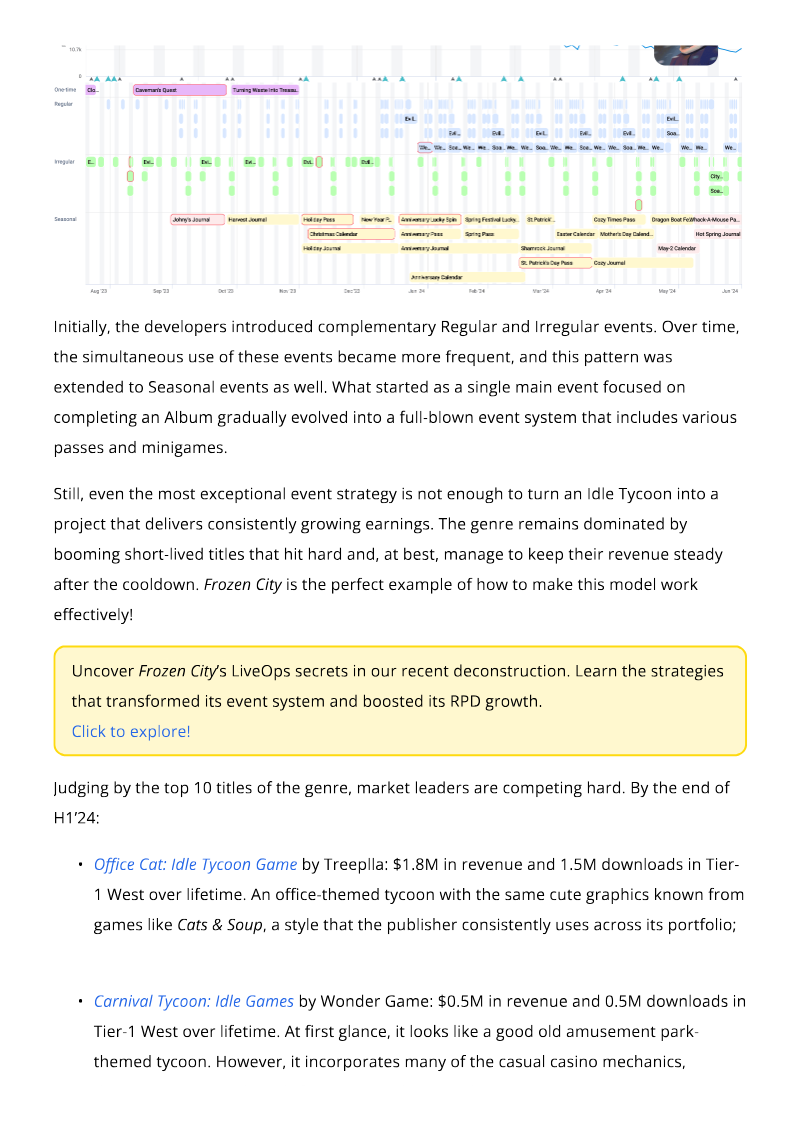
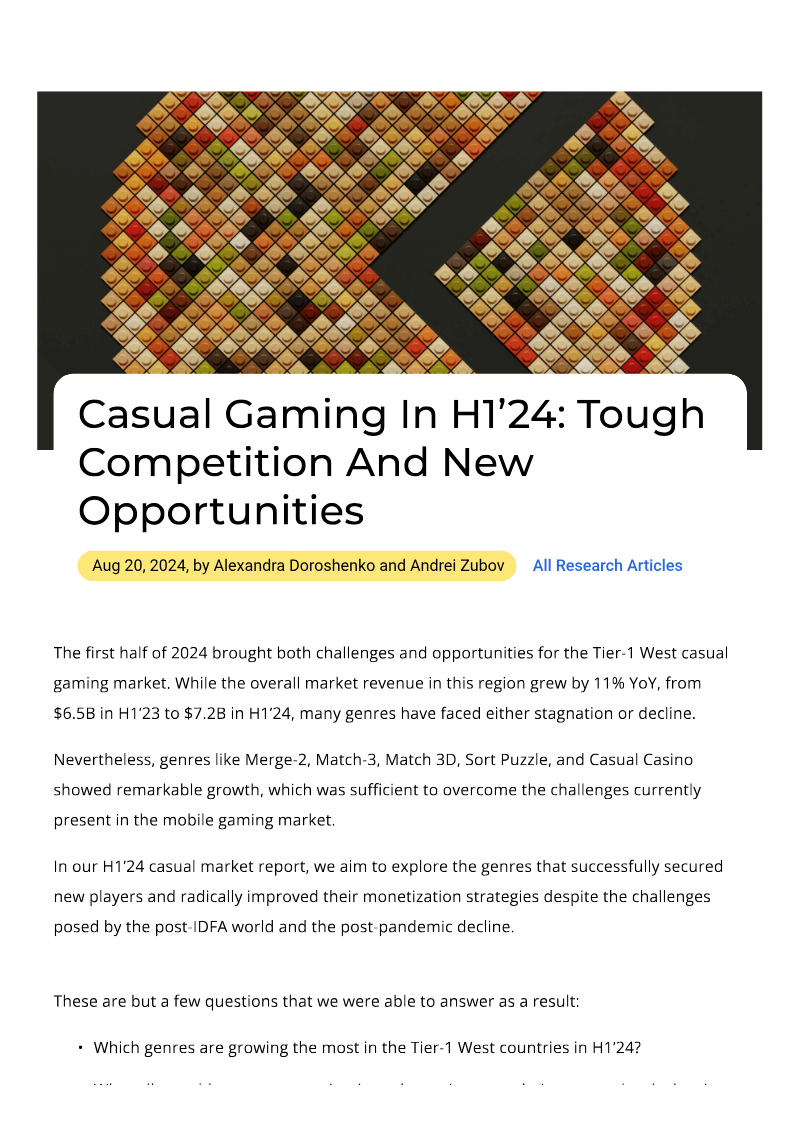
The mobile casual gaming market in Tier-1 Western countries—comprising the US, UK, Australia, Canada, France, and Germany—experienced an 11% year-over-year revenue increase in the first half of 2024, reaching $7.2 billion. Despite this growth, the industry faces significant challenges, including post-pandemic market cooling and the ongoing impact of IDFA privacy changes. A recurring trend across successful titles is that revenue growth is increasingly outpacing download volume, signaling a strategic shift toward enhanced monetization and sophisticated LiveOps rather than pure user acquisition. The analysis focuses on six key genres, revealing a landscape where established giants often dominate, yet specific niches offer growth potential. Match-3 with Meta remains the highest-grossing category, though it is heavily concentrated among four major titles. Conversely, the Sort Puzzle genre emerged as the fastest-growing segment, achieving a twelve-fold year-over-year revenue increase. Merge-2 and Match 3D also demonstrated strong performance, with the latter doubling its revenue primarily through new, innovative titles that integrate meta-features and social mechanics. Meanwhile, the Casual Casino genre remains highly monopolized, with Monopoly GO! alone accounting for 63% of total genre revenue. Methodologically, the findings are derived from an extensive classification system covering over 300 genres, with in-depth performance tracking of specific titles and their respective LiveOps calendars. The data indicates that while market entry barriers are high due to rising customer acquisition costs, developers can still succeed by refining monetization strategies and implementing robust, event-driven engagement models. The current market environment favors publishers capable of sustaining long-term operations over those relying on short-lived viral hits, as evidenced by the operational transition of former leaders like Frozen City.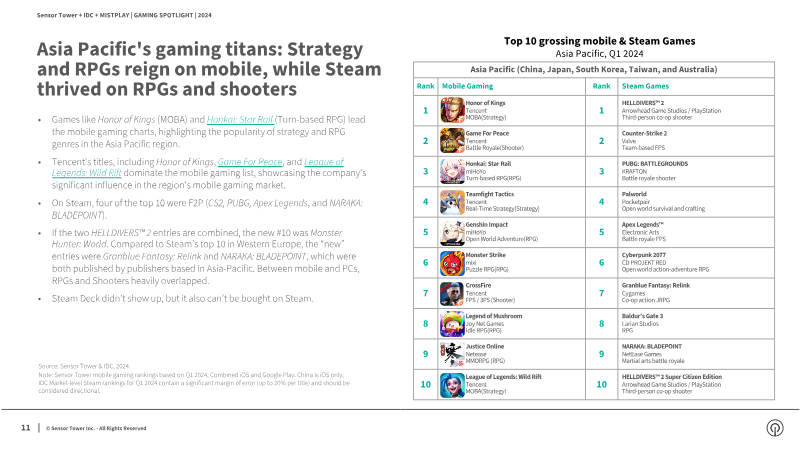
Sensor Tower · 2024
ReportGaming Spotlight H1 2024
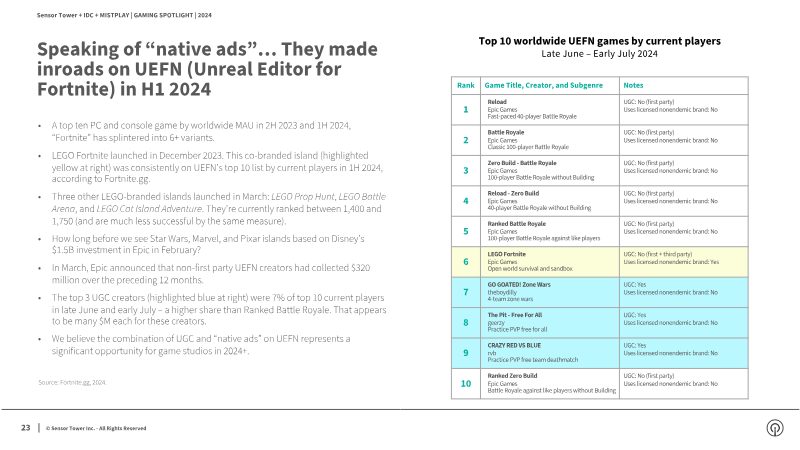
Mobile gaming solidifies its position as the leading segment of the global video-game market, with revenue projected to reach $83 billion in 2024, reflecting a 6 percent year-over-year increase. In contrast, home-console spending is expected to decline by 1 percent to $42 billion, while handheld revenues are slated to fall 2 percent to just under $2.5 billion. The upward trajectory of mobile is driven primarily by rapid expansion in emerging regions such as India and Indonesia, where user acquisition and spending are accelerating faster than in mature markets. Within mobile, fast-growing sub-genres—particularly simulators and multiplayer online battle arenas—accounted for $2.34 billion, representing 5.8 percent of total mobile revenue, and achieved a modest 0.4-point rise in download share during the latest reporting period. In the United States, monetisation patterns among mobile players continue to favour rewarded-video advertisements. These ads recorded the highest net-sentiment score of +20 points and were the most frequently encountered format in the third quarter of 2023. Other ad formats, including playable, native, banner/display, and standard video, lagged behind both in visibility and user sentiment, indicating a clear preference hierarchy that shapes publisher revenue strategies. Overall, the data underscore a market increasingly centred on mobile platforms, propelled by growth in developing economies and reinforced by user-friendly ad experiences. Console and handheld segments face modest contractions, suggesting that future investment and innovation will likely concentrate on mobile-first titles, emerging-region outreach, and optimisation of rewarded-video ad ecosystems to sustain growth.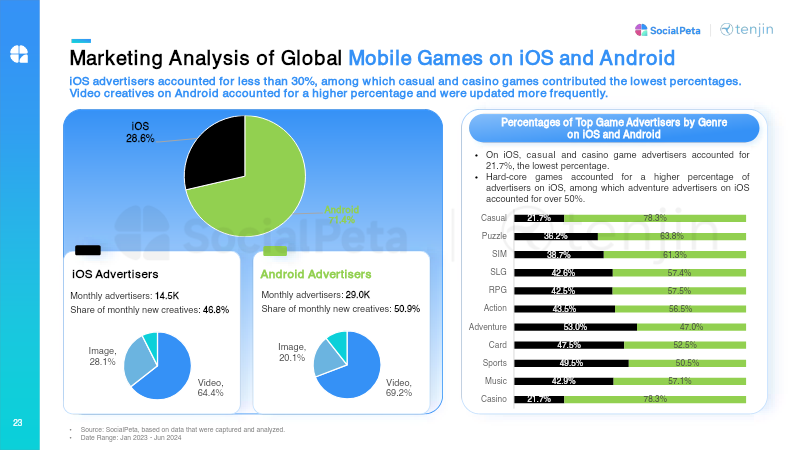

SocialPeta · 2024
ReportInsights into Global Mobile Game Marketing & Ad Spend Trends for H1 2024
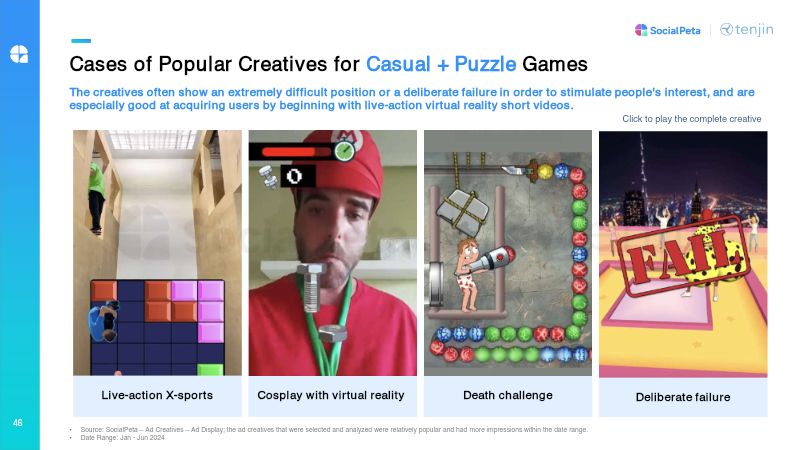
The global mobile gaming landscape in the first half of 2024 is defined by a strategic pivot toward hybrid-casual and subscription-based models as developers seek stable revenue and higher user lifetime value. This transition is supported by the rapid expansion of mini-games on super-apps, currently engaging approximately 650 million players, and the integration of 5G and AI-driven personalization. Marketing success now hinges on the synergy between App Store Optimization and paid search, alongside the use of predictive modeling to mitigate rising acquisition costs. Rewarded playtime has emerged as a critical monetization tool, yielding eCPMs 2.7 times higher than standard formats. Market activity surged during this period, with monthly active advertisers increasing 33.7% year-over-year to exceed 55,000. Despite this influx, the intensity of individual campaigns moderated, with the average monthly creatives per advertiser falling to 105. Video remains the primary medium, accounting for 77% of ad formats, though AI-generated imagery is gaining significant traction. While Western Europe maintains the highest advertiser density, the Hong Kong, Macau, and Taiwan regions represent the most competitive environments. Genre-wise, casual and puzzle games dominate advertiser participation on Android, but RPGs have surpassed strategy titles in total creative volume through the aggressive use of AI-generated content. Regional performance highlights distinct growth corridors, such as Brazil’s emergence as a hub for casino games and the Middle East’s demand for localized simulation and strategy titles. Successful campaigns frequently utilize "mini-game" video ads and deliberate-failure narratives to drive conversions. High-performing titles like Legend of Mushroom and Solo Leveling: Arise demonstrate the efficacy of high-volume creative output and IP-driven TikTok marketing. Ultimately, the industry is moving toward a bifurcated strategy where Asia-Pacific markets focus on intensive pre-registration windows while Western markets prioritize long-term promotional stability.

Big Games Machine · 2024
ReportHow Gamers Discover What to Play
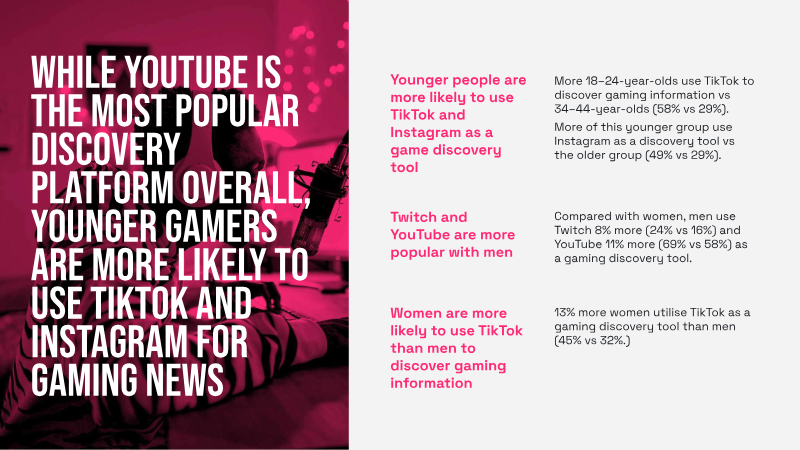
Video game marketing remains a vital component of the industry, though consumer preferences have shifted toward authentic, multi-channel discovery rather than traditional overt sales tactics. Research conducted in May 2024 among 1,009 PC and console gamers in the United States reveals that the average player utilizes four to five different information sources before committing to a new title. This behavior underscores a move away from single-channel reliance toward a diverse marketing mix where authenticity and peer-led insights are prioritized over corporate messaging. YouTube stands as the dominant platform for game discovery, used by 52% of respondents and cited as the most trusted source of information. However, discovery habits vary significantly by demographic. Younger gamers aged 18–24 are twice as likely to use TikTok and Instagram for news compared to those aged 34–44. Gender also influences platform choice, with men favoring YouTube and Twitch, while women are 13% more likely than men to utilize TikTok for discovery. Despite the prevalence of these platforms, trust remains fragmented; while YouTube is the most trusted, social media platforms like TikTok and X are frequently viewed with skepticism, suggesting that trust resides more in specific creators than the platforms themselves. Purchasing decisions are primarily driven by familiarity and risk mitigation. Forty percent of gamers prioritize established franchises they already enjoy, and 25% favor games from respected developers. While reviews and influencer endorsements remain influential, cost-related factors such as subscription services and price promotions also play a significant role in the decision-making process. Ultimately, the data suggests that successful game discovery relies on building a presence across multiple social and video platforms while leveraging established brand equity and influencer relationships to overcome consumer distrust.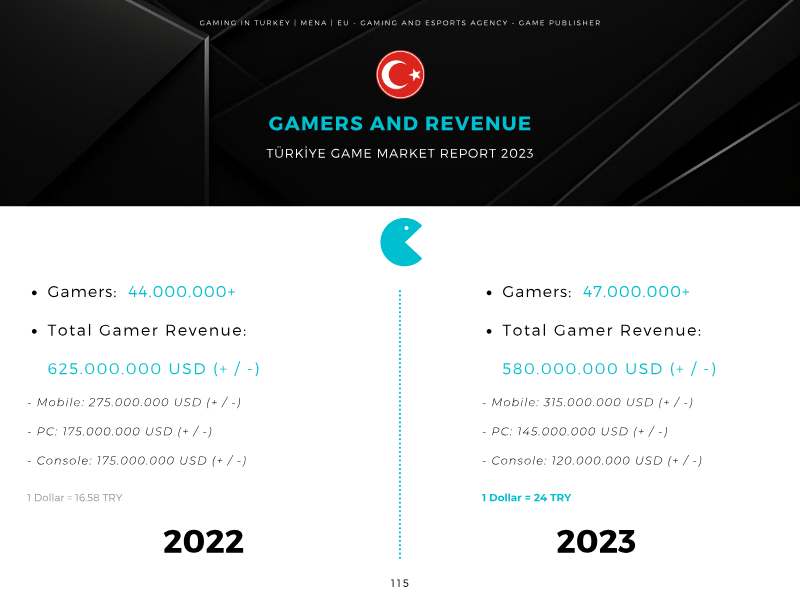

Gaming in Turkey · 2024
ReportTürkiye Game Market 2023 Report
The 2023 Türkiye Game Market Report provides a comprehensive analysis of a resilient and evolving gaming ecosystem navigating significant economic volatility and geopolitical instability. Despite these challenges, the industry generated $580 million in revenue from a base of 47 million gamers. The market is currently undergoing a strategic transition, moving away from a historical reliance on hyper-casual mobile titles toward more sustainable, high-quality indie productions, hybrid-casual models, and an increased focus on PC and console development. This maturation is supported by a robust infrastructure of accelerators, specialized educational programs, and a growing network of service providers in localization, in-game advertising, and cloud technology. The industry’s international influence remains strong, with approximately 90% of locally produced games exported globally. Notable successes, such as the global performance of Royal Match, underscore Türkiye’s capacity to produce world-class content. While mobile gaming remains the dominant platform—supported by high smartphone penetration—the sector is increasingly integrating artificial intelligence to enhance development and marketing. Furthermore, the esports landscape continues to thrive, with a diverse, gender-inclusive player base and a professionalized tournament infrastructure that attracts significant brand investment. Looking ahead, the industry is positioning itself for long-term growth by addressing talent shortages through improved academic-industry collaboration and navigating evolving regulatory requirements regarding data privacy. While economic pressures and shifts in platform pricing policies have created hurdles, the consensus among industry leaders is one of cautious optimism. By prioritizing sustainable business models, cross-platform compatibility, and the strategic adoption of immersive technologies, the Turkish gaming sector aims to solidify its status as a mature, export-oriented player in the global market throughout 2024 and beyond.

Sensor Tower · 2024
ReportStore Intelligence Data Digest: Q4 2023
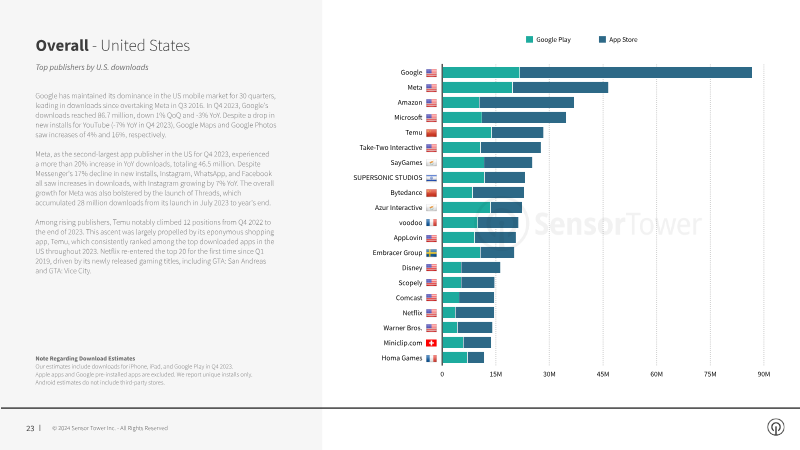
Global mobile app performance in the final quarter of 2023 reflected a complex landscape of shifting platform dynamics and regional market evolution. Total worldwide downloads reached 33.4 billion, representing a 6% year-over-year decline primarily attributed to an 8% drop in Google Play installs. Conversely, iOS downloads grew by 1.3%, a trend particularly visible in India. Despite a 13% decline in Google Play installs, India remained the world’s largest mobile market with 6.1 billion downloads, while its growing middle class drove increased iOS adoption. Emerging markets like Nigeria showed the strongest absolute growth on Google Play, while Japan demonstrated exceptional monetization efficiency, leading the world with a revenue-per-download ratio of $23.61 in the manga category. The competitive landscape was defined by a tension between aggressive user acquisition and long-term retention. TikTok reclaimed its position as the most downloaded app globally, fueled by an 80% surge in China, while the shopping platform Temu dominated Western markets. However, high-growth apps like Temu struggled with user stickiness, maintaining daily engagement rates below 20%. In contrast, established platforms like WhatsApp and Google Chrome proved the most resilient, with WhatsApp achieving a 91% daily engagement rate among its monthly active users. Meta and Google maintained their corporate dominance, bolstered by the launch of Threads and a 38% year-over-year increase in YouTube Kids downloads. In the gaming sector, Garena Free Fire and Roblox led global downloads with 56 million installs each, while Ludo King remained a powerhouse in the Asian market. The U.S. market saw continued success for Monopoly Go and a significant expansion of Netflix’s gaming portfolio, highlighted by the launch of GTA San Andreas. These trends underscore a maturing global industry where market leaders must balance massive scale in emerging regions with the high-value monetization and retention found in established digital economies.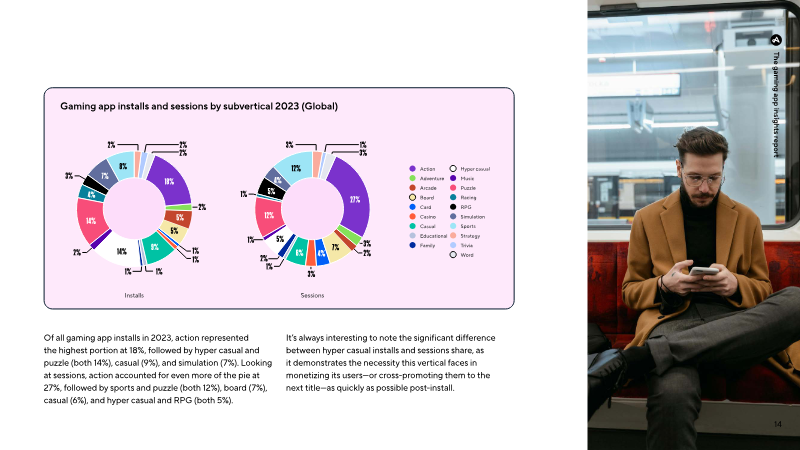

Adjust · 2024
ReportThe Gaming App Insights Report: Unlocking Growth Opportunities for Mobile Marketers
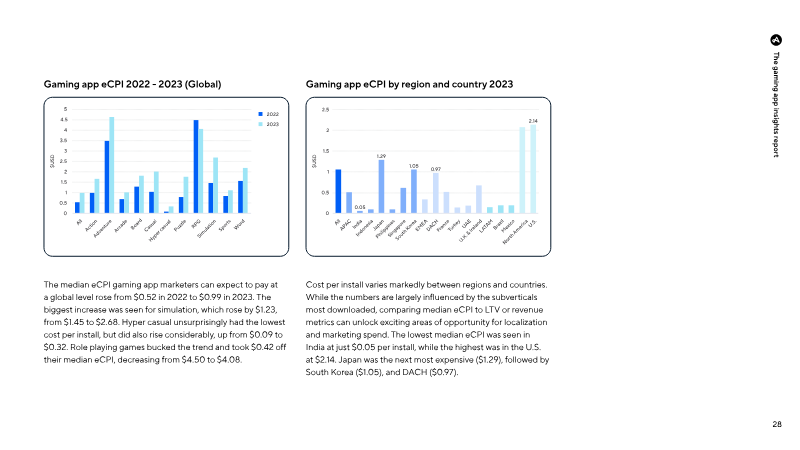
The mobile gaming industry is entering a period of stabilization and renewed growth following recent volatility, characterized by a 7% year-over-year increase in global installs during late 2023. While consumer spending saw a marginal decline throughout the previous year, early 2024 data suggests a recovery driven by the rise of hybrid casual titles and the integration of artificial intelligence to streamline production. This shift is particularly evident in the Latin American market and within specific subverticals like Racing and Simulation, which experienced install surges of 61% and 53%, respectively. Despite these gains, the landscape remains competitive as organic install shares dropped to 50% and median day-one retention rates softened to 28.3%. Monetization strategies are evolving as developers pivot toward hybrid models that combine in-app purchases with advertising revenue. Although global effective cost per install nearly doubled to $0.99 in 2023, in-app revenue grew by 6%, led by high-value genres such as RPGs and Adventure games. These categories command the highest lifetime value and average revenue per monthly active user, particularly in mature markets like the United States and Japan. Conversely, hyper-casual games continue to prioritize volume and efficiency, maintaining low acquisition costs despite a broader industry trend toward more complex, long-term engagement models. The industry has demonstrated significant resilience regarding privacy changes, with global App Tracking Transparency opt-in rates rising to 39%. This adaptation, coupled with the superior performance of hybrid casual games in click-through rates and ad revenue, indicates a strategic move toward data-driven marketing and diversified revenue streams. As the sector moves through 2024, success depends on balancing high acquisition costs in premium markets with the massive scale offered by emerging regions like India and Southeast Asia, all while navigating a more privacy-centric digital ecosystem.
Sensor Tower · 2024
ReportQ1 2024 Digital Market Index
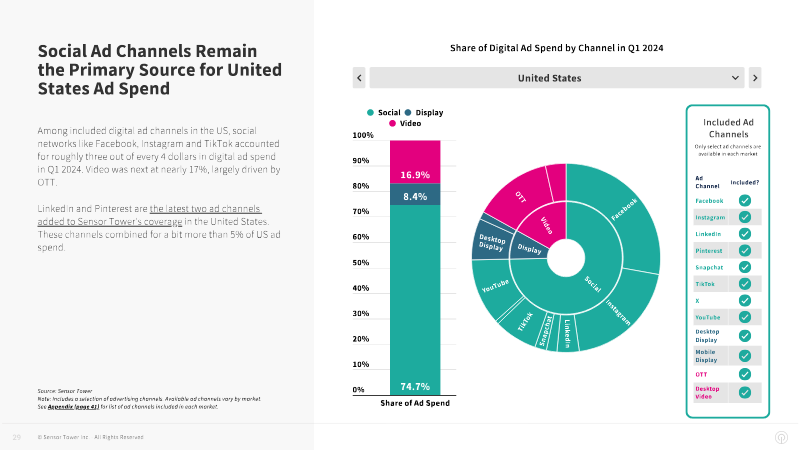
In the first quarter of 2024, the mobile gaming market showed a clear shift away from hyper-casual titles, which experienced a year-over-year decline of more than ten percent across all major platforms. At the same time, niche sub-genres—particularly those emphasizing deeper mechanics, social interaction, and regional cultural themes—registered modest growth, indicating that players are gravitating toward more differentiated experiences. Revenue concentration continued to favor the top-tier publishers, whose combined share of global digital game sales rose to just over 45 percent, while mid-size and indie developers struggled to maintain market visibility amid rising user acquisition costs. Geographically, North America and Western Europe together accounted for roughly 38 percent of total spend, but the fastest growth rates were observed in Southeast Asia and Latin America, where mobile penetration and improved payment infrastructure drove double-digit increases in both downloads and in-app purchases. The overall market size reached $23.7 billion in Q1, representing a 4.2 percent increase from the same period a year earlier, with the majority of the uplift coming from subscription-based models and live-ops monetisation strategies. The data also highlighted a maturing ad-tech ecosystem: programmatic video ads delivered higher eCPMs than traditional interstitials, while rewarded ads maintained the strongest user retention metrics. However, ad fraud remained a concern, with industry-wide estimates suggesting that up to 7 percent of ad impressions were non-genuine, prompting publishers to invest more heavily in verification tools. These trends suggest that the digital gaming landscape is moving toward higher-value, more engaged user bases, with regional diversification and sophisticated monetisation approaches shaping the next phase of growth.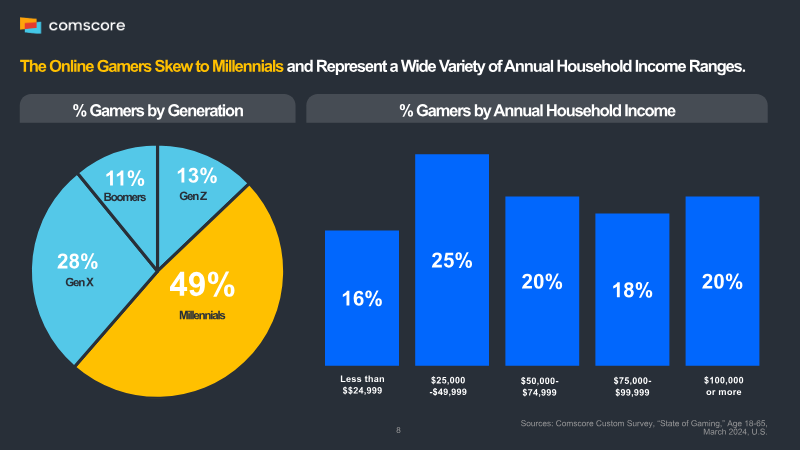


Comscore · 2024
ReportLevel Up – Harnessing the Power of Gaming Audiences
The 2024 Level Up report, a collaborative analysis by Comscore and Anzu, examines the evolving landscape of the U.S. gaming market and the expanding opportunities for brand integration. The study defines gamers as adults aged 18 to 65 who play multiple times a week, revealing that 62% of the U.S. adult population fits this criteria. A significant finding is the high level of cross-platform engagement; 77% of gamers utilize more than one device, while 40% play across all platforms, including PC, console, and mobile. The data highlights distinct consumer behaviors based on platform preference. Console gamers demonstrate the highest willingness to pay for content, with 37% prepared to spend over $60 on a single title. In contrast, 32% of mobile-only gamers prefer free-to-play models. Genre preferences also vary by hardware, with PC players favoring first-person shooters and RPGs, while console players show a strong affinity for action-adventure and sports titles. From an advertising perspective, the report concludes that gaming is no longer a niche silo but a mainstream medium with high receptivity to marketing. Approximately two-thirds of gamers view in-game advertisements as having a positive or neutral impact on their experience. Specifically, 34% of respondents believe product placement enhances realism, and 45% express a preference for rewarded ad formats. Case studies, such as Tommy Hilfiger’s campaign, demonstrate the efficacy of these strategies, showing a 20-point lift in brand favorability and a 23-point increase in purchase intent. The report emphasizes that the partnership between Comscore and Anzu now allows for more precise measurement of the incremental reach provided by intrinsic in-game advertising.

SocialPeta · 2024
Report