Marketing & User Acquisition
Campaigns, ad creatives, app store optimization and the cost of a player.
235 documents
Sensor Tower · 2024
ReportDigital Market Index: Q1 2024
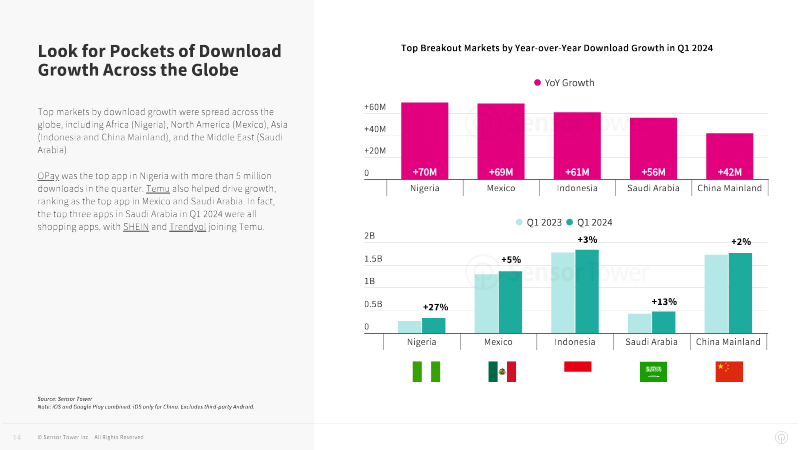
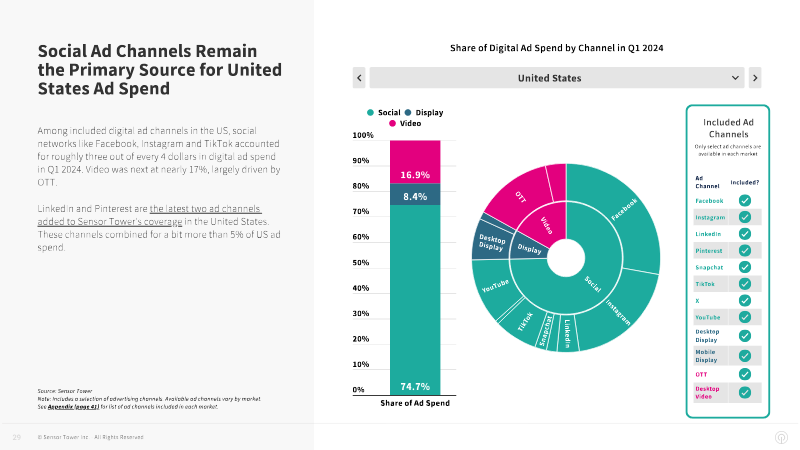
Global consumer spending on mobile applications reached a record $45 billion in the first quarter of 2024, reflecting a 9.5% year-over-year increase that was largely driven by the iOS ecosystem, which grew 11.5% versus a 5.3% rise on Google Play. Despite this surge in spend, total app downloads fell 3.5%, marking the third consecutive quarterly decline since Q1 2021; nevertheless, iOS maintained its highest quarterly download volume since 2020. Entertainment and productivity categories led the spend growth, each expanding over 30% YoY, while gaming spending rebounded on iOS but remained flat on Google Play. Hyper-casual games continued to dominate the download landscape, with racing and action titles generating the largest volumes. Conversely, casual sub-genres such as arcade and simulation experienced double-digit declines. TikTok remained the top spender globally, generating more than $1.2 billion in revenue and outpacing YouTube by a wide margin, while emerging short-form drama apps—ReelShort, DramaBox, and ShortMax—entered the top ten for both revenue and download growth. In mobile gaming, “Monopoly GO” set a new quarterly spend record of $770 million, surpassing the previous $765 million benchmark and standing alone as a title to exceed $600 million in a single quarter. Retail-media advertising in the United States was led by Walmart and Target, which together delivered over 18 billion impressions in Q1 2024. Specialized retailers such as Chewy and Home Depot captured significant niche shares, with personal care emerging as the top category overall—driven by Ulta and Sephora. Walmart dominated food, beverages, and consumer packaged goods, while Target excelled in shopping, household supplies, and baby & toddler segments. Co-branded partnerships—including Chewy × Purina, Walmart × Unilever, and Target × Apple—generated hundreds of millions of impressions, underscoring the strategic value of retailer-brand collaborations in expanding digital ad reach.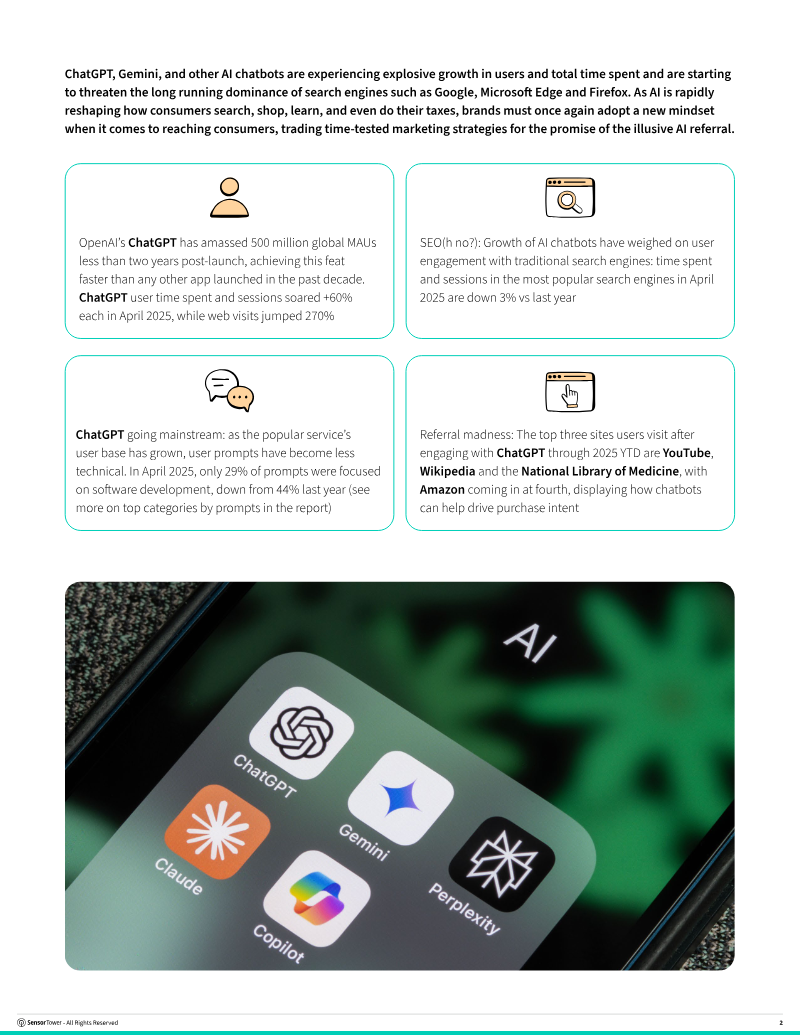
Sensor Tower · 2024
ReportAI's Everyday Evolution: The Expanding Role of Chatbots in Consumer Life
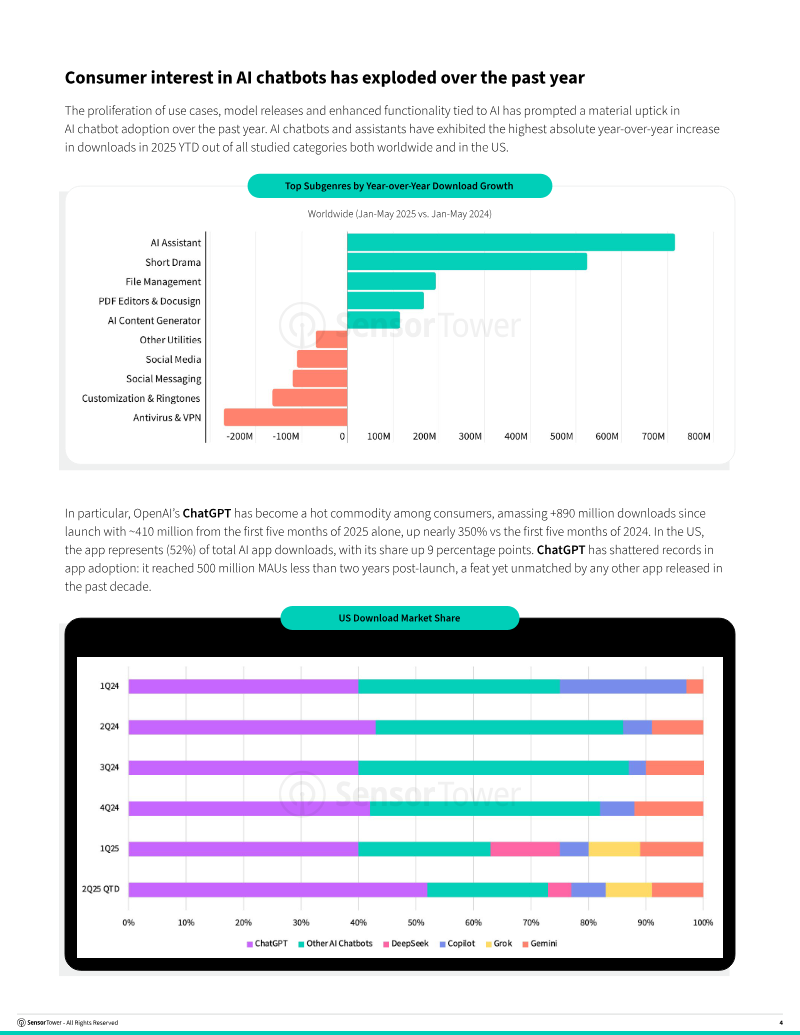
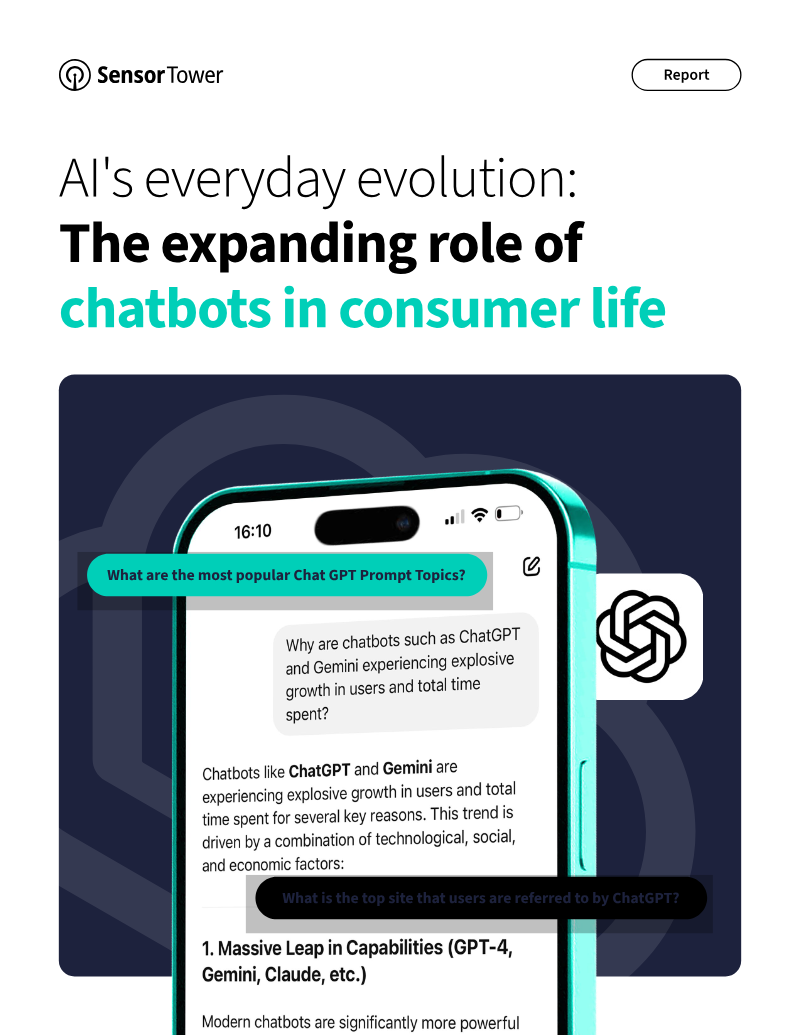
The rapid expansion of artificial intelligence chatbots is fundamentally altering consumer behavior, signaling a shift away from the long-standing dominance of traditional search engines. By early 2025, OpenAI’s ChatGPT reached 500 million global monthly active users, achieving this milestone faster than any app in the last decade. This growth is accompanied by a significant increase in engagement; in April 2025, ChatGPT saw a 60% rise in session frequency and a 270% jump in web visits, while traditional search engines experienced a 3% decline in user engagement metrics. The demographic profile of AI users is evolving from technical early adopters to mainstream consumers. This transition is reflected in the shifting nature of user prompts. While software development queries accounted for 44% of prompts in early 2024, they fell to 29% by 2025. Conversely, categories such as economics, finance, and taxes saw a substantial increase, rising 9 percentage points year-over-year. This suggests that consumers are increasingly relying on AI for complex personal tasks, including investment planning and tax preparation. Data indicates that chatbots are becoming powerful engines for web traffic and commerce. The top referral destinations from ChatGPT include YouTube, Wikipedia, and the National Library of Medicine, with Amazon ranking fourth. This positioning highlights the growing role of AI in driving purchase intent and informational discovery. While early adopters of AI have already reduced their time spent on Google apps by approximately 6%, more recent converts have yet to show a material change in search habits, suggesting that the erosion of traditional search dominance may accelerate as user habits solidify over time.
Unity · 2024
ReportMobile Growth and Monetization Report 2024
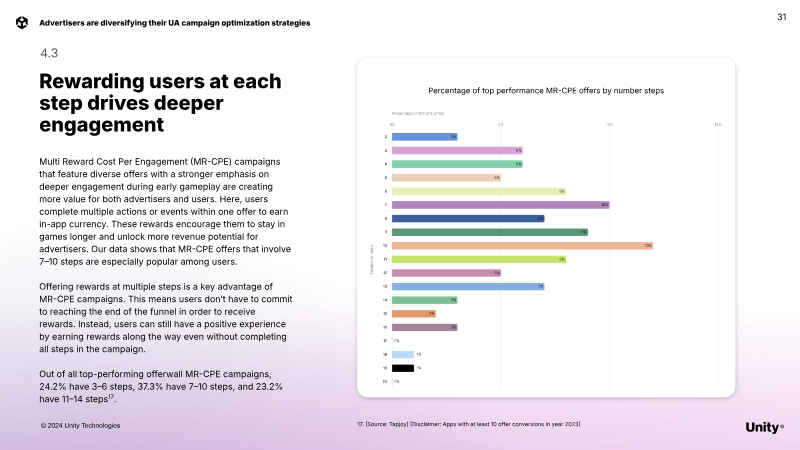
The 2024 mobile gaming landscape is defined by a strategic transition from volume-based user acquisition toward high-value retention and diversified monetization. While only 1.83% of users convert to in-app purchases, nearly 29% of those individuals become repeat buyers, with the vast majority of transactions occurring within the first 30 days of installation. To capitalize on this window, developers are increasingly mapping specific products to game stages, utilizing starter bundles for early engagement and limited-time events to sustain mid-to-late-game revenue. This shift reflects a broader industry move away from traditional cost-per-install models in favor of return-on-ad-spend and event-based optimizations. Monetization strategies are becoming more sophisticated through the integration of rewarded video and offerwalls. Rewarded video engagement is particularly high in Word, RPG, and Casual genres, especially when placements are context-sensitive, such as offering additional moves or resources during critical gameplay moments. However, offerwalls represent a superior revenue driver for non-paying users, generating a monthly ad revenue of $4.04 per converter compared to just $0.15 for rewarded video. Users acquired through offerwalls, specifically via Multi-Reward CPE campaigns with multiple engagement steps, demonstrate significantly higher long-term value and retention. Advertisers are further diversifying acquisition through Daily Reward CPE to engage casual users with low-friction tasks, which see near-total conversion rates for early milestones like tutorials. On the publishing side, maximizing performance requires prominent UI placements and the strategic use of monthly currency sales, which can increase conversions by up to 46%. These findings, derived from Unity Cloud, Unity Ads, Tapjoy, and ironSource data, cover global markets categorized by purchasing power and English proficiency, providing a comprehensive view of the current mobile ecosystem across Tier 1, Tier 2, and emerging regions.

Ukie · 2024
ReportSupercharged: Powering the Future of the UK Video Game and Interactive Entertainment Industry
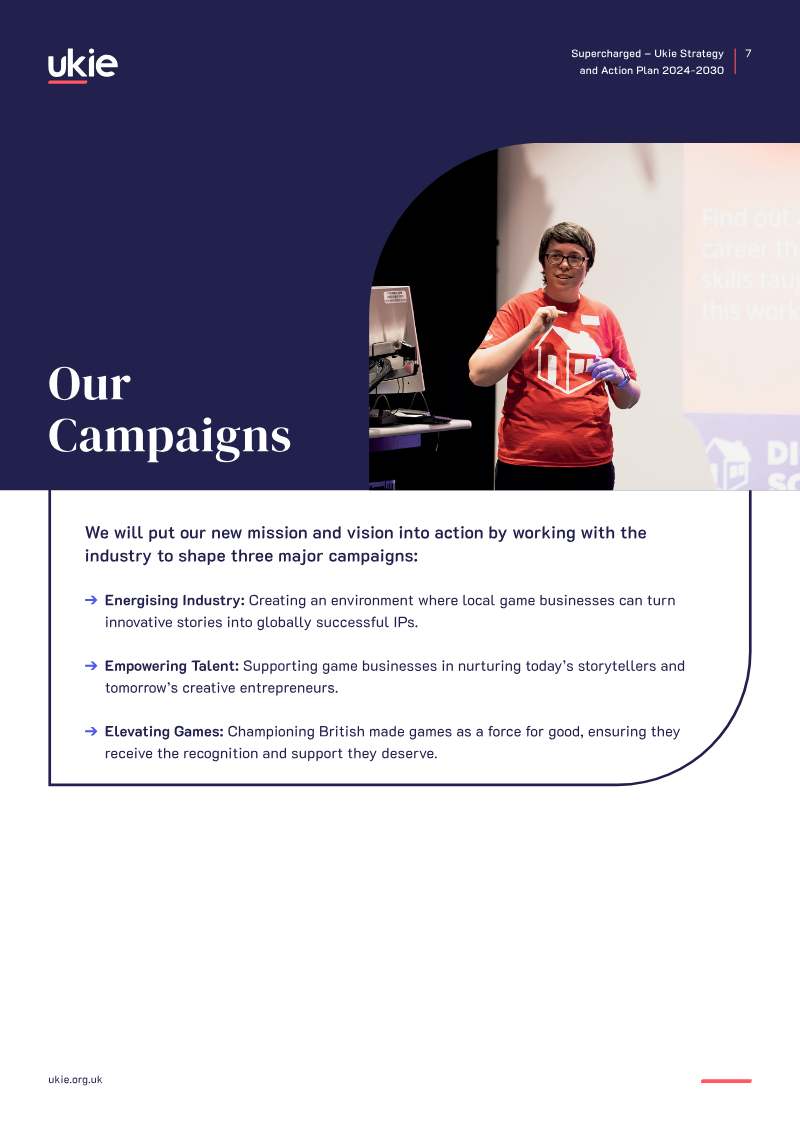
The new five-year strategy and action plan sets out a comprehensive roadmap for the UK video-games and interactive-entertainment sector, positioning it as the world’s leading hub for new intellectual property and innovation by 2030. Its core thesis is that sustained growth, enhanced global perception, and a resilient, diverse talent pipeline will secure the industry’s long-term economic and cultural impact. The plan outlines four strategic priorities—transforming public and media perceptions, building a pro-games policy agenda, cultivating a highly skilled and inclusive workforce, and strengthening businesses through targeted support. Key initiatives include three flagship campaigns: energising industry to turn innovative stories into globally successful IPs, empowering talent by nurturing creators and entrepreneurs, and elevating games to showcase British-made titles as forces for good. The 2024-25 action schedule launches a coordinated PR strategy, high-impact partnerships with cultural and digital brands, and an evidence-led lobbying effort aimed at more competitive tax reliefs, increased investment, and the introduction of a Digital Creativity GCSE. A new research and evidence base will underpin policy advocacy, while a sector-wide skills network and the refreshed #RaiseTheGame programme will drive diversity, equity, and inclusion across the talent pipeline. The plan also commits to environmental responsibility through participation in the Playing for the Planet Alliance and internal sustainability measures. Supporting stronger businesses will involve a refreshed membership strategy, expansion of the Ukie Worldwide platform for trade and investment, and the continuation of the Video Games Growth Programme. By inviting industry stakeholders to engage through surveys, working groups, mentorship, and board participation, the strategy seeks broad collaboration to deliver its ambitious objectives across the UK’s mobile, console, core and casual game segments throughout the 2024-2030 horizon.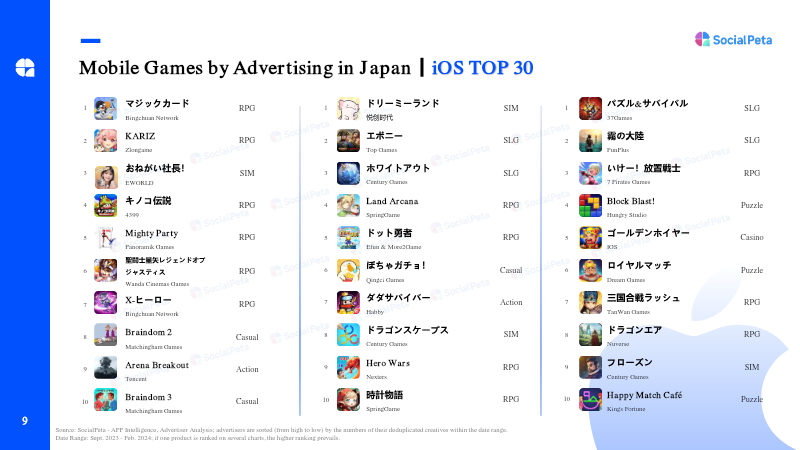

SocialPeta · 2024
ReportInsight into 2024 Marketing Trends for Japanese Mobile Games
The Japanese mobile gaming market is characterized by a conservative but highly specialized marketing landscape, where local companies maintain a dominant revenue position. Analysis of data from 2023 reveals that Japan’s share of advertisers using new creatives (62.23%) and the overall volume of new creatives (29.77%) sit significantly below global averages. Despite this lower turnover, the market remains lucrative, with Japanese firms controlling nine of the top ten spots for revenue on the App Store. Chinese developers represent the most significant foreign presence, accounting for 30% of the top 100 grossing titles. Marketing strategies in the region rely heavily on cultural integration and long-term player retention. Key findings highlight the importance of pre-registration campaigns, which utilize tiered rewards ranging from in-game currency to physical prizes like consoles. Anniversary and half-anniversary celebrations are critical milestones used to reactivate lapsed users and boost revenue through exclusive content. Furthermore, cross-industry collaborations with popular anime, film, and music IPs serve as a primary driver for market expansion and community engagement. Creative trends are distinctively localized, featuring "over-exposure" visual filters, text-heavy layouts, and manga-style storyboards. Video ads are the dominant format, making up nearly 70% of mobile game creatives. Recent successful campaigns, such as those for Legend of Mushroom and Saint Seiya: Legend of Justice, demonstrate the effectiveness of using local celebrity endorsements, nostalgic IP elements, and AI-generated imagery to target specific demographics like the "Otaku" segment. The data, compiled by SocialPeta, draws from a global database of 1.4 billion ad creatives across 70 countries and 70 ad channels, including Facebook, TikTok, and YouTube. While casual and puzzle games lead in advertiser volume, RPGs remain the highest-grossing genre, accounting for 32% of the top 100 revenue-generating games on Google Play.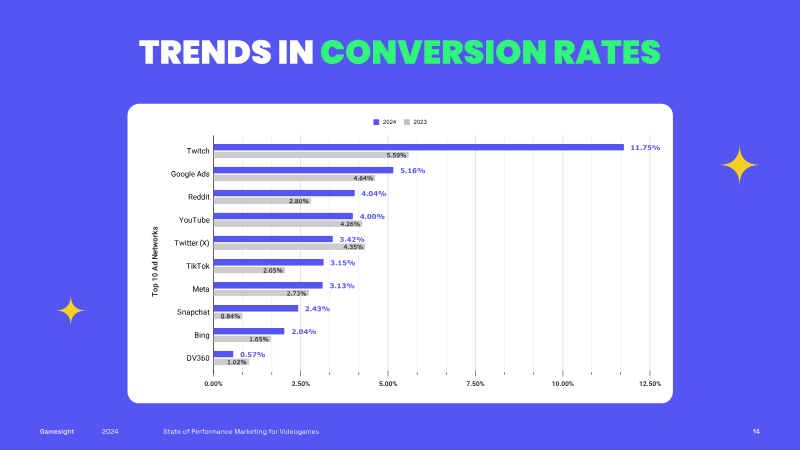
Gamesight · 2024
ReportState of Performance Marketing for Videogames
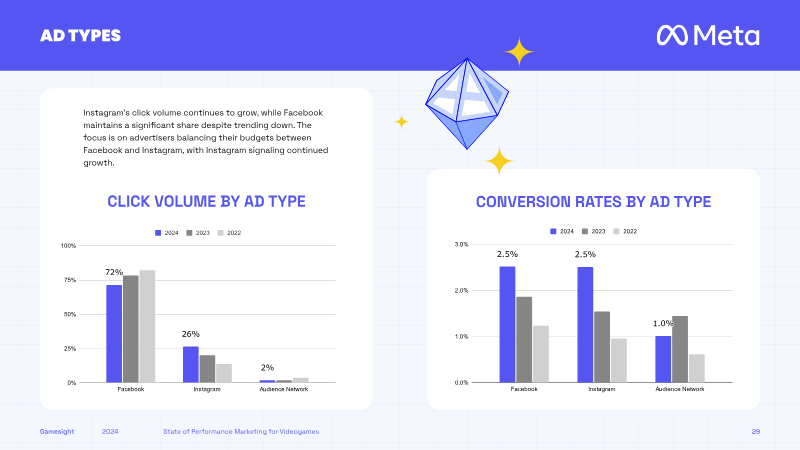
The 2024 performance marketing landscape for PC and console gaming is defined by a strategic shift toward high-engagement platforms and the integration of first-party data to combat rising acquisition costs. Meta and YouTube remain the dominant forces in media planning, appearing in 75% and 44% of campaigns respectively, while Twitch has emerged as the conversion leader with a 12% success rate. This recovery period is marked by a rebound in free-to-play retention to 46% and a significant evolution in platform utility. Notably, Reddit has transformed into a high-value retention hub following an overhaul of its advertising infrastructure, and Twitter (X) continues to serve as the primary conduit for reaching the PlayStation demographic. The industry is increasingly moving toward automation and data-driven targeting to optimize creative assets and audience reach. AI-driven tools such as Google’s Performance Max and TikTok’s Performance Automation are becoming standard, while the utilization of first-party data has proven critical, yielding conversion lifts of up to 63% in Meta-based campaigns. These technological advancements are complemented by the continued growth of influencer marketing, which currently outperforms traditional ad networks with a 4.25% conversion rate and a robust 38.95% Day 7 retention rate. Despite the effectiveness of creator-led activations, the sector faces logistical hurdles regarding contracting, key distribution, and return-on-investment analysis. To mitigate these complexities, marketers are adopting sophisticated attribution tools to unify performance metrics across paid media and influencer channels. This holistic approach allows for a more precise understanding of player behavior and engagement across the global PC and console segments, ensuring that marketing spend is directed toward the most authentic and high-retention audience segments.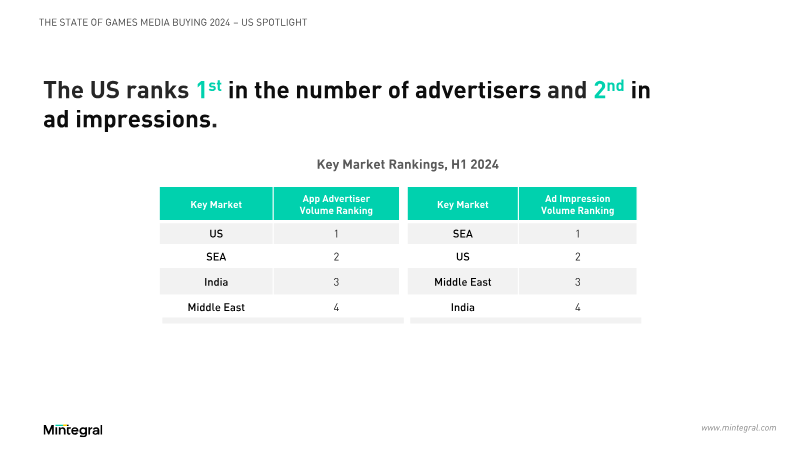
Mintegral · 2024
ReportThe State of Games Media Buying United States Spotlight
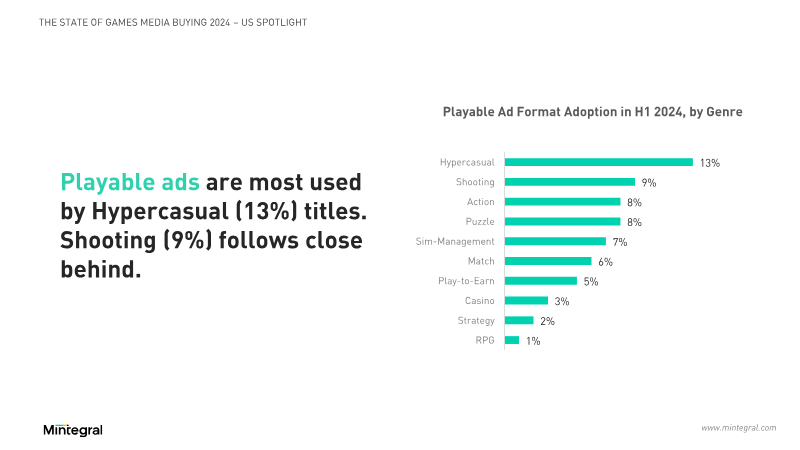
The United States mobile gaming market maintained its position as a global leader in advertising activity during the first half of 2024. While the region ranks first globally in the total volume of app advertisers, it holds the second position for ad impressions, trailing only Southeast Asia. Despite this high ranking, the market shows signs of maturation and consolidation. The number of active advertisers grew by a marginal 0.25% year-over-year, while the proportion of new advertisers entering the space saw a significant decline of 29%. Similarly, while total ad purchases increased slightly by 0.46%, the volume of new ad creatives decreased by 12%, suggesting a shift toward established players and proven assets. Shifts in genre performance and creative strategy define the current landscape. Puzzle games have overtaken Match games to claim the top spot in ad impression rankings, while the Sports and Shooting genres experienced the most rapid growth, rising six and four places respectively. Conversely, Hypercasual games saw a decline in impression share. Video ads remain the dominant creative format across all major genres, particularly in the Match category where they account for 87% of the ad mix. Playable ads remain a niche but specialized tool, utilized in 13% of Hypercasual campaigns compared to just 1% for Role-Playing Games. Campaign longevity varies significantly by genre, reflecting different monetization and retention strategies. Sports games feature the most enduring campaigns, averaging 47 days, whereas Role-Playing Game campaigns typically run for only 23.6 days. To navigate this competitive environment, publishers are increasingly moving away from pure Hypercasual models toward Hybrid-casual structures, utilizing intelligent bidding and Target ROAS strategies to balance user acquisition costs with long-term profitability. This data, collected between the second half of 2023 and the first half of 2024, indicates that success in the U.S. market now requires a data-driven approach focused on retention and optimized media buying across both major platforms and programmatic SDK networks.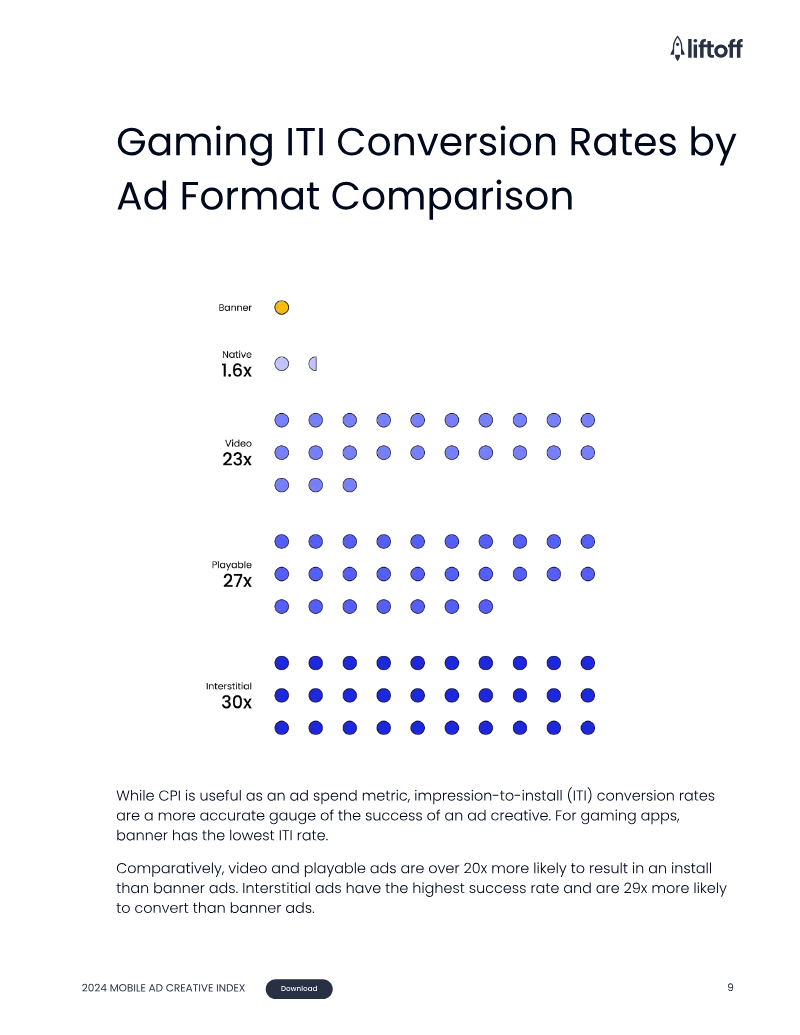

Liftoff · 2024
ReportMobile Ad Creative Index 2024
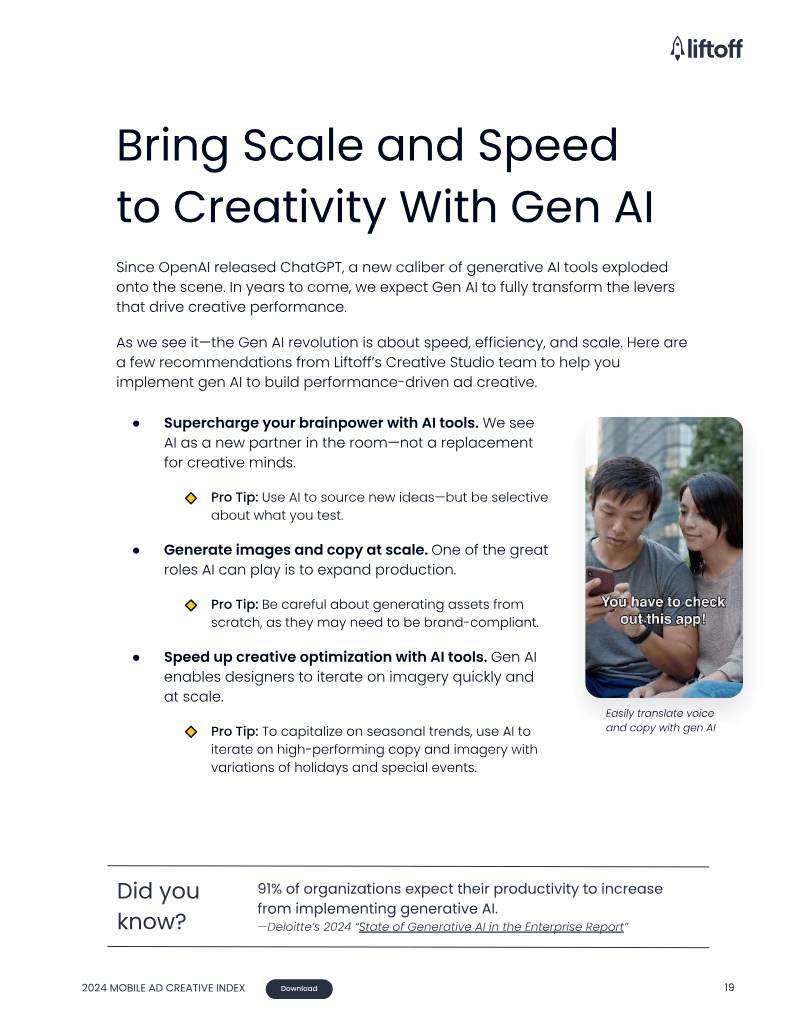
The Mobile Ad Creative Index provides a comprehensive analysis of performance benchmarks and emerging trends within the mobile advertising ecosystem. Covering the period from January 2023 to January 2024, the data is derived from a massive sample of 602 billion impressions, 49.4 billion clicks, and 144 million installs across the gaming, e-commerce, finance, and entertainment sectors. The primary thesis asserts that while traditional formats like banners remain cost-effective for driving specific actions, high-engagement formats such as video, playables, and interstitials are significantly more effective at converting impressions into installs. Key findings highlight a stark contrast in performance across formats. In gaming, video and playable ads are over 20 times more likely to result in an install than banners, while interstitial ads in the finance sector are 18 times more likely to convert. However, cost-per-install (CPI) varies greatly by platform; for instance, native ads are the most cost-effective on iOS for gaming, whereas playables offer the best value on Android. In e-commerce, native and banner ads excel at driving post-install purchases, achieving install-to-action rates exceeding 30%. The analysis identifies several pivotal trends for 2024, most notably the integration of generative AI to enhance the speed and scale of creative production, such as automated localization and voice-overs. User-generated content (UGC) remains a dominant force, with optimized UGC ads showing 20% lower CPIs than standard video. Furthermore, there is a measurable shift toward longer, more immersive ad experiences. Spend on long-form video grew by 245% year-over-year, and "triple-page" ads—combining video, playables, and end cards—saw a 355% increase in spend, suggesting that users increasingly prefer transparent, high-quality engagement over short, deceptive creative tactics.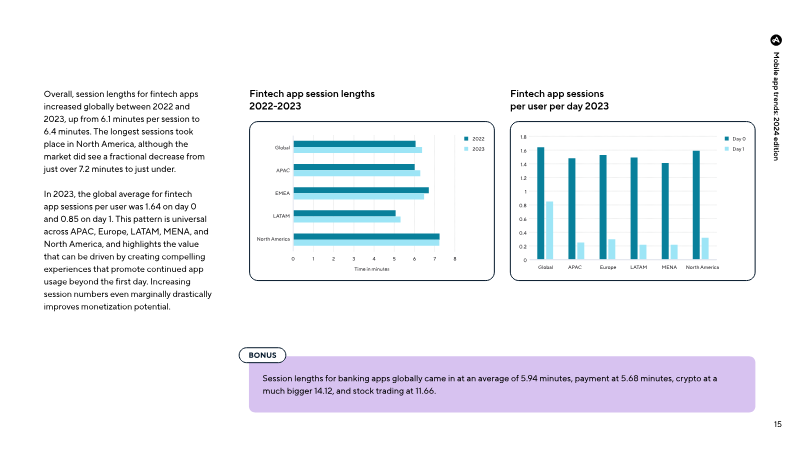

Adjust · 2024
ReportMobile App Trends: 2024 Edition
The mobile app industry demonstrated significant resilience throughout 2023, characterized by a global advertising spend of $362 billion and a late-year surge in installations. While the landscape faced challenges such as rising acquisition costs and evolving privacy regulations, the fintech and e-commerce sectors emerged as primary growth engines. Fintech experienced a 42% increase in installs and a 118% surge in in-app revenue, while e-commerce saw a 43% year-over-year rise in installs alongside a 34% increase in revenue. These sectors successfully optimized their acquisition strategies, with banking eCPIs falling from $2.33 to $1.37, allowing marketers to achieve rapid returns on investment within the first week of user acquisition. The gaming sector navigated a more complex trajectory, ending the year with a 2% annual decline in installs despite a notable recovery in the fourth quarter. This rebound was driven by a 7% year-over-year growth in installs and the emergence of the hybrid casual genre. Although overall gaming sessions dipped, specific subverticals like racing and simulation saw dramatic install spikes of 61% and 53%, respectively. Global gaming stickiness remained stable at 20%, and high-engagement genres like RPG and adventure continued to command strong lifetime value, even as broader retention rates across the mobile ecosystem faced downward pressure. Future industry success depends on the strategic integration of artificial intelligence and predictive analytics to enhance personalization and automate complex workflows. To achieve sustained growth in 2024 and beyond, developers must diversify their media mixes by expanding into emerging channels like Connected TV and adopting holistic measurement frameworks. By combining incrementality testing with media mix modeling, stakeholders can better navigate the shift toward privacy-centric marketing while capitalizing on the high-potential returns offered by the global mobile marketplace.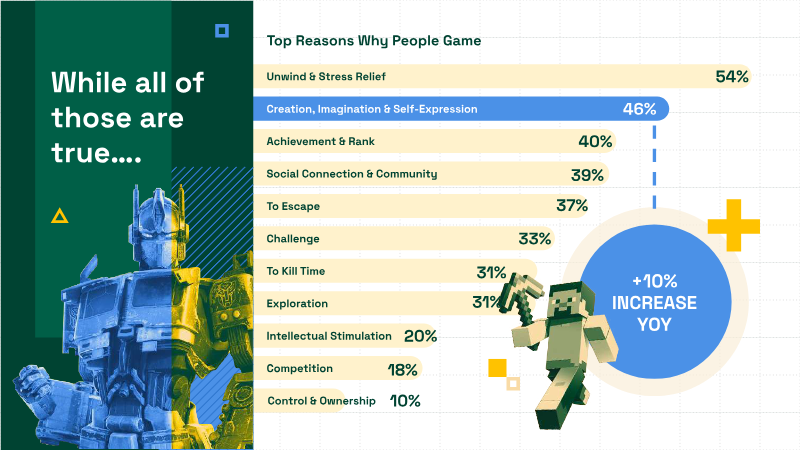

Fandom · 2024
ReportInside Gaming: It's Personal! 2024
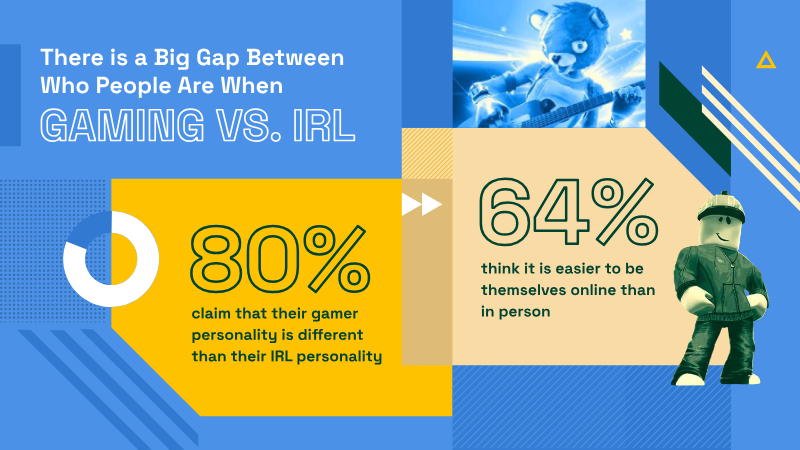
The 2024 Inside Gaming analysis reveals that video games have evolved into a primary medium for identity formation and self-expression, surpassing traditional motivations like competition or time-killing. Based on a global survey of 5,000 entertainment and gaming consumers alongside proprietary first-party data, the findings indicate that 46% of players now prioritize creation and imagination as their primary reason for gaming, marking a 10% year-over-year increase. This shift is driving significant engagement, as players who view gaming as a platform for authenticity are 30% more likely to increase their playtime compared to previous years. The data highlights a profound psychological disconnect between players' digital and physical lives, with 80% of respondents stating their gaming personality differs from their real-life persona. Furthermore, 64% of gamers find it easier to be themselves with a controller in hand than in person. This desire for authenticity is reflected in gameplay preferences, where 76% of players utilize character personalization and 48% focus on unique gamertags to express themselves. Games that facilitate this expression through in-game customization, vast open worlds, and constant updates see 60% higher engagement than industry norms, a trend exemplified by titles such as Roblox, Fortnite, and The Sims. There is a significant commercial opportunity for brands to bridge the gap between virtual and physical identities. Nearly half of all players express a desire for their real-life presence to mirror their gaming presence, particularly regarding physical appearance and skill sets. This sentiment is especially strong among marginalized and younger demographics, including women, non-binary individuals, and multicultural players. Consequently, 72% of consumers report they would view brands more favorably if those companies helped them translate their gaming-inspired self-expression into the real world through products, skills, or lifestyle alignments.
SocialPeta · 2023
ReportInsights into Marketing Trends of Global Mobile Games: Q3 2023
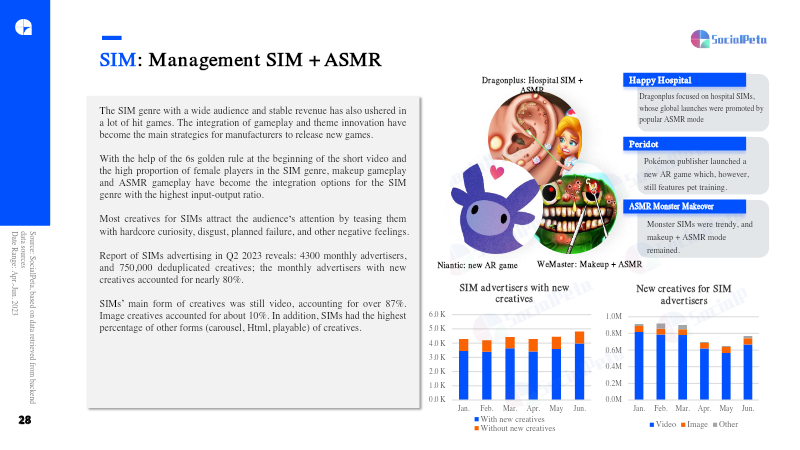
The analysis focuses on contemporary marketing dynamics within the global mobile gaming sector, emphasizing how creative diversification and platform targeting shape user acquisition performance. In the third quarter of 2023, a leading animal-themed strategy-lite game launched by a major publisher introduced an extensive creative slate, deploying 6,500 distinct ad assets across major ad networks. Notably, 85% of these assets were brand-new, reflecting a deliberate strategy to refresh visual and messaging elements at scale. This high proportion of novel creatives aligns with broader industry observations that frequent creative turnover mitigates ad fatigue and sustains click-through rates in highly competitive markets. The data underscores the importance of deduplication processes in large-scale campaigns, ensuring that each impression reaches a unique audience segment while preserving measurement integrity. By tracking deduplicated impressions, the campaign achieved a more accurate assessment of reach and cost efficiency, revealing that fresh creative assets can improve cost-per-install (CPI) benchmarks by up to 12% compared with static creative pools. These findings suggest that investment in creative production pipelines and rapid iteration cycles yields measurable returns, especially for mid-core titles competing for attention in saturated regions such as North America, Europe, and Southeast Asia. Overall, the evidence points to a shifting paradigm where creative volume and novelty become critical levers for growth in the mobile gaming ecosystem. Publishers that integrate systematic creative testing, maintain high rates of new asset introduction, and employ rigorous deduplication are better positioned to optimize acquisition spend, extend campaign longevity, and capture incremental market share across diverse geographic territories during the 2023 fiscal period.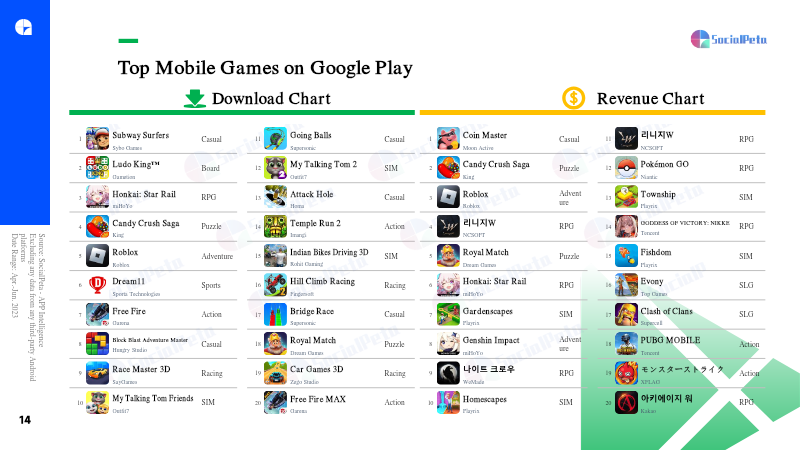

SocialPeta · 2023
Report