Marketing & User Acquisition
Campaigns, ad creatives, app store optimization and the cost of a player.
279 documents


Mintegral · 2026
Report2026 Global Non‑Gaming App Trends Report
The report argues that non‑gaming mobile applications are experiencing accelerated growth driven by AI integration, short‑form content, and intensified user acquisition competition. Key findings show that Android dominates download volume—particularly in Utilities (79 % of installs) and Life Services (58 %)—while iOS generates a higher share of revenue, especially in Finance & Business (56 % of iOS revenue) and Life Services (57 %). In 2025, AI‑focused apps such as ChatGPT (+1,340 %) and Perplexity (+3,613 %) achieved the highest year‑over‑year download growth, and Short Drama titles like Kuku TV (+45 % k) and RapidTV (+498 %) recorded explosive revenue increases, with AI Social apps (e.g., Character AI +918 %) also driving significant monetization. User acquisition activity expanded across all major categories, with Life Services (+42 %) and Finance & Business (+43.5 %) leading the rise in app counts. Smart bidding adoption surged, with Target ROAS spend increasing by 50 % and Target CPE spending up 57 %, particularly in Utilities and Entertainment. Cost‑per‑install (CPI) analysis revealed that E‑Commerce on Android commands a 3× premium, while Finance & Business on iOS reaches 4.6×, underscoring high competition for transactional users. Monetization patterns shift toward in‑app advertising (IAA), dominating across Education, Utilities, and Entertainment. Video formats—rewarded and interstitial—outperform banner ads by 128–165× eCPM, with North America delivering the highest rewarded video eCPMs (up to 11.8× in Short Drama). The report covers global markets excluding Mainland China from January to December 2025, drawing on anonymized data from Mintegral and Insightrackr across 100+ key app categories.
SocialPeta · 2026
Report2026 Global Mobile Gaming Marketing Trends White Paper
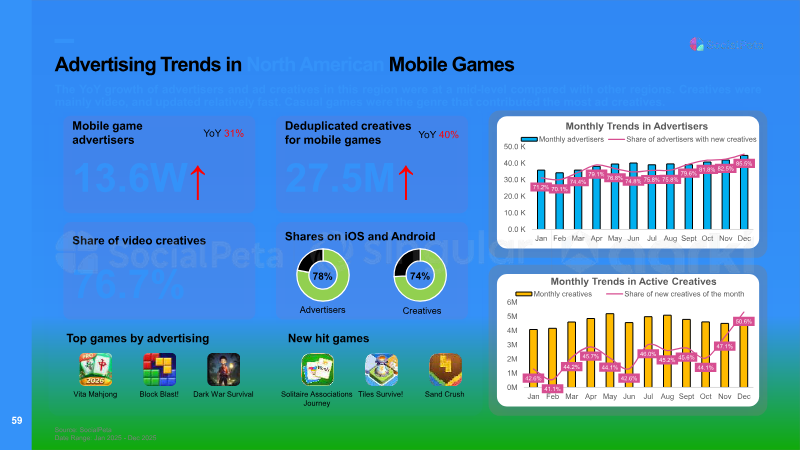
The white paper establishes that the mobile‑gaming advertising ecosystem expanded rapidly in 2025, with more than 90 000 active advertisers and an influx of roughly 8 000 new entrants each month, a 22 % year‑over‑year rise. Advertisers increasingly deploy fresh creatives, with video accounting for 74 % of all ads—up 14 % YoY—and Android remains the dominant acquisition platform, though iOS shares grow for mid‑core and hard‑core titles. Top mobile games in 2025 show a clear split between volume‑driven casual installs and value‑focused premium titles. Casual hits such as Block Blast! and Subway Surfers dominate downloads, while mid‑core and premium games generate the bulk of revenue. Leading spenders—FunPlus, Yotta Games, Hungry Studio—continue to favor Android for lower cost‑per‑install acquisition, whereas iOS delivers higher monetization per install. The industry is moving from a linear funnel to an “Infinity Loop” model that integrates acquisition, retargeting, and lifecycle actions. Aarki’s supervised‑AI engine demonstrates the potential to boost lifetime value by up to 30 % and reduce campaign volatility, underscoring the importance of a unified, data‑driven full‑funnel strategy that prioritizes LTV over instant installs. Early‑stage mobile games must achieve rapid habit formation, with 60‑minute daily play by week 2 and high alliance join rates. Paid‑traffic validation is critical; a Day‑1 acquisition rate below 35 % signals readiness issues. Creative trends vary by genre: lightweight socializing and parkour mini‑games dominate SLG spend, RPGs favor narrative IP‑linked content, while simulation and casual titles rely on realistic or viral short‑video formats that capture 70–80 % of impressions. Regional insights reveal puzzle and casino titles lead creative trends in 2026, with Japan/Korea driving new creative volume and Southeast Asia showing higher local IP acceptance. Mobile‑gaming ad spend rises modestly in Oceania and South America, with Android dominating creative output. A strategic pivot toward “authenticity‑utility‑impact” stacks—solving real problems and building defensible communities—drives higher retention, while AI‑powered creatives accelerate rapid testing. Finally, marketers increasingly adopt AI and programmatic DSPs beyond walled gardens; performance gaps and trust issues persist, yet data show significant install uplifts when CTV campaigns complement mobile ads, indicating a shift toward transparent, scalable programmatic solutions.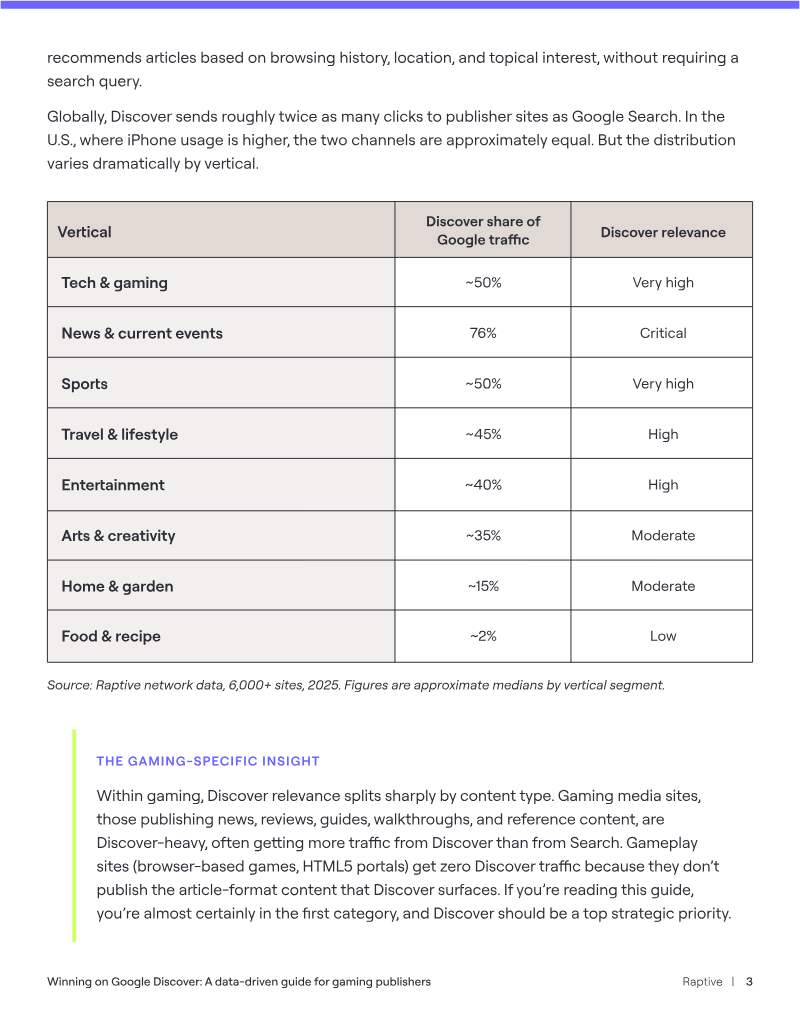
Raptive · 2026
ReportWinning on Google Discover: A Data-Driven Guide for Gaming Media
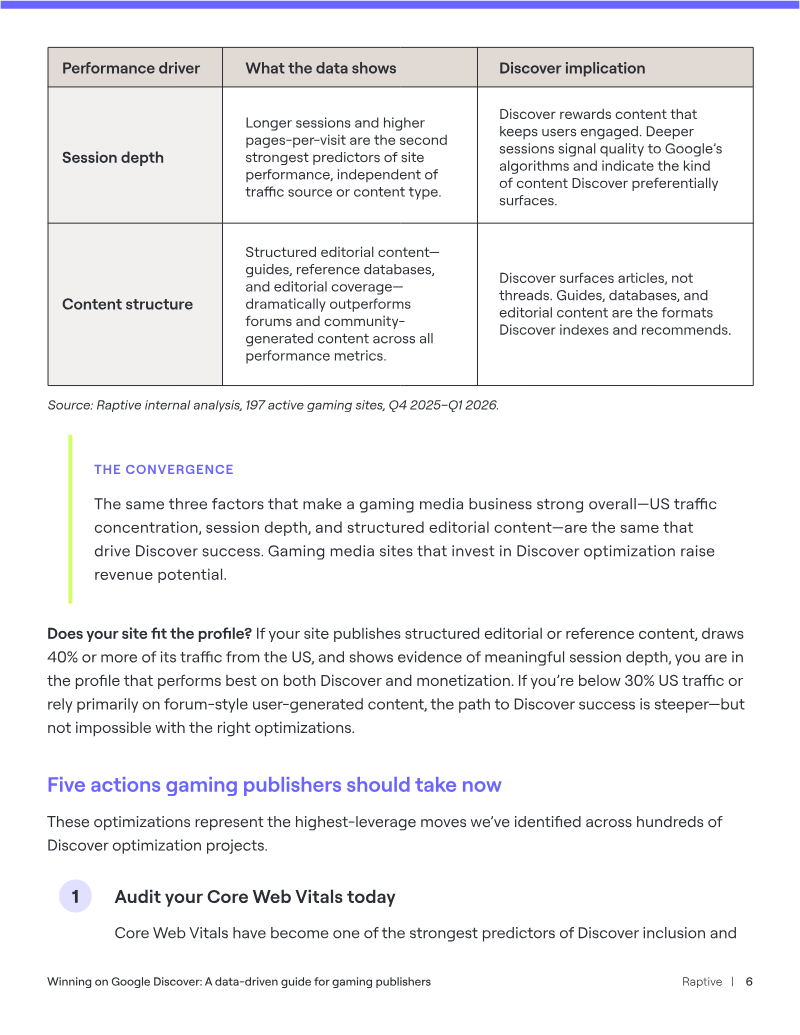
The brief explains how Google’s February 5, 2026 “Discover core update” expands the personalized content feed and shifts traffic from traditional search to Discover, especially for gaming media. Across 197 active gaming sites in the Raptive network, roughly half of Google traffic originates from Discover, with a 20 % rise in sites receiving feed impressions after the update. The report identifies three key performance drivers that correlate with both Discover visibility and overall revenue: high U.S. traffic concentration, deep session depth, and structured editorial content such as guides and reference databases. Sites that meet these criteria see stronger Discover performance, while those dominated by forum‑style or low‑differentiation content face greater volatility. Methodologically, the analysis draws on internal Raptive data from 6,000+ sites and external sources like Chartbeat and Google Search Console. It highlights early post‑update signals: Discover traffic is growing for smaller publishers, click volatility remains high due to real‑time recommendation algorithms, and AI summaries now occupy about half of feed impressions. The brief recommends five high‑impact actions—optimizing Core Web Vitals, crafting Discover‑specific headlines, adding author voice, aligning publishing calendars with gaming events, and correcting meta tags—to boost Discover clicks. The document concludes by outlining Raptive’s support services, including a forthcoming Discover Workbook and personalized audits that have historically yielded an 89 % RPM uplift for gaming publishers. The brief positions Discover as a critical, data‑driven channel for gaming media amid declining search traffic and AI‑generated content.


InvestGame · 2026
ReportThe Dual Frontier: A Retailer’s Framework for Agentic Commerce
Retailers frequently adopt LLM‑powered chat widgets without addressing the core friction points that shape shopper behavior. The analysis argues that meaningful agentic commerce emerges when AI is tailored to a retailer’s specific product categories, customer profiles, and pain points. By deploying onsite ambient intelligence that proactively surfaces assistance when shoppers display confusion, retailers can intervene before friction escalates. Off‑site agent commerce remains nascent; catalog data quality and the availability of structured attributes are critical bottlenecks that must be resolved to enable reliable recommendations and transactions. Data quality is identified as a pivotal differentiator. In an agentic environment, insufficient data can prevent a retailer from entering a shopper’s consideration set entirely, whereas in traditional e‑commerce it merely dampens conversion rates. The framework stresses the need to provide agent platforms with enough data for accurate recommendations while protecting proprietary signals from competitors. A calibrated approach—balancing “share freely,” “share selectively,” and “protect” signals—is essential to maintain trust, enhance recommendation confidence, and drive higher conversion rates. A quantitative readiness diagnostic offers a pragmatic path forward. Four pillars—catalog, technical infrastructure, organizational capacity, and strategic urgency—are scored on a 32‑point scale. Scores of 26–32 signal mature foundations and immediate learning loops; 18–25 require focused catalog work over 8–12 weeks; 10–17 suggest a narrow pilot with partner support; and 0–9 indicate foundational improvements are needed before any agent rollout. Building these capabilities in‑house can take 12–18 months, whereas partnering with a platform such as Moloco Commerce Media accelerates deployment through catalog normalization, real‑time decisioning, and holdout‑based incrementality frameworks.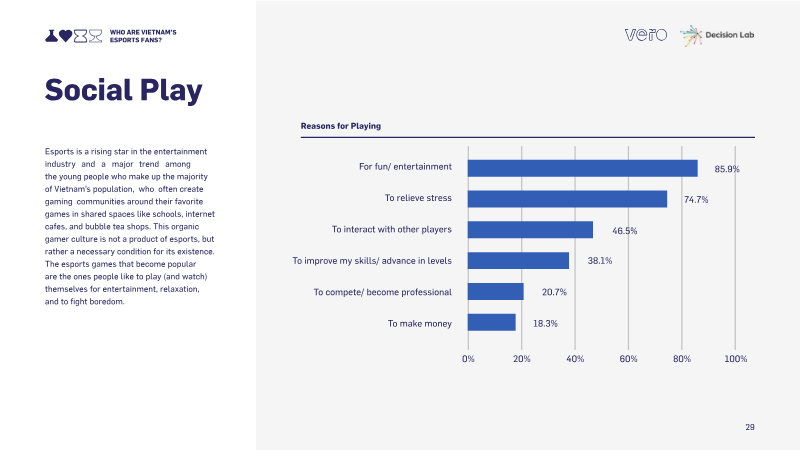

Decision Lab · 2026
ReportGaming and Esports in Vietnam: A New Arena for Brands
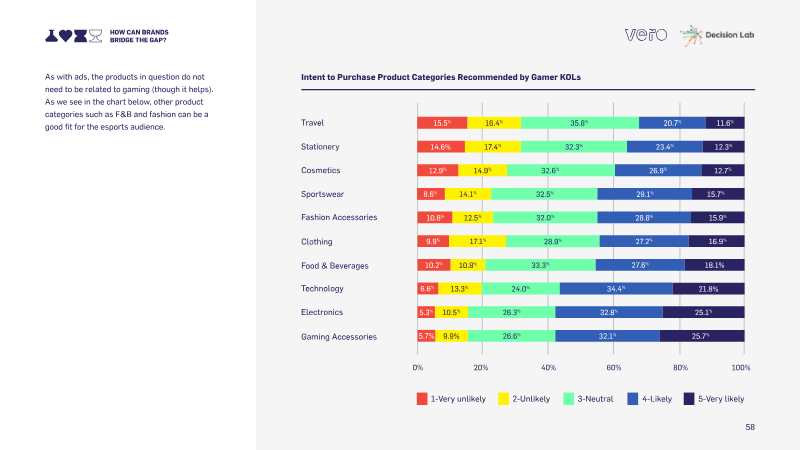
Vietnam’s gaming and esports landscape has evolved into a high‑growth, culturally resonant channel for brands targeting the country’s youthful, tech‑savvy population. With one‑third of the populace engaged in esports and an adult gamer rate of 85 %—the highest globally—the market is driven by widespread smartphone penetration, robust 4G coverage, and a demographic where roughly 70 % are under 25. Mobile titles dominate, particularly MOBAs and FPS games, while PC gaming remains significant; casual players account for nearly half of the audience. Consumer behavior shows intense engagement: gamers spend 1–3 hours per session, seek entertainment (85.9 %), stress relief (74.7 %), and social interaction (46.5 %). Streaming platforms such as YouTube Gaming and Facebook Gaming lead, with Twitch lagging behind. Brands that sponsor mobile esports events or partner with key opinion leaders (KOLs) can tap into this high‑interaction environment, especially as 51 % of gamers trust KOL recommendations and 42 % purchase endorsed products. Investment trends confirm the sector’s appeal. Global esports spend reached $844 million in 2021, with 9.9 % allocated to Vietnam. In‑game advertising that offers prizes (49 %) and video content (40 %) yields the strongest purchase intent, particularly for electronics, tech, and gaming accessories. Best practices emphasize customized creative assets, reward‑based incentives, and authentic collaborations—examples include Adidas “Time In” with Ninja, Dashing’s team sponsorship, and Mastercard’s League of Legends partnership—demonstrating higher recall than traditional sports ads. Practical engagement strategies recommend experiential pop‑ups, in‑game placements, and co‑creation with publishers (e.g., Louis Vuitton’s LVxLOL) to deliver authentic touchpoints. Cause‑based campaigns resonate with Gen Z’s social consciousness, while treating esports as a “co‑business” encourages integrated, audience‑centric messaging. Overall, Vietnam’s rapidly expanding mobile and PC gaming ecosystem offers brands a fertile arena for digital fluidity, agile research, influencer partnerships, and localized media strategies to capture high‑growth engagement.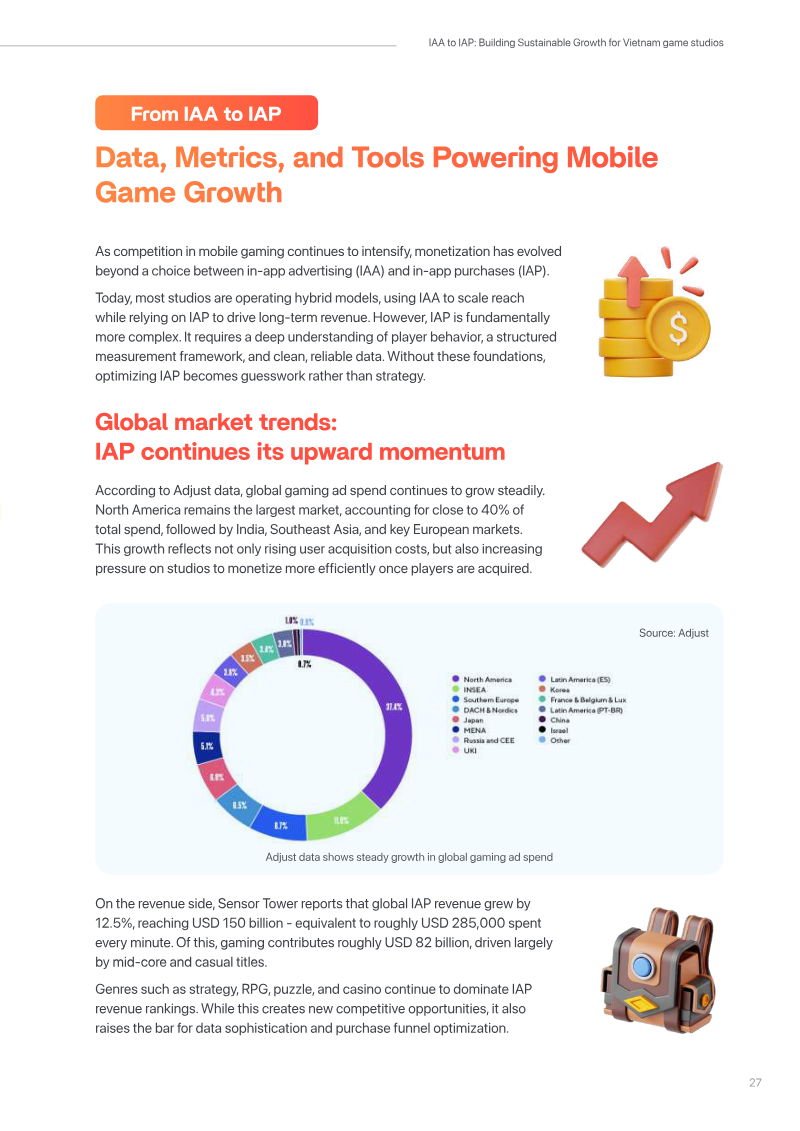
InvestGame · 2026
ReportVietnam Gaming Outlook 2026: Building Sustainable Growth
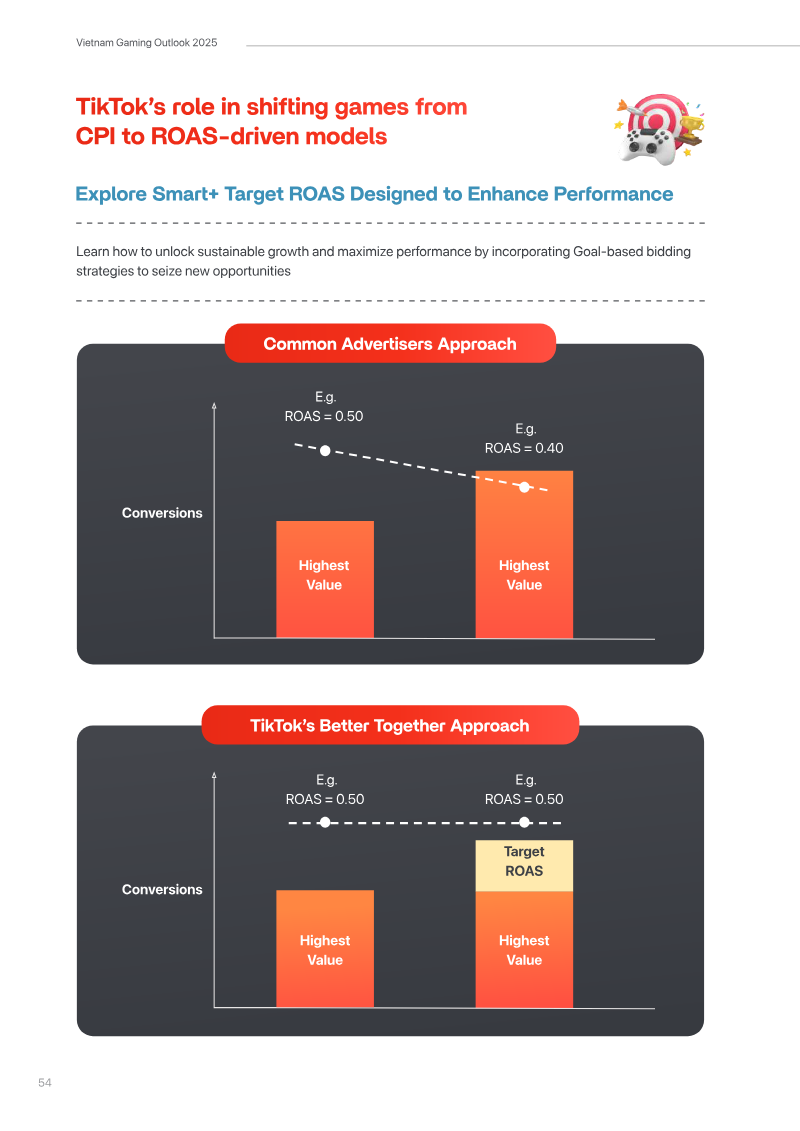
Vietnam’s mobile gaming landscape is rapidly evolving from a download‑centric, ad‑driven model to a hybrid ecosystem that prioritizes in‑app purchases (IAP) and subscription revenue. In 2024, the country led global Google Play downloads with 6.1 billion installs yet generated only about $430 million, underscoring the profitability ceiling of pure advertising. Rising acquisition costs, privacy‑driven signal loss, and a plateauing average revenue per user (ARPU) have forced studios to adopt IAP‑first, hybrid casual titles that deliver deeper engagement and predictable cash flows. Global IAP and subscription revenue reached $150 billion in 2025, up 13%, while Vietnam’s IAP growth surged 65 %, positioning hybrids as the default blueprint for sustainable growth by 2026. The transition hinges on data‑centric monetization strategies. AI‑driven programmatic advertising and hybrid supply‑side platforms help studios navigate privacy constraints, while sophisticated IAP systems require clean player‑behavior analytics and structured measurement frameworks. Localized pricing—using purchasing power parity tiers, local currency endings, and one‑tap tokenised payments—can lift conversion by over 20 % and reduce checkout abandonment by up to 30 %. Integrating multi‑currency settlement through a single provider such as Airwallex adds 2–5 % to net margin without altering game design. A phased rollout model enables Vietnamese studios to pilot in core markets, expand regionally through configuration rather than new vendor projects, and scale into high‑value markets like the US for top‑line growth and FX savings. Premium ad formats on TikTok, when matched to specific spending barriers, can boost transaction values by 20–30 % and shift campaigns from cost‑per‑install to return‑on‑ad‑spend metrics. Case studies, such as Falcon Game Studio’s pivot to a hybrid model with 60–70 % day‑one retention and a 3–5 % global payer rate, illustrate the tangible benefits of this approach. Overall, Vietnam’s mobile gaming sector is poised to compete globally by leveraging robust payment partners, privacy‑first acquisition tactics, and a disciplined IAP strategy that unlocks higher lifetime value and sustainable studio growth through 2026.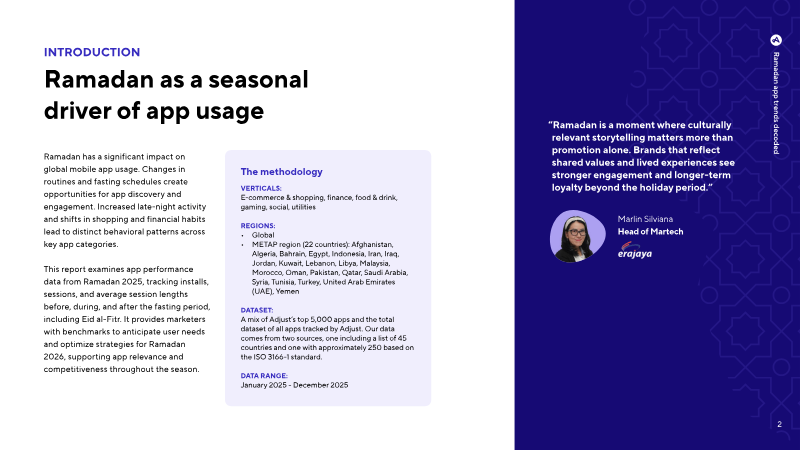

InvestGame · 2026
ReportMobile App User Trends: MENA Ramadan 2026
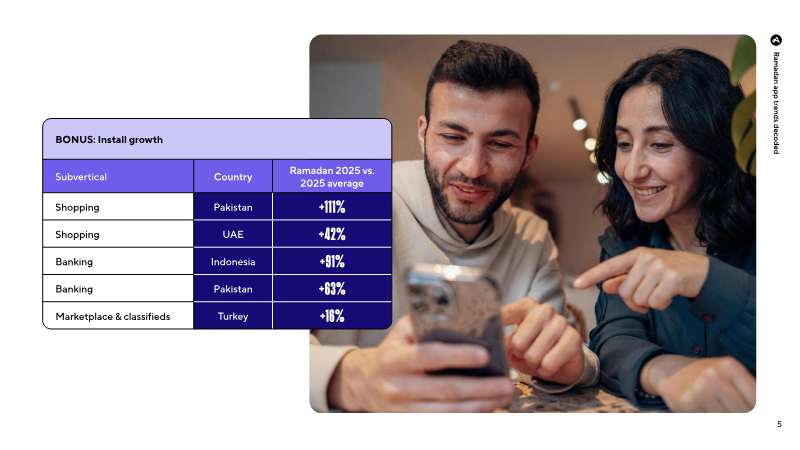
The analysis focuses on mobile application usage patterns observed during the Ramadan period of 2026 across the Middle East and North Africa (MENA) region. The primary objective is to quantify shifts in user engagement, subscription behavior, and platform preference relative to the preceding year and a broader baseline average. Key metrics examined include overall app usage, subscription growth, in‑app purchases, and social media interaction. Findings indicate a pronounced rise in overall app engagement during Ramadan 2026, with total usage increasing by approximately 111 % compared to the same period in 2025. Subscription activity shows a 42 % uptick, while in‑app purchase volume climbs by 91 %. Social media engagement metrics—measured through likes, shares, and comments—exhibit a 63 % increase. When benchmarked against the average growth rate for the same timeframe (2025‑2026), these figures represent a significant acceleration, suggesting heightened consumer activity during the holy month. The data set covers all MENA markets and aggregates daily usage logs from a representative sample of mobile devices. The methodology involved longitudinal tracking of app sessions, transaction records, and social media interactions over the 30‑day Ramadan period. Comparative analysis was performed against both the previous year’s Ramadan metrics and a rolling 12‑month average to isolate seasonal effects. In conclusion, the Ramadan period of 2026 drove substantial growth across multiple facets of mobile app consumption in MENA, with overall usage and monetization metrics surpassing historical trends. These insights underscore the strategic importance of tailoring app offerings, promotional campaigns, and user experience enhancements to align with cultural and religious calendars in the region.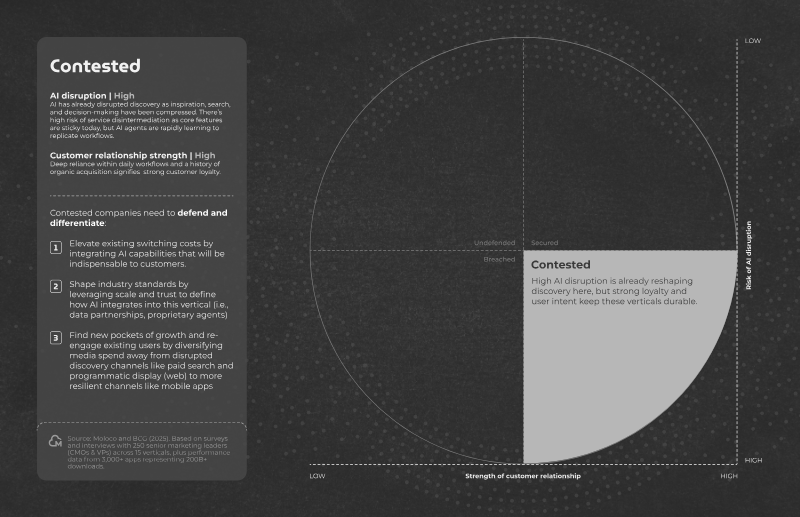

InvestGame · 2026
ReportThe AI Disruption Index: How AI Is Reshaping Consumer Discovery
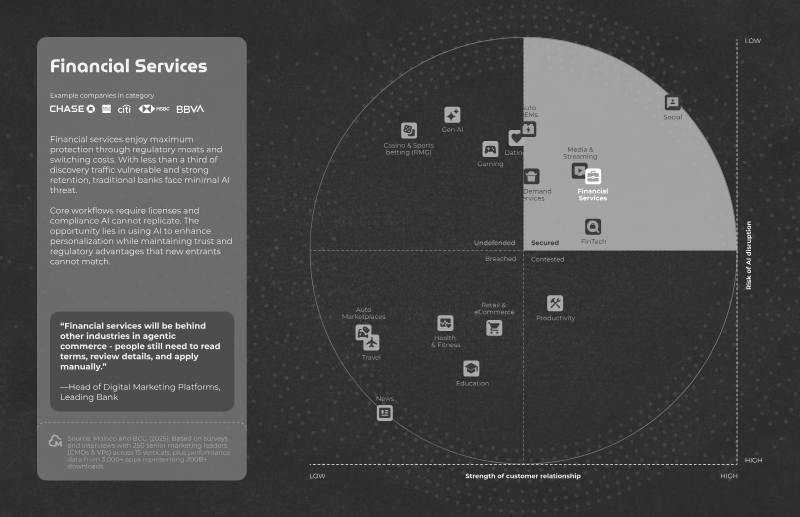
The AI Disruption Index demonstrates that artificial intelligence is fundamentally altering how U.S. consumers discover and purchase brands, with one‑third of adults now using personal AI agents to find products and nearly half employing AI for purchase research. A survey of 283 marketing leaders across fifteen verticals, coupled with analysis of more than 3,000 apps that collectively amassed over 200 billion downloads, confirms that AI has already eroded traditional discovery channels and is poised to disintermediate services that depend heavily on paid search and weak customer relationships. Generative‑AI agents pose the greatest threat to news, education, health & fitness, retail, and on‑demand services, where AI can replace conventional search and recommendation workflows. Only sectors with strong regulatory or content moats—such as financial services, media rights holders, and auto OEMs—retain a defensive advantage. The study underscores that brands must embed AI‑driven personalization and deepen direct customer relationships to counter the risk of zero‑click discovery. Mobile applications emerge as the primary competitive advantage for brands able to own the customer journey. They provide first‑party data, closed‑loop measurement, and personalized experiences that are difficult for AI agents to replicate. The report recommends three strategic priorities: investing in superior mobile app experiences, unifying and activating customer signals through comprehensive data profiles, and rethinking channel mixes to favor resilient, direct‑engagement platforms over fragmented paid or organic search. These actions will enable brands to mitigate AI‑driven disruption and secure long‑term customer loyalty across the United States.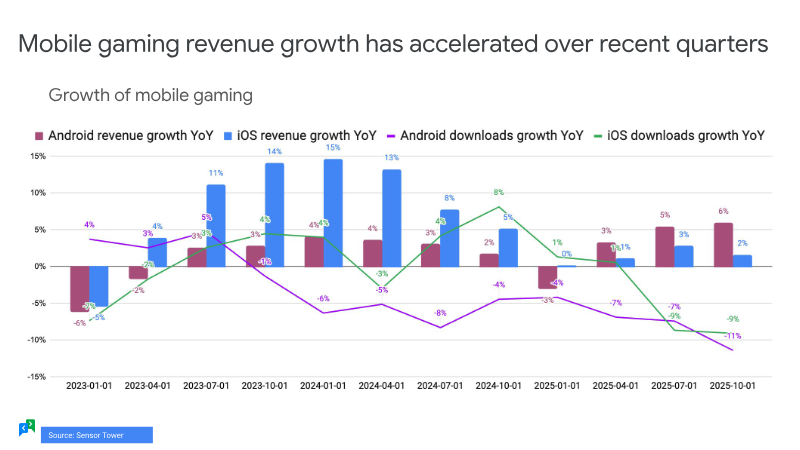
InvestGame · 2026
ReportKey Insights and Data: 2023–2025
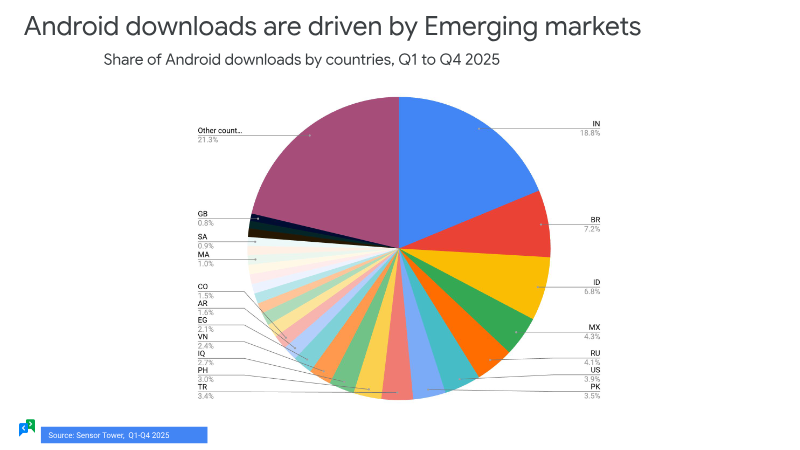
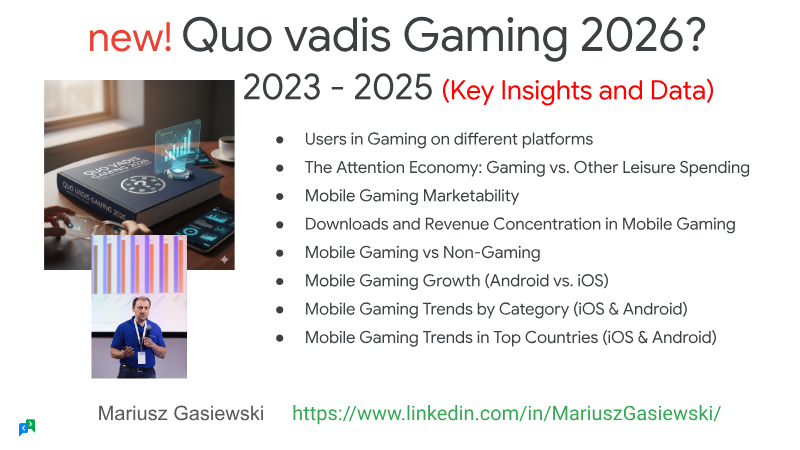
Mobile gaming drives the global industry’s growth through 2025, accounting for more than half of worldwide revenue and over eighty percent of players. Global gaming income is projected to reach $197 billion in 2025, a 7.5 % year‑over‑year rise largely powered by mobile and PC segments, while console expansion remains modest. The sector’s resilience is most pronounced in emerging markets where Android and iOS user volumes surge, yet revenue concentration persists in Western regions—particularly the United States and the United Kingdom—where iOS dominates acquisition spend. Competitive dynamics sharpen as the top ten to fifty titles on Google Play and Apple’s App Store capture an increasing share of revenue, creating a winner‑take‑all environment. Hyper‑casual and match‑3 games concentrate U.S. spend, whereas Android strategy titles spread more evenly across Japan, Korea, and Taiwan. Sub‑genres such as chess, ludo, hidden object RPGs, and slots thrive in China, India, Brazil, and Southeast Asia, collectively commanding 15–20 % of global spend. Across most categories, day‑one retention has slipped from roughly 80 % to about 60 %, underscoring a broader challenge of sustaining early engagement. Download patterns reveal Android’s volume advantage—about 70 % of global downloads—with the United States, India, Brazil, and Indonesia leading. iOS, though smaller in volume (30 %), delivers higher per‑download revenue, especially in China and the U.S. iOS penetration is rising in emerging markets such as Brazil and Vietnam, while Android’s share in India climbs from 18.8 % to 21.3 %. Genre‑level analysis shows modest growth (10–30 %) across most mobile categories, with occasional outliers and declines in specific niches. Overall, the landscape is characterized by rapid mobile expansion, concentrated monetization power, and shifting geographic priorities that shape strategic opportunities for developers and marketers.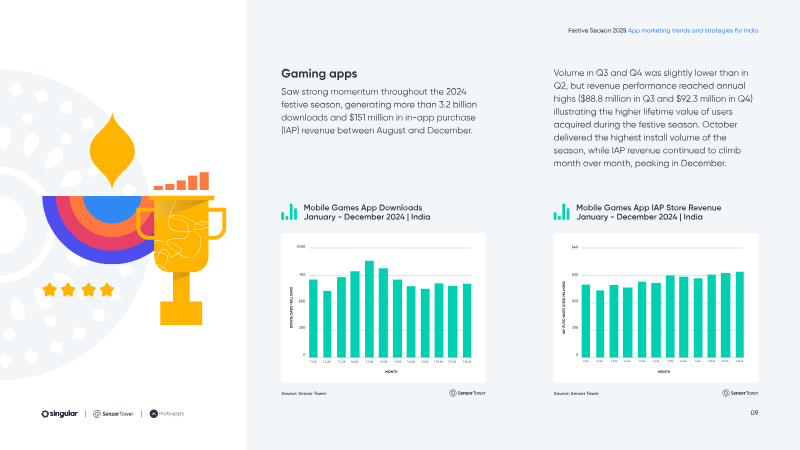
InvestGame · 2026
ReportFestive Season 2025: App Marketing Trends and Strategies for India
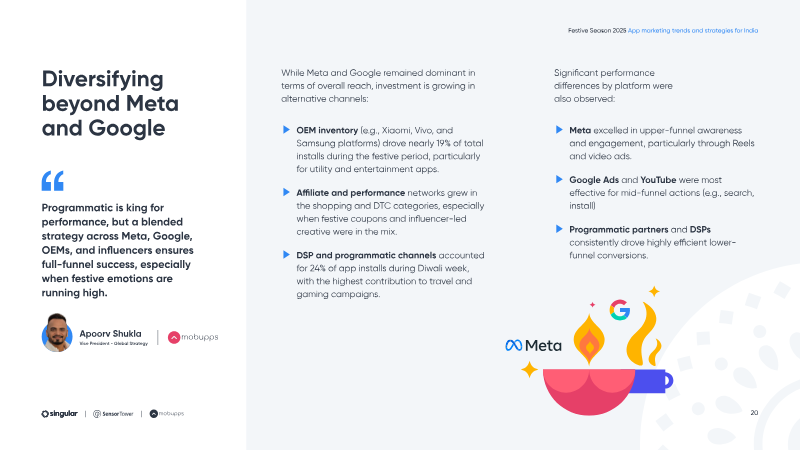
India’s festive season—from Onam in August through Diwali and Christmas in December—drives more than 30 % of the country’s annual digital advertising spend, making it a pivotal period for app marketers. In 2024, mobile games alone attracted over 3.2 billion downloads and generated $151 million in‑app purchase revenue, while non‑gaming verticals such as shopping, food delivery and OTT experienced sharp install spikes during key festivals. The data reveal a 53 % rise in mobile ad spend from Q1‑Q2 to Q3‑Q4, with installs up 36 % and re‑engagements soaring 69 % during the peak festive window, underscoring the season’s high‑value user acquisition and monetisation potential. User‑acquisition efficiency improved markedly, with CPI falling by approximately 12 % while CPA remained stable. Video and playable ads delivered the highest ROAS—up to 4.2× in fintech and 3.8× in e‑commerce—and programmatic/OEM placements on Xiaomi and Samsung yielded significant conversion lifts, particularly in Tier‑2 and Tier‑3 cities. Creatives that refreshed weekly, incorporated localized language, and employed urgency cues such as countdowns outperformed static ads, highlighting the need for agile, culturally relevant creative and a diversified media mix that extends beyond Meta and Google into programmatic and OEM channels. Marketers are increasingly leveraging data‑driven platforms—Singular, MobuppsX, Sensor Tower, Pathmatics and others—to optimise acquisition, retention and media spend. By integrating MAFO, iRTB, advanced fraud prevention and audience‑retention analytics, brands can reduce wasted spend, improve advertising ROI and accelerate growth across web, social and mobile channels. A unified data‑house approach enables faster campaign optimisation, measurable engagement gains and stronger competitive positioning during India’s lucrative festive period.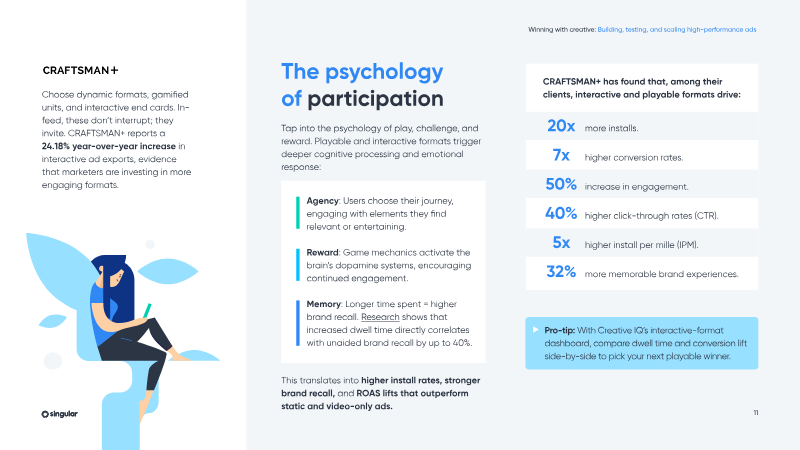
Moloco · 2026
ReportWinning with Creative: Building, Testing, and Scaling High-Performance Ads
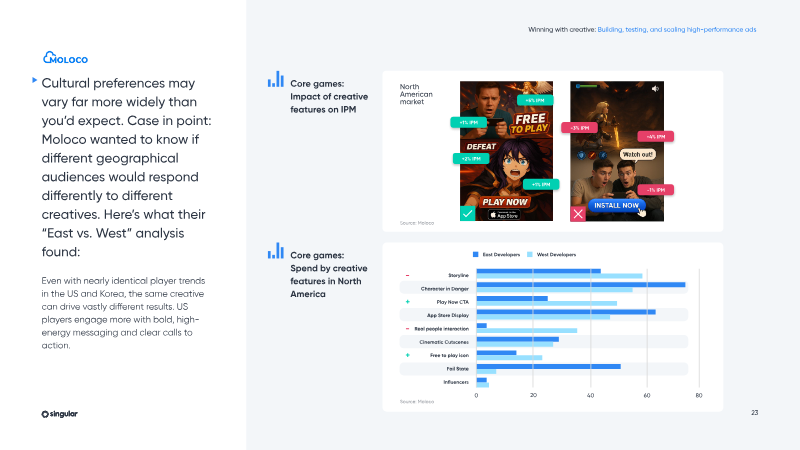
The purpose of the analysis is to demonstrate that creative content remains the decisive lever for growth in an advertising environment increasingly fragmented by privacy constraints and platform diversity. By measuring “Return on Creative” through volume, variety, and versioning, marketers can isolate incremental value per asset and scale profitable campaigns across platforms. High‑performance ads are defined by rapid, data‑driven testing and creative diversification. In e‑commerce and lifestyle categories, first‑person point‑of‑view walkthroughs that showcase everyday use outperform generic user‑generated content, with a 350 % lift in ad spend when winning templates are paired with top assets. TikTok’s “TikTok‑first” structure—hook, body, close—shows that 30‑second videos with sound on can raise purchase intent by up to 77 %. AI tools such as TikTok Symphony deliver a 57 % efficiency gain in content creation, underscoring the necessity of automated, localized creative testing for scaling. The three‑stage CRAFTSMAN+ framework provides a systematic approach to creative optimization. Stage 2 refines concepts by testing talent, video duration, and demographic fit to identify the most engaging format. Stage 3 fine‑tunes assets—including intro hooks, audio, CTA copy, and visual elements—to lock in the winning creative, benchmark performance, and scale campaigns. Narrative structure (education‑focused versus social proof) and localized storytelling drive higher conversion rates and return on ad spend, while structured fatigue monitoring (CTR decay, spend decline) enables proactive creative refreshes. Geographically the findings apply to major digital markets worldwide, with a focus on platforms such as TikTok and broader social media ecosystems. The time period covers the most recent advertising cycles, reflecting current privacy regulations and platform algorithm changes. Overall, the analysis concludes that dynamic, interactive creative—tested rapidly and scaled strategically—offers the highest growth potential for brands navigating today’s complex advertising landscape.
Adjust · 2026
Report