Marketing & User Acquisition
Campaigns, ad creatives, app store optimization and the cost of a player.
279 documents
RELX
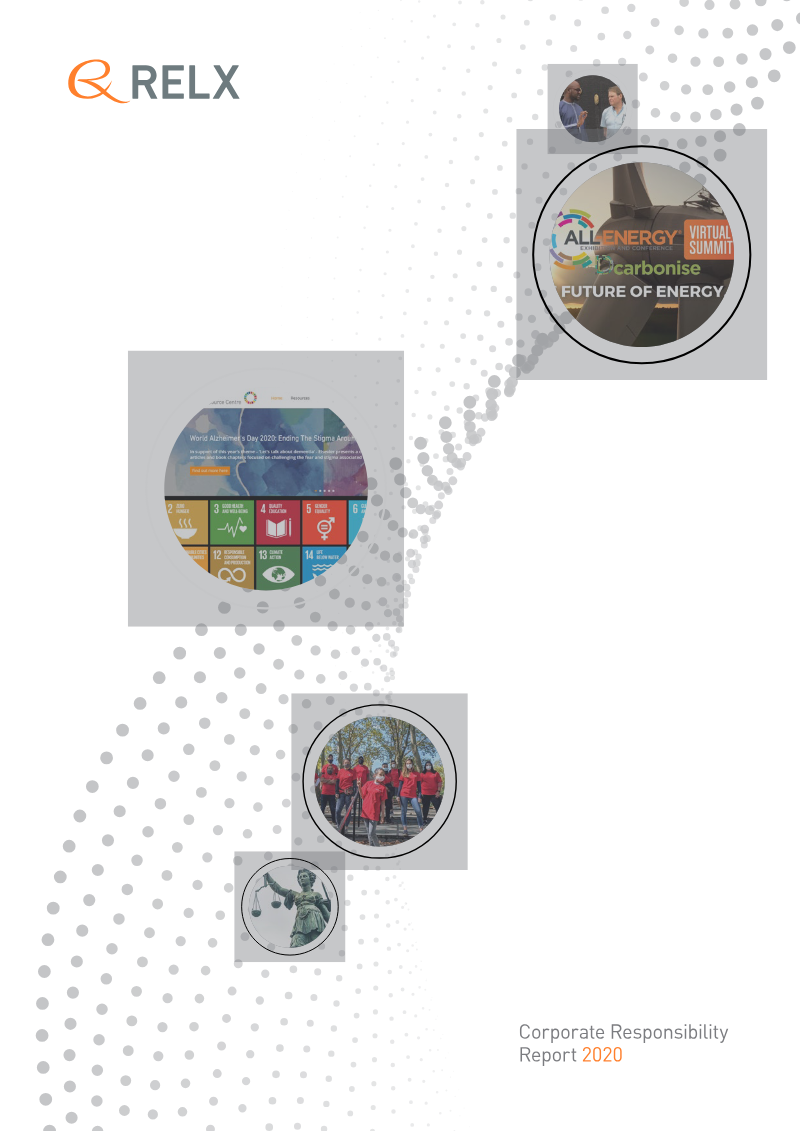
ReportCorporate Responsibility Report 2020
The 2020 Corporate Responsibility Report details how RELX integrated sustainability, ethical governance, and social impact into its global information-based analytics and decision-tool business. The primary thesis centers on the strategic alignment of core business capabilities—such as data dissemination, legal research, and scientific publishing—with the United Nations Sustainable Development Goals (SDGs). By leveraging its expertise in health, justice, and financial inclusion, the company sought to address systemic disparities while maintaining rigorous internal standards for data privacy, anti-corruption, and human rights. Key operational achievements in 2020 included reaching 100% renewable electricity usage and establishing new science-based targets to reduce Scope 1 and 2 carbon emissions by 46% by 2025. The company demonstrated significant social commitment through the "RELX Cares" program, which contributed £17.5 million in total value to community and educational initiatives, and by expanding its supply chain oversight, with 91% of tracked suppliers signing the company’s Code of Conduct. Furthermore, RELX prioritized workforce diversity and inclusion, reporting a 51% female workforce and launching extensive mental health and equity training programs to support employees during the COVID-19 pandemic. The report covers the company’s global operations throughout the 2020 fiscal year, emphasizing a transition toward digital-first products, which accounted for 87% of revenue. By utilizing frameworks such as the Taskforce on Climate-related Financial Disclosure (TCFD) and undergoing independent assurance by Ernst & Young, the company reinforced its commitment to transparency and accountability. Ultimately, the findings illustrate a comprehensive effort to embed environmental, social, and governance (ESG) priorities into the firm’s long-term business strategy, ensuring that technological innovation and corporate responsibility remain mutually reinforcing objectives.


AEVI
ReportPEGI: European Game Information
The text serves as an educational and promotional overview of the Pan‑European Game Information (PEGI) rating system, using a comic‑style narrative to capture the attention of younger gamers while delivering core information about age‑based content classification. Its central thesis is that PEGI provides the most comprehensive mechanism for informing consumers about video‑game suitability, thereby ensuring safe and informed purchasing decisions across Europe. Key points emphasize that PEGI operates in more than thirty countries and employs a traffic‑light colour scheme to convey age recommendations: green icons for games suitable for all audiences (ages 3 and 7), amber for intermediate levels, and red for titles restricted to adults (18+). The system also includes content descriptors that clarify specific elements that may affect suitability, reinforcing transparency for parents and players. The narrative illustrates the progression through various “worlds” representing age brackets—3, 7, 12, 16, and 18—highlighting that each tier is tailored to increasingly experienced gamers. The scope is continental, covering the European video‑game market and all major platforms, with references to the official website and downloadable applications for iPhone, Android, and Windows 7 Phone. No empirical methodology is presented; the piece relies on descriptive exposition and visual storytelling rather than survey data. Overall, the material positions PEGI as a reliable, universally adopted standard that guarantees 100 % informed choice for consumers.
Adjust
Report