Marketing & User Acquisition
Campaigns, ad creatives, app store optimization and the cost of a player.
232 documents
App Annie · 2021
ReportGaming Spotlight: 2021 Review
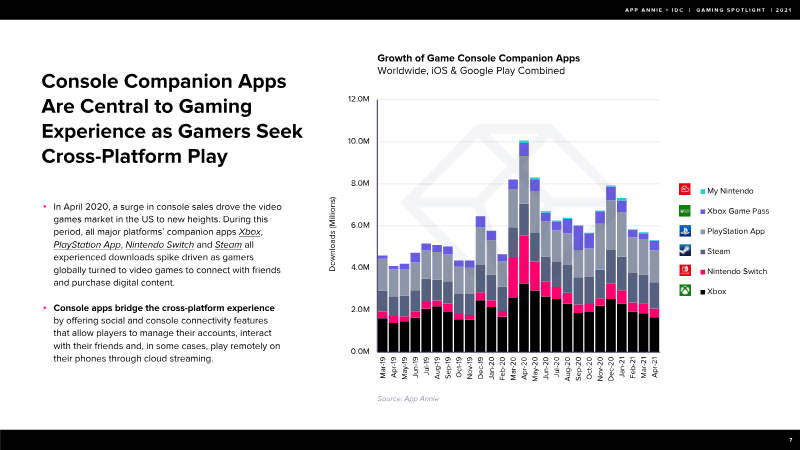
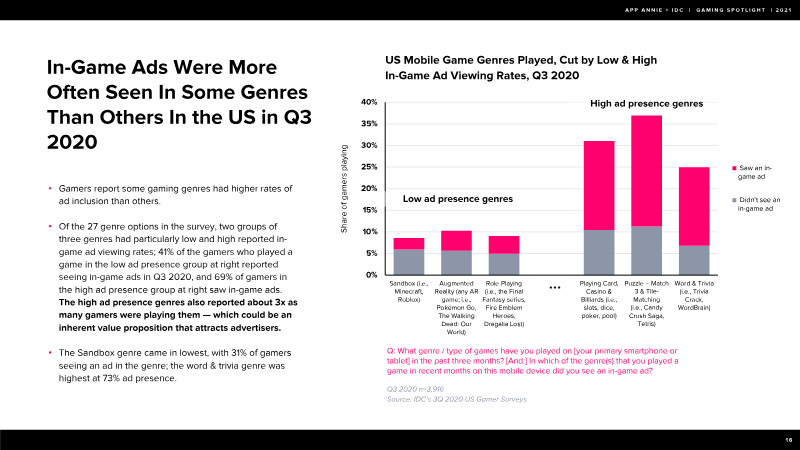
The 2021 Gaming Spotlight provides a comprehensive analysis of the global digital gaming landscape, emphasizing the dominance of mobile gaming and the increasing integration of cross-platform experiences. The primary thesis posits that mobile gaming has become the central driver of industry growth, with its global lead over home consoles projected to reach 3.1x by the end of 2021. This shift is supported by data indicating that mobile game downloads and consumer spending in Q1 2021 increased by 30% and 40%, respectively, compared to pre-pandemic levels in late 2019. The analysis highlights a significant evolution in player behavior, where social connectivity and cross-play capabilities have become essential for long-term engagement. High-grossing titles such as Roblox and Genshin Impact exemplify this trend, leveraging cross-platform features to scale rapidly across mobile, PC, and console environments. Furthermore, the report notes that console companion apps have become vital tools for managing accounts and maintaining social connections, reflecting a broader trend of merging mobile and console experiences. Methodologically, the findings rely on market intelligence from App Annie and consumer survey data from IDC, which polled over 3,300 US gamers regarding their attitudes toward in-game advertising. The research reveals that while overall sentiment toward in-game ads improved between 2019 and 2020, player reception is highly dependent on the ad format. Rewarded video and playable ads, which offer a direct value exchange, consistently outperform traditional banner and video ads in user sentiment. The data warns that ad oversaturation, particularly in high-frequency genres like word and trivia games, correlates with more negative player sentiment and potential churn. Ultimately, the industry is trending toward casual, session-based gaming, with hyper-casual and simulation genres seeing the most significant growth in download market share.

AudioMob · 2021
ReportAudio Ad Engagement in Mobile Games
This analysis examines the efficacy of in-game audio advertising as a non-intrusive alternative to traditional video and banner formats within the mobile gaming industry. The primary thesis posits that audio ads maintain player engagement and retention by allowing gameplay to continue uninterrupted, thereby fostering a more positive brand association compared to conventional, disruptive advertising models. Research findings are derived from a combination of market surveys and behavioral testing. A YouGov survey of 2,200 respondents highlights that 86% of UK adults dislike video ads, while 28% identify audio ads as their preferred monetization model. Behavioral testing conducted by Go Live Test confirms that 100% of participants continued playing during audio ad delivery and achieved 100% brand recall when ads were paired with a companion banner. Furthermore, the data indicates a significant engagement advantage, with audio ads achieving a click-through rate (CTR) of approximately one click per 1.4 listens, vastly outperforming the 0.08% average CTR typical of static banners. The effectiveness of this format is further validated by a Warner Music Group case study targeting 18-to-30-year-olds in the United States. The campaign achieved a 1.78% CTR—representing a 1,000% increase over traditional banner standards—and an ad completion rate exceeding 75%, significantly higher than the 4% to 8% industry standard for skippable video ads. Additionally, the campaign recorded a 1.8% bounce rate on the destination page, suggesting high intent among users who engaged with the audio format. These findings suggest that audio advertising offers a viable solution for developers and brands seeking to monetize a global audience of 2.8 billion mobile gamers without compromising the user experience. By integrating seamlessly into the background of gameplay, audio ads mitigate the frustration associated with screen-blocking video ads, ultimately driving higher engagement and more favorable brand outcomes.


SocialPeta Data Research Institute · 2021
ReportWhite Paper on Global Mobile Games
The white paper argues that mobile-game advertising has entered a new phase of intensity and sophistication, driven by rapid creative growth, the dominance of video formats, and evolving privacy regulations. In 2021 ad creatives surged by 200% YoY while CPMs rose 34%, with video ads now accounting for over 85% of spend. The market continues to expand, projecting more than 70 000 advertisers by 2023, yet advertiser growth has slowed post-pandemic to just 5% YoY. Android remains the primary platform, hosting roughly two-thirds of advertisers, and high-spending Tier 1 markets—particularly the United States, Japan, and Korea—retain their status as key targets for publishers. Geographically, the United States shows a casual-game bias among advertisers (26% of spend) but still supports high-spending titles such as Free Fire and Subway Surfers. China’s landscape is shifting from RPGs to casual titles, with puzzle games capturing the largest creative share. In the Middle East, strategy and shooter games like Rise of Kingdoms and PUBG Mobile dominate downloads and revenue, whereas the CIS market displays a more diversified mix of strategy, shooter, and casual titles. Across all regions, vertical video ads—especially 30–34 second formats with end-card elements—outperform horizontal variants for mid- and hard-core titles, achieving conversion rates around 0.15%. Playable ads also deliver significant lift for mid-core games. Privacy changes from Apple and Google have accelerated a shift toward probabilistic attribution models such as SKAN, compelling advertisers to prioritize creative design over granular targeting. Hybrid monetization platforms that blend bidding and non-bidding networks are gaining traction, while developers increasingly adopt innovative in-app purchase mechanics (limited-time offers, battle passes) and social features (chat, PvP, guilds) to enhance engagement and retention. These trends collectively underscore a mobile-gaming ecosystem that is more video-centric, privacy-aware, and focused on long-cycle strategy titles in high-engagement markets.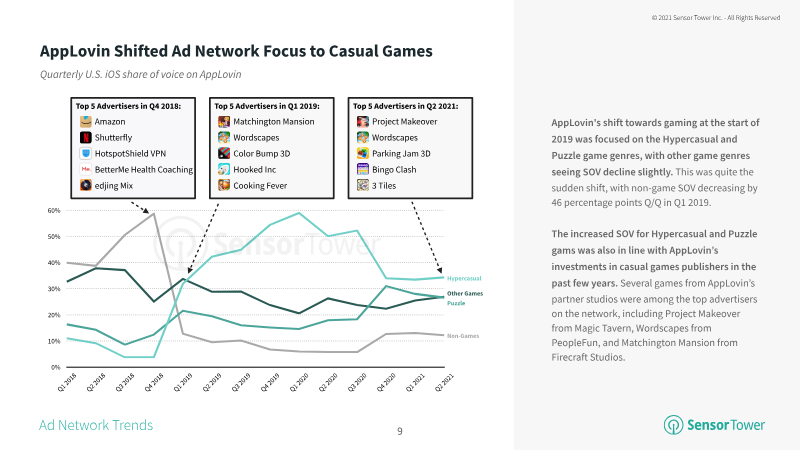
Sensor Tower · 2021
ReportThe State of Mobile Game Advertising 2021
The report examines U.S. mobile game advertising in 2021, focusing on ad network share of voice (SOV), creative formats, genre-specific trends, and demographic alignment. Five gaming-centric networks—Chartboost, Unity, Adcolony, ironSource, and Vungle—dominated game advertising, each maintaining over 90% SOV from games on iOS and Android. In contrast, mainstream social platforms (Facebook, Instagram, TikTok, YouTube) displayed a more balanced mix of gaming and non-gaming ads, with SOV from games ranging 40–60%. AppLovin and MoPub shifted toward gaming in late-2018, investing heavily in hypercasual publishers; this pivot increased their game SOV to roughly 90% on iOS and 80% on Android by early-2021. AdMob’s focus on Google Play titles grew, with its game SOV rising from 60% to 80% by Q2 2021. Creative analysis shows video ads remain the dominant format across networks, accounting for >50% of game ad spend on iOS and Android. Playable ads gained traction among hypercasual publishers (e.g., AppLovin) and, more recently, mid-core titles such as Call of Duty: Mobile and State of Survival. Full-screen ads were more common on Android, especially for Google Play games. Genre-level insights reveal puzzle and hypercasual games rely heavily on gaming-focused networks (Chartboost, Unity), while mid-core and strategy titles favor broader platforms like Facebook and YouTube. Casino games concentrated on Adcolony, which also hosts many real-money reward creatives. The study concludes that despite IDFA changes, game advertising volumes remained stable into 2021. Publishers can optimize spend by matching network demographics to target audiences—YouTube for younger, male strategy players; Adcolony for older, female casino gamers—and by adopting emerging creative trends such as simple playable ads and background music to differentiate in a crowded market.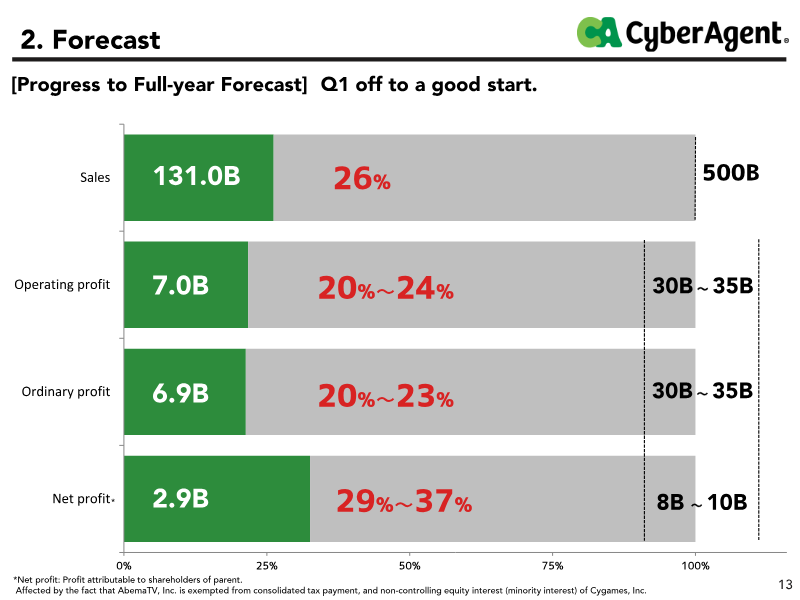
CyberAgent · 2021
Presentation1Q FY2021 Presentation Material: October to December 2020
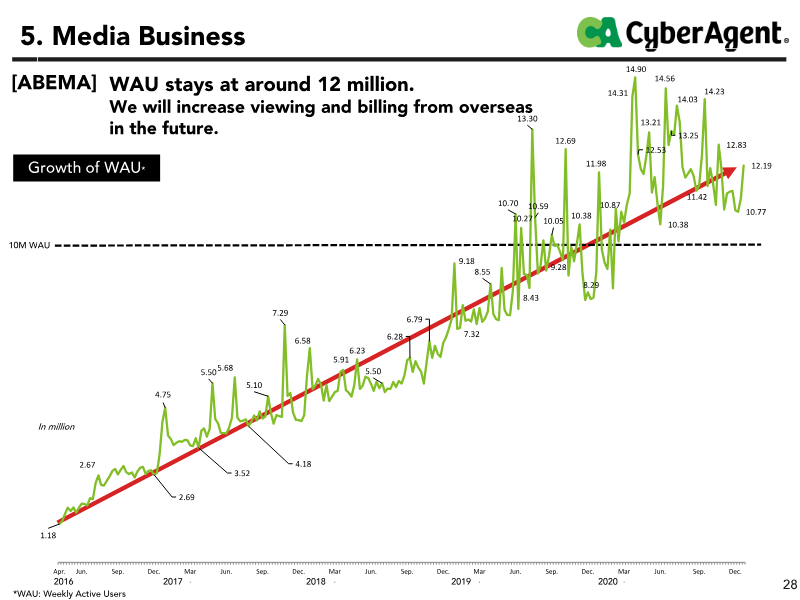
CyberAgent achieved record-high consolidated sales of 131 billion yen during the first quarter of fiscal year 2021, representing a 13.3% year-over-year increase. This growth was primarily propelled by the Media and Advertising segments, offsetting a temporary downturn in the Game business. While the Game segment saw revenue decline 15% to 29.9 billion yen and operating profit drop 77.8% due to seasonal factors and elevated marketing expenditures, the company maintained a strong financial foundation with 252 billion yen in total assets. This performance establishes a solid trajectory toward meeting full-year targets despite the mixed results across different business units. The Media segment emerged as a significant growth engine, with ABEMA driving a 67% surge in revenue to 20.4 billion yen. This expansion was supported by a premium subscriber base exceeding 921,000 users and an elevenfold increase in transaction volume for the WINTICKET platform. To capitalize on this momentum, the company restructured ABEMA into distinct Free and Premium business units. Simultaneously, the Game business prepared for a recovery through the high-profile launches of titles such as Uma Musume Pretty Derby and NieR Re[in]carnation, signaling a strategic focus on high-quality content to stabilize future earnings. Corporate strategy remains centered on governance and technological adaptation within the Japanese market. The organizational structure utilizes a clear distinction between supervision and execution, supported by a board of eight directors that includes significant outside representation. By emphasizing environmental data disclosure and the integration of artificial intelligence within advertising and media functionality, the company aims to align with modern ESG standards. These initiatives, framed within the context of the New Normal, reflect a commitment to long-term sustainability and operational agility in a rapidly evolving digital landscape.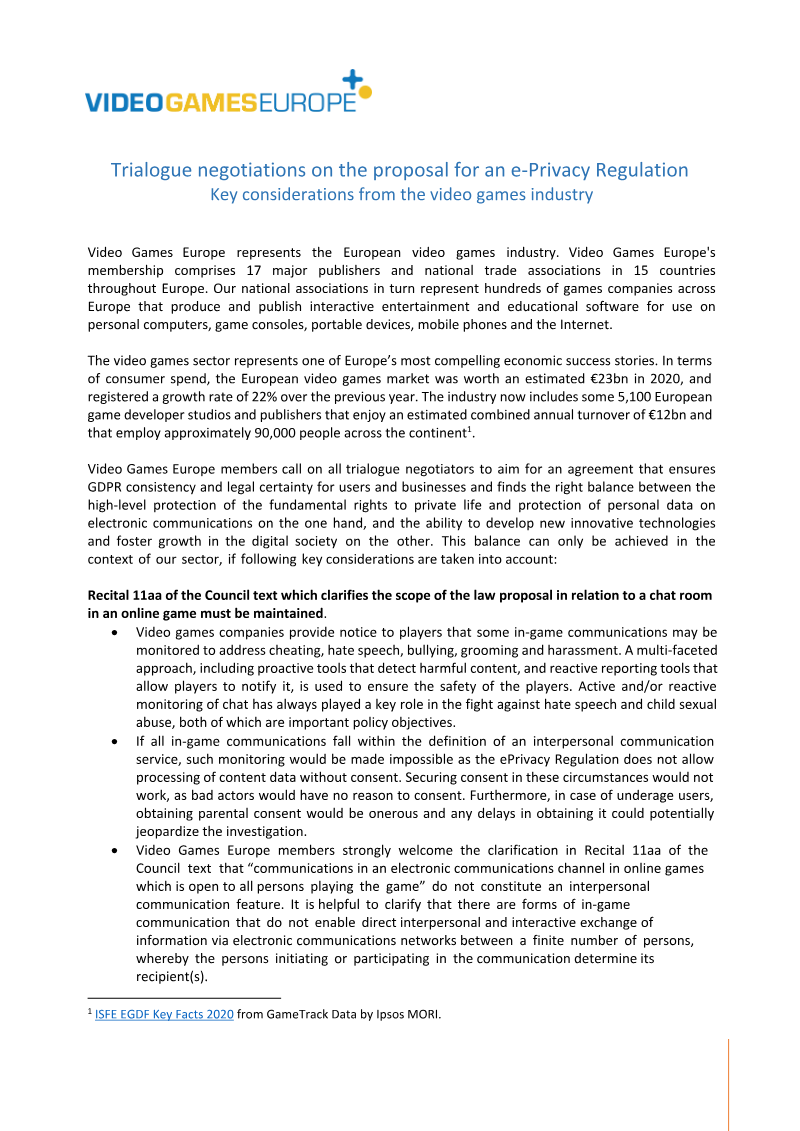
Video Games Europe · 2021
WhitepaperTrialogue Negotiations on the Proposal for an e-Privacy Regulation: Key Considerations from the Video Games Industry
Video Games Europe, representing 17 major publishers and national trade associations across 15 European countries, urges trialogue negotiators to craft an e-Privacy Regulation that aligns with GDPR consistency while preserving the sector’s capacity to innovate and protect users. The industry, valued at €23 billion in consumer spend in 2020 and growing 22 percent year-on-year, comprises roughly 5,100 developer studios and publishers with combined annual turnover of €12 billion and a workforce of about 90 000 employees. Key positions stress that in-game communications, particularly chat rooms open to all players, must remain outside the definition of an interpersonal communication service, as clarified in Recital 11aa, to enable monitoring for cheating, hate speech, bullying, grooming and child sexual abuse. Requiring consent for such monitoring would be ineffective, especially for under-age users, and could impede investigations. The industry also seeks broad adoption of the Council’s provisions in Article 8, allowing processing of terminal equipment information for performance optimisation, audience measurement, security, fraud prevention and software updates without individual consent, thereby avoiding consent fatigue and cumbersome parental authorisation. Video Games Europe opposes the introduction of mandatory privacy-setting requirements in Article 10, arguing that they would stifle competition, concentrate power among a few software providers, and impose costly technical burdens on consoles. Finally, the association calls for Article 11 to be aligned with GDPR Article 23, expanding public-interest exemptions to include protection of data subjects, enforcement of civil claims and IP enforcement, ensuring law-enforcement access while safeguarding fundamental rights.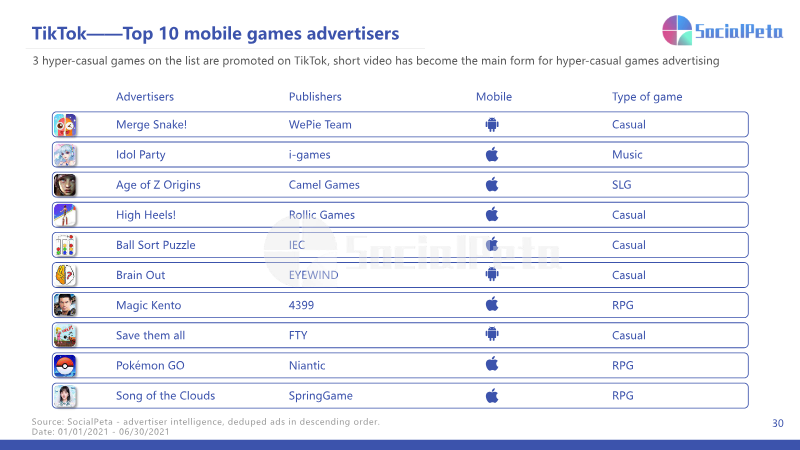

SocialPeta · 2021
Report2021 H1 Global Mobile App Marketing Whitepaper
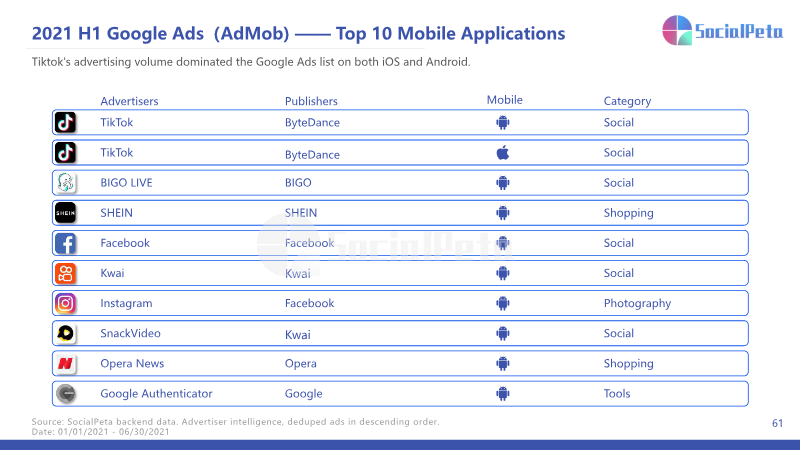
The global mobile marketing landscape experienced a massive surge in activity during the first half of 2021, characterized by a 108% year-on-year increase in advertising creatives totaling over 19 million. This growth was primarily driven by hard-core gaming titles and a significant expansion in the non-game sector, where creatives rose 38% to 47.6 million. Despite this volume increase, Apple’s IDFA policy changes caused a 13% decline in the share of iOS creatives, shifting more focus toward Android platforms. Geographically, the United States remained the largest advertising market, while Oceania emerged as the fastest-growing region for non-game advertisers. Chinese companies solidified their global dominance during this period, accounting for 70% of top-charting mobile game media buying and over 25% of the total global market share. These developers maintained a particularly strong presence on major social platforms, representing 100% of the top ten advertisers on Facebook’s News Feed. However, this increased competition contributed to a sharp rise in acquisition costs, with Facebook’s average CPC and CPM both climbing 128% year-over-year. RPG and Puzzle genres led in total creative volume, while Strategy games exhibited the highest media buying intensity per advertiser. Marketing strategies have evolved toward high-engagement, "snackable" short-form video content and influencer-led campaigns to combat rising costs and privacy-related tracking challenges. In the gaming sector, creative tactics shifted toward live-action footage and gameplay extensions, while non-game apps—particularly in the education and shopping sectors—capitalized on pandemic-related lifestyle shifts. As the industry navigates the post-IDFA era, the integration of high-quality in-game ads and diverse creative formats has become essential for maintaining user retention and driving monetization across both domestic Chinese and international markets.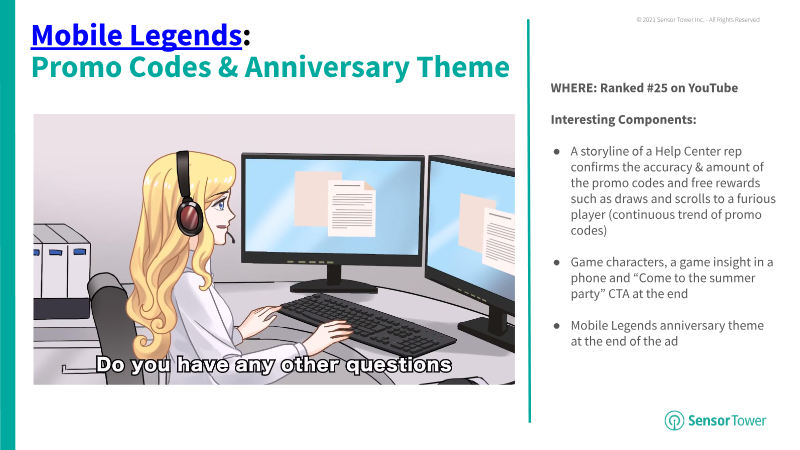
Sensor Tower · 2021
ReportMobile Ad Creative Report: August 2021
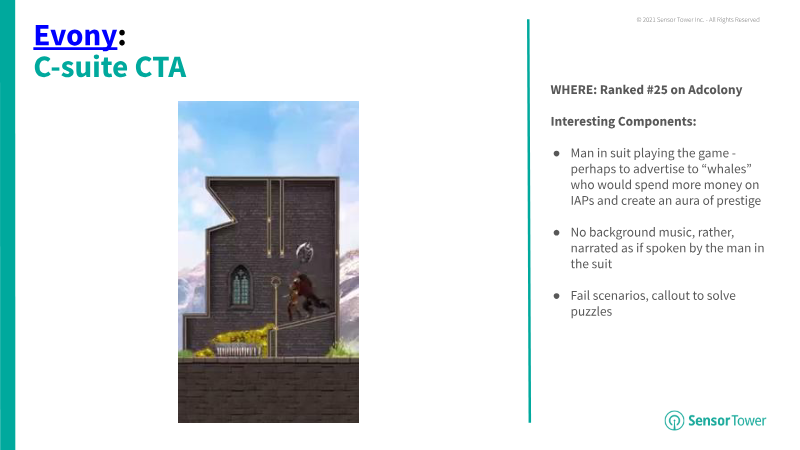
Mobile gaming creative trends in August 2021 centered on humanizing digital experiences and leveraging high-profile cultural partnerships. Analysis of top-performing ads across platforms like YouTube, Instagram, Snapchat, and Facebook reveals a heavy reliance on real-world celebrities, particularly musicians. Notable examples include Garena Free Fire featuring DJs Dimitri Vegas & Like Mike as playable characters and Call of Duty Mobile partnering with artist Ozuna. These collaborations often utilize cinematic storytelling and high-fidelity animations to bridge the gap between gaming and mainstream entertainment. The industry continues to utilize specific psychological triggers and visual formats to drive engagement. Fail-state elements, where ads demonstrate a player losing a level to pique viewer interest, remain prevalent in titles like Royal Match and Evony. Additionally, hyper-casual games are increasingly adopting popular music soundtracks and expressive callouts to appeal to younger demographics on Snapchat. Other emerging visual trends include split-screen layouts, the use of Bitmojis, and "search bar" call-to-actions that visually demonstrate how to find the app in stores. Geographically, the findings cover global releases with specific performance data from major ad networks including ironSource, Applovin, and Vungle. The scope encompasses diverse genres, from mid-core shooters and RPGs to hyper-casual and puzzle games. Methodology involves ranking creatives based on their performance and visibility across social media and ad networks during the August 2021 period. Conclusions suggest that successful creatives are moving away from pure gameplay footage in favor of narrative-driven content, anniversary themes, and interactive elements like Buzzfeed-style quizzes or "Christmas in July" promotions.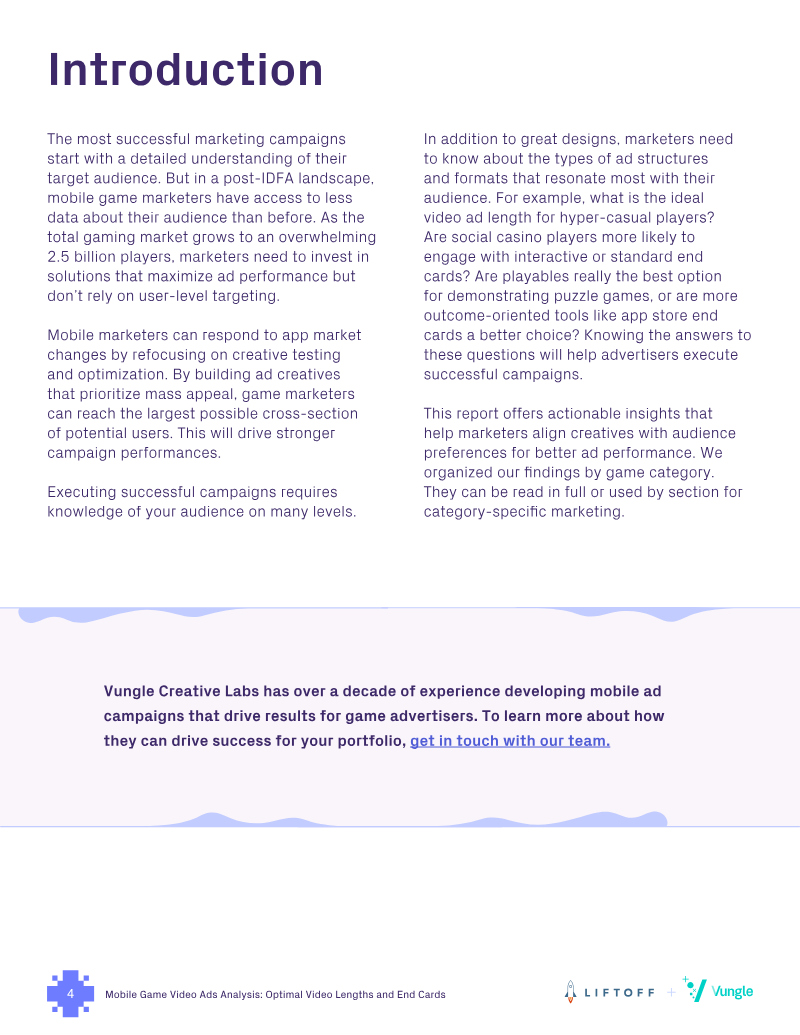

Liftoff · 2021
ReportMobile Game Video Ads Analysis: Optimal Video Lengths and End Cards
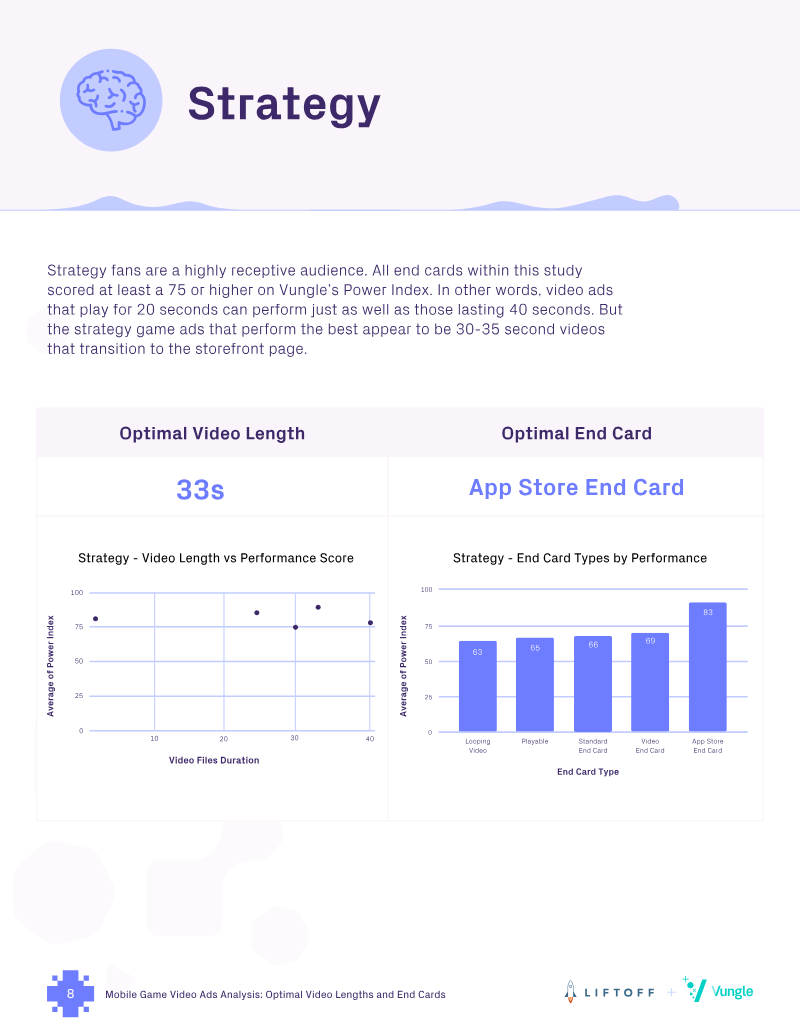
This analysis examines the relationship between video ad length, end card formats, and campaign performance across five major mobile gaming genres: Hyper-Casual, RPG, Strategy, Puzzle, and Social Casino. By evaluating 3.7 billion in-app video ad impressions and subsequent installs via the Vungle platform, the study establishes creative benchmarks using a proprietary Power Index to measure efficacy. The findings suggest that as the industry moves toward a post-IDFA environment with limited user-level data, marketers must prioritize creative optimization and mass-appeal strategies to drive engagement. The data reveals distinct audience preferences for each genre. Social Casino players favor efficiency, responding best to 10-second ads paired with standard static end cards. Puzzle and Strategy games both see peak performance when utilizing app store end cards that provide a direct path to download, though their optimal video lengths differ at 22 seconds and 33 seconds, respectively. Conversely, genres with deeper gameplay loops require more extensive creative storytelling. Hyper-Casual games perform best with 37-second ads and video end cards, while RPGs benefit from the longest engagement times, peaking at 46 seconds with looping video end cards to showcase aesthetic and narrative depth. The scope of the research covers a global audience of over one billion unique devices, focusing on the structural elements of ad creatives rather than specific visual content. The methodology filters out low-performing impressions to ensure the Power Index accurately reflects the most successful format pairings. Ultimately, the findings conclude that aligning ad duration and post-roll interactive elements with genre-specific player expectations is essential for maximizing return on ad spend in an increasingly competitive mobile marketplace.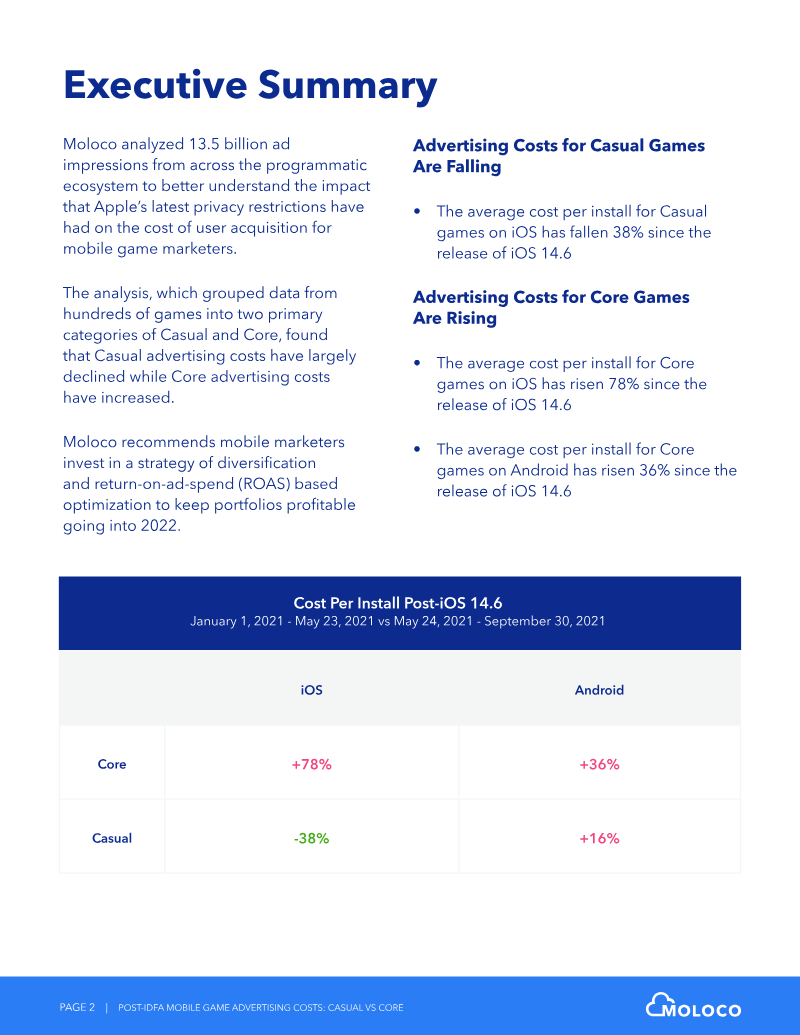
Moloco · 2021
ReportPost-IDFA Mobile Game Advertising Costs: Casual vs Core
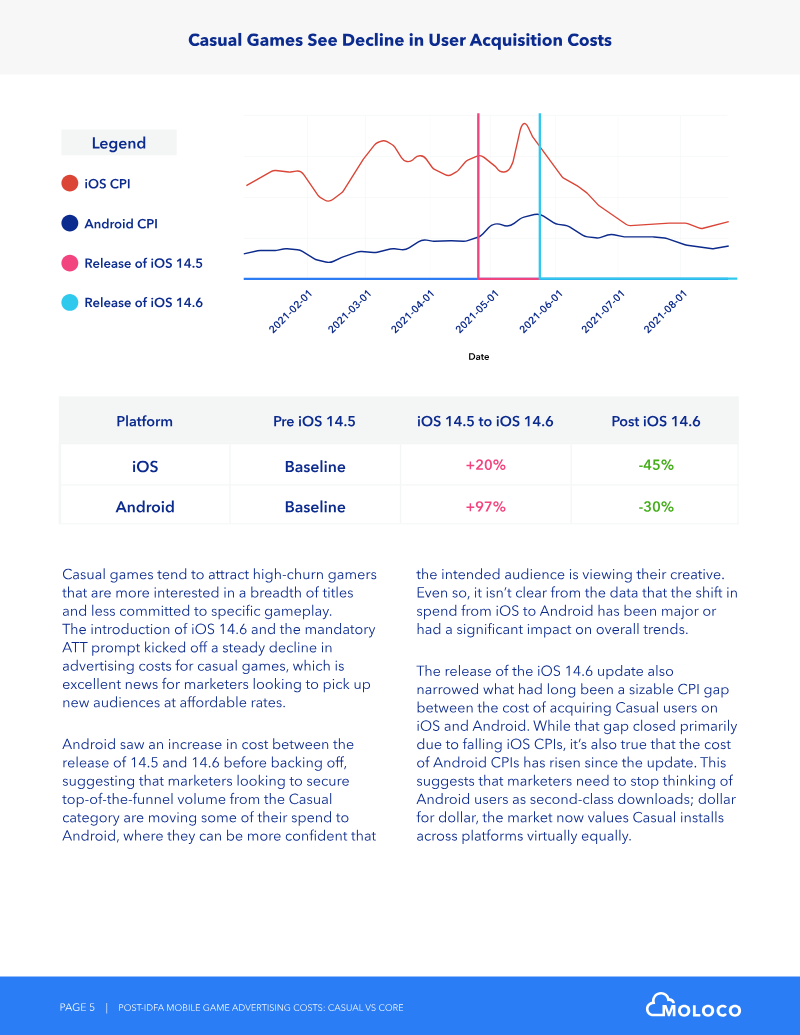
The analysis quantifies how Apple’s post-IDFA privacy updates have reshaped user-acquisition economics for mobile games, contrasting casual titles with core experiences. By aggregating 13.5 billion programmatic ad impressions from iOS and Android between January 1 2021 and September 30 2021, the study tracks cost-per-install (CPI) trends across three intervals—pre-iOS 14.5, during the iOS 14.5-14.6 rollout, and post-iOS 14.6—using Moloco’s proprietary game taxonomy to separate titles into casual and core categories. Casual games experienced a sharp decline in iOS CPI, falling 38% after the iOS 14.6 release, while Android CPI for the same segment rose modestly by 16%. In contrast, core games saw iOS CPI surge 78% and Android CPI increase 36% over the same period, reflecting intensified competition for a shrinking pool of high-value, trackable users. The narrowing of the historical iOS-Android CPI gap for casual titles indicates that Android installs now command comparable monetary value, whereas iOS remains the premium channel for core audiences due to higher in-app-purchase conversion rates. Methodologically, the research averages weekly CPI data across the defined date ranges, applying a taxonomy that classifies games by genre and engagement depth, with subcategories overlapping between casual and core groups. Findings suggest that the divergent CPI trajectories are driven by user churn characteristics and lifetime-value differentials rather than seasonal factors. Strategic recommendations emphasize diversifying media spend, allocating budget to campaigns optimized for return-on-ad-spend, and leveraging machine-learning-based bidding to mitigate volatility. These practices aim to preserve profitability amid the evolving privacy-driven market dynamics for both casual and core mobile game publishers.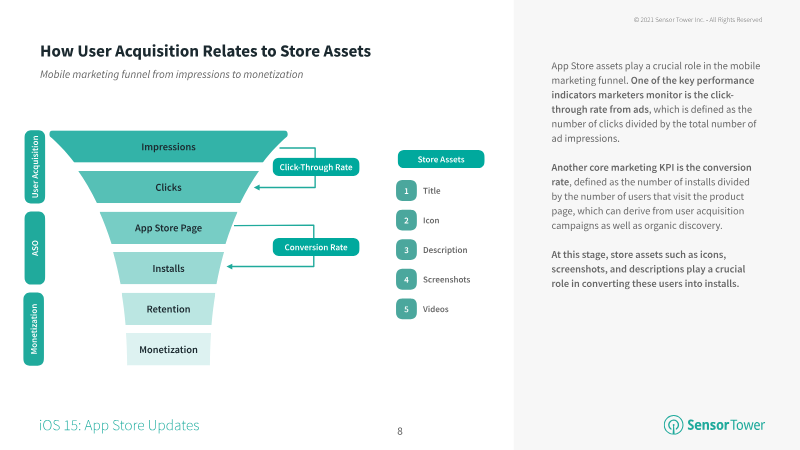
Sensor Tower · 2021
ReportMobile Game Store Asset Optimization Trends 2021
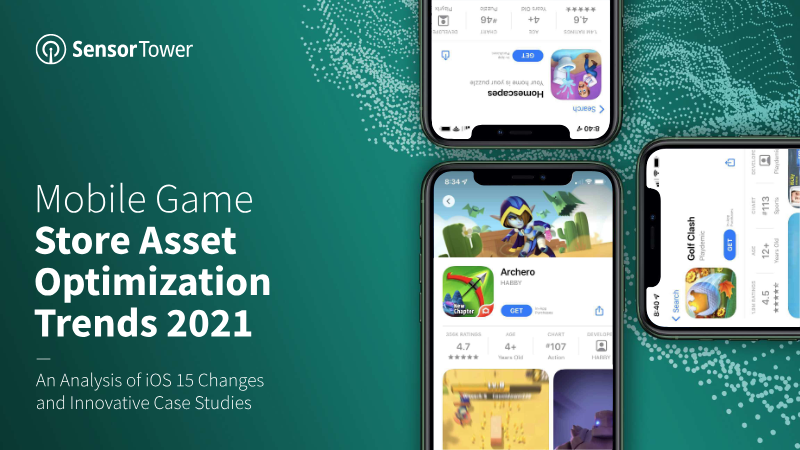
Strategic store asset optimization is a critical driver for increasing conversion rates and reducing user acquisition costs in the mobile gaming industry. Analysis of top-performing publishers reveals that the most successful entities treat app icons, screenshots, and product pages as dynamic marketing tools rather than static assets. This approach is particularly relevant following the release of iOS 15 in late 2021, which introduced Custom Product Pages and Product Page Optimization. These features allow developers to create up to 35 unique landing pages and conduct native A/B testing for up to 90 days, enabling highly targeted campaigns for specific audiences and influencers. Data from major titles illustrates several dominant trends in asset management. Seasonal updates are a primary strategy; for instance, Golf Clash implemented 17 icon changes between 2017 and 2021 to reflect holidays like Halloween and St. Patrick’s Day. Other publishers, such as King and Garena, prioritize brand identity by integrating corporate logos across their entire portfolios to leverage existing brand equity. Furthermore, "forever franchises" like Animal Crossing: Pocket Camp use icon updates to signal anniversaries and live operations events, driving re-engagement among lapsed players. A significant shift in the industry involves the alignment of store assets with high-performing ad creatives. Publishers like Playrix and Nexters successfully utilized "Pull the Pin" advertisements—which often differ from core gameplay—to lower costs per install. To minimize friction and improve conversion, these companies updated their App Store screenshots and icons to match the ad content. While such experimentation was historically more prevalent on Google Play due to its long-standing A/B testing tools, the new iOS 15 capabilities are expected to catalyze similar data-driven optimization strategies across the Apple ecosystem. This analysis utilizes Sensor Tower’s proprietary intelligence platforms to track these trends across global markets and major gaming segments.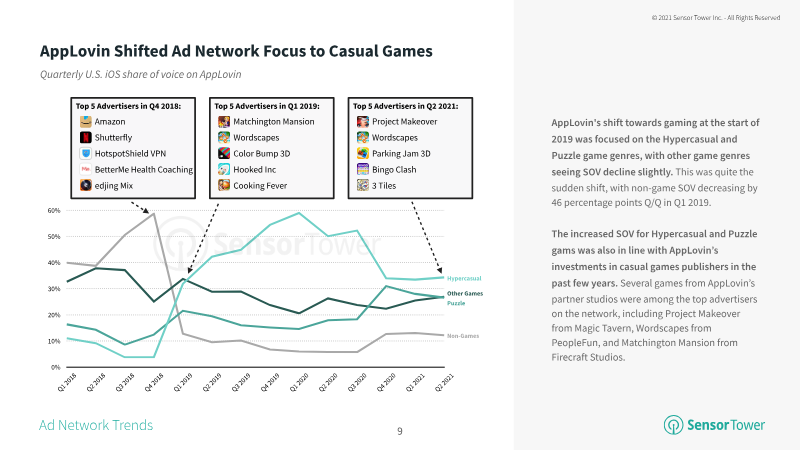
Sensor Tower · 2021
Report