Europe
National and regional reports on the European games industry.
328 documents
Stowarzyszenie Polskie Gry
ReportKodeks Dobrych Praktyk w Sprawie Stosowania Ratingu Gier Wideo: Polska
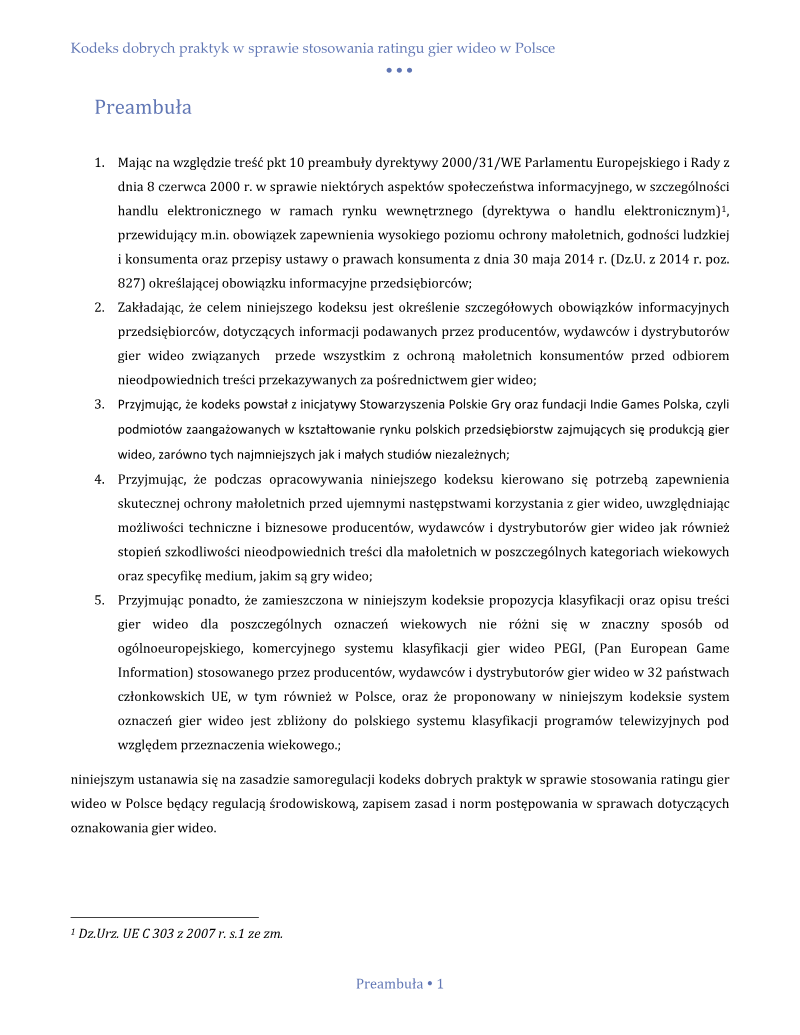
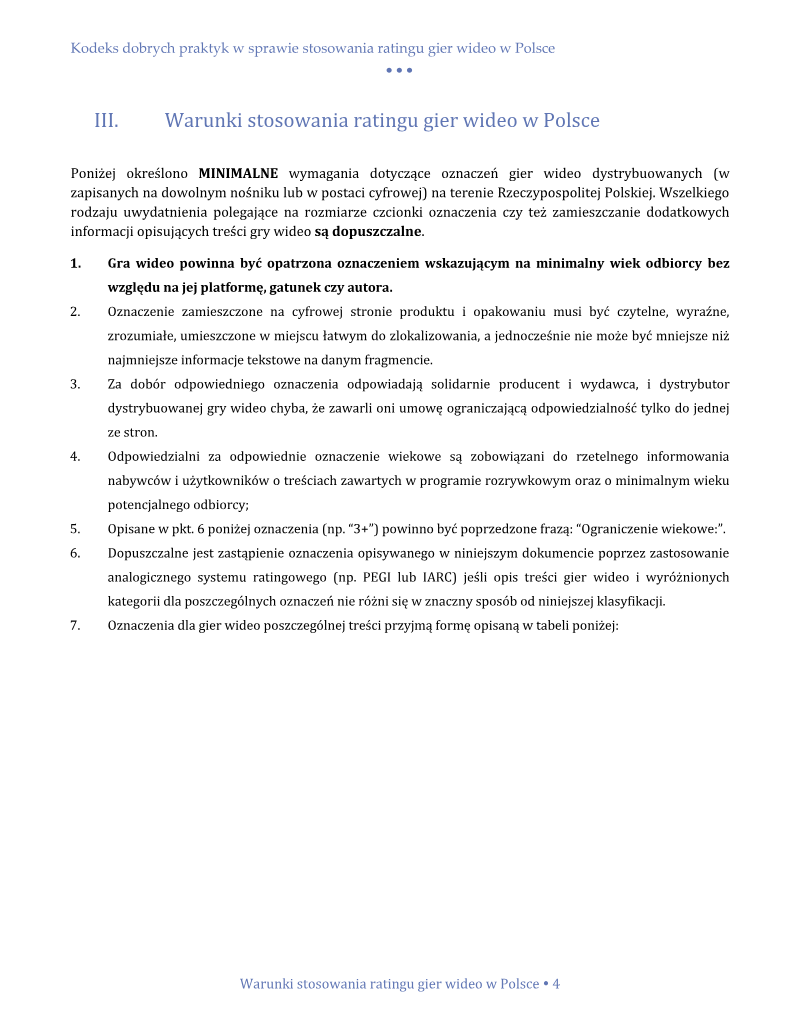
The Kodeks Dobrych Praktyk w Sprawie Stosowania Ratingu Gier Wideo (Code of Good Practice for Video Game Rating in Poland), established in November 2016 by the Stowarzyszenie Polskie Gry and the Indie Games Polska foundation, serves as a self-regulatory framework for the Polish video game industry. Its primary objective is to protect minors from exposure to inappropriate content by standardizing the information provided to consumers regarding age-appropriate game classifications. The code functions as an industry-wide commitment to transparency, ensuring that producers, publishers, and distributors clearly label games regardless of the platform or distribution method. The framework establishes five distinct age-based categories—3+, 7+, 12+, 16+, and 18+—which align closely with the established Pan European Game Information (PEGI) system. These categories define acceptable levels of violence, language, sexual content, and fear-inducing elements. By adopting these standards, participating entities agree to provide clear, legible, and accessible age ratings on all digital and physical product packaging. The code emphasizes that responsibility for accurate labeling lies with the producers and publishers, who are required to assess the effectiveness of their rating practices at least every two years. Enforcement of these standards is managed through an internal Sąd Koleżeński (Peer Court), which oversees compliance and adjudicates potential violations. While the code is a voluntary, industry-led initiative, it is designed to complement existing Polish consumer protection laws and European Union directives regarding the protection of minors in digital environments. By formalizing these ethical and professional norms, the industry aims to foster greater social trust and ensure that consumers, particularly parents, can make informed purchasing decisions. Entities that choose to adopt the code must formally register their commitment, and any false claims of adherence are subject to scrutiny under national regulations concerning unfair market practices.
Rovio
ReportRovio Sustainability Report 2025
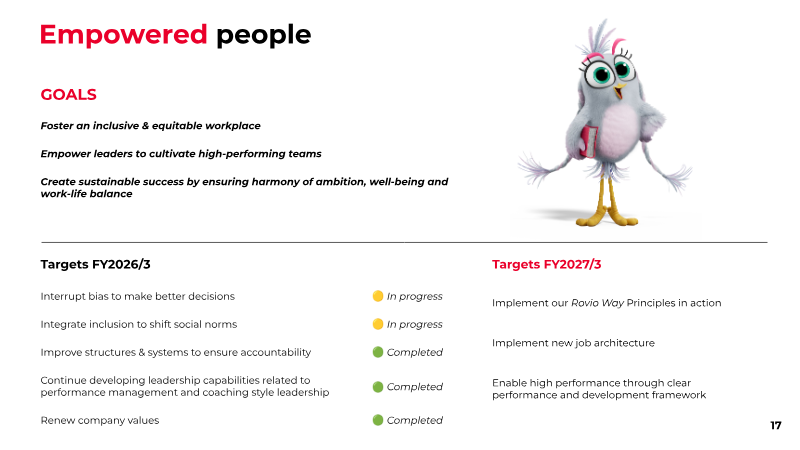
The Rovio Sustainability Report 2025 outlines the company’s voluntary environmental, social, and governance performance for the fiscal period spanning April 1, 2025, to March 31, 2026. As a subsidiary of SEGA SAMMY Holdings, Rovio utilizes this disclosure to maintain transparency and accountability regarding its sustainability strategy, which is structured around three core pillars: Positive Play, Empowered People, and Protecting our Planet. The report aligns partially with European Sustainability Reporting Standards, though it remains a voluntary exercise for the organization. Key findings highlight a total carbon footprint of 20,980 tons of CO2e, with Scope 3 emissions accounting for 98.6% of the total. For the first time, the company included downstream emissions from initial game downloads in its accounting, which significantly improved coverage but precluded direct year-over-year comparisons. Operationally, Rovio maintains six global locations with 508 employees, reporting a gender pay gap of 1.4% when adjusted for location, level, and role. The company continues to prioritize industry collaboration, maintaining active memberships in the Playing for the Planet Alliance and the Sustainable Games Alliance to drive collective climate action. Strategic conclusions emphasize a pragmatic approach to sustainability, acknowledging challenges in formalizing long-term emission reduction plans due to supply chain limitations and evolving market realities. While the company successfully implemented new internal "Rovio Way" principles and improved data tracking for career progression, it faced capacity constraints that delayed the rollout of certain accessibility scorecards and carbon pricing models. Looking ahead, the organization intends to focus on integrating AI sustainability frameworks, enhancing inclusive game design, and embedding its new corporate principles into daily operations to ensure long-term, sustainable growth across its transmedia and mobile gaming portfolio.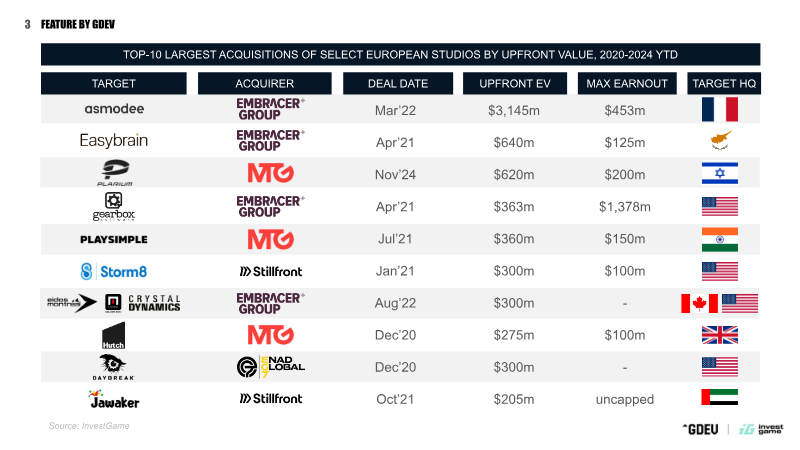

InvestGame
ReportEurope’s Gaming Consolidators: The Magnificent Seven Post-M&A Rush
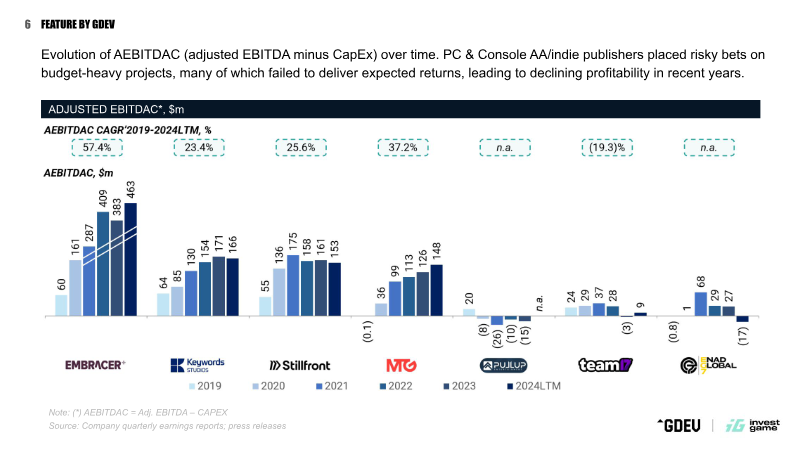
The analysis examines the surge of M&A activity among European gaming publishers between 2020 and 2024, highlighting a capital deployment of $19 billion across more than 140 deals. Seven leading consolidators—mienn Easybrain Group, Stillfront, Keywords, Multiplay Media, Management Studios, The Label Yippee!, and SoftWare—dominated the market, with mienn Easybrain Group alone executing 78 deals worth $14.1 billion and acquiring studios such as Ashodee, CrazyLabs, and Aspyr. The largest individual acquisitions include Asmodee Group’s $3.145 billion purchase of a target in March 2022 and Plarium MO’s $620 million deal for SoftWare in November 2024. Revenue growth data reveal that reported year-over-year increases were largely driven by inorganic expansion, with average revenue growth rates ranging from 21% to 66%. In contrast, organic growth remained modest; only a handful of firms maintained double-digit positive trajectories without M&A. Adjusted EBITDA minus CAPEX (AEBITDAC) trends show a decline for many PC and console publishers, reflecting high-budget projects that failed to deliver expected returns. Share price performance indicates a post-pandemic correction: most acquirers’ stocks fell 30–70% from December 2019 levels, and the aggregate market cap of the seven firms peaked at $25.5 billion in April 2021 before stabilizing around $5.4 billion after share issuances financed acquisitions. Valuation multiples peaked during the 2020 bull market (EV/NTM revenue up to 30×) and subsequently contracted as investors shifted focus toward profitable organic growth. Overall, the report underscores that aggressive inorganic strategies during low-interest periods did not generate sustainable shareholder value, prompting leadership changes, layoffs, and restructuring initiatives across the sector.

Gamesforum
ReportThe Future of Ad Monetization: Insights from Industry Leaders
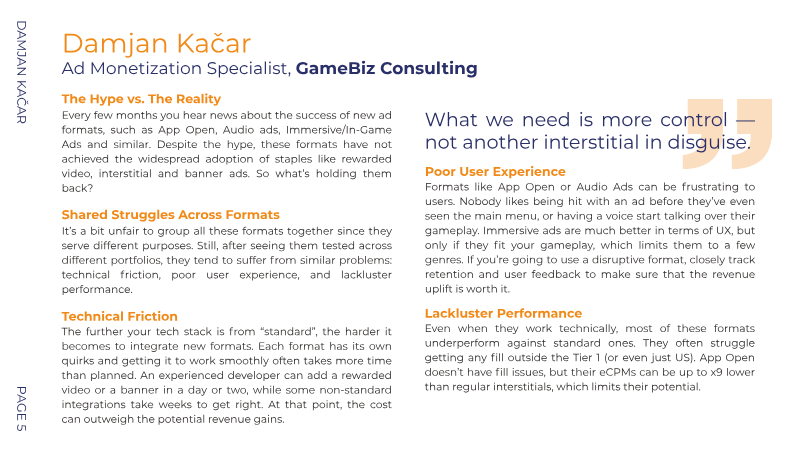
The panel “The Future of Ad Monetization” presented at Gamesforum Barcelona 2026 focuses on the evolving role of advertising within mobile game economies, arguing that ads are no longer ancillary revenue but integral to core gameplay loops. Experts from PlayPack, GameBiz Consulting, and Nekki highlight that by 2025 ad monetization has become one of the most challenging systems, requiring creative integration and data-driven adaptivity. PlayPack’s Merge Away example illustrates how hybrid models combining rewarded ads and in-app purchases can drive profitability, yet misaligned user cohorts can cause revenue drops of up to 30%. The discussion stresses the necessity of real-time visibility into ad source performance and the importance of designing ad moments as optional, rewarding side quests rather than punitive blockers. GameBiz Consulting’s specialist notes that newer formats such as App Open, audio, and immersive ads have yet to achieve widespread adoption due to user experience friction and lower eCPMs. He recommends cautious experimentation, high price floors for intrusive formats, and pairing ads with “no-ads” purchase offers to mitigate churn. The panel also emphasizes that the future lies in contextual, segmented ad experiences—matching the player’s motivation and session flow—to transform ads from interruptions into meaningful choices. Nekki’s head of monetization projects that the most valuable in-game currency will shift from virtual goods to player time, advocating for adaptive ad systems that respect individual player preferences. He foresees LiveOps integration of dynamic, data-driven ad touchpoints tied to progression events. Overall, the panel concludes that sustainable revenue will stem from a balance of data insight, empathetic design, and adaptive monetization strategies that treat ads as living components of the game ecosystem.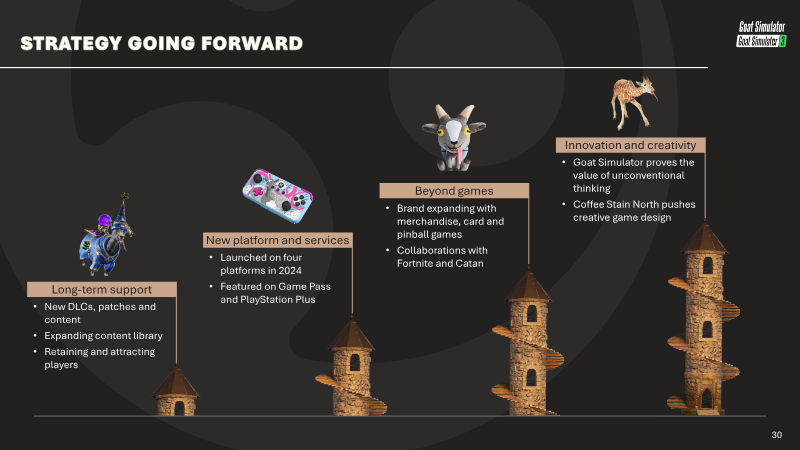
Coffee Stain Group AB
PresentationCapital Markets Event 2025: Coffee Stain Group
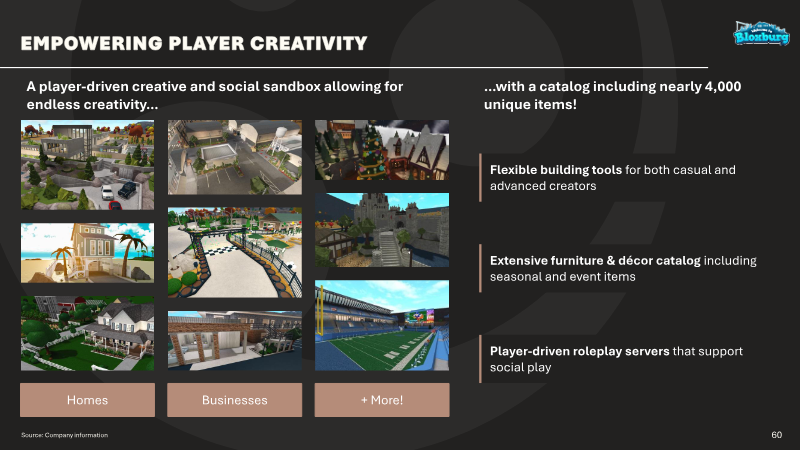
Capital Markets Event 2025 showcases the Coffee Stain Group’s strategy of building a portfolio around small, autonomous teams that prioritize gameplay quality and community engagement. Ninety percent of net sales derive from a handful of flagship titles—most notably Goat Simulator, Deep Rock Galactic and Satisfactory—which consistently achieve high review scores (above 96%) and generate lifetime sales up to SEK 2 bn. The company’s partnership model, publishing and investing in niche-focused games, sustains long-term value through continuous content updates and a symbiotic developer-player relationship. The global gaming market is projected to grow at 3% CAGR across all platforms, driven by rising consumer spend and the expansion of Steam, mobile, Game Pass and PlayStation Plus. Despite saturation and increased competition for player attention, Coffee Stain maintains a strong presence; its titles enjoy high review counts (over 500 k for Goat Simulator) and retain players through regular updates, platform expansions and community-driven development. Innovation, creative gameplay and long-term support are core to the firm’s approach. Strategic collaborations reinforce this model. The partnership with Tuxedo Labs leverages the proprietary Teardown physics engine, producing a highly engaged community (10 000+ mods, 20 major updates) and peak concurrent users of 60 k for Deep Rock Galactic seasons. The studio’s headcount grew from six to 47 FTEs over five years, illustrating the scalability of open development and a “make happy decisions” culture that drives both critical acclaim (e.g., 9.5/10 reviews) and commercial success. Coffee Stain’s Roblox title, Welcome to Bloxburg, exemplifies a successful free-to-play transition. With 791 k daily active users and SEK 1.35 bn in lifetime net sales, the monetization mix of currency purchases, optional unlocks and a premium subscription maintains a non-pay-to-win stance while rebuilding player trust. The company’s lean cost base and strong cash generation are amplified by launch-driven sales spikes from new content releases and strategic stakes such as its 30% share in Iron Gate’s Valheim publishing. Financially, the group reports a net-sales CAGR of 34% to SEK 1.2 bn and a cash EBIT margin of 44%. Cash reserves reach SEK 472 m in 2025, with no external debt, providing flexibility for capital allocation and potential M&A. The lean, autonomous team model underpins low overheads, high cash conversion (≈120%) and a focus on developing existing IPs while selectively pursuing new opportunities across platforms and partnerships.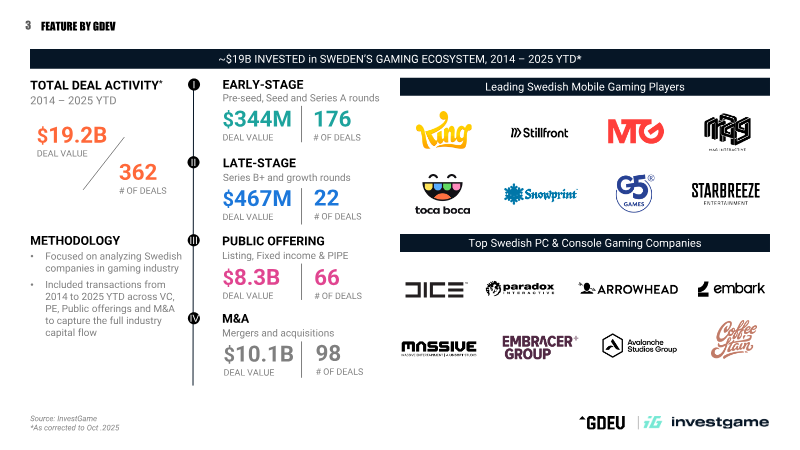
InvestGame
ReportThe Rise and Reset of Sweden's $19B Gaming Capital Machine
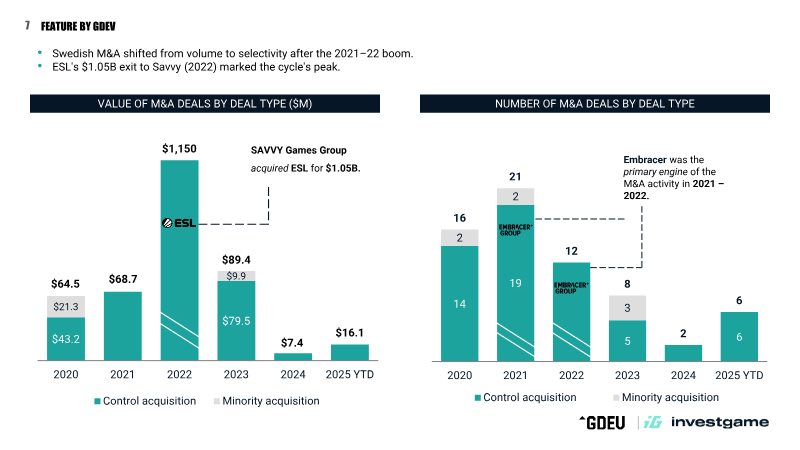
The analysis demonstrates that Sweden’s gaming sector has evolved into a $19 billion capital ecosystem, with 1,100 companies and 202 firms engaging in tracked transactions since 2014. Sweden contributes roughly 20% of Steam’s projected 2025 gross revenue, and its developers produced five of the platform’s global top-10 bestsellers in 2024–25. Capital flows have shifted from early-stage seed rounds to late-stage growth and acquisition deals, reflecting a maturation of the pipeline. Private investment rebounded in 2024 after a pullback; late-stage rounds now dominate, with Aonic’s $157 million growth round and Arrowhead’s $80 million investment illustrating investor preference for studios with proven commercial traction. Early-stage deal counts have normalized from 2021’s peak, indicating a steady but active pipeline. M&A activity peaked in 2021–22, with ESL’s $1.05 billion sale to Savvy marking the cycle’s apex; subsequent deals have become more selective. Three transactions—King ($5.9 billion), Mojang ($2.5 billion), and ESL ($1.05 billion)—account for 93% of total M&A value, underscoring the premium paid by global acquirers for Sweden’s IP and engineering talent. Public market activity has shifted from equity-fueled growth to defensive debt financing; Embracer’s $4.4 billion raised through fixed income and PIPE in 2020–22 exemplifies this trend. Capital concentration is high, with the top ten private rounds comprising over $495 million of an $811 million total. The data, sourced from InvestGame and market-cap records through December 2025, cover Sweden’s entire gaming industry—mobile, PC & console, VR/AR, esports, and platforms—from 2014 to the present. Methodology includes tracking VC rounds, public offerings, PIPEs, and M&A transactions across all segments. The findings illustrate a resilient ecosystem that has transitioned from early-stage bootstrapping to mature, high-value capital flows driven by proven studios and strategic consolidation.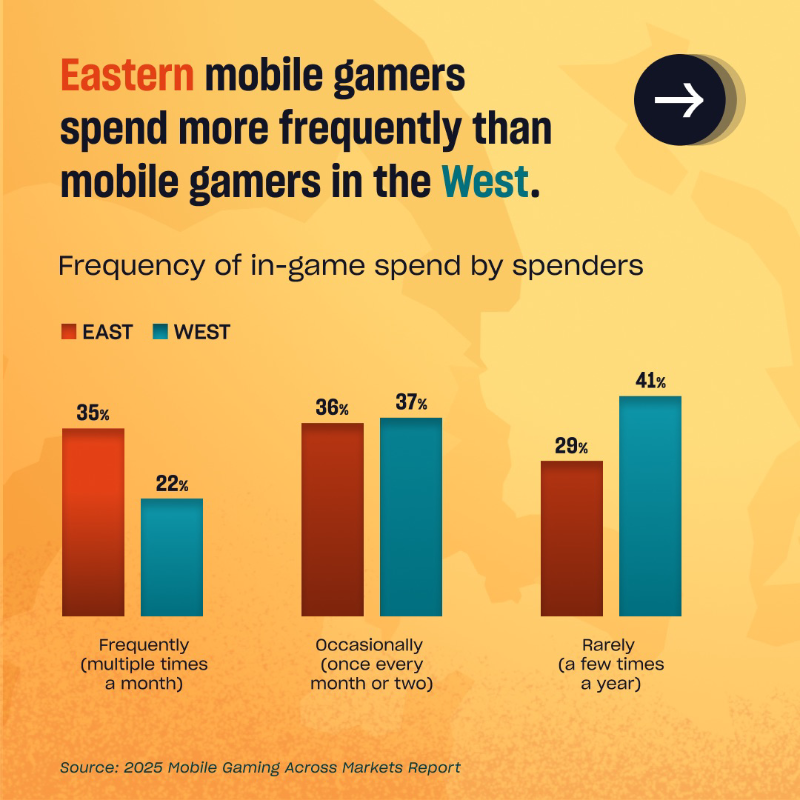
Mistplay
ReportEast vs. West: Monetization Trends
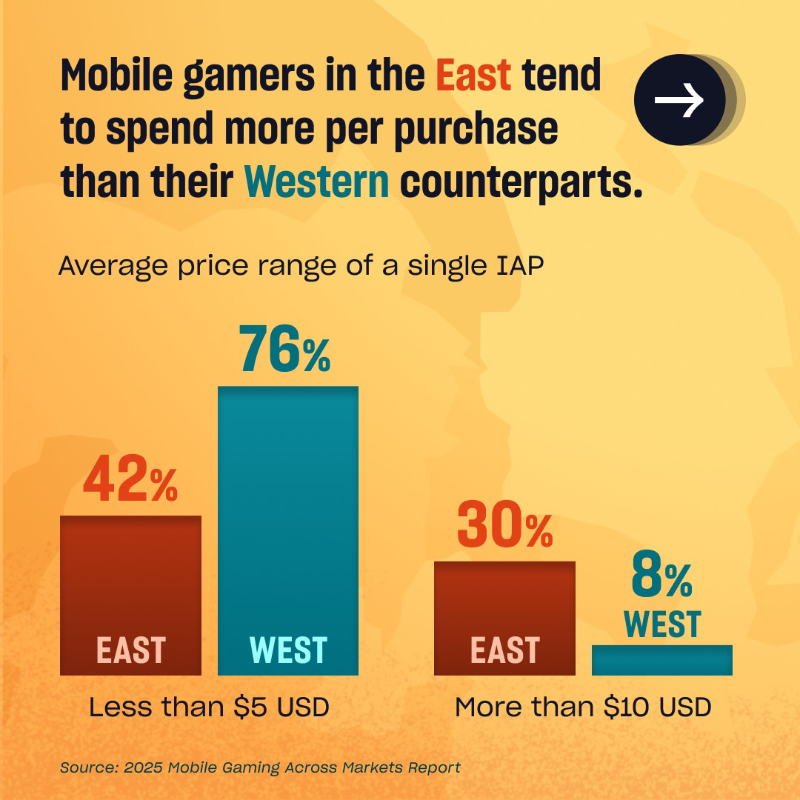
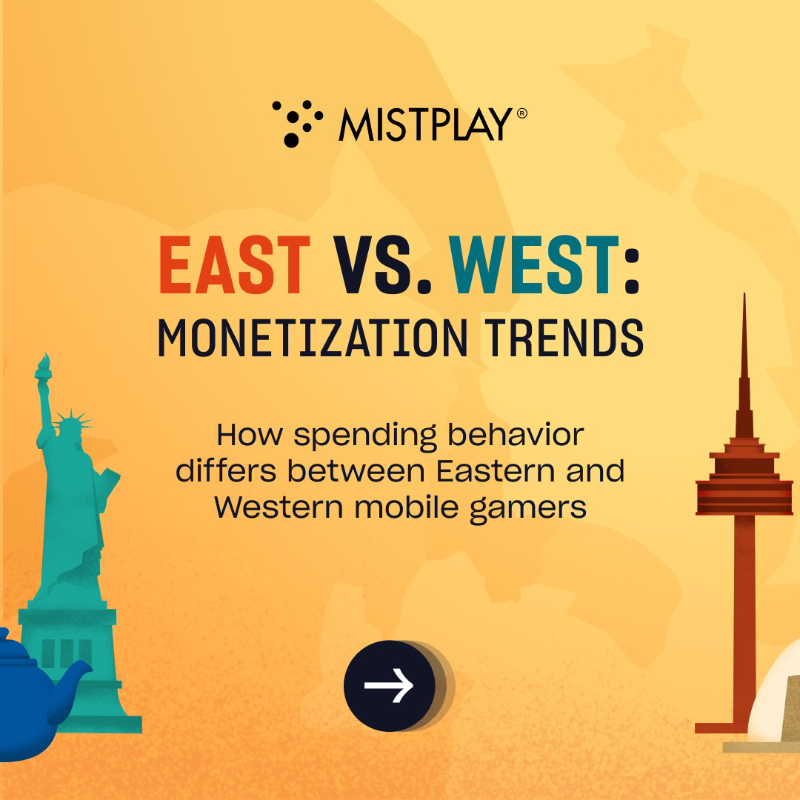
The study examines how mobile gaming spending patterns differ between Eastern and Western markets, focusing on frequency of purchases, average spend per transaction, and motivational drivers. Findings reveal that Eastern gamers purchase in-app items more often than Western players; 35% of East spend frequently versus 36% in the West, with a higher proportion of occasional and rare spenders in the West. When it comes to transaction size, Eastern users tend to pay more per purchase: 76% spend over $10 compared with only 42% of Western users, while a smaller share of East spend under $5 (30%) versus 8% in the West. Motivational analysis shows that Western gamers prioritize value and bundles, whereas Eastern players are more attracted to exclusivity, limited-time items, new offers, and character acquisition. The research covers key markets in Asia—Korea and Japan—and Western regions including the United States, United Kingdom, and broader Europe. Data were collected through a survey of mobile gamers across these regions, with sample sizes sufficient to compare spending behaviors and motivations. The report concludes that monetization strategies should be tailored regionally: value-based bundles may resonate better in the West, while exclusive content and limited editions could drive higher spend in Eastern markets.

University of Bristol
WhitepaperWhat Good Are AI NPCs?: Lessons from a Large-scale Player Study
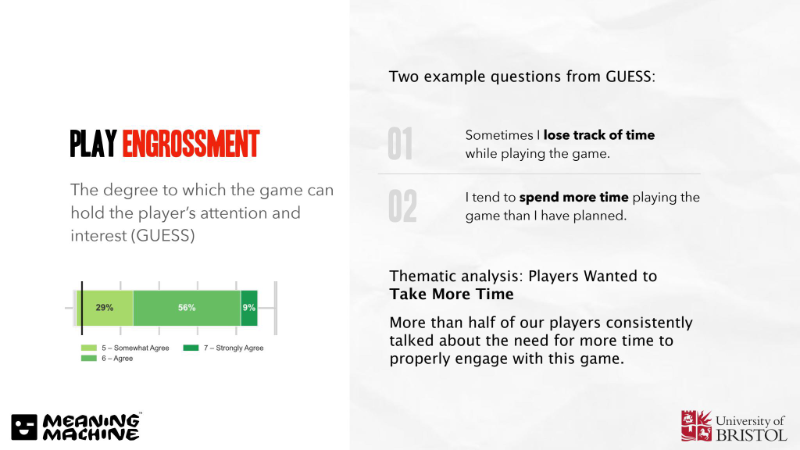
The study demonstrates that generative AI-driven non-player characters can deliver deeply engaging, emotionally resonant gameplay. In a 122-hour experiment with 68 participants, the “Dead Meat” demo achieved high immersion scores—97% UES reward and 94% focused attention—while keeping mental demand low (NASA-TLX scores of 64.7 for demand and 52.7 for performance). Qualitative interviews consistently cited the NPCs’ human-like dialogue and narrative depth as key contributors to player enjoyment. Quantitative data confirm widespread satisfaction: 96% of players rated overall enjoyment as high, and 90% praised the creative freedom afforded by the open-ended design. Subscale analysis of the GUESS instrument revealed that 60% achieved a top score for Creative Freedom, 65% for Personal Gratification, and 80% for Play Engrossment. Thematic coding identified freedom of expression, challenge-driven motivation, and immersive conversation as primary drivers of satisfaction, indicating that the game successfully balances agency with sufficient guidance. Player behavior analysis uncovered seven distinct strategic approaches—such as “Good Cop/Bad Cop” interrogation, “Rule Bender End Justifies the Means,” and “Smart Arse” manipulation—often combined within a single session. Participants responded equally to voiced and text-based NPCs, and the 20-minute session length encouraged replayability through role-playing different characters. Although the brief duration limited long-term insight, emergent strategies were viewed as a feature rather than a flaw. Future research will explore how authorial adjustments influence player responses across demographic groups, reinforcing the potential of AI NPCs to enrich narrative gameplay on a broad scale.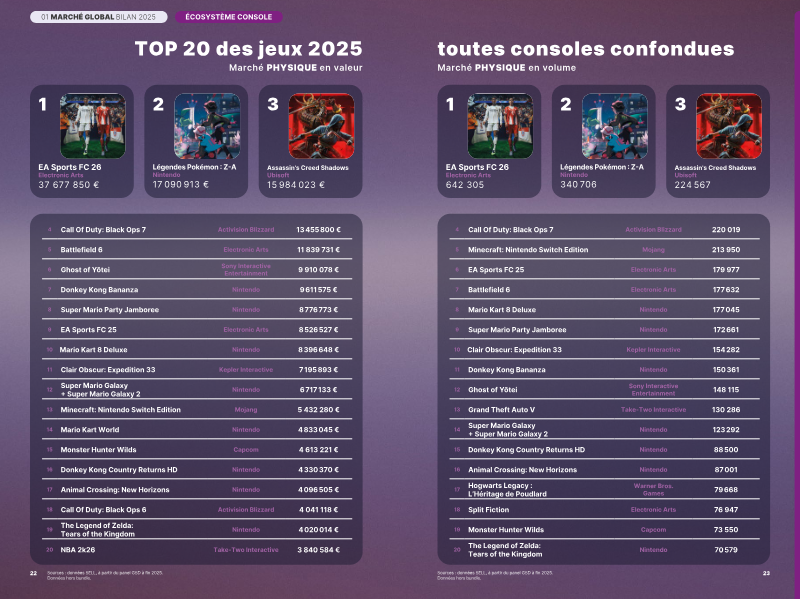
SELL – Syndicat des Éditeurs de Logiciels de Loisirs
ReportBilan du Marché Français: 2025
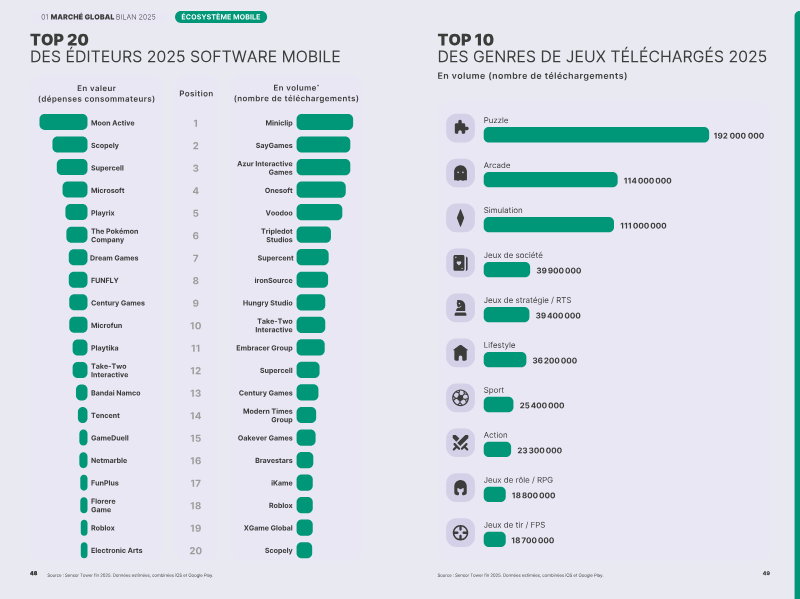
The French video game market demonstrated significant resilience in 2025, generating €5.856 billion in total revenue, a 2.9% increase over the previous year. This performance marks the second-highest in the industry’s history, solidifying its position as a cornerstone of the national cultural economy. Growth was primarily fueled by a rebound in console hardware sales and a record-breaking 11% surge in the mobile sector, which reached €1.792 billion. The market maintains a balanced ecosystem, with consoles commanding a 44% share, followed by mobile at 31% and PC gaming at 26%. Software remains the primary revenue driver, accounting for over two-thirds of the total market. While physical game sales faced a double-digit decline, this was effectively mitigated by the expansion of digital content, including microtransactions and downloadable content. Electronic Arts emerged as the leading publisher across console and PC platforms, while the mobile landscape remains almost entirely dominated by free-to-play models, which now represent 94% of mobile revenue. The industry’s reach expanded to 40.2 million players, characterized by a maturing demographic where adults comprise 88% of the base. High engagement levels persist, with 76% of players gaming on a weekly basis and a growing trend toward cross-platform usage. Alongside this growth, there is a heightened emphasis on responsible gaming. Parental involvement has reached new heights, with 67% of parents actively monitoring gaming habits through PEGI classifications and standardized parental control tools. This commitment to safety, supported by organizations like the SELL and events such as Paris Games Week, ensures that the industry continues to thrive as a mature, socially responsible, and culturally significant sector within France.
11 bit studios
ReportAkt Notarialny: 11 Bit Studios
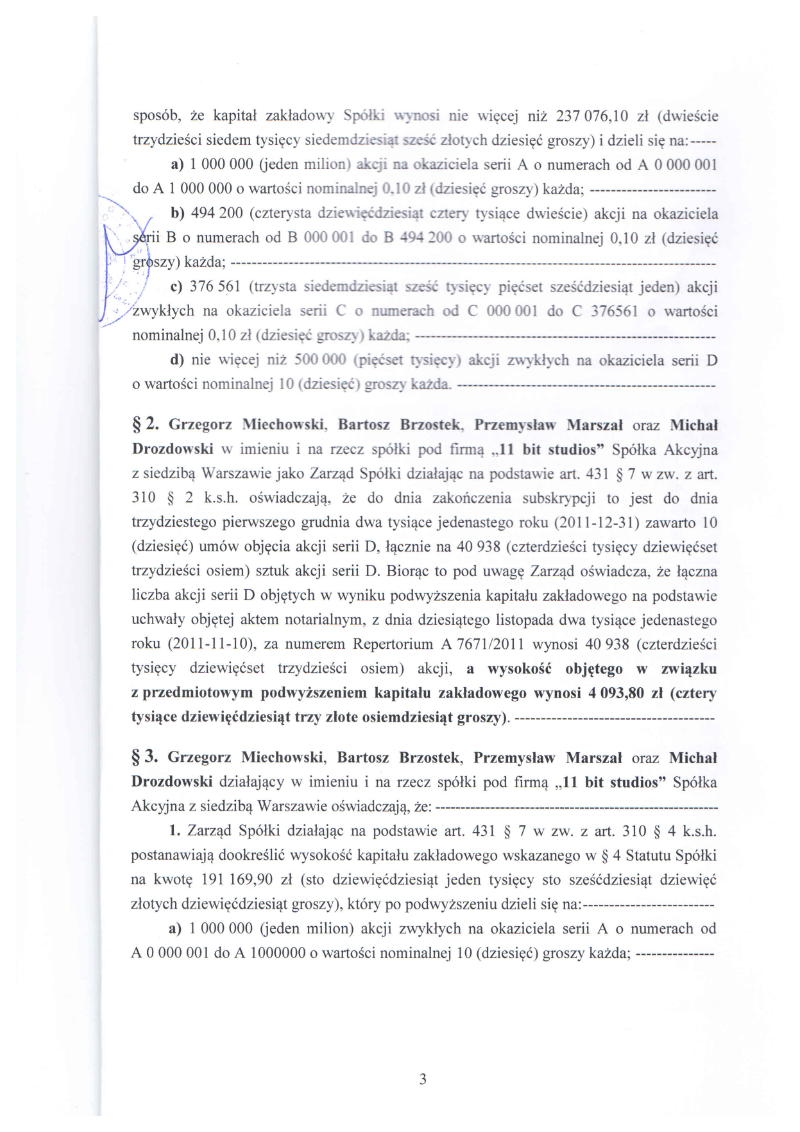
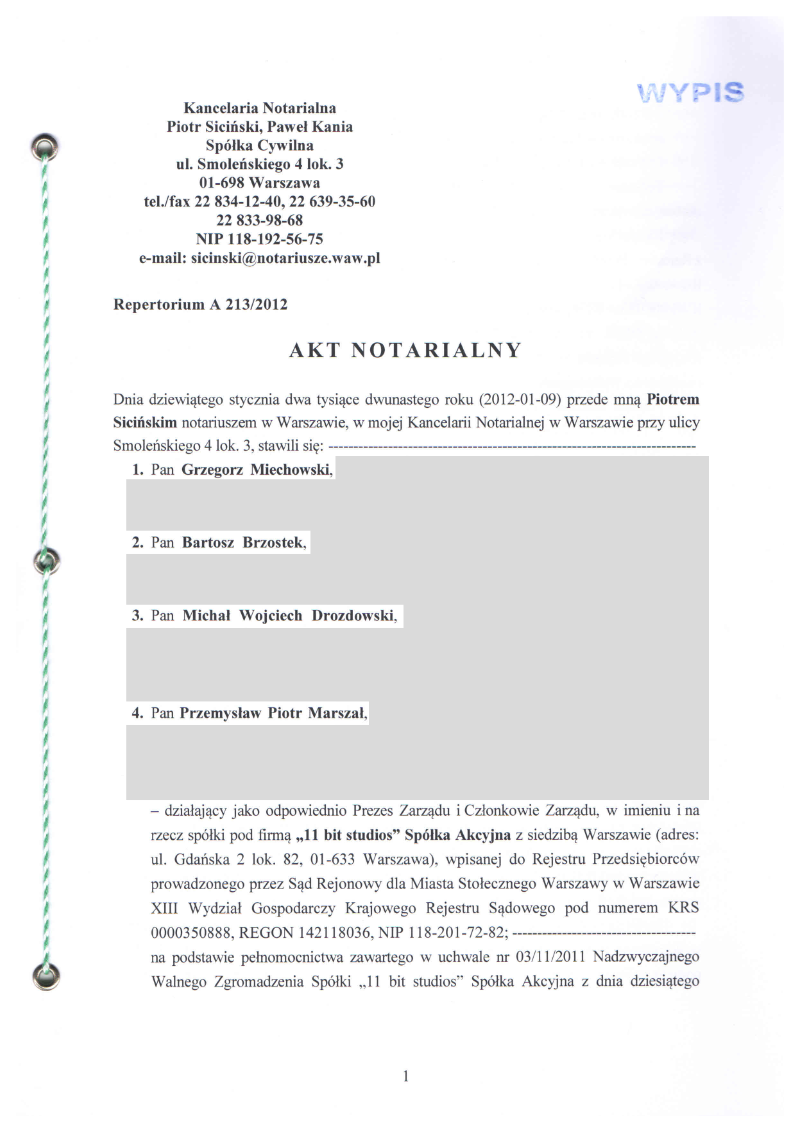
The notarized act dated January 9, 2012 records the formal approval by 11 Bit Studios’ board—Grzegorz Miechowski, Bartosz Brzostek, Przemysław Marszal, and Michał Drozdowski—of a capital increase for the Warsaw-based public limited company. The board, empowered by Extraordinary General Meeting resolutions of November 10, 2011 (notary file A 7671/2011), authorized the issuance of up to 500,000 new ordinary shares (Series D) at a nominal value of PLN 0.10 each, raising the share capital from PLN 187,076.10 to a maximum of PLN 237,076.10. The resolution also amended the company’s statute to reflect a new share structure: 1,000,000 Series A shares, 494,200 Series B shares, 376,561 Series C shares, and up to 500,000 Series D shares. By December 31, 2011 the board confirmed that 10 subscription agreements had been executed for a total of 40,938 Series D shares, amounting to PLN 4,093.80 in subscription proceeds. The act further specifies that the capital increase was fully paid in cash, with shares deposited into the company’s account before registration. It outlines provisions for voluntary share cancellation and issuance of utility certificates, as well as the allocation of costs: notarial fees, VAT at 23%, and a civil-law transaction tax. The document is limited to Warsaw, Poland, covering the period from the November 2011 resolutions through the January 2012 notarization. It relies on statutory provisions under Polish commercial law (articles 431 §7, 310 §2, and related tax statutes) to validate the corporate actions. The act concludes with notarized signatures and fee details, confirming compliance with legal formalities for the capital increase.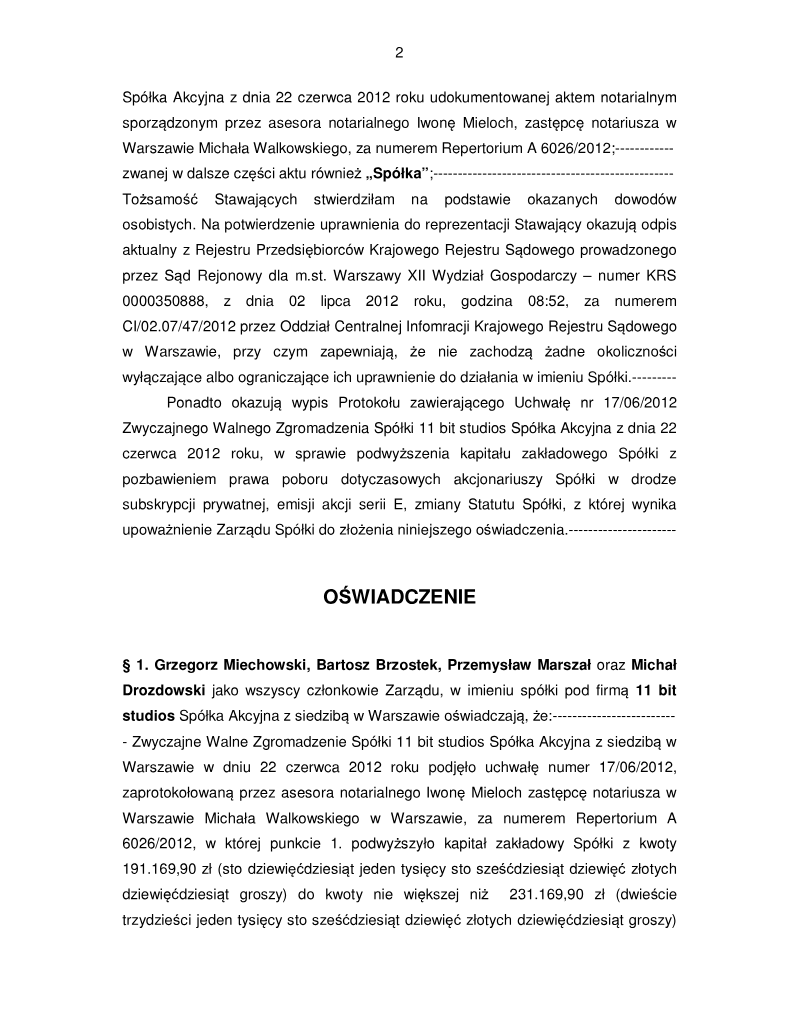
11 bit studios
ReportDookreślenie kapitału — seria E
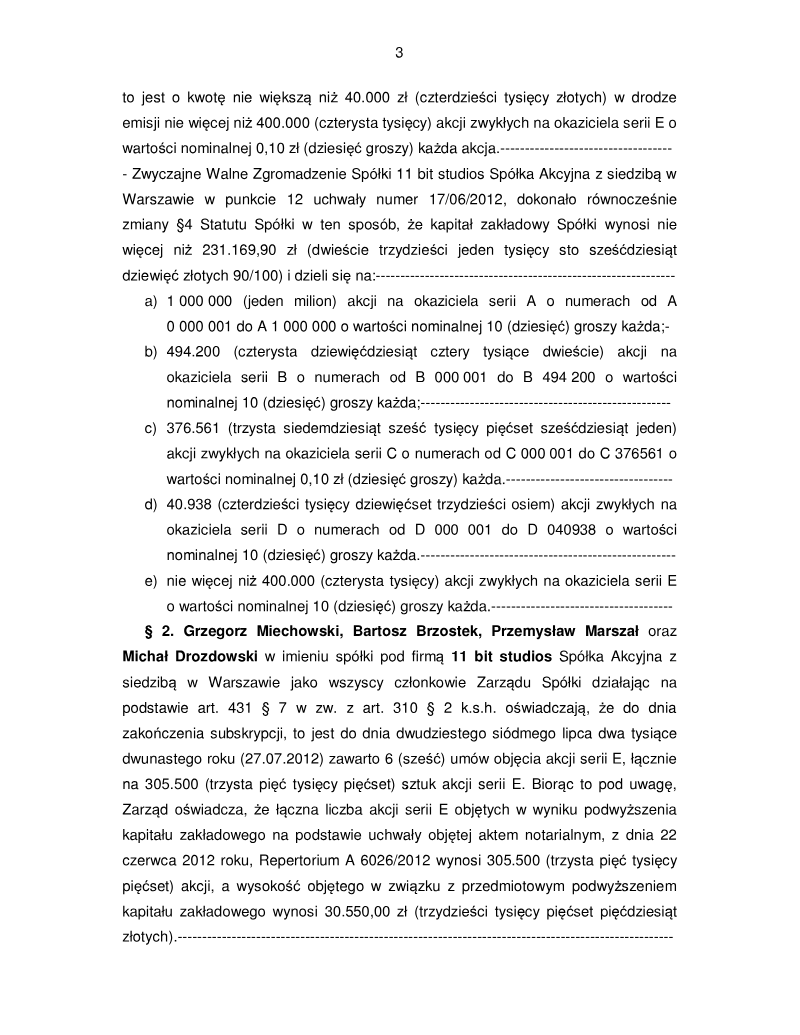
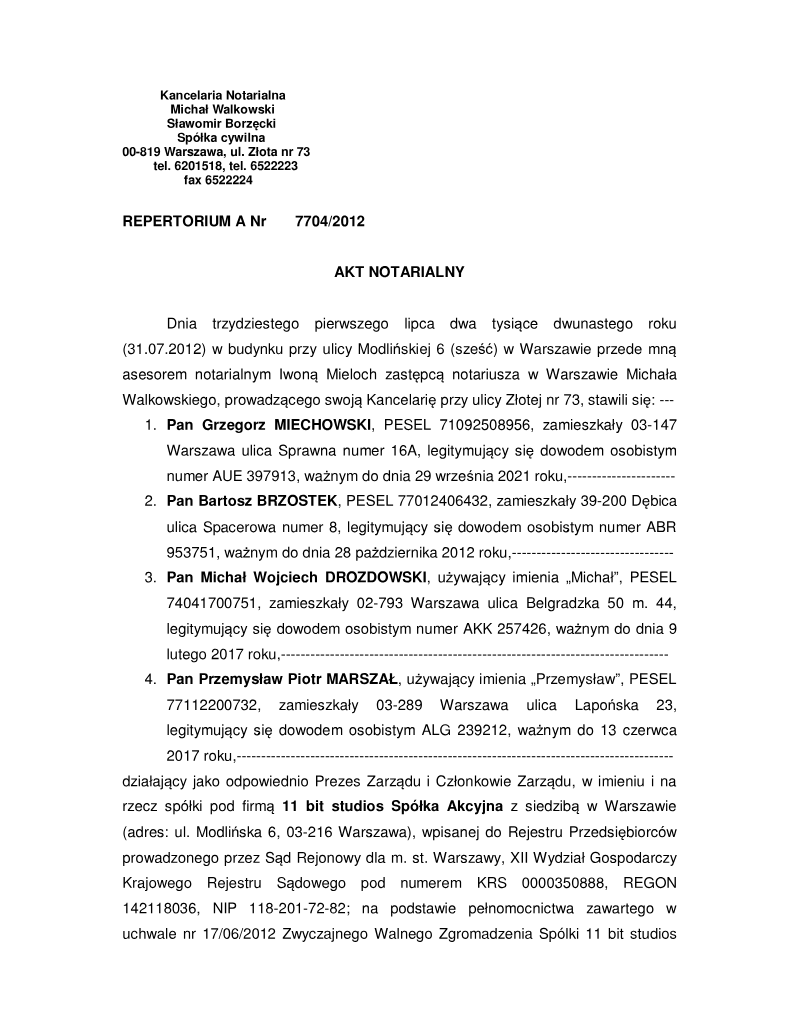
The document records a notarial act concerning the capital increase of 11 bit studios Spółka Akcyjna, a Warsaw-based video game developer. The act confirms that the extraordinary general meeting held on 22 June 2012 approved a capital increase from PLN 191,169.90 to a maximum of PLN 231,169.90 by issuing up to 400,000 new ordinary shares (Series E) with a nominal value of PLN 0.10 each, and amended the company’s articles to reflect the new share structure. The updated capital is set at PLN 221,719.90 and divided into five series: 1,000,000 Series A shares (PLN 0.10), 494,200 Series B shares, 376,561 Series C shares, 40,938 Series D shares, and 305,500 newly issued Series E shares. Six subscription agreements were executed by 27 July 2012, covering 305,500 Series E shares for a total subscription value of PLN 30,550.00. The act lists the board members—Grzegorz Miechowski, Bartosz Brzostek, Przemysław Marszał, and Michał Drozdowski—who represent the company in signing. It details procedural aspects such as notarization, registration requirements, and cost allocation (notarial fee PLN 200.00 plus VAT PLN 46.00). The document is limited to the company’s Warsaw jurisdiction and pertains exclusively to its capital structure changes in 2012, with no broader industry or geographic scope. The methodology is purely legal documentation, relying on corporate minutes and statutory provisions to validate the capital increase and share issuance.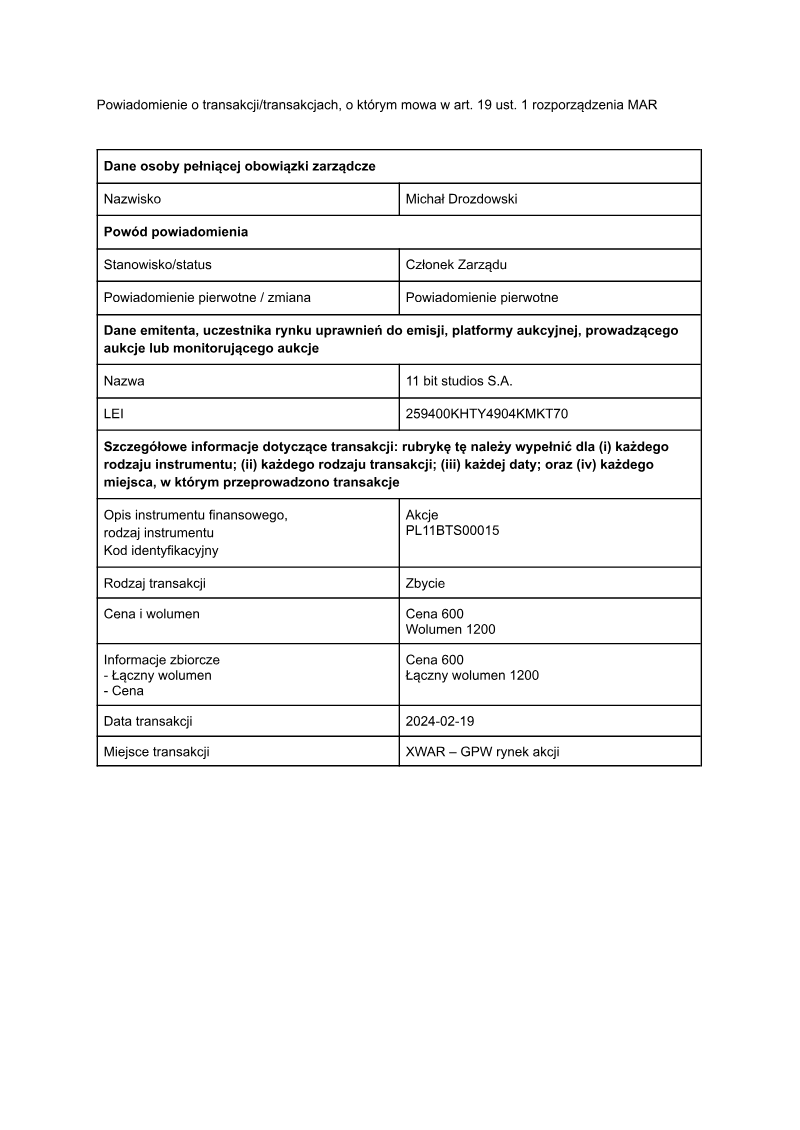
11 bit studios
Report