Two & a Half Gamers
Two & a Half Gamers is a YouTube channel covering the mobile games business. It publishes videos on ad monetization, user acquisition, game launches, studio strategies and industry news.
Documents

PGC Live Special w/ John Wright: Hybrid casual is a stepping stone! Quality over quantity
The mobile gaming industry is undergoing a fundamental transition as studios move away from the high-volume, rapid-prototyping model of hyper-casual gaming toward the more sustainable, long-term potential of hybrid-casual titles.
- Hybrid casual games now require a more robust development process than hypercasual, shifting from rapid three-day prototypes to a 2–3 month timeline for a Minimum Viable Product (MVP).
- Commercial success in the current market is defined by long-term retention rather than high initial IPM or CPI, with a target Day 7 retention of 14–16% and Day 30 retention of 8–10%.
- The industry is seeing a shift toward PC gaming for free-to-play titles, as it offers easier mediation setups, fewer 'walled gardens' than mobile, and more efficient private auction/pre-bid processes.
3 life changing UA tips from 2023, how to revert ad apocalypse? Review Radar vol 3 (#95)
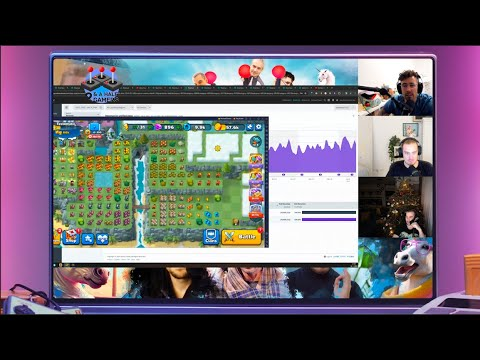
The mobile gaming industry is currently navigating a period of significant structural adjustment, characterized by a shift toward rapid creative iteration and the optimization of monetization stacks in response to declining ad performance.
- Regulatory and platform changes in 2023 caused eCPM drops between 15% and 45%, necessitating a shift toward more aggressive monetization and creative optimization.
- Integrating hyper-casual mini-games directly into core products helps align creative assets with gameplay, effectively reducing user churn.
- Publishers can increase total ad impressions by up to 20% by embedding placements within live-ops events that offer progression speed-ups rather than resource-based rewards.
Apple vs Epic Special: 27% fee, new guidelines & creative solutions with workarounds
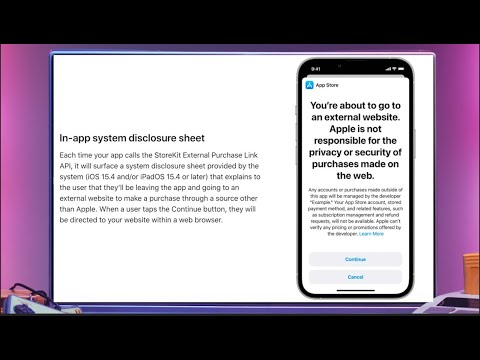
This analysis examines the recent shift in Apple’s App Store policies following the conclusion of the Apple versus Epic legal battle.
- Apple now allows external links for in-app purchases in the U.S., but imposes a 27% commission fee on these transactions to maintain revenue.
- The new policy may be more expensive than the standard 30% App Store fee because developers must also pay external payment processors an additional 3% to 6% transaction cost.
- Apple mandates 'scare screens' that warn users they are leaving the secure App Store, creating friction that developers argue significantly lowers conversion rates.
The Hunt for hybrid casual, Captain Hook of Creatives, Google Apocalypse (#92)
The mobile gaming industry is undergoing a structural transformation as hyper-casual publishers pivot toward hybrid-casual models to secure long-term stability.
- Google recently implemented a major, industry-wide change to ad monetization that effectively eliminated a common publisher 'hack' used to increase ad revenue by 25% to 50%, with the policy change being applied retroactively.
- The 'hybrid casual' genre is the dominant industry trend, with Habby, Voodoo, Crazy Labs, and SayGames leading the market by blending hyper-casual accessibility with long-term engagement mechanics.
- Habby remains a significant outlier in the hybrid casual space, with Survivor.io serving as a primary template that many other developers are attempting to replicate.
Supercell's Clash Mini Softlaunch: Game design, UA & Creative review (#90)
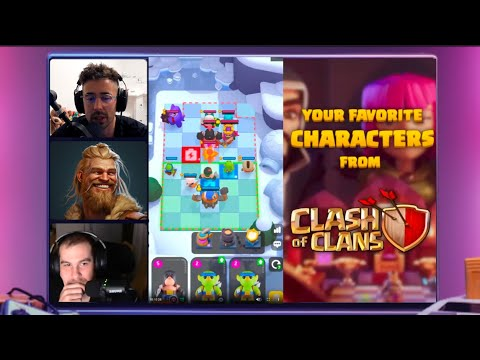
Clash Mini represents a strategic attempt by Supercell to capture the mobile auto-battler market, a genre that has historically demonstrated significant revenue potential in Asian territories compared to Western regions.
- Supercell’s Clash Mini faces a high probability of cancellation or fundamental restructuring due to its inability to meet the company's rigorous internal benchmarks for a global release.
- Since its November 2021 soft launch, the game has generated $2 million in revenue from 4.7 million downloads, failing to demonstrate the revenue depth required for long-term viability.
- The game’s monetization strategy, which locks high-impact units behind binary gacha systems, has created a pay-to-win dynamic that alienated players and hindered revenue performance.

UA strategies in the post-IDFA world LIVE - Gamedrive x 2.5gamers!
The mobile gaming industry has undergone a fundamental transformation in the post-IDFA era, necessitating a shift from granular, deterministic tracking toward a holistic strategy that balances performance marketing with brand-building.
- AppLovin has emerged as a top-two UA channel for most mobile games, joining TikTok, Facebook, and Unity as essential platforms for iOS user acquisition.
- The current industry trend for creative strategy involves integrating 'fake' ad mechanics directly into the game as mini-games or calendar events to ensure a smooth transition from creative to gameplay.
- Switching ad mediation platforms can significantly impact revenue; for example, changing banner refresh rates from 30 seconds (AdMob) to 10 seconds (LevelPlay or MAX) can potentially triple banner revenue.
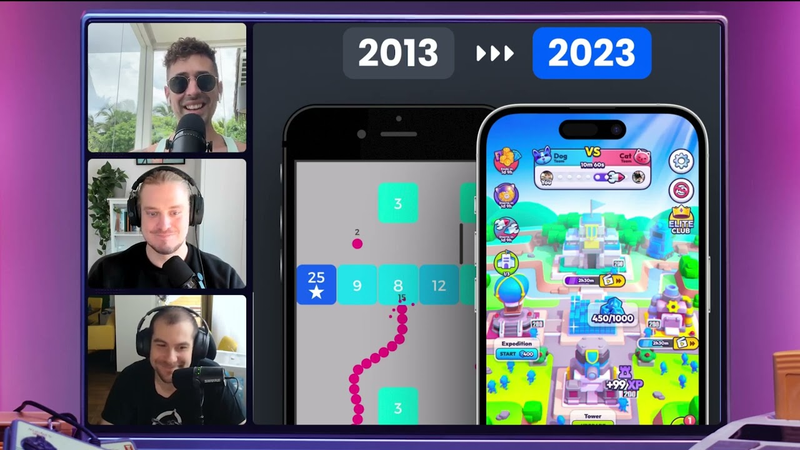
Voodoo Block Jam 3D Hybrid casual story: Is Voodoo a Rising Phoenix? (#89)
Voodoo is successfully executing a strategic pivot from its hyper-casual origins toward a hybrid-casual model, a transition that now accounts for 75 percent of the company’s total revenue.
- Voodoo’s 'Block Jam 3D' demonstrates a shift toward hybrid-casual, where in-app purchase (IAP) revenue shows a hockey-stick growth curve while download volume remains flat or declining.
- Interstitial ads drive the majority of the game's revenue, accounting for approximately 50% to 66% of total ad income, with an average of 8–9 impressions per session.
- The game utilizes a 'VIP experience' branding for its no-ads option rather than a standard 'no-ads' label, a strategy that reportedly increased purchase conversion rates by 1,000%.

Zenless Zone Zero: First look! Everything we know from Closed Beta (#88)
HoYoverse continues to solidify its dominance in the global gaming market by applying a highly refined, high-production-value gacha model to its latest title, Zenless Zone Zero.
- HoYoverse employs a standardized, highly profitable template for its gacha-based titles, allowing the company to develop new games in roughly half the time required by Western studios.
- Zenless Zone Zero utilizes a gacha monetization model identical to Honkai: Star Rail, featuring a 1% base pull rate for top-tier characters and a pity system that guarantees an S-rank character after 50 pulls.
- The game features a complex progression system with six equipment slots and randomized stats, requiring players to repeatedly farm artifacts to achieve optimal character builds.

Warcraft Rumble: Deep dive into game's complexity, spend depth, systems, vectors, UA, creatives(#84)
Warcraft Rumble represents a strategic evolution of the mobile lane-battler genre, successfully adapting the Clash Royale formula by integrating expansive, scrolling maps and intricate gold-mining mechanics.
- Warcraft Rumble features an aggressive monetization model where fully maxing a single deck costs approximately €4,700, with a full collection completion estimated at €40,000.
- The game generates daily revenues between $250,000 and $600,000, positioning it as a high-engagement niche product for existing Blizzard fans rather than a mass-market mobile title.
- User acquisition is currently limited and conservative, relying on organic reach and repurposed trailer footage rather than performance-driven creatives or aggressive mobile-first strategies.
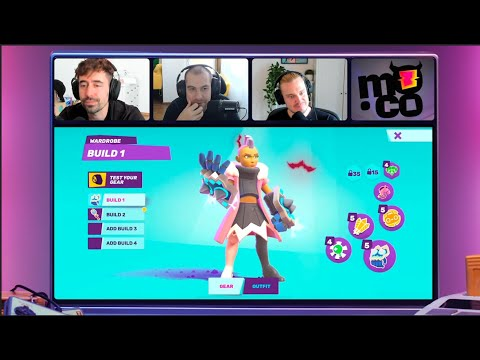
Supercell's Mo.co: First look! New game in closed beta - not even in soft launch yet
Supercell is currently testing Mo.co, an isometric, player-versus-environment action RPG that marks a strategic departure from the company’s traditional focus on competitive, player-versus-player titles.
- Supercell's Mo.co is a PvE-focused action RPG, marking a strategic departure from the company's historically PvP-dominant portfolio.
- The game utilizes a mission-based progression system where XP is gated exclusively by completing specific tasks, preventing players from grinding XP through general gameplay.
- Progression is heavily reliant on a gear-check mechanic where item upgrades are strictly tied to the player's character level, preventing the concentration of resources into a single piece of equipment.
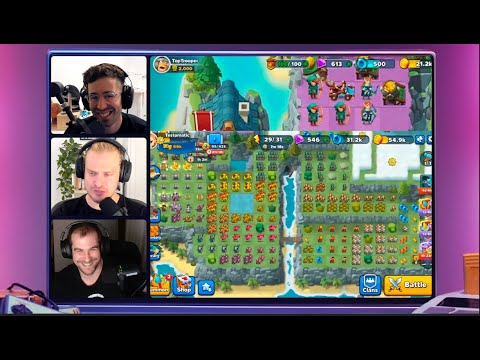
Top Troops Global launch case study: Game design, Ad monetisation & UA review (#82)
Top Troops represents a strategic evolution of the Battle Legion formula, transitioning from a PvP-focused meta to a PvE-centric progression system.
- Top Troops launched globally on October 4th, but experienced a slow start with approximately $6,000 in daily revenue during its first week despite years of development.
- The game utilizes a merge mechanic that lacks strategic depth, as players primarily brute-force progression using legendary units while ignoring a large portion of the available unit roster.
- Top Troops prioritizes IAP-driven revenue and currently generates less than 10% of its total income from ad monetization, significantly lower than comparable titles like Dragon City which reach 30%.
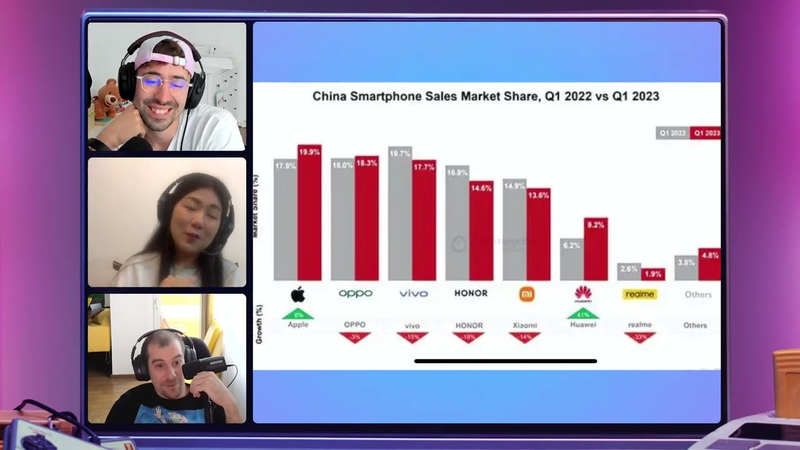
China Special West to East: market situation, cultural adaptation, publishing, UA & creatives
The Chinese mobile gaming market is experiencing a robust post-pandemic recovery, characterized by a significant acceleration in government licensing approvals for foreign titles.
- The Chinese government has increased game approval rates following the post-pandemic recovery, signaling a more favorable regulatory environment for new titles.
- HTML5 (H5) games serve as a strategic entry point for the Chinese market because they are easier to manage and often bypass the mandatory ISBN license requirement.
- User acquisition on Android in China is highly complex and requires working with local agencies, whereas iOS remains the most accessible platform for self-managed publishing.