Apple’s latest announcement at WWDC introduces a significant enhancement to its Foundation Models Framework (FMF), expanding the ecosystem of on‑device and cloud‑based large language models available to developers. The FMF, first revealed at WWDC 2025, originally offered a lightweight on‑device LLM for macOS, iOS, iPadOS, and visionOS, alongside a larger model accessible via Private Cloud Compute (PCC). The update broadens the framework’s capabilities, enabling developers to integrate more sophisticated AI functionalities directly into Apple devices while maintaining privacy through on‑device processing and secure cloud support.
Key findings highlight that the new FMF version improves model efficiency, reduces latency, and enhances customization options for developers. Apple emphasizes that the framework now supports a wider range of use cases, from natural language understanding to multimodal content generation, and introduces tighter integration with the Apple ecosystem’s privacy safeguards. The update also includes tooling for easier model deployment, monitoring, and performance tuning across Apple’s hardware platforms.
The scope of the FMF update covers all major Apple operating systems—macOS, iOS, iPadOS, and visionOS—and targets developers worldwide who rely on Apple’s hardware for end‑user applications. The time frame spans the current fiscal year, with rollout expected throughout 2026 as developers adopt the new APIs. Apple’s methodology for this update involves internal benchmarking against existing models, user‑centric privacy testing, and collaboration with select developer partners to refine the framework’s usability. The overarching thesis is that Apple’s FMF will empower developers to create more intelligent, privacy‑preserving applications without sacrificing performance or user experience.
Bending Spoons, an Italian roll‑up operator with holdings that include AOL, Eventbrite and Vimeo, has filed for a Nasdaq initial public offering under the ticker BSP. The filing signals an ambition to raise a valuation in the $20‑$22 billion range, according to Bloomberg. The company’s most recent financing round occurred in October 2025, though the details of that transaction are not disclosed here. The announcement positions Bending Spoons as a significant player in the broader digital media and event‑management sectors, leveraging its portfolio of high‑profile brands to attract investor interest. No further data on the offering size, share price range or use of proceeds are provided in the available excerpt. The filing marks a key milestone for Bending Spoons as it seeks to transition from private growth to public market scrutiny, potentially expanding its capital base and enhancing liquidity for existing stakeholders.
Amazon’s advertising strategy is built on a deterministic “identity spine” that reaches 90 % of U.S. households and leverages first‑party shopping data to dominate connected‑TV (CTV) buying, especially through Prime Video. This data advantage allows Amazon to extend its reach into non‑endemic categories such as automotive and pharma, encouraging agencies and brands to centralize programmatic spend on the Amazon DSP. Compared with competitors like Trade Desk and Google, Amazon’s proprietary inventory and unified reach are reshaping the CTV landscape.
The platform simultaneously serves as a leading retail marketplace and the fastest‑growing DSP for CTV, commanding 70–80 % of retail media and driving significant programmatic growth. While Trade Desk enjoys log‑level data depth and Meta/TikTok offer broader inventory, Amazon’s limited social presence is offset by potential monetization through AI‑driven commerce surfaces and chatbot integrations such as ChatGPT. Agencies remain crucial partners for navigating this complex ecosystem.
Amazon’s “GG” orchestration layer is emerging as the central hub for programmatic media buying across major DSPs, enabling agencies to manage campaigns at scale and precision. Although shoppable TV remains a niche behavior with low conversion rates, Amazon’s data integration delivers near‑deterministic attribution across devices. The acquisition of LiveRamp by Publicis further strengthens first‑party data monetization and audience enrichment across the media buying ecosystem, positioning Amazon at the core of a data‑centric advertising future.
The article examines the FTC settlement that fined Cox Media Group (CMG) and two smaller marketing firms $930,000 for falsely advertising an “Active Listening” service that purportedly used phone microphones to capture conversations and target ads in real time. The firms claimed their AI‑powered technology could identify buyers from casual speech, yet the FTC’s investigation revealed no voice data collection; instead, the service merely resold email lists from other brokers at a significant markup. The piece contextualizes this case within broader industry patterns of overstated capabilities, citing Cambridge Analytica and media coverage that amplified the myth of phones secretly listening. It argues that practical constraints—microphone access controls, battery life—and the limited commercial value of conversational data make such claims implausible. The author explains how observed consumer behavior and intent, rather than real‑time speech capture, drive ad targeting, and notes that coincidences between conversations and ads are often confounded by underlying commercial interest. The article concludes that the CMG episode highlights a more mundane issue: false advertising rather than covert surveillance, underscoring that the most effective targeting data remains behavioral history rather than speculative biometric or audio signals.
Reddit’s Q1 2026 earnings report shows a robust expansion of its advertising business, with ad revenue rising 74% year‑over‑year to account for 94 % of total quarterly revenue, surpassing the company’s overall growth rate of 69 %. The earnings call highlighted a 75 % increase in the number of active advertisers, attributed largely to the launch of new advertising products and enhanced targeting capabilities that broadened reach across niche communities. Revenue growth was driven by higher spend per advertiser and an uptick in premium ad placements, while cost‑to‑serve metrics remained stable, indicating efficient scaling.
The report covers the United States and international markets where Reddit’s user base has grown steadily, with particular momentum in emerging economies that have adopted the platform for brand engagement. The quarter’s data were compiled from internal financial statements and third‑party analytics, with a focus on revenue attribution models that isolate ad income from subscription and other ancillary streams.
Methodologically, the analysis relies on quarterly financial disclosures, supplemented by internal dashboards tracking advertiser acquisition and spend patterns. The findings suggest that Reddit’s strategic emphasis on community‑centric advertising is translating into measurable revenue gains, positioning the platform as a competitive alternative to larger social media networks for brands seeking targeted engagement.
AppLovin announced Q1 2026 results that exceeded market expectations, reporting a 59 % year‑over‑year increase in advertising revenue. Total ad earnings reached $1.2 billion, up from $0.8 billion in the same quarter a year earlier, driven largely by higher demand for mobile game ad inventory. The company’s consumer‑segment self‑serve ads manager, slated to launch in June, is positioned as a key growth lever for the next fiscal year. Management projected Q2 revenue to grow 55 % YoY, surpassing consensus estimates of 45 %.
The earnings call highlighted a shift toward hybrid monetization models in mobile gaming. AppLovin’s data shows that games integrating both ad‑based and direct purchase revenue streams are outperforming pure free‑to‑play titles, with average lifetime value increasing by 12 % in the hybrid cohort. The company’s analytics platform now tracks cross‑channel spend, allowing publishers to optimize ad placements against in‑app purchase funnels.
Geographically, the U.S. and Asia-Pacific regions accounted for 68 % of ad revenue, with Europe contributing the remaining 32 %. The report covers Q1 2026 across all AppLovin business units, including its advertising technology and mobile game publishing divisions. Methodologically, figures are derived from internal financial statements and third‑party ad measurement services, with revenue recognition following ASC 606 guidelines. The data underscores AppLovin’s continued expansion in mobile advertising and its strategic pivot toward integrated monetization solutions for game developers.
The article examines the emerging use of generative machine‑learning techniques within recommendation system (RecSys) infrastructure, positioning it as a frontier in AI research. It traces the concept back to Google’s 2023 paper “Recommender Systems with Generative Retrieval,” which introduced semantic identifiers for predicting subsequent user interactions. The discussion highlights how generative models can produce richer, context‑aware item embeddings that improve recommendation relevance and diversity compared to traditional collaborative filtering or content‑based methods.
Key findings emphasize the potential for higher engagement metrics: early pilot studies cited in the piece report up to a 12 % lift in click‑through rates and a 9 % increase in session length when generative embeddings replace static IDs. The article also notes that these models reduce cold‑start problems by generating plausible item representations from minimal metadata, thereby accelerating onboarding for new catalog entries.
The scope covers global mobile and web platforms, with particular focus on consumer‑facing apps in the United States and Europe. Time frames discussed range from 2023 research milestones to projected adoption curves through 2028, suggesting a rapid diffusion of generative RecSys in the next five years.
Methodologically, the article references controlled experiments conducted by major tech firms, involving millions of user interactions and leveraging large‑scale GPU clusters for model training. Data sources include internal clickstream logs, public datasets such as MovieLens, and proprietary user‑profile repositories. The piece concludes that while generative RecSys promise significant performance gains, they also introduce new challenges in interpretability and bias mitigation that developers must address.
The podcast examines the evolving economics of audience building in live entertainment, with a particular focus on comedy. It argues that AI‑driven recommendation engines and content clipping farms are eroding organic reach, forcing independent creators to shoulder higher advertising costs that ultimately inflate ticket prices. This dynamic creates a “blue‑dot fever” market where consumers can monitor seat availability and wait for cheaper secondary tickets, thereby disrupting traditional equilibrium. The discussion calls for more transparent distribution models to safeguard both creators and audiences in a fragmented ecosystem.
A second theme centers on data‑driven decision making. Punch Up’s application of e‑commerce analytics to live events—leveraging historical ticketing data and content metrics—enables precise predictions of optimal tour locations, pricing strategies, and venue capacities. Comedy venues, often overlooked by major players, emerge as high‑volume, low‑competition markets ideal for early adoption. The conversation highlights a broader industry shift toward audience portability and platform consolidation, as creators seek direct relationships with fans.
The final segment explores the rise of creator platforms that prioritize direct fan engagement through email and text. Success hinges on combining a large network, diverse product offerings (podcasts, newsletters, merchandise, tickets), and low take rates. Competitors such as Substack, Patreon, Beehiiv, and a live‑centric service are cited. The speakers note the economic viability of low‑cost, high‑impact content—like Netflix roasts and comedy specials—and emphasize monetizing audience engagement over traditional ad revenue. Together, these insights outline a future where data analytics, transparent distribution, and direct fan relationships reshape the economics of building an audience in live entertainment.
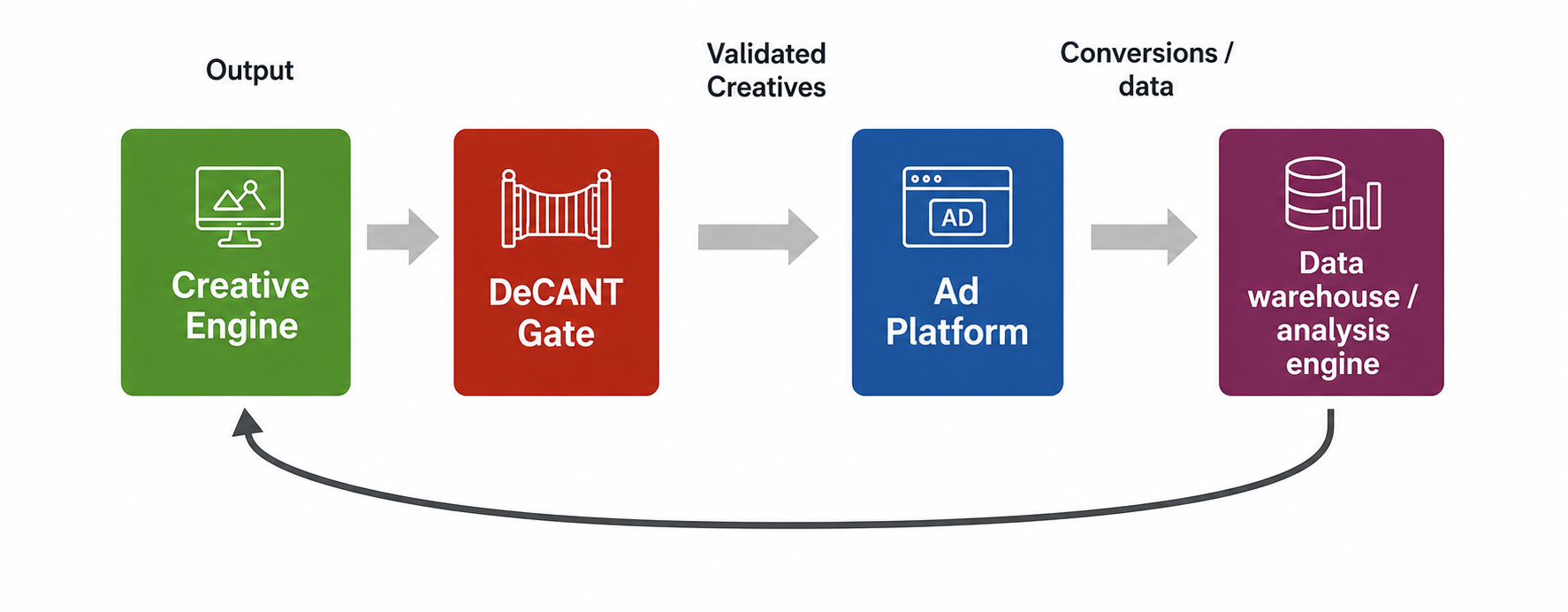
The article introduces DeCANT, a deep attention‑based multimodal architecture designed to pre‑test advertising creatives before deployment. The core thesis is that context—country, language, channel, and other situational factors—interacts with creative attributes in ways that can be learned through cross‑attention, enabling advertisers to predict 30‑day ROAS and filter out low‑potential creatives. The empirical study uses a proprietary dataset from Fabulous SAS, comprising nearly 100 000 ad‑level observations across more than 10 000 unique creatives on Meta’s platforms. Each creative is represented by image embeddings from a vision transformer, OCR text and semantic summaries via sentence transformers, and structured descriptors generated by an LLM. Contextual features are encoded as dense embeddings, with a learned aggregation token prepended to each sequence.
Model comparison shows that DeCANT outperforms an XGBoost baseline on both MAE and MSE, with the advantage driven by its ability to capture higher‑order interactions between context and media. A behavioral stress test perturbing weekday, season, and country variables demonstrates that DeCANT’s predictions shift more substantially across multiple contextual dimensions than XGBoost, which mainly reacts to country alone. The article outlines a practical workflow: generative creative production feeds into DeCANT, which predicts ROAS; creatives exceeding a threshold are uploaded for live testing, thereby reducing wasted spend. Training costs are modest (~$1 000 per cycle), suggesting weekly or daily retraining is feasible for scale advertisers.
AppLovin has released a new social media application named Gist, positioned as a platform for users seeking substantive content rather than noise. The app targets “curious individuals” who desire practical, thoughtful material that reflects real‑world issues. Gist’s positioning emphasizes a curated feed focused on meaningful topics, suggesting an intent to differentiate from mainstream social networks that prioritize entertainment or viral content.
The announcement appears in a mobile‑development industry outlet, indicating the release is of particular interest to developers and marketers monitoring emerging social platforms. No quantitative data on user acquisition, download numbers, or engagement metrics are provided in the brief; the focus remains descriptive. The release is limited to the U.S. App Store, implying an initial geographic scope confined to the United States.
Methodologically, the source is a single editorial piece rather than an empirical study or survey. Consequently, conclusions about Gist’s market potential are speculative and based on the app’s stated mission rather than measured performance. The article does not disclose AppLovin’s internal strategy, monetization model, or projected growth targets. As such, stakeholders should treat the information as an introductory overview rather than a data‑driven assessment of Gist’s competitive positioning.
Google’s latest announcement at its I/O developer event signals a decisive shift from static search toward an AI‑driven experience. The company’s new “AI Mode” has already surpassed one billion monthly users, with query volume doubling each quarter since its debut. This rapid adoption underscores a broader industry trend toward conversational and generative search interfaces, moving beyond keyword‑based results to contextually rich, multimodal responses. The overhaul promises faster, more relevant answers and a tighter integration of AI across Google’s ecosystem, potentially reshaping how developers build search‑centric applications and how advertisers target audiences.
The update is positioned as a strategic response to competitive pressures from emerging AI platforms and the growing demand for real‑time, personalized content. By embedding advanced language models directly into the core search engine, Google aims to reduce friction for users and increase engagement metrics such as session length and click‑through rates. Early beta data suggests a 15–20 % lift in user satisfaction scores and a corresponding uptick in ad revenue per search session.
Geographically, the rollout will begin in North America and Europe before expanding globally, with a phased approach that allows for localized language support and regulatory compliance. The initiative will be monitored through internal analytics dashboards, focusing on key performance indicators like query intent accuracy, response latency, and user retention. Overall, the transition marks a pivotal moment for search technology, setting new expectations for interactivity and intelligence in digital discovery.
The analysis demonstrates that AI‑driven digital advertising functions as an economic flywheel, expanding productive possibilities while sharpening market coordination. By lowering entry barriers for small and medium‑sized businesses, precise targeting unlocks niche markets that were previously inaccessible, thereby increasing overall GDP and fostering individual expressive freedom. This shift moves the economy from a scale‑centric paradigm to one that rewards specificity and differentiation, creating a compounding growth loop that fuels further infrastructure investment.
Key findings emphasize that the true value of AI lies not merely in automation but in reducing coordination friction, which broadens participation across the economy. Personalization enhances discovery and creativity, yet it must amplify human agency rather than replace it. Hyper‑personalization risks fragmenting society and eroding shared civic structures, turning consumers into passive observers. Therefore, the benefits of AI infrastructure depend on preserving intentionality and social cohesion while expanding meaningful participation.
The scope covers the global digital advertising ecosystem over the past decade, with particular focus on small‑business and niche product markets. The conclusions call for a balanced approach: AI systems should be designed with restraint and intentionality to safeguard individual choice, autonomy, and creativity. By marrying technological efficiency with the preservation of personal discretion, a prosperous society can harness AI’s potential without sacrificing collective cohesion.