Japan Advanced Institute of Science and Technology
8 reports, presentations and talks by Japan Advanced Institute of Science and Technology in the Game Industry Library, the newest “Can We Infer Move Sequences in Go from Stone Arrangements?” (2024).
Documents

Can We Infer Move Sequences in Go from Stone Arrangements?
The research investigates the feasibility of inferring the chronological move sequences of a Go game solely from the final arrangement of stones on the board.

Procedural Maze Generation with Considering Difficulty from Human Players' Perspectives
This research presents a novel method for procedural maze generation that incorporates human behavioral tendencies to calibrate difficulty levels.
- Researchers successfully calibrated procedural maze difficulty by training a LightGBM model on human navigation patterns, specifically focusing on path selection at branch points.
- The model was developed using data from 20 participants navigating 21 mazes, analyzing 23 distinct features such as distance to the goal and straight-line movement tendencies.
- Difficulty is quantified by the number of extra steps a player takes beyond the shortest possible path, allowing for the categorization of mazes into easy, moderate, and difficult tiers.

Improving Human Players' T-Spin Skills in Tetris with Procedural Problem Generation
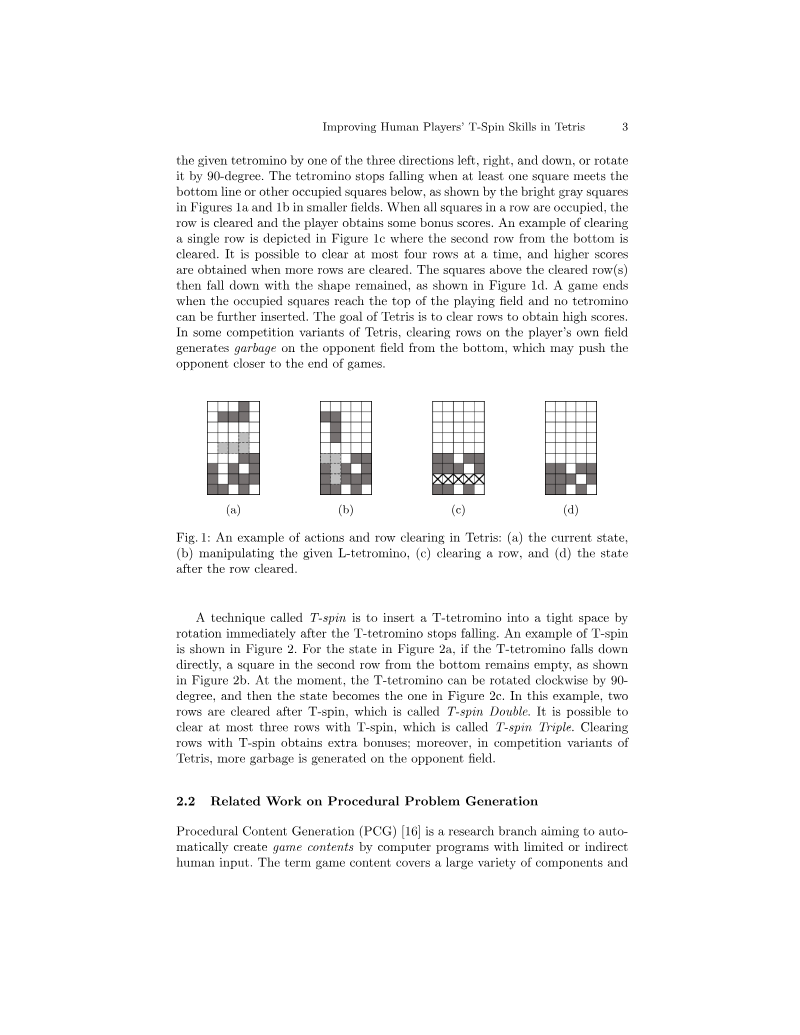
This research explores the application of procedural content generation to create educational puzzles for Tetris, specifically targeting the mastery of the T-spin technique.
- Training with procedurally generated T-spin puzzles significantly increases maneuver frequency, with growth rates of 212% for random problems and 334% for curated 'interesting' problems compared to a decline in control groups.
- Procedural generation using a reverse-generation method effectively creates two-step T-spin puzzles that improve player performance in competitive Tetris scenarios.
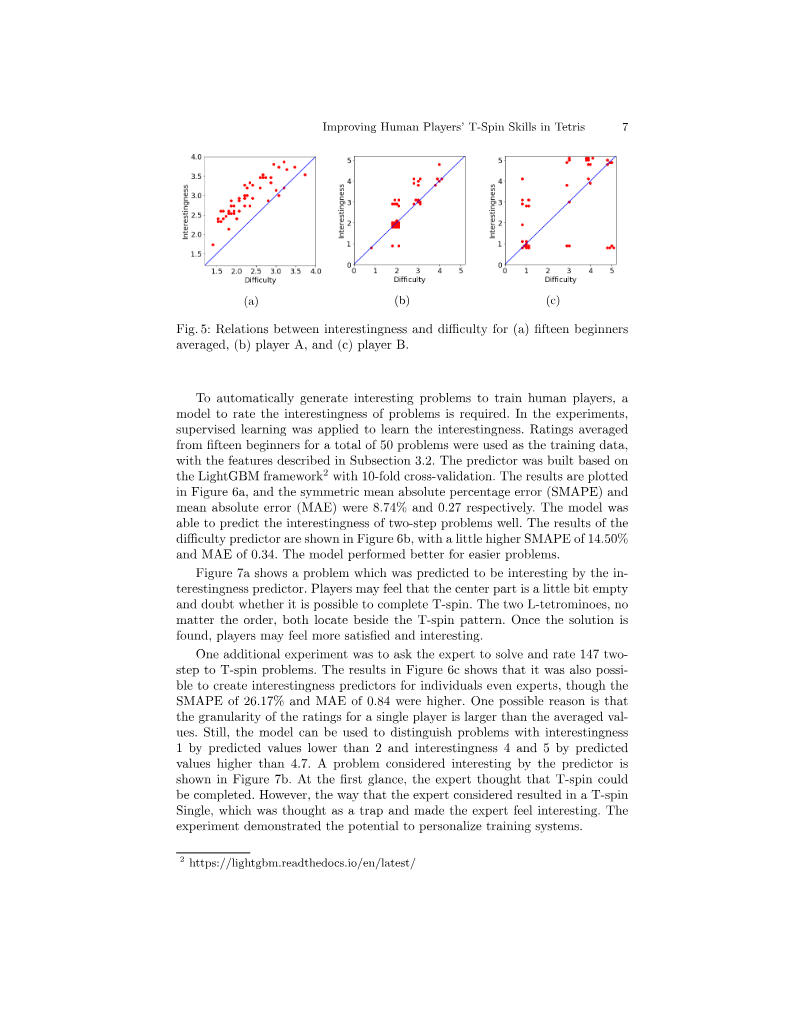
- Machine learning models, specifically LightGBM, can predict puzzle difficulty and interestingness with high accuracy, achieving a symmetric mean absolute percentage error of 8.74% for interestingness ratings.

Design and Evaluation of a Cybersecurity Awareness Training Game
This study explores the design and evaluation of a serious game intended to improve cybersecurity awareness among university students.
- The serious game achieved an average score of 8.4 out of 10 for situational understanding and 7.6 for overall cybersecurity knowledge improvement among university students.
- The ATMSG (Activity Theory-based Model of Serious Games) framework successfully aligned educational objectives with game mechanics to teach complex security scenarios like phishing and public information safety.
- Beginner-level participants reported higher satisfaction with the game, finding the visual novel format both novel and accessible for learning cybersecurity concepts.


Deep df-pn and Its Efficient Implementations
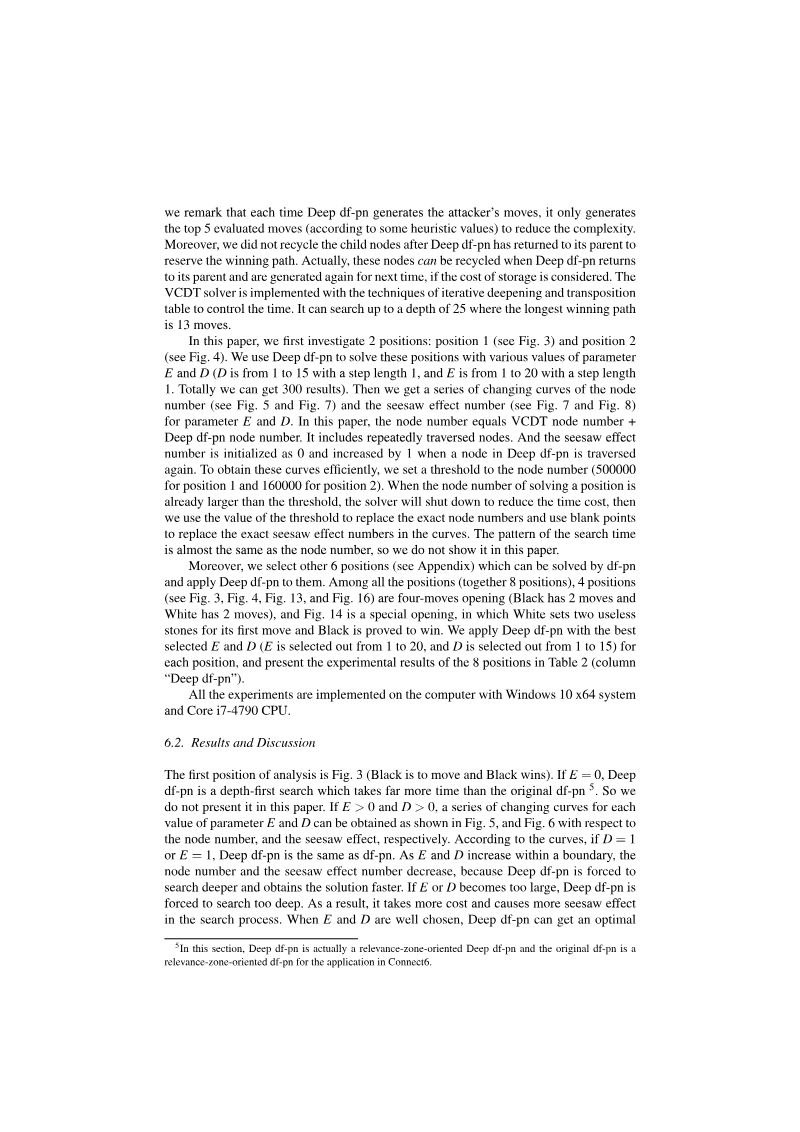
Deep df-pn functions as an advanced iteration of the proof-number search algorithm, specifically engineered to resolve the seesaw effect that frequently degrades performance in game-tree searches.
- Deep df-pn resolves the 'seesaw effect' in game-tree searches by replacing static proof values with a depth-dependent function, preventing inefficient oscillation between subtrees.
- The algorithm utilizes two adjustable parameters to modulate search behavior, allowing for a more flexible balance between broad and deep exploration.
- Empirical testing in Connect6 demonstrates that Deep df-pn significantly reduces the number of nodes visited compared to standard df-pn and the 1+epsilon trick.


Machine-Learning of Shape Names for the Game of Go
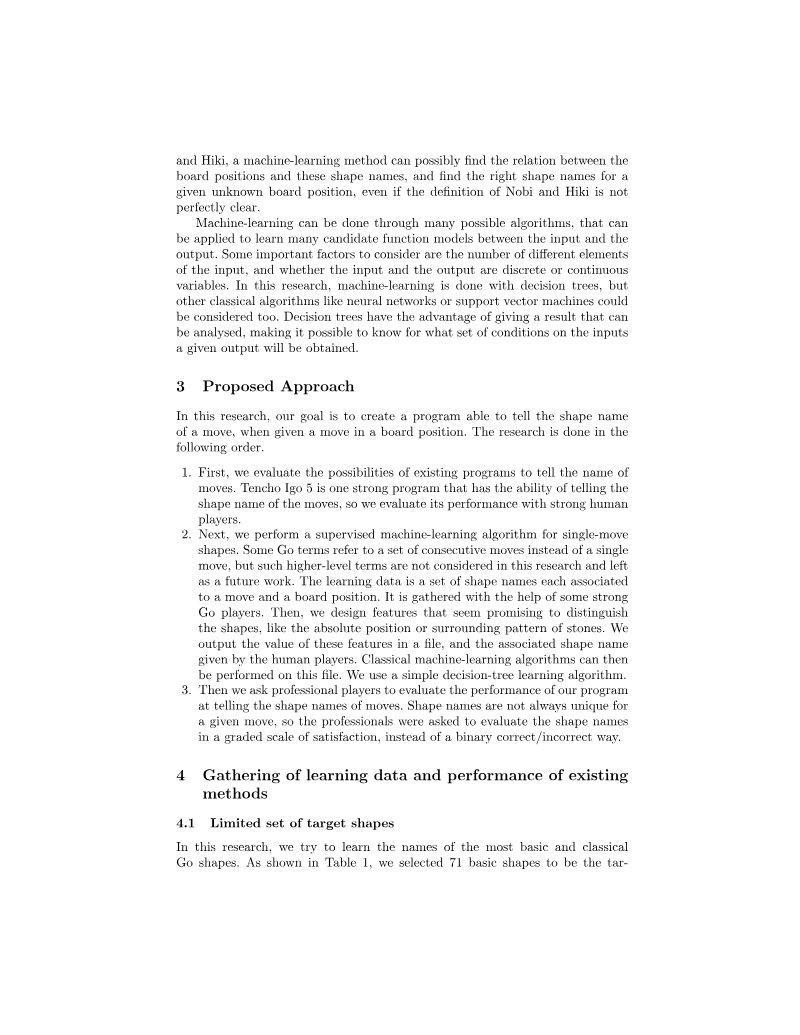
This research addresses the challenge of enabling Go software to provide human-like commentary by automatically assigning appropriate shape names to specific moves.
- A machine-learning model using decision trees achieved an 82% accuracy rate in assigning human-like Go terminology to board moves.
- The model’s qualitative performance score of 83.8 is nearly identical to the 84.6 score achieved by human amateur labels when evaluated by professional players.
- The research utilized a dataset of 11,526 moves from 60 games, which were labeled by six players ranked 4 dan or higher using 71 predefined shape names.


Efficiency of Static Knowledge Bias in Monte-Carlo Tree Search
This analysis examines the integration of static knowledge into Monte-Carlo Tree Search (MCTS) algorithms for the game of Go.
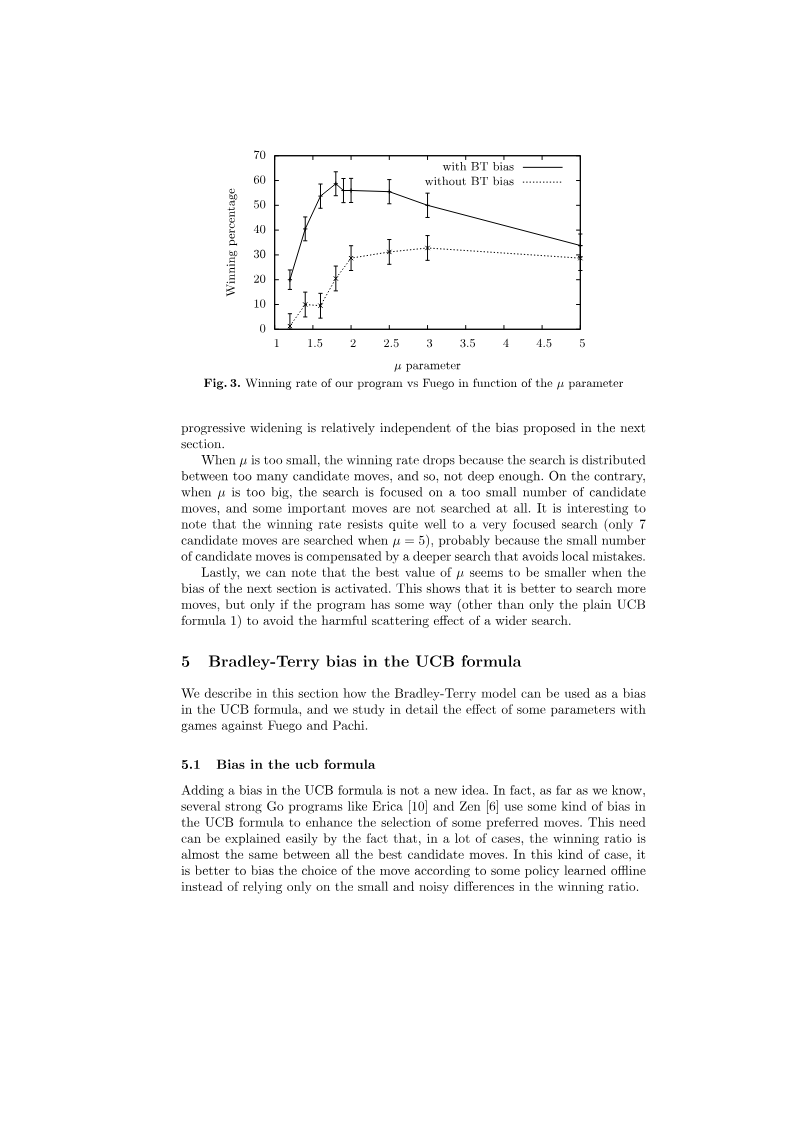
- Integrating static move evaluation based on the Bradley-Terry model into MCTS algorithms significantly improves the competitive strength of Go engines against established programs like Fuego and Pachi.
- Progressive widening, which restricts search to a subset of promising moves, is highly effective for Go engines when tuned with a specific parameter, μ.
- The research validated these performance improvements through extensive testing of over 31,200 games on 13x13 boards, maintaining a 95% confidence interval of ±5% on winning rates.

Accelerated UCT and Its Application to Two-Player Games
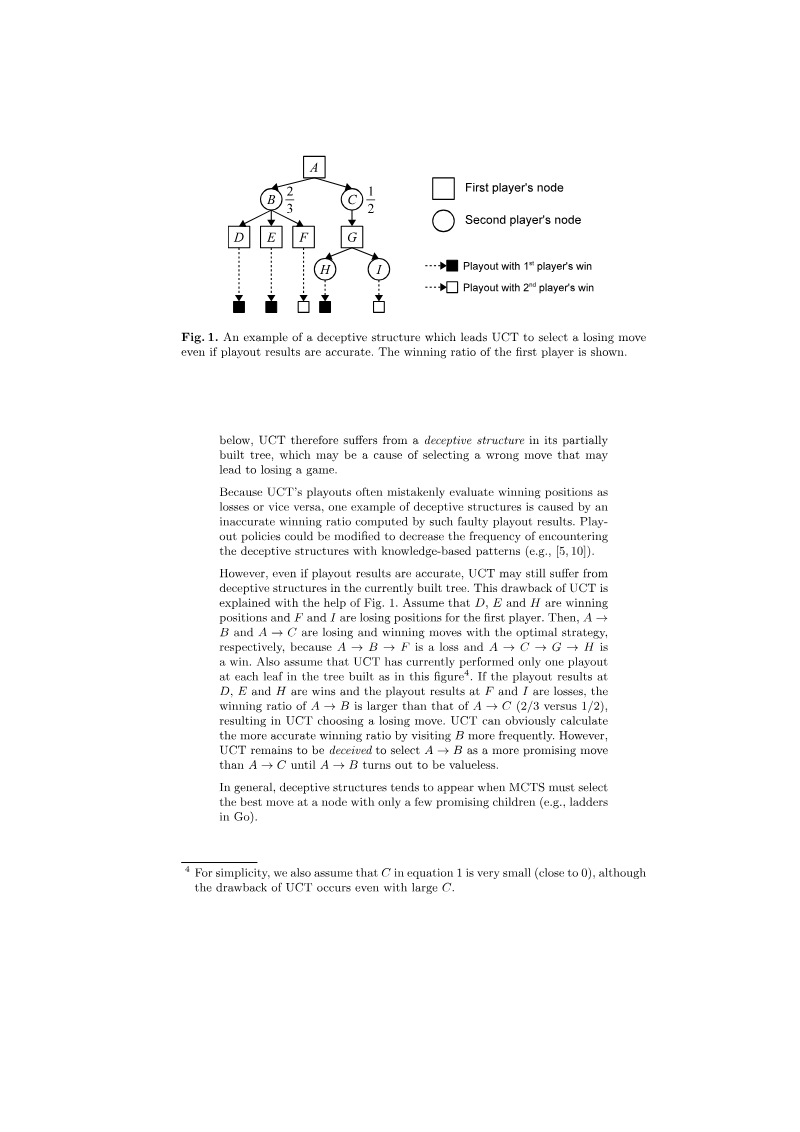
The Accelerated UCT algorithm is introduced as a solution to the over-optimistic behavior and deceptive structures inherent in standard Monte-Carlo Tree Search (MCTS) when applied to two-player games.
Do you work at Japan Advanced Institute of Science and Technology? Get a free report of how these documents are read and cited here.