Article
What Steam's Own Data Tells Us About the 2025 Market
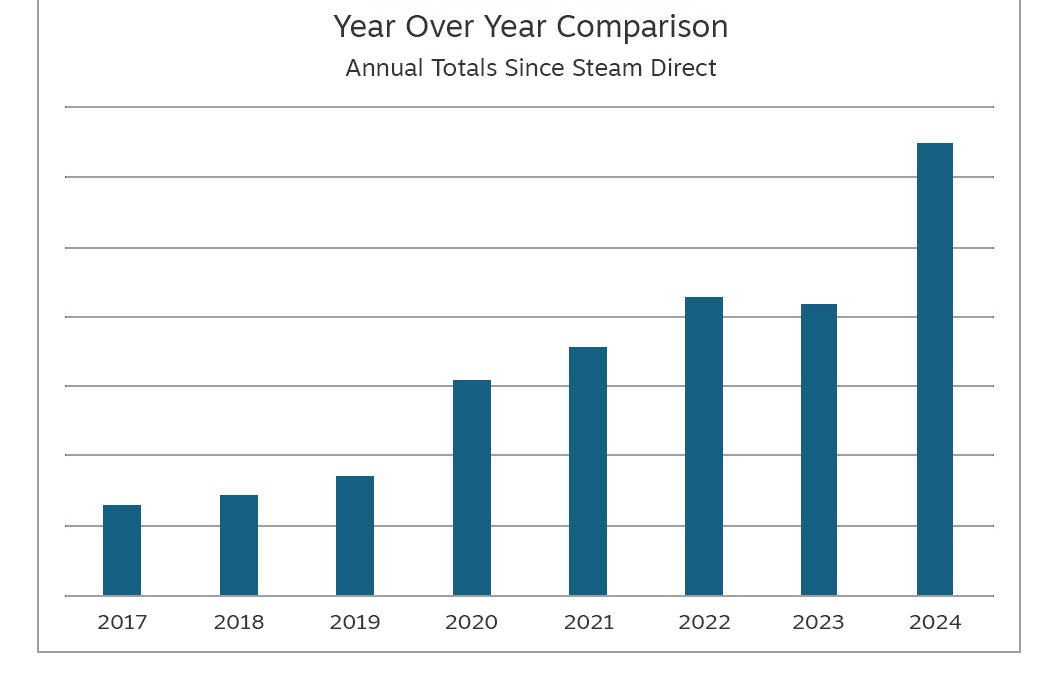
The 2025 PC gaming market, as evidenced by recent platform data from Valve, demonstrates robust growth despite broader industry narratives of stagnation and layoffs. Steam’s internal metrics reveal that 2024 was the platform's most successful year for new game releases, with revenue from new titles increasing nearly tenfold since 2014. Notably, the number of successful games is expanding: in 2024, over 500 titles exceeded $250,000 in revenue, and more than 200 titles surpassed $1 million within their first 30 days, representing year-over-year growth of 27% and 15%, respectively.
This data suggests that while the market is increasingly fragmented and challenging for individual developers to dominate, it remains a fertile environment for a diverse range of products. Success is increasingly driven by niche appeal and high-quality gameplay rather than developer pedigree. Furthermore, the globalization of the market is a significant factor, with approximately one-quarter of top new releases originating from first-time developers across a wide array of countries, facilitated by accessible self-publishing tools and localized support.
Beyond platform-wide trends, the analysis highlights the critical role of organic social media reach in game discovery. Viral content on platforms like TikTok and Instagram, particularly when centered on relatable hooks—such as the "friendship-ruining" potential of cooperative gameplay—can generate significant wishlist momentum for unreleased titles. This phenomenon underscores the importance of creating highly targeted, shareable marketing assets that allow influencers to organically amplify a game’s visibility. Ultimately, the current market landscape rewards developers who prioritize marketable, high-engagement concepts that resonate within specific player communities, leveraging the platform’s network effects to achieve long-term revenue sustainability.
- Steam experienced its most successful year for new releases in 2024, with revenue from new titles increasing nearly tenfold compared to 2014 levels.
- The number of commercially successful games is rising, with over 500 titles exceeding $250,000 in revenue and more than 200 titles surpassing $1 million within their first 30 days.
- The market for successful games is expanding, evidenced by a 27% year-over-year growth in titles earning over $250,000 and a 15% growth in those earning over $1 million.
- Market success is increasingly driven by niche appeal and gameplay quality rather than developer pedigree, with approximately 25% of top new releases coming from first-time developers.
- Organic social media reach on platforms like TikTok and Instagram is a primary driver of game discovery, with viral, shareable content significantly boosting wishlist momentum for unreleased titles.
+2
GameDiscoverCoMar 2025