The tactical first-person shooter Ready Or Not achieved significant commercial success upon its console release, reaching one million units sold in under four days. This performance highlights a rare exception to current market trends, as the title’s genre alignment with mainstream console preferences—specifically its tactical, Rainbow Six-style gameplay—allowed it to overcome the typical barriers faced by independent titles on console platforms. While the game’s success is notable, it remains an outlier in a market that is increasingly top-heavy, where only a small fraction of new releases achieve high-volume sales.
Analysis of console market performance since the second quarter of 2025 indicates that significant commercial upside is largely restricted to traditional, AAA-style genres. On PlayStation, only about 15 new games are estimated to have surpassed 500,000 unit sales in 2025, with just over 30 titles exceeding 100,000 units. The Xbox ecosystem shows even more constrained standalone sales, partly due to the platform’s heavy emphasis on Game Pass, which often captures the majority of player engagement for new releases. Consequently, developers frequently struggle to gain visibility on consoles without substantial online buzz to break through existing filter bubbles.
Beyond specific console performance, broader industry data reveals a shifting landscape in global Steam traffic. Comparing snapshots from April 2024 and July 2025, Steam interest in Asia is rising, with the region now accounting for 32.2% of global bandwidth, up from 30.4%. While North American and European traffic shares have experienced a slight relative decline, total bandwidth consumption continues to grow across all regions. These findings suggest that while Steam remains a global platform, its growth is currently outpacing Western markets in Asia, providing a critical indicator of evolving regional player interest.
The gaming industry is currently experiencing a period of high activity on the Steam platform, characterized by a significant influx of major game debuts following the conclusion of the Steam Summer Sale. More than 20 games launched with over 50,000 wishlists, including nine titles that exceeded 100,000 wishlists. This surge highlights a competitive landscape for developers and publishers navigating post-sale discovery and visibility.
Beyond launch volume, Valve has implemented technical updates to Steam’s infrastructure, most notably transitioning wishlist data to an hourly, near real-time update cycle for developers. Concurrently, the platform has updated its publishing guidelines to address pressure from payment processors regarding adult content. By adding a clause that restricts content violating the standards of financial institutions and card networks, Valve has taken steps to ensure continued payment compatibility, while maintaining its generally permissive stance on platform content.
Broader industry trends indicate a shift toward evidence-based investment and audience validation, as developers face increasing pressure to demonstrate market viability early in the production cycle. Data from the U.S. Bureau of Labor Statistics suggests that gaming remains a significant leisure activity, competing for time alongside traditional media like television. Meanwhile, other platforms are adjusting their operational frameworks, with Nintendo introducing stricter eShop publishing guidelines in Asia to curb spam, and Roblox expanding safety features for younger users. These developments collectively underscore a tightening of platform governance and a heightened focus on data-driven decision-making across the global video game market as of mid-2025.
The success of the indie title Parcel Simulator serves as a case study for how solo developers can achieve significant commercial traction in the crowded simulator genre. Released in June 2025, the game surpassed 55,000 units sold within its first month, maintaining strong player retention with average playtimes exceeding 14 hours. The developer, a software engineer working in his spare time, utilized a strategy centered on iterative development, public playtesting, and influencer outreach rather than traditional marketing or paid advertising. By blending inspection-based mechanics with approachable automation, the game successfully appealed to a broad audience beyond the typical simulator niche.
The broader industry context highlights a highly competitive landscape for simulator games, with 39 new titles featuring "Simulator" in their titles debuting on Steam in June 2025 alone. Despite this saturation, data indicates that titles with clear, hook-heavy gameplay and strong influencer appeal can still achieve significant visibility through Steam’s algorithmic recommendations. The analysis emphasizes that while the barrier to entry for the genre is low, long-term success remains dependent on refining gameplay loops based on direct user feedback and community engagement.
Additionally, the industry is seeing a notable rise in the use of generative AI, with approximately 7,818 titles on Steam now disclosing its use, representing roughly 7% of the platform's total library. While nearly 20% of all games released in 2025 have disclosed AI integration, its application remains largely confined to peripheral tasks such as asset generation or voice synthesis. Most commercially successful titles avoid centralizing AI in core gameplay, reflecting a cautious approach to potential consumer backlash while acknowledging that minor, non-intrusive AI usage is becoming increasingly normalized in the development process.
The game industry in the mid-2020s increasingly rewards developers who employ data-driven, systematic approaches to project selection and market positioning. A primary thesis is that success on PC and console platforms is heavily dependent on a studio’s ability to identify and execute within established, high-demand subgenres. By anchoring new concepts to proven commercial hits, developers can mitigate the risk of creating products that fail to resonate with players due to unclear market fit.
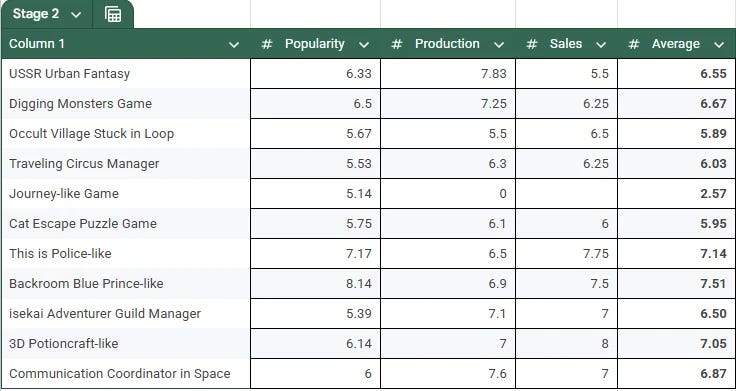
A case study of the studio Darts illustrates a rigorous, metrics-led framework for game development. The studio evaluates potential projects based on three core dimensions: internal team enthusiasm, technical feasibility, and market potential. By categorizing projects into risk levels based on budget and skill, and by requiring teams to define a clear 10-to-15-second hook modeled after successful titles, developers can move beyond subjective decision-making. This structured, democratic process helps align creative vision with commercial reality, ensuring that the final product is both viable and marketable.
Industry trends further emphasize the necessity of professionalized development processes. Valve’s guidance on Early Access highlights that player expectations for quality and polish have risen significantly, necessitating a proactive approach to community engagement and feedback management. Furthermore, broader market data indicates that while console hardware sales have faced recent headwinds, diversified holdings and PC/console developers have seen significant year-over-year growth. As the industry evolves, the competitive edge for smaller, agile studios lies in combining logical, market-aware planning with a disciplined commitment to communication and iterative development.
The co-op mountain climbing game Peak achieved significant commercial success, selling 4.5 million copies within its first month of release following a June 16, 2025, launch. Developed through a collaboration between studios Aggro Crab and Landfall, the title utilized a lean, agile development model born from a game jam-style offsite. By focusing on a singular, intuitive mechanic—a damageable stamina bar—and leveraging existing technical expertise in multiplayer ragdoll physics, the team created a highly accessible and viral experience that maintained approximately 100,000 daily concurrent users on Steam.
The game’s rapid adoption was driven by its high "watchability," which encouraged influencer-led virality, and a strategic $5–$8 price point. Despite having fewer than 30,000 wishlists at launch, the title relied on post-release momentum rather than traditional pre-release marketing. Key design choices, such as procedural mountain generation and the integration of proximity voice chat, fostered social interaction and replayability. Player data indicates a broad geographic reach, with the United States, Russia, and the United Kingdom leading in sales, and a median playtime of nearly four hours.
Beyond the specific case study of Peak, the broader industry landscape remains complex. Current trends highlight ongoing debates regarding the sustainability of subscription models like Xbox Game Pass, the technical capabilities of upcoming hardware such as the Switch 2, and shifting regulatory environments in China that may expedite licensing for international studios. Additionally, the Roblox ecosystem continues to demonstrate that high-engagement titles can sustain significant revenue through aggressive monetization strategies, even as player counts fluctuate.
The analysis of Steam’s performance in June 2025 highlights the platform's top-grossing and highest-selling new releases, while providing broader context on industry trends. The primary objective is to quantify the commercial success of new titles using proprietary revenue and unit sales estimates, offering insights into market performance for developers and industry observers.
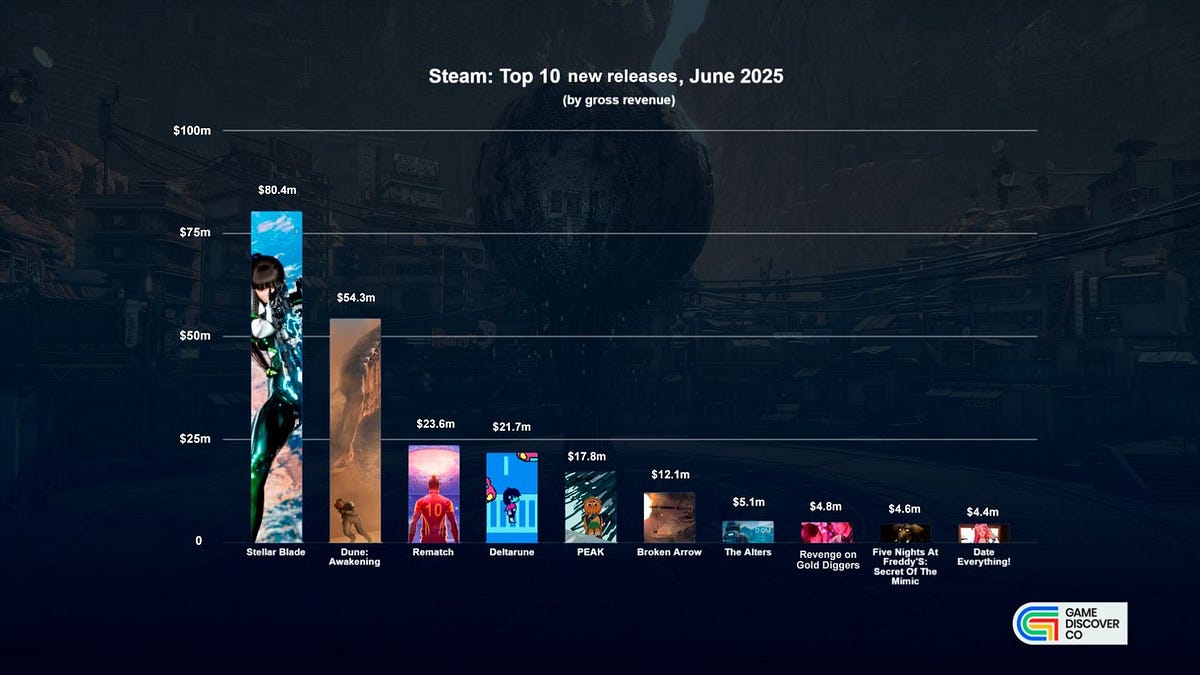
Key findings indicate that Stellar Blade was the standout performer among new releases, generating $80.4 million in gross revenue and reaching 192,000 concurrent users within its first two weeks, driven significantly by strong adoption in the Chinese market. Other notable commercial successes included Dune: Awakening, Rematch, and Deltarune, all of which surpassed $20 million in gross revenue. In terms of unit volume, the co-op climbing game Peak led the market with approximately 2.9 million units sold, demonstrating high casual virality. Overall, the top-grossing games on the platform remained dominated by established titles like Counter-Strike 2, which maintained a lead with an estimated $134 million in monthly revenue.
The scope of the analysis is limited to the Steam PC platform during June 2025. The methodology relies on internal revenue and unit sales estimates, which are derived from platform data and adjusted for market variables. The analysis also incorporates qualitative observations regarding regional pricing strategies, such as the premium pricing of Stellar Blade in China, and the impact of seasonal events like the Steam Summer Sale on platform reporting tools. Beyond specific game performance, the analysis touches upon broader industry shifts, including the rise of patient gaming, the influence of recommendation algorithms over chronological feeds, and the ongoing challenges regarding platform-level layoffs and hardware-related consumer protection disputes.
The success of the survival-climbing game Cairn, which achieved 500,000 demo downloads across Steam and PlayStation 5, serves as a case study for effective pre-launch marketing strategies in the current gaming landscape. The game’s performance is attributed to a combination of high-quality, distinct gameplay mechanics and a methodical approach to platform visibility. By leveraging Steam’s demo-specific features—such as email notifications to wishlisters and consistent placement on the platform’s trending lists—the developers maintained high engagement throughout the demo’s availability.
Key findings indicate that launching a demo outside of the crowded Steam Next Fest window allowed for sustained visibility. Furthermore, the developers maximized reach by participating in numerous industry showcases and festivals, which helped build momentum following the game's initial reveal. Organic interest from content creators also played a significant role, with viral social media clips driving substantial traffic without the need for heavy advertising expenditure. The demo’s success is further supported by its localization efforts, which extended its reach across various international storefronts.
The analysis covers the global PC and console market, specifically focusing on discovery trends observed between late 2024 and mid-2025. Data points are derived from platform-specific metrics, including Steam download statistics and PlayStation 5 performance, alongside insights from industry analytics partners. The findings underscore that while specific game themes—such as the "survival-climber" microgenre—possess inherent appeal, the strategic use of platform tools and organic community engagement remains essential for converting interest into significant download volume before a full commercial release.
The analysis provides a comprehensive overview of genre performance on Steam by applying a proprietary, exclusive-tag methodology to games that have generated over $1 million in lifetime revenue. By assigning a single primary genre and subgenre to each title, the research aims to clarify the total addressable market and revenue distribution across the platform’s history, moving beyond the limitations of overlapping Steam tags.
The findings reveal that the Action genre dominates the platform, accounting for 58.37% of total revenue, followed by Role-Playing (17.11%), Strategy (13.97%), and Simulation (9.76%). Within these categories, specific subgenres drive significant value; for instance, Arena Shooters represent nearly 19% of all Action revenue, largely bolstered by evergreen titles. Conversely, subgenres like Action Roguelikes and Psychological Horror exhibit higher volumes of successful titles released in recent years, suggesting a more accessible market for newer developers compared to the highly concentrated, top-heavy revenue structures found in genres like Battle Royale or Hero Shooters.
The research emphasizes that while high-revenue genres appear attractive, they are often dominated by a small number of long-standing titles. Average revenue per game serves as a critical metric for developers, highlighting that genres with lower per-title revenue often feature a broader base of successful games. The study concludes that while data provides essential insights into market composition, it does not guarantee success, as the analysis excludes the thousands of titles that fail to reach the $1 million revenue threshold. This framework serves as a strategic tool for developers to evaluate market bets and understand the competitive landscape of the PC gaming industry.
The primary purpose of this analysis is to evaluate the current landscape of Discord community management for video games and provide a performance overview of the Apple Arcade service as of mid-2025. The central thesis posits that successful Discord engagement has shifted from simple member acquisition to a "Discovery Meta" era, where long-term growth and platform ranking are driven by daily operational excellence, active user retention, and coordinated cross-server alliances.
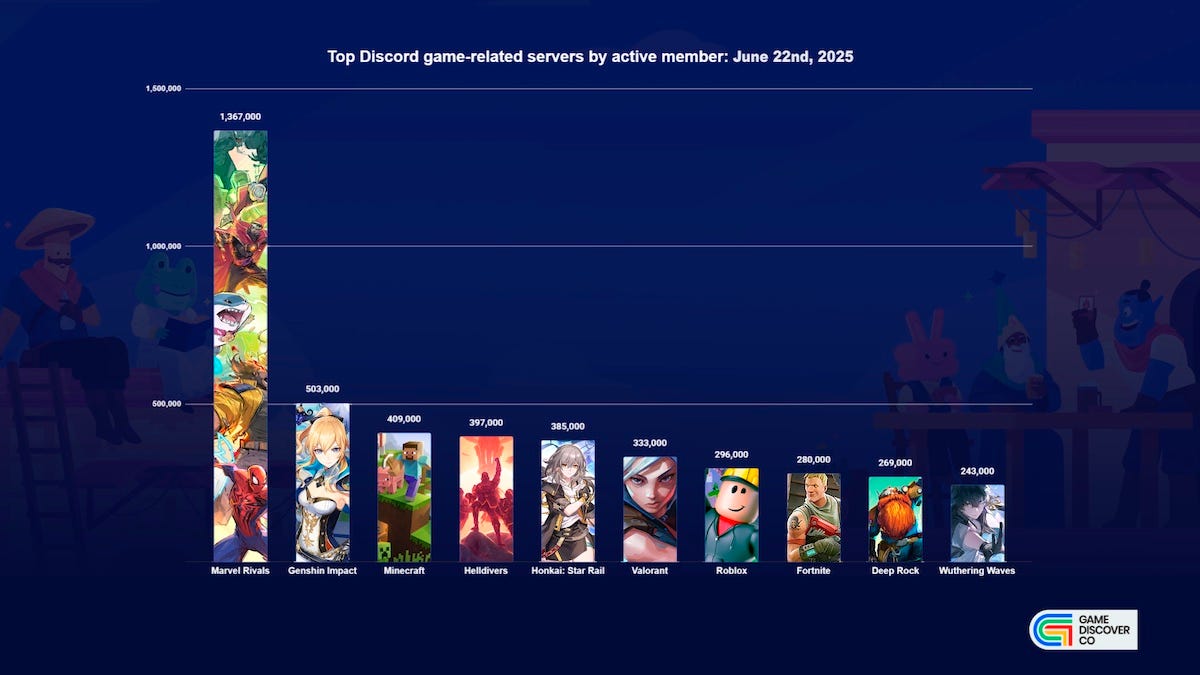
Key findings regarding Discord indicate that top-performing servers, such as those for Marvel Rivals, Genshin Impact, and Roblox, prioritize high activity-to-membership ratios. Discord has begun relaxing its historical one-million-member cap for AAA titles that demonstrate strong engagement metrics. Effective community management now requires curated onboarding, consistent daily programming, and the use of specialized bots. Conversely, servers for titles like Sea of Thieves and League of Legends have seen a decline in relative ranking, suggesting that even established communities require constant, active moderation to maintain their standing.
Regarding Apple Arcade, the service functions as a stable, bundled component of the broader Apple One ecosystem rather than a standalone commercial success. Analysis of 2025 year-to-date U.S. review counts reveals that titles like NBA 2K25 Arcade Edition, Hello Kitty Island Adventure, and Balatro are among the most popular. The service continues to serve as a repository for high-quality, ad-free, family-friendly games, though it remains a niche segment with limited new commissioning.
The analysis utilizes data from manual compilations of verified Discord servers and U.S. App Store review metrics. The scope covers global gaming trends on Discord and U.S.-specific performance data for Apple Arcade, reflecting the industry’s ongoing shift toward community-driven discovery and subscription-based mobile gaming models.
The gaming industry is currently navigating a period of market stabilization, characterized by a plateau in consumer electronics adoption and a strategic shift toward predictable, long-term revenue streams. Recent data indicates that while hardware sales remain significant, the growth of third-party software on new platforms, such as the Switch 2, is a multi-year process rather than an immediate success. Market analysis reveals that console adoption in the UK has reached 40%, with VR penetration at 10%, suggesting that the industry has entered a mature phase where no new major hardware form factors have emerged in the 2020s.
PlayStation’s recent business segment presentation highlights a transition toward a more durable and diversified financial model. While the PlayStation 5 has achieved significant profitability, generating $136 billion in revenue and $13 billion in profit, the company is actively pivoting away from an aggressive live-service strategy that previously prioritized a wide array of AAA live-service titles. Instead, Sony is focusing on franchise engagement hours and upselling existing users through higher-tier PlayStation Plus subscriptions, which grew from 30% to 38% of the total subscriber base between 2022 and 2024.
The broader industry landscape reflects these trends through various platform developments, including Microsoft’s commitment to a next-gen Xbox experience that transcends single-device limitations and Steam’s continued investment in accessibility features for the Steam Deck and Big Picture Mode. Meanwhile, the Steam marketplace remains active, with recent debuts like Rematch, Peak, and Broken Arrow leading a busy launch week. Despite these successes, the industry faces ongoing challenges, including shifting production schedules, potential trade tariff impacts, and a growing need to balance hit-driven development with the demand for stable, recurring revenue.
The June 2025 Steam Next Fest demonstrated a significant expansion in developer participation, with the number of submitted demos growing to over 2,600, up from approximately 1,800 in June 2024 and 900 in June 2023. The primary objective of this analysis is to evaluate the performance of these demos using metrics such as wishlist additions, concurrent user (CCU) counts, and follower growth to identify which titles gained the most traction during the event.
Key findings indicate that while high-profile titles like Vindictus: Defying Fate dominated in terms of concurrent users, the event showcased a diverse range of successful genres, including superhero comedies, rhythm-based roguelikes, and atmospheric horror titles. Notably, Stellar Blade achieved high visibility before its release, though it was technically ineligible for the final rankings. Data suggests that while the sheer volume of available content is staggering—making it difficult for any single title to capture the majority of player attention—the top 1% of demos still successfully generated over 30,000 wishlists.
The methodology relies on proprietary wishlist estimation algorithms, Steam’s public-facing top-played charts, and follower increase data. The analysis covers the global PC gaming market as represented by the Steam platform during the June 2025 event window. The findings conclude that despite the increasing saturation of the festival, there remains significant opportunity for developers to gain visibility, provided their titles resonate with specific player niches. The data highlights that median performance remains consistent with previous years, suggesting that while the competition has intensified, the platform’s discovery mechanisms continue to facilitate meaningful engagement for a wide variety of games.
This analysis evaluates the impact of the 2025 "Not-E3" and Summer Game Fest showcases by tracking Steam follower and wishlist growth for over 700 unique titles. The primary objective is to identify which game announcements generated the most significant audience interest in the five-day period following their respective reveals. The methodology relies on verifiable Steam platform data, including follower counts and wishlist additions, to rank titles and compare the relative effectiveness of various industry showcases.
Key findings indicate that Summer Game Fest served as the most influential event, yielding a median of 56,068 new wishlists per game, followed by the Xbox and PlayStation showcases. High-performing titles were characterized by a mix of established franchises—such as Resident Evil Requiem, Atomic Heart 2, and Grounded 2—and notable new entries like The Expanse: Osiris Reborn. While genre trends favored gritty action, horror, and sci-fi, the data suggests that mainstream appeal often correlates with higher wishlist volume, whereas veteran strategy audiences are more likely to engage with the "follow" function.
The scope of the analysis covers the global video game industry during the June 2025 event window. Beyond showcase performance, the findings highlight broader market trends, including the rapid adoption of the Nintendo Switch 2, which recorded 3.5 million units sold in its first four days. Additionally, the data reveals a platform-agnostic landscape where Steam remains the dominant PC storefront, while third-party developer support for the Switch 2 appears constrained by limited access to early development hardware. The analysis concludes that while major showcases remain effective drivers of discovery, the diversity of successful titles underscores the lack of a singular, guaranteed formula for marketing success in the current gaming climate.