The video game industry currently faces significant challenges regarding sustainability, characterized by reduced investment, fewer viable platform deals, and declining revenue for many new titles. In this environment, building and maintaining a catalog of games serves as a critical strategy for long-term financial stability. By analyzing the performance of the Supraland franchise, it becomes clear that a symbiotic relationship exists between new releases and older titles, where interest in a current sequel drives discovery and sales for the entire back catalog.
Data from Supra Games illustrates this phenomenon effectively. While the original Supraland sold 42,000 units in its first month, it has since achieved a lifetime sales volume nine times higher than its initial launch. Although revenue multipliers are lower in later years due to discount-driven pricing, the steady volume of 50,000 units sold annually provides a consistent revenue stream long after active development has ceased. Similarly, the standalone title Supraland: Six Inches Under demonstrated that even front-loaded products contribute to a broader, sustainable ecosystem that keeps the studio cashflow positive.
This analysis relies on internal sales data provided by Supra Games and industry-wide streaming metrics from August 2025, sourced in partnership with Stream Hatchet. The scope covers the PC and console markets, with a focus on how developers can leverage franchise momentum to maintain relevance. Ultimately, the findings suggest that while individual game launches remain important, the ability to cultivate a persistent catalog is a vital component of a resilient business model in the modern gaming landscape.
This analysis examines the performance of new and existing video game titles across PC and console platforms during August 2025. The primary objective is to identify market leaders, evaluate the impact of remakes and remasters, and assess the influence of platform-specific trends and pricing strategies on sales volume and revenue.
August 2025 saw a notable dominance of remakes and remasters, which secured three of the top four positions in new PC game sales. Titan Quest II led the market with 430,000 units sold, followed closely by Mafia: The Old Country, which achieved 430,000 units on Steam and an additional 700,000 on consoles. Other significant performers included Warhammer 40,000: Dawn of War – Definitive Edition and Metal Gear Solid Delta: Snake Eater. While AAA titles drove high revenue, indie games such as Tiny Bookshop and Is This Seat Taken? demonstrated strong performance, particularly on the Nintendo Switch eShop.
The data highlights the importance of long-tail sales and strategic discounting. Cyberpunk 2077 maintained high volume through a 65% discount, while Helldivers 2 saw a significant spike in activity following a cross-platform release and a collaborative content update. Conversely, some titles faced challenges; Gears of War: Reloaded experienced modest PC sales, attributed to the lack of split-screen multiplayer and previous availability of remasters, despite reaching over 1.7 million players across other platforms.
Methodologically, the findings rely on proprietary tracking data and industry-standard sales estimates for PC and console platforms. The scope covers global digital storefronts, with specific attention to Steam, PlayStation, Xbox, and Nintendo Switch. The analysis concludes that while high-budget franchises continue to capture the largest share of gross revenue, the market remains receptive to diverse indie titles and strategic re-releases that leverage established intellectual property.
The survival-crafting title Abiotic Factor achieved significant commercial success, reaching 1.4 million units sold following its transition from Early Access to a 1.0 release in July 2025. This performance highlights the effectiveness of a long-term, iterative development strategy combined with strategic pricing and cross-platform availability. By utilizing a chapter-based content rollout during Early Access, the developers maintained player engagement and built momentum, which culminated in a peak Steam concurrent user count of 29,000 at launch. Key growth drivers included a pre-1.0 price increase from $25 to $35, the introduction of exclusive supporter DLC, and localized outreach efforts in the Chinese market, which accounts for approximately 20% of the player base.
Beyond the specific case study of Abiotic Factor, the broader industry landscape reflects a shift in publisher investment strategies. A survey of over 25 PC and console publishers indicates that while there is strong demand for genres such as survival, city-builders, and roguelites, there is a growing trend toward de-risking projects through smaller upfront investments. Publishers are increasingly prioritizing titles that offer high replayability and accessibility over those requiring massive production budgets. This shift is largely attributed to the success of smaller-budget titles that have achieved million-seller status on Steam, proving that fun and depth can often outweigh high-fidelity graphics in the current market.
The analysis underscores that sustained sales growth is a laborious, compounding process rather than the result of a single event. Success relies on the strategic layering of discount spikes, consistent content updates, and cross-platform visibility. Furthermore, the industry is seeing a move toward more targeted B2B engagement, as traditional trade events face challenges in attracting high-level decision-makers, prompting new models for matching developers with funding partners.
The mobile gaming market operates on fundamentally different discovery and monetization principles than the PC and console sectors, necessitating a distinct analytical approach. While PC and console titles rely heavily on organic reach, community engagement, and word-of-mouth, mobile success is almost exclusively driven by paid user acquisition (UA). This model requires sophisticated, high-conversion advertising creative paired with aggressive monetization strategies designed to extract significant revenue from a small percentage of high-spending players, or "whales."
A primary tactic in the mobile space involves "growth hacking," where developers utilize lightweight, hook-driven gameplay in advertisements to attract a broad audience, only to transition players into a more complex, monetizable loop—such as 4X strategy—once they are installed. This strategy often involves cloning successful indie PC titles to serve as an initial hook. For instance, the mobile title Kingshot has utilized mechanics and assets reminiscent of the indie game Thronefall to drive user acquisition, a practice that has drawn sharp criticism from original developers regarding the ethics of misleading advertising and the reliance on predatory microtransactions.
The mobile market remains a massive industry segment, with global revenues exceeding $100 billion as of 2025. However, the reliance on direct ad tracking, extreme revenue-per-user variability, and aggressive monetization makes it a distinct ecosystem compared to the more organic-focused PC and console markets. Consequently, industry analysis for mobile requires specialized expertise in UA funnels and data-driven live service operations, rather than the traditional discovery metrics used for premium PC and console gaming.
Game discovery analysis focuses on the evolving mechanics of how players identify and select titles within the PC and console ecosystems, with a primary emphasis on the Steam storefront. The central thesis posits that success in the modern gaming market is increasingly dependent on algorithmic visibility, pre-launch momentum, and data-driven platform optimization rather than traditional marketing alone. By examining the intersection of player psychology and storefront architecture, these insights provide a framework for developers to navigate a crowded marketplace where organic discovery is the primary driver of sustainable revenue.
Key findings highlight the critical role of wishlist accumulation as a predictive metric for launch performance. Data points suggest that specific conversion ratios between pre-launch wishlists and first-week sales can serve as benchmarks for commercial viability. Furthermore, the analysis delves into the technical nuances of platform storefronts, including the Epic Games Store and various console ecosystems, to identify how different discovery engines prioritize specific genres or engagement metrics. Case studies of indie game launches provide empirical evidence for these trends, offering post-mortem data on pricing strategies, regional interest, and the long-term impact of seasonal sales events.
The scope of this research covers the global indie and mid-market gaming segments, primarily focusing on current market trends and future industry predictions. Methodology involves the synthesis of public sales data, developer-shared internal metrics, and algorithmic tracking of storefront rankings. By maintaining a neutral, analytical perspective on market shifts, the analysis identifies broader industry patterns, such as the increasing importance of "hook" mechanics and the necessity of building community-driven momentum well before a game’s release date. This comprehensive approach equips stakeholders with the tools to optimize their presence on digital storefronts and maximize their reach in a competitive landscape.
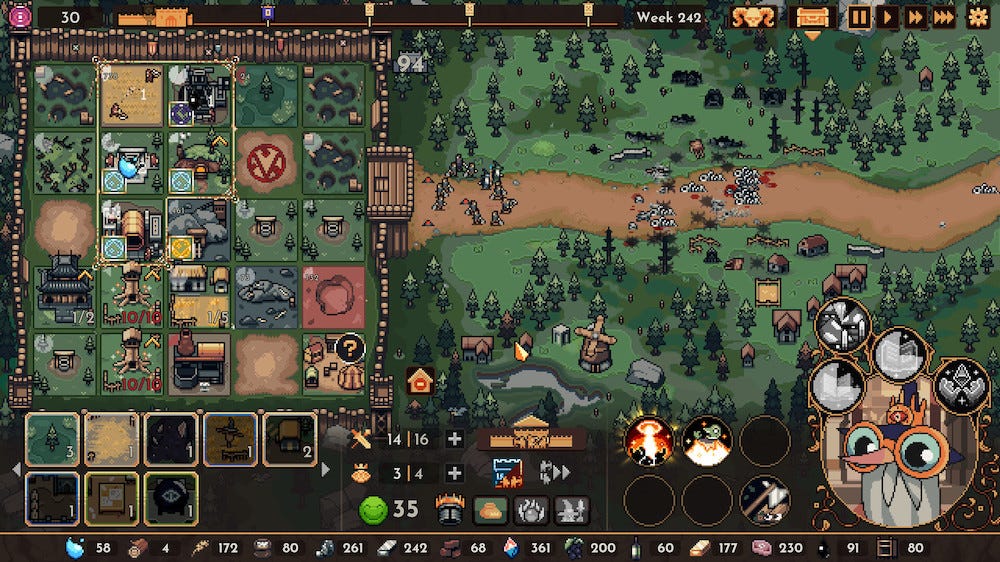
The success of the roguelike kingdom builder The King Is Watching serves as a primary case study for effective game development and marketing strategies in the 2020s. The title achieved over 200,000 sales within its first few weeks of release, driven by a combination of iterative development, a strong core gameplay hook, and a targeted international launch strategy. Originally a game jam concept, the project underwent significant pivots—including a shift from a deckbuilder to a roguelike and the injection of humor—to better align with player expectations.
Key factors in the game's commercial performance include the strategic use of a demo as a growth engine, which garnered over 500,000 downloads and provided critical feedback for onboarding and user experience. Furthermore, the publisher implemented a robust international strategy, particularly in China, where early localization of assets, dedicated influencer partnerships, and region-specific pricing contributed to the market accounting for 39% of total unit sales. The game also benefited from strategic bundling with other titles, which accounted for 20% of its total purchases.
Beyond this specific success, the industry landscape is shifting due to new platform policies, most notably Steam’s recent change to how user reviews are displayed. Steam now prioritizes language-specific reviews for games with over 2,000 total reviews, aiming to provide a more accurate sentiment reflection for regional audiences. While this change helps developers by separating localized feedback from global averages, it has sparked debate regarding how potential buyers weigh review counts and overall scores when making purchasing decisions. These developments highlight the increasing importance of regional data and iterative, player-focused development in modern game discovery.
Steam wishlists serve as a critical metric for game discovery, but their predictive value depends heavily on the nature of the engagement behind them. While total wishlist counts provide a baseline for visibility, recent momentum driven by "proven" playability—such as successful demos or established franchise history—offers a more reliable indicator of potential launch success. Games that rely solely on high-concept trailers without accessible gameplay face higher delivery risk, as audience skepticism can dampen conversion rates despite high initial interest.
Analysis of the top 33,000 unreleased Steam titles reveals that wishlist volume correlates strongly with platform ranking. To reach the top 1,000 unreleased games, a title generally requires over 44,000 wishlists, while the top 250 tier demands upwards of 191,000. Despite these thresholds, the market remains competitive, with approximately 50 to 75 games launching each month with more than 50,000 wishlists. These figures underscore that while wishlists are a primary KPI for developers, they must be contextualized against the specific risk profile of the game, ranging from low-risk, demo-backed titles to high-risk projects that have yet to demonstrate their core mechanics.
Beyond Steam, the broader industry landscape shows significant shifts in platform engagement and development strategies. Roblox continues to see massive growth, with top-earning experiences increasingly tied to viral trends and IP-driven content. Meanwhile, developers are navigating a challenging environment where discoverability and market saturation remain the primary obstacles to commercial success. As production costs and platform requirements evolve, the industry is increasingly prioritizing measurable, data-backed engagement over speculative hype.
The sci-fi colony simulator RimWorld continues to demonstrate significant commercial longevity, with its latest expansion, Odyssey, marking the most successful DLC launch in the franchise’s history. By analyzing performance metrics from Ludeon Studios, it is evident that the title has maintained strong momentum over a decade of development. Odyssey outperformed the previous expansion, Anomaly, by approximately 45,000 wishlists at launch and generated record-breaking revenue for the series within its first two weeks. Following the release, the game’s peak concurrent player count on Steam surged from 62,000 to nearly 100,000, cementing its position among the platform's most-played titles.
The success of the franchise is attributed to a consistent strategy of pairing high-value paid expansions with substantial free base-game updates, ensuring the core experience remains accessible while providing new content for dedicated players. Ludeon Studios emphasizes a design philosophy that avoids forcing purchases, instead focusing on systemic depth that integrates seamlessly with extensive user-generated content and mods. Marketing for Odyssey utilized a compressed, high-impact promotional timeline, supported by targeted international outreach and localized language support, which helped re-engage both active and lapsed players.
The analysis highlights broader industry trends, noting that RimWorld’s player base is globally distributed, with the United States and China serving as primary markets. Furthermore, the game’s sustained performance—characterized by high average playtimes and a shift toward more frequent, moderate discounting—illustrates the viability of long-term franchise building on PC. These findings underscore the effectiveness of maintaining a "fully systemic" game identity that encourages emergent storytelling, allowing the title to remain a top performer in the simulation genre years after its initial release.
July 2025 saw a relatively quiet period for new game releases on Steam, with only three titles surpassing $10 million in gross revenue compared to six in the previous month. The market was led by the Souls-like ARPG Wuchang: Fallen Feathers, which generated $19.1 million, and the early access survival title Grounded 2, which grossed nearly $16 million despite a day-one release on Game Pass. Killing Floor 3 also performed well initially, exceeding $10 million in gross revenue, though all three top-tier titles faced challenges regarding long-term player retention or expectation management.
Beyond the top three, smaller titles such as the Stronghold Crusader remaster, the space shooter Wildgate, and the roguelike The King Is Watching contributed to the month’s performance. On console platforms, EA Sports College Football 26 and Ready Or Not emerged as significant commercial successes, particularly in North America and the UK. Notably, Wuchang demonstrated strong cross-platform momentum, securing over 400,000 paid units on PlayStation 5.
The broader Steam landscape remained dominated by evergreen titles like Counter-Strike 2, which generated $150 million in July, and other established free-to-play games including PUBG and GTA V. The data also highlights the emergence of Marvel Rivals as a rare successful new free-to-play PC title and the Western viral growth of the previously Japan-centric Umamusume: Pretty Derby. These findings are based on proprietary sales and player engagement estimates, reflecting a market environment where subscription services like Game Pass and PlayStation Plus continue to influence player acquisition and monetization strategies across the industry.
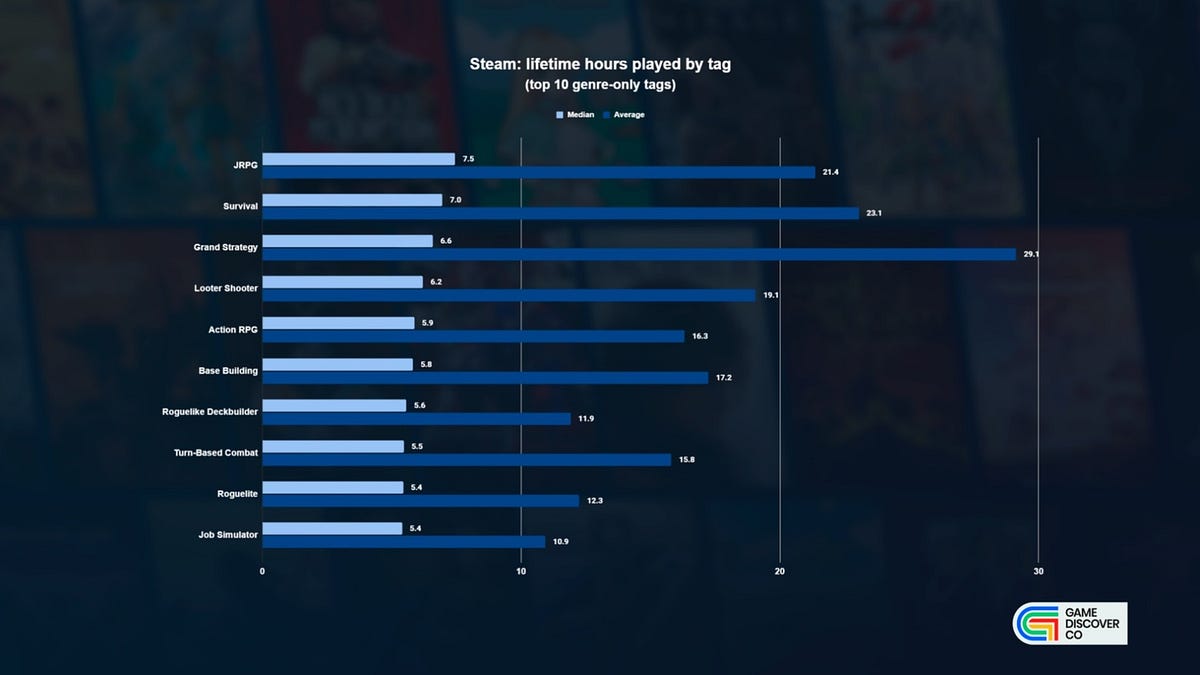
This analysis examines the relationship between video game genres and player engagement, specifically focusing on playtime metrics on the Steam platform. By utilizing anonymized, randomly sampled lifetime playtime data from public player profiles, the study identifies which genres command the highest levels of user investment. The methodology involves analyzing the top 250 most-played games within specific Steam tags, filtering for games where the genre tag is among the top eight most prominent for that title to ensure accurate categorization.
Key findings indicate that Japanese Role-Playing Games (JRPGs) lead in engagement, boasting a median playtime of 7.5 hours and an average of 21.4 hours. Other high-performing genres include Survival, Grand Strategy, Looter Shooters, and Action RPGs, all of which maintain median playtimes exceeding 5.4 hours. Conversely, genres with lower barriers to entry, such as Twin-Stick Shooters, often exhibit lower replayability, with median playtimes as low as 2.2 hours.
The data suggests a correlation between development complexity and playtime, as more resource-intensive genres like Grand Strategy frequently appear at the top of engagement rankings. While median playtime is not the sole indicator of a game's success or value, it serves as a critical metric for understanding player behavior and potential return on investment. Ultimately, the findings highlight that while certain genres naturally foster longer sessions, developers should view these trends as insights into market preferences rather than prescriptive rules for game design.
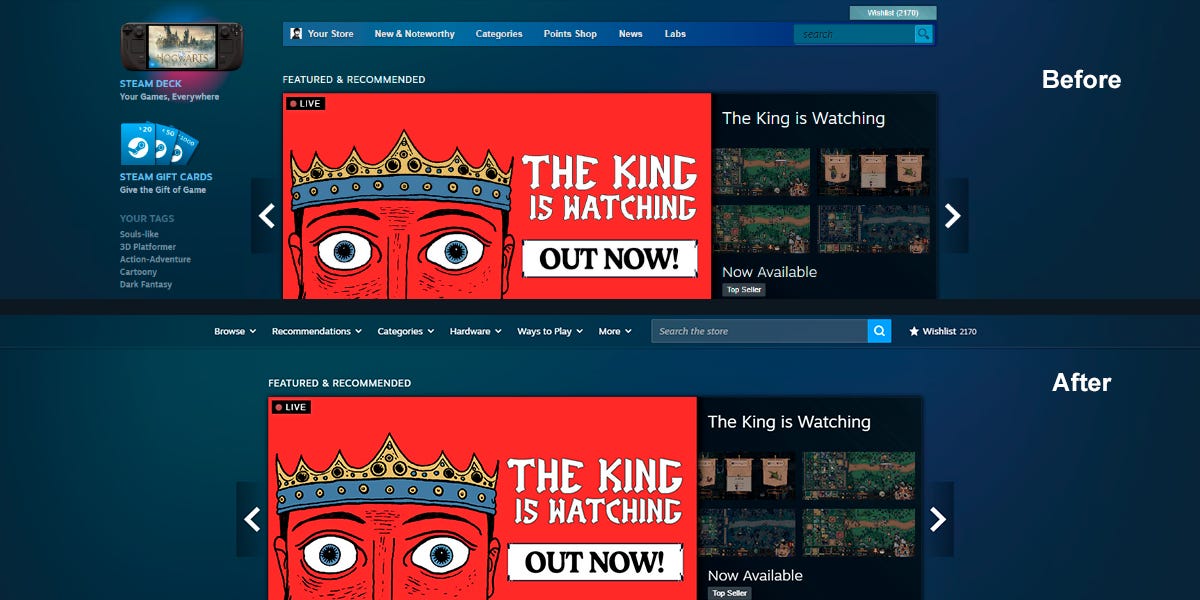
The July 2025 analysis of Steam’s store interface redesign highlights a strategic shift toward increased personalization and streamlined navigation. Valve has replaced the traditional blue sidebar with a more dynamic, user-centric menu system that emphasizes individual browsing habits. Key changes include the prioritization of "Top-Sellers," "Discounts," and "Events," while deprioritizing the Points Shop. The update also introduces a more prominent "Hardware" section, specifically tailored to the Steam Deck, and a "Ways to Play" tab that categorizes titles by accessibility features like controller support and co-op functionality.
The search interface has also been refined to include popular search trends and recently viewed items, alongside the ability to search for publishers and specific tags directly. While these interface adjustments aim to improve user experience and discovery, the analysis concludes that they do not fundamentally alter the requirement for developers to generate significant pre-launch momentum to achieve visibility on the platform. Instead, the changes are expected to amplify interest in specific genres and styles by surfacing content more effectively based on individual user data.
Beyond the interface update, the analysis examines the viral success of the indie title Mage Arena. Despite its low price point and "janky" technical state, the game achieved over 13,000 concurrent users by leveraging voice-chat mechanics that encourage social interaction. Data indicates a strong player overlap between Mage Arena and other voice-centric hits like Lethal Company, suggesting a growing market for novelty-driven, co-op experiences. However, the rapid rise of such titles also highlights ongoing challenges regarding content moderation and the liability of unmoderated voice chat in online gaming environments.
The video game industry faces a persistent challenge in accurately gauging market trends due to the cognitive bias of industry professionals who rely on outdated mental models. The core thesis posits that creators often mistake the historical forms of media—such as specific marketing channels or legacy genres—for the underlying functions that drive consumer interest. As generational shifts occur, the failure to recognize that modern players prioritize specific needs, such as social connection or specific gameplay loops, over traditional industry pedigree or development budgets leads to a disconnect between product design and market demand.
Industry data highlights this evolution through shifting nostalgia cycles and demographic changes. While many developers focus on remaking titles from the 1980s and 1990s, recent market performance indicates that "Flash-era" games from the 2000s and early 2010s are currently yielding stronger commercial results, as evidenced by the successful debut of remasters like Little Fighter 2. Furthermore, demographic analysis from Japan reveals that major console intellectual properties are aging alongside their fanbases, whereas mobile and competitive titles maintain significantly younger audiences. These findings suggest that relying on personal generational experience as a default for market strategy is increasingly ineffective.
The scope of this analysis encompasses global trends in game discovery, platform policy, and consumer behavior, with specific data points drawn from the Japanese market and broader Western industry developments as of July 2025. Key industry updates include the stabilization of premium game pricing at $69.99, the record-breaking launch of the Nintendo Switch 2, and the impact of AI-driven search summaries on website traffic. Ultimately, the industry must move toward an outside-in perspective, designing products that align with the actual media consumption habits and functional desires of contemporary, diverse player generations rather than clinging to legacy structures.