Gamecity Hamburg
Association402 documents
Documents
Article
Curvature Games Release The Amusement
Curvature Games, a studio based in Hamburg, has officially released its immersive narrative virtual reality adventure, The Amusement. The project, which was developed over several years by alumni of the Games Lift incubator program, is published by ARTE France. The game is currently available on both the Meta VR and Steam VR platforms.
The narrative centers on a protagonist named Samantha Burkhart, who explores an abandoned amusement park inspired by 1920s-era Luna Parks. As players navigate the environment, they uncover clues and solve puzzles while exploring the character's complex family history. The experience is designed to be highly immersive, utilizing proprietary Redirected Walking technology developed by the studio. This system maps real-world movement directly into the virtual environment, allowing players to explore the game’s world within a compact 2x2-meter space. In addition to walking, the game incorporates various locomotion mechanics, including climbing, swinging, and cart rides.
Founded in 2020, Curvature Games has evolved from a small team into a studio focused on producing diverse virtual experiences, games, and XR content. The release of The Amusement marks a significant milestone for the developer, highlighting the studio's commitment to advancing VR immersion through technical innovation and narrative-driven gameplay.
- Curvature Games has released its narrative VR adventure title, The Amusement, on both Meta VR and Steam VR platforms.
- The game utilizes proprietary Redirected Walking technology to allow full exploration of the virtual environment within a compact 2x2-meter physical space.
- Developed by Hamburg-based alumni of the Games Lift incubator, the project is published by ARTE France.
- The gameplay features a 1920s-inspired abandoned amusement park setting and incorporates mechanics such as climbing, swinging, and cart rides.
- Founded in 2020, Curvature Games focuses on producing narrative-driven virtual experiences and XR content.
+1
Gamecity Hamburg
Article
Apply for a Games Made in Hamburg Showcase at Portside Game Assembly Industry Party 2026
Gamecity Hamburg has issued a call for applications for the Games Made in Hamburg Showcase, a featured exhibition scheduled for the Portside Game Assembly Industry Party on June 26, 2026. The primary objective of this initiative is to provide local developers, studios, and teams with a platform to present playable versions of their projects to an international audience of industry professionals. By facilitating this exposure, the organization aims to foster networking opportunities and enable developers to gather critical feedback on their work.
Selected participants will be provided with a dedicated exhibition space on the MS Stubnitz from 7:30 pm to 10:30 pm. In addition to the showcase opportunity, chosen teams receive two complimentary entry tickets to the industry party and two drink vouchers per person. This event is part of the broader Portside Game Assembly, which takes place in Hamburg from June 25 to June 26, 2026, and serves as a hub for connecting local talent with the global indie games community.
Interested parties must submit their applications via the designated online portal by the deadline of May 22, 2026. This showcase is one of several ongoing efforts by Gamecity Hamburg to support the local games ecosystem, which includes various funding programs, incubator initiatives, and professional development events designed to strengthen the regional industry’s presence on both national and international stages.
- Gamecity Hamburg is accepting applications until May 22, 2026, for the Games Made in Hamburg Showcase.
- The showcase will take place on June 26, 2026, from 7:30 pm to 10:30 pm aboard the MS Stubnitz.
- Selected participants receive a dedicated exhibition space, two complimentary industry party tickets, and two drink vouchers per person.
- The event is part of the Portside Game Assembly, which runs in Hamburg from June 25 to June 26, 2026.
- The initiative aims to connect local developers and studios with an international audience of industry professionals for networking and project feedback.
Gamecity Hamburg
Article
Online Application Open for Kreativ-Transfer: Hamburg
The Kreativ-Transfer initiative provides financial support to independent game studios and developers based in Germany, facilitating their participation in key industry networking events and exhibitions. By subsidizing costs associated with travel, accommodation, accreditation, and exhibition space, the program aims to help smaller entities increase their market reach and connect with potential investors or publishers.
The funding covers up to 70 percent of eligible expenses, with a maximum grant of 1,000 to 2,000 euros per applicant. To qualify, studios must be independent, maintain headquarters within Germany, and employ no more than 20 permanent staff members. Furthermore, applicants must demonstrate a financial need, specifically that they are currently unable to independently fund their attendance at significant industry gatherings.
The initiative is funded by the German State Minister for Culture and Media and receives support from the game union of the German games industry. A jury evaluates all submissions to select participants, with the application process occurring online. The program has already demonstrated success in its initial phase, supporting 14 participants nationwide, including three studios based in Hamburg: Mooneye Studios, Bagpack Games, and Rose-Engine. This effort underscores a broader commitment to fostering growth and visibility for the German indie games sector.
- The Kreativ-Transfer initiative provides grants covering up to 70 percent of travel, accommodation, and exhibition costs for independent German game studios.
- Applicants can receive a maximum grant of 1,000 to 2,000 euros to attend industry events and networking opportunities.
- To qualify, studios must be based in Germany, employ no more than 20 permanent staff, and demonstrate an inability to fund attendance independently.
- The program is funded by the German State Minister for Culture and Media with support from the game union of the German games industry.
- A jury evaluates all online applications to select participants for the funding.
+1
Gamecity Hamburg
Article
Volunteer Work: Inspire Kids & Youth to Start Coding
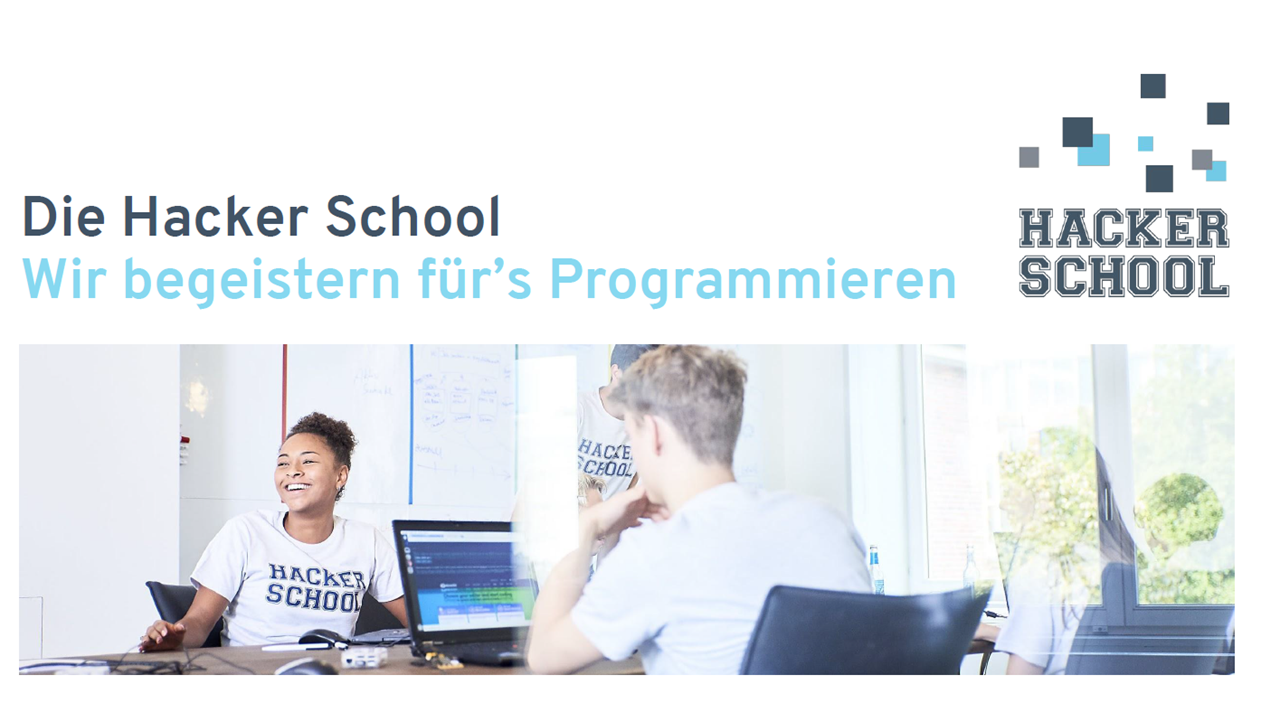
The Hacker School initiative in Hamburg aims to increase digital literacy among youth by providing accessible coding education. The organization’s core mission is to ensure that every student between the ages of 11 and 18 has the opportunity to learn the fundamentals of software development and computer science. To maintain inclusivity, the program offers courses at cost-price or through a pay-what-you-can model, removing financial barriers for participants.
The program relies on a volunteer-driven model, recruiting IT professionals to serve as coaches, known as "inspirers," who lead intensive two-day workshops. Beyond direct instruction, volunteers can contribute by developing educational materials for the curriculum. The initiative also encourages corporate involvement, inviting companies to provide physical space, technical equipment, and the flexibility for employees to participate in coaching during standard working hours. Several Hamburg-based games companies have already engaged in discussions to support these efforts.
This initiative operates within the broader Hamburg technology and gaming ecosystem, which is supported by regional organizations like Gamecity Hamburg. By bridging the gap between industry professionals and students, the program seeks to cultivate the next generation of digital talent. Interested parties, including individual developers and corporate partners, are encouraged to coordinate directly with the organization to facilitate volunteer placement and resource contributions.
- The Hacker School initiative provides coding education to students aged 11 to 18 through intensive two-day workshops.
- The program utilizes a volunteer-driven model where IT professionals, referred to as 'inspirers,' lead instruction and develop curriculum materials.
- To ensure inclusivity, the initiative operates on a cost-price or pay-what-you-can financial model to remove barriers for participants.
- Corporate partners are encouraged to support the program by providing physical space, technical equipment, and allowing employees to volunteer during working hours.
- Gamecity Hamburg and various local games companies are actively engaging with the initiative to help cultivate the next generation of digital talent within the region.
+1
Gamecity Hamburg
Article
Games Germany: Alle unter einem Dach
The establishment of Games Germany—Regional Funds and Networks serves as a strategic consolidation of the German games industry’s regional support infrastructure. By uniting six regional funding bodies and seven network institutions under a single umbrella organization, the initiative aims to professionalize the sector, increase the visibility of German game developers, and streamline international networking efforts. The model draws inspiration from Focus Germany, the established collective for regional film funding, to create a unified front for the industry.
The coalition comprises 13 key partners, including FFF Bayern, Film und Medienstiftung NRW, gamecity:Hamburg, and various other regional media and film societies. Together, these organizations provide comprehensive coverage across Germany, offering developers and studios centralized access to information regarding funding, production conditions, and publishing opportunities. By pooling resources, the collective intends to facilitate more efficient engagement with international markets in Europe, Asia, and the Americas.
The initiative officially launched its collaborative efforts at the Nordic Games conference in Malmö in May 2017, with a formal, broader introduction scheduled for the gamescom trade fair in Cologne later that year. This partnership represents a significant shift toward a more cohesive national strategy, designed to support the growth of the German games industry by integrating regional expertise into a singular, internationally recognized framework.
- Games Germany consolidates 13 regional partners—comprising six funding bodies and seven network institutions—under a single umbrella organization to unify the German games industry's support infrastructure.
- The initiative aims to professionalize the sector and streamline international market engagement across Europe, Asia, and the Americas by pooling regional resources.
- The coalition includes key regional entities such as FFF Bayern, Film und Medienstiftung NRW, and gamecity:Hamburg to provide developers with centralized access to funding and production information.
- The organizational model is explicitly based on Focus Germany, the existing collective framework used for regional film funding.
- The partnership launched its collaborative efforts at the Nordic Games conference in May 2017, with a formal introduction scheduled for gamescom in Cologne later that year.
Games Germany
Article
Fisch und Web: Gamecity Hamburg
Gamecity Hamburg serves as a central hub for the local games industry, focusing on enhancing the visibility and connectivity of the Hamburg-based gaming sector. The organization’s primary objective is to provide a comprehensive digital infrastructure that supports local developers, studios, and industry stakeholders through networking, event management, and information dissemination.
A key component of this initiative is the maintenance of a digital industry guide, which catalogs approximately 200 local companies. This directory allows for categorization by activity, providing a structured overview of the regional ecosystem. Beyond the directory, the organization facilitates industry growth by hosting and promoting a wide range of events, including meetups, professional workshops, and industry-specific gatherings. These efforts are designed to foster collaboration and provide a platform for both established companies and emerging talent to engage with the broader gaming community.
The scope of these activities is concentrated on the Hamburg region, acting as a bridge between local developers and international industry events. By providing resources such as prototype funding, incubator programs, and exhibition opportunities at major trade shows like Gamescom, the initiative actively supports the commercial and creative development of regional studios. The organization maintains a bilingual communication strategy, utilizing both German and English to ensure that its editorial content remains relevant to a diverse, international audience. Through these integrated services, the initiative functions as a vital support system for the sustainable development of the Hamburg games industry.
- Gamecity Hamburg supports the regional gaming sector by maintaining a digital directory of approximately 200 local companies categorized by their specific industry activities.
- The organization provides direct financial and professional support to local studios through prototype funding, incubator programs, and organized exhibition opportunities at major trade shows like Gamescom.
- A core function of the initiative is to act as a bridge between the Hamburg-based industry and the international market, utilizing a bilingual German and English communication strategy.
- The hub facilitates industry growth by hosting and managing a variety of professional events, including meetups, workshops, and industry-specific gatherings.
- The initiative serves as a central infrastructure for the Hamburg gaming ecosystem, focusing on enhancing visibility, connectivity, and collaboration for both established studios and emerging talent.
Gamecity Hamburg
Article
Elvenar Macht Mobil
In November 2017, the Hamburg-based game developer InnoGames expanded the reach of its fantasy city-building title, Elvenar, by launching mobile versions for iOS and Android. This release marked a significant milestone for the title, which had originally debuted as a browser-based game in 2015 and already boasted a global player base numbering in the millions.
The mobile iteration features full cross-platform functionality, allowing users to synchronize their existing browser accounts or create new ones across mobile devices. To ensure a seamless transition to handheld play, InnoGames optimized the user interface specifically for touchscreen interaction. Technical requirements for the mobile version were set at iOS 8 or higher and Android 4.4.4 or higher.
This strategic move underscored the continued growth of InnoGames, a prominent player in the German gaming sector with an annual revenue of 130 million euros at the time of the announcement. To celebrate the mobile launch, the company initiated a promotional campaign offering hardware prizes to its community. The release highlights the industry-wide trend of transitioning successful browser-based titles to mobile environments to capture broader audiences and enhance player retention through multi-device accessibility.
- In November 2017, InnoGames expanded its 2015 browser-based title Elvenar to iOS and Android to reach a wider audience.
- The mobile version features full cross-platform functionality, allowing players to synchronize existing browser accounts with mobile devices.
- InnoGames optimized the Elvenar user interface specifically for touchscreen interaction to facilitate the transition from browser to mobile play.
- At the time of the mobile launch, InnoGames reported an annual revenue of 130 million euros.
- The mobile release supports iOS 8 or higher and Android 4.4.4 or higher.
+1
Gamecity Hamburg
Article
Gastkommentar: Ist eSport Sport? Eine Analyse
The analysis explores the societal relevance of esports and its relationship with traditional organized sports, arguing that the formal classification of esports as a sport is secondary to its broader cultural and structural impact. The core thesis posits that sport is a dynamic, evolving concept shaped by societal shifts, and that esports shares significant structural and organizational parallels with traditional athletic competitions, including league structures, event staging, and the capacity for emotional engagement.
Key findings emphasize that esports functions similarly to traditional sports by fostering social bonds, providing a platform for brand communication, and offering participants experiences of competence and achievement. Furthermore, the analysis highlights observable transfer effects, such as the acquisition of tactical knowledge and the refinement of eye-hand coordination, which have relevance in both real-world sports and professional contexts. The integration of esports into the organized sports sector is presented as a strategic opportunity to promote responsible media usage among youth, particularly given the inherent risks associated with digital gaming.
The scope of this discussion is centered on the German sports landscape, specifically following a 2017 expert hearing held by the Hamburg Parliament regarding the integration of esports. By framing esports as a manifestation of competitive digital play, the analysis advocates for a pragmatic approach that acknowledges the convergence of digital gaming and traditional physical activity, ultimately suggesting that organized sports institutions have a responsibility to engage with this phenomenon rather than exclude it.
- The formal classification of esports as a sport is less significant than its structural and cultural parallels to traditional athletics, such as league organization and event staging.
- Esports functions as a legitimate platform for social bonding, brand communication, and the pursuit of individual competence, mirroring the core value propositions of traditional sports.
- Participation in esports provides measurable transfer effects, including the development of tactical knowledge and refined eye-hand coordination applicable in professional contexts.
- Organized sports institutions are encouraged to integrate esports to promote responsible media usage among youth and mitigate the inherent risks of digital gaming.
- The German sports sector is advised to adopt a pragmatic approach to esports, following the precedent set by the 2017 Hamburg Parliament expert hearing on the subject.
Gamecity Hamburg
Article
Großer Erfolg für Goodgame Studios
Goodgame Studios, a prominent game developer based in Hamburg, achieved a significant commercial milestone in November 2017 with the launch of its mobile title, Big Farm: Mobile Harvest. The game’s release marked a successful turnaround for the company, recording its strongest launch performance to date. Within the first three weeks of global availability, the farming simulation game surpassed two million installations across 234 countries.
The studio reported that the title achieved record-breaking levels of both player engagement and monetization activity. The game’s design, which emphasizes cooperative mechanics and community interaction, was identified as a primary driver for its rapid adoption and sustained user interest. Management noted that the positive reception of this project provided the necessary momentum to support the studio's ongoing development pipeline.
Looking ahead, the company confirmed plans to expand its portfolio with the release of a more complex strategy title, Empire: Millennium Wars, scheduled for early 2018. The studio’s leadership expressed confidence in maintaining this growth trajectory, citing the team's ability to meet development timelines and the successful market performance of its recent mobile offerings as indicators of a stable and productive future for the organization.
- Goodgame Studios' mobile title Big Farm: Mobile Harvest surpassed two million installations across 234 countries within its first three weeks of release in November 2017.
- Big Farm: Mobile Harvest recorded the strongest launch performance in the company's history, achieving record levels of player engagement and monetization.
- The game’s success was primarily driven by design elements that prioritize cooperative mechanics and community interaction.
- The strong market performance of Big Farm: Mobile Harvest provided the financial and operational momentum required to support the studio's ongoing development pipeline.
- Goodgame Studios plans to expand its portfolio in early 2018 with the release of a more complex strategy title, Empire: Millennium Wars.
+1
Gamecity Hamburg
Article
Das bringt das neue Exozet Lab Hamburg
The establishment of Exozet Lab Hamburg represents a strategic expansion of the Berlin-based digital agency Exozet into the Hamburg market, formed in partnership with the local agency Pop Rockets. The primary objective of this new facility is to accelerate digital transformation for clients across diverse sectors, including automotive, media, and environmental services. By leveraging specialized methodologies such as design sprints and creative prototyping, the lab aims to compress traditional development timelines, enabling the creation and testing of functional prototypes within a single week.
The core thesis of the initiative centers on the necessity of speed and co-creation in an increasingly competitive digital landscape. The lab utilizes a collaborative model that integrates client-specific market knowledge with Exozet’s two decades of digital expertise. This approach facilitates the rapid development of Minimal Viable Products (MVPs) and relies on close operational synergy with the agency’s existing team of over 150 professionals in Berlin.
The Hamburg team is composed of veterans from the local games industry, whose background in gaming technology serves as a foundational advantage for solving complex digital challenges. While the lab is a newly formed entity, it maintains a growth-oriented strategy for 2018 and actively engages with the local Hamburg games community to augment its project teams. Early successes include the development of multisensoric virtual reality experiences and mobile applications, demonstrating the practical application of their rapid-development framework.
- Exozet has expanded into the Hamburg market through a partnership with Pop Rockets to establish Exozet Lab Hamburg, aimed at accelerating digital transformation for automotive, media, and environmental clients.
- The lab utilizes design sprints and creative prototyping to compress development timelines, enabling the creation and testing of functional prototypes within a single week.
- The facility leverages the expertise of over 150 professionals from Exozet’s Berlin headquarters to facilitate the rapid development of Minimal Viable Products (MVPs).
- The Hamburg team is composed of local games industry veterans, utilizing their specialized background in gaming technology to solve complex digital challenges.
- Early project successes for the lab include the development of mobile applications and multisensoric virtual reality experiences.
Gamecity Hamburg
Article
Neue Gesichter bei Daedelic: Germany
In November 2017, the Hamburg-based game developer Daedalic Entertainment announced a strategic expansion of its communications department to bolster its international market presence. The company established a dedicated five-person team tasked with managing global marketing, public relations, community management, and social media operations. This organizational shift reflects a broader corporate initiative to increase the visibility of the studio’s game portfolio on a global scale.
The newly formed department is led by Tim Krause-Murroni, who serves as the Director of Communications and reports directly to CEO Carsten Fichtelmann. The team includes Sandra Hübner as Head of PR, responsible for global public relations and influencer relations, and Lisa Mallory, who oversees the strategic development of social media channels. Marketing assistants Marie Müller and Mounir Aouina provide additional support across all marketing-related functions.
This restructuring serves as a direct response to the evolving challenges within the international video game industry. By centralizing these core communication functions, the studio aims to leverage specialized expertise to drive sustainable growth and enhance the international recognition of its titles. The move underscores the company's commitment to professionalizing its outreach efforts to remain competitive in an increasingly globalized gaming market.
- In November 2017, Hamburg-based Daedalic Entertainment established a new five-person communications department to expand its international market presence.
- The department is led by Director of Communications Tim Krause-Murroni, who reports directly to CEO Carsten Fichtelmann.
- The team includes Sandra Hübner as Head of PR, Lisa Mallory overseeing social media, and marketing assistants Marie Müller and Mounir Aouina.
- The restructuring centralizes global marketing, public relations, community management, and social media operations under one dedicated unit.
- This organizational shift is a strategic initiative designed to increase the global visibility of Daedalic Entertainment’s game portfolio.
+2
Gamecity Hamburg
Article
Gaia Beyond: Riesenspiel mit winzigem Team
The development of the space-themed title Gaia Beyond serves as a case study for the viability of small-scale, distributed game production. The project, which began in early 2011, is managed by a three-person team split between Hamburg and Bonn. By leveraging digital communication tools and maintaining a foundation of mutual trust, the developers have successfully navigated the challenges of remote collaboration to build a complex, open-world experience.
The game is designed as a non-linear, narrative-driven adventure that incorporates role-playing elements and open-world mechanics. Drawing inspiration from genre classics like Freelancer and the X-series, the title tasks players with navigating a space environment, managing faction relations, and engaging in combat. The developers emphasize that the game is intended for a broad audience, ranging from genre veterans to younger players, though it requires significant player engagement with its complex, branching storyline.
The project reached a significant milestone with its scheduled transition to Steam Early Access in 2018, with a full version 1.0 release planned for the end of that year. This development model highlights how lean, geographically dispersed teams can produce ambitious, content-heavy games through disciplined task allocation and long-term commitment. The project underscores the importance of player patience and active participation in navigating the game's intricate narrative structure.
- Gaia Beyond demonstrates that a three-person team can successfully develop a complex, open-world space game through remote, distributed collaboration.
- The project, which began development in 2011, utilizes a non-linear, narrative-driven structure inspired by genre staples like Freelancer and the X-series.
- The development team operates across two locations, Hamburg and Bonn, relying on digital communication tools and mutual trust to manage production.
- The game entered Steam Early Access in 2018, with a full version 1.0 release targeted for the end of that same year.
- The title is designed for a broad demographic, requiring significant player engagement to navigate its branching storyline and faction-management mechanics.
+2
Gamecity Hamburg