The January 2024 edition of the Game Maker’s Toolkit reading list serves as a curated resource for game developers and enthusiasts, focusing on critical analysis of contemporary and historical game design. The primary objective is to provide high-quality, educational content that explores the mechanics, narrative techniques, and industry philosophies shaping the medium. By aggregating diverse media—including articles, interviews, and video essays—the collection aims to foster a deeper understanding of how specific design choices impact player experience and industry evolution.
The selection highlights several key areas of interest within the gaming landscape. Notable topics include the evolution of genre-specific mechanics, such as the implementation of memory shards in modern Metroidvanias to mitigate backtracking fatigue, and the integration of narrative depth into romance systems within large-scale RPGs like Baldur’s Gate 3. Furthermore, the list examines the intersection of technical features and player agency, specifically through an analysis of the origins and utility of the VATS system in the Fallout franchise. It also addresses the broader creative philosophies of industry veterans, such as Shigeru Miyamoto’s approach to innovation and the use of difficulty spikes as a deliberate storytelling device.
This collection covers a broad spectrum of the industry, ranging from AAA production design to the foundational principles of game creation. While the scope is global in its reach, the content is specifically tailored for an audience interested in the craft of game development. By synthesizing insights from various external sources, the list functions as a professional development tool, emphasizing the importance of iterative design and the historical context of game mechanics in the ongoing advancement of interactive entertainment.
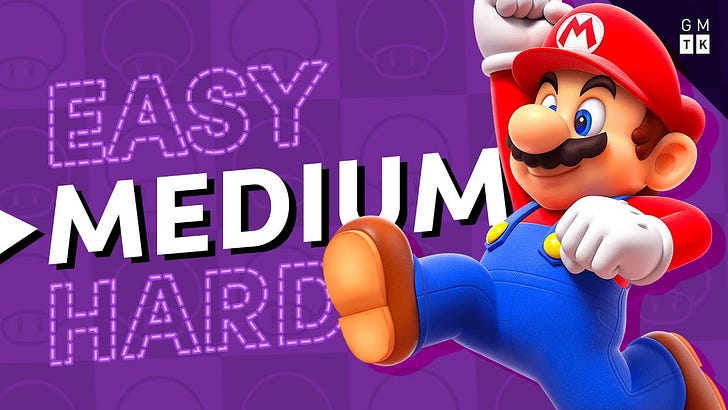
Nintendo maintains broad accessibility across its flagship platforming titles by eschewing traditional difficulty selection screens in favor of an integrated, invisible difficulty architecture. This design philosophy centers on a tiered level structure that provides a mandatory critical path for progression while simultaneously offering optional, more challenging routes and secret objectives. By embedding these choices directly into the environment, the games allow players to self-regulate their experience in real time, effectively catering to both novice players and seasoned veterans within the same interactive space.
The system functions as a fluid, interconnected network that permits players to opt into or out of heightened challenges based on their comfort level. Safety nets, such as assist modes and character-specific abilities, provide a buffer for those struggling with complex mechanics, while high-difficulty stages and post-game content offer significant depth for those seeking mastery. This approach prioritizes player agency, ensuring that the sense of accomplishment derived from overcoming obstacles remains intact regardless of the individual’s skill level.
This design strategy effectively eliminates the friction often associated with static difficulty settings, which can inadvertently alienate players by forcing them to commit to a level of challenge that may not match their evolving proficiency. By prioritizing intuitive, environmental cues over explicit menus, these games foster a more inclusive experience that scales naturally with the player. Ultimately, this methodology demonstrates that sophisticated difficulty management is best achieved through subtle, structural design choices that empower the user to define their own engagement with the game’s mechanics.
The December 2023 edition of the Game Maker’s Toolkit reading list serves as a curated digest of significant discourse within the video game industry. The primary purpose of this collection is to highlight high-quality long-form writing and video essays that explore the intersection of game design, development history, and cultural trends. By aggregating these perspectives, the list provides a snapshot of the critical conversations shaping the medium at the close of the year.
The selection covers a diverse range of industry segments, including indie horror successes, AAA franchise evolution, and niche design philosophies. Key topics featured include the rapid market ascent of Lethal Company, driven by innovative proximity chat and sound design; the architectural nuances of labyrinthine level design; and the ongoing evolution of the Doom series over its thirty-year history. Additionally, the list highlights critical analysis of contemporary titles such as Lies of P and provides insight into the creative processes behind major releases like The Legend of Zelda: Tears of the Kingdom.
The content reflects a broad analytical scope, ranging from technical design critiques to industry interviews. By focusing on both established developers and emerging indie phenomena, the collection captures the varied ways in which games communicate with players and adapt to shifting market expectations. This curation emphasizes the importance of critical reflection in understanding the vitality and technical progression of modern game development.
The provided text serves as a personal retrospective on the gaming landscape of 2023, specifically highlighting the Resident Evil 4 Remake as a standout title. The primary thesis posits that successful remakes distinguish themselves by reimagining core mechanics rather than merely replicating original content. By introducing significant gameplay adjustments—such as allowing player movement while aiming—the developers maintained the original’s tense, challenging atmosphere through recalibrated enemy behavior and pacing.
The analysis emphasizes the importance of balancing nostalgia with innovation. The author notes that while some content was excised from the base game, its subsequent inclusion in the Separate Ways downloadable content provided a more logical narrative fit for the secondary protagonist. This approach is presented as a successful model for modernizing classic titles without compromising their fundamental spirit.
The scope of this commentary is limited to the author’s subjective experience within the 2023 release calendar. It does not claim to be an exhaustive industry survey or a comprehensive review of the year’s most popular titles, explicitly acknowledging the omission of major releases like Baldur’s Gate 3. The methodology relies entirely on qualitative personal assessment rather than quantitative data or broad market research. Consequently, the findings offer a focused, professional perspective on design philosophy and the evolution of action-adventure titles within the current gaming industry.
The November 2023 industry overview serves as a curated digest of critical discourse surrounding game design, historical preservation, and the current labor climate within the interactive entertainment sector. The primary thesis posits that while 2023 has been a year of significant creative output, the industry faces an existential crisis driven by widespread layoffs and unsustainable operational models. This tension between high-quality game development and the precarious nature of employment forms the central narrative of the period.
Key thematic findings focus on the evolution of game design and the necessity for standardized industry practices. Discussions highlight the enduring influence of foundational titles like Far Cry 2 and the innovative mechanics of Slay the Spire, which are credited with revitalizing the digital card game genre. Furthermore, the analysis emphasizes a growing call for universal accessibility guidelines, noting that while frameworks exist, their lack of widespread adoption remains a significant barrier to inclusive design. The content also underscores the importance of historical context in game development, advocating for documentation that captures the "who" and "why" behind classic titles rather than just the final product.
The scope of this analysis is global, reflecting on trends within the broader video game industry throughout late 2023. By synthesizing various perspectives from developers, journalists, and academics, the summary provides a snapshot of an industry at a crossroads. It highlights the contrast between the technical achievements of individual designers—such as the mechanics behind Jetpack Joyride—and the systemic instability currently affecting the workforce. The methodology relies on a qualitative aggregation of expert commentary and industry reporting to identify the most pressing challenges and design milestones of the era.
The October 2023 edition of the Game Maker’s Toolkit reading list serves as a curated digest of critical discourse surrounding major video game releases from that period. The primary objective is to synthesize professional perspectives on high-profile titles, specifically Spider-Man 2, Assassin’s Creed Mirage, and Super Mario Wonder, while providing a broader context for contemporary game design and development trends.
The collection highlights a dichotomy in industry reception. Regarding Spider-Man 2, analysis focuses on Insomniac Games' ability to successfully adapt the franchise for an interactive medium, with some critics noting a prioritization of style over substance that nonetheless resonates with a global audience. Conversely, the discourse surrounding Assassin’s Creed Mirage centers on the tension between nostalgia and innovation. Critics argue that the title’s attempt to return to the series' roots results in a regressive experience that fails to integrate modern stealth design advancements, ultimately questioning the value of looking backward rather than leaping forward in mechanical evolution.
This summary covers the global gaming landscape as of October 2023, focusing on AAA console titles. The methodology relies on aggregating expert reviews and analytical articles from prominent industry outlets, including The Hollywood Reporter, Destructoid, Remap Radio, and IGN. By gathering these diverse viewpoints, the list provides a snapshot of the critical consensus regarding how major studios balance established intellectual property expectations with the necessity for mechanical iteration in the current gaming market.
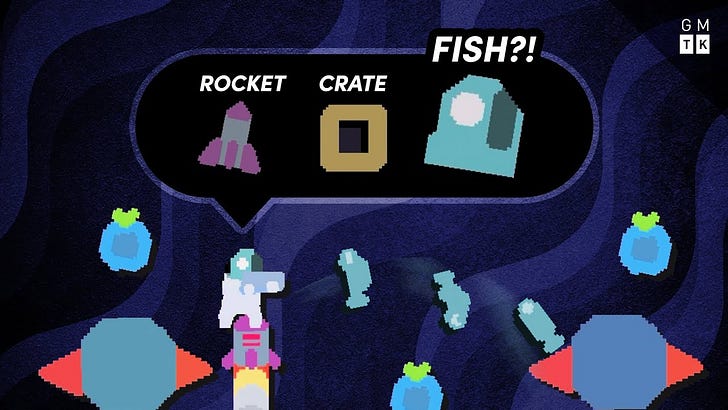
The indie puzzle platformer Mosa Lina serves as a case study in emergent gameplay design, specifically highlighting how the integration of randomized mechanics can subvert traditional puzzle-solving conventions. Unlike conventional titles that rely on fixed, developer-intended solutions, Mosa Lina assigns players a rotating set of tools for each level. This design choice removes the guarantee of a specific path to victory, forcing players to engage in creative, physics-based problem-solving to navigate obstacles.
The game functions as a commentary on the immersive sim genre, contrasting its own open-ended, chaotic nature with more rigid, modern titles where abilities often serve as simple keys for specific locks. By utilizing a robust physics engine—where objects like tentacles and platforms interact dynamically—the game allows for a vast, nearly infinite range of player actions. The core loop involves a pool of approximately 20 items, from which nine are randomly selected per run, encouraging repeated play to discover unique synergies and strategies.
This approach prioritizes player agency and emergent storytelling over structured progression. While the lack of a traditional narrative or guaranteed solution may alienate players seeking a more curated experience, the game successfully demonstrates the potential for randomness to foster high levels of player creativity. By embracing unpredictability, Mosa Lina positions itself as an experimental alternative to hand-crafted puzzle games, proving that design constraints can be effectively replaced by systems that empower the player to become the primary architect of their own solutions.
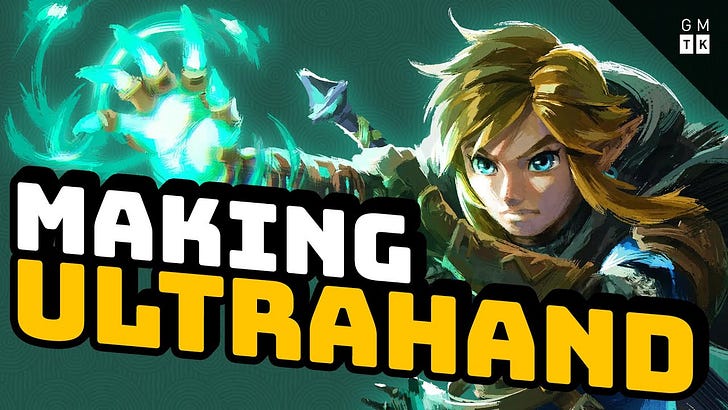
The development of the Ultrahand mechanic in The Legend of Zelda: Tears of the Kingdom represents a strategic shift toward player-driven agency and open-ended problem solving. Conceived by director Hidemaro Fujibayashi following the completion of Breath of the Wild, the feature was designed to allow players to construct complex machines using a simplified, intuitive interface. The project was validated through early prototypes built within the existing game engine and inspired by observed player behavior, ultimately receiving approval from leadership figures Eiji Aonuma and Shigeru Miyamoto.
The design philosophy prioritized accessibility, aiming to emulate the ease of building with physical toys like Lego rather than complex professional software. To achieve this, developers implemented several streamlining measures, such as replacing fine-tuned rotation with 45-degree increments and utilizing snap-to-point mechanics. Furthermore, the team limited the variety of Zonai devices to prevent decision paralysis and modeled these tools after familiar household objects to ensure intuitive usage. Visual cues, such as the prominent glue used to connect components, were retained to provide immediate feedback on structural integrity despite initial aesthetic concerns.
Beyond technical simplicity, the mechanic was engineered to evoke specific player emotions, including creativity, humor, and a sense of empowerment. By moving away from traditional, single-solution puzzle design, the developers fostered an environment where players could experiment with unconventional, "cheating" solutions. While the team had to implement balance adjustments to prevent game-breaking exploits like infinite-motion machines, the final implementation successfully balances technical stability with the freedom to explore, resulting in a highly versatile toolset that encourages diverse playstyles and emergent gameplay.
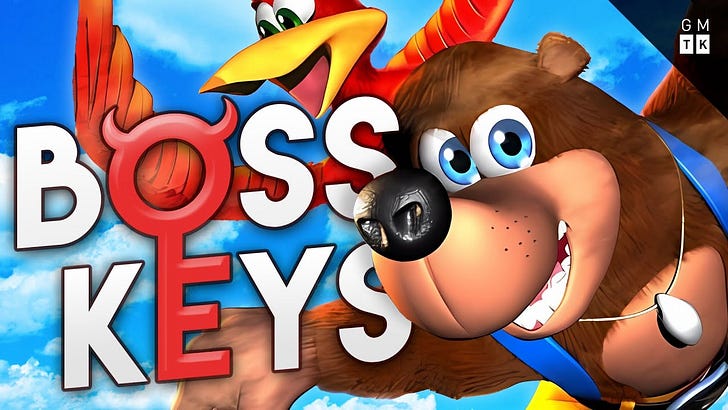
The evolution of world design within the Banjo-Kazooie franchise illustrates a fundamental tension between architectural ambition and player accessibility. While the original title utilizes a series of compact, standalone levels characterized by intuitive navigation and focused puzzle-solving, the sequel pivots toward a sprawling, interconnected structure. This shift aims to create a more immersive and unified environment, drawing inspiration from non-linear design philosophies that reward exploration and long-term retention of spatial information.
The transition to this complex, Metroidvania-style layout introduces significant friction in the user experience. The sequel relies heavily on extensive backtracking and mandatory character-specific transformations to gate progress, which frequently complicates navigation. Although these mechanics succeed in building a more cohesive world, the lack of clear communication and the burden of tedious character-swapping often overwhelm the player. Consequently, the increased scale and maze-like complexity of the interconnected environments frequently impede the flow of gameplay rather than enhancing it.
Ultimately, the design philosophy of the original game remains the superior model for accessibility and engagement. By prioritizing focused, self-contained objectives, the first entry achieves a level of clarity that the sequel sacrifices in its pursuit of greater depth. The attempt to expand the scope of the world across every axis results in a diminished experience, suggesting that the most effective world design balances environmental ambition with the necessity of intuitive guidance. The franchise serves as a case study in how excessive complexity can inadvertently undermine the core appeal of a platforming experience.
The September 2023 industry digest serves as a curated collection of critical discourse surrounding major developments in the video game landscape. The primary focus centers on the release of Bethesda’s Starfield, utilizing a series of articles and video essays to evaluate the title’s design limitations, specifically regarding its restrictive introductory sequences, the perceived safety of its space exploration mechanics, and the broader implications for the future of the open-world RPG genre.
The analysis highlights a growing tension between traditional Bethesda design philosophies and modern player expectations for sandbox freedom. Key findings suggest that while Starfield adheres to established genre conventions, it fails to capture the inherent danger of space exploration or the player-driven desire to manipulate and break the game’s internal logic. By aggregating expert critiques, the collection underscores a critical industry sentiment that the current iteration of the Bethesda formula may be reaching a point of stagnation, necessitating a shift in how developers approach player agency and world-building.
The scope of this review is limited to the global gaming industry during September 2023, with a specific emphasis on high-profile AAA releases and significant corporate news, such as the controversy surrounding Unity’s business practices and Nintendo’s release strategy. The methodology relies on a qualitative synthesis of professional journalism and technical video analysis, providing a snapshot of the prevailing critical consensus during a period of intense industry activity. By examining these specific touchpoints, the summary illustrates a broader industry trend where technical polish and scale are increasingly weighed against the necessity for innovative, emergent gameplay experiences.
Chants of Sennaar is a point-and-click adventure game that centers on the innovative mechanic of deciphering fictional languages. The game tasks players with exploring a massive, tower-like environment where they must decode cryptic glyphs and symbols to progress. By observing context clues, such as recurring symbols in greetings or shop signage, players build a vocabulary database. The game features a built-in interface that allows users to log their guesses, which are later validated through a notebook system that requires players to correctly associate symbols with visual representations, effectively preventing the use of brute-force guessing.
The game’s design is structured around distinct levels, each featuring a unique language, which prevents the experience from becoming overwhelming and allows for varied linguistic puzzles. While the game occasionally incorporates secondary mechanics like stealth or sliding block puzzles, its primary strength lies in its core translation loop. The title is noted for its accessibility, offering a manageable completion time of approximately six to seven hours, making it an ideal experience for short-term play.
Released on major platforms including PC, Switch, Xbox, and PlayStation, the game stands out within the puzzle genre for its focus on deduction and player intuition. Although the fictional languages are intentionally simplified—with each population utilizing roughly 30 words—the design successfully creates a satisfying sense of discovery. By prioritizing the feeling of intellectual accomplishment over the creation of a linguistically rigorous system, the game provides a compelling and approachable experience for players interested in logic-based exploration.
Effective 2D camera design requires moving beyond simple character-pinning to create a dynamic, responsive viewing experience that prioritizes player visibility and game feel. The primary thesis is that a well-designed camera must anticipate player needs by balancing focus, movement, and visual feedback, rather than merely tracking the protagonist at the center of the screen.
Key strategies for optimizing 2D cameras include implementing lookahead features, which shift the camera’s focus toward the direction of travel or the player's cursor to reveal upcoming obstacles. Managing vertical movement is equally critical; developers can prevent motion-induced discomfort by ignoring minor jumps or designing levels with fixed vertical constraints. Furthermore, applying damping—the use of easing to smooth camera transitions—prevents erratic, jittery movement, while the strategic use of dead zones allows for more natural character movement within the frame.
Beyond basic tracking, cameras serve as a tool for narrative and mechanical emphasis. Techniques such as dynamic zooming, framing multiple points of interest, and restricting camera boundaries help guide player attention toward essential gameplay elements. Finally, adding visual "juice"—such as screen shake or hit-stop effects—can significantly heighten the impact of player actions. While these techniques are widely applicable across various 2D genres, the optimal camera configuration remains highly dependent on the specific pacing and design goals of the individual game. There is no universal solution, but by treating camera axes independently and prioritizing what the player needs to see, developers can create a more polished and intuitive experience.