The October 2025 edition of the Game Maker’s Toolkit Digest marks a strategic shift in editorial focus, moving away from standard industry news and new release announcements toward curated analysis and critical commentary. The primary objective is to provide deeper value to readers by highlighting long-form articles and video essays that explore the design, development, and cultural reception of major titles, rather than simply reporting on industry headlines or corporate developments.
The content reflects a growing industry fatigue regarding traditional news cycles, which are often dominated by reports of layoffs, corporate consolidation, and economic instability. By pivoting to thematic analysis, the digest addresses current trends in major releases, such as the prevalence of revenge-based narratives in high-budget PlayStation titles and the evolving design philosophies of open-world games. Specific examples include technical deep dives into the development of Ghost of Yōtei, critiques of environmental destruction mechanics in modern shooters, and discussions on the effectiveness of smaller, constrained map designs in titles like Pokémon Legends: Z-A.
This editorial approach prioritizes qualitative insight over quantitative industry reporting. By curating external perspectives on game design and cultural impact, the digest aims to foster a more meaningful engagement with the medium. This transition reflects a broader desire to move beyond the surface-level cycle of new releases and toward a more reflective, analytical discourse on the state of game development.
Dynamic destruction in video games is a complex technical challenge that requires developers to balance realistic physics with performance constraints. Rather than relying on pre-canned animations, modern game design increasingly utilizes real-time, procedural techniques to simulate the breaking, bending, and collapsing of environments. These systems are essential for enhancing player agency, allowing for emergent gameplay such as creating new paths, altering lines of sight, or manipulating the environment to gain tactical advantages.
The industry employs several ingenious methods to achieve these effects without exceeding memory budgets. Common approaches include swapping intact assets for pre-modeled broken versions, as seen in Control and Battlefield: Bad Company 2, or utilizing real-time mesh slicing to divide objects upon impact, a technique utilized in Astro Bot and Rainbow Six: Siege. More advanced simulations include soft-body physics, which allow for realistic vehicle deformation through node-and-beam networks in titles like BeamNG.drive, and grid-based fire propagation systems that calculate damage across invisible cells, as demonstrated in Far Cry 2.
Voxel-based systems, such as those in Teardown, offer high-fidelity, free-form destruction by treating environments as clusters of individual blocks that can be independently removed or converted into physics objects. Furthermore, structural analysis systems—most notably pioneered by Red Faction: Guerrilla—calculate stress across building layers to determine exactly when a structure should collapse. While these techniques provide significant immersion and replayability, they present substantial challenges for level design, as they often disrupt the intended flow of a game. Ultimately, successful implementation of destruction requires that these systems serve specific design goals rather than existing merely as technical spectacles.
The September 2025 edition of the Game Maker’s Toolkit digest serves as a curated industry update, focusing on significant software releases and critical analysis within the gaming sector. The primary purpose of the publication is to provide professional commentary on high-profile titles while offering a broader reading list for industry enthusiasts and developers. The content reflects the post-summer surge in market activity, highlighting a mix of major blockbuster launches and notable indie projects.
The analysis centers on two specific titles: Hollow Knight: Silksong and LEGO Voyagers. Hollow Knight: Silksong is identified as a major industry milestone, characterized by its dense, expansive world design and challenging, precise gameplay mechanics that encourage player experimentation. In contrast, LEGO Voyagers is evaluated as a less successful co-op experience, with the critique focusing on repetitive puzzle design and cumbersome construction mechanics that detract from the overall user experience.
The scope of the digest is global, covering the release landscape as of September 2025. The methodology relies on qualitative, first-hand experiential analysis, with the author documenting personal playthroughs to assess game design, difficulty curves, and mechanical execution. By contrasting the critical reception of a highly anticipated Metroidvania against a lackluster puzzle title, the digest provides a snapshot of current trends in game design quality and player engagement. The publication serves as a bridge between industry news and deep-dive critical review, emphasizing the importance of mechanical polish and world-building in modern game development.
The design of game difficulty serves as a critical tool for shaping player experience, balancing the desire for challenge with the risk of player alienation. High difficulty is primarily employed to heighten the sense of satisfaction upon overcoming obstacles, align gameplay with narrative themes of struggle or decay, and enforce specific, intentional playstyles that prevent repetitive or suboptimal strategies. When executed effectively, difficulty fosters a sense of fair progression where players can identify their mistakes and measure their improvement.
However, difficulty becomes counterproductive when it relies on unfair mechanics, such as unpredictable enemy patterns, excessive backtracking, or resource scarcity that forces tedious farming. These elements often transform a rewarding challenge into a source of frustration, leading to player attrition. While some titles successfully integrate difficulty as a core design pillar, the absence of accessibility options or adjustable difficulty modes can limit a game's reach, potentially barring players from experiencing non-combat elements like exploration and narrative.
Designers can mitigate these issues by providing non-linear progression paths, allowing players to circumvent bottlenecks by exploring other areas, acquiring new abilities, or gathering resources before returning to a challenge. By viewing difficulty not as a monolithic setting but as a diverse set of tools, developers can create experiences that remain engaging without becoming insurmountable. Ultimately, the most successful implementations of high difficulty maintain a delicate balance, ensuring that the player remains in a state of productive challenge rather than succumbing to discouragement.
The August 2025 edition of the Game Maker's Toolkit Digest provides a curated overview of notable video game releases, highlighting a mix of high-budget remakes, sequels, and innovative indie titles. The primary purpose of the digest is to inform industry followers and enthusiasts about current market trends and significant software launches, reflecting the ongoing evolution of both AAA and independent game development.
The report identifies several key titles shaping the late-summer release landscape. Major industry entries include Metal Gear Solid Delta: Snake Eater, noted for its faithful adherence to the original source material, and Mafia: The Old Country, which marks a shift toward linear narrative structures reminiscent of earlier generation shooters. Additionally, the digest highlights Nintendo’s experimental tech demo, Drag x Drive, which serves as a showcase for the Switch 2 hardware but has faced criticism for imprecise control mechanics.
In the independent sector, the digest spotlights Sword of the Sea, an atmospheric movement-based adventure, and Öoo, a puzzle-oriented Metroidvania platformer. These selections emphasize a continued industry interest in atmospheric design and mechanical innovation. By categorizing these releases into blockbuster and smaller-scale projects, the digest illustrates the diverse range of experiences currently available to consumers, spanning from established franchise revivals to experimental indie design concepts. The content serves as a snapshot of the gaming industry's output as of August 2025, focusing on critical reception and design philosophy.
The ninth annual GMTK Game Jam, held in August 2025, serves as a significant case study in community-driven game development. The event challenged participants to create a functional game within a four-day timeframe based on the singular theme of "loop." The jam achieved record-breaking participation for the itch.io platform, drawing over 37,000 entrants who produced more than 9,600 unique titles.
The primary purpose of the event is to foster creativity and skill development within the independent game design community. Rather than relying on a single judge to determine winners, the process emphasizes community-led ranking and peer review, reflecting the massive scale of the submissions. The featured games demonstrate a wide range of interpretations of the "loop" theme, spanning genres such as puzzle-platformers, rhythm-based combat, and logic-heavy simulations. Notable entries highlighted for their design ingenuity include titles that integrate time-travel mechanics, rhythmic movement, and complex spatial reasoning.
The event underscores a trend toward high-quality, polished output within short-term development constraints. Many of the standout projects successfully combined technical mechanics with distinct visual styles, effectively demonstrating how rigid constraints can drive innovative design solutions. The success of the 2025 iteration, which saw no reliance on AI-generated content, highlights the continued vitality of human-led creative collaboration. With the event now established as an annual fixture, planning is already underway for the 10th anniversary edition in 2026, further cementing its role as a major hub for indie developers to experiment with new concepts and refine their craft.
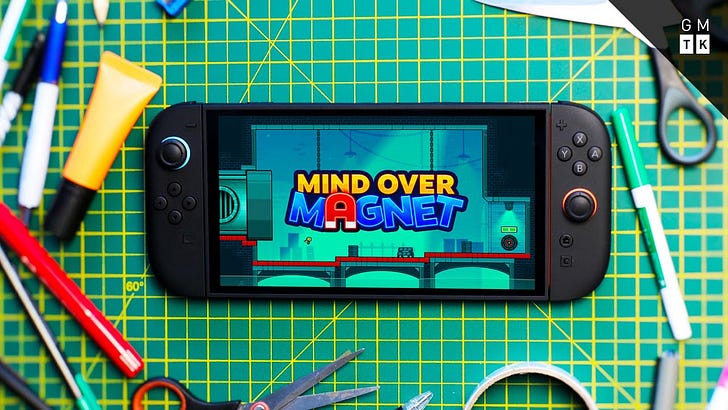
The video game Mind Over Magnet has officially expanded its availability to major console platforms, marking a significant milestone for its creator. The title, which was previously exclusive to Steam, is now playable on the Nintendo Switch, Nintendo Switch 2, PlayStation 4, PlayStation 5, Xbox One, and Xbox Series consoles. This release represents a strategic move to increase the game's reach across the current and previous generations of hardware.
The porting process was managed by the Brazil-based studio Alchemy Games. The external development team handled the technical requirements, the certification processes for each platform holder, and the direct relationships with Sony, Microsoft, and Nintendo. This partnership allowed the original developer to successfully transition the title to a multi-platform release while minimizing internal operational overhead.
This expansion highlights the growing accessibility of independent titles through specialized porting services. By leveraging external expertise, independent developers can navigate the complex certification and distribution requirements of multiple console ecosystems simultaneously. The launch serves as a case study in how independent creators can scale their distribution footprint to reach a broader audience across diverse gaming hardware.
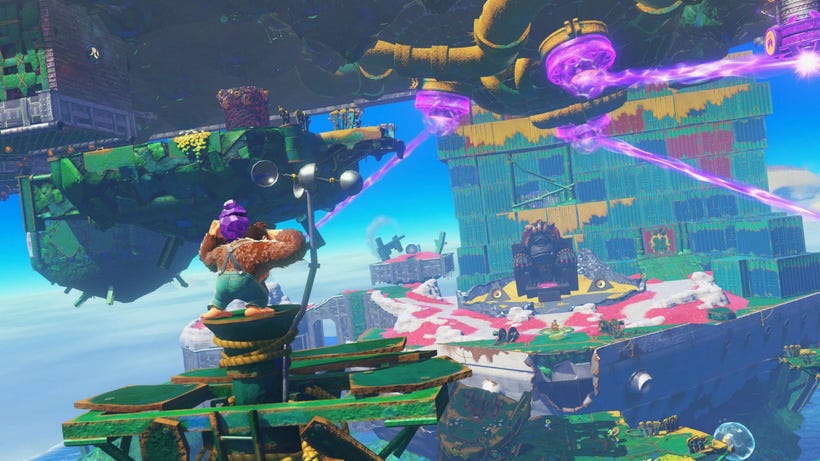
The July 2025 industry digest provides a critical analysis of the newly released title Donkey Kong Bananza, highlighting its development pedigree and core gameplay mechanics. Developed by the core team behind Super Mario Odyssey, the game represents a strategic shift for Nintendo, moving away from traditional platforming precision toward a focus on environmental destruction and high-intensity action.
The analysis identifies the game’s primary design philosophy as a departure from the intricate, exploration-heavy level layouts characteristic of the Mario franchise. Instead, the experience centers on a destructible world where players utilize a punch-heavy combat system to navigate and complete time-sensitive objectives. While the title retains the high production values, charming aesthetic, and collectible-driven progression expected from the studio, the gameplay loop is noted for its manic pace. This speed often obscures spatial orientation, making it difficult for players to discern level structure or navigation paths compared to more traditional platformers.
Covering the global console market as of July 2025, the assessment is based on direct hands-on experience with the game’s initial three worlds. The findings suggest that while the title succeeds as an imaginative and fun departure for the development team, its reliance on chaotic, destructive mechanics creates a distinct experience that prioritizes visceral satisfaction over the deliberate, puzzle-like design typically associated with the studio’s output. The summary serves as an early-stage evaluation of how established design talent adapts familiar polish to new, more aggressive gameplay frameworks.
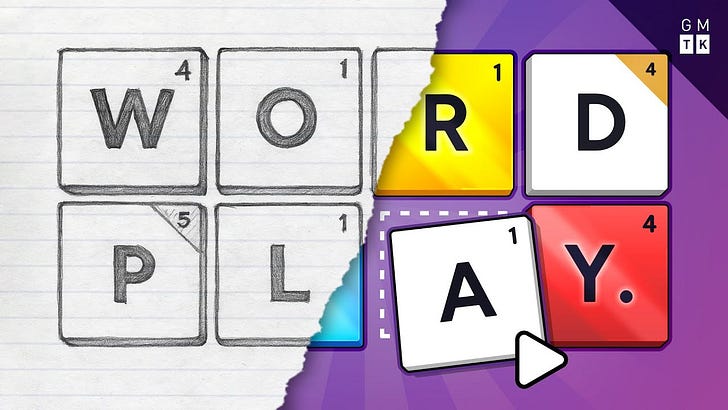
The development of the word-based roguelike game Word Play serves as a case study in efficient, scope-conscious game production. Conceived as a hybrid of spelling mechanics and roguelike progression systems, the project moved from initial concept to a full Steam release in seven months. The primary thesis emphasizes that disciplined project management, iterative development, and a ruthless approach to scope are essential for independent developers to maintain productivity and avoid burnout.
The development timeline began in December 2024 following a game jam, with the core spelling mechanics established first to ensure a solid foundation. Subsequent months focused on layering roguelike elements, such as shops and passive perks, which eventually scaled to 160 unique modifiers. Key milestones included a successful demo launch in May 2025 that attracted 20,000 players in its first week, followed by extensive quality assurance testing with community members. Despite encountering external competition from similar titles and a mid-development injury, the project maintained momentum through a modular approach to feature implementation.
Methodologically, the project relied on a layered development strategy, focusing on individual components—such as core mechanics, then roguelike systems, then content expansion—before moving to final polish. Feedback loops were critical, utilizing community playtesting via Discord and professional insights gathered at the Game Developers Conference. By prioritizing simple, effective design choices over complex assets, the project successfully navigated a compressed timeline, demonstrating that strategic planning and community-driven iteration can significantly accelerate the path from prototype to commercial release.
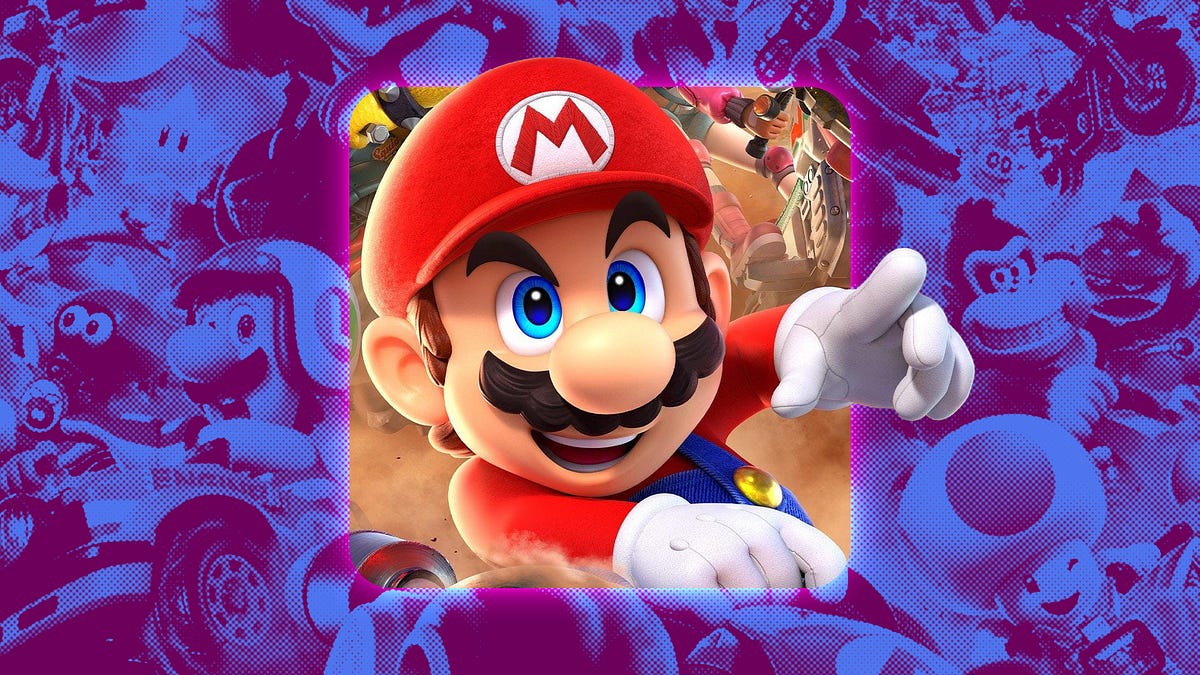
The June 2025 industry update provides a critical assessment of the launch of Mario Kart World, a flagship title released alongside the Nintendo Switch 2 console. The analysis focuses on the intersection of traditional arcade racing mechanics and modern open-world design trends. While the title maintains the series' hallmark polish, nostalgic soundtrack, and high-quality core gameplay, the integration of an open-world environment is identified as a significant design failure.
The evaluation highlights that the open-world elements feel largely lifeless and disconnected from the core racing experience. Specifically, the Grand Prix mode suffers from the inclusion of long, empty, and liminal spaces between traditional tracks, which detracts from the pacing and overall engagement. Despite these structural criticisms, the analysis identifies a singular successful implementation of the new design philosophy: a survival-based knockout mode that utilizes the expansive island map effectively.
This assessment serves as a brief critique of current industry trends toward shoehorning open-world mechanics into established franchises. By contrasting the success of the series' legacy racing mechanics against the shortcomings of its new, sprawling map design, the commentary illustrates the potential pitfalls of expanding game scope without sufficient environmental depth or meaningful player interaction. The findings reflect a broader industry observation regarding the diminishing returns of open-world integration in genres traditionally defined by tight, closed-loop design.
Effective participation in Steam Next Fest requires a strategic approach to demo development that prioritizes marketing goals over mere playtesting. The primary objective is to maximize wishlists by providing a polished, representative experience that leaves players wanting more. Developers are encouraged to release their demos at least two weeks before the official event begins, allowing time to gather user feedback, resolve technical issues, and refine gameplay mechanics based on real-world performance.
Key findings emphasize that a successful demo should offer between 30 and 90 minutes of gameplay, balancing sufficient content to demonstrate core mechanics with enough restraint to maintain interest in the full release. Developers should ensure the initial experience is accessible and engaging, avoiding excessive difficulty that might lead to early abandonment. Furthermore, it is critical to treat the demo as a marketing asset rather than a development build; this includes teasing locked content to highlight the depth of the full game and providing clear pathways for users to navigate to the main store page.
Operational efficiency is improved by centralizing feedback into a single, manageable channel, such as a dedicated Discord forum, rather than relying on fragmented social media or email threads. Technical security is also paramount; developers must ensure that demo builds are strictly partitioned from full-game assets to prevent unauthorized access to unreleased content. By aligning the demo release closely with the final product launch, developers can capitalize on the momentum generated during the festival, ensuring that player interest translates directly into sales.
The May 2025 edition of the Game Maker's Toolkit digest serves as a brief industry update, focusing on personal observations and current trends within the independent gaming sector. The primary intent is to highlight notable new releases and provide brief critical analysis of emerging titles that demonstrate innovative design mechanics.
The central focus of this update is the deck-building roguelike StarVaders. The analysis identifies the game as a significant entry in the genre, noting its departure from traditional deck-builder conventions through the integration of a grid-based tactical layout. Key design elements highlighted include a risk-reward heat meter system and a strategic emphasis on enemy positioning, which draws favorable comparisons to established titles like Might & Magic: Clash of Heroes. The game is characterized as a standout release for players seeking mechanical depth within the saturated deck-building market.
The scope of this update is limited to the personal experiences of the author during May 2025, reflecting a broader industry trend where niche, high-quality indie titles continue to capture player interest despite a crowded release landscape. The methodology relies on qualitative, hands-on gameplay assessment rather than quantitative market data. While the author notes a high volume of professional activity and ongoing development projects, the public-facing content remains focused on specific gameplay mechanics and the evolution of roguelike sub-genres.