Game DiscoverCo
Organization2 documents
Documents
Article
What Do s&box’s Issues Tell Us About Launching Platforms in 2026?
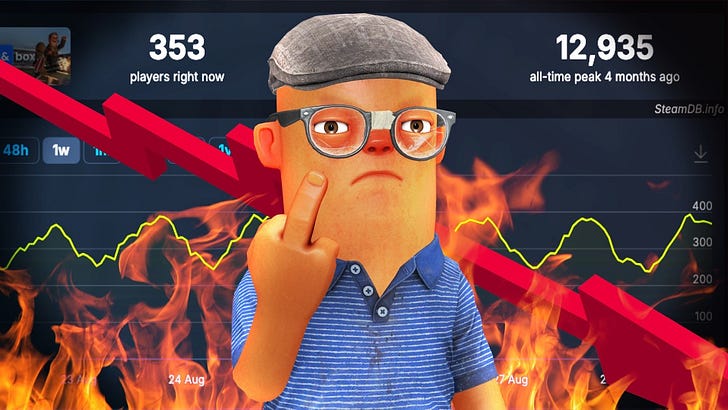
The launch of Facepunch Studios’ S&box serves as a case study for the systemic challenges inherent in establishing new game development platforms in 2026. Despite the developer's pedigree and the platform's technical sophistication, S&box has struggled to maintain a consistent user base. After launching on Steam in April 2026 at a $20 price point, the platform grossed approximately $6 million, yet concurrent user counts dropped from a peak of 13,000 to fewer than 500 within five months.
Several factors contributed to this decline. The initial $20 entry fee restricted the audience to a narrow, hardcore demographic, while the lack of immediate Steam Workshop support and a perceived focus on engine development over user-facing features alienated fans of the platform's predecessor, Garry’s Mod. Furthermore, the platform suffers from a lack of "lead" content—compelling, signature games that provide a clear incentive for users to adopt the ecosystem over established alternatives like Roblox or Steam.
The broader implications for platform operators highlight a critical "maker-to-player" imbalance. When a platform relies on user-generated content, the ratio of creators to players often becomes unsustainable. Without a curated library of high-quality experiences, platforms risk being overwhelmed by low-complexity, repetitive content that fails to retain a broad audience. Ultimately, the difficulty of differentiating a new platform in a saturated market remains the primary obstacle, as users increasingly question the value proposition of migrating to proprietary tools when existing marketplaces already offer superior discovery and content variety.
- Facepunch’s s&box platform has seen its concurrent player count drop from a 13,000 peak at its April 2026 launch to under 500 five months later, despite grossing approximately $6 million.
- The platform's initial $20 price point restricted the user base to a small, hardcore cohort, failing to generate the broad momentum required for a game-creation ecosystem.
- A critical failure for s&box was the lack of a 'lead' game to serve as a hook, leaving users without a compelling reason to commit to the platform over established alternatives like Garry's Mod.
- Platforms that prioritize engine development over player-facing content risk a lopsided 'maker-to-player' ratio, a recurring issue that previously hindered the success of Media Molecule’s Dreams.
- Steam has reduced the waiting period for new developers to release their first game from 30 days to 21 days after paying the initial app fee.
Game DiscoverCoSept 2026
Article
BeamNG.drive: The Biggest Driving Game Hit Nobody Analyzes?
The analysis examines the sustained success of the vehicle simulation title BeamNG.drive, positioning it as a significant yet under-analyzed evergreen hit in the PC gaming market. The primary thesis is that the game’s longevity is driven by a combination of complex, high-fidelity soft-body physics, a robust modding ecosystem, and organic growth fueled by creator content on platforms like YouTube. By functioning more as a versatile "vehicle platform" than a traditional game, it appeals to a diverse audience ranging from sim-racing enthusiasts to casual sandbox players.
Key data points highlight the game's impressive commercial performance, with an estimated lifetime gross revenue of approximately $200 million on Steam from over 10 million copies sold. Despite being in Early Access since 2015, the title maintains a daily concurrent user count of roughly 25,000, with 1.3 million copies sold in the most recent 12-month period. The analysis notes that the game’s popularity has compounded over time, supported by a 97% positive user review rating and a development strategy that prioritizes long-term technical investment over short-term marketing cycles.
The scope of the analysis covers the global PC gaming market, specifically focusing on Steam-based discovery and player behavior trends through 2026. The methodology relies on proprietary platform data, including concurrent user metrics, player overlap analysis, and direct insights provided by the developer, BeamNG GmbH. The findings underscore that for titles with high technical complexity and strong community engagement, visibility and sales growth are often driven by user-generated content and the compounding nature of platform discovery rather than traditional promotional bursts.
- BeamNG.drive has achieved an estimated $200 million in lifetime gross Steam revenue with over 10 million copies sold, including 1.3 million copies sold in the last 12 months alone.
- The game's success is driven by its 'soft-body physics' engine, which serves as both a consumer-facing vehicle simulator and an enterprise-grade tool for autonomous driving research via BeamNG.Tech.
- Community-driven User Generated Content (UGC) and modding are critical to the game's longevity, with third-party platforms hosting extensive libraries of real-world vehicle models that expand the game's appeal beyond its base offerings.
- The title maintains high engagement through extreme versatility, attracting diverse player bases ranging from hardcore sim-racers to casual fans of sandbox destruction and off-roading.
- Steam's algorithmic visibility has compounded the game's growth, supported by a 97% positive user review score and a strategy of maintaining a consistent 20% discount rate.
Game DiscoverCoSept 2026