
Game Developers Conference
Game Developers Conference (GDC, now the GDC Festival of Gaming) is the professional event for the games industry. It publishes recorded talks and interviews, annual industry survey reports such as the State of the Game Industry, and news articles.
Documents
Capturing Great Footage for Game Trailers
Game trailers serve as the primary vehicle for audience engagement, necessitating a shift from standard gameplay recording to a deliberate, filmmaking-oriented approach.
- Effective game capture requires tailoring the performance to the game's intent: character-driven games should be played to reflect the protagonist's personality, while competitive games should showcase the player's actual inputs and skill.
- To ensure high-quality, professional-looking footage, developers should provide debug tools such as free-roaming cameras, toggles for HUDs and music, time-of-day controls, and the ability to disable head-bob in first-person titles.
- Maintain consistent and aesthetically pleasing shot composition by using the rule of thirds, which can be easily implemented by placing a 3x3 grid overlay on your monitor using tape or digital guides.
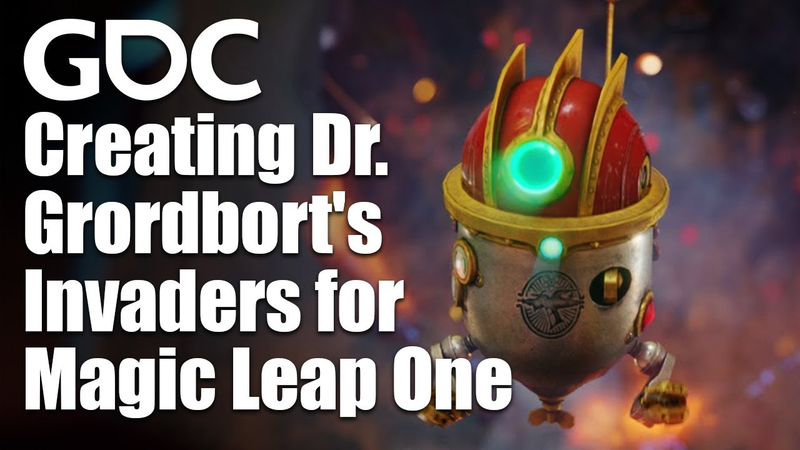
Creating Dr. Grordbort's Invaders for Magic Leap One
Dr. Grordbort’s Invaders serves as a foundational case study for spatial computing, illustrating how developers can leverage mixed reality to create immersive, systemic experiences on the Magic Leap One.
- To prevent immersion-breaking object interpenetration, implement a 'smoosh' physics system where virtual objects bounce and react physically when colliding with one another.
- Design for physical comfort by limiting intense gameplay sessions to 2–5 minutes, using a 'home base' hub to allow players to take breaks and manage fatigue.
- Use a priority-based visual system, such as subtle screen-edge 'glints,' to guide player attention toward critical objectives without overwhelming the field of view.
Implementing Pixar's Brain Trust Model at King and How It All Went Wrong
King, the developer behind the Candy Crush franchise, attempted to implement a centralized advisory model modeled after Pixar’s Brain Trust to improve game quality across its global studios.
- King failed to implement a centralized 'Brain Trust' model because teams perceived the static group of senior experts as intimidating gatekeepers, leading to the group being labeled the 'Angels of Death.'
- The initial centralized model collapsed due to a lack of clear goals, conflicting management feedback, and cultural misunderstandings regarding the role of 'champions' in the development process.
- King successfully pivoted to a decentralized governance model that separates project support from formal evaluation, utilizing a flexible network of senior creative talent instead of a fixed panel.
The Holy Grail of Multiplayer Level Design: Casual and Competitive Maps
The design of multiplayer maps requires balancing the distinct needs of casual and competitive players, a challenge often referred to as the pursuit of a "holy grail" map.
- Successful multiplayer map design requires balancing the needs of casual players, who seek recreational play, with competitive esports players who prioritize strategic depth and tournament viability.
- Designers should categorize player skill progression into layers: basic mechanical movement and shooting, map-specific tactical knowledge, and high-level meta-game strategy such as character bans and team compositions.
- Casual-friendly maps often rely on 'single-scan' layouts that allow players to process the entire environment quickly, whereas competitive maps require complex, multi-option layouts that prevent stale gameplay.
Deep Learning: Beyond the Hype
Deep learning and reinforcement learning are fundamentally transforming game development by functioning as trainable, high-performance function estimators.
- Deep learning and reinforcement learning are shifting game development from scripted mechanics to trainable function estimators, enabling advancements in automated motion capture, voice synthesis, and facial animation.
- The primary industry objective is to move beyond combat-centric gameplay toward immersive role-playing experiences featuring complex social interactions and emergent, human-like behaviors.
- Practical applications, such as those seen in Battlefield 1, demonstrate that neural agents can successfully navigate complex 3D environments and prioritize resources.

Designing Great Interactive Narratives on Mobile
Effective mobile interactive narrative design hinges on the delicate balance between player agency and structured storytelling.
- Mobile narrative design should prioritize character-driven emotional engagement over complex mechanical branching to maintain technical manageability and foster player empathy.
- Because a significant portion of the audience does not complete full narratives, developers must craft individual lines as compelling hooks and design episodic experiences that provide value in short, interrupted sessions.
- Meaningful player choice is defined by the ability to foster personal identity and connection rather than the sheer volume of potential branching outcomes.

Expanding Animation and Design Capabilities in Post-Launch Battlefield 1
The post-launch development of Battlefield 1 demonstrates how animation teams can significantly enhance gameplay depth and historical authenticity by leveraging flexible, data-driven tools.
- To overcome the limitations of rigid legacy animation systems in Battlefield 1, the DICE LA team developed flexible, logic-based reload systems that allowed for weapon-specific behaviors like ejecting partial magazines or reeling in cloth ammunition belts.
- By decoupling reload logic from fixed animation loops, the team enabled complex interactions such as the Perino M1908's ability to top off ammunition at various stages, which required managing 120 rounds through a hybrid of manual and additive animation layers.
- The team successfully scaled their post-launch content production by building reusable systems; initial development efforts for the first six weapons in the 'In the Name of the Tsar' expansion paved the way for an expanded list of 11 guns that utilized the same underlying animation logic.

Hutch: Fantastic Mistakes and How to Avoid Them
Hutch, a mobile-first game studio founded in 2011, transitioned from a console-focused development background to a profitable free-to-play business model by embracing lean development and iterative validation.
- Hutch transitioned from console development to a profitable free-to-play model by treating all design decisions as testable assumptions rather than fixed creative choices.
- The studio mitigates financial risk by prioritizing 'viable' products over 'minimum' ones, ensuring concepts are validated against live player data before full-scale production.
- Early titles like Smash Bandits failed due to a lack of market validation and a mismatch between skill-based gameplay and free-to-play monetization, whereas later titles like Top Drives succeeded by limiting innovation to specific, justified areas.

ILMxLAB: Pioneering Immersive Entertainment
Immersive entertainment is undergoing a fundamental transformation, moving away from isolated virtual reality experiences toward a model of persistent, interconnected digital worlds.
- Location-based VR experiences can serve as a primary retail anchor, as evidenced by a Westfield London location where 71.6% of visitors reported the VR attraction was their sole reason for visiting the mall.
- The future of immersive entertainment lies in a multi-platform ecosystem where a single identity and narrative persist across devices, ranging from mobile AR and tablet-based crafting to console gaming and full-immersion VR.
- Hyper-reality experiences like 'The Void' successfully leverage untethered headsets, motion capture, and multi-user networking to create social environments where strangers often leave feeling like close friends.
Knowledge is Power: An Overview of Knowledge Representation in Game AI
Effective game artificial intelligence depends less on the sophistication of underlying algorithms and more on the quality and structure of the data provided to agents.
- Effective game AI relies more on the quality and structure of data provided to agents than on the complexity of the underlying algorithms.
- Developers should categorize information into three distinct types: static environmental data, dynamic spatial data, and specific entity details to improve agent reactivity.
- Implementing spatial tools like smart objects, tactical maps, and influence maps allows agents to interpret their surroundings efficiently for complex decision-making.
How to Use Machine Learning, Live Telemetry Analysis, and Computer Vision to Manage Communities
Modern game development requires a fundamental shift toward integrating community management as a core design pillar rather than a reactive support function.
- Integrating in-game social features like chat systems can double player retention by providing a space for social interaction and peer-to-peer assistance without leaving the game environment.
- Successful game communities rely on 'social loops'—mechanisms where social notifications, such as clan messages or shared tactics, trigger further gameplay and engagement, mirroring the core game loop.
- Developers should implement lightweight replay systems that record event data rather than raw video, allowing for easier analysis and the automated generation of highlight reels for player sharing.
Indistinguishable from Magic: Lessons Learned from Creating Merchandise for Alto's Adventure
Developing merchandise for independent games functions most effectively as a long-term brand-building strategy rather than a primary revenue driver.
- Merchandise should be treated as an extension of the game's universe to build long-term brand value rather than a primary revenue stream, as profitability often takes years to achieve.
- Integrating a 'Gift Shop' directly into the game via SDKs can significantly drive sales, with 57% of Alto's Adventure merchandise sales originating from in-app purchases after the feature's launch.
- DIY e-commerce solutions like Shopify offer higher profit margins and brand ownership compared to third-party partners, though they require more upfront effort and management from the developer.