Showing 30 of 406 results · 0.57s
Aug 2020
IGG Inc. 2020 Interim Report
IGG
maintaining a strong balance sheet while positioning for future growth in the global mobile gaming market
Financial71 pages
Fiscal Year Ended March 2026: Results Presentation
Sega Sammy Holdings
expanding the Angry Birds IP through film and licensing initiatives, and launching additional mobile games in China to restore earnings. Operational improvements, trans‑media expansion, and targeted
Financial62 pages
3Q 2023 Earnings Release: Kakao Games
Kakao Games
revenue, totaling 264.7 billion won, with a modest 2 % quarter‑over‑quarter drop. Mobile game revenue rose marginally, driven by the launch of “Ares: Rise of Guardians,” while
Financial11 pages
Sep 2014
IGG Inc. Q3 2014 Quarterly Report
IGG
first nine months of 2014, driven by a successful strategic pivot toward the mobile gaming market. Revenue reached $144.1 million, representing a 180.9% year-over-year increase, while
Financial42 pages
Apr 2017
FY2017 Third Quarter Financial Results
GREE
release blitz" of new titles. The operational scope focuses heavily on the Japanese mobile gaming market, supplemented by overseas operations and a growing advertising and media segment. During
Financial35 pages
Dec 2024
Examining a Decade of Gaming Startup Exit Paths
InvestGame
billion market cap at listing, and Scopely, which secured a $4.9 billion acquisition. Mobile gaming dominates the exit landscape, accounting for 75% of all major deals during this
Financial7 pages
Jan 2010
Fiscal Year Ending 1st Half Financial Overseas Titles
Koei Tecmo
pillar of the future growth strategy involves aggressive entry into the social and mobile gaming sectors. Successes with titles like Nobunaga’s Ambition for Everyone, which surpassed
Financial24 pages
Feb 2015
Summary of Financial Results for Fiscal Year Ended December 31, 2014 (Japanese GAAP) (Consolidated)
KLab
capitalize on its improved financial stability and the ongoing growth of the mobile gaming market
Financial22 pages
Embracer Group Interim Report: Q2 July–September 2025
Embracer Group
performance of titles such as Killing Floor 3 and mid‑size releases, whereas Mobile Games grew 17 % with a 25 % organic lift from the PLAION portfolio. Entertainment & Services
Financial19 pages
May 2015
First Quarterly Report 2015
IGG
gross profit margin contracted to 68.8%, reflecting the rising channel costs inherent in mobile game distribution. Corporate governance and equity management remained central to the period’s activities
Financial38 pages
May 2021
Consolidated Financial Results for the First Quarter of the Fiscal Year Ending December 31, 2021
KLab
billion yen, or 35.96 yen per share. The report covers the Japanese mobile gaming market for the three-month period from January 1 to March 31, 2021. Despite
Financial9 pages
May 2021
Summary of Main Supplementary Explanations Q&A at the FY2021 Third Quarter GREE Results Briefing
GREE
over the medium-to-long term, driven by a robust pipeline of new mobile game titles scheduled for release in FY2022 and beyond. This growth strategy is underpinned
Financial1 pages
Jun 2012
Form 20-F Annual Report: Fiscal Year 2012
Sony Group
performance. Strategically, Sony is realigning its electronics division toward digital imaging, gaming, and mobile, while pursuing cost reductions and next‑generation display technologies. The acquisition of full control
Financial7 pages
Apr 2016
Gravity Co., Ltd. 20‑F Annual Report for Fiscal Year Ended December 31, 2015
Gravity Co.
Ragnarok Online, which is entering a mature phase and experiencing declining user numbers. Mobile game and application revenue grew from KRW 6.6 billion
Financial1 pages
May 2025
Partial Correction to FY2022 Consolidated Financial Results (Japanese GAAP)
CyberAgent
revenue through digital media and advertising to offset the inherent volatility of the mobile gaming market. This corrected financial outlook underscores a period of high investment and structural
Financial19 pages
Feb 2023
Summary of Financial Results for Fiscal Year Ended December 31, 2022 (Japanese GAAP)
KLab
high market volatility and the inherent difficulty in predicting hit-driven mobile gaming cycles. Growth strategies are currently centered on high-profile collaborations, specifically a co-developed title
Financial18 pages
Aug 2025
Summary of Financial Results for Second Quarter (First Half) of Fiscal Year Ended December 31, 2025
KLab
incentivize a recovery in market value and diversify revenue streams beyond traditional mobile gaming. Management remains focused on achieving profitability through aggressive cost-cutting, workforce optimization
Financial16 pages
Nov 2013
Third Quarterly Report 2013
IGG
million. This growth trajectory was primarily fueled by a strategic pivot toward mobile game development, most notably the successful market introduction of Castle Clash. By the third quarter
Financial26 pages
Feb 2026
Kakao Games Q4 2025 Earnings Announcement
Kakao Games
decrease compared to the same period in the previous year. The mobile gaming segment, the company’s largest revenue driver, saw a 38.7% year-over-year decrease
Financial7 pages
May 2018
Summary of Financial Results for First Quarter of Fiscal Year Ending December 31, 2018
KLab
positive outlook depending on market trends and the performance of the existing mobile gaming portfolio
Financial12 pages
Aug 2012
Financial Results for the Fourth Quarter of the Fiscal Year Ended June 30, 2012
GREE
stabilize its domestic market position while capturing new opportunities in the international mobile gaming landscape
Financial35 pages
Feb 2023
Form 10-K: FY 2022
AppLovin
proprietary machine-learning-powered Software Platform and a diversified portfolio of over 350 mobile games. The primary thesis of the 2022 reporting period centers on the transition from
Financial1 pages
Oct 2022
Q3 2022 Earnings Call
Stillfront
exchange effects, and 1.4 percent organic growth, which notably outperformed a broader global mobile gaming market currently facing post-pandemic contraction. The company’s operational cash flow reached
Financial15 pages
Jun 2014
FY2014 Business Report
mixi
fourth quarter marked a significant turnaround. Driven by the explosive success of the mobile game Monster Strike, fourth-quarter sales jumped 143.8% compared to the third quarter, returning
Financial2 pages
Nov 2019
Form 10-Q: Q3 2019
SciPlay
portfolio of high‑performing games, reliance on licensed intellectual property from Scientific Games Corporation, and exposure to regulatory changes in data privacy and gaming law. The post
Financial1 pages
Feb 2024
Summary of Financial Results for Fiscal Year Ended December 31, 2023
KLab
shares in the subsidiary BLOCKSMITH&Co. Due to the inherent volatility of the mobile gaming market and the high degree of uncertainty surrounding the performance of its largest
Financial18 pages
Apr 2017
Gravity Co., Ltd. Form 20‑F: FY2016 Annual Report
Gravity Co.
Korea, Taiwan/Hong Kong/Macau, Japan, and the United States/Canada dominated the revenue mix, while mobile‑game sales declined sharply. Cash balances fell to KRW 16.7 billion
Financial1 pages
Annual Report: IGG
IGG
foreign investment laws. The company’s business model remains focused on international mobile game development, with localized marketing strategies spanning more than 200 countries. Corporate governance and social
Financial179 pages
Oct 2018
FY2019 First Quarter Financial Results
GREE
quarter-over-quarter basis. The business strategy focuses on three primary pillars: mobile game engines, intellectual property (IP) development, and global expansion. Key operational highlights include the release
Financial30 pages
Oct 2017
FY2018 1Q Result Presentation
GREE
This performance was driven primarily by the successful release and operation of native mobile games and a stable browser-based business. While net income appeared lower year
Financial5 pages
IGG Inc. 2020 Interim Report
Aug 202071 pages26k words
Summary
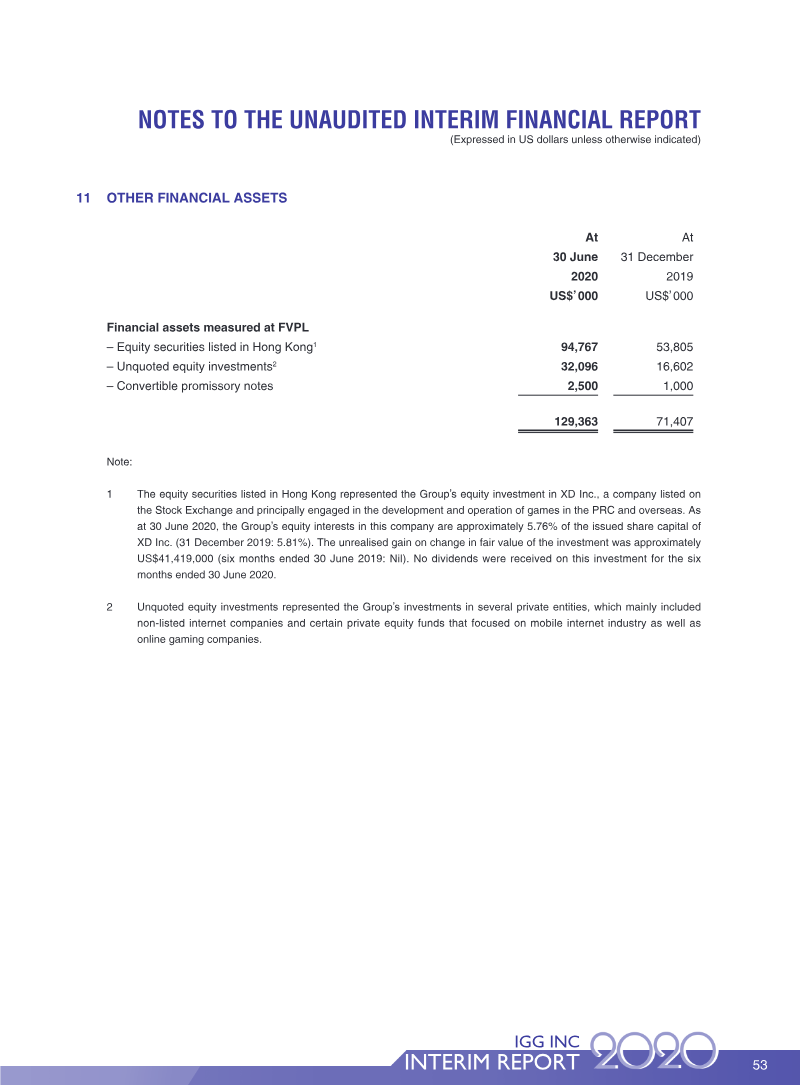
IGG Inc. demonstrated significant financial resilience during the first half of 2020, characterized by a strategic pivot toward investment gains and cost management despite a softening in top-line revenue. While total revenue decreased 12% year-on-year to $312.3 million due to the natural lifecycle decline of legacy titles, net profit surged 88% to a record $132.8 million. This profitability was primarily driven by a $54.3 million gain from global investments, most notably a substantial fair value increase in the Group’s stake in XD Inc., alongside a resurgence in the flagship title Lords Mobile, which achieved record monthly gross billing of over $60 million in July 2020.
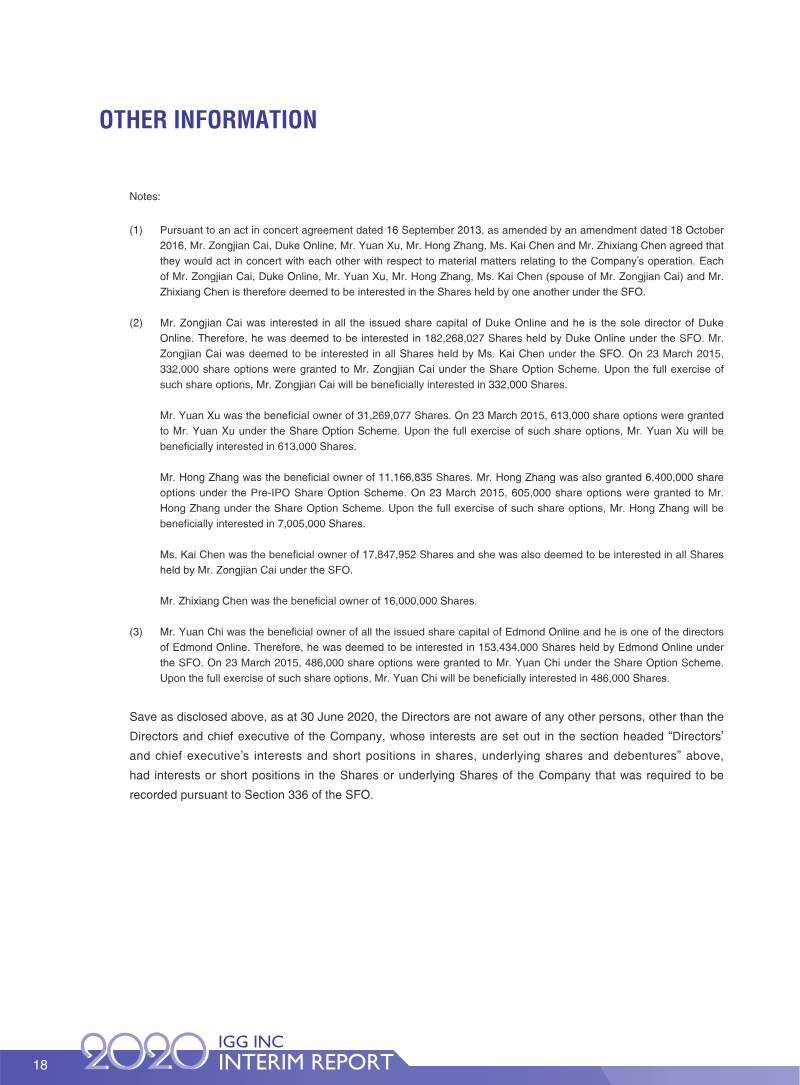
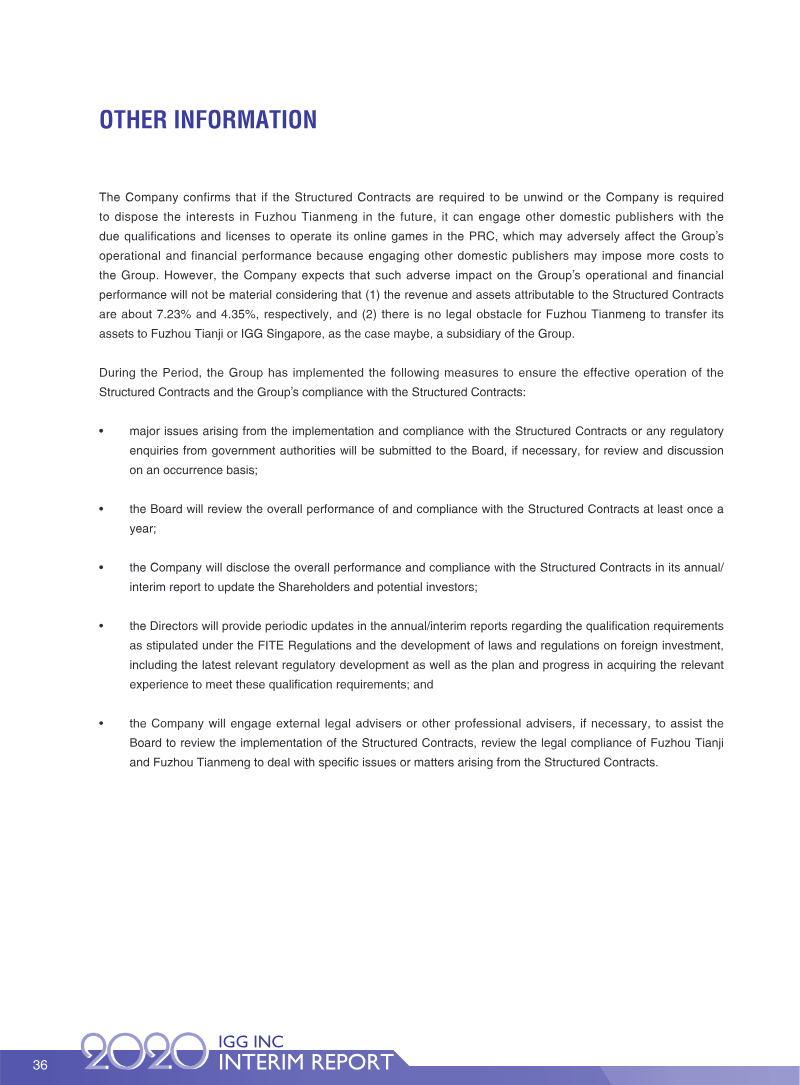
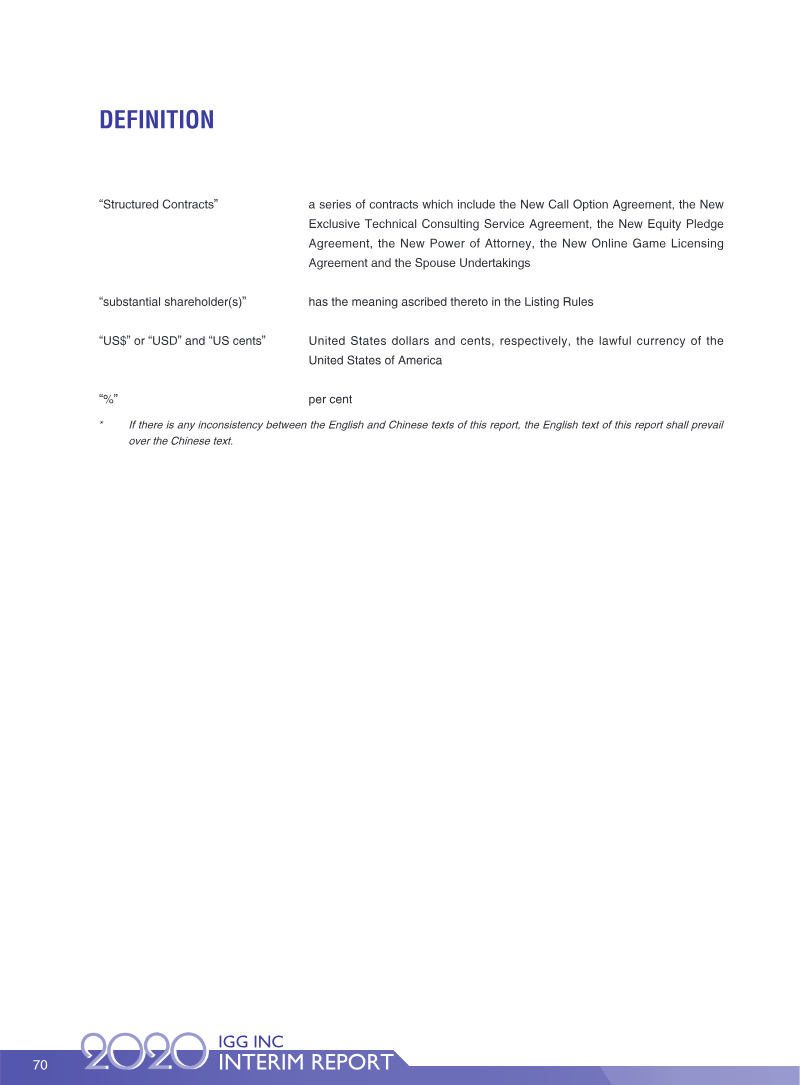
The Group’s operations remain globally diversified, with Asia, North America, and Europe serving as primary markets. To navigate Chinese regulatory restrictions on foreign investment in gaming, the Group utilizes a "Structured Contracts" framework via Fuzhou Tianmeng. While this Variable Interest Entity (VIE) structure faces potential long-term regulatory scrutiny under China’s Foreign Investment Law, it currently accounts for less than 8% of total revenue and is deemed a manageable risk. Corporate governance remains stable, with the Board maintaining a combined Chairman and CEO structure to streamline strategic development.
Financially, the Group ended the period in a robust liquidity position, holding $339.9 million in cash and cash equivalents. This capital strength supported aggressive shareholder return initiatives, including $79.7 million in dividends and $14.1 million in share repurchases. Furthermore, the Group continued to incentivize its workforce through expanded share option and award schemes while simultaneously pursuing new growth opportunities through $3.3 million in acquisitions of online gaming associates. These actions reflect a dual focus on maintaining a strong balance sheet while positioning for future growth in the global mobile gaming market.
Pages
Insights
- IGG Inc. reported a 12% year-on-year revenue decline to $312.3 million, yet net profit surged 88% to a record $132.8 million, largely driven by a $54.3 million gain from investments in companies like XD Inc.
- Flagship title Lords Mobile experienced a resurgence, reaching a record monthly gross billing of over $60 million in July 2020.
- The company maintains a strong liquidity position with $339.9 million in cash and cash equivalents, facilitating $79.7 million in dividends and $14.1 million in share repurchases during the period.
- Operations rely on a Variable Interest Entity (VIE) structure via Fuzhou Tianmeng to navigate Chinese regulatory restrictions, though this structure currently accounts for less than 8% of total revenue.
- The Group is actively pursuing growth through acquisitions, investing $3.3 million in online gaming associates during the first half of 2020.
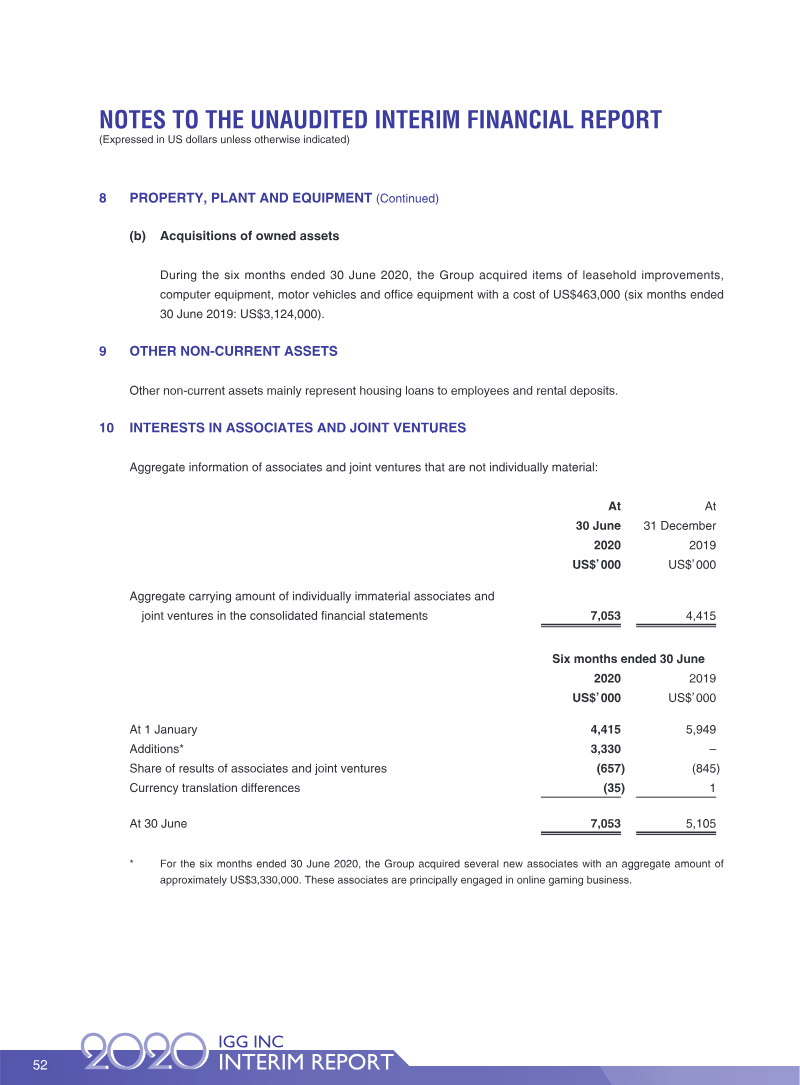
INTERESTS IN ASSOCIATES AND JOINT VENTURES