FinancialGREE
Financial Results for the Fourth Quarter of the Fiscal Year Ended June 30, 2012
14 Aug 201235 pages~20 min full read
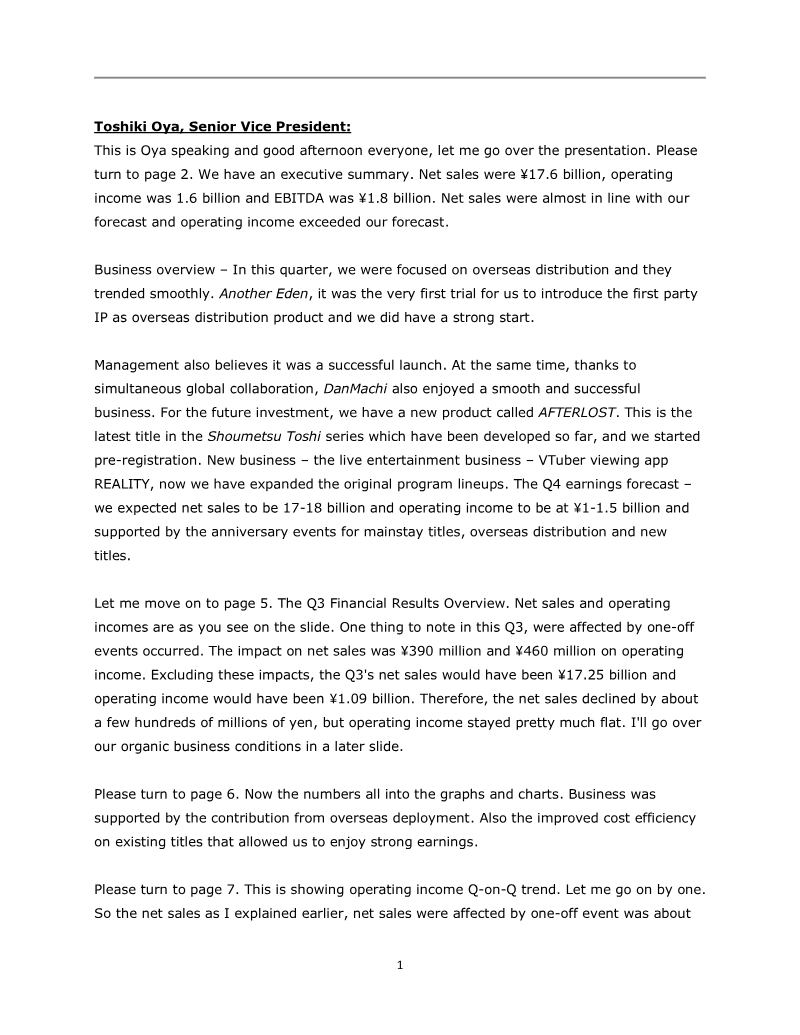
GREE, Inc. achieved record-breaking financial performance for the fiscal year ended June 30, 2012, characterized by net sales of ¥158.2 billion and a net profit of ¥48 billion. While these figures represent triple-digit year-over-year growth, the fourth quarter experienced a sequential decline in revenue. This downturn resulted from a temporary shortage of major intellectual property releases and the proactive implementation of user protection measures, most notably the discontinuation of "comp-gacha" monetization mechanics to align with evolving industry standards. Despite these short-term headwinds, the company maintains an optimistic outlook for the 2013 fiscal year, forecasting net sales to reach as high as ¥205 billion.
The strategic focus for the upcoming period centers on aggressive global expansion and the diversification of the smartphone gaming portfolio. By leveraging the acquisition of Funzio and launching a unified platform across 169 countries, the company aims to establish a dominant international presence. Product development is shifting toward high-profile collaborations with established franchises such as Naruto and Bleach, while simultaneously expanding into new genres beyond traditional card battle games. This growth is supported by a significant increase in human resources and a dual-revenue model encompassing both in-game purchases and advertising media.
Operational integrity and corporate social responsibility remain central to the business model. A robust safety infrastructure, including a 24/7 monitoring system staffed by 450 personnel and a CEO-led security committee, ensures content moderation and age-based restrictions. These internal controls are complemented by external initiatives, such as mobile-carrier age verification and digital literacy programs. By balancing aggressive global scaling with rigorous user protection and compliance, the company seeks to stabilize its domestic market position while capturing new opportunities in the international mobile gaming landscape.
GREE · 2026
GREE · 2026
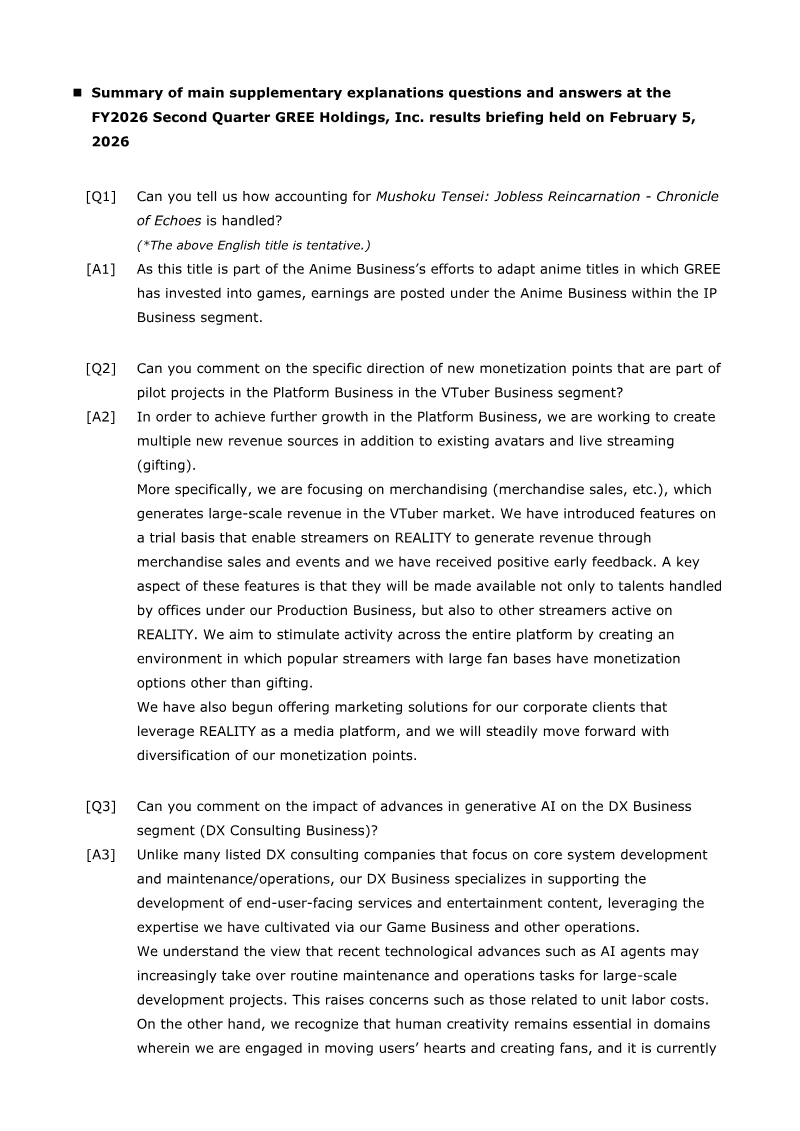
GREE · 2026
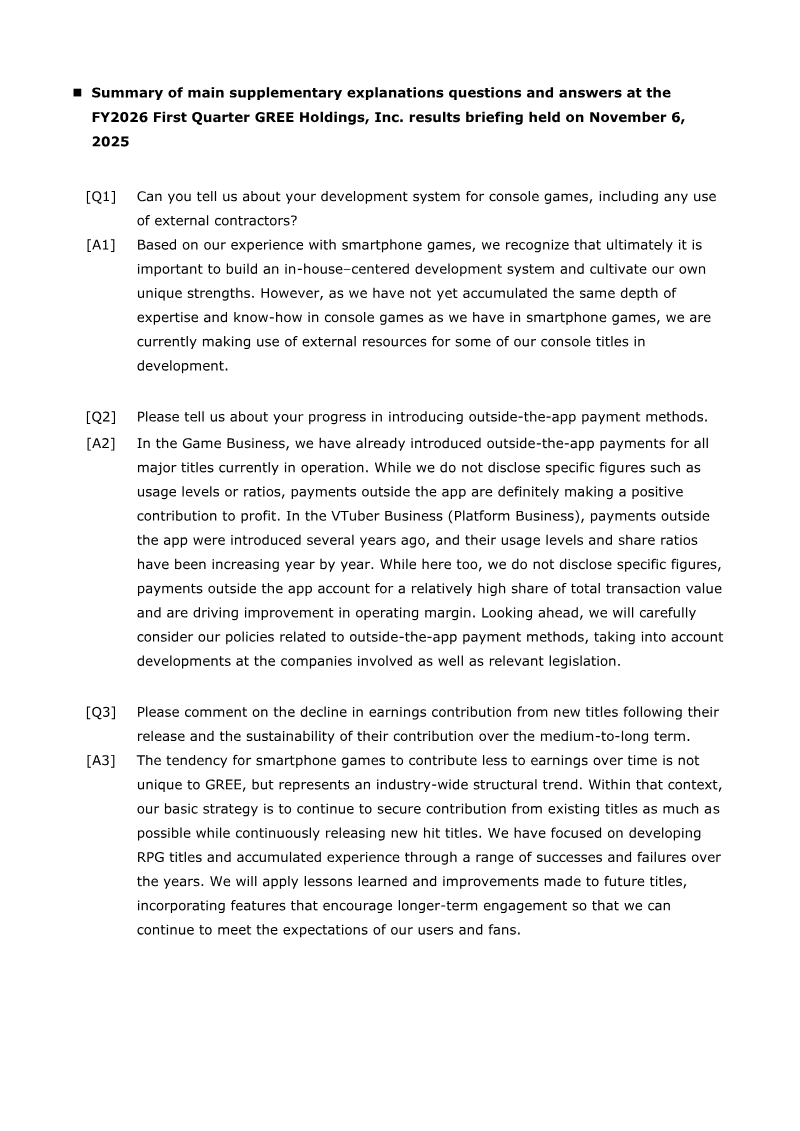
GREE · 2025
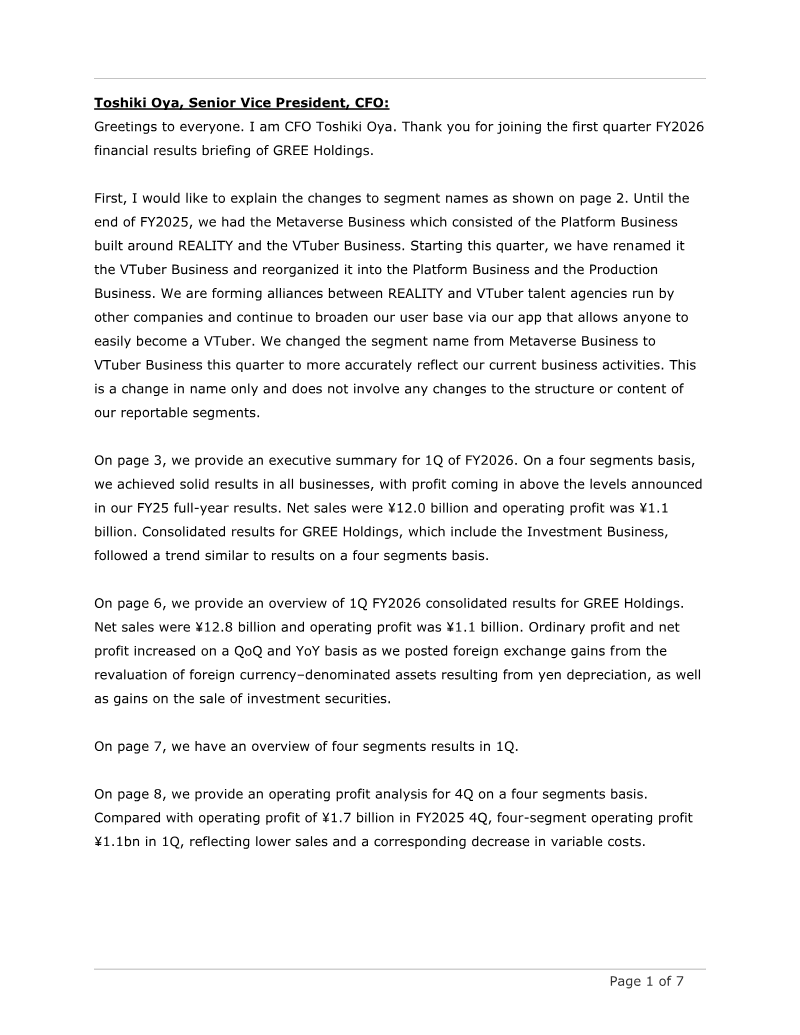
GREE · 2025
GREE · 2025
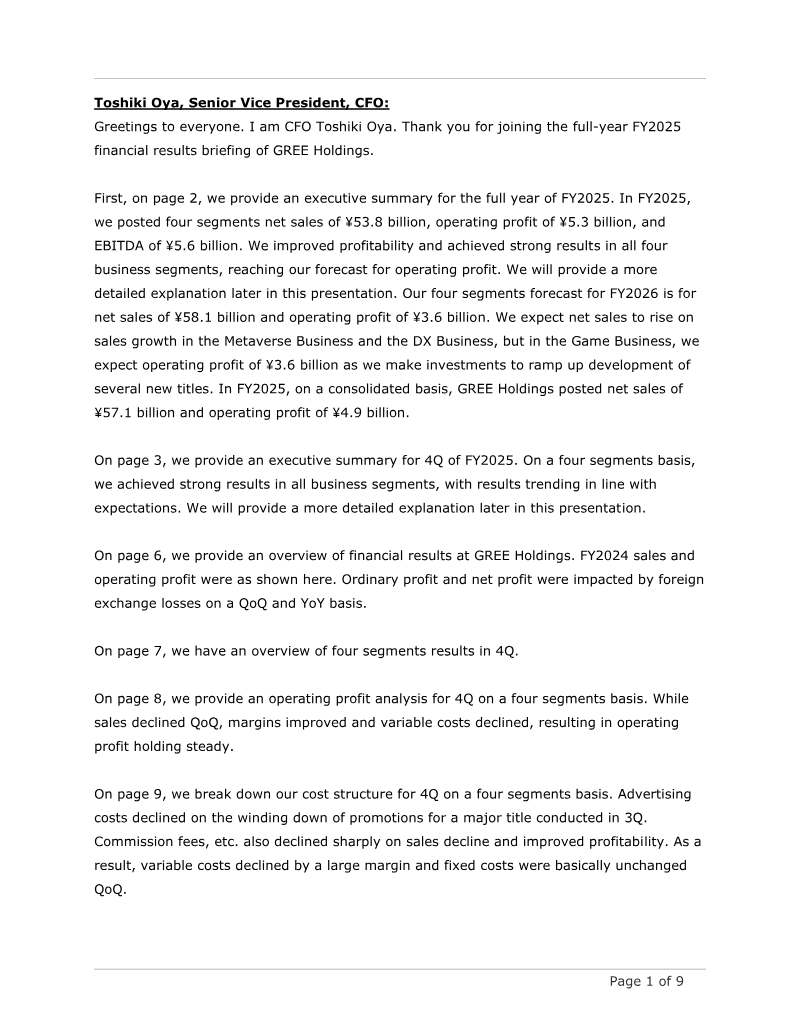
GREE · 2025
GREE · 2025
GREE · 2025
GREE · 2025
GREE · 2025
GREE · 2025
Capcom · 2026
CD Projekt · 2025
Ubisoft · 2025
Koei Tecmo · 2025
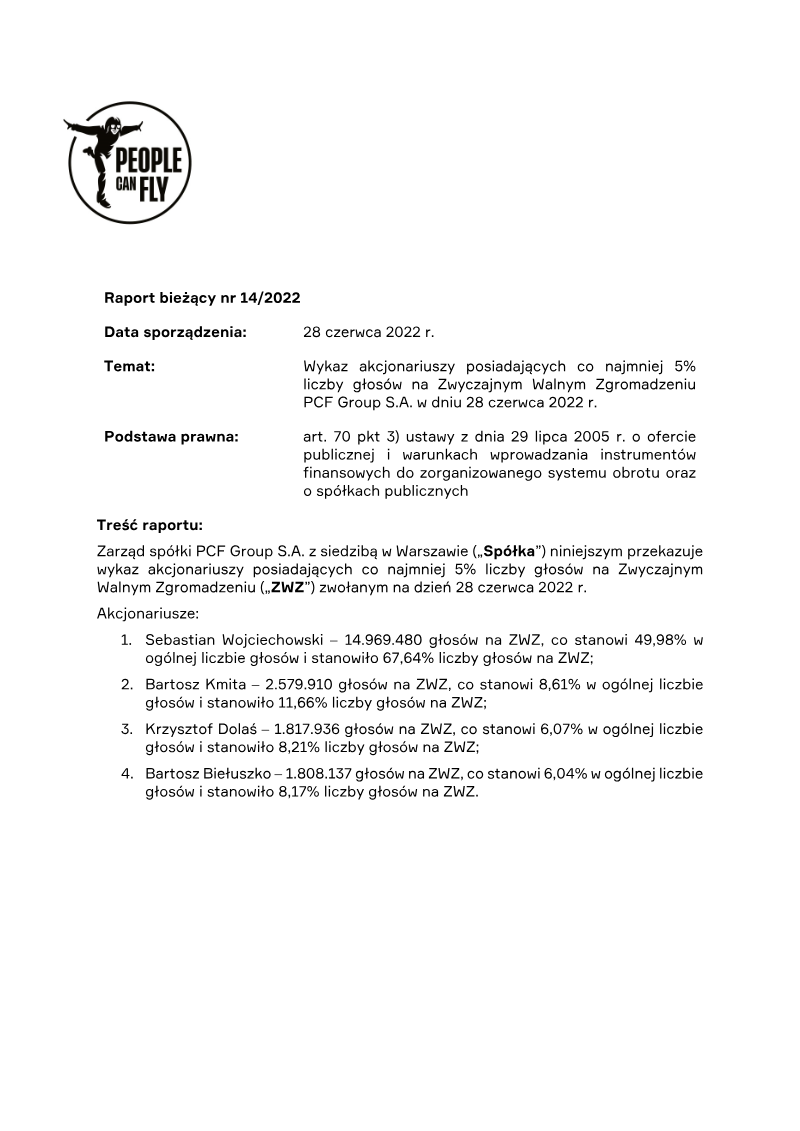
PCF Group · 2022
Bandai Namco · 2021
Bandai Namco · 2017
GREE
Nacon

Frontier Developments
Nacon
Nacon