
Report17 pages
Annual Barometer of the Video Game Industry in France 2021
The 2021 Annual Barometer of the Video Game Industry in France provides a comprehensive analysis of the sector’s economic health, employment trends, and production landscape. Conducted between May and June 2021 through an online survey of 1,200 qualified entities, the research captures a representative snapshot of the French video game ecosystem, which is primarily composed of development studios, publishers, and service providers. The study highlights the industry's resilience and growth despite the challenges posed by the global health crisis.
Key findings indicate that the French video game sector remains highly productive, with approximately 1,350 games in development during 2021, 92% of which are original creations. The industry is characterized by a strong focus on independent production, with 77% of studios identifying as indie developers. Financially, while the sector shows promise—with 20% of studios reporting annual revenues exceeding €1 million—the landscape remains fragile, as 36.5% of studios reported a deficit in 2020, the highest level since 2014. Despite this, the industry maintains a positive outlook, with 89% of respondents expressing confidence in their company’s future and 94% remaining optimistic about the broader French video game market.
Employment remains a cornerstone of the industry, which continues to prioritize permanent contracts, with 80% of salaried positions held as CDI. The workforce is increasingly diverse, with female representation reaching 22%. Furthermore, the sector benefits from robust institutional support, as 41% of companies utilize regional funding and many rely on the national video game tax credit. France is currently ranked as the second most attractive country for video game development globally, trailing only the United States, reflecting the sector's strong international standing and continued potential for expansion.
- France is the second most attractive country globally for video game development, supported by a strong reliance on national tax credits and regional funding utilized by 41% of companies.
- The industry is highly productive with approximately 1,350 games in development during 2021, 92% of which are original intellectual properties.
- Despite high levels of optimism regarding the market, 36.5% of studios reported a financial deficit in 2020, marking the highest rate of insolvency since 2014.
- The French ecosystem is dominated by independent production, with 77% of studios identifying as indie developers.
- Employment stability is a priority for the sector, as 80% of salaried positions are held under permanent (CDI) contracts.
+1
Syndicat National du Jeu VidéoJan 2021

Report26 pages
Annual Report of the German Games Industry 2021
01 Players in Germany 8 02 German market for computer 14 03 The games industry in Germany 24 .1 Employment figures and companies .4 The ten demands of the games industry 04 gamescom 38 05 About game – the German 42 .1 Diversity initiative Hier spielt Vielfalt .2 Environmental and climate protection in the .3 Foundation for Digital Games Culture .5 Entertainment Software Self-Regulation Body 06 D...
- The German games market experienced significant growth in 2020, with overall sales revenue increasing by over 30% due to the COVID-19 pandemic. Hardware sales, including consoles and gaming PCs, reached a record high, and subscription services saw a 44% increase in sales revenue.
- Germany launched a major EU-notified games funding guideline in late 2020, with several studios receiving over one million euros in funding, marking a significant first for the country's games industry.
- The number of companies in the German games industry increased by 5% for development and publishing companies and 7% for publishing-focused companies in 2021. However, employment in the core market grew by only 8% to 10,906 people, indicating that most new companies are microenterprises.
- gamescom 2020 successfully transitioned to a digital format due to the pandemic, attracting millions of viewers from over 180 countries and featuring 370 partners across five show formats, with gamescom: Opening Night Live being a highlight.
- game – the German Games Industry Association, with approximately 340 members including developers and publishers, advocates for improved industry conditions, youth protection, and diversity, and has been climate-neutral since early 2021.
+1
game – Verband der deutschen Games-Branche e. V.Jan 2021
Report80 pages
European Video Games Industry Insight Report: 2021
By European Game Developers Federation (EGDF) Supported by Video Games Europe European Video Games Industry Data 5 Number of game developer studios 7 Number of game publishers 8 Number of people working in the video games industry 9 Percentage of women working in the industry ...
- In 2021, the EU video game industry comprised 5,500 game developer studios and over 250 game publishers, employing 85,000 people and generating a turnover of €18.3 billion, up from 78,000 employees and €15.1 billion in 2020.
- Many European countries offer cultural aid for video game production, with common forms including grants (e.g., Austria, Denmark, Finland), loans (e.g., Belgium, France), and tax credits (e.g., Belgium, France, Germany, Greece).
- Europe has a robust educational infrastructure for game development, with numerous institutions offering study programs; for example, Austria has 13 institutions, Belgium 8, and the Czech Republic 8.
- Individual European countries show varying industry sizes and growth; for instance, Denmark had 168 studios and 911 employees in 2021, while Norway had 17 studios and 368 employees in the same year.
- The report defines a game developer studio as a sole trader or company whose main turnover comes from developing games, including one-man teams and those using external publishers, and an active company as one registered, employing people, and generating turnover.
+2
European Games Developer FederationJan 2021
Report20 pages
Market Snapshot: Q2 2021 US, China & Japan
The mobile gaming market in the second quarter of 2021 experienced notable shifts in genre performance and publisher dominance across the United States, China, and Japan. The primary objective is to provide a comparative analysis of these regional markets, highlighting evolving trends in genre market share, publisher success, and the increasing importance of live-service feature updates. The analysis utilizes a proprietary taxonomy and motivation framework, supported by a survey of over 7,000 mobile gamers in English-speaking western countries, to categorize games and identify player archetypes.
Key findings indicate that the United States saw a decline in the Puzzle genre’s market share, while the Strategy genre experienced significant growth. In Japan, the Sports genre continued to gain momentum, largely driven by the success of titles like Umamusume Pretty Derby, while RPGs faced a decline. China exhibited a trend reversal from the previous quarter, with RPG and Strategy genres regaining market share at the expense of Shooters. Publisher performance was marked by strong results from Supercell in the US and Cygames in Japan, while Leiting Games nearly doubled its market share in China.
A critical trend identified is the 37% year-over-year increase in feature updates, with Strategy games leading this surge at 208%. Developers are increasingly prioritizing engagement through non-recurring live events and limited in-app purchase offers, which saw frequency increases of 143% and 122%, respectively. These features are becoming essential for retention and monetization across major genres. Furthermore, player motivation data reveals that games appealing to fast-paced action and competitive play continue to dominate the top-grossing charts in the US, with specific archetypes like King of the Hill and Skill Master remaining highly relevant.
- Live-service feature updates increased by 37% year-over-year, with Strategy games leading the surge at 208% growth.
- Engagement tactics are shifting toward non-recurring live events and limited-time in-app purchase offers, which saw frequency increases of 143% and 122% respectively.
- In the US, the Strategy genre grew while the Puzzle genre declined, with Supercell emerging as a top-performing publisher.
- China experienced a market reversal in Q2 2021 as RPG and Strategy genres regained share from Shooters, while Leiting Games nearly doubled its market share.
- Japan’s market saw the Sports genre gain momentum behind the success of Umamusume Pretty Derby, while RPGs faced a decline and Cygames maintained strong publisher performance.
+3
GameRefineryJan 2021

Report53 pages
Mobile Market Forecast: 2021-2025
The global mobile application market is entering a period of sustained expansion, with total consumer spending projected to reach $270 billion and annual downloads expected to hit 230 billion by 2025. Although the rapid acceleration in activity triggered by the COVID-19 pandemic is normalizing, the industry maintains strong momentum across both the Apple App Store and Google Play. This growth is underpinned by a fundamental shift in revenue composition, as non-game applications increasingly capture market share. Projections indicate that non-game revenue will account for nearly half of total spending by 2025, with these applications expected to surpass gaming revenue on the App Store as early as 2024.
Geographically, the market landscape is evolving as mature regions and emerging economies follow distinct trajectories. While Asia continues to dominate global download volume, fueled largely by the massive scale of the Indian market, Europe is emerging as the primary engine for future revenue growth with a projected compound annual growth rate of 23 percent. Meanwhile, mature markets such as the United States are experiencing a deceleration in new app adoption, yet they continue to demonstrate significant increases in per-user spending. China, the United States, and India remain the most critical pillars of the global mobile economy.
These trends underscore a maturing ecosystem where developers and marketers must pivot toward high-value non-gaming sectors and capitalize on the rising monetization potential within European markets. As the industry moves toward 2025, the ability to leverage granular data on user demographics, advertising performance, and SDK adoption will be essential for navigating the shifting competitive landscape. The continued resilience of consumer spending, even as download growth stabilizes, confirms that the mobile economy remains a primary driver of global digital commerce.
- The global mobile application market is projected to reach $270 billion in consumer spending and 230 billion annual downloads by 2025.
- Non-game applications are rapidly gaining market share and are expected to account for nearly 50% of total spending by 2025.
- Non-game revenue is projected to surpass gaming revenue on the Apple App Store as early as 2024.
- Europe is positioned as the primary engine for future revenue growth, with a projected compound annual growth rate of 23%.
- While Asia leads in total download volume, the United States is seeing a deceleration in new app adoption alongside an increase in per-user spending.
+1
Sensor TowerJan 2021
Report80 pages
Store Intelligence Data Digest: Q4 2021
Global mobile application activity reached a significant milestone in 2021, with total annual downloads climbing to 144.2 billion. The fourth quarter alone accounted for 36.1 billion of these installs, representing a 2.7 percent year-over-year increase. While the mobile gaming sector remained a primary driver of volume, led by the global success of Garena Free Fire and the emergence of battle royale titles like PUBG: New State, other categories such as Finance and Utilities demonstrated faster growth rates. The market landscape saw China reclaim its position as the leading market for App Store installs, while India maintained its dominance on Google Play.
Market dynamics throughout the year reflected a complex transition toward post-pandemic normalization. Although most app categories returned to pre-pandemic baselines, Business and Medical applications remained elevated, with Business installs more than doubling 2019 levels. Simultaneously, the travel sector experienced a robust recovery, with U.S. vacation rental and online travel agency apps exceeding pre-pandemic download figures by the end of the year. Meta and Google solidified their positions as the world’s top publishers, each exceeding 600 million quarterly downloads, while European developers, particularly Say Games, gained significant traction on the Google Play platform.
Technological innovation continued to influence consumer behavior, evidenced by the rise of NFT-focused mobile applications and the integration of blockchain features into established cryptocurrency platforms. Regional recovery patterns varied, as North America stabilized more rapidly than Asian markets, where pandemic-era usage shifts persisted longer. Ultimately, the year was defined by a shift in market leadership, with TikTok retaining its status as the most downloaded app globally and Garena Free Fire securing its place as the top-downloaded game, underscoring the continued resilience and evolution of the mobile ecosystem.
- Global mobile app downloads reached 144.2 billion in 2021, with Q4 alone contributing 36.1 billion installs, a 2.7% year-over-year increase.
- Meta and Google maintained market dominance as the world’s top publishers, each surpassing 600 million downloads in the fourth quarter.
- Business app installs remained significantly elevated, more than doubling 2019 pre-pandemic levels, while Medical apps also sustained higher-than-normal activity.
- China reclaimed its position as the leading market for App Store installs, while India maintained its top position on the Google Play platform.
- Garena Free Fire was the most downloaded mobile game of 2021, leading a gaming sector that remains a primary driver of global download volume.
Sensor TowerJan 2021
Report25 pages
Mobile Game Genre Report: Comparing & Contrasting Eastern and Western Markets 2021
This report examines the mobile gaming landscape in 2021, focusing on the strategic differences between Eastern and Western markets regarding genre popularity, monetization, and user acquisition. While mobile is the leading gaming platform globally by revenue and player count, market dynamics vary significantly between regions. The United States remains the largest market for puzzle games, followed by Japan and China, though Western markets generally favor casual genres like puzzle and arcade, whereas Eastern markets demonstrate a higher preference for competitive, immersive titles such as Battle Royale and role-playing games.
Key findings indicate that while puzzle games are popular globally, their implementation differs by region. Western titles often emphasize narrative and decoration, while Eastern titles frequently integrate deeper economies, character collection, and gacha mechanics. Monetization strategies also diverge; Western players show a higher tolerance for in-game advertising, leading to an IAA-focused revenue model. Conversely, Japanese players exhibit a greater willingness to engage in in-app purchases, resulting in a more balanced or IAP-heavy approach. Live-ops, including limited-time events and social engagement features, are identified as critical tools for retention in both regions, though the specific content—such as collaborations with anime or manga in Japan—is tailored to local cultural interests.
The analysis relies on industry data and expert insights, including case studies from developers like Translimit. Methodology involves comparing consumer behaviors, demographic profiles, and revenue streams across key markets. The report concludes that successful global expansion requires rigorous localization of marketing creatives and user acquisition strategies. Developers are encouraged to utilize A/B testing and performance-based ad optimization to navigate the distinct preferences of Western and Eastern audiences, ensuring that both gameplay mechanics and monetization models align with regional expectations.
- Western markets prioritize casual genres like puzzle and arcade, while Eastern markets demonstrate a stronger preference for competitive, immersive titles such as Battle Royale and RPGs.
- Monetization strategies differ by region, with Western titles leaning toward in-game advertising (IAA) models, while Japanese players show a higher propensity for in-app purchases (IAP).
- Puzzle games are a global staple, but Western implementations focus on narrative and decoration, whereas Eastern versions prioritize character collection, deep economies, and gacha mechanics.
- Live-ops and social engagement features are essential for player retention globally, though content must be culturally localized, such as using anime or manga collaborations in Japan.
- Successful global expansion requires rigorous localization of marketing creatives and user acquisition strategies, supported by A/B testing and performance-based ad optimization.
+1
NewzooJan 2021
Report73 pages
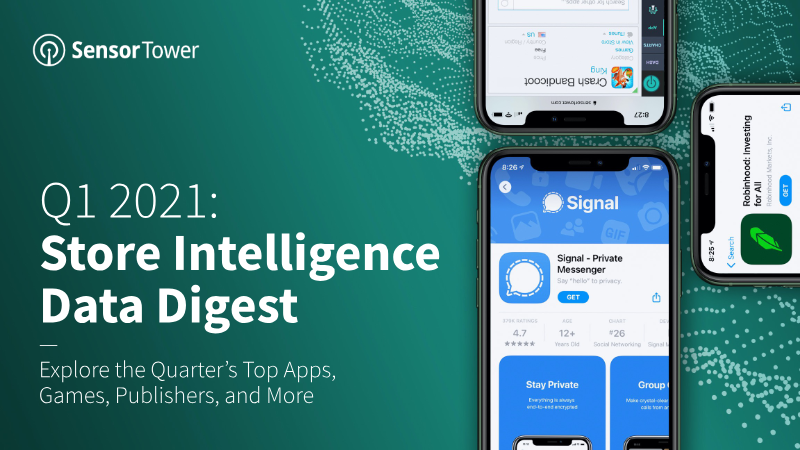
Q1 2021: Store Intelligence Data Digest
Global mobile app downloads reached 36.6 billion in the first quarter of 2021, representing an 8.7% year-over-year increase. This growth was primarily fueled by a 15.3% surge on Google Play, which reached 28.2 billion installs, effectively counteracting an 8.6% decline on the App Store. While emerging markets like India and the Philippines saw growth exceeding 30%, established markets such as the United States and Russia experienced slight contractions as the initial download spikes seen during the 2020 pandemic began to stabilize.
The quarter was defined by a significant shift in consumer behavior toward privacy-focused communication and financial management. Telegram and Signal saw massive adoption, with Telegram becoming the top messaging app worldwide and Signal’s installs jumping from 2 million to over 60 million. Simultaneously, interest in cryptocurrency and retail investing drove a 34% increase in Finance category downloads across the U.S. and Europe, propelled by platforms such as Robinhood, Coinbase, and Binance. TikTok maintained its position as the top global app, while Google and Facebook continued their rivalry as the leading publishers by volume.
In the gaming sector, hypercasual titles remained the dominant force, accounting for 80% of the top 20 games in the United States. Join Clash 3D emerged as the most downloaded game globally, bolstered by heavy adoption in Asia. Despite a late-quarter release, Crash Bandicoot: On the Run achieved a standout performance with 23 million installs in its first week. Although App Store game downloads fell 22.4% year-over-year due to a high 2020 baseline in China, the overall market remained competitive, with hypercasual publishers like Voodoo and Zynga maintaining high rankings through aggressive acquisition and rapid release cycles.
- Global mobile app downloads rose 8.7% year-over-year to 36.6 billion in Q1 2021, driven by a 15.3% surge on Google Play that offset an 8.6% decline on the App Store.
- Hypercasual games dominated the U.S. market, accounting for 80% of the top 20 titles, with Join Clash 3D ranking as the most downloaded game globally.
- Finance category downloads in the U.S. and Europe grew by 34%, fueled by retail investing and cryptocurrency platforms like Robinhood, Coinbase, and Binance.
- Privacy-focused communication apps saw massive adoption, with Telegram becoming the top global messaging app and Signal installs increasing from 2 million to over 60 million.
- Emerging markets like India and the Philippines experienced growth exceeding 30%, while established markets like the U.S. and Russia saw slight contractions as pandemic-era download spikes stabilized.
+1
Sensor TowerJan 2021
Report77 pages
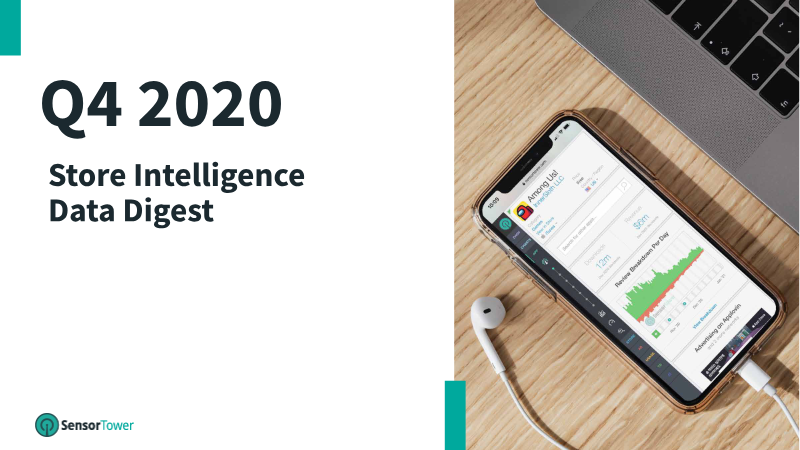
Store Intelligence Data Digest: Q4 2020
The global mobile app ecosystem experienced unprecedented expansion in 2020, culminating in a fourth quarter that saw 35.2 billion downloads and a year-end total of 143 billion. This 23.8% year-over-year increase was primarily catalyzed by the COVID-19 pandemic, which fundamentally altered consumer behavior across the App Store and Google Play. While Google Play drove the majority of volume growth with a 28% increase, the United States notably overtook China as the leading App Store market. India remained the global leader in total volume, contributing over 7 billion downloads in the final quarter alone.
The pandemic created a sharp divergence between industry segments, fueling record-breaking demand for Business and Gaming apps while severely depressing Travel and Navigation. Business category downloads surged by 134% as video conferencing tools like Zoom and Google Meet became essential, reaching 681 million and 331 million annual downloads respectively. Conversely, airline and rideshare apps saw declines of up to 46% in the United States. In the gaming sector, social-oriented titles thrived; Among Us emerged as a cultural phenomenon with 166 million quarterly downloads, while mobile gaming revenue surpassed $21 billion in the final quarter of the year.
Market leadership shifted significantly during this period as Google surpassed Facebook to become the top global publisher for the first time. TikTok maintained its status as the most downloaded non-gaming app globally for both the quarter and the year. Despite the overall surge in digital engagement, certain sub-sectors like hypercasual gaming faced headwinds in mature markets like the U.S. due to changes in commuting patterns. However, the successful late-year launches of titles such as Call of Duty: Mobile in China and the global rise of Genshin Impact signaled continued strength and diversification within the mobile gaming landscape heading into 2021.
- The global mobile app ecosystem reached 143 billion total downloads in 2020, a 23.8% year-over-year increase driven largely by pandemic-related shifts in consumer behavior.
- Business app downloads surged by 134% in 2020, highlighted by Zoom and Google Meet reaching 681 million and 331 million annual downloads respectively.
- Mobile gaming revenue exceeded $21 billion in Q4 2020, with social-oriented titles like Among Us driving engagement via 166 million quarterly downloads.
- Google surpassed Facebook to become the top global publisher for the first time, while TikTok maintained its position as the most downloaded non-gaming app globally for the year.
- India led the world in total download volume with over 7 billion downloads in Q4 2020, while the United States overtook China as the leading market for the App Store.
Sensor TowerJan 2021

Report29 pages
State of the Game Industry 2021
The global game industry entered 2021 characterized by a shift toward next-generation hardware and a complex transition to remote work environments. While the PC remains the foundational platform for development and revenue, the PlayStation 5 has established itself as the primary console of interest, capturing 44% of developer attention. Conversely, interest in immersive technologies has cooled, with VR and AR engagement dropping to 38% as the market consolidates around the Oculus Quest. Despite these platform shifts, a significant tension persists regarding digital storefront economics; only 3% of developers believe the traditional 30% revenue cut is justified, signaling a growing demand for more equitable distribution models.
The operational landscape has been profoundly shaped by the COVID-19 pandemic, leading to a notable increase in project delays, which rose from 33% to 44% year-over-year. However, the shift to remote work has proven surprisingly effective, with 66% of professionals reporting stable or increased productivity. This transition has not eliminated long-standing labor issues, as 30% of the workforce still reports "crunch" weeks exceeding 60 hours. Consequently, support for unionization remains high at 51%, driven by a desire for better work-life balance and fair compensation within a workforce where 57% of developers have a decade or less of experience.
Industry growth remains steady, evidenced by 47% of studios expanding their staff, yet demographic and social challenges persist. Although 60% of studios have initiated diversity and inclusion programs, the workforce remains 73% male, and only 31% of developers have implemented specific accessibility measures in their projects. As developers prioritize digital storefront promotion and word-of-mouth for discoverability, the industry continues to balance rapid technological adoption with the need for systemic improvements in labor practices and representation.
- The PlayStation 5 is the primary console of interest for 44% of developers, while interest in VR and AR has cooled to 38% as the market consolidates around the Oculus Quest.
- Remote work has proven effective, with 66% of professionals reporting stable or increased productivity, despite project delays rising from 33% to 44% year-over-year.
- Labor tensions remain high, as 30% of the workforce reports 'crunch' weeks exceeding 60 hours, leading to 51% of developers supporting unionization.
- Only 3% of developers believe the traditional 30% revenue cut taken by digital storefronts is justified, indicating a strong industry push for more equitable distribution models.
- While 60% of studios have launched diversity and inclusion programs, the workforce remains 73% male, and only 31% of developers have implemented specific accessibility measures.
Game Developers ConferenceJan 2021
Report31 pages
Social Casino Gaming Apps Report 2021
The global social casino market reached $6.2 billion in gross revenue in 2020, demonstrating robust financial health despite a highly saturated competitive landscape. Data collected from 239 apps and 39 million events between August 2020 and August 2021 indicates that while the sector is expanding, it has become increasingly difficult for new entrants to break into the top rankings. Marketing costs reflect this friction, with the average cost-per-install reaching $7.21. Significant disparities exist between platforms, as iOS installations cost more than double those on Android, largely due to shifting privacy regulations and tracking limitations.
Profitability in this sector relies on high long-term engagement and sophisticated monetization mechanics. The genre maintains a Day 30 return on ad spend of 25.18%, supported by a player base that is predominantly older, with nearly half of users aged 45 or above. These players are primarily motivated by the thrill of gameplay and the desire for treasure collection. To capitalize on these motivations, top-performing apps have increasingly adopted features such as album collectibles and special side-modes. Most notably, the battle pass mechanic saw a dramatic rise in market penetration, growing from 5% to 36% within a single year, while piggy banks and guild systems remain essential for driving social interaction and consistent spending.
Sustaining growth in the current climate requires a strategic shift toward high-excitement ad creatives and seamless integration with in-app experiences. Because no new titles reached the top 200 during the study period, established players must utilize machine learning and feature-level data to optimize for long-term value. Success is no longer defined solely by user acquisition but by the ability to integrate complex meta-features that satisfy the core audience's psychological drivers within an increasingly crowded and expensive digital marketplace.
- The social casino market is highly consolidated, with no new titles breaking into the top 200 rankings between August 2020 and August 2021.
- Market entry is increasingly expensive, with average cost-per-install reaching $7.21 and iOS acquisition costs more than double those of Android due to privacy tracking limitations.
- Battle pass mechanics experienced rapid adoption, with market penetration growing from 5% to 36% in a single year.
- The sector generated $6.2 billion in gross revenue in 2020, maintaining a Day 30 return on ad spend of 25.18%.
- The core player demographic is mature, with nearly 50% of users aged 45 or older, driving a focus on treasure collection and album collectible features.
+1
LiftoffJan 2021
Report21 pages
Gaming Deals Activity Report Q1-Q3’2021
The global video game industry experienced unprecedented growth in deal activity during the first three quarters of 2021, reaching a total closed deal value of $57.7 billion across 667 transactions. This represents a 2.5x increase in cumulative value and a 46% increase in the number of deals compared to the same period in 2020. The market was primarily driven by the gaming segment, which accounted for 75% of total value, followed by platform and technology, esports, and other related sectors.
Mergers and acquisitions served as the primary engine for this expansion, contributing $27.9 billion or 48% of the total closed deal value. Notable transactions included Microsoft’s $7.5 billion acquisition of ZeniMax Media and ByteDance’s $4 billion acquisition of Moonton. Public offerings contributed $21.2 billion, highlighted by the $3.75 billion IPO of Krafton. However, the report identifies a cooling trend in public markets during the third quarter, characterized by a decline in the number of deals and share price volatility for industry leaders. Private investments reached a record $8.6 billion, with late-stage venture capital accounting for 78% of that value, led by significant rounds for companies like Sorare and Discord.
A major finding is the explosive rise of blockchain gaming, which saw a 34x year-over-year growth in deal value, totaling $1.56 billion. Investors showed a strong preference for infrastructure and platform layers that enable blockchain integration, rather than individual game titles. Geographically, the report highlights the continued dominance of strategic investors like Tencent, which closed 69 deals during the period, focusing heavily on the mobile segment and the Chinese market.
The analysis is based on data from InvestGame and S&P Capital IQ, tracking closed transactions across mobile, PC, console, and VR/AR segments while excluding pure gambling and betting. The methodology utilizes a weighted average ranking system to identify the most active venture capital and strategic investors globally.
- The video game industry saw $57.7 billion in closed deal value across 667 transactions in Q1–Q3 2021, representing a 2.5x increase in value and 46% increase in deal volume compared to 2020.
- Mergers and acquisitions were the primary growth driver, contributing $27.9 billion (48% of total value), headlined by Microsoft’s $7.5 billion acquisition of ZeniMax Media and ByteDance’s $4 billion purchase of Moonton.
- Public offerings generated $21.2 billion, led by Krafton’s $3.75 billion IPO, though the market experienced a cooling trend and increased share price volatility during the third quarter.
- Blockchain gaming experienced explosive growth with a 34x year-over-year increase in deal value to $1.56 billion, with investors prioritizing infrastructure and platform layers over individual game titles.
- Private investments reached a record $8.6 billion, with late-stage venture capital accounting for 78% of that total, driven by major funding rounds for companies like Sorare and Discord.
+1
InvestGameJan 2021

Report26 pages
Gaming Spotlight 2021 Review
Mobile gaming has solidified its position as the primary driver of global digital games consumption, with spending projected to extend its lead to 3.1 times that of home consoles in 2021. This growth is characterized by a merging of the mobile and console experiences, as mobile devices increasingly offer console-quality graphics and cross-platform social features. Data indicates that global consumers downloaded over 1 billion games per week in Q1 2021—a 30% increase over pre-pandemic levels—while weekly spending rose 40% to $1.7 billion.
The industry is increasingly defined by cross-platform connectivity and real-time online features. Top-grossing titles like Roblox and Genshin Impact demonstrate the success of multi-platform rollouts that prioritize cross-play and cross-save functionality. This trend is supported by a surge in console companion apps and game livestreaming platforms. For instance, Steam saw a 60% increase in peak daily concurrent users between October 2019 and March 2021, while engagement and monetization on apps like Twitch and Discord reached new heights as social gaming habits became more ingrained during the pandemic.
Market research into gamer sentiment reveals a nuanced landscape for ad monetization. While overall sentiment toward in-game ads improved in the United States between 2019 and 2020, formats offering a direct value exchange performed best. Rewarded video ads and playable ads received the highest positive sentiment, whereas standard video ads remained the most divisive due to their perceived intrusiveness. Findings suggest that ad oversaturation correlates with negative sentiment and potential churn, particularly in high-saturation genres like word and trivia games.
This analysis covers global market trends from 2014 through early 2021, with specific deep dives into U.S. gamer surveys from Q3 2019 and Q3 2020. The data is synthesized from App Annie’s mobile market estimates and IDC’s primary research, which includes surveys of over 3,000 gamers and analysis of digital and physical spending across mobile, PC, and console segments.
- Mobile gaming is the dominant market force, with 2021 spending projected to be 3.1 times higher than that of home consoles.
- Global game downloads reached over 1 billion per week in Q1 2021, a 30% increase over pre-pandemic levels, while weekly spending grew 40% to $1.7 billion.
- Cross-platform functionality is a critical success factor, as evidenced by the performance of titles like Roblox and Genshin Impact that prioritize cross-play and cross-save features.
- PC gaming engagement saw significant growth, with Steam recording a 60% increase in peak daily concurrent users between October 2019 and March 2021.
- In-game advertising performance is highly dependent on format, with rewarded video and playable ads receiving the highest positive sentiment compared to intrusive standard video ads.
+1
data.aiJan 2021
Report30 pages
Mobile Game Genre Report: Role-Playing Games 2021
Role-playing games represent the most lucrative segment of the global mobile gaming market, generating $18.5 billion in 2020 and accounting for nearly a quarter of all mobile gaming revenue. This market is geographically concentrated in East Asia, where China, Japan, and South Korea collectively generate over 70% of the genre's global earnings. The landscape is characterized by the dominance of domestic publishers and a heavy reliance on established intellectual properties from movies, literature, and PC ports, which account for approximately half of the top-performing titles. The Marvel franchise serves as a primary example of this trend, exerting a pervasive influence on player acquisition and revenue generation through its immense brand saturation.
While IP-based titles leverage organic recognition, original properties must utilize aggressive influencer marketing and high-quality creative advertisements to compete. Long-term sustainability in the genre is driven by consistent content updates, social competitive mechanics, and time-limited gacha systems. Although in-app purchases remain the primary revenue driver—particularly among high-income male audiences—there is a significant shift toward hybrid monetization. Approximately 83% of players now accept non-disruptive rewarded video ads as a means to progress without direct spending.
To navigate evolving privacy regulations and tracking challenges, developers are increasingly prioritizing high-value user signals within the first 24 hours of gameplay. Interactive playable ads have emerged as a highly effective acquisition tool, occasionally increasing eCPMs by over 200%. By combining traditional spending triggers like battle passes and limited-time events with sophisticated ad integration, publishers are successfully monetizing both high-spending "whales" and non-paying users to maintain growth in an increasingly competitive global market.
- Mobile RPGs generated $18.5 billion in 2020, representing nearly 25% of total mobile gaming revenue.
- The market is heavily concentrated in East Asia, with China, Japan, and South Korea accounting for over 70% of global RPG earnings.
- Approximately 50% of top-performing RPG titles rely on established intellectual properties, such as the Marvel franchise, to drive player acquisition and revenue.
- Hybrid monetization is becoming standard, with 83% of players accepting non-disruptive rewarded video ads as an alternative to direct in-app purchases.
- Interactive playable ads have become a critical acquisition tool, capable of increasing eCPMs by more than 200%.
+5
PangleJan 2021

Presentation44 pages
1Q FY2021 Presentation Material: October to December 2020
CyberAgent achieved record-high consolidated sales of 131 billion yen during the first quarter of fiscal year 2021, representing a 13.3% year-over-year increase. This growth was primarily propelled by the Media and Advertising segments, offsetting a temporary downturn in the Game business. While the Game segment saw revenue decline 15% to 29.9 billion yen and operating profit drop 77.8% due to seasonal factors and elevated marketing expenditures, the company maintained a strong financial foundation with 252 billion yen in total assets. This performance establishes a solid trajectory toward meeting full-year targets despite the mixed results across different business units.
The Media segment emerged as a significant growth engine, with ABEMA driving a 67% surge in revenue to 20.4 billion yen. This expansion was supported by a premium subscriber base exceeding 921,000 users and an elevenfold increase in transaction volume for the WINTICKET platform. To capitalize on this momentum, the company restructured ABEMA into distinct Free and Premium business units. Simultaneously, the Game business prepared for a recovery through the high-profile launches of titles such as Uma Musume Pretty Derby and NieR Re[in]carnation, signaling a strategic focus on high-quality content to stabilize future earnings.
Corporate strategy remains centered on governance and technological adaptation within the Japanese market. The organizational structure utilizes a clear distinction between supervision and execution, supported by a board of eight directors that includes significant outside representation. By emphasizing environmental data disclosure and the integration of artificial intelligence within advertising and media functionality, the company aims to align with modern ESG standards. These initiatives, framed within the context of the New Normal, reflect a commitment to long-term sustainability and operational agility in a rapidly evolving digital landscape.
- CyberAgent achieved record-high consolidated sales of 131 billion yen in 1Q FY2021, a 13.3% year-over-year increase driven by strong performance in the Media and Advertising segments.
- The Media segment grew revenue by 67% to 20.4 billion yen, bolstered by ABEMA’s premium subscriber base exceeding 921,000 users and an elevenfold increase in WINTICKET transaction volume.
- The Game business experienced a 15% revenue decline to 29.9 billion yen and a 77.8% drop in operating profit, attributed to seasonal factors and increased marketing spend.
- To drive future earnings recovery, the company is focusing on high-quality content launches, specifically Uma Musume Pretty Derby and NieR Re[in]carnation.
- Management restructured ABEMA into separate Free and Premium business units to better capitalize on current growth momentum.
+1
CyberAgentJan 2021

Report52 pages
Go Global Mobile Game: New Insights
During the first half of 2021, China-headquartered publishers ascended to the global leadership position in the mobile gaming market, capturing 23% of overseas consumer spend. This 47% year-over-year growth resulted in $8 billion in revenue, driven by a strategic expansion into both established markets like Germany and emerging regions such as Chile and Egypt. The industry landscape is currently defined by a shift toward hybridization, where developers integrate casual mechanics into core genres to broaden audience appeal and sustain engagement.
The 4X March-Battle subgenre remains a dominant global force, leading consumer spend across major economies including the United States and the United Kingdom. While mature titles in the 4X and M3-Meta categories continue to drive massive revenue growth, emerging opportunities are surfacing in high-growth subgenres like Luck Battle and Merge Saga. These "Score Leaders" demonstrate significant increases in consumer spending despite declining download rates, suggesting a market pivot toward deeper monetization of existing user bases rather than raw acquisition.
The market is also experiencing a surge in specialized categories, most notably the Idol Training subgenre, which saw triple-digit growth in both spending and downloads during the first half of the year. In contrast, Puzzle RPGs faced declines in performance, likely due to shifting privacy policies impacting user acquisition strategies. To navigate these fluctuations, publishers are increasingly leveraging "Nijigen" or anime-style aesthetics and gacha monetization models. By combining these thematic elements with cross-subgenre mechanics and social features, developers are successfully maintaining competitive advantages in an increasingly crowded global marketplace.
- China-headquartered publishers captured 23% of overseas mobile gaming consumer spend in H1 2021, achieving $8 billion in revenue and 47% year-over-year growth.
- Developers are increasingly adopting a hybridization strategy, integrating casual mechanics into core genres to broaden audience appeal and improve user engagement.
- The 4X March-Battle subgenre remains the leading driver of consumer spend in major markets like the United States and the United Kingdom.
- High-growth subgenres such as Luck Battle and Merge Saga are seeing increased consumer spending despite declining download rates, signaling a shift toward deeper monetization of existing users.
- The Idol Training subgenre experienced triple-digit growth in both spending and downloads during the first half of 2021.
+1
data.aiJan 2021
Report24 pages
Games Marketing Insights for 2021
This analysis examines the shifting landscape of the global gaming industry following the COVID-19 pandemic, focusing on player motivations, monetization, and community engagement. The primary thesis asserts that the pandemic catalyzed a permanent expansion of the gaming audience, introducing a "new gamer" cohort that differs significantly from existing players in demographics and behavior. While existing players increased their time spent gaming, they became less likely to spend money, whereas new players emerged as a high-value segment with a greater propensity for in-game purchases.
The findings are based on a July 2020 survey of 13,246 mobile gamers across nine markets, including the United States, United Kingdom, Germany, and South Korea. Data indicates that the mobile gaming audience grew by 28 million in the US and 8.6 million in the UK. In Western markets, these new players are significantly younger than existing ones and gravitate toward "core" genres like shooters and strategy rather than casual puzzles. Conversely, South Korea proved an anomaly, where new gamers are older and prefer casual titles. Across all regions, new gamers play more hours per week than veterans and are more open to social features, such as multiplayer modes and in-game chatting.
The industry saw a massive shift toward digital discovery and community. Live-streaming platforms experienced record growth, with Facebook Gaming surpassing one billion hours watched in Q3 2020. Furthermore, 70% of consumers reported increased mobile device usage, making mobile-first discovery essential. A critical finding for marketers is the rising importance of brand familiarity; less than a quarter of players in the US, UK, and Germany tried games they had never heard of, suggesting that title recognition and IP strength are now as vital for mobile games as they are for the console market.
To navigate these shifts, the analysis recommends a mixed monetization model that balances ad-supported content with in-app purchases to capture diverse spending habits. It concludes that developers must embrace "always-on" marketing and community management, as players are increasingly seeking engagement through social media groups and streaming partnerships outside of the game client itself.
- The pandemic triggered a significant expansion of the gaming audience, adding 28 million mobile players in the US and 8.6 million in the UK by July 2020.
- New gamers represent a high-value segment with a greater propensity for in-game purchases compared to veteran players, who increased their playtime but decreased their spending.
- Brand familiarity is critical for acquisition, as fewer than 25% of players in the US, UK, and Germany are willing to try games they have not heard of previously.
- New gamers in Western markets are younger and prefer core genres like shooters and strategy, while new gamers in South Korea are older and favor casual titles.
- Live-streaming platforms saw record growth during the pandemic, with Facebook Gaming exceeding one billion hours watched in Q3 2020.
+1
KingJan 2021
Whitepaper61 pages
The 2021 Global Mobile Gamers Whitepaper
Mobile gaming has emerged as the primary driver of the global games market, generating $93.2 billion in 2021 and accounting for over half of total industry revenue. This segment is projected to reach $116.1 billion by 2024, fueled by expansion in emerging markets and the integration of social metaverse experiences. Within this landscape, short-video platforms have become essential hubs for player engagement, with nearly half of mobile gamers across thirteen key global markets utilizing these platforms to discover and share content.
Users on these platforms represent a high-value demographic that outperforms the average gamer in nearly every engagement metric. These players install 50% more games, spend 36% more time playing weekly, and engage with a significantly broader variety of genres. Their behavior is characterized by a high propensity for spending, particularly on progression-based purchases and in-game add-ons. This audience acts as a community of evangelists, twice as likely as non-users to discover new titles through social video content and subscription services, making them a critical target for strategy and MOBA developers.
Geographic analysis reveals distinct regional preferences in art styles and mechanics. While realistic aesthetics maintain global dominance, Asian markets show a unique affinity for anime and "cute" art styles, alongside a higher tolerance for randomized reward systems like gacha. Conversely, Western markets in the United States and United Kingdom lean toward puzzle and casual titles with cartoonish aesthetics. Despite these regional differences, fantasy remains the most popular setting worldwide. Across all territories, the consistent introduction of new content and technical stability are the most effective levers for re-engaging lapsed players and maintaining long-term retention.
- Mobile gaming generated $93.2 billion in 2021, accounting for over half of total industry revenue, with projections to reach $116.1 billion by 2024.
- Users who engage with short-video platforms represent a high-value demographic that installs 50% more games and spends 36% more time playing weekly than the average gamer.
- Short-video platform users are twice as likely as non-users to discover new titles through social content and subscription services, making them a primary target for strategy and MOBA developers.
- Regional art style preferences vary significantly, with Asian markets favoring anime and 'cute' aesthetics alongside gacha mechanics, while U.S. and U.K. markets prefer puzzle and casual titles with cartoonish aesthetics.
- Fantasy remains the most popular global game setting, while consistent content updates and technical stability are the primary drivers for re-engaging lapsed players and ensuring long-term retention.
+1
TikTokJan 2021
Report15 pages
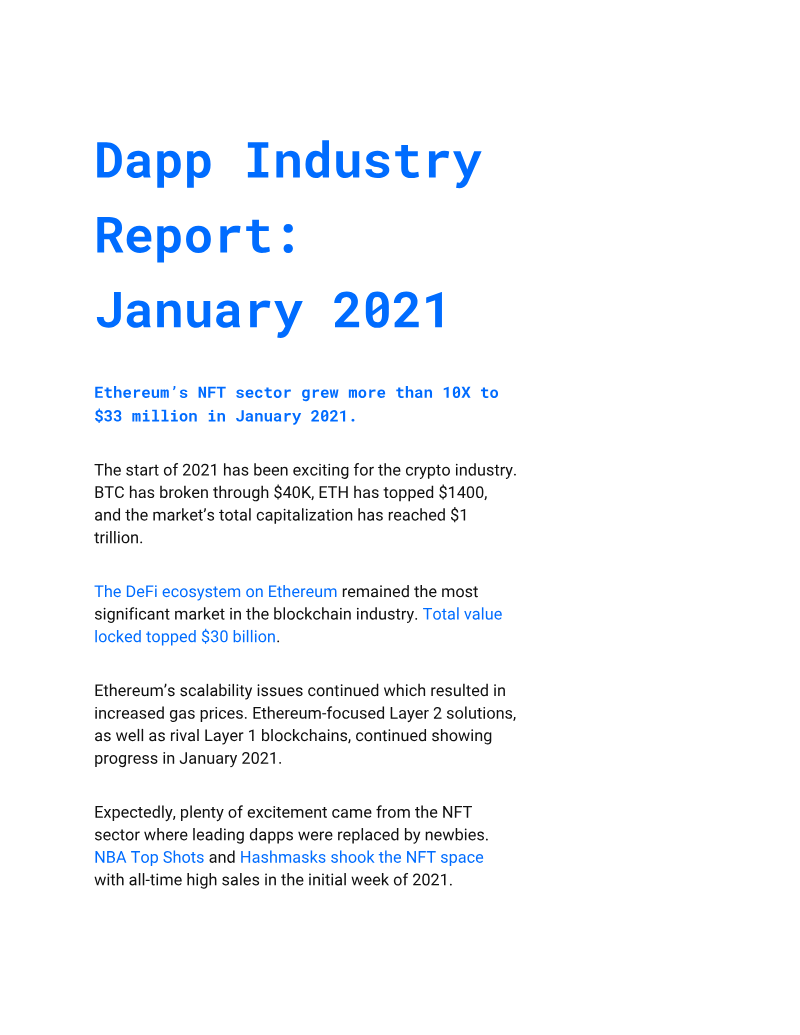
Dapp Industry Report: January 2021
The report presents a snapshot of the decentralized‑application (dapp) landscape in January 2021, emphasizing Ethereum’s continued dominance while highlighting the rapid emergence of competing blockchains and the explosive growth of the NFT sector. Across the month, Ethereum generated more than $112 billion in transaction volume—86 % of total blockchain activity—and supported roughly 72 000 daily active wallets (30 % of the market). Its DeFi ecosystem accounted for 99 % of this activity, with Uniswap and 1inch leading in unique wallet usage, while total value locked (TVL) on Ethereum surpassed $30 billion, driven by token price surges and a rise in aTVL to $14 billion.
NFT activity on Ethereum expanded tenfold, from $3 million in December to $33 million in January, propelled by CryptoPunks and the newly launched Hashmasks, which quickly became the top collectible dapp. Meanwhile, the Flow blockchain’s NBA Top Shot achieved over $40 million in sales, overtaking Ethereum‑based NFTs to become the leading NFT platform. Binance Smart Chain (BSC) recorded its strongest month, exceeding $15 billion in transaction volume and generating the highest number of unique active wallets on its network, largely through Venus and PancakeSwap. Wax’s gaming dapp Alien Worlds also posted rapid growth, reaching 8 000 daily active wallets.
Scalability constraints on Ethereum continued to inflate gas fees, prompting migration to layer‑2 solutions such as Matic and to alternative layer‑1 chains. The report’s data derive from DappRadar analytics, covering transaction volumes, wallet activity, and TVL across major protocols (Ethereum, BSC, Wax, Flow, EOS, Tron, and emerging networks like Polkadot and Solana) for the calendar month of January 2021. Overall, the findings indicate a blockchain ecosystem transitioning from DeFi‑centric growth to a new wave dominated by high‑value NFT dapps and diversified cross‑chain activity.
- Ethereum maintained market dominance in January 2021 with $112 billion in transaction volume, representing 86% of total blockchain activity and over $30 billion in total value locked.
- The NFT sector experienced explosive growth, with Ethereum-based NFT volume increasing tenfold to $33 million, while Flow’s NBA Top Shot surpassed all Ethereum platforms to lead the market with over $40 million in sales.
- Binance Smart Chain recorded its strongest performance to date, processing over $15 billion in transaction volume and achieving the highest number of unique active wallets, driven primarily by Venus and PancakeSwap.
- Ethereum's DeFi ecosystem remained the primary driver of its activity, accounting for 99% of its network usage with Uniswap and 1inch as the leading platforms.
- High gas fees caused by Ethereum's scalability constraints accelerated a migration toward alternative layer-1 blockchains and layer-2 solutions like Matic.
+1
DappRadarJan 2021
Report78 pages
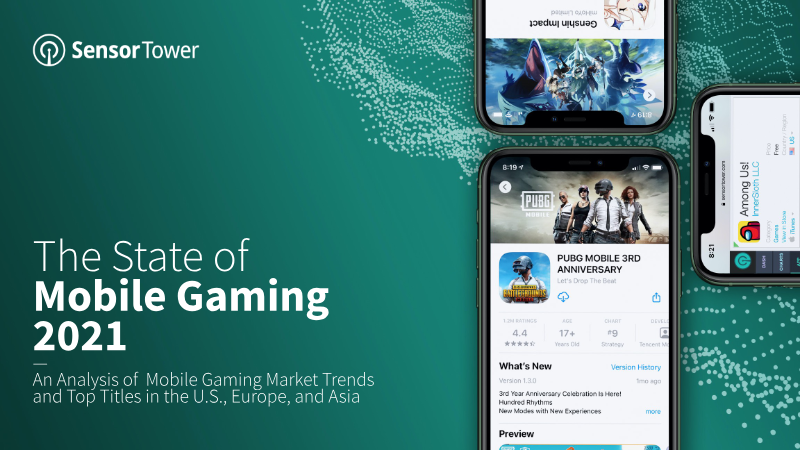
The State of Mobile Gaming 2021
The global mobile gaming industry experienced unprecedented expansion through early 2021, catalyzed by a pandemic-induced surge that drove quarterly revenue to a record $22.2 billion. This growth represents a significant 33% year-over-year increase, with the United States emerging as the premier revenue market, contributing 28% of global consumer spending. While mature markets in North America and Europe reached new financial heights, developing regions—most notably India—served as the primary engines for user acquisition, pushing global downloads to new peaks. Asia remains the largest collective region, surpassing $12 billion in quarterly revenue, anchored by Japan’s robust $5 billion contribution.
Market dynamics shifted toward social and multiplayer experiences, with titles such as Roblox and Genshin Impact dominating both engagement and monetization. RPG and Strategy remain the highest-grossing genres, generating $21.9 billion and $15.1 billion respectively in 2020, though Simulation and Shooter categories exhibited the fastest year-over-year growth. Simultaneously, the Hypercasual genre achieved staggering scale, reaching 3.4 billion downloads in a single quarter. This high-volume segment has become a cornerstone of the mobile advertising ecosystem, where publishers like Zynga and Playrix maintain a dominant share of voice across major digital networks.
Monetization has consolidated almost entirely around the freemium model, which now accounts for 99% of App Store revenue through a combination of in-app purchases, subscriptions, and advertising. Looking forward, the industry is projected to reach $117 billion in annual revenue by 2023, maintaining a compound annual growth rate of 13.5%. While the initial pandemic-driven spike in downloads has stabilized, the sustained increase in consumer spending and the rapid growth of markets in Southeast Asia and Europe indicate a permanent upward shift in the global gaming trajectory.
- The mobile gaming industry reached a record $22.2 billion in quarterly revenue in early 2021, marking a 33% year-over-year increase.
- The industry is projected to reach $117 billion in annual revenue by 2023, maintaining a compound annual growth rate of 13.5%.
- The freemium model now dominates the market, accounting for 99% of App Store revenue through in-app purchases, subscriptions, and advertising.
- RPG and Strategy remain the highest-grossing genres at $21.9 billion and $15.1 billion respectively, while Hypercasual games reached 3.4 billion downloads in a single quarter.
- The United States is the premier revenue market, contributing 28% of global consumer spending, while Asia remains the largest collective region with over $12 billion in quarterly revenue.
+1
Sensor TowerJan 2021