Shenmue II
Game
2 documents in the library are about Shenmue II, from writers such as DiGRA. Each has a summary and key insights with the page they come from.
Connections
Each row is a game or company named alongside Shenmue II, each column a document, oldest first. A mark means that document names it. Select a row to see those documents.
Documents about Shenmue II
Flesh, Plastic, Stone: The Pleasure of Recontextualised Character Models
This paper examines moments in videogames that deliberately undercut their own fictions by presenting characters as inert digital objects rather than lifelike agents.
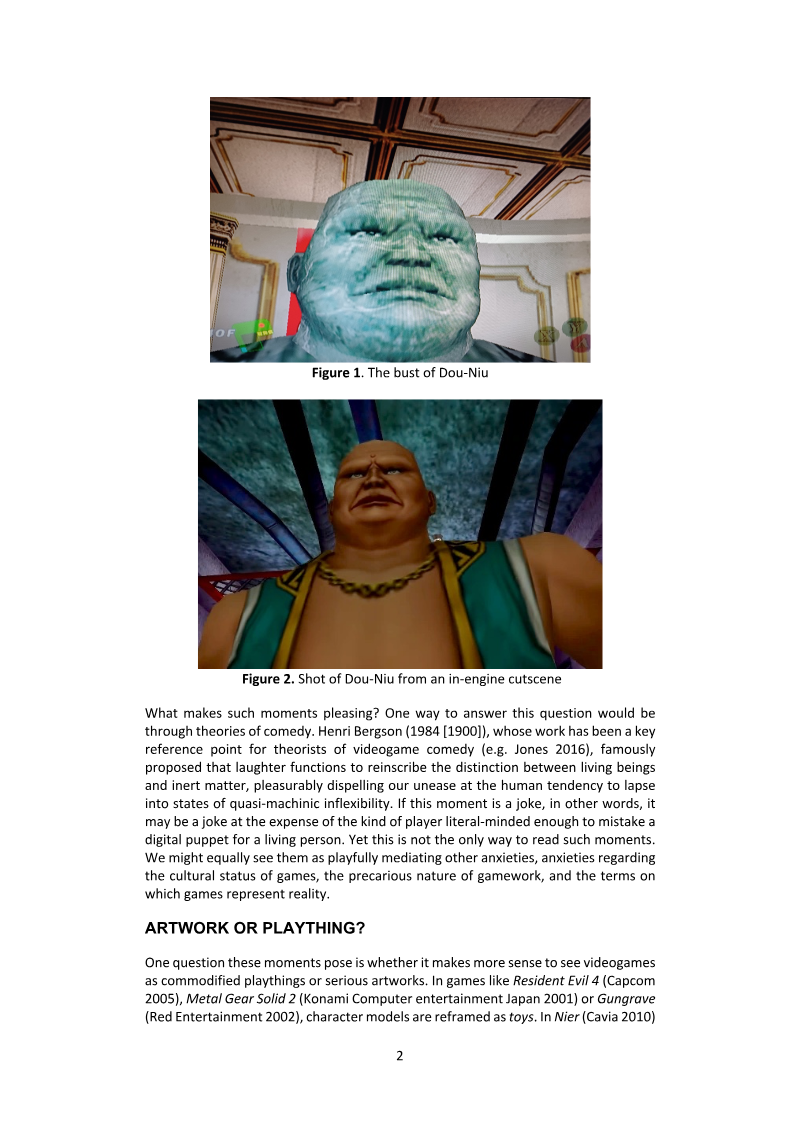
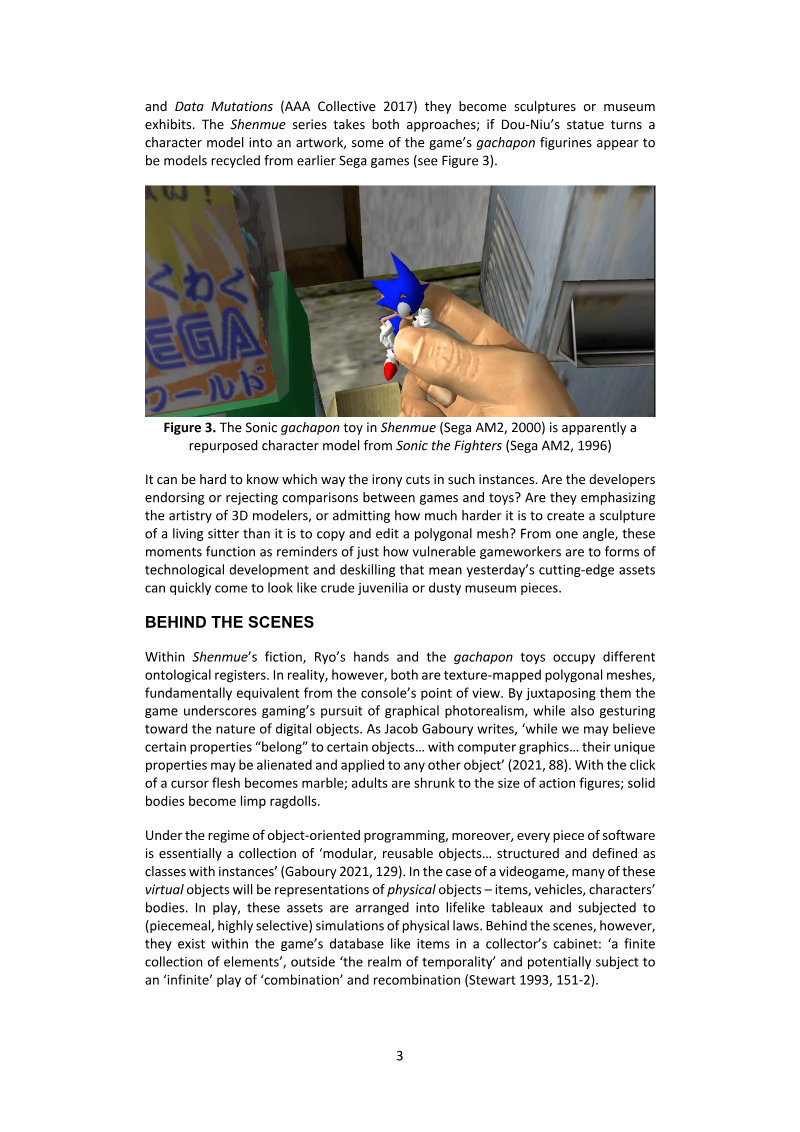
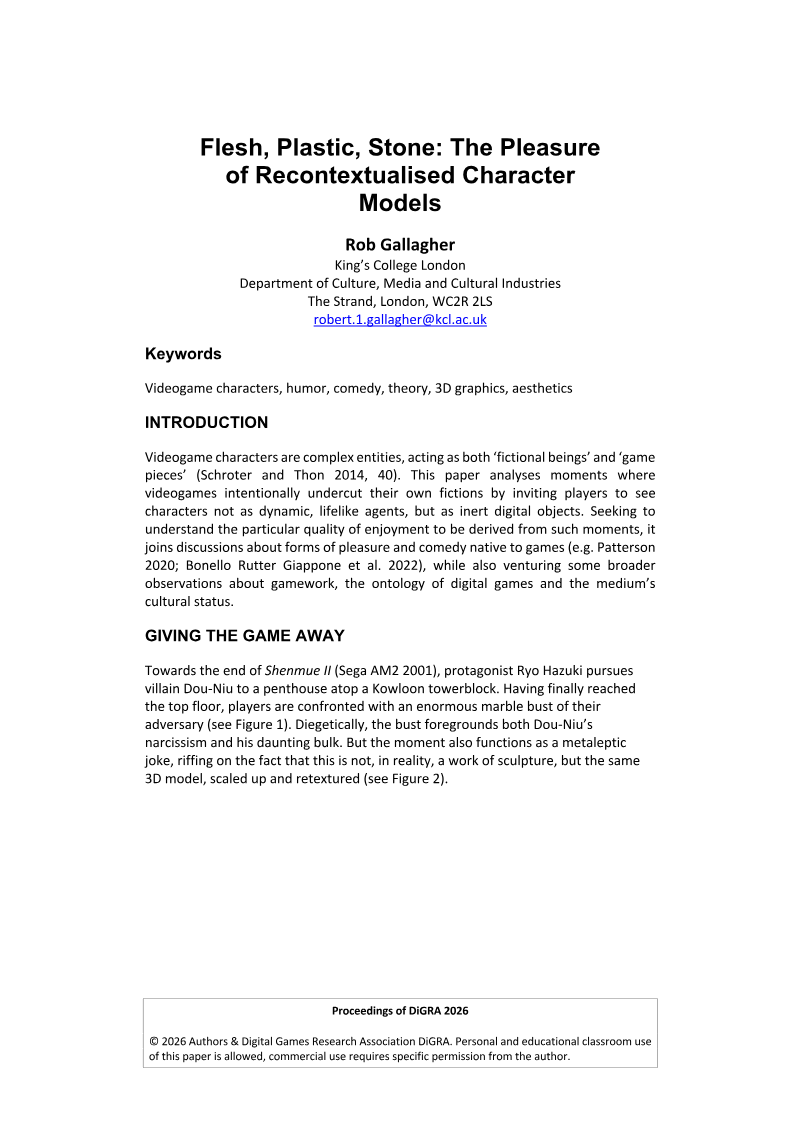
- The paper argues that moments where game characters appear as statues, toys, or museum exhibits deliberately undercut their own fictions and produce a distinctive pleasure, analysed through theories of comedy, the ontology of digital objects, and the cultural status of games.
- Its central example is Shenmue II, where a marble bust of a villain turns out to be the same scaled and retextured 3D model used for the character himself.
- The author contends such moments do more than mock players who mistake digital puppets for living people (as Bergson's theory of laughter might suggest), also mediating anxieties about games as commodified playthings versus serious art, and the deskilled, precarious labour of developers whose cutting-edge assets become obsolete.
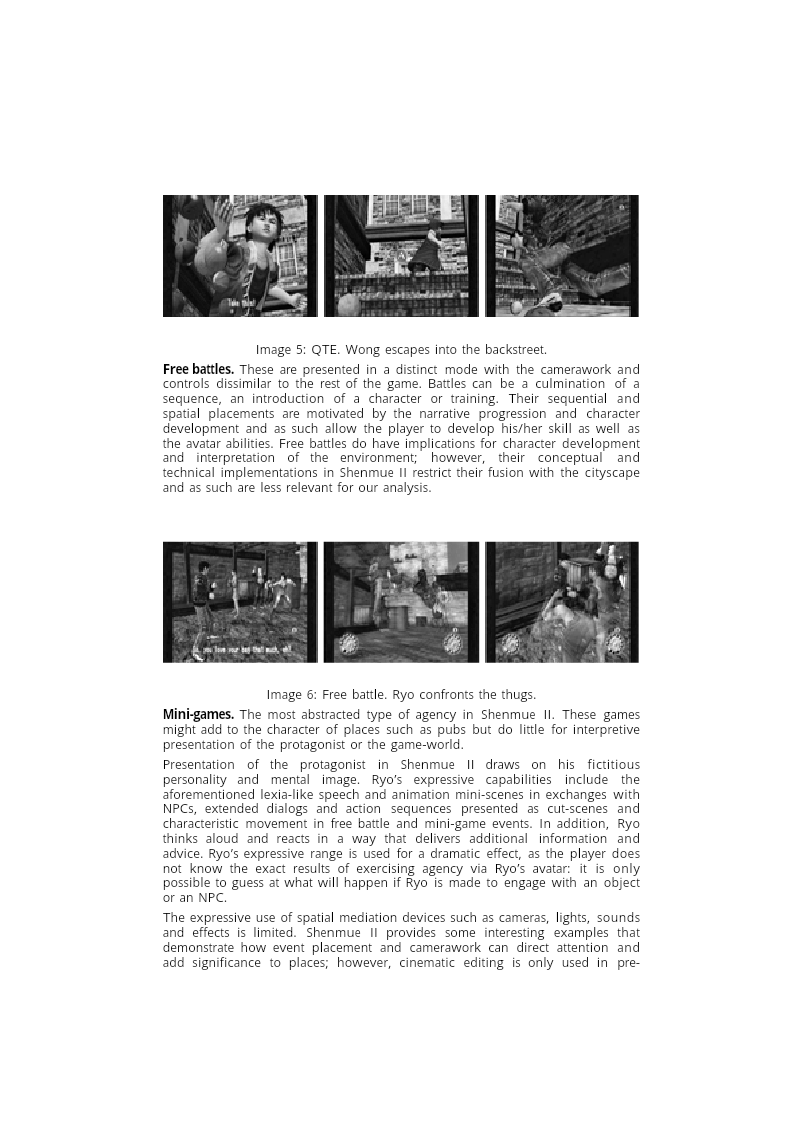
Space, Agency, Meaning and Drama in Navigable Real-Time Virtual Environments
Navigable real-time virtual environments, examined through the action-adventure role-playing game Shenmue II, derive their meaning and dramatic force from a hybrid structure that combines rule-based, systematic organization with situational knowledge drawn from real-world experience.
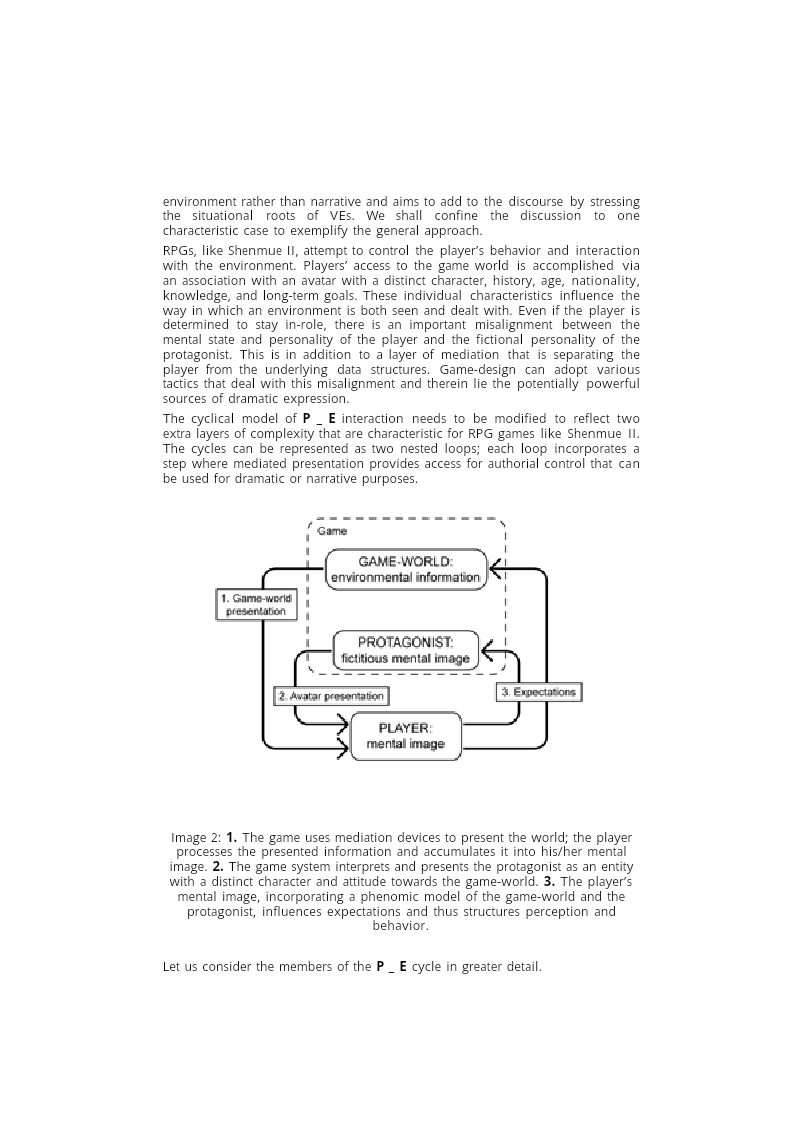
- Navigable real-time virtual environments derive meaning and dramatic force from a hybrid of rule-based systematic organization and situational knowledge drawn from real-world experience.
- Grounded in environmental psychology, the authors frame person-environment interaction as a cyclical, bi-directional process in which perception is continually shaped by prior experience, a cycle virtual environments replicate with an added layer of authorial mediation.
- The authors conclude that interactivity and culturally situated associations are the principal sources of engagement, and designers who neglect links to the external world risk producing confusion rather than immersion.