
Indigo Prophecy
GameBy Quantic Dream · Released Sep 2005
Indigo Prophecy is an action-adventure game that involves the player in making decisions to alter the narrative. The name change in North America was made to avoid confusion with Michael Moore's Fahrenheit 9/11 documentary film, which was released in 2004.
Connections
Each row is a game or company named alongside Indigo Prophecy, each column a document, oldest first. A mark means that document names it. Select a row to see those documents.
About the game
- Released
- Sep 2005
- Developer
- Quantic Dream
- Publisher
- Atari, Inc.
- Genres
- Adventure
- Platforms
- Xbox, PlayStation 4, PC (Microsoft Windows), PlayStation 2
Game data from IGDB.com
Documents about Indigo Prophecy
Fahrenheit and the Premature Burial of Interactive Movies
Lessard's analysis argues that Quantic Dream's Fahrenheit (2005, released as Indigo Prophecy in some markets) should be understood not as an original innovation but as a refined descendant of the interactive movie genre, which many observers believed had died by the late 1990s.
- Lessard argues Quantic Dream's Fahrenheit (2005, released as Indigo Prophecy in some markets) is a refined descendant of the interactive movie genre, which many believed had died by the late 1990s, rather than an original innovation.
- The game is classified as a branching tree of pre-recorded scenes linked by Quick Time Events, built on motion-captured animation, fixed on-rails camera work, and pre-arranged framing, placing it apart from procedurally generated first-person shooters.
- Fahrenheit sold more than 700,000 copies and earned aggregate review scores in the mid-80s percent range, which the author cites as evidence that the genre's demise may have been premature.
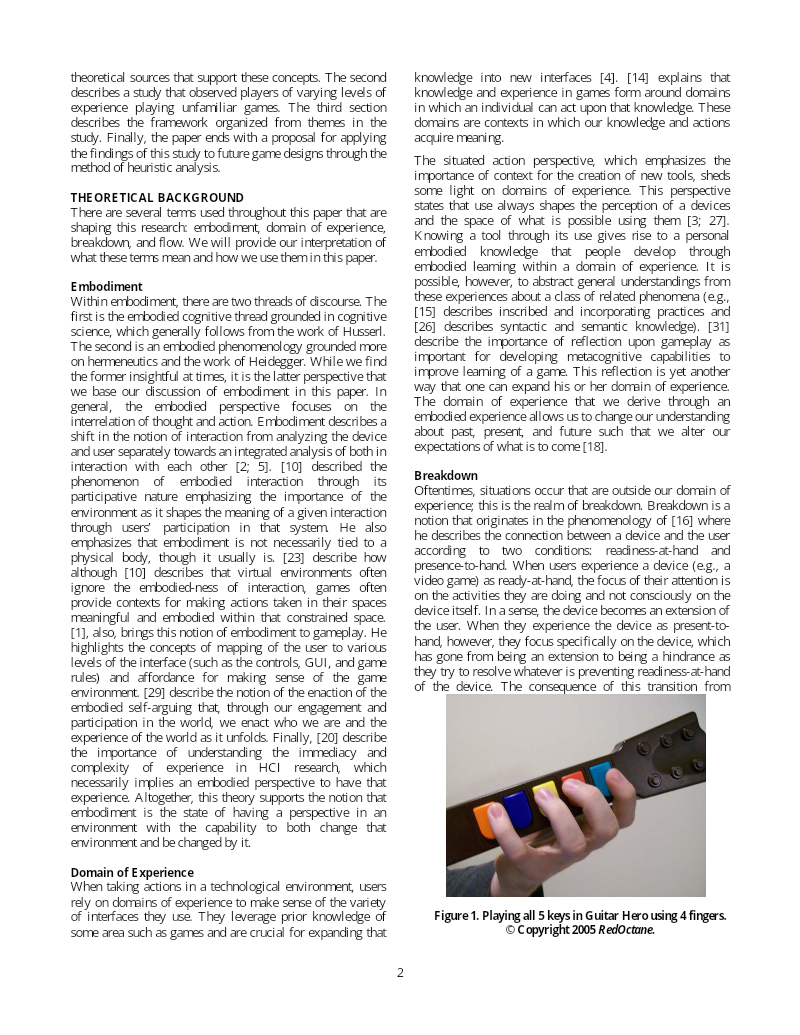
Evaluating Interactive Entertainment Using Breakdown: Understanding Embodied Learning in Video Games
This study examines how players learn video games through embodied interaction, using the concept of "breakdown" as its central lens.
- Breakdowns in video game play occur when a player's everyday strategies fail, leading either to behavioral adaptation (breakdown in interaction) or loss of immersion (breakdown in illusion), and they can be identified through observable signs such as surprise, erratic movement, and frustration.
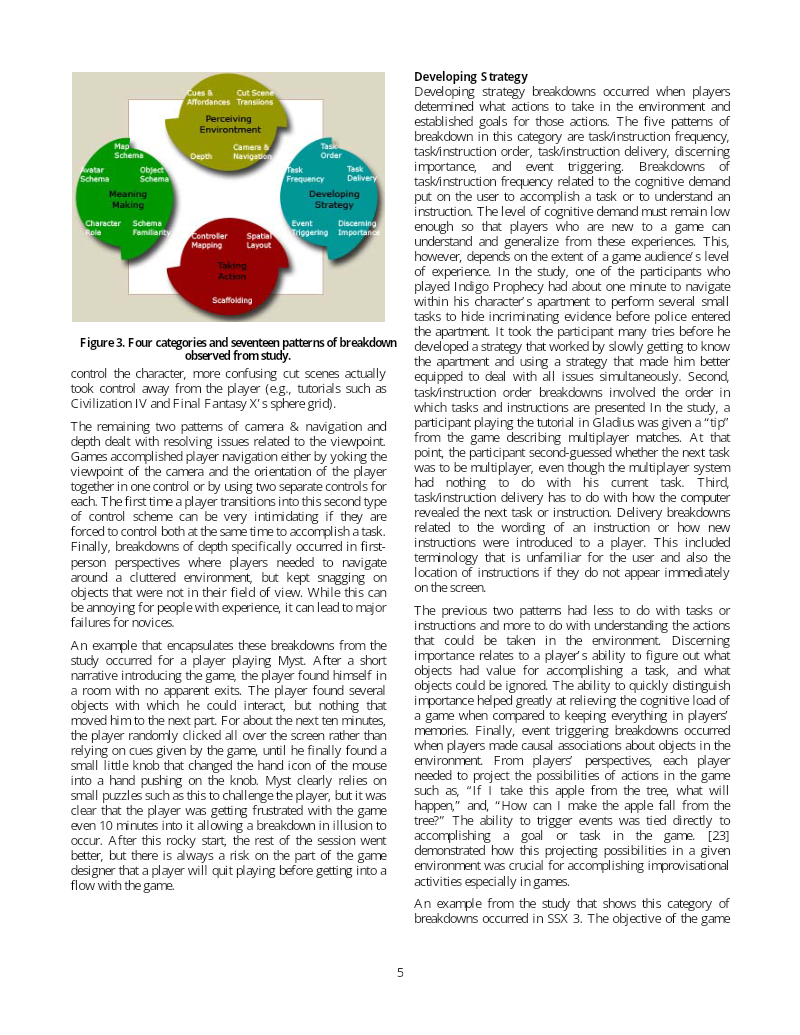
- Based on talk-aloud protocols and interviews with 13 Indiana University participants (eight male, five female) playing unfamiliar games like Myst, SSX 3, Sly 2, and Indigo Prophecy over roughly three-hour sessions, the authors identified a taxonomy of 17 breakdown patterns across four categories: perceiving the environment, developing strategy, taking action, and meaning making.
- Many breakdowns stem from unclear environmental cues, poorly delivered or sequenced instructions, mismatched control mappings, and disconnects between tutorials and core gameplay.