Updated Jun 1, 2026 by Ubisoft
Financial
Published by Ubisoft
UBISOFT REPORTS FIRST-QUARTER 2025-26 SALES In €m Reported % of total net bookings Q1 change vs. Q1 Q1 2025-26 Q1 2024-25 2025-26 2024-25 IFRS 15 sales 310.8 -3.9% NA NA Net bookings 281.6 -2.9% NA NA Digital net bookings 250.2 -2.7% 88.8% 88.7% PRI net bookings 151.8 -4.3% 53.9% 54.7% Back-catalog net bookings 260.4 +4.4% ...
UBISOFT REPORTS FIRST-QUARTER 2025-26 SALES In €m Reported % of total net bookings Q1 change vs. Q1 Q1 2025-26 Q1 2024-25 2025-26 2024-25 IFRS 15 sales 310.8 -3.9% NA NA Net bookings 281.6 -2.9% NA NA Digital net bookings 250.2 -2.7% 88.8% 88.7% PRI net bookings 151.8 -4.3% 53.9% 54.7% Back-catalog net bookings 260.4 +4.4% 92.5% 86.0% Q1 Net Bookings reached €281.6m, below expectations, reflecting a lower-than-expected performance for Tom Clancy’s Rainbow Six® Siege, a partnership that is now expected to materialize in Q2 and, to a lesser extent, an unfavorable foreign exchange impact. Progress on Group transformation: Ubisoft to reorganize into Creative Houses. These business units will enhance quality, focus, autonomy and accountability while fostering closer connections with players. The first Creative House is the new subsidiary announced in March with a recently appointed dedicated leadership. Closing of the transaction with Tencent is progressing well and, subject to regulatory approval, continues to be expected by the end of 2025. 2025-26 targets confirmed: Stable net bookings year-on-year, approximately break-even non- IFRS operating income and negative free cash flow. Following the closing of the Tencent transaction, the Group expects to maintain a consolidated non-IFRS net debt position of around zero. PARIS - July 22, 2025 – Today, Ubisoft released its sales figures for the first quarter of fiscal 2025-26, i.e., the three months ended June 30, 2025.
sh flow. Following the closing of the Tencent transaction, the Group expects to maintain a consolidated non-IFRS net debt position of around zero. PARIS - July 22, 2025 – Today, Ubisoft released its sales figures for the first quarter of fiscal 2025-26, i.e., the three months ended June 30, 2025. Yves Guillemot, Co-Founder and Chief Executive Officer, said “The first quarter delivered mixed results. On the positive side, Assassin’s Creed Shadows delivered on its expectations, with now more than 5 million unique players since its launch, and Rainbow Six Siege X received highly positive player feedback thanks to its renewed gameplay and enhanced features that drove significant player engagement growth. However, player spending in Rainbow Six Siege faced temporary but significant disruptions due to technical pricing issues, which have now been identified and addressed. Despite this one-off setback, the growth potential of the game is strong with solid traction on activity and in-game spending. We also continued to make meaningful progress on Ubisoft’s transformation by outlining a new operating model built around business units, called Creative Houses. These units will reflect our diverse types of gaming experiences and will allow for enhanced quality, focus, autonomy and accountability. Over time, each of these Creative Houses will boost creative vision and business performance.
erating model built around business units, called Creative Houses. These units will reflect our diverse types of gaming experiences and will allow for enhanced quality, focus, autonomy and accountability. Over time, each of these Creative Houses will boost creative vision and business performance. The new Subsidiary announced earlier this year and overseeing our flagship brands – Assassin’s Creed, Far Cry, and Rainbow Six – is the first of these Creative Houses. The recent announcement of its leadership team marks an important milestone as we move toward a more agile and focused organization while ensuring necessary long-term stability and creative vision.”
Q1 ACTIVITY Overall, first quarter net bookings reached €282m, below the guidance, reflecting a lower-thanexpected performance for Rainbow Six Siege, a partnership that is now expected to materialize in Q2 and, to a lesser extent, an unfavorable foreign exchange impact. Back Catalog net bookings stood at €260m, up 4% year-on-year and 6% excluding partnerships. Assassin’s Creed® Shadows performed in line with expectations and recently crossed the 5 million player mark. Ongoing additions continue to enhance the player experience, most notably the recent Parkour update, which introduced new interactions for both Naoe and Yasuke and was well received by players. Ahead of the Holiday season, the mid-term potential of the game will be supported by the Claws of Awaji expansion, coming in Q2, that will introduce more than 10 hours of new content along with a new weapon, skills and abilities, further expanding and enriching the game experience. The Rainbow Six Siege X update was launched on June 10, alongside Year 10 Season 2, introducing a significant evolution to its business model, major upgrades to core systems including gameplay improvements, a permanent new 6v6 game mode called Dual Front and enhanced player protection features. The launch received strong community feedback, with players praising the visual upgrades, modernized maps with new environmental destruction and the improved onboarding mechanics. While resolved in June, player spending this quarter saw a significant impact from a pricing exploit with prepaid currency cards that temporarily inflated virtual currency wallets.
raising the visual upgrades, modernized maps with new environmental destruction and the improved onboarding mechanics. While resolved in June, player spending this quarter saw a significant impact from a pricing exploit with prepaid currency cards that temporarily inflated virtual currency wallets. However, the momentum since launch is encouraging with acquisition levels trending around 5 times above the same period last year. Session Days were up 25% year-on-year in June since launch and 65% compared to the 3-prior week’s baseline. Overall, June delivered the third-strongest MAU performance in the game’s history, trailing only the two peak months during the Covid period in Spring 2020. Session Days have continued to grow 20% in July to date. Despite the one-off pricing setback, in-game spending has also shown positive traction, with the Valkyrie Paragon becoming the highest-performing bundle launch in terms of currency spend. These developments reflect growing sustained interest in the game and indicate that the evolving content and engagement strategies are resonating with players. Thanks to its engine upgrade, the ambitious Siege X update will enable much stronger quality and velocity of content releases, setting the foundations for the years to come.
sustained interest in the game and indicate that the evolving content and engagement strategies are resonating with players. Thanks to its engine upgrade, the ambitious Siege X update will enable much stronger quality and velocity of content releases, setting the foundations for the years to come. It is not viewed as a single moment, but as the beginning of a longer journey, and the long-term growth trajectory of the title is very promising. Tom Clancy’s The Division® 2 had a very strong start to the fiscal year with the launch of Year 7, the Battle for Brooklyn DLC release, a new Season and its inclusion in the Game Pass that drove significant growth in acquisition and engagement, reaching its highest activity performance since May 2020. Elsewhere in the catalog, Star Wars Outlaws™ released its second DLC, A Pirate’s Fortune, in mid-May. The update received positive reviews, with players praising the return of legendary pirate Hondo Ohnaka, the story and new gameplay elements. The game is also set to reach a broader audience with its upcoming release on the Switch 2 console on September 4.
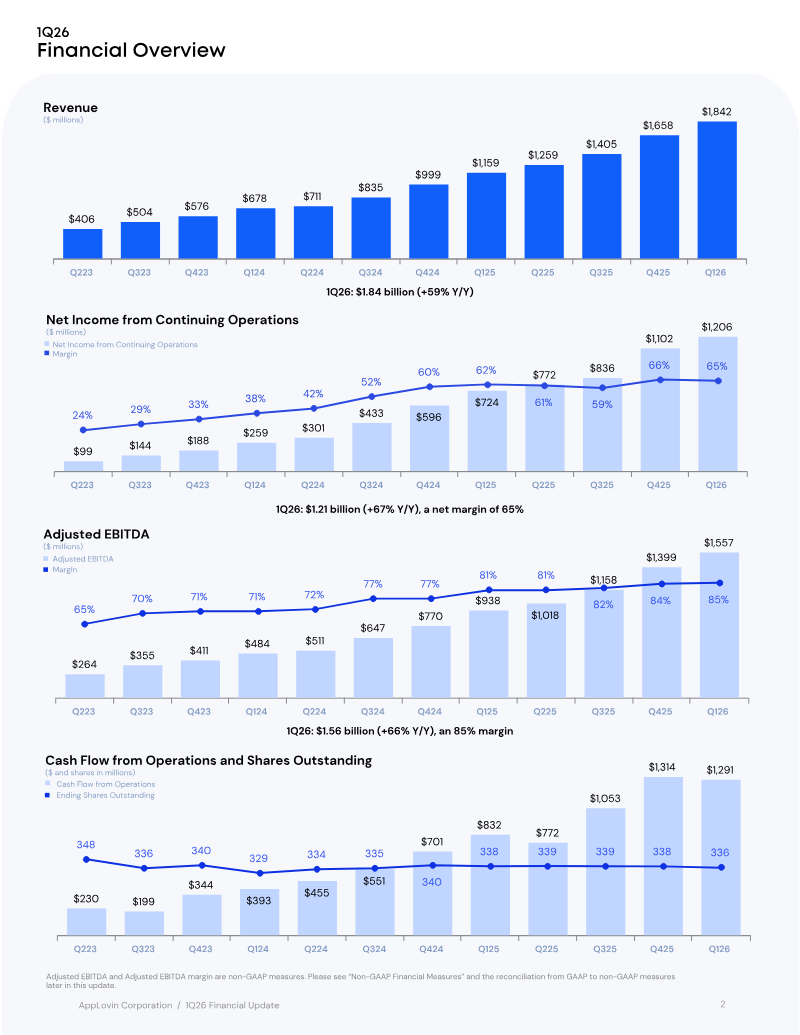
($ millions) $1,658 $1,842 Revenue $1,259 $1,405 <u>$1,842</u> ($ millions) $835 $999 $1,159 <u>$1,259</u> <u>$1,405</u> <u>$1,658</u> $406 $504 $576 $678 $711 <u>$835</u> $999 <u>$1,159</u> $406 <u>$504</u> <u>$576</u> <u>$678</u> $711 Q223 Q323 Q423 Q124 Q224 Q324 Q424 Q125 Q225 Q325 Q425 Q126 Q223...
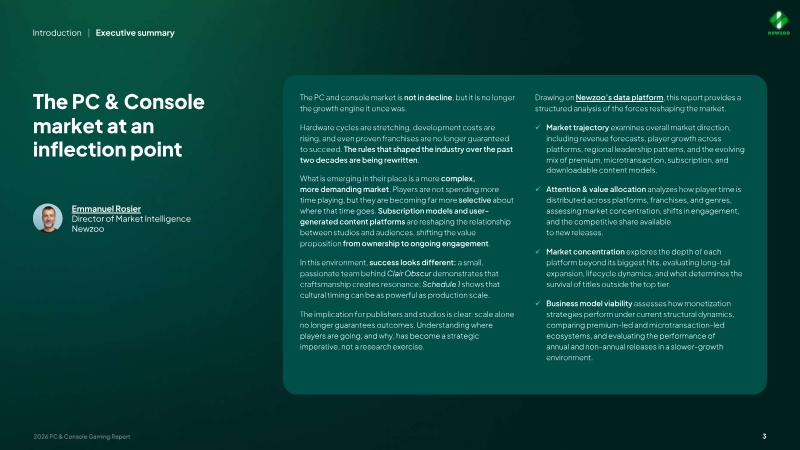
The 2026 State of Gaming analysis demonstrates a shifting landscape in which mobile gaming remains the largest driver of downloads—approximately 50 billion in 2025—but its growth rate is slowing. Revenue, however, continues to climb as monetization models mature and lifetime value deepens, especially within hybrid‑casual titles that now generate the most incremental income. In contrast, PC and console platforms experience record revenue growth, with Steam’s premium segment up 32 % and blockbuster releases such as Battlefield 6 capturing significant market share from incumbents. Shooter downloads on these platforms have plateaued, suggesting new titles are primarily cannibalizing existing audiences rather than expanding the category. Genre‑specific dynamics reveal that strategy games are the only mobile genre to grow in downloads, driven by 4X titles from Eastern developers. Action and shooter games dominate PC/console gains, while hyper‑casual remains the largest download engine but shows a notable lift in time spent, particularly in Tier 2 markets. Casual titles face declining day‑7 retention, indicating a stickiness challenge that could erode long‑term player value. Live‑ops and acquisition strategies have evolved toward retention‑focused events, multi‑tier season passes, and expedition‑style rewards. These mechanisms now represent the most reliable revenue drivers across competitive genres such as RPG, action, and simulation. Advertising spend remains concentrated on social channels—YouTube, Facebook/Instagram—and high‑attention formats like video, playable, and rewarded ads. Battlefield 6’s pre‑launch spend surpassed Call of Duty titles, leveraging Facebook, Reddit, and desktop display, while its post‑launch strategy pivoted to YouTube with cinematic, celebrity‑hook creatives. Geographically, the U.S. market shows a skew toward lifestyle and puzzle categories despite lower IAP shares, whereas casino titles exhibit higher spend‑to‑revenue efficiency. Overall, the industry is moving from acquisition toward deeper monetization per user, with indie shooters and simulation titles gaining traction amid intense competition in the shooter segment.
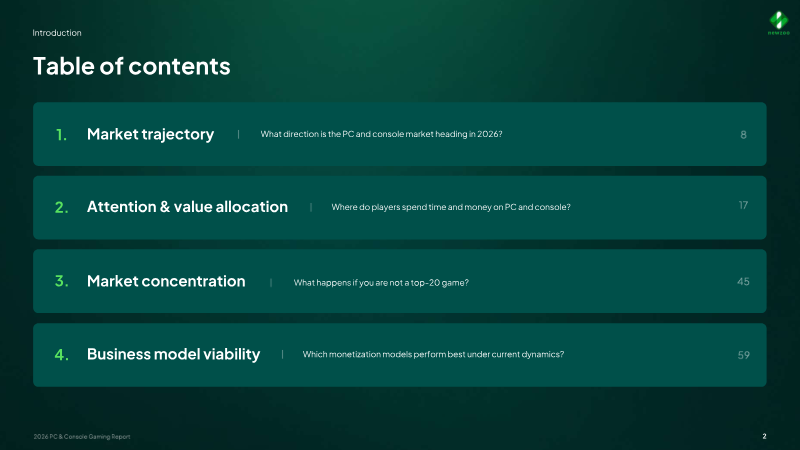
1. Market trajectory What direction is the PC and console market heading in 2026? 8 What direction is the PC and console market heading in 2026? 2. Attention & value allocation Where do players spend time and money on PC and console? 17 3. Market concentration What happens if you are not a top-20 game? 45 4.
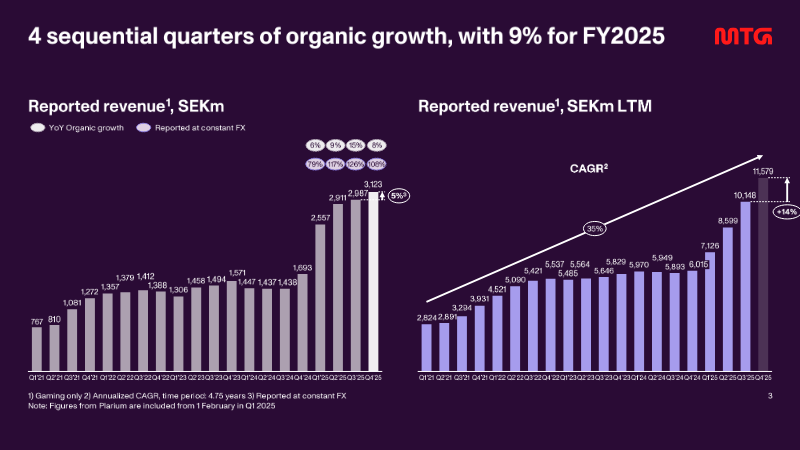
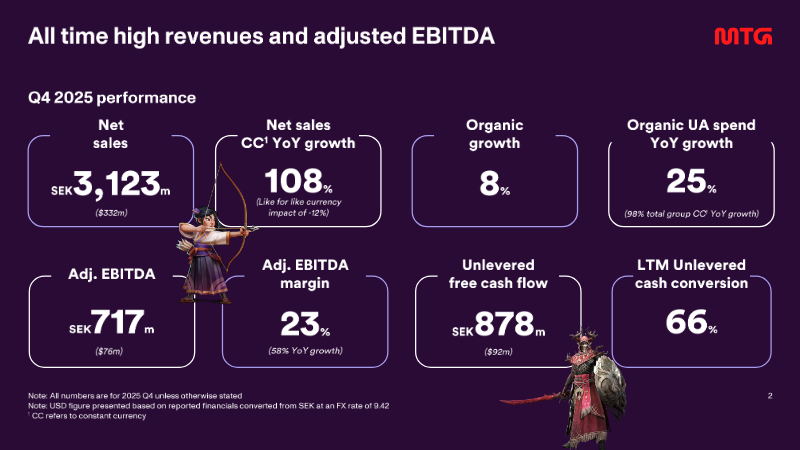
The interim filing presents the fourth‑quarter 2025 financial results for a midcore‑casual gaming group, emphasizing a record‑setting revenue run and the successful execution of a transformation agenda that includes the integration of the Plarium acquisition and the rollout of a new district structure in early 2026. Revenue reached SEK 3,123 million, reflecting 108 % organic growth year‑on‑year and a 25 % increase on a constant‑currency basis, while adjusted EBITDA rose to SEK 717 million, delivering a 23 % margin that matches the full‑year figure. Unlevered free cash flow amounted to SEK 878 million, with a cash‑conversion rate of 66 % and a leverage ratio of five times EBITDA, underscoring robust liquidity and disciplined capital management. User‑acquisition spending accelerated, representing 38 % of quarterly revenue—up from 37 % in the prior quarter—and grew 76 % on a reported basis, driven by heightened investment in original studios, new casual titles, and the racing franchise. The direct‑to‑consumer channel expanded by 600 basis points to 32 % of total revenue, reflecting a strategic shift toward higher‑margin in‑app purchases. Across the fiscal year, the company posted a 9 % organic revenue increase, with word‑games, racing, and RAID franchises delivering the strongest quarter‑end performance. Operating cash flow for the quarter stood at SEK 840 million, while adjusted net income was SEK 1,390 million, translating to an adjusted EPS of SEK 11.33. The financial outcomes exceed guidance and position the firm to meet its medium‑term outlook, with a pre‑IPO study for PlaySimple concluded and the midcore transformation progressing as planned.