Updated Mar 21, 2026 by Stillfront
Report
Published by Stillfront
Stillfront Group AB<sub>(</sub>SF.SE ) Stillfront Group AB<sub>(</sub>SF.SE) Corrected Transcript Q3 2022 Earnings Call 26-Oct-2022 Chief Executive Officer, Stillfront Group AB ChiefFinancial Officer, Stillfront Group AB ..........................................................................................................................................................................................
Corrected Transcript 26- Oct-2022 Stillfront Group AB<sub>(</sub>SF.SE ) Q3 2022 Earnings Call Total Pages: 15
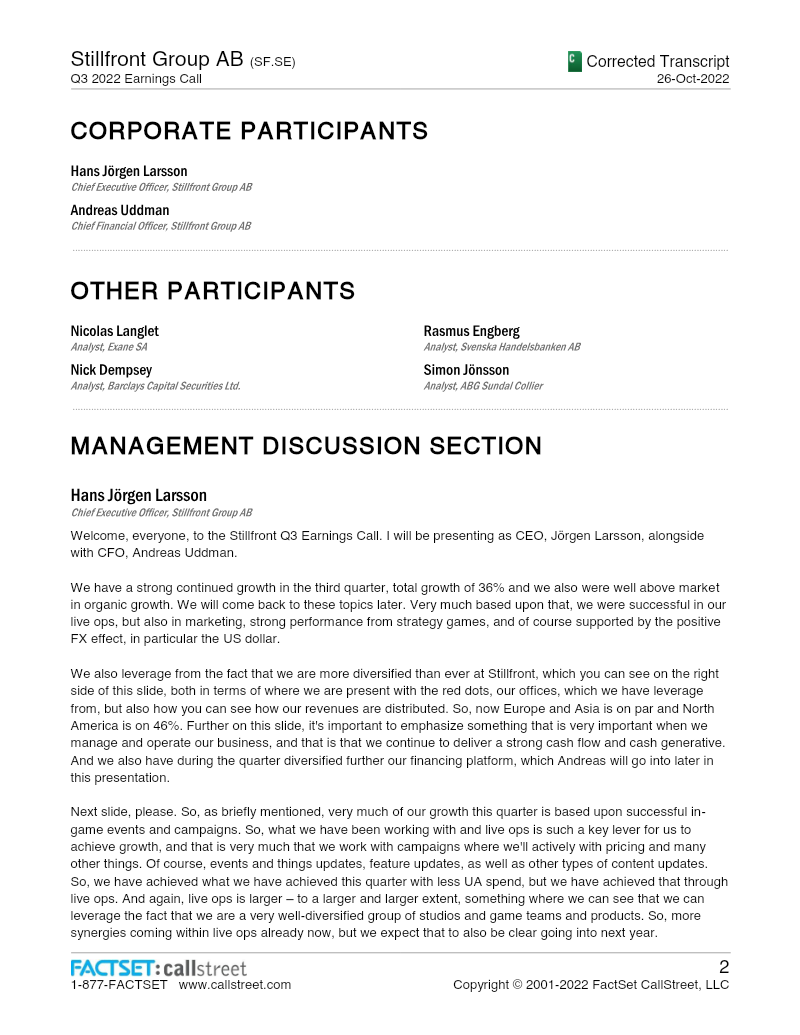
Stillfront Group AB<sub>(</sub>SF.SE) Corrected Transcript Q3 2022 Earnings Call 26-Oct-2022 CORPORATE PARTICIPANTS Hans Jörgen Larsson Chief Executive Officer, Stillfront Group AB Andreas Uddman ChiefFinancial Officer, Stillfront Group AB ...................................................................................................................................................................................................................................................... OTHER PARTICIPANTS Nicolas Langlet Rasmus Engberg Analyst, Exane SA Analyst, Svenska Handelsbanken AB Nick Dempsey Simon Jönsson Analyst, Barclays Capital Securities Ltd. Analyst, ABG Sundal Collier ...................................................................................................................................................................................................................................................... MANAGEMENT DISCUSSION SECTION Hans Jörgen Larsson Chief Executive Officer, Stillfront Group AB Welcome, everyone, to the Stillfront Q3 Earnings Call. I will be presenting as CEO, Jörgen Larsson, alongside with CFO, Andreas Uddman. We have a strong continued growth in the third quarter, total growth of 36% and we also were well above market in organic growth. We will come back to these topics later. Very much based upon that, we were successful in our live ops, but also in marketing, strong performance from strategy games, and of course supported by the positive FX effect, in particular the US dollar.
d we also were well above market in organic growth. We will come back to these topics later. Very much based upon that, we were successful in our live ops, but also in marketing, strong performance from strategy games, and of course supported by the positive FX effect, in particular the US dollar. We also leverage from the fact that we are more diversified than ever at Stillfront, which you can see on the right side of this slide, both in terms of where we are present with the red dots, our offices, which we have leverage from, but also how you can see how our revenues are distributed. So, now Europe and Asia is on par and North America is on 46%. Further on this slide, it's important to emphasize something that is very important when we manage and operate our business, and that is that we continue to deliver a strong cash flow and cash generative. And we also have during the quarter diversified further our financing platform, which Andreas will go into later in this presentation. Next slide, please. So, as briefly mentioned, very much of our growth this quarter is based upon successful ingame events and campaigns. So, what we have been working with and live ops is such a key lever for us to achieve growth, and that is very much that we work with campaigns where we'll actively with pricing and many other things. Of course, events and things updates, feature updates, as well as other types of content updates. So, we have achieved what we have achieved this quarter with less UA spend, but we have achieved that through live ops.
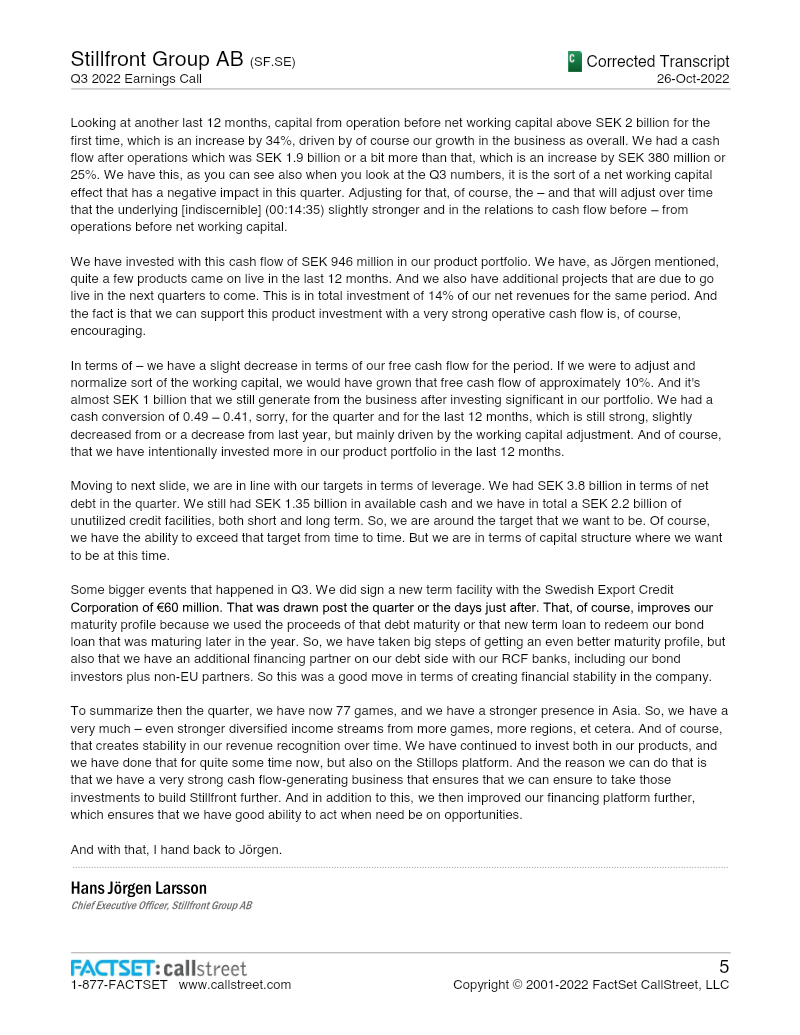
t we work with campaigns where we'll actively with pricing and many other things. Of course, events and things updates, feature updates, as well as other types of content updates. So, we have achieved what we have achieved this quarter with less UA spend, but we have achieved that through live ops. And again, live ops is larger – to a larger and larger extent, something where we can see that we can leverage the fact that we are a very well-diversified group of studios and game teams and products. So, more synergies coming within live ops already now, but we expect that to also be clear going into next year.
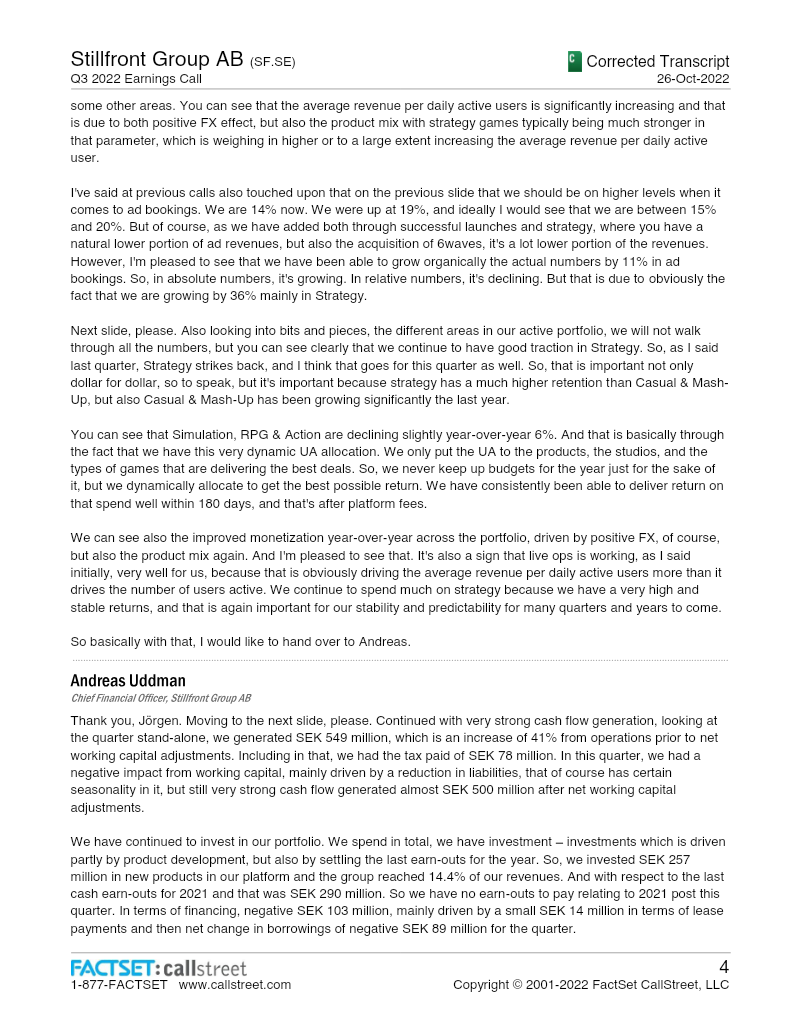
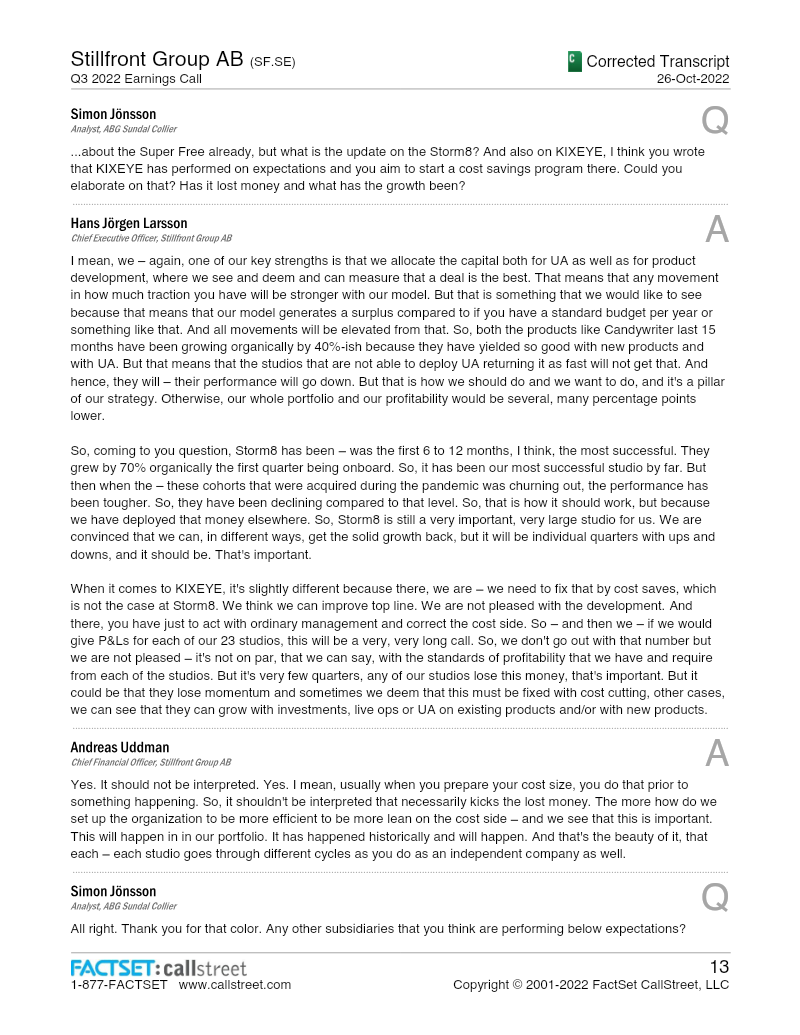
Stillfront Group AB<sub>(</sub>SF.SE) Corrected Transcript Q3 2022 Earnings Call 26-Oct-2022 We can – we are happy to see that the brand strategy engine that is based on – built on the Bytro engine, we have leveraged further. So, we have the five games out now from three different studio based upon that engine, which is, of course, a very efficient way for us to grow as we can be much more capital efficient for getting out new games. Also pleasing to see that Super Free for the fourth consecutive quarter have added a game to the active portfolio, which is the single game that came in in the third quarter, which is usually not a good quarter for launching games since this is the weakest quarter seasonality wise for us. But nevertheless, looking over the last year, we have added 21 games in total. So, we're now up to 77 games. Out of these 21 games, 15 have been added organically out of approximately 30 going into soft launch. So, we think that success rate is on par or even slightly better than we have had historically. We also – it's also important to note that in general terms, this is always our slowest quarter. But nevertheless, we have been able to improve our total performance and organic growth as we will come back to in a second.
uccess rate is on par or even slightly better than we have had historically. We also – it's also important to note that in general terms, this is always our slowest quarter. But nevertheless, we have been able to improve our total performance and organic growth as we will come back to in a second. Next slide, please. So, looking at some of our financial development. As mentioned, net revenues grew by 36% year-over-year driven both by acquisitions, of course the positive FX effect and organic growth. You can see on the right upper side of the slide that we had 1.4% organic growth, 22% growth from our acquisitions, hence our acquisitions are developing satisfactory or from satisfactory to very good. So, we are pleased with the acquisitions that we've made the last year, Jawaker, that now is organic from the 1st of October, and they will support us we're sure and also very stable performance from 6waves. Also, we can note that we increased our margins from Q2 to Q3. So, we have an adjusted EBIT margin of 29%. And also, it's important to emphasize that the organic growth that we have, 1.4%, is not the number that we are targeting or we are pleased with. But yeah, if you look at in relation to how the market has been developing, which is between 10%, some market analysts say up to, there was a report I think yesterday of 13% negative growth that in relation to that, which is of course also important to factor in I think it's a good number, but we're not satisfied with that number going forward and we expect that that will improve not only in Q4, but into next year.
The interim filing presents the fourth‑quarter 2025 financial results for a midcore‑casual gaming group, emphasizing a record‑setting revenue run and the successful execution of a transformation agenda that includes the integration of the Plarium acquisition and the rollout of a new district structure in early 2026. Revenue reached SEK 3,123 million, reflecting 108 % organic growth year‑on‑year and a 25 % increase on a constant‑currency basis, while adjusted EBITDA rose to SEK 717 million, delivering a 23 % margin that matches the full‑year figure. Unlevered free cash flow amounted to SEK 878 million, with a cash‑conversion rate of 66 % and a leverage ratio of five times EBITDA, underscoring robust liquidity and disciplined capital management. User‑acquisition spending accelerated, representing 38 % of quarterly revenue—up from 37 % in the prior quarter—and grew 76 % on a reported basis, driven by heightened investment in original studios, new casual titles, and the racing franchise. The direct‑to‑consumer channel expanded by 600 basis points to 32 % of total revenue, reflecting a strategic shift toward higher‑margin in‑app purchases. Across the fiscal year, the company posted a 9 % organic revenue increase, with word‑games, racing, and RAID franchises delivering the strongest quarter‑end performance. Operating cash flow for the quarter stood at SEK 840 million, while adjusted net income was SEK 1,390 million, translating to an adjusted EPS of SEK 11.33. The financial outcomes exceed guidance and position the firm to meet its medium‑term outlook, with a pre‑IPO study for PlaySimple concluded and the midcore transformation progressing as planned.
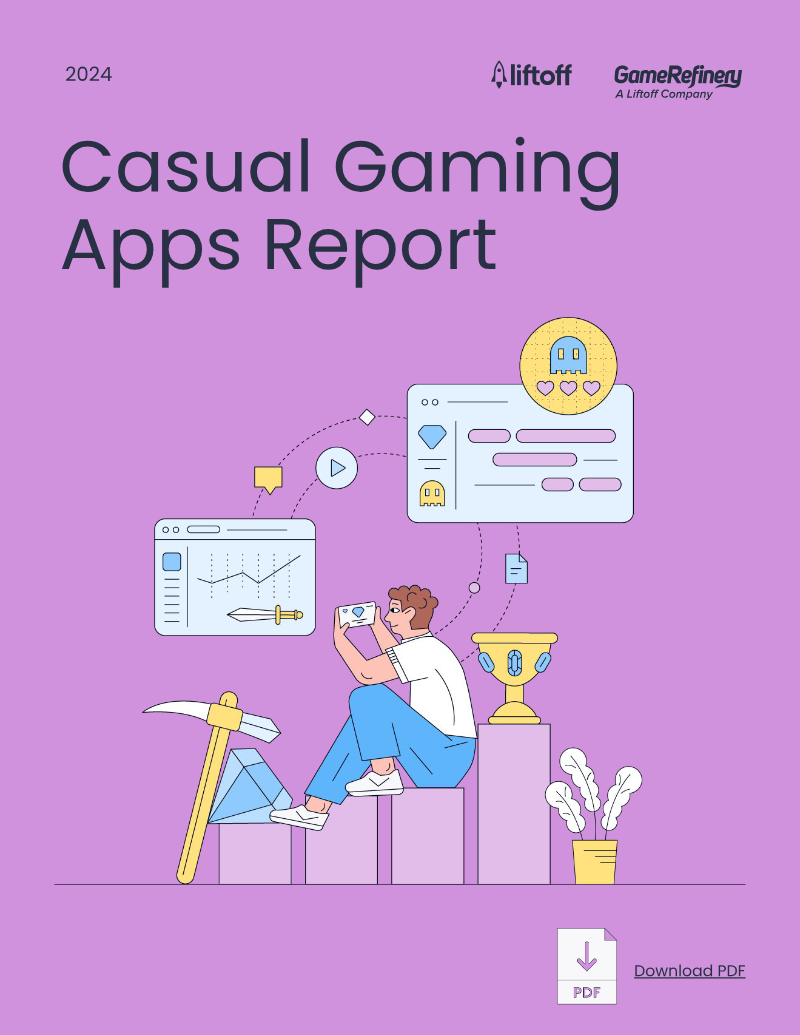
A well‑designed in‑game offer system is presented as the most potent driver of lifetime value and average revenue per paying user. By integrating a limited set of synergistic offer types—login bonuses, triggered prompts, endless streams, “1 + X” bundles, battle‑passes, stamp‑cards, and curated bundles—and optimizing their frequency, timing, pricing, segmentation, and economic balance, developers can achieve conversion rates as high as ninety‑six percent on login offers and lift repeat‑purchase value by roughly twenty percent through endless offers. Conversion is shown to be a function of repeated exposure rather than a single impression; players typically require about seven viewings before taking action. The most effective moments to surface offers are at login, during “out‑of‑currency” events, after level failures, or in high‑momentum gameplay phases. A dynamic, tiered pricing ladder that escalates after each purchase and regresses after periods of inactivity—exemplified by a seven‑tier structure ranging from under one dollar to ninety‑nine dollars—enables precise alignment with player spend propensity while avoiding both under‑monetization of high‑potential users and alienation of low‑spenders. Segmentation must extend beyond basic recency and frequency metrics to incorporate geographic tier, acquisition source quality, and player progression. Lower‑tier regions demand adjusted price ladders and reduced offer frequency, whereas high‑quality acquisition channels justify more complex bundles. Early‑game players respond best to inexpensive, simple offers, while mid‑ and late‑game users can be presented with higher‑value packages. Anchoring the entire shop around a stable, low‑priced entry pack establishes a reference point that shapes perceived value across all offers. Collectively, these principles apply to mobile and casual games operating globally, reflecting current industry practices and data from recent case studies. Implementing the outlined framework promises measurable improvements in monetization efficiency, player satisfaction, and overall revenue performance.
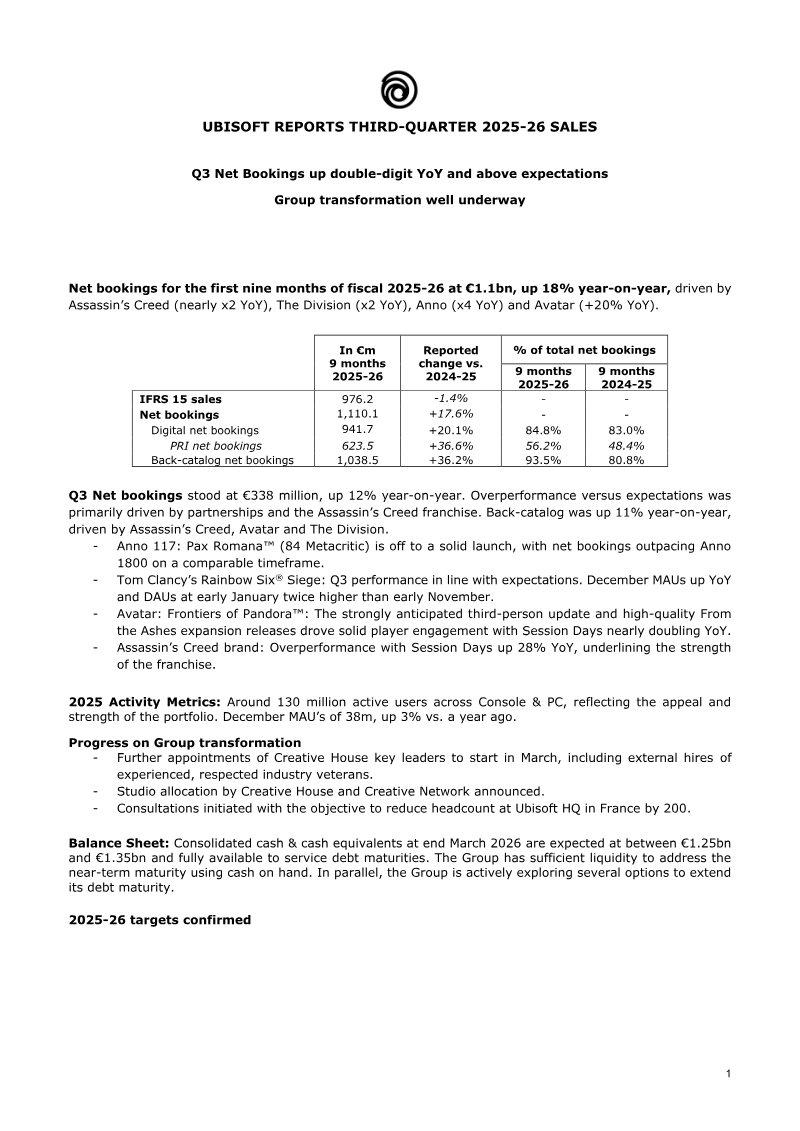
Ubisoft reported a double-digit increase in net bookings for the third quarter of fiscal year 2025-26, reaching €338 million. This 12% year-on-year growth exceeded internal expectations, primarily driven by strong performance in partnerships and the Assassin’s Creed franchise. For the first nine months of the fiscal year, net bookings totaled €1.11 billion, an 18% increase compared to the previous year. This growth was largely supported by back-catalog sales, which rose 36.2% and accounted for over 93% of total net bookings during the nine-month period. Key performance drivers included the successful launch of Anno 117: Pax Romana, which outpaced its predecessor, and significant engagement growth for Avatar: Frontiers of Pandora following a major third-person perspective update. While the first-person shooter market remained crowded, Tom Clancy’s Rainbow Six Siege performed in line with expectations, showing a recovery in daily active users by early January. Overall player activity remained robust, with approximately 130 million unique active users across PC and consoles during the 2025 calendar year. The company is currently undergoing a major structural transformation into five distinct "Creative Houses" to sharpen focus and accelerate decision-making. This reorganization includes the recent completion of a €1.16 billion investment from Tencent into Vantage Studios, which manages the Assassin’s Creed, Far Cry, and Rainbow Six brands. Additionally, Ubisoft is streamlining its headquarters in France, initiating consultations to reduce headcount by 200 positions. Looking ahead, Ubisoft confirmed its full-year targets, including net bookings of approximately €1.5 billion and a non-IFRS EBIT of around -€1 billion. The fourth-quarter pipeline features the global mobile launches of Rainbow Six Mobile and The Division Resurgence. The group maintains a solid liquidity position, with cash equivalents expected between €1.25 billion and €1.35 billion by March 2026, providing the flexibility to address upcoming debt maturities.
G5 Entertainment’s 2024 performance reflects a strategic pivot toward operational efficiency and margin expansion within the global mobile gaming sector. Despite a 14% year-over-year revenue decline to SEK 1,135 million, the company achieved a 5% increase in operating profit, reaching SEK 116.8 million. This improvement is attributed to a disciplined focus on its core demographic—women aged 35 and older—and the expansion of its proprietary direct-to-consumer G5 Store, which now accounts for 16.1% of total revenue. By leveraging AI-driven development and a rigorous funnel of five to six soft launches annually, the company aims to sustain its position in the evergreen Hidden Object, Match-3, and Mahjong genres. The company maintains a robust financial foundation, characterized by SEK 276 million in available cash and an equity/asset ratio of 83%. Financial stability is further supported by a conservative approach to capital, with no external debt and a portfolio where the top ten titles generate 98% of intangible asset value. While the business remains sensitive to market volatility, currency fluctuations, and reliance on major third-party distribution platforms, auditors have provided an unqualified opinion on the financial statements, confirming that the valuation of capitalized development costs remains within reasonable parameters. Beyond financial metrics, the organization emphasizes a structured approach to corporate governance and human capital. With a gender-balanced workforce and a commitment to ethical business conduct, G5 integrates comprehensive labor policies and 360-degree performance assessments to drive organizational health. While the company has implemented energy-efficient practices, it currently lacks formal climate mitigation plans and EU taxonomy-aligned sustainability metrics. Moving forward, the board remains focused on balancing organic growth with shareholder returns, as evidenced by the proposed dividend of SEK 8.0 per share and a continued emphasis on performance-based executive remuneration.