1 free read left. Create a free account for unlimited reading + AI research.
Create free accountArticle Eludamos: Journal for Computer Game Culture
1 free read left. Create a free account for unlimited reading + AI research.
Create free accountArticleEludamos: Journal for Computer Game Culture
Stark's 2020 Eludamos article argues that action games trace back to military and industrial work.
Doug Stark's 2020 Eludamos article advances a media philosophical approach to computer games, grounded in Nietzsche's observation that writing tools "work on our thoughts" and developed through the work of Rambo, Barker, Crogan, and Claus Pias. Its central contention is that action games descend from military and industrial projects, and that these origins train players' sensorimotor capacities. Rather than simply constraining thought, this training is presented as enabling new modes of perception and of living within digital culture. The essay identifies four defining attributes of action games: real-time control, grammatized time and space, user measurement, and user optimization.
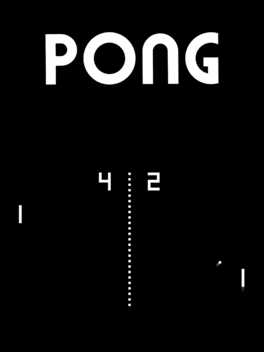
The historical argument traces this lineage from Wundt's reaction-time experiments and World War I army aptitude tests through Taylorist and Gilbreth-style studies of workplace efficiency, Wiener's anti-aircraft cybernetics, and the SAGE air-defense system. These converging developments in psychology, management, cybernetics, and Cold War infrastructure produced the human-machine feedback loops that culminated in Pong (1972), with the human operator treated as the slowest and most manageable element of the system. Crogan extends this reading, arguing that simulation and ergodic play reproduce a logistical desire to predict and control contingency rather than encounter it as genuine event.
The essay is largely critical of this tendency but complicates the picture. It contrasts Crogan's view with Bogost's position that play has intrinsic value and that openly acknowledging complicity carries critical weight. Drawing on Hansen and Benjamin, the author proposes that the pre-reflective, mimetic corporeal training games provide may be creatively generative rather than purely exploitative. The scope is broad, spanning twentieth-century military, industrial, and Cold War history and its afterlives in digital entertainment, with the argument resisting any simple totalization of game play as militarization.
Each row is a game or company this document names, each column a document, oldest first. A mark means that document names it. Select a row to see those documents.

Eludamos: Journal for Computer Game Culture · 2026

Eludamos: Journal for Computer Game Culture · 2026

Eludamos: Journal for Computer Game Culture · 2026

Eludamos: Journal for Computer Game Culture · 2026

Eludamos: Journal for Computer Game Culture · 2026

Eludamos: Journal for Computer Game Culture · 2026

Eludamos: Journal for Computer Game Culture · 2026

Eludamos: Journal for Computer Game Culture · 2025

Eludamos: Journal for Computer Game Culture · 2025

Eludamos: Journal for Computer Game Culture · 2025

Eludamos: Journal for Computer Game Culture · 2025

Eludamos: Journal for Computer Game Culture · 2025