1 free read left. Create a free account for unlimited reading + AI research.
Create free accountArticle Mobile Dev Memo
1 free read left. Create a free account for unlimited reading + AI research.
Create free accountArticleMobile Dev Memo
High distribution costs and market consolidation benefit incumbents with large marketing budgets. This creates significant barriers to entry for new developers.
Market Structure. The mobile app economy is increasingly a 'winner-takes-all' market.
Mobile free-to-play game launches face mounting structural barriers, and this April 2015 analysis argues that developers are responding with three marketing strategies that depart from the standard metrics-driven, advertising-funded user acquisition model. The app economy is characterized as winner-takes-all, with the Top Grossing chart effectively frozen because only a few developers can compete on marketing budgets and established networks.
Four forces over the prior 12 to 18 months are cited as raising distribution costs. The "great unbundling" has increased the downloads needed to reach a meaningful Top Downloaded position. Major publishers have moved into portfolio operation and aggressive cross promotion, widening install gaps between top ranks and the rest. Mobile ad tech has consolidated and vertically integrated, and non-gaming companies entering mobile advertising have pushed up costs. App discovery itself is not considered broken, but it favors well-funded players when growth depends on arbitrage between lifetime customer value and cost per install.
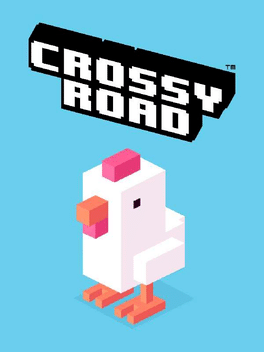
The first alternative, the gimmick, relies on a simple competitive mechanic suited to score comparison and social sharing, with Flappy Bird as the archetype and Crossy Road as another example. These games tend to de-emphasize in-app purchases, so advertising becomes the main revenue source, a model made more viable by growth in video and native ad formats for titles with very large user bases. The second, the celebrity co-brand, is exemplified by Glu's Kim Kardashian: Hollywood and a planned Katy Perry game. It offsets marketing costs through name recognition, social traffic, and press coverage, though public interest and media attention may fade as such games proliferate. The third, the second screen extension, ties games to television brands such as The Simpsons: Tapped Out, Family Guy: The Quest for Stuff, and Madden NFL Football, capturing heightened interest and search activity during broadcasts. Emerging TV-timed ad solutions could improve campaign performance and lower costs, though current tools remain imperfect.
The analysis is qualitative and conceptual, drawing on named examples rather than original survey data, and it focuses on the Western free-to-play mobile games market.
Each row is a game or company this document names, each column a document, oldest first. A mark means that document names it. Select a row to see those documents.

Mobile Dev Memo · 2026
Two & a Half Gamers · 2026
Mobile Dev Memo · 2026

Naavik · 2026
Mobile Dev Memo · 2026
Two & a Half Gamers · 2026

Deconstructor of Fun · 2026
Tenjin · 2026
Two & a Half Gamers · 2026
Two & a Half Gamers · 2026
Gamigion · 2026
SocialPeta · 2026
Deconstructor of Fun · 2026