1 free read left. Create a free account for unlimited reading + AI research.
Create free accountWhitepaper DiGRA
1 free read left. Create a free account for unlimited reading + AI research.
Create free accountWhitepaperDiGRA
Celia Pearce's paper responds to Gonzalo Frasca's 2003 essay "Ludologists Love Stories Too." Pearce argues that the essay deepened the divide it addressed.
Celia Pearce's paper "Theory Wars" responds to Gonzalo Frasca's 2003 essay "Ludologists Love Stories Too," which argued that the ludology/narratology debate was largely a misunderstanding. Pearce contends that Frasca's essay itself deepens the divide by polarizing scholars into opposing camps and by mislabeling and decontextualizing their positions. She argues that attaching the "-ist" suffix to researchers creates a false binary, and that many scholars would prefer to move freely between play-centered and narrative-centered perspectives rather than adopt a fixed position. Her central proposal is to reframe "narrative" as an adjective rather than a noun, shifting the question from whether games are narratives to the more productive question of in what ways they are narrative.
The paper develops this reframing through several concrete examples. Pearce uses a comparison of the "plots" of chess and Macbeth to illustrate how narrative operates differently across media, and she considers how board games such as Monopoly and Clue embed abstract or fictional roles. She draws on Jesper Juul's work to argue that the computer adds temporality, responsive animation, and procedural simulation, which expand the possibilities for narrative. Pearce also advances her earlier argument that many games, particularly since the early 1990s, align more closely with spatial storytelling traditions such as theme parks and cathedrals than with novels or cinema, and she highlights the concept of "emergent authorship," in which stories arise from play itself.
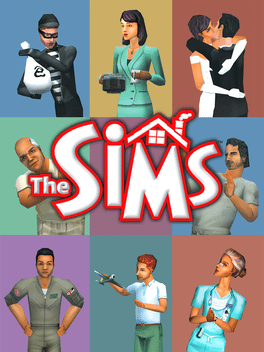
The scope of the paper is primarily conceptual and theoretical, drawing on the DiGRA 2005 proceedings and situating its discussion within game studies literature from roughly 1994 to 2005. It does not present empirical data, surveys, or sample-based findings. Its method is essentially critical and illustrative, relying on close reading of Frasca's arguments, analysis of named games such as Myst, The Sims, and Civilization, and reference to conversations among scholars at conferences. Pearce's overall conclusion is that the debate would be more fruitful if scholars focused on specific games and their particular mechanisms rather than on the labels assigned to one another.
Each row is a game or company this document names, each column a document, oldest first. A mark means that document names it. Select a row to see those documents.
DiGRA · 2012
DiGRA · 2012
DiGRA · 2012
DiGRA · 2012
DiGRA · 2012
DiGRA · 2011
DiGRA · 2011
DiGRA · 2011
DiGRA · 2011
DiGRA · 2011
DiGRA · 2011
DiGRA · 2011
PocketGamer.biz · 2025