1 free read left. Create a free account for unlimited reading + AI research.
Create free accountWhitepaper DiGRA
1 free read left. Create a free account for unlimited reading + AI research.
Create free accountWhitepaperDiGRA
Eva Nieuwdorp's DiGRA 2005 paper, "The Pervasive Interface: Tracing the Magic Circle," argues that pervasive games, which embed fantasy within everyday physical and social settings, demand a rethinking of what counts as an interface. Rather than limiting the concept to hardware and screens, the paper draws on human-computer interaction theory, particularly Dourish's notion of embodied interaction, to propose a "liminal interface" that players cross in two stages. The first, the paratelic interface, is a playful state in which players set aside lifeworld conventions through what Goffman calls rules of irrelevance. The second, the paraludic interface, is a rule-bound structure in which the game world's semiotic conventions become dominant, distinguishing paidia (free play) from ludus (structured play).
The argument rests on a reworked account of the magic circle, which the author treats as a permeable, two-way boundary rather than a sealed space. Drawing on Huizinga, Caillois, Gee, and Goffman, the paper examines how object-meaning relationships are deliberately strained in pervasive play, illustrated through the ambiguous "Mystery Key" in The Go Game. Because the everyday world persists as a backdrop, the paper contends that the game world must feel omnipresent and internally consistent; if it does not, the magic circle is pierced and the game collapses.
The paper is primarily conceptual and theoretical, offering no empirical data and no player studies. Its scope is defined by reference to examples such as Botfighters, I Love Bees, and The Go Game, and it explicitly defers questions of player experience and further definitional refinement to later research. Positioned as a pre-study for the author's forthcoming Master's thesis, it establishes a framework rather than testing one.
DiGRA · 2022
DiGRA · 2022
DiGRA · 2022
DiGRA · 2022
DiGRA · 2022
DiGRA · 2022
DiGRA · 2022
DiGRA · 2022
DiGRA · 2022
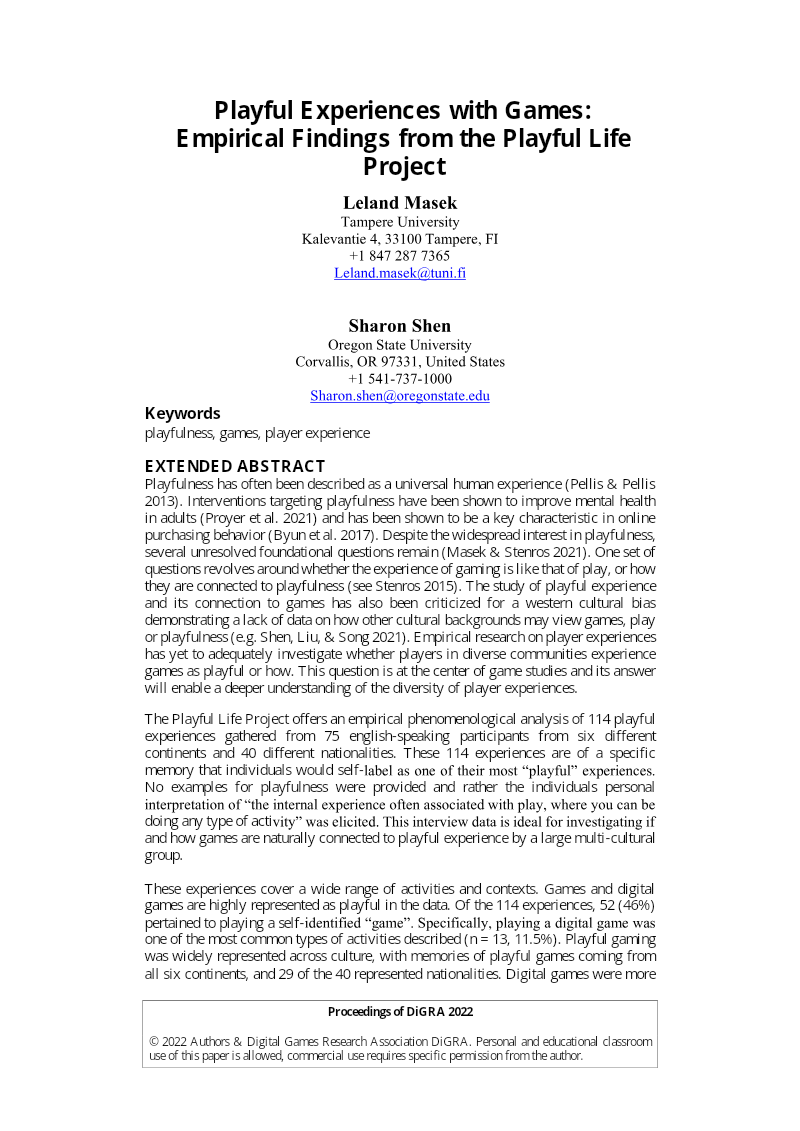
DiGRA · 2022
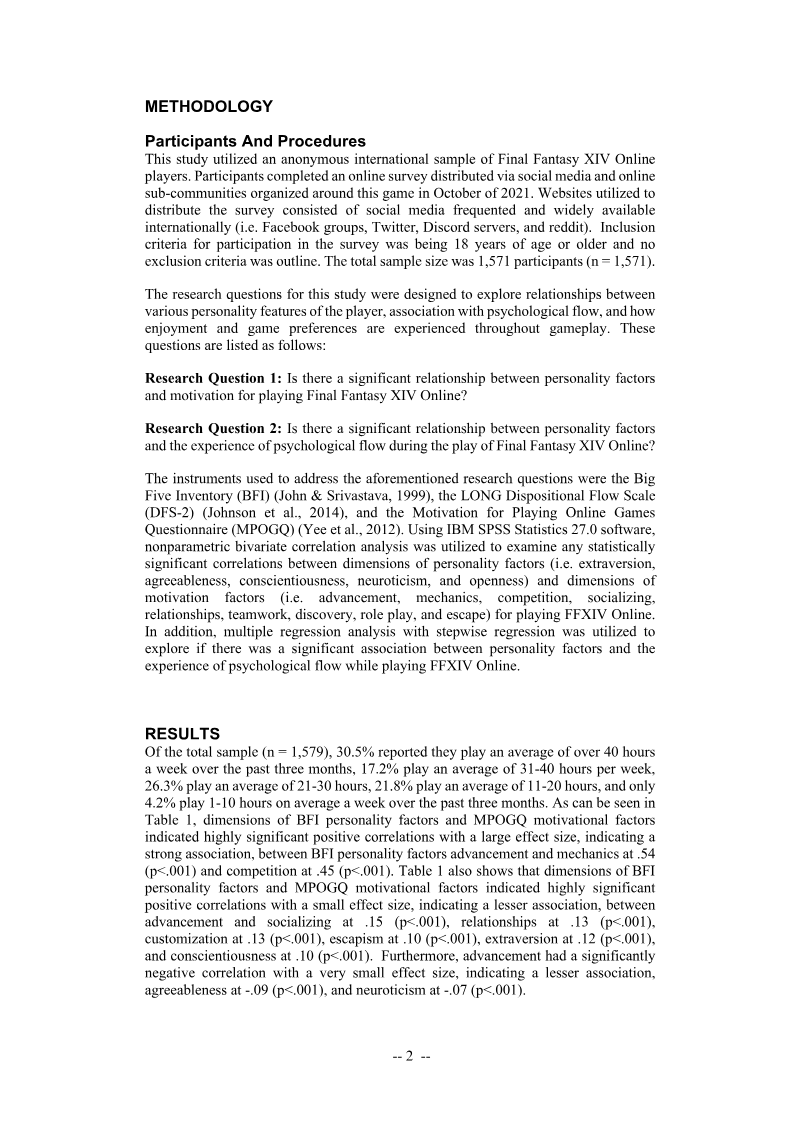
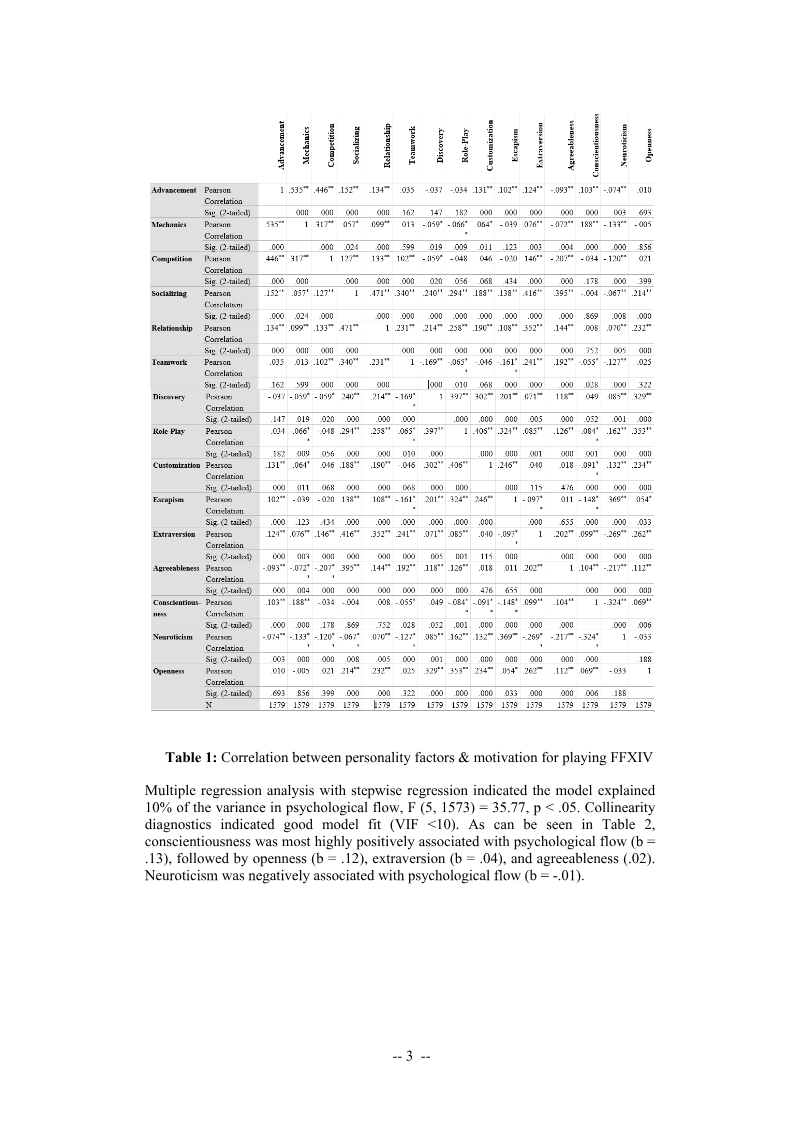
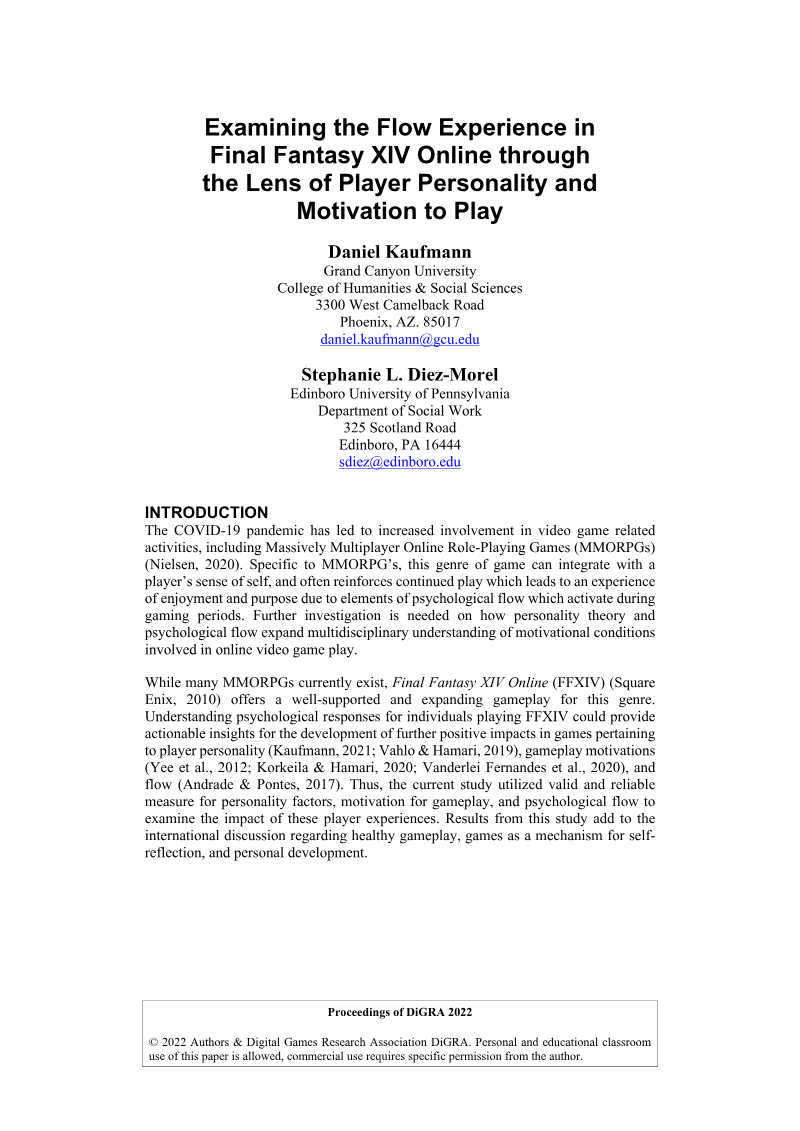
DiGRA · 2022
DiGRA · 2022
Jason Schreier · 2026