
ArticleAndreessen Horowitz
The Number One Tool Early Stage Founders Overlook
29 Jan 20261 pages~12 min full read
Early-stage founders frequently neglect financial modeling under the assumption that their businesses are too nascent or uncertain to justify the effort. This perspective is identified as a significant strategic error, as the primary purpose of a financial model at the pre-seed and seed stages is not to achieve precise forecasting, but to serve as a structured tool for learning and decision-making. By externalizing assumptions, founders can identify gaps between expectations and reality, allowing for faster pivots and more informed adjustments to business strategy.
The analysis emphasizes that a functional model should focus on three critical tiers of metrics: financial viability, structural goal-setting, and business model efficiency. Financial viability requires tracking cash flow, burn rate, and runway to ensure survival. Structural goal-setting involves establishing internal benchmarks—such as user growth or retention—that serve as indicators of product-market fit. Finally, assessing business model efficiency through unit economics, such as the relationship between customer acquisition costs and lifetime value, helps founders determine if their venture has a path to long-term scalability.
Rather than aiming for complex, GAAP-perfect accounting, founders are encouraged to maintain a living document that is updated regularly. This approach transforms the model into a diagnostic instrument that highlights bottlenecks in retention, pricing, or sales efficiency. By treating the model as a testable hypothesis, founders can mitigate the risk of being caught off guard by rapid cash depletion or an inability to raise subsequent funding rounds. Ultimately, the practice of modeling is presented as a vital discipline for navigating uncertainty and maintaining a clear, data-driven view of a startup’s progress.

Andreessen Horowitz · 2026
Andreessen Horowitz · 2026
Andreessen Horowitz · 2026
Andreessen Horowitz · 2026
Andreessen Horowitz · 2026
Andreessen Horowitz · 2026

Andreessen Horowitz · 2026

Andreessen Horowitz · 2026
Andreessen Horowitz · 2026
Andreessen Horowitz · 2026
Andreessen Horowitz · 2026
Andreessen Horowitz · 2026

InvestGame · 2026

The Games Fund · 2025

Drake Star · 2025
Konvoy · 2024
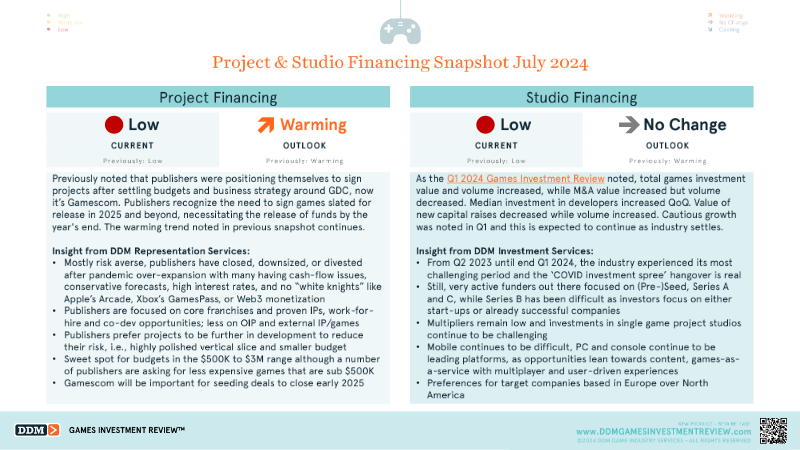
DDM · 2024
Konvoy · 2024

PitchBook · 2024
Konvoy · 2024

InvestGame · 2024

PitchBook · 2024

Huuuge · 2024
InvestGame · 2024