The primary purpose of this guidance is to advocate for the use of investment memos as a critical, underutilized tool for early-stage startup fundraising. The central thesis posits that a pitch deck alone is insufficient for securing venture capital, as investors must often convince their internal teams to support a deal. A well-structured, written memo provides the necessary depth and clarity to facilitate this internal consensus, effectively acting as a high-leverage asset that distinguishes a founder’s narrative from competitors who rely solely on visual presentations.
The guidance outlines a comprehensive framework for creating an effective memo, emphasizing sections such as a concise one-liner, team overview, problem and market analysis, product strategy, go-to-market approach, business model, traction, competitive landscape, and long-term vision. It stresses that memos are particularly valuable for founders operating in obscure or contrarian markets, as well as for technical founders who may struggle to communicate their vision effectively in verbal pitches. By forcing founders to articulate their logic in full prose, the process also serves as a rigorous internal exercise for refining business strategy.
While the guidance acknowledges that pitch decks remain essential as initial "teasers" to secure meetings, it argues that the memo provides the substance required to move a deal forward. It recommends keeping memos concise—typically three to ten pages depending on the funding stage—to ensure they remain actionable for busy investors. Ultimately, the practice of writing a memo is presented as a strategic advantage that helps investors accurately price a company’s potential and fosters a deeper, more productive relationship between founders and their backers.

Andreessen Horowitz · 2026
Andreessen Horowitz · 2026
Andreessen Horowitz · 2026
Andreessen Horowitz · 2026
Andreessen Horowitz · 2026
Andreessen Horowitz · 2026

Andreessen Horowitz · 2026
Andreessen Horowitz · 2026
Andreessen Horowitz · 2026
Andreessen Horowitz · 2026
Andreessen Horowitz · 2026
Andreessen Horowitz · 2026

Drake Star · 2025

The Games Fund · 2025
Konvoy · 2024
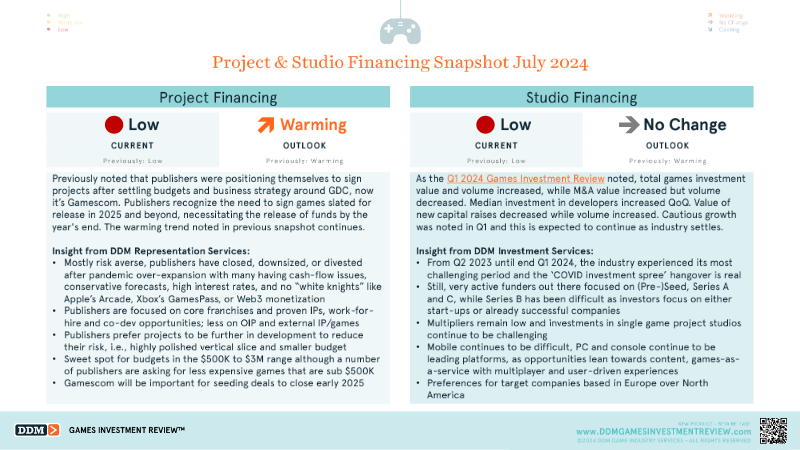
DDM · 2024
Konvoy · 2024

PitchBook · 2024

InvestGame · 2024
InvestGame · 2024

PitchBook · 2024

InvestGame · 2024
Konvoy · 2024
Konvoy · 2023