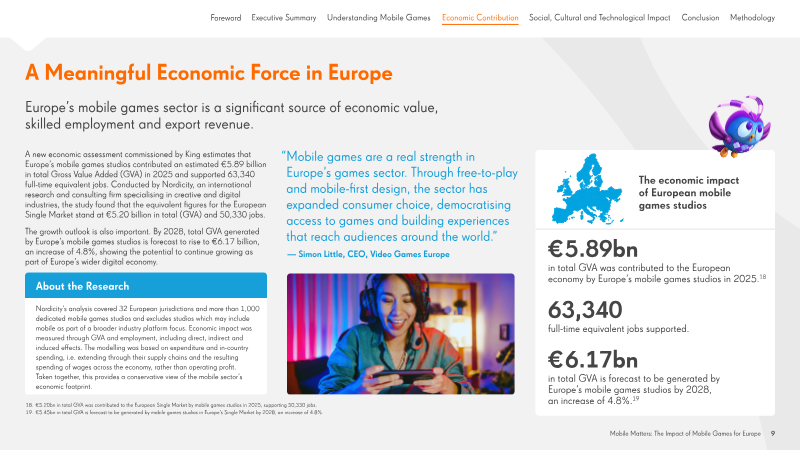
It generates €5.89 billion in Gross Value Added and supports over 63,000 full-time equivalent jobs.
Economic Engine. The European mobile games sector is a significant economic contributor.
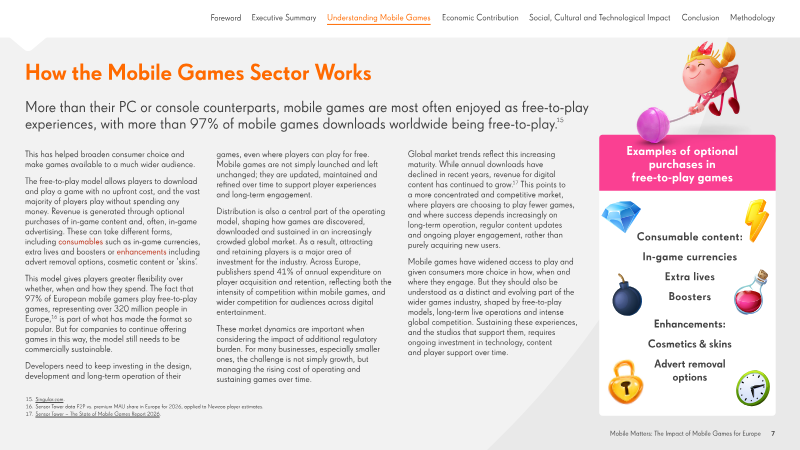
It protects consumers and supports the free-to-play model, which requires continuous investment due to rising global development costs.
Like a tightrope walker needing a safety net, the industry needs regulation to balance consumer protection with investment.
Framework Importance. The industry relies on a balanced regulatory framework to protect consumers and support the free-to-play model.
It also drives technological innovation, especially in AI and advanced digital skills.
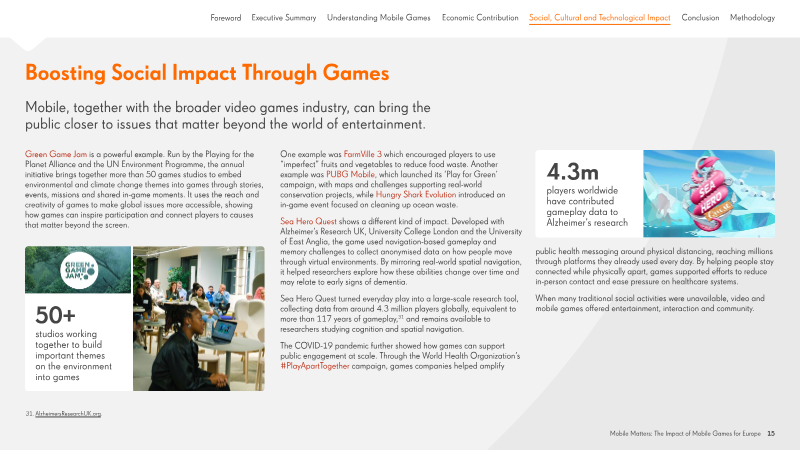
It supports initiatives ranging from environmental advocacy to medical research, beyond its commercial contributions.
The European mobile games sector functions as a vital economic engine, generating €5.89 billion in Gross Value Added and sustaining over 63,000 full-time equivalent positions as of 2025. By prioritizing metrics such as employment and operational expenditure across 32 jurisdictions, the industry demonstrates a robust footprint that extends beyond simple revenue generation. This ecosystem, anchored by major creative and technical hubs in Sweden, Spain, and the United Kingdom, is projected to see its market value within the European Single Market climb to €6.13 billion by 2028.
The industry’s primary thesis centers on the necessity of a balanced regulatory framework that protects consumers while fostering the continuous investment required for the free-to-play model. Because mobile gaming represents the most prevalent form of digital entertainment in Europe, companies must commit significant resources to live operations to remain competitive against escalating global development costs. This ongoing investment cycle is essential for maintaining Europe’s status as a premier hub for technological innovation, particularly in fields such as artificial intelligence and advanced digital skill development.
Beyond its direct commercial contributions, the sector serves as a catalyst for broader societal progress. Mobile gaming platforms increasingly function as vehicles for social impact, facilitating initiatives ranging from environmental advocacy to medical research. To ensure the long-term sustainability of this growth, policymakers must cultivate an environment that encourages operational agility and technical advancement. By supporting the industry’s ability to innovate, Europe can secure its competitive position in the global digital economy while leveraging the unique reach of mobile gaming to address diverse societal challenges.