Transcript
[Music] welcome to the navic gaming podcast where it is our mission to explore the business and future of video games we bring together the industry's brightest Builders investors and thinkers to keep a pulse on current events dissect emerging Trends and games share Lessons Learned and have a great time this podcast is also part of novic growing ecosystem which ranges from free and premium research to Consulting and advice ADV services for more information visit [Music] www.nic.edu the platforms for some of the largest live service games including League of Legends fortnite Destiny 2 and Plants versus Zombies 2 pragma Powers services like accounts matchmaking and player data for the world's most ambitious live
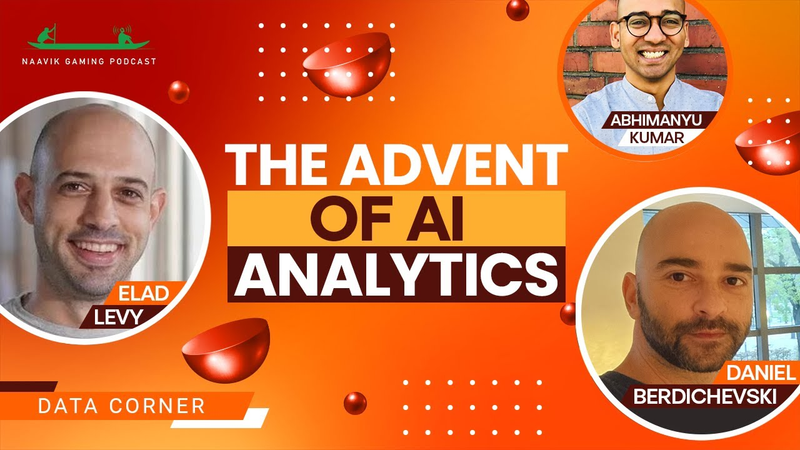
service games the pragma back-end game engine is the only solution that is truly extensible so that game designers aren't blocked by clumsy blackbox designs with pragma Studios no longer need to hire a large backend team and get the ultimate peace of mind that their game will always be ready to scale to learn more simply head to pragma Dogg or check out the link in the show notes and with that let's jump into the episode so welcome everybody to another episode of the navic gaming podcast we're back with another data Corner discussion and this will also be the final one of this mini segment so this time we decided to focus it on a topic that's a little bit more future facing and also a little bit exciting given you know the current big trends in games and the topic is essentially AI analytics while preparing for this conversation I ran across Gartner's analytic ascendant
model I'll put a link to this in the show notes it's a very interesting framework but the framework basically says that on a value versus difficulty graph um there are four types of analytics that sharpen hindsight reveal insight and also create foresight uh these four types of analytics are number one descriptive analytics which basically explains what happened uh diagnostic analytics which explains why did it happen Predictive Analytics which explains what will happen and finally prescriptive analytics which explains how one can make it happen uh and from a gaming analytics standpoint you know gaming Studios of all sizes and analytics capabilities live you know on various points of this framework and employ each of the four analytics types to varying degrees but AI specifically has the potential to act almost as an exoskeleton over here and Elevate all aspects uh of this framework
uh and especially for the gaming industry and you know that's what we are here to talk about today and to do this we're joined by two great guests uh first and now making his fifth appearance is elad Levy founder of dive which is a bi as a service company that focuses on solving game studios data problems with highly contextual analytic Solutions so welcome elad again thank you Manu for having me it's always a pleasure nice and second we have someone new uh he his name is Daniel berki who used to be uh pla's VP of data science and products and is now a data Management Consultant who also serves on the board of various companies uh great to have you with us also Daniel great Manu he there it's good to be here thank you for having me so hi awesome awesome uh so yeah since my intro was very brief
uh and also elad has been here a few times uh you know I'd probably love listeners uh love the listeners to kind of get to know Daniel uh a little bit better uh so Daniel could you uh you know briefly tell us about your journey into games your path within play Tika itself and what you're doing today um also I know you're elad's childhood friend so if you'd like to tell us more about how elad was growing up versus how he is today uh we love that also to tell you the truth is the same we were born in the same city and you see we are both bald and a little beard so the jeans or the atmosphere in the city I'm not sure but that is a great fan for years by the way I think a lot you're the one that at age 15 helped me to understand what is a PC and how is it built out built off and that was my entry to the technology world uh side
note anyway so hi I'm Danielle and my journey started in 2007 as a bi a data engineer I was working for a professional services company for three years uh around 25 project in those three years it was hard amazing but uh I learned a lot in those years in different domains retail e-commerce customer success automotive and many more after 3 years a good friend of mine and myself we found the T person a boutique data services company we started with bi and data Integrations pipelines analytics later on after building good infostructure ER we started to to help our customers also with the cherry on
top with the analytics with the lwh hanging fruits with the different types of data mining those days clustering segmentation predictions in different juristic and and models we had some statistical background and also technical background but I think the the secret Source those days was the business focus we uh since we are like a boutique company we first try to understand from our stakeholders what do they want okay exactly and then the technical challenges we solve them in different ways much less data than these days Big Data was not with all the vs volume variety same principl less data but the same principle exactly and the same same goal Roi um or efficiency sometimes we started to give services to different companies there I first started to work with games and online
gambling as well um we noticed the the challenges and the interest in in the user based b2c type of of of domains and in 2012 I got a phone call from alad he informed me that he opened up a new startup a new game House of fun I remember he told me listen we're doing great but we have no clue what's going on inside except the top numbers so I said with my team for a night or two and we we generated some insights and it was great from that point in on we gave services to House of Fun House of Fun grew rapidly not because of me because of the the game the timing Etc and in 2014 while they were growing we were going with them while working with other games and companies as well in different types of Data Solutions
2014 I think pla purchased House of fun and I joined after a year with two of my team members into pla in House of f as VP data first I started as director of data engineering main like building the infrastructure then it worked quite well so um I was pointed as VP data managing business analytics game economy the first data science team um bi ba and in those days it's we wanted to integrate our Solutions with the road map the product road map of the game studio and also a data product I think 2017 was the first data product uh member that joined our team it was a great uh addition 2018 I moved to to pla the technology department serving all games entire portfolio of pla trying to to integrate AI
Solutions uh to all of pla's portfolio as VP AI products later on as VP data products building experimentation platforms data warehouse it was before the IPO and marketing Etc 21 I left PLA and in the last three years I'm helping different types of companies game studios mid small uh with any data Rel challenge some some of them are organizational some of them are AI AB testing and infrastructure working with di as well awesome great yeah thanks for thanks for that uh you know the the full timeline over there I think that uh yeah just charts out your career and also um CH out the career really well but also just kind of showcases um you know why you're a great fit for this topic today uh especially just given the stuff that you have done uh at PLA and Contin continue to do now
so I guess yeah with that you know we can jump into today's discussion um we'll start off with like the real Basics over here because AI analytics is um yeah I guess it's a pretty pretty new term uh for maybe the more um you know more mass Market portion of the industry I guess it's been used in different companies in different ways like you mentioned Daniel uh with the AI Solutions you were implementing in uh in pla but you know just to level set let's just start off with the most basic question Daniel could you you know just Define what is AI analytics and how does it defer defer to the more you know um for lack of a better term traditional analytics uh that that that's happening today uh and yeah and of course if you could put it in the gaming industry's context that would be perfect great so I'll try to make it as simple as possible I will neglect the generative AI for now because we are talking about
AI analytics and less operational and cost related projects but if we are focusing on AI analytics so traditional analytics as I see it is mainly descriptive techniques aim to interpret what happened and maybe even why sometimes people also confuse some gut feelings inside but uh usually the questions the Frameworks the interfaces are dashboards reports in push or or pull but what happened and why in traditional manners um so this is my point of view regarding traditional analytics AI analytics is a combination of techniques and models and algorithm used for different automations optimizations some of them are real time some of them are bad depends on the frequency depends on the use case but uh the goal is to optimize something that a
human can do but he needs a lot of arms a lot of eyes and maybe we to duplicate him several times so things like predictions or relationships between entities clustering segmentation is well known in the in the gaming industry um anomaly detection sometimes in F and others classifications Etc and if I think about uh a nice metaphor for for for the differences imagine that you are running a restaurant and um in traditional analytics you will see the inventory and maybe some PE days that are peeking and the best dishes and you will be able to optimize your restaurant according to past history and the knowledge that you have and common sense with AI analytics you have the ability imagine that each client that enters the the restaurant he will have
like a sticky note on his forehand that will say what dishes do he like is a new user old user from where did he come from how should we approach them what should be the treatment not only to classify him but maybe what do we think he should be presented with or the dishes that he liked or what is the biggest probability that he will continue and enjoy engagement and from the other side also increase revenues and it's mind-blowing the minute that people understand like what can we do with data so these are like main differences for mine okay makes sense so I guess yeah uh maybe to kind of uh say that back to you um like kind of going back to this gner uh model there's the there's the descriptive analytics and the diagnostic analytics which kind of explains the what and the why and this is more in the traditional uh analytics bucket uh but then as soon as you get into the more predictive and the prescriptive analytics um you know
which kind of explains the what will happen and how can one make it happen aspects of it this is getting more into the um AI analytics uh realm uh of things um and I guess yeah you kind of like hit on you hit on a few aspects of you know how um the gaming industry already implements a analytics in a few ways um but maybe elad uh you could you know maybe continue to out line current methods that you know the gaming industry is using different companies what they're using to um uh to basically Implement AI analytics quote unquote uh in their uh analytics operations and um and yeah what have kind of also been you know more effective examples uh of its application um from your experience I'm really happy that you said quote unquote because AI became this bucket that holds a lot of things to the I can give you examples from dive and
the stuff that we do and some of them was like were mentioned by Daniel already so he knows it very well obviously segmentation is definitely a huge uh segmentation and clustering is definitely a huge portion of um you know of actionable I I I like data to be actionable like beyond the inside the the that's like a something that you know Insight is amazing that the descriptive part but when you tie it back to an action then this is really where when you start to see the when you start moving the needle in a company and improving kpis so segmentation and clustering player Behavior this is stuff that really helps a lot anomalies can save you a lot of money if you uploaded the you know back to production or send their wrong event and
all of a sudden you get like the wrong reporting and predictions obviously is is a great tool as well we love doing a lot of those um things in dive tying the predictions back to the UA U UA channels so that you can optimize marketing this way but you can use it also for churn and a lot of other Danielle had a great example he spoke about that they did In Paya for customer support that he told me about a long time ago which is really amazing use of predictions but this is I think the more real examples okay Beyond like putting CH GPT and asking them like like not talking about the toys talking about the real stuff that is actually being used by companies inside the games industry and also outside right okay makes sense um yep and yeah I would like probably uh agree with a lot of that and I guess the
kind of key takeaway is um AI analytics and this is the reason I kind of put it in quotes AI analytics has always been around it maybe just wasn't uh known by this more buzzwordy uh name which uh which is kind of becoming more po popular now um but it's always kind of been around in in multiple shapes and forms and but yeah uh now that you know um it can go so much further I guess uh given where AI as a whole is is kind of going but um I guess from a company's perspective you know before before anyone takes the plunge into uh uh into these AI analytics methods and and processes uh they likely kind of need to have the right foundation to build on in terms of you know U your analytics stack and processes and teams and and such um so from a from a more data analytical uh or data analytics lens Daniel what what
do you kind of what do you kind of think needs to be true for a company before they can even start to consider AI analytics great question question and it can lead to failure and success uh in AI from my point of view uh you cannot push it into the um entire flow the roadmap immediately you need to create sort of a um pilot projects okay imagine that you have a game studio and you have product managers and game designers economy monetization and everything is working and they want to add AI because everybody wants AI these days it would be very hard to integrate it immediately with ETA and the the nature of AI is iterations exploration explore versus exploit some of the segments will experience a certain experience and the other another one and you learn and
evolve as you go so to land it into a a running road map or ongoing road map will will be quite hard I have few points that I think can help here one is first of all management sponsorship okay someone uh that has a wider view should want that and be able to to invest in that I'm not talking about bringing on phds and data in mlops you have different types of uh team members these days that are related to ongoing uh working model or any other AI related workflow but the the management should be aware that they want to um and also make it available for the entire company that they want to integrate that the second one is Tech technical foundations
technical foundations both in Ai and also in other analytics data should be available ER quite deep okay usually it's again it's very gener generic and and and and quality data I think the most uh uh problematic thing I see is that the entire analytic aspect sometimes is called tracking I'm doing tracking I have that data somewhere and hopefully you can do whatever you want over there but the user is not a user the session is not a user when does the session end you need a lot of uh it's not only the metadata like how does the the data look like but what does he it says and the dive I know they're doing it we have also data engineers and you have like a profession that makes the data both available and something that you can gain insights from or information from the data right so so foundations and you don't need the top
tier foundations okay you don't need as a new game Studio you just need it to be organized repaired maybe layers some data will be more available and cleaner some data is uh less available but still available I I remember in 2015 I don't know a lot if you remember I uh we had a great data foundations and and we understood that we need to answer and we wanted to create the first data science te and we understood that we have questions that are coming or about to come that we will not be able to answer why because we have a retention policy on data and we don't keep more than x days some events we neglect them as well and remember I I I flew to Argentina maybe to Mead and we discussed about it and this was the first time that we initiated a data link 2015 that will enable a data science team both to to to uh they had two two
layers one is the truth okay the data warehouse the model data like the kpi what is conversion everything is already modeled and prepared user attributes Etc but also some more data like popups that showed up usually much more data popups or any event that happened in the kashier or different types of events because at the end in AI you are creating uh feature engineering most models you are creating like attributes of your entities for example users and those features have big weight on the output for example CH churn prediction okay which is wiely use um you are getting different uh um features like what is the LTV of that user or what is the frequency in the last seven days Etc ET what is the crash rate what is the crash rate device type you can create like
thousands of of of of features but sometimes I noticed that the the classical features we are all aware of and even a PhD that came straight or any other data scientist that came straight from the academy or another company can create the traditional uh features but the important features sometimes come from domain experts okay like the game economy or we had a psychologist with worked with somebody that understands that we are talking about players players have their history we need to think about those features in a more volatile method and those feature usually needed more and more and more data so if you will have the foundations the technical foundations of layers H you will have a better chance to succeed in those projects right I have two more points which are critical same as the previous one one is
choosing the right project to do this AI integration sometimes it's like you have a lot of team members that say oh come on it's hype usually in games by the way because you have the product manager and the designers and they have their own road map so the way I found that has success in these scenarios is is taking a working workflow okay with a feasible technical if you have missing data I will not go bring it but we have the data we have the use case and we know how to compare and 5% upgrade in the kpis will be beneficial those are the project I would start with if and I saw it that if you have success in this types of projects immediately R&D will come to you and product come to you and everybody wants to start in US it I will start lean small successful maybe after a few iterations hopefully you don't need to use the art there are a lot of models that are quite even Uris sixs our first
data science experience was based on urtic and common knowledge with some technical workflows but that is the way and the last one which is crucial everywhere is the writing I talked a bit about the domain expertise ER but also the technical aspects like how to make it happen don't go straight to uh to you know um stateoftheart H Academy related scientist they they can help sorry l no I just uh when just on the team I I have a comment as well but go on it's okay maybe you're going to say anyway you know the V diagram that you have the business aspect and the technical one and the analytical or or mathematical there is a v diagram when we're talking about the data scientist at first I think that the domain
expertise has the most value okay and then supplement with the technical and the mathematical aspects and if we have success that's the way to to grow um so these are my points here awesome yeah I think I think that's a great answer um Eli do you wanted to say something about the team yeah about the team I think that uh yeah Daniel said it but in h when it comes to data at at that level right like beyond the basic reporting and insight there is a there's a kind of an art or a creative part that uh shows in because and you know we tried I remember that we tried like data scientists they don't even play the game sometime you know for them they just look at formulas and there are things that you must understand the game mechanic and sit down with the game
designer or product manager to understand so that factor is also someone that can connect the dots that that has huge advantages beyond the whole PhD and math experts it can help but I I agree with the lad completely you need a the understanding of the game understanding of of I I I worked with some amazing brilliant guys and girls that came from uh um domains not games that you need only to predict something okay if you predict you have success here we are talking about players maybe today he's after the Christmas sale and you know he's like pay too much maybe in your experimentation you forgot to to take into account The Hangover because they got more coins you need to take few days after your experimentation maybe there is a challenging period in the game economy so things are changing you have like the action and the reaction
and uh it needs some flexibility and not flexibility and not only mathematics therefore my suggestion is um use the mathematics and the skills they are available as a internally or externally but create like a team that has domain expertise technical expertise and the addition of the maatic righten so just to kind of recap you know what kind of needs to be true for a company before uh it can start considering AI analytics uh Daniel you had four points uh one is the first one is basically first having a management sponsor so that you know there is support at the top for you know uh yeah for this movement uh towards it second is having great technical foundations uh this includes both in terms of analytics technology but also you know data depth and data quality itself um then pick the right project so you know uh something think that's uh something where gains can be seen pretty
quickly implementations can be done quickly efficiency is key chances of success are high so that the management sponsor continues to sponsor it uh and you know that uh all of that and then finally there's the right team uh which is I guess I guess this means more of the team that's actually working on the transition to AI analytics uh but you also had which I would probably say is a fifth point this is something that you mentioned while you were explaining the technical foundations would probably call it like you know this broader team literacy uh data literacy in a way because if um if the if the AI analytics team is going to be the one that that needs to go and talk to the economy designers and the game designers and you know get inputs from them also on what can be tracked it would be great if the game designers and economy designers also you know are well versed with the data so that the conversation is actually easier uh with the data team so um but yeah I guess that would be my uh the
summary but yeah I think that's like a great you know five point or four point with my extra fifth Point kind of a framework um all right um so so yeah let's maybe start looking into future a bit now um I guess yeah maybe this one is for elot you know kind of given this Gartner framework that we discussed at the top of the show um and also just kind of given how the discussion has uh you know has kind of ensued right now I guess it would be fair to say that we are we're not maybe too early but we're still on the earlier side on as an industry on the path towards uh AI analytics but um I guess the question for you is like how long do you think for like the more you know evolved state of of this uh how long do you think it would kind of take uh for us as an industry to get to that you know um that next you know AI analytic stage and also
what what what kind of needs to happen in the industry to accelerate that journey I am not really good with speculations I still can't believe that this graph that you sent was made in 2012 that's like that's a really long time ago so it's really amazing I um uh I mean I I love reading about AI I love the future everything is nice but I focus most most of my energy on the problems of today and not you know the what will happen in five years from now probably Daniel will be able to answer that better but if you look at this Gartner graph that was made in 2012 and you apply it to game studios game studios are still struggling with you know basic reporting sometimes you know really basic stuff
so um and there have been so many like ways and intentions and experiments and products to try and automate everything and invent some new Swiss of army knife that will show this and show that and it and it it never works because it all comes down to the fact that games are so different from each other and it's so you know pla is a Social Casino it's you know like a lot of slot machines it's based on spins I speak with people that do puzzle games everything there is completely different we have a client that we just signed that developing a mobile game this is like a completely different Dynamic you know every Roblox as well Roblox is a completely different animal as well yeah so I think that you know if you look at in kind of a Broadway on the games
industry then you know maybe in industries that are more um you know like structured like e-commerce or booking it will be easier to move forward but games are so unique that you just most of them are stuck in the really basic levels of data and they cannot nail the foundation yet right and they should they should be there uh like small I'm com from the data domain but all the time I'm taking the the product product is the king from my point of view okay it's very strange that I'm saying it but we can think together we can make it happen but the game designers the product Market Feit the this is the first place to go and then we are supporting with different by the way the Holy Grail of AI in gaming Studios is when each and every every Department in each feature they think
about AI how can we integrate it our capabilities that we already prove that are working how can we integrate them but just a side note I'm seriously feel privileged that we managed to build that in pla because we used to build Fe features and they say hey let's maybe we can personalize this part of the picture maybe we can segment that part you know there was a very healthy process there of um incorporating data in feature building and that is like that's something that you can do now you know with the right team the right technology will by the way in dive you are closing the loop it means that you have the descriptive analytics the data Pipeline and your segments of decision you post back to the game server and you can act upon with live operation Etc so I think that's the place that current game should go if
you have insights okay or or decisions coming you need to act upon them in real time B I don't I don't care how and this is the first place to go H to act upon your decisions and not only reporting R okay yeah yeah so I guess yeah sounds like um still pretty early on the journey to uh you know uh like kind of more mass adoption of AI analytics across multiple gaming Studios where it's almost like a table Stakes kind of a scenario I guess there's there's a long way to go but yeah you know I think it's it's definitely helpful to understand what we need to get there and I guess a lot of that is just has parallels with the with kind of like the four points that you mentioned Daniel right like those might be even though those points are um specific to a certain company um I mean they're basically uh you know extendable to the entire industry also um but okay
great yeah the four points are can be integrated now we can talk later about where are we going in the future in AI analytics but the four points are four or five even you added some you should probably translate this podcast to an article and uh do like a post on those four points it will serve a lot of companies out there yeah all right um so I guess yeah maybe kind of moving on a little bit um and maybe um you know talking about like some more uh specific Concepts within the AI analytics uh discussion um yeah there are there are like some pretty interesting Concepts but also you know inherent risks uh for example one interesting concept is just this idea of synthetic data which is essentially you know artificially generated data that can be used to train uh machine learning models um but new
Concepts like this also you know increases risks uh around topics uh like you know maybe internal data literacy uh maybe like different teams are actually not comfortable training uh machine learning models on artificially generated data uh you know things like that so um but yeah question to you Daniel you know how do you think uh AI analytics will maybe change the way we think about topics such as internal data literacy um and do you think you know Concepts like synthetic data for example will grow to become more of a risk or a boon uh to kind of driving uh business impact uh in the industry great so regarding data literacy ER I think it's a critical aspect of of success in any organization I have also customers partners that I work today not only in the gaming industry that the terminology is different like what are our kpis what
is the data dictionary I guess everybody heard about this uh domain how do I look on data okay maybe I can do people need to understand how to work with data and I don't have a secret clue secret uh tool or something that can make a company's lives better here but I would invest time in that from my experience usually what I see is a bottom up approach uh people you know with your legs you go and sit with the team members and present them uh uh the interfaces where can they understand where data is and how to work with different tools like Tableau powerbi like all the data interface for product managers they usually will not run sqls or even then they need to understand how the data is built a lot of uh uh presentations uh Road mapping or where are we going KN what can we do as I said the holy gra is everybody everybody in
the teams all teams knows what do we have you will remove redundency and duplications of uh of uh uh different features R&D data so you need uh the tools the ER to to to present the the literacy you need the organization to um put it in Focus okay like what is conversion okay what is retention how can we impact why don't we look on averages okay in games as I said things are volatile we look on on on different type of perspectives we have the players as I said so the literacy is crucial and unfortunately I don't have a tool or a magic wand that will make things better I would focus on that from the early stages if you if games will not only games if companies will do it from the early stages it will be much easier to grow new team members and new features and everybody will talk in the same
language so this is regarding data literacy maybe there will be tools that will help and identify the chats and also create like a semantic layer but again these are dreams and nothing I can say for now right um regarding synthetic data I must say that I do have experience here uh but we use synthetic data which is like generating data ACC into past history like what will happen in the future but we didn't trust our results okay the only reason we used it because feature was not developed yet and we want to synthesize like what's going to happen because we want to train the model prepare it there is code over the iterations we want it to be ready because time is M an Essence here right and again as I said in the gaming industry we are talking about players we're talking about winter and summer people are act differently we have uh uh different psychological aspects or game
related aspects like after a sale before a sale specific country we have like different things that it will be hard I guess in the future we see that everything is exponential maybe in two years we have the best solution for it but for now I think that real data and and and accurate data precise because you want to act upon it as I said it's and you can use synthetic data to solve technical time related um challenges Bren okay yeah that that that makes sense uh and especially like just maybe just given where you know the industry is on this timeline towards you know in AI analytics future uh I guess yeah getting those uh getting the technical foundations and the data depth foundations right first is the most important before you're building you know artificial data on top of real data that is that does not exist
as yet internally in the company so uh so I think yeah that all all of that makes a lot of sense maybe one more um you know uh before like a final question uh one more topic that's a little bit more you know out there I guess um there's this other interesting concept of augmented analytics uh which which I've read about now um so again like maybe question to Daniel like what are your thoughts on this field of augmented analytics first of all what is it uh you know why is why why is it important uh and um and also like how do you think it'll be kind of implemented in the games industry okay this one is exciting I must say and uh in the last few months one year I also Deep dive to try to understand where can we go I also read the G that seems to have good predictions he's talking about augmented bi augmented uh analytics uh with wide adoption in seven
or eight years something like that but as we said God knows some ultimate NOS maybe I don't know but the thing is from and I have also some good friends that are are are investigating that area I think this one is exciting and is very related augmented is to tools that will try and augment the current procedures that internal team members at the end are producing okay for example the data pipelines and the the the data warehousing on top of that reporting answering questions with augmented procedures okay it's very sci-fi for now but but but imagine that you will be able to talk with your data this is the dream of anyone that needs to hire like a lot of data engineers and analyst you can talk okay I know there are uh
startups in Israel everywhere that are going for that path to talk with the data but so not only talking with it you can uh like we all using chat GPT B and other platforms the the chat works like from a user experience people like it they ask they they are reiterate their question they understand the question is not good enough they some more details so imagine that you're asking like what was my playing da yesterday okay and why do you think it dropped or is there any reason technical or untechnical maybe it's related to and it will answer and present you graphs do you like those graphs okay do you want me to send them on a periodical approach so we can Vision that and I think it will be amazing but there is a long long long long way for that to happen first those decisions are based on Precision okay you need to uh act you want to act you
are a product manager game design I don't know any team member monetization CRM and if you will not trust your answers it can happen with team members as well but for now I'm sure that the answers you cannot trust them you can train the models according to your data Etc but we're not there this is the response I'm getting for people that are investigating it right so this is One Trust second one is is terminology we talked about data literacy okay that I see I meet a lot of companies and one calculates conversion in a certain way and what is Dow and retention day Zero no it's retention day one but what is play out did he act already did he activate the play button or did he just had the loading like so the terminology the one source of truth that each organization these days really needs because we're not there you're laughing daily strug so it's for now yes it is Halo
made you can talk with the lad you can talk with me how can you make it simple how can we make it like based on layers that each time you have new use cases you just create another layer and you will be able to back to the game server Etc like every use case but to trust completely as an organization on U um augmented bi I I I think it will come it's running our way but challenges are huge and um and another thing which is important is cost okay now everything is in the cloud and you are a big company or you have a lot of data because somebody understood that he needs the depth and the variety and you ask a question you don't know the impact of this question that question will run now throughout all of your data all your history will cost you like thousand of dollars and you get a question but you will be quite sad later on a so we have
challenges that's we have challenges yet yep all right makes sense elad anything to add add on this or I no I just H it's great you know I mean I I've learned so much from Daniel I think that he he's the one that taught me all the basics when it comes to data so I'm I really love uh listening to talk and uh I I see a lot of tools out there and it's kind of feels that we are almost there like it looks nice in in a short YouTube video or something but ER from my point of view it's kind of a toy in a way because you know if I let you investigate what was my Dau yesterday fine and then I I'll start adding more and more I'll start making the questions more and more complicated then you will probably get some either wrong answers or you know or or won't
get answers and uh I think that it's something that I see almost everywhere that AI like does a lot of heavy lifting but there's always a human being on the other side that kind of reviews the final touch and I see it in like a ton of Industries and a lot of applications like they like they let the AI model run it finishes and then a human being goes over it and says okay let's see does it make sense does it that makes sense so it's kind of it's yes it's like a nice bot that helps you know ease ease the the pain of a lot of the heavy lifting yeah regarding the cost that is a that is a beautiful beautiful point that Daniel made ER there are a ton of solutions out there because you know everything is in Cloud obviously ly and not everything many are de clouding actually but that's
a different topic and a lot of the data bases and the data warehouses and data lakes are in the cloud and they charge by ER queries and consumptions so the more queries and questions that you make the the bill goes up and it's it's actually a really fascinating point that Daniel just F because I I see those uh I see those problems happening all the time and I get a lot of like companies that consult me about you know hey our data or infrastructure costs are you know Spike to like insane like numbers and it's it's it doesn't make sense at some point you know cost aspects sometimes are U misleading and should be reviewed but if we go we went straight to the augmented AI there is like something
that is happening now like those tools that are not there yet like automating everything it can act really really really go good as co-pilots okay you have the human in the middle he doesn't have the skills he doesn't know how for example in ay testing do the proper user allocation or what is the various he doesn't know it he can do it with his own urtic these days you can simply iterate with several agents try and find look with his own skills and partners like does it make sense as we said juristic are good enough usually from what I see in the early stages of of game studios but you have like a a bigger time to Market of different solutions you have the missing skills you can find them around with generative AI so adding them as co-pilot in the processes of analytic is amazing and widely used is it co-pilots or compilot I didn't catch that yeah
imagine that you have an analyst that is a pilot he has like then you have like the AI tools or Pilots yeah encoding and R&D classic use that terminology as copilot yeah makes sense uh yeah I mean this is more like a broader point of at least how I see AI today maybe my you know uh take on this evolves over time but honestly uh yeah for me AI across anything that you know we are doing uh it could be on the data side on the creative side or you know on The Voice side whatever is all just basically an exoskeleton for you know our ourselves in a way so it it doesn't like fully replace us uh at least given its current form but it you know augments us and like you said it's a great co-pilot to have in you know different situations I agree completely man and sorry but in
creative and sound we have it already I know there are companies Leonardo and other that you can integrate them you can see the output you can understand is it faulty not fault you can have the decision with data God knows if the thing Dow is right or wrong so this is the difference the Precision you can yeah you can accept a a semi- precise let's call it a out puts from creative and sound can you can have your cont generation is definitely is is definitely way more advanced you know you can build like level designs you can you know puzzle games this is all like you know Bots and Ai and it it works great yeah that's another use case okay yeah great uh but yeah I think the future um of you know being able to talk to my data uh it can mean many things but you know all the possibilities I can think of of what it means all of them
sound very exciting so I'm generally quite excited to get to that place uh but yeah I mean we are coming up on time uh so maybe you know let's get to our final question over here maybe starting with you elad um what would uh again like since the uh podcast topic is AI analytics what would your one piece of advice be to game developers when they're thinking about you know moving closer towards this AI analytics uh space in whatever form is viable today no so where and how to start I will go back to the uh Four Points framework of Danielle pick you know a project make a quick test and see if it works or not you know like fail fast you know like in in in any other product building or feature and as for the form I think that again the
foundation for me is key because and with with dive this is like the majority of the problems that we see every day in the present are Foundation problems of data collection curation validation cleaning and this because everyone like it's like data dat such a data AI those are like great buzzwords but then everything comes from some like there's a source for all this information like you can and if that source is inaccurate then everything you build on top of it even if if it's a boat that you chat with it will give you an inaccurate like what what was how much did was the revenue yesterday minus five because the developer sent you know like a bug in the event so it's like accuracy and the getting the foundation right for me is like one of the biggest challenges all right so yeah Daniel same
question to you uh what would your one piece of advice be I would go for um starting small but with impact okay imagine a small project of a current flow that AI data science or analytical addition increased in three three percentage is 4 percentages immediately the entire organization will want to use those uh additions as well so start small and look for impact this is the place I would startop right yeah and I guess yeah and then build build momentum uh over time exactly momentum is great yeah all right I think uh that's a great way then to end it for today uh thank you again Daniel and elad for coming on uh Daniel if listeners want to uh get in touch with you and learn more um or yeah potentially even work with you you know how should they do so uh you can contact
me in my LinkedIn profile Daniel bki there are not a lot Daniel bki around I'll be happy to assist wherever I can thank you all right perfect and elad uh if listeners want to get in touch with you and potentially work with dive how can they do so well my LinkedIn obviously a lot Levy and my personal email elad at dive. games and I can also help if it's an easier way to remember that email I can connect them with Daniel all right perfect great uh so thank you again for the conversation and thank you listener uh for tuning in uh this is also going to be my last episode for the year uh but I'll see you again in 2024 until then I hope it's been a fruitful 2023 uh for everybody hope you have a great holiday break and if this conversation is any indicator of the
exciting things to come to our industry in 2024 and Beyond I hope you're as excited as we are as we enter into the new year if you enjoyed today's episode whether on YouTube or your favorite podcast app make sure to like subscribe comment or give a Fest star review and if you want to reach out or provide feedback shoot us a note at podcast nvic.org or find us on Twitter and Linkedin plus if you want to learn more about what navic has to offer make sure to check out our website www.nic.edu and advisory Services again that is www.nic.edu [Music]
Auto-generated captions from YouTube — names and numbers may be misheard.






















Comments