1 free read left. Create a free account for unlimited reading + AI research.
Create free accountArticle International Journal of Esports
1 free read left. Create a free account for unlimited reading + AI research.
Create free accountArticleInternational Journal of Esports
The qualitative study used semi-structured interviews to examine how competitive pressure is experienced and managed. The sample was small and male-only.
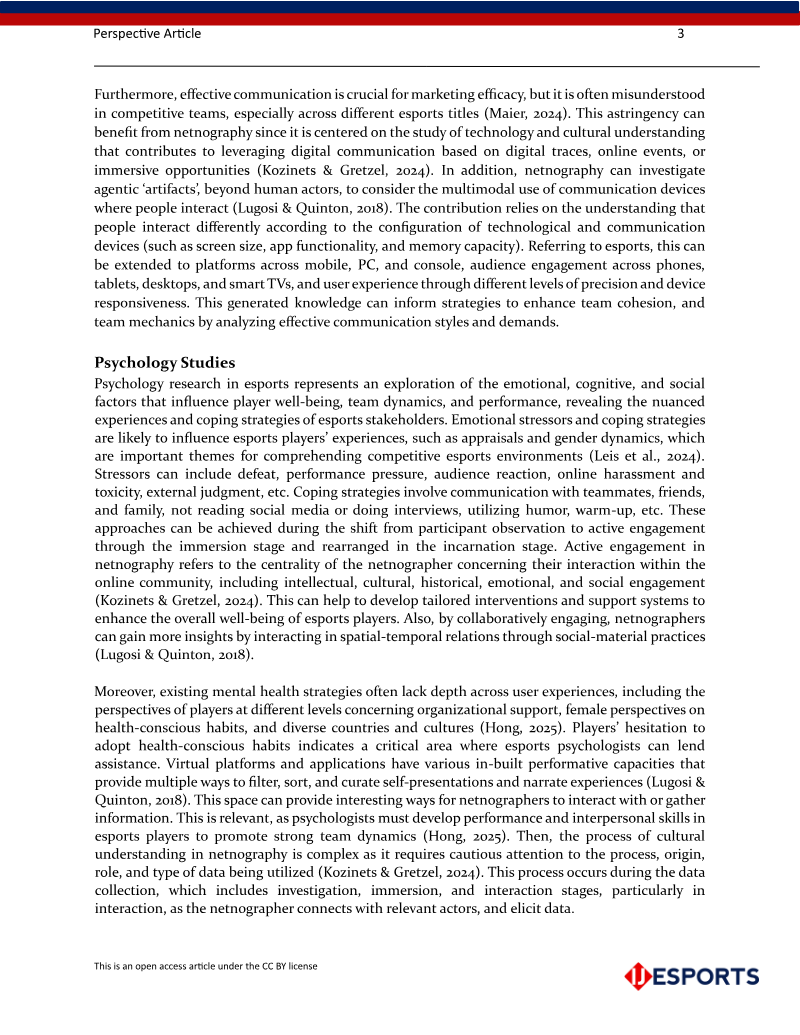
This qualitative study, led by Leis and colleagues, examines the stressors, perceived stress responses, and coping strategies of professional esports players, focusing on League of Legends. Drawing on semi-structured interviews with 12 male players aged 19 to 28, most ranked in the top competitive tiers, the work seeks to understand how competitive pressure is experienced and managed in a rapidly growing but understudied domain. Its central aim is to inform practitioners and support the development of esports-specific psychological interventions.
Players identified stressors across five areas: performance expectations, internal self-evaluation, team dynamics, audience and social media pressures, and environmental constraints. Stress responses were most pronounced before and after competition. Pre-match nervousness and physiological arousal typically subsided within the first few minutes of play, while poor outcomes were linked to anger and embarrassment, and strong results to happiness. Coping strategies clustered into six themes, including social network support, attention regulation, self-regulation, increased effort, consumption strategies, and dissociation. Communication with teammates and coaches, along with a performance-focused mindset during play, emerged as the most frequently used supports.
The authors situate these findings within prior sport and esports research, noting broad alignment while highlighting social media as a novel stressor and informal consumption practices, such as caffeine use, as areas needing further inquiry. Practical recommendations include trust- and communication-building interventions, breathing techniques, self-talk, and tailored long-term psychological support.
The study acknowledges important limitations, including its small, male-only sample, a competition-focused interview guide, and constrained generalizability. Gaps remain regarding training and off-season contexts, organizational stressors, and female players.
Each row is a game or company this document names, each column a document, oldest first. A mark means that document names it. Select a row to see those documents.
International Journal of Esports · 2026
International Journal of Esports · 2026
International Journal of Esports · 2026
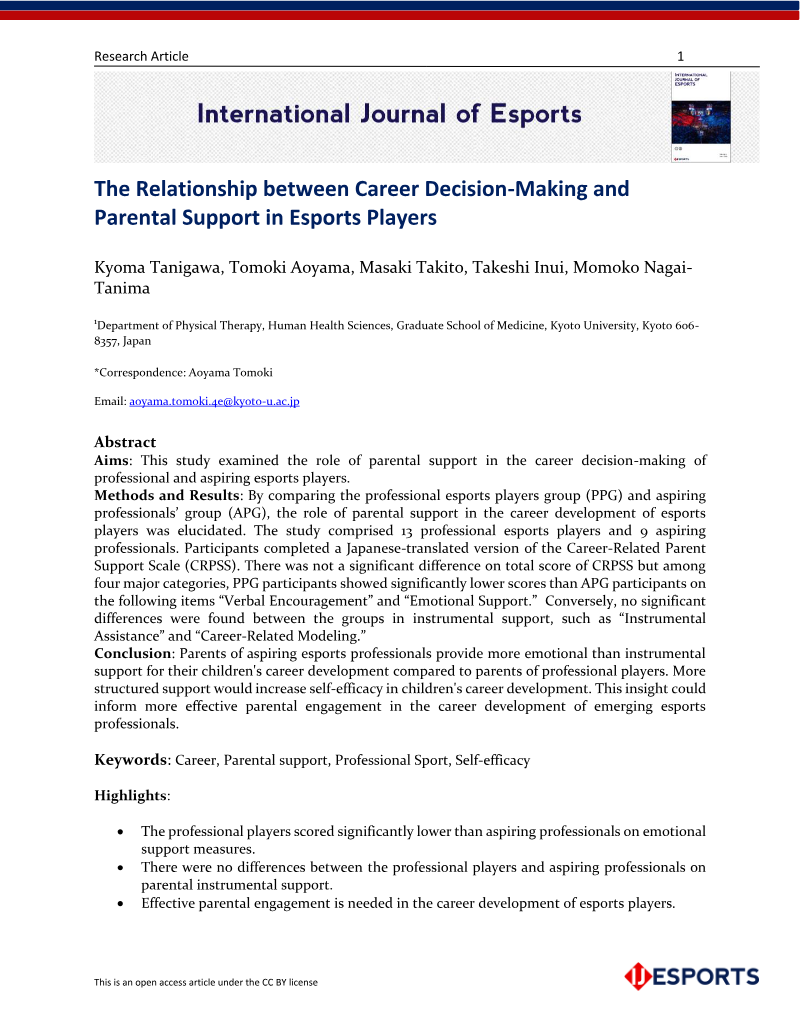
International Journal of Esports · 2026
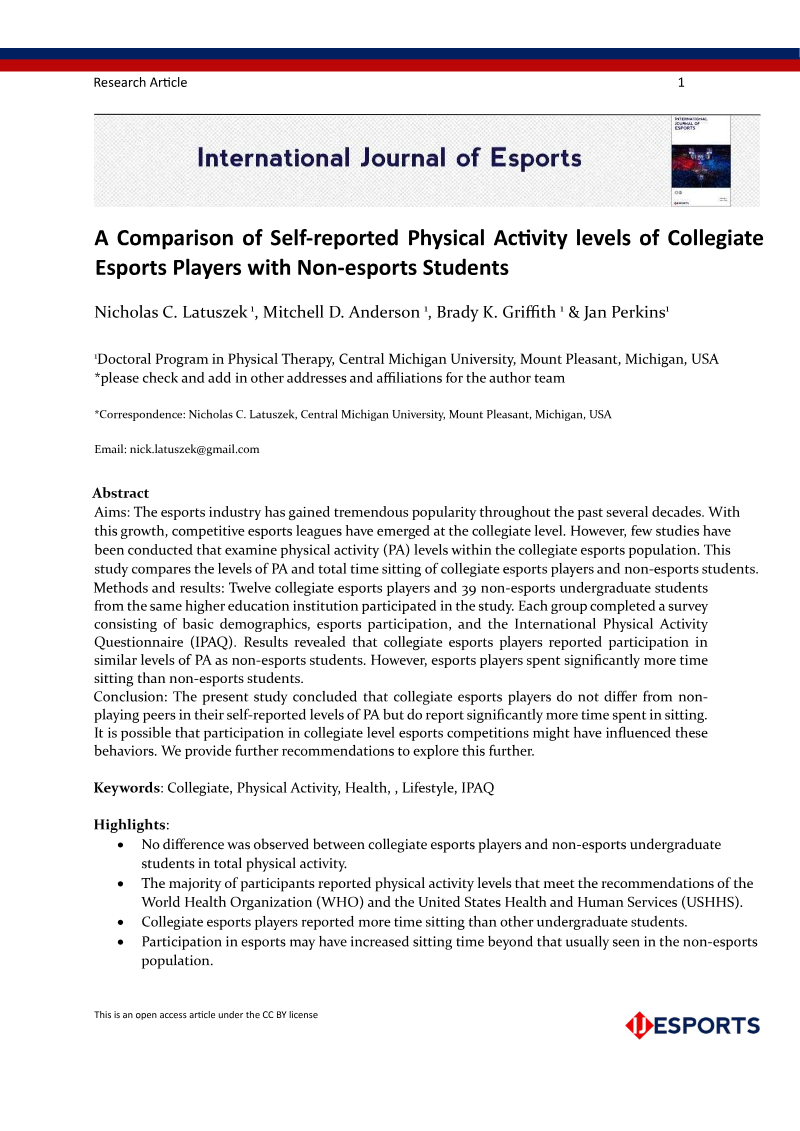
International Journal of Esports · 2026
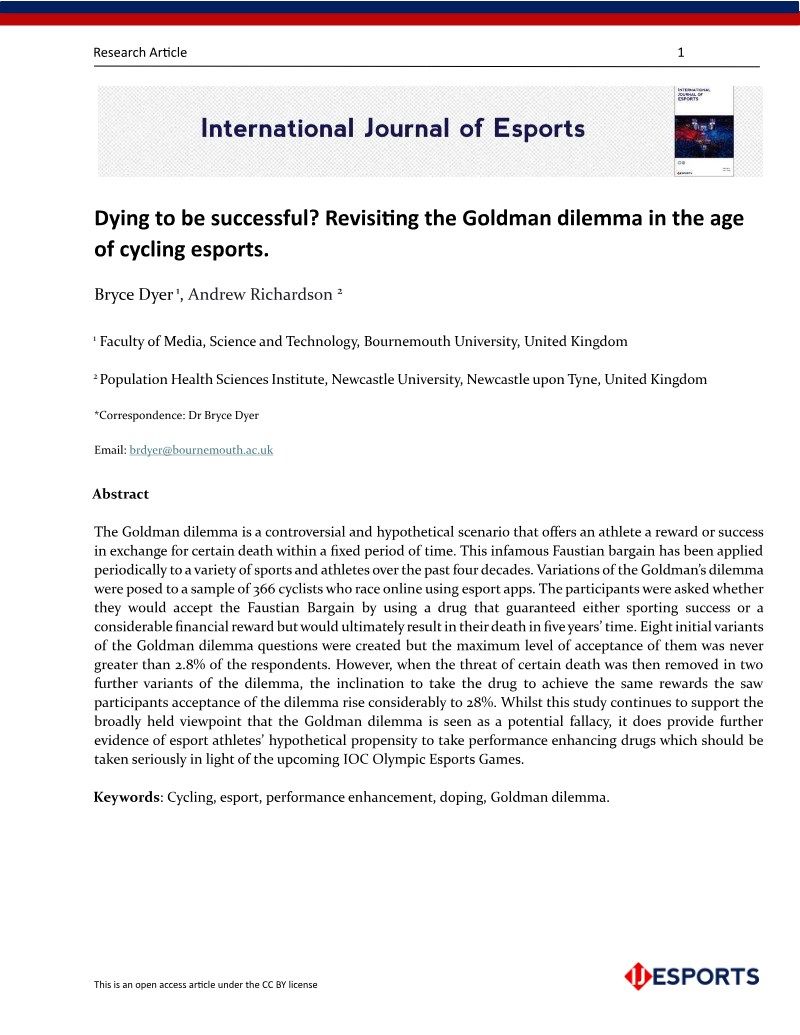
International Journal of Esports · 2026
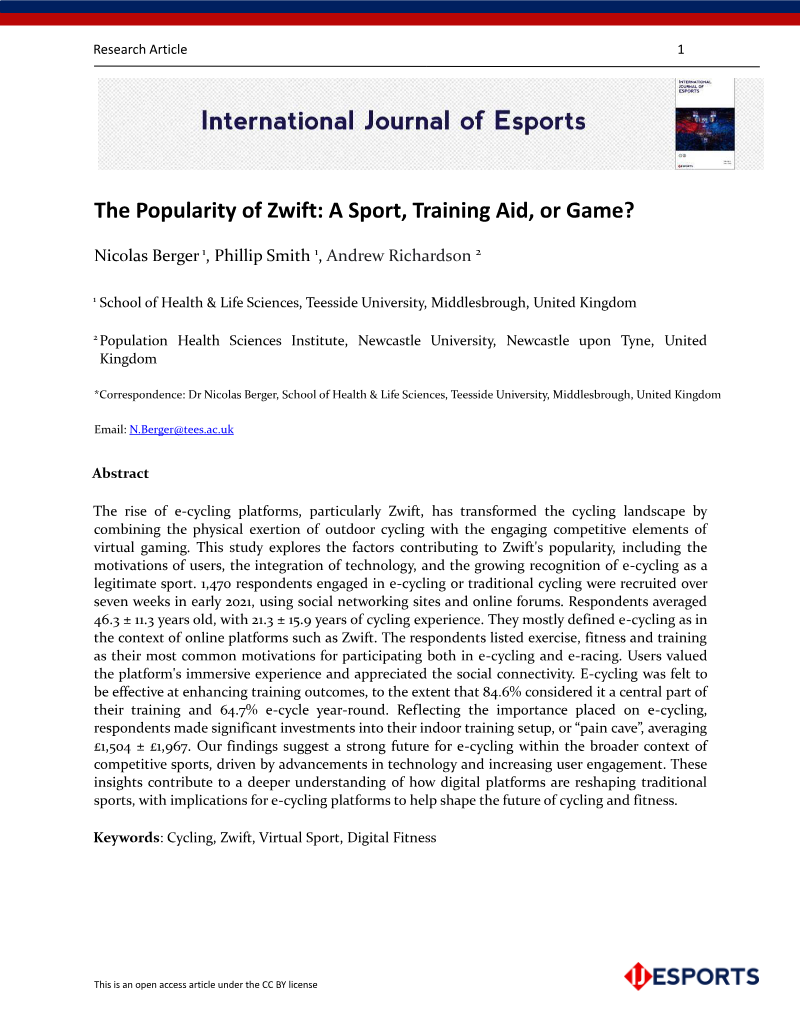
International Journal of Esports · 2025
International Journal of Esports · 2025
International Journal of Esports · 2025
International Journal of Esports · 2025
International Journal of Esports · 2025
International Journal of Esports · 2025
Niko Partners · 2026